

Reckless banks and BP: What they have in common
The Deepwater Horizon oil rig was operated by Transocean.
It was cemented by Halliburton.
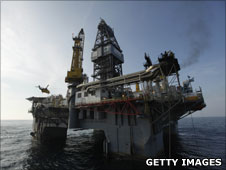 And an important element in the safety equipment that failed was manufactured by Cameron International.
So, why oh why, BP shareholders ask me, is the US administration apparently heaping all the blame for the devastating oil spill in the Gulf of Mexico on BP?
The answer is not hard to find.
The overwhelming financial benefit from the operation of the rig accrued to BP and its shareholders.
And the company that books the profits in the good times has to absorb the losses when it all goes horribly wrong.
The simple devastating charge that can be laid at BP's door is that it had no timely and viable plan to deal with a high impact, low probability event, viz the catastrophic successive failures of preventative equipment on the rig itself.
It is precisely the same charge that was levelled at big financial institutions from Northern Rock, to Royal Bank of Scotland, Lehman, AIG, UBS, Citigroup and the rest - namely that they had no plan B for when the unthinkable happened and entire financial markets, on which they were dependent for vital finance, closed down.
The analogy can be extended. Because it is quite clear that the long-term costs of finance for banks and therefore for the rest of us is on a pronounced rising trend (ignoring the short-term reductions in interest rates engineered by central banks) as a result of reforms to reduce the risks taken by banks.
And the cost of oil will also have to rise, as companies are forced to take much more expensive precautions when drilling for oil in treacherous regions.
More expensive oil and more expensive finance: it's not a recipe for booming economies, even if both are essential to deliver more sustainable growth.
 On a more parochial issue, I am increasingly hearing grumblings of discontent from shareholders and politicians about the performance - or should that be lack of performance? - of BP's chairman, Carl-Henric Svanberg.
Their point is that at a time of life-or-death crisis for a company, the chairman should become the public face of the business, representing the company to the wider world and taking the lead in meeting with politicians, regulators and shareholders.
Why?
Well the priority for the chief executive in these circumstances - especially one like Tony Hayward who was explicitly chosen by BP's board precisely because he was a nitty gritty geologist and professional manager rather than a PR wiz - is to sort the underlying physical problem (the leak), in circumstances of quite extreme personal pressure.
For the chief executive also to be the public face of the business requires superhuman qualities that arguably no business leader possesses. And it's worse for Tony Hayward because he'll be aware that the buck stops with him for the fact that BP didn't have that contingency plan in place for dealing with this catastrophically high impact, low probability event.
What's more, the chairman is supposed to represent all interested parties - the executives, the other employees, shareholders, customers, and so on - in a way that is much harder for any chief executive, even in the good times.
To put it in the starkest terms, any chief executive will always be seen as having too much of his own skin in the game to be dispassionate at a time when the survival of the company is not guaranteed - and therefore everything he or she says will be seen as tendentious to an extent.
Which is why, as one investor put it to me, chairman Svanberg needs to emerge from the wings to the front of the stage, even if the audience seems somewhat hostile.
Update 10.55: The value of BP's brand has probably been seriously impaired by the Gulf Coast debacle. So perhaps it should revert to its previous corporate moniker.
Except that I am reminded by Terry Smith of Tullett Prebon that BP's last uncarnation, till 1954, was as the Anglo-Iranian Oil Company.
Even now, I suspect "Iran" sells less well in the US than "BP" - or at least BP's owners must fervently hope that's the case.
 I'm
I'm 





Page 1 of 2
Comment number 1.
At 09:47 11th Jun 2010, writingsonthewall wrote:"The overwhelming financial benefit from the operation of the rig accrued to BP and its shareholders."
Glad you've set that one straight Robert.
It's very noticeable that the slight rebound in share price is caused by investors thinking Obama will lay off the shouting - and that the vast increase in estimated oil leaked hasn't affected it at all!
Just goes to show, there is no moral conscience in investors minds - all they want is a profit - no matter what the cost to the environment.
Complain about this comment (Comment number 1)
Comment number 2.
At 09:48 11th Jun 2010, FedupwithGovt wrote:Fall guy springs to mind maybe. When the dust finally settles heads will certainly roll. I'm not really surprised that Svanberg doesn't want to stick his head above the parapet and I really wouldn't want to be Tony Hayward for all the tea in China. This has been a disaster in every possible way, human, environmental, commercial, political. Unfortunately our reliance on oil (particularly the US and its insatiable demand for cheap petrol) and the need to go to greater extremes to get it means incidents like this will probably become all to frequent. Also as you mention in your blog, let's not forget the involvement of Transocean and Halliburton in all of this.
Complain about this comment (Comment number 2)
Comment number 3.
At 09:55 11th Jun 2010, Studlea Phatt Katt wrote:Mr. Peston wrote: "And the company that books the profits in the good times has to absorb the losses when it all goes horribly wrong."
Unless of course it is a bank.
Complain about this comment (Comment number 3)
Comment number 4.
At 09:59 11th Jun 2010, plamski wrote:Good article this time, Robert. Thank you.
The moral of the stories is that the banks and the oil companies are at the top in the league of greed. The sooner we get rid of them completely, the better.
Complain about this comment (Comment number 4)
Comment number 5.
At 10:08 11th Jun 2010, DevilsintheDetail wrote:" The simple devastating charge that can be laid at BP's door is that it had no timely and viable plan to deal with a high impact, low probability event, viz the catastrophic successive failures of preventative equipment on the rig itself."
You could equally well lay this charge at the American Government.
It presumably invited BP to come and drill in its own backyard and quite clearly it cared not one jot about overseeing emergency planning which highlights its own attitude to that region of the country and lust for petrolem dollars.
They are laying all the blame with BP because they can.
Hyprocrisy and Greed
Complain about this comment (Comment number 5)
Comment number 6.
At 10:08 11th Jun 2010, Angus Tait wrote:Robert
Lets take the analogy a bit further and remark on the differences to the banks. Obama is threatening to reap vengeance on BP and its shareholders by requiring no payment of dividends until Gulf coast victims have been sufficiently recompensed.
Yet no such requirements from him on Banks, which have arguably created much greater devastation. Both business sectors cannot be damaged as they are both "too big too fail" and have consequential side effects to the world in costs of borrowing or fuel.
Double standards, presidential weakness against banks or just plane short sightedness?
Angus
Complain about this comment (Comment number 6)
Comment number 7.
At 10:14 11th Jun 2010, richard mason wrote:This comment was removed because the moderators found it broke the house rules. Explain.
Complain about this comment (Comment number 7)
Comment number 8.
At 10:20 11th Jun 2010, Jacques Cartier wrote:You've listed some similarities. But what about the differences? It takes know-how and hard work to extract crude oil from under the sea. It's a very difficult task.
But to run a bank, you just have to shuffle paper and money around, and polish your back in a leather chair, pushing buttons. It's unskilled work, in comparison.
Complain about this comment (Comment number 8)
Comment number 9.
At 10:22 11th Jun 2010, Cassandra wrote:At the end of the day it was BP that obtained regulatory clearance from the US authorities. Accordingly it is BP that is legally responsible for what has happened.
The simple fact is that BP did not have any plan b in place to deal with such an accident. To make matters worse the handling of events since the accident has been hopeless. I suspect in years to come it will be the classic case study for PR professionals of what not to do.
I agree the BP Chairman and Board have apparently been in hiding. Have any of them even visited the effected areas?
Complain about this comment (Comment number 9)
Comment number 10.
At 10:22 11th Jun 2010, writingsonthewall wrote:I would like to say near the start of this blog that anyone who is considering bringing up 'the war' in a discussion about a corporation and a nation and an oil spill - should really drag themselves into this century.
We do not cover ourselves in glory when we revert back to the same old stories which I'm sure the Americans are sick of hearing.
Having read through some of the posts placed yesterday on this subject I was ashamed to be 'British' by some of the xenophobic nonsense played out in defence of what is ultimately a non-sovereign corporation.
I hope the American people can see through this and don't hold it against us.
This is a battle between 'the people' and 'the corporation', not some wrangle between the people of the respective companies. Clearly some in the UK are insistant on following what they believe is their own self interest - but alas this is yet another deception played out by corporate PR and the media in order to set man against man.
In the 1930's it was the tensions that political ideology brought which engaged man in war - now it seems it will be the tensions that corporations bring which will lead to conflict. This is not a good idea.
All sides should bear that in mind when showing our emotions regarding this matter - the unity must be at the human level, not at the monetary one.
We are all human first and foremost - country, nationality, corporate association, political leanings - are all secondary to the fact we're all humans.
Complain about this comment (Comment number 10)
Comment number 11.
At 10:25 11th Jun 2010, crayfish59 wrote:Pretty much agree with most of this. But as a former oil company employee a tip to your BP shareholder friends. Since the mid 80's most country's regulatory authorities have made it clear to oil companies that they are legally responsible for any failings on the part of their contractors. My own company had to pay significant damages when a geophysical contractor blew up some of its own employees.
Complain about this comment (Comment number 11)
Comment number 12.
At 10:26 11th Jun 2010, Blogpolice wrote:Robert,
Its all to do with contracts and insurance. Oil company contractors cannot pay for the costs of disasters. They are not as big as the oilcos. Governments across the world know that the only body they can hit for payment is the oilco. So you do not see small oilcos being awarded difficult licences. You are right of course that even big oilcos can't afford the cost so they try and get the industry to co-operate to share the cost of the contingency plans. Heres where anti competition rules work against them. If you dig deep you will probably find the whole GoM oil industry is helping on this one. What is clear though is there were a string of failures and that equipment was not immediately available.
Again you are right about the low probability of the event. Undoubtedly human error involved in not seeing the signals, but that was made worse by a string of equipment failures.
But it all comes down to cost. Do governments do enough to protect us against Tsunamis? Volcanos? Asteroid hits? No the probability is too low and the cost far too big. We live with the risk.
What is a pity is the BP bashing. Did we bash the US banks (yes) but not to the same degree. Did the world ask for compensation from US banks to the same degree that US officials are now talking about for BP? No this is more like a lynch mob who have no knowledge of legal principles of contract. Yet they are government officials.
Closer to home should the British people sue the Labour government for the mismanagement of the UK econony over the last decade?
Unfortunately the man in the street does not understand the principles. Which is why lynch mobs are so easy to mobilise. But when governments join in with the mob then civilisation collapses.
Complain about this comment (Comment number 12)
Comment number 13.
At 10:33 11th Jun 2010, dinosaur wrote:"It is precisely the same charge that was levelled at big financial institutions from Northern Rock, to Royal Bank of Scotland, Lehman, AIG, UBS, Citigroup and the rest - namely that they had no plan B for when the unthinkable happened and entire financial markets, on which they were dependent for vital finance, closed down."
Surely they did have a plan B? - panic the taxpayer into picking up the tab.
Complain about this comment (Comment number 13)
Comment number 14.
At 10:36 11th Jun 2010, jmwest wrote:The fact that they didn't have a backup plan is only one problem. Management needs to quit talking to the lawyers and PR people, who are only making BP appear worse and worse to those of us in the States. Why did they hold back the high-resolution images that the scientists needed to get a better idea of how much oil was pouring out? Why are they dragging their feet on sending out cheques to those whose livelihoods have been destroyed? Why have they not followed the safety recommendations made by their own people? Why do they continue to claim that they have never tried to keep the people they've hired from talking to the press, when by their own admission they previously had cleanup crews sign non-disclosure agreements? That was early on, but these workers are still muzzled out of fear of retribution. Why BP continues to make statements that can be easily refuted is a mystery to me. It's no wonder that Americans have stopped believing a word BP says.
Complain about this comment (Comment number 14)
Comment number 15.
At 10:38 11th Jun 2010, TGM wrote:One of the most succinct, articulate and balanced set of words I have ever seen.
An outstanding précis of the problem and at least the "Executive" solution!
Tim
Complain about this comment (Comment number 15)
Comment number 16.
At 10:39 11th Jun 2010, newblogger wrote:So Robert,
To sum up:-
It was NOT BP's fault, but they get the blame and the bill simply because they can afford it?
'The overwhelming financial benefit from the operation of the rig accrued to BP and its shareholders.'
This is akin to taking a taxi to the airport. You are hiring the car and driver to take you to the airport. Since you set to gain most from said journey, since it is you who wants to go to the airport. You pay the driver for his efforts. When he crashes because his brakes were faulty, you get the blame!
NICE!
Complain about this comment (Comment number 16)
Comment number 17.
At 10:40 11th Jun 2010, John_from_Hendon wrote:Reckless banks and BP: What they have in common?
ans: They are too big to fail!!!!!!!!!
With all the attendent hand wringing accompanied by total inaction.
The fault line of capitalism?
Complain about this comment (Comment number 17)
Comment number 18.
At 10:40 11th Jun 2010, seasidermole wrote:Don't give the oil companies a reason to increase the cost of oil. Extra sub surface safety valves are cheap compared to rig time and manpower cost. 3 different types of sub surface shut down valves operated by 3 different types of activation will solve the problem. Will BP also be paying Transocean, Haliburton and Camerons international staff layed off because of this accident. Could be interesting to find out.
Regards
Ken Moyle
Complain about this comment (Comment number 18)
Comment number 19.
At 10:40 11th Jun 2010, Kudospeter wrote:respectfully RP, i think its a little week to compare BP to bankers just so your regular bloggers can have the light relief of ending the week with a bash a banker session.
The principle of the company who makes most of the profit ends up ultimately accepting most of the cost in a disaster situation isn't a principle in business i am aware of.
The high impact low probability senario was addressed, the understanding was that BP's total liability would always be limited to $75m
The US seem at least compicit in a desire to have cheap oil.
Surely the US were capable of setting safety standard requirements. A lot of professions seem to have standards to those of the regulations (e.g. building to building regs, accountants e.g. repo 105 in Lehman Bros.)
Complain about this comment (Comment number 19)
Comment number 20.
At 10:42 11th Jun 2010, jfreem2 wrote:Robert, your BP shareholders need also to consider this. Despite the probable failure of the Halliburton Cement Plugs, the Cameron BOP and the Transocean Procedures. All evidence (so far!) suggests BP took a shortcut which exposed them unnecessarily. Within the Drilling fraternity, (I am a UK Driller with no axe to grind), BP seems to have a bit of a reputation for taking chances. If you are in a hurry and jump out of the plane instead of waiting till it lands, and the parachute fails, then you are guilty of poor risk management. As you rightly state, they did not have a "reserve chute" or back up plan, but the main reason they are being vilified is that they substantially increased the need for one.
Complain about this comment (Comment number 20)
Comment number 21.
At 10:44 11th Jun 2010, Nickwh wrote:Mr Obama needs to be reminded of Bhopal(Union Carbide) and the Piper Alpha explosion(Occidental). These facts as well as the US not signing up to Kyoto and using inefficient car engines means that they are even more dependent on oil supplies from countries they don't like. Why haven't his administration started to address these issues and thus he is in no position to throw bricks in a glass house.
Complain about this comment (Comment number 21)
Comment number 22.
At 10:50 11th Jun 2010, RT74 wrote:BP is the fourth largest company in the world with anual revenue over 14 billion pounds, and treats oil exporting countries like subsidiaries. So I find it amazing that so many people are rushing to its defense when it has been shown that they have lied since day one about the impact of this disaster. Over 14,000 gallons of oil are hemorrhaging into one of the most precious ecosystems in the world causing catastrophic disaster, and all people can care about is "poor BP". Disgusting.
Complain about this comment (Comment number 22)
Comment number 23.
At 10:51 11th Jun 2010, willsmac wrote:But there does seem to be an impressive difference of scale - The oil spill losses are small fry by banking standards. Now if Svanberg and Hayward take their full bonuses this year and dump all the costs on the taxpayers (which so far they show little sign of doing) that might be a better analogy!
Complain about this comment (Comment number 23)
Comment number 24.
At 10:54 11th Jun 2010, Qasim wrote:Im sorry Robert but you have it wrong. If the American companies caused the mess, they should be held account for their shoddy work. Just because BP benefited is in no way a justifiable reason for them to suffer for someone elses mistake.
It is high time that the media start calling Obama on this cheap political scoring he is doing! If he wants someones ass to kick he should start by looking closer to home!
Complain about this comment (Comment number 24)
Comment number 25.
At 10:57 11th Jun 2010, ruralwoman wrote:My sympathy is totally with the Gulf of Mexico and its marine life, definitely not BP or its shareholders.
BP is at fault because they failed to have a credible emergency plan in place to deal with blow outs, leaks etc.
Deep-sea drilling 1 mile down, in an environmentally sensitive area prone to Hurricanes without a plan B was an black gold well too far.
Its an ongoing global disaster for all concerned, greed not Obama is to blame.
Complain about this comment (Comment number 25)
Comment number 26.
At 11:01 11th Jun 2010, rangerray wrote:"no timely and viable plan to deal with a high impact, low probability event"
Every industry has to weight up the cost of acting against the impact of not acting. For example Automatic Train Protection was never implemented because it was considered the cost out weighed the likely number of deaths.
BP made a sensible evaluation of the cost verses the probability of failure and unfortunately got it wrong.
The big concern must be the effectiveness of the blowout preventor (BOP). They are in every rig which presumably means they are all unlikely to be protected in the case of a failure. In a risk adverse world this would mean closing down every rig to test the BOP.
Complain about this comment (Comment number 26)
Comment number 27.
At 11:02 11th Jun 2010, pietr8 wrote:It's the chairman's job to put his head up when it's all gone wrong.
Why didn't Tony Hayward get some good PR? It's still not too late and we don't have to attack the Americans for Obama's deep-rooted anti Britsh sentiments.
In the blame game, it doesn't all rest with BP; your comment about their profit Robert is not really relevant. A contractor is entitled to pass on liability to an accident caused by a sub-contractor though the main liability initially rests with the contractor whether or not the operation is profitable.
BP's PR is still appalling.
Obama is just covering his back which is to be expected.
Complain about this comment (Comment number 27)
Comment number 28.
At 11:02 11th Jun 2010, PetersKitchen wrote:"The analogy can be extended. Because it is quite clear that the long-term costs of finance for banks and therefore for the rest of us is on a pronounced rising trend (ignoring the short-term reductions in interest rates engineered by central banks) as a result of reforms to reduce the risks taken by banks."
At last, at last rejoice, rejoice....
Debt is diluted
Interest rates squashed for banks and margins extended to rebuild reserves
Interest Rates increase
Asset value is rebalanced
And it all starts again
Boom,boom,bust,boom,boom,bust,boom,boom,bust - engineered to keep the FIAT system running. As the engineers point out - WARNING: THE VALUE OF (ASSET) CAN GO DOWN AS WELL AS UP
However, the asset tree has hit the top, the assets being quoted are now the country's, states and superstates and their own precious ratings
PIIGS, Eastern Block, US of A and Japan - all on verge
In an attempt to get out of this they will kill off the ratings agencies, you'll see
This balloon cant deflate enough to get the FIATmongers out of this one.
Its over folks.
Complain about this comment (Comment number 28)
Comment number 29.
At 11:06 11th Jun 2010, Al_o_Gymru wrote:We shouldn't forget those who died and their families.
It would benefit politicians and business leaders alike if they read the excellent book by Nassim Taleb 'The Black Swan - The Impact of the Highly Improbable'
I wonder what the impact of additional safety requirements will be on future fuel prices - or will profits be reduced instead?
Complain about this comment (Comment number 29)
Comment number 30.
At 11:09 11th Jun 2010, jon112dk wrote:"And the company that books the profits in the good times has to absorb the losses when it all goes horribly wrong."
I must have missed that bit when the banks went pear shaped.
'The Telegraph' is reporting that Fred Goodwin has just bought himself a £3.5 million house in scotland. So he's obviously not absorbing that much loss.
Complain about this comment (Comment number 30)
Comment number 31.
At 11:22 11th Jun 2010, DeimosL wrote:"And the company that books the profits in the good times has to absorb the losses when it all goes horribly wrong."
In practice everybody should realise that companies are about profit. So spending on safety measures is a cost that reduces profit. so companies look at risk against cost of safety. The equation has nothing to do with environment or caution. Just how much will safety measure X cost and what is the likelihood of having to use X (because unused it is a waste of money/profit).
That is why governments have regulators - to force companies to take safety measures to protect their citizens/environment. Maybe BP and its associates are at fault but the US overnment also has a large part of the blame because it failed to require BP to have adequate safety measures. Just look at the plan for wildlife protection they submitted to the US regulator: to protect Sea Otters and Walrus (species that do not live in the Gulf) - so it would appear that the US regulator not only failed to enforce adequate safety measures and backup but did not even read the plan BP submitted !!
Complain about this comment (Comment number 31)
Comment number 32.
At 11:34 11th Jun 2010, kaos_maximus wrote:"The overwhelming financial benefit from the operation of the rig accrued to BP and its shareholders."
In addition, it was BP freely choosing to outsource these operations and use these suppliers (Haliburton, Transocean, Cameron, etc.). If BP chose them primarily because of finincial reasons and neglected to control operational and safety aspects of these services, by keeping these in-house, it is only right that it should take financial and legal responsibility for these choices.
Complain about this comment (Comment number 32)
Comment number 33.
At 11:37 11th Jun 2010, scottdougall wrote:at least for now it would seem that oil has been profitable enough for BP to have the money to sort this mess out - however haphazardly - the banks it would seem are merrily dancing over the horizon while we all face an uncertain future because of their mistakes
who in fact are we paying back for the national debt ?? at least with oil its clear who is profiting and where the money flows, to pension funds etc - with the banks it all seems to have disappeared into bankers back pockets...
I for one resent that my life is now a worry while I watch on my cycle through London to my train station when Buggati Varon sports cars at £2,000,000 a go being sold, a couple this week alone - thinking - these people just dont care and they are all it would seen rolling in money - what feels like our money...
why dont all the countries burdened with the debt from bailing out the banks get together and as a whole default - tell the banks to bugger off and start again with a clean sheet
makes me feel a rising anger - resentful - helpless
Complain about this comment (Comment number 33)
Comment number 34.
At 11:40 11th Jun 2010, Uphios wrote:Sorry Robert, I disagree with your assertion 'The simple devastating charge that can be laid at BP's door is that it had no timely and viable plan to deal with a high impact, low probability event, viz the catastrophic successive failures of preventative equipment on the rig itself.'.
What do you think the BOP valve is for? This an expensive piece of kit found at all similar well heads that serves no function other than shutting of the supply if catastrophy strikes. A plan B. Of course when the thing fails you get a disaster. You can only go so far with backup plans. Analogy - should you be unfortunate enough to crash your car and at this point discover the seat belt fails and then the air bag fails where is your plan B?
Complain about this comment (Comment number 34)
Comment number 35.
At 11:41 11th Jun 2010, cping500 wrote:Oh dear so the unlikely happens but ... everyone in the H&S industry knows that you have to estimate the probability of an accident and the impact of the accident (total costs) and then make your plans. Of course here may be criminal charges (including manslaughter and general breaches of the law as in this case) but the civil and reputational damage is likely to be much more. If BP who appears to be the the main contractor has non done this then too bad. I'm sure the Daily Mail and Express would be baying for blood if it happened in the North Sea.
Complain about this comment (Comment number 35)
Comment number 36.
At 11:52 11th Jun 2010, twinturbo wrote:Robert
Another link between banks and BP is that former Chairman Peter Sutherland is chairman of Goldman Sachs.
See https://www.zerohedge.com/article/series-lucky-coincidences-involving-goldman-sachs-bp-plc?
I also understand that Sutherland and his successor Svanberg were (are?) on the Ericsson board together.
Speaking of Goldman Sachs I would love you to blog on High Frequency Trading.
Complain about this comment (Comment number 36)
Comment number 37.
At 11:53 11th Jun 2010, writingsonthewall wrote:8. At 10:20am on 11 Jun 2010, Jacques Cartier wrote:
"But to run a bank, you just have to shuffle paper and money around, and polish your back in a leather chair, pushing buttons. It's unskilled work, in comparison."
Come on Jacques - you know you also have to get your handicap down...and of course those long lunches are a real burden, all that wine in the middle of the day - it's a wonder they even bother with their meagre salary.
Most importantly as a banker you need to be able to talk absolute nonsense - but make everyone think you're really, really clever - otherwise the whole system breaks down......
They have to complicated words like "expansion", "shareholder value", "fiscal inadequacy" and now there are new words like "bankruptcy" and "democratic" which must also be learnt.
Life for a banker is far from easy - and now there are people like you who are always picking on them - even though they have done absolutely nothing wrong (it was all Browns fault aparrently)
Complain about this comment (Comment number 37)
Comment number 38.
At 11:55 11th Jun 2010, TSArthur wrote:I am also very sympathetic to Hayward. He at least has an understanding of the issues involved in both getting the oil and in solving this problem. Obama, almost the entire political class in the UK and US, can only offer angry shouting and wringing of hands - left to all of them together at this point the oil spill would go on until the pressure in the field abated. It is a peculiar feature of the political class that almost none of them (Vince Cable being the one eyed man in the kingdom of the blind) had a clue about the financial crisis and adopted a similar shouty posture to that now adopted by Obama. Instead of all women short lists perhaps we could have all scientist/engineer shortlists and we might then have politicians who can contribute something useful (I am not holding my breath that those who seem to have read 'cliches', 'opinions','vacuous oratory' will readily stand aside). Given the usual composition of boards of directors it would be interesting to know how well qualified the board members who set safety parameters and cost constraints at BP were.
Complain about this comment (Comment number 38)
Comment number 39.
At 11:56 11th Jun 2010, Chris wrote:Good point by Angus Tait (Banks ... have arguably created much greater devastation). It's not arguable... The mess the banks made was (financially) at least 100 times greater!
Complain about this comment (Comment number 39)
Comment number 40.
At 11:58 11th Jun 2010, writingsonthewall wrote:11. At 10:25am on 11 Jun 2010, crayfish59 wrote:
"Since the mid 80's most country's regulatory authorities have made it clear to oil companies that they are legally responsible for any failings on the part of their contractors. My own company had to pay significant damages when a geophysical contractor blew up some of its own employees."
Seems reasonable - I mean when you contract out the only thing you can't contract out is overall responsibility.
Local councils try the same trick up and down the land.
If you choose to contract out services then you must be responsible for the failure of those services.
Clearly a lot of people have double standards.
Complain about this comment (Comment number 40)
Comment number 41.
At 11:59 11th Jun 2010, sanity4all wrote:By the way, where is the comparison with the Banks Robert?
Is it that they 'cleaned up' as well and left the taxpayers coffers empty?
How many UK based banks are sponsoring or investing in the World cup series in South Africa?
Is any of this (loans, investments) during a time of UK taxpayer bailouts, when they should have been lending to UK businesses?
Back to BP. I do see it, Halliburton. Say no more.
Weren't they the sole contractor for the US before, during and after the Iraq invasion in 2003?
Didn't they lose many convoys due to inadequate commitment, equipment failures and didn't they get involved in some fraud with development funds in Iraq?
So don't blame BP (or the Anglo-Iran Oil Company either) for the leak.
Yes the 'buck' stops with BP and they have the unenviable task (and expertise) to clean oil up.
Mr Hayward is competent. Leave him to do his job and armchair critics should get on with theirs. Surprised Mr Obama has the time on his hands..
Perhaps UK pension fund shareholders should have used their new-found voices to have shouted a bit more loudly when the Banks 'nicked the loot'!
Complain about this comment (Comment number 41)
Comment number 42.
At 11:59 11th Jun 2010, puzzling wrote:Rising cost of finance and oil?
Why not less greed for profit?
Complain about this comment (Comment number 42)
Comment number 43.
At 12:00 11th Jun 2010, Sumproduct wrote:Reckless banks and BP: What they have in common...
... those at the top run the business for maximum bonuses at the expense of shareholders and the general public.
Greed is as greed does
Complain about this comment (Comment number 43)
Comment number 44.
At 12:01 11th Jun 2010, atheistic1 wrote:@Robert Peston
You said "The overwhelming financial benefit from the operation of the rig accrued to BP and its shareholders."
I have to disagree with this, the govenment of the US has taken a far larger slice of the cake than BP has.
Complain about this comment (Comment number 44)
Comment number 45.
At 12:02 11th Jun 2010, twinturbo wrote:Responding to comment 6 from Angus see "Is BP Too Big To Fail?" at https://www.zerohedge.com/article/bp-too-big-fail
Complain about this comment (Comment number 45)
Comment number 46.
At 12:10 11th Jun 2010, writingsonthewall wrote:12. At 10:26am on 11 Jun 2010, Blogpolice wrote:
"Closer to home should the British people sue the Labour government for the mismanagement of the UK econony over the last decade?"
Interesting concept and a good point - however it wouldn't work as the Labour Government would raise the joint defences of:-
"We were authorised with a mandate from the people" and "the problems in the system were inherited from the previous Government" - which shows they had the authority and that they were not wholy responsible.
Both of which would cloud the judgment enough for a dismissal - as the burden of proof is on the accuser not the accused.
In the same way the sub-contractors in the deepwater spill can simply point to the contract and say "we did as we were told" - only if there is criminal negligence proven will BP be absolved of blame.
The sub's would have had to have blatantly ignored a clear instruction in the contract (i.e. make the concrete cap 15ft thick when they only made it 10ft thick) - and even they it would have to be proven that this was a contributory factor.
Alas the legal onus of responsibility is on BP - and I very much doubt that even if negligence was proven, the gain may only be a refund on the cost of the contract, the damage caused by the spill would still be down to BP.
Someone should have explained this to shareholders before they started investing. I feel sorry for pensioners who had no idea this would affect them - but that's why everyone needs to take more notice on what is being done with their money.
I suppose you could say pension holders contracted out the management of their pension - but did not contract out the responsibility for it going wrong.
Complain about this comment (Comment number 46)
Comment number 47.
At 12:18 11th Jun 2010, writingsonthewall wrote:14. At 10:36am on 11 Jun 2010, jmwest
..and why did their 'experts' claim the spill was only 1000 barrels a day in the early days - and recently claim they are capturing 15000 barrels a day with the 'cap'.
Tripping up on your own lies is never a good way to make an impression of trust.
All I can say is that all corporations do it - they call it PR - I call it lying to save yourself.
...but as with all liars - they eventually come unstuck - and as we all know it's usually much worse for the liar than if they had simply told the truth in the first place (as every 4 year old knows).
...so who's fault is it that BP's now getting a disproportionate hammering from the US media?
People accept accidents happen - they do not accept attempted cover ups.
Complain about this comment (Comment number 47)
Comment number 48.
At 12:22 11th Jun 2010, Straightalk wrote:5. At 10:08am on 11 Jun 2010, DevilsintheDetail wrote:
"You could equally well lay this charge at the American Government.
It presumably invited BP to come and drill in its own backyard and quite clearly it cared not one jot about overseeing emergency planning which highlights its own attitude to that region of the country and lust for petrolem dollars."
________________
Whilst I agree with your thoughts about the US government's regulatory lapses, it is not accurate to suggest the American government invited BP into the Gulf.
BP's presence in the Gulf is largely explained by its acquisition of the US oil company, Amoco (American Oil Company), whose ancestry can be traced back to the late 19th century when Standard Oil (Indiana) was formed by John D Rockefeller in 1889.
In 1947 Indiana Standard was the first company to drill offshore in the Gulf of Mexico.
Standard Oil Company(Indiana) was officially renamed Amoco in 1985.
It's worth noting that on 16 March 1978 the very large crude carrier, Amoco Cadiz ran ashore off on the French coast at Brittany causing one of the worst spills in history.
In August 1998, BP and Amoco merged in what was at the time the largest industrial merger ever. Although the Amoco brand was originally to have remained in the US on retail stations, in 2001 BP announced that they would rebrand them BP.
Thus through the process of acquisition BP as the senior partner in the merger effectively has assets locted in the Gulf of Mexico that were originally developed over 60 years ago. Hardly a case of the US government inviting British Petroleum into their backyard; rather it is a case of British Petroleum buying drilling operations that were already there. Of course the deep water operations are new fields, but the BP presence in the Gulf is well established.
In 2000, British Petroleum changed its name to BP to emphasise its environmental vision 'beyond petroleum'. Ironic really.
Complain about this comment (Comment number 48)
Comment number 49.
At 12:24 11th Jun 2010, Catpain_Slackbladder wrote:As usual we get some spineless jellies crawling out of the woodwork whinging that they're "Ashamed to be British". Yes, I'm ashamed you're British as well.
Complain about this comment (Comment number 49)
Comment number 50.
At 12:25 11th Jun 2010, sammyd wrote:What about Union Carbide, is Obama as vociferous about that. the suffering continues.
Complain about this comment (Comment number 50)
Comment number 51.
At 12:27 11th Jun 2010, sammyd wrote:Bhopal was one of the biggest environmental disasters ever, thousands dead continuing suffering, where is the american public there? and Obama
Complain about this comment (Comment number 51)
Comment number 52.
At 12:29 11th Jun 2010, redrobb wrote:Oil companies v's Banks? Both can duck & dive at professional level, certainly what the media won't report in the coming years will be the litigation that BP will pursue against its partners, any future settlements will come with gagging orders. Greed begets greed so in that sense BANKS / OIL are pretty much bedfellows....
Complain about this comment (Comment number 52)
Comment number 53.
At 12:34 11th Jun 2010, writingsonthewall wrote:26. At 11:01am on 11 Jun 2010, rangerray wrote:
"Every industry has to weight up the cost of acting against the impact of not acting. For example Automatic Train Protection was never implemented because it was considered the cost out weighed the likely number of deaths."
Interesting.....Marx said this would happen.....human life eventually becomes a commodity and is eventually 'valued' by the Capitalist.
So when any corporation does their 'analysis' do they include the possibility of a oil spill which can never be stopped until the well runs dry?
If they did then surely they would not be able to proceed with such a gamble - unless of course they're blinded by their greed and they do not project costs which relate to the environment.
I mean if the shrimps all disappear from Florida / Louisiana - then it won't just be the fishermen who suffer.
Clearly no corporation takes these possibilities into account or everything would be a lot more expensive - so why is anyone surprised when the inevitable happens?
Complain about this comment (Comment number 53)
Comment number 54.
At 12:35 11th Jun 2010, Catpain_Slackbladder wrote:Altruistic talk is all well and good but we're dealing with Americans here.. "Rule makers and goalpost shakers supreme". In the spirit of friendly and competitive rivalry, we should always give the Americans a good deal more than they give us.
Complain about this comment (Comment number 54)
Comment number 55.
At 12:36 11th Jun 2010, Averagejoe wrote:"Closer to home should the British people sue the Labour government for the mismanagement of the UK econony over the last decade?"
In what way were the Labour Government responsible, and more than the previous Tory government?, as they both pursued the same principle of market deregulation, and secondly exactly how does a government "manage the economy"? I think you will find they have little influence on it. They are nothing more than a bunch of puppets to the banking system.
Complain about this comment (Comment number 55)
Comment number 56.
At 12:38 11th Jun 2010, Catpain_Slackbladder wrote:Corporate America is the Devils Horlicks
Complain about this comment (Comment number 56)
Comment number 57.
At 12:42 11th Jun 2010, Justin150 wrote:"And the company that books the profits in the good times has to absorb the losses when it all goes horribly wrong."
For the media that may seem right but legally it is totally nonsense.
Lets assume that owner of the rig has a legal duty to take all reasonable steps to ensure the rig is operated is a safe manner. The rig owner then carefully selects a couple of sub-contractors who are familiar with deep water drilling, have the experience and a generally good track record on safety. The rig owner goes further and insists on higher standards of operations from the sub-contractors than legally required and does check every 3 or 4 months to make sure the standards are being followed.
The two sub-contractors cut some corners and an accident happens.
In this situation the rig owner would have booked all the profits and because it had complied with all its legal responsibilities not have to carry any of the losses.
Hence Robert you are taking nonsense.
Of course whether my example is actually what happened is not something we know yet. There will be an investigation which will hopefully tell us more
Complain about this comment (Comment number 57)
Comment number 58.
At 12:42 11th Jun 2010, p45builder wrote:when we (our 'coop') build a house we use occasionally outside contractors.
When they mess up we take the flak/hit from the customer/stakeholder cos it is our responsibility to see that the subbies do it right first time. We own the problem, we get it sorted, and we wash our linen with the subbie in private unless they won't play ball....
BP messed up big time. They failed to own the problem. They washed their dirties in public, and they underestimated the political climate of the the local stakeholder (USA) super-big-time. The risk management strategy was untested and flawed.
Shareholders in BP will suffer, and yes that includes pension funds. That's the risk you take when you undertake direct or managed hands-off investment in a company. No sympathy. The alternative is to accept lower returns in a very low risk government protected bank account.
Complain about this comment (Comment number 58)
Comment number 59.
At 12:43 11th Jun 2010, Robin Gitte wrote:Really pleased with Robert's article. It's good to see people with engineering degrees, or in this case a geology degree, working their way up through a company to the top. Sure they make a few gaffes, but their heart is more likely in the right place.
How much damage is wrought by the MBAs?
What is the point of an MBA except personal gain?
Tony's a decent bloke doing his best. Give him a break.
Complain about this comment (Comment number 59)
Comment number 60.
At 12:46 11th Jun 2010, General_Jack_Ripper wrote:As ever Robert, you've missed the most glaringly obvious point;
They both operate in industries that generate huge amounts of profit and deal with very real dangers that can devastate lives, economies and the environment. And to make matters worse, both industries have been effectively self regulating for the last 30-odd years since Thatcher and Reagan started up the revolving door system between the boardrooms and regulatory bodies.
The financial sector is regulated by bankers and the oil industry is regulated by oil workers and almost every single person in a position of responsibility within the regulatory bodies is either an ex-executive of one of the leading companies in the industry or will end up as an executive of one of these companies once they leave their position as a regulator.
This means that the general public gets shafted every single time something goes wrong and no-one responsible ever faces the consequences of their actions, or inaction.
This is the single biggest contributor to the international system of privatised profits and socialised losses that exists in Western economies.
Corporations are the Robber Barons of the 21st century and they have all of our politicians in their pockets, this is why 21st Century slaves are begging the Pharaohs for work and fighting with each other over scraps when we live on a planet that is more than capable of providing us all with everything we'll ever need for a long and happy life.
Complain about this comment (Comment number 60)
Comment number 61.
At 12:50 11th Jun 2010, OffToOZ wrote:"Reckless banks and BP: What they have in common"
They are also too big to fail. I like this new version of capitalism we've created, where the risk taker uses the leverage of their size and perceived importance to transfer the risk they've created to the government and future generations, while keeping the rewards of all the risks that they've taken. They keep the money, we keep the destruction.
I suspect that this won't go on forever. Mother nature will have a nasty surprise in store for us at some stage.
Complain about this comment (Comment number 61)
Comment number 62.
At 12:50 11th Jun 2010, Peter wrote:I have been following the coverage of all of this in the media in the States.
1. There is no doubt that the US populace wants the demise of BP and its assets seized regardless of any rational argument.
2. Tony Hayward is the most hated person in the US - unfortunately a fact as blogs show. Hindsight suggests he should not have fronted the PR on this. A Brit appearing on US TV explaining the disaster has not gone down well besides which, as he himself admits, PR is not his strong point (Andrew Marr interview). His gaffes have certainly inflamed the situation including BP's adverts on TV which he has fronted. The Chairman as a Swede would not have done any better. The head of the US operations - an Amercian - may have had a better chance but possibly only marginally.
3. President Obama has called in the Chairman for a meeting on Wednesday. Something bad is going to come from this for the company and shareholders. One thing is likely - he is going to ask for the head of Tony Hayward - as that will go down really well with Americans and it is a simple thing for BP to deliver on.
Complain about this comment (Comment number 62)
Comment number 63.
At 12:52 11th Jun 2010, onebadmouse wrote:Good report Robert.
The Americans are not attacking the British at all. Read Mark Mardell.
https://www.bbc.co.uk/blogs/thereporters/markmardell/
There is spin going on. Favours are being called in within the UK media.
Unfortunately those poor inhabitants of the coast are going to suffer for years. - And nobody is going to compensate them!
Complain about this comment (Comment number 63)
Comment number 64.
At 12:53 11th Jun 2010, rogerredhat wrote:Why aren't more reporters publishing articles this close to the truth? To this day I don't understand why nobody has asked what the alternative to bailing out the banks was? The simple principle (which our Tory government- yes it is a Tory government) is that private sector exists for one simple reason- to make a profit. No profit, no private sector provision, it's as simple as that. The private sector will continue to take risks that pay off in the short term without considering wider implications until this changes- whether they're banks or oil companies.
Complain about this comment (Comment number 64)
Comment number 65.
At 12:54 11th Jun 2010, professor_driftwood wrote:RP writes: "The simple devastating charge that can be laid at BP's door is that it had no timely and viable plan to deal with a high impact, low probability event, viz the catastrophic successive failures of preventative equipment on the rig itself."
It seems that nobody, including the other oil companies drilling in the gulf and the US government's regulators, foresaw an accident of this kind or thought of the catastrophic effects. This is evident from the fact that no one else had a plan, or the means, to deal with the problem. BP should be held responsible for clearing up the spill, but it should not be deliberately destroyed by the US government.
Complain about this comment (Comment number 65)
Comment number 66.
At 13:06 11th Jun 2010, PennyPR wrote:Re RP's comment that the CEO was "explicitly chosen by BP's board precisely because he was a nitty gritty geologist and professional manager rather than a PR wiz." While I agree with him that the chairman's role in a crisis is to help take some of the media flak off the guy who's leading the charge to fix the mess, you can't exempt the CEO of a company from getting decent media skills training and practice to handle the communications element of their job just because they have other relevant specialist skills.
It really isn't a case of either appointing an expert or a PR wiz. Senior business people need a portfolio of skills and credible communications is crucial, from inspiring the troops to speaking for the company.
And wouldn't the media have had a field day if he'd just got on with it and ignored the press?
Complain about this comment (Comment number 66)
Comment number 67.
At 13:07 11th Jun 2010, stretch wrote:May be BP should think again about the merits of operating in the US vis-a-vis with say Russia!
So called Democracy or so called Oligarchy it all seems to yield the same outcome!
Admit liability, state you're going to pay for the cleanup is obviously not enough for a President out to protect his own behind. A bit of retrospective legislation to grab a few more dollars, why not!
Is that really preferable to having your assets nationalised through the back door?
In the latter situation at least you know where you stand and don't have to put up with sanctimonious hypocrites.
Perhaps BP should just call it a day and sell up to say sinopec or aramco just to see what really matters energy security or shrimp fishermen and manatees! After all no reason to drill off the US coast plenty of Oil in Venezuela and Iran!
Complain about this comment (Comment number 67)
Comment number 68.
At 13:13 11th Jun 2010, mgaved wrote:"Reckless banks and BP: What they have in common" - Well, in good times they give their shareholders the profits and complain about too much government regulation, and in bad times they expect governments to bail them out and for the public sector to take cuts to cover for their losses.
Complain about this comment (Comment number 68)
Comment number 69.
At 13:18 11th Jun 2010, ALEKK wrote:When the dust (or is it silt?) has finally settled. BP will be doing their utmost to get the failed equipment up off the seabed and, I'm guessing here, the Americans (Halliburton et al) will be doing their utmost to prevent that. I suspect that this is a story that will unfold in the fullness of time and that BP's largesse at this stage is because they know something that will vindicate them in this whole sorry story.
Complain about this comment (Comment number 69)
Comment number 70.
At 13:20 11th Jun 2010, injected wrote:The BP Chairman and CEO are very European creatures, and clearly not crisis people or good presenters. You can't imagine either in an American company of any size. For the good of the company's future, they should both be replaced with people more able to sound and look convincing - especially to American consumers.
Complain about this comment (Comment number 70)
Comment number 71.
At 13:20 11th Jun 2010, debruyn wrote:This is incorrect. Attention is focussed on BP as the physical & legal operator of the concession. Regardless of the actions of the contractors involved, the responsibility (& liability)is recognised in law as belonging to BP as the operator. In practice this means that the BP representatives on the Deepwater Horizon were in charge of what happened & supervised the ongoing activities accordingly.
On a second point, Professor Ian McDonald's remarks concerning the flowrate of the leaking oil preventing the topkill operation from succeeding is also wrong. This is a matter of pressure not flowrate. My understanding of the failure is not because of the high flowrate from the well but a mixture of the topkill fluids fracturing the well downhole & the lack of integrity of the well around the BOP & riser.
Complain about this comment (Comment number 71)
Comment number 72.
At 13:27 11th Jun 2010, sunburycynic wrote:All very well bashing BP but what about the other 2 shareholders of the well, one American and the other Japanese I believe, in the interest of fairness should not their reputations also be dragged through the mud too. American politicians have short memories, perhaps conveniently I would suggest, do they not remember Bhopal and Piper Alpha, both responsibilities of US companies and no vitriolic attacks by Indian or UK politicians then.
Complain about this comment (Comment number 72)
Comment number 73.
At 13:32 11th Jun 2010, Anotherpoint wrote:There is a bigger story behind all this. National Governments now control the vast majority of oil deposits (Russia,Iraq,Iran,Venezuela etc.) This leaves the private sector companies chasing increasingly more marginal/riskier projects. Combine that with a need for Western Governments to reduce their dependency on unstable suppliers and companies like BP are faced with a far riskier outlook and ultimately potential accidents in the pursuit of this marginal oil. Whilst BP is not blameless, the current oil blowout has increasingly become more likely as a result of this change in oil deposit ownership to National Governments.
Complain about this comment (Comment number 73)
Comment number 74.
At 13:33 11th Jun 2010, Jacques Cartier wrote:@ 37. At 11:53am on 11 Jun 2010, writingsonthewall wrote:
>> 8. At 10:20am on 11 Jun 2010, Jacques Cartier wrote:
>> "But to run a bank, you just have to shuffle paper and money around, and
>> polishyour back in a leather chair, pushing buttons. It's unskilled
>> work, in comparison."
> Most importantly as a banker you need to be able to talk absolute
> nonsense - but make everyone think you're really, really clever -
> otherwise the whole system breaks down......
I know! How hard can it be to operate a book-keeping machine? Lordy,
lordy, those guys have got some front to pass that off as "work"!
Complain about this comment (Comment number 74)
Comment number 75.
At 13:38 11th Jun 2010, whatever wrote:The main thing BP and the banks have in common is that they were largely owned by our pension funds - a fact you perhaps care not to mention given your, the politicans' (eg Saint Cable) and the media's role in destroying confidence in British banking, thereby making the credit crunch much worse than it should have been in the UK.
The deceit and incompetence surrounding the banking crisis by grossly overpaid management, regulatory authorities, a grossly overpaid BoE Governor and treasury officals, and politicians have been immense, and who has paid the bill for this? - mainly our pension funds.
That's why so many more final salary schemes have closed and personal pensions and annuity rates have suffered enormously.
The losses to our pension funds of the nationalisations/share grabs of the banks(on which most commentators agree the current government will make a very nice profit) is huge - some £200 billion which makes the £20 billion or so BP loss, which should reverse providing the US government does not essentially grab BP's assets,seem insignificant.
So much press coverage over the BP effect on our pension funds - I wonder why so little on the much bigger impact of the bank share grabs? - or is that a silly question given the different vested interests in the "spin"?
Complain about this comment (Comment number 75)
Comment number 76.
At 13:39 11th Jun 2010, killer_and _flash wrote:I don't think it's entirely fair to equate banking to BP. If the oil majors stopped drilling for oil in risky areas like the Gulf of Mexico
a) the West (and especially) the US would be even more dependant on middle eastern oil
b) the price of oil would rocket as supply reduced
c) we'd run out of oil even more quickly
So, it's not just for the benefit of the oil majors. US society especially replies on oil exploration off the US coast.
Complain about this comment (Comment number 76)
Comment number 77.
At 13:51 11th Jun 2010, seanamwilliams wrote:I cant agree with your analogy. Although the majority of the benefit accrues to the patient we still hold the surgeon accountable for his competence.
Complain about this comment (Comment number 77)
Comment number 78.
At 13:53 11th Jun 2010, prometheuswrites wrote:I find the stance that Obama has taken towards BP somewhat hypocritical when remembering the Bhopal (Union Carbide) disaster and the environmental problems associated with depleted uranium in Iraq.
When can we expect to see US reparations in these countries equivalent to that being asked of BP?
Complain about this comment (Comment number 78)
Comment number 79.
At 13:56 11th Jun 2010, writingsonthewall wrote:"BP plans to defer dividend after pressure from Obama"
Abandon ship!!!
https://www.timesonline.co.uk/tol/news/world/us_and_americas/article7148202.ece
Is it just me or did the FTSE drop 50 points in as many seconds? Are we 'fat fingering again' - or is this for real?????
In a world of lies - who knows anymore. Gold anyone?
Complain about this comment (Comment number 79)
Comment number 80.
At 14:06 11th Jun 2010, Robin Gitte wrote:47. At 12:18pm on 11 Jun 2010, writingsonthewall wrote:
14. At 10:36am on 11 Jun 2010, jmwest
..and why did their 'experts' claim the spill was only 1000 barrels a day in the early days - and recently claim they are capturing 15000 barrels a day with the 'cap'.
Tripping up on your own lies ...
The steel pipe may have had a kink in it restricting the flow. You're making assumptions.
Complain about this comment (Comment number 80)
Comment number 81.
At 14:06 11th Jun 2010, corum-populo-2010 wrote:Well said post #3. We all want honest statements and actions on serious issues from all elected leaders. Certain banks and traders, with 'financial' ASBOs still appear to be running free?
The American President's ongoing comments on BP has some 'selective' amnesia as BP are part of American Oil Company (AMACO) and their sub-contractors too?
President Obama is between a rock and a hard place, but that does not give his close staff and speech writers a license to misinform?
Complain about this comment (Comment number 81)
Comment number 82.
At 14:08 11th Jun 2010, stevewo wrote:Another company to add to Roberts' "reckless" list is NATIONAL GRID.
This company have been taking risks with peoples' lives (particularily children).
High pressure gas transmission pipelines should NEVER be laid near infants schools, and yet that is exactly what they have done, purely to save a small amount of money.
This is reckless and dangerous in the extreme.
They are risking the "high impact, low probability" events that Robert is talking about, with potentially catastrophic consequences, both for the community and for National Grid.
Many banks got reckless and went under....and BP?.....not yet proven.....and National Grid are indulging in the same sort of disastrous risk-taking.
Complain about this comment (Comment number 82)
Comment number 83.
At 14:13 11th Jun 2010, Up2snuff wrote:30. At 11:09am on 11 Jun 2010, jon112uk wrote:
"And the company that books the profits in the good times has to absorb the losses when it all goes horribly wrong."
I must have missed that bit when the banks went pear shaped.
'The Telegraph' is reporting that Fred Goodwin has just bought himself a £3.5 million house in scotland. So he's obviously not absorbing that much loss.
-------------------------------------------------
A very good post amidst all the hype, waffle, ire, hand-wringing, brickbat chucking ...
Complain about this comment (Comment number 83)
Comment number 84.
At 14:15 11th Jun 2010, writingsonthewall wrote:49. At 12:24pm on 11 Jun 2010, Catpain_Slackbladder wrote:
"As usual we get some spineless jellies crawling out of the woodwork whinging that they're "Ashamed to be British". Yes, I'm ashamed you're British as well."
Spineless am I - well I dare you to say it to my face. Once again those who are most xenophobic are also the weakest (which is why they seek safety in mobs).
What have you done that's so brave - criticised the Americans knowing that they are not likely to come over and blow you up for being an itch they want to scratch.
The day I see you standing in front of the Whitehouse proclaiming your opinions to an angry US public - is the day I take such nonsense from you slackbladder.
Until then - you shall continue to be the coward you are - hiding behind the British nation as you are....
Complain about this comment (Comment number 84)
Comment number 85.
At 14:15 11th Jun 2010, Mr Right wrote:"And the company that books the profits in the good times has to absorb the losses when it all goes horribly wrong."
Hold on a moment, doesn't that all depend on what "all goes horribly wrong" means?
If it means they fail to find oil, or it's oil of substandard quality then fine. They took the commercial risk and it failed to pay off.
But when it goes wrong due to the possible negligence of subcontractors and parts suppliers that's a different story. You could equally say Transocean/Halliburton/Cameron Int booked profits from this transaction so they (or their insurers) should pay. None of this is to absolve BP from any blame, just not all of it.
More broadly, it's pretty clear what game Obama's playing. This is pure politics. His incessant ranting is doing him no credit.
Complain about this comment (Comment number 85)
Comment number 86.
At 14:17 11th Jun 2010, writingsonthewall wrote:54. At 12:35pm on 11 Jun 2010, Catpain_Slackbladder wrote:
"Altruistic talk is all well and good but we're dealing with Americans here.. "Rule makers and goalpost shakers supreme". In the spirit of friendly and competitive rivalry, we should always give the Americans a good deal more than they give us."
now you're showing your true colours - when you say 'dealing with Americans' do you refer to the 309,473,000 individuals - or merely your warped view of the 'American' through the eyeglass of their state machine?......or maybe you didn't think about it at all....
Complain about this comment (Comment number 86)
Comment number 87.
At 14:26 11th Jun 2010, writingsonthewall wrote:57. At 12:42pm on 11 Jun 2010, Justin150
The situation you describe is a breach of contract agreement between the sub and the 'master' company.
In that case there would be some liability on the sub. however I don't believe they would be liable for 'all damages and claims' and that the maximum amount to be reclaimed could only be the contractual value.
That is what a lot of outsourcers do not realise when they hastily agree to their contracts.
I would be very surprised if any sub-contractor would sign up to the financial responsibility of the entire project within a contract - which is the only way they will be liable.
If a roofer does a bad job on your house, you will find it very hard to get back anything other than the cost of the work - that's why you have insurance.
No-one can insure BP (it's too much) therefore they accept the role of 'self-insurer'
BP can spread some of the costs if they can prove contractual breaches - but not pass on responsibility and will ultimately bear the brunt of any legal action.
Complain about this comment (Comment number 87)
Comment number 88.
At 14:30 11th Jun 2010, trevst wrote:Transocean and Haliburton caused the problem but they were contracted to BP. Ultimately however BP were contracted to the oil consumers and government of the USA who wanted that product from a "local source".
Let us not forget also that every barrel of oil ever lifted from the earth's crust has been burnt or turned into plastics and chemicals and ended up permanently in the air, water or land that constitutes our living environment. Its just a bit more noticeable when it goes direct into the sea.
Complain about this comment (Comment number 88)
Comment number 89.
At 14:34 11th Jun 2010, Political_Incorrect wrote:So the much maligned Canadian oil sands don't look so bad now after all.
Complain about this comment (Comment number 89)
Comment number 90.
At 14:35 11th Jun 2010, Mr Right wrote:33. At 11:37am on 11 Jun 2010, scottdougall wrote:
"...why dont all the countries burdened with the debt from bailing out the banks get together and as a whole default - tell the banks to bugger off and start again with a clean sheet"
May be slightly off topic, but scottdougall - I sense our politics may be a bit different, and most of the debt is from general overspending rather than bailing out the banks, but I'm totally with you on this suggestion. Expose those who gambled to the full unencumbered and unrestrained force of the free market.
Complain about this comment (Comment number 90)
Comment number 91.
At 14:36 11th Jun 2010, toni49 wrote:53. At 12:34pm on 11 Jun 2010, writingsonthewall wrote:
"Interesting.....Marx said this would happen.....human life eventually becomes a commodity and is eventually 'valued' by the Capitalist."
This has been happening for a long time. Value of life figures are used as something that many are uncomfortable with, but we have no other way of determining whether safety measures should be adopted. Say we have the following options:
a) £10 per employee for hard hats for construction workers to protect from falling objects on a construction site
b) £10 000 000 per employee for a miracle suit to protect construction workers from all possible injuries, including paper cuts
We would expect companies to implement a) but not b). That is simple and (reasonably) obvious. But what is the miracle suit cost £1 000 000 per worker, or £100 000 per worker, or £10 000 per worker. If we do not have a guideline for how much it is practical to spend to prevent a single person from dying, how do we make this choice?
Complain about this comment (Comment number 91)
Comment number 92.
At 14:37 11th Jun 2010, plamski wrote:10. At 10:22am on 11 Jun 2010, writingsonthewall wrote:
We are all human first and foremost - country, nationality, corporate association, political leanings - are all secondary to the fact we're all humans.
------------------------
WOTW, a wonderful post, thank you very much!
Everyone should read it.
Complain about this comment (Comment number 92)
Comment number 93.
At 14:39 11th Jun 2010, delenn87 wrote:As a risk assessment analyst (safety, not financial) I can see that BP missed qome very obvious risks. But I would like to add that no risk assessment is fool proof. Not necessarily in BPs defence, but I suspect, as with any new technology, some of the risks of this kind of deep sea drilling could not have been forseen - even with mitigation measures in place. Perhaps some of the blame should be placed not on BP, but on those who accepted a higher "risk - gain" pay off - and here I mean the oil consumer. Risk is usually about public acceptance at the end of the day - people continue to smoke, drive and drink because they are happy with the risk. They only stop being happy with the risk when something happens - risk is actually about certainty - something will certainly happen within a given time period - but we are happy that it wont happen in our lifetimes - of course this is where climate change argmunets, lack of direction on nuclear waste management etc comes in. Perhaps we should educate people in understanding risk, their part in acceptance, and the real costs. This oil spill should serve as a wake up call to all oil producers, not just BP... and to all oil consumers.
Complain about this comment (Comment number 93)
Comment number 94.
At 14:43 11th Jun 2010, writingsonthewall wrote:59. At 12:43pm on 11 Jun 2010, PacketRat wrote:
"Tony's a decent bloke doing his best. Give him a break."
I have to sympathise with Mr Hayward - once again the great British public are very good at blaming the current encumbant - but not so good at seeing what the previous CEO did - and how his desire to produce 'shareholder value' through outsourcing has contributed heavily to this current mess.
It's all pass-the-parcel - all that matters is who's holding it when the music stops.
Complain about this comment (Comment number 94)
Comment number 95.
At 14:43 11th Jun 2010, studentforever wrote:BP has tried several methods of mitigating the disaster - and it is a disaster - but only the last one has had a reasonable level of success. It started work immediately on drilling relief wells, the one slow and expensive technique which all the experts agree should work. I find the Obama technique of jumping up and down and howling "Fix it!! Right now!!" both irritating and showing a fundamental lack of competent engineering briefing.
I am sure that if a consortium of American engineers had come up with a viable technique then BP would have tried it, in fact I am sure that if a consortium of Iranian engineers suggested a potentially viable technique then BP would have tried it. I am afraid that the President sounds to me like a 2 year old having a temper tantrum which is not a happy thought about someone with his finger on the nuclear button. I am gravely disappointed that a man who sounded so convincing during his campaign should behave in this way.
Complain about this comment (Comment number 95)
Comment number 96.
At 14:47 11th Jun 2010, Uphios wrote:58. At 12:42pm on 11 Jun 2010, p45builder wrote:
when we (our 'coop') build a house we use occasionally outside contractors.
When they mess up we take the flak/hit from the customer/stakeholder cos it is our responsibility to see that the subbies do it right first time. We own the problem, we get it sorted, and we wash our linen with the subbie in private unless they won't play ball....
.........................................................
Not sure I believe that. O.K. it works fine for a door sticking or a petrol tankers brakes failing, you take responsibility and try to sort it out between the various contractors. However, should the gable end fall in on your house and kill the bread winner of the family are taking responsibility? Are you sorting it with the brickie, or the structural engineer, or the architect or whoever because they are all busy blameing one another.
Complain about this comment (Comment number 96)
Comment number 97.
At 14:48 11th Jun 2010, Jacques Cartier wrote:@ 34. At 11:40am on 11 Jun 2010, Uphios wrote:
> What do you think the BOP valve is for? This an expensive piece of kit found
> at all similar well heads that serves no function other than shutting of
> the supply if catastrophy strikes.
The industry will look hard at the efficacy of the valve. That is the last line of defence and it (basically) didn't work. I think it's time to call International Rescue. Thunderbird 4 could fix this in five minutes.
Complain about this comment (Comment number 97)
Comment number 98.
At 14:49 11th Jun 2010, stanilic wrote:Are you saying to us Robert, that it is all down to the regulators to manage the lunatic snake oil salesmen and their line in bovine biological solids?
If you are, then I agree with you.
The regulators of the financial markets failed us in 2008 and now the same sort have failed the people of the Gulf.
I have said it before and I will say it again: if the state fails to protect the ordinary folk from the violence of arbitrary power then what is the point of it?
Capital behaves in the way it does because that is its nature. It needs to be calmed down or even neutured so that it serves the common wealth. It worked with our cats so one should have faith. The argument for the interventionist state is that the institutions of power can manage capital so that its behaviour is humane.
The political class had better wake up as their interventionist state is now on trial for its life.
Complain about this comment (Comment number 98)
Comment number 99.
At 14:50 11th Jun 2010, killcrash wrote:Do remember, people, that Americans do not believe in a "level playing field" and that they always play to win, regardless.....
(Memo to self: Start buying BP fuel and stop buying anything made in the USA, or by an American company offshoot)
Complain about this comment (Comment number 99)
Comment number 100.
At 14:52 11th Jun 2010, writingsonthewall wrote:67. At 1:07pm on 11 Jun 2010, my_viewpoint wrote:
"Perhaps BP should just call it a day and sell up to say sinopec or aramco just to see what really matters energy security or shrimp fishermen and manatees! After all no reason to drill off the US coast plenty of Oil in Venezuela and Iran!"
Ah but you see those Venezuelan's and Iranian's - not so keen to sell of their national resources. That's why they are depicted as the 'evil and insane' by the corporate PR fed media.
It's no coincidence that those countries who refuse to allow big business to take over then become international pariahs.
Like 'old man writingsonthewall' has said since the 60's - why would I fear a lunatic in Iran pressing the button anymore than a lunatic in America?
I mean did anyone think a US president was ever going to 'ask for a vote' before pressing it?
Fortunately self-preservation is just enough to prevent both lunatics - I expect Ahmadinnerjahd (guessing at spelling) has just as much to live for as Bush did - if not more so.
Let us all hope this 'balance' continues.
Complain about this comment (Comment number 100)
Page 1 of 2