

Should we trust the regulators?
There is a remarkable similarity between reforms of the financial system that are likely to be proposed in the coming days by the US and British governments.
 Which, in one sense, is both predictable and sensible - because in a world of globalised finance, it would be almost impossible to have our biggest banks subject to radically different regulatory constraints in different parts of the globe.
But what about the essence of what's recommended to prevent the excessive risk-taking by banks and other financial institutions that propelled economies from America, Europe and even Asia into the worst recession since the 1930s?
We may have uniformity between London and Washington - but are the chancellor of the exchequer and US treasury secretary being bold, far-sighted and wise or timid, myopic and ineffectual?
What's striking is that both the British Treasury and the White House are not contemplating the kind of structural reforms of the banking industry that the US adopted towards the end of the Great Depression.
There will, for example, be no formal prohibition on what the banks insured by all of us as taxpayers can do.
Those big banks that are so big and important to the economy and therefore benefit from a de facto guarantee that they won't be allowed to collapse, well those banks will still be permitted to engage in what the governor of the Bank of England (no less) has described as "casino" banking in wholesale markets.
Nor will there be a simple rule that says something like "the value of no bank's loans and investments should ever be bigger than the economy of its home country" - even though it's not exactly been comfortable for the UK that bailing out Royal Bank of Scotland, whose balance sheet was almost 50% bigger than our GDP, linked the credit-worthiness of the country to that of a bank (if RBS failed, the UK failed).
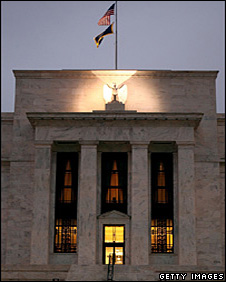 Instead there will be lots of new powers for regulators, like the Financial Services Authority in the UK and the Federal Reserve in the US. And there will be myriad new rules that endeavour to cut the financial industry down to an appropriate size by making it more costly to engage in certain riskier activities.
Thus the securities trading bits of commercial banks will be forced to hold lots more capital in respect of these supposedly speculative activities - which makes it more expensive for them to play in the governor's wholesale-markets casino.
Also there may be a simple so-called "leverage" rule, which says that gross loans and investments - unadjusted for the riskiness of particular asset classes - should not be more than a certain multiple of capital.
Which of course is common sense: it was the height of folly to permit Royal Bank of Scotland to lend and invest 50 times the value of its core equity; a mere 2% fall in the value of its assets wiped out the institution.
But here's the thing.
There was a grotesque failure of regulation and regulators over the past few years.
And one reasonable response to that failure would have been to dismantle and simplify a global financial industry that had become too complex and byzantine - to cut it down to size by government edict, by fiat.
Instead the leaders of the US and the UK, whose financial services industries are the world's most important, are arguing that regulators can and will do a better job than hitherto.
They are asking us to trust that a new generation of watchdogs, armed with new and improved rulebooks, will do a much better job than the last lot.
Some may say that they could hardly do worse.
But what may not reassure everyone is that the soundness of the financial system - a system, remember, which has held the global economy to ransom for the past 20 months - will remain dependent on the ability and zeal of a regulatory priesthood.
It would be better perhaps, you might think, to limit the human factor in keeping banks safe and sound: just possibly, a more reliable, long-term basis for sanitizing finance would be simplify it and shrink financial institutions.
 I'm
I'm 





Page 1 of 2
Comment number 1.
At 09:34 15th Jun 2009, U14032507 wrote:This comment was removed because the moderators found it broke the house rules. Explain.
Complain about this comment (Comment number 1)
Comment number 2.
At 09:40 15th Jun 2009, watriler wrote:If you stuff the FSA with city people who largely share the ethos and principles of the banking world it is little wonder that we have ineffective regulation. If expertise is needed buy it in as required. The FSA should have a strong consumer and small shareholder presence as well as the state.
If Banks are too important to fail they should be in public ownership - strategic national risk. At the other end there is a need for an enforceable consumer charter governing the way the banks treat individuals and SME's.
Complain about this comment (Comment number 2)
Comment number 3.
At 09:50 15th Jun 2009, Peter wrote:The problem is that the Governments need the financial institutions in place and making money, so they are not going to do the 'right' thing and formally reorganise the regulation of those institutions.
Until you break the Govt's financial dependency, you cannot reform the system.
Complain about this comment (Comment number 3)
Comment number 4.
At 09:58 15th Jun 2009, wykhamist wrote:I have no faith in governments ability to regulate banks properly. After all, those making the regulations have their snouts in the same trough.
No doubt our marvellous government will waste even more public money hiring 'experts' to administer more ineffective rules, for which they will be paid handsomely from the public purse.
The banks have already started paying bonuses again, and the regulators never stopped paying them.
Most likely the next bubble will occur in an area not covered by new legislation. What you can be sure of, though, is that a lot of greedy rich people will get even richer as a result, helped on by the government, and at our expense.
Complain about this comment (Comment number 4)
Comment number 5.
At 10:03 15th Jun 2009, MadTom wrote:The banks were stupidly designated 'too big too fail' and supported when they should have been allowed to fail. Whats too big to fail? The only way to maintain these highly leveraged monsters is with more leverage of taxpayers money.
We have the bizarre system where you cant organically grow a company at a realistic and sustainable rate because the financial institutes will make sure that someone else is financed so that you have to use finance to 'compete'.
If you bring in the rules to regulate these beasts - low levarages and no self insuring (banks shares covering banking liabilities!!!) they will starve to death.
There are two routes forward
1) inflation and/or quantative easing to get us back to the very unstable economic happy place we thought we were before so whichever goverment is in power doesnt look bad for being honest about the drain on the economy the city really is.
2) we regulate properly so that the economy can expand or contract safely without the boom and bust which is a direct result of the financial instituions behaviour and no other.
Complain about this comment (Comment number 5)
Comment number 6.
At 10:05 15th Jun 2009, Cityunslicker wrote:Reading between the line,s the US and UK have decided not to do very much. Certainly no major surgery; what does this tell us?
Complain about this comment (Comment number 6)
Comment number 7.
At 10:16 15th Jun 2009, excellentcatblogger wrote:I can trust the UK regulators to always pay themselves hefty bonuses especially when they have clearly failed. I am equally confident that they will not act to enforce the law to the full extent when presented with a clear case of fraud or worse.
Other than that everything is peachy.
Complain about this comment (Comment number 7)
Comment number 8.
At 10:20 15th Jun 2009, U14032507 wrote:Talking about Regulation now or for the future is like giving banks a let-off in the free for all bad investments in toxic sub-prime and credit derivatives of the recent past. It's also a bit late as all the money and assets have been transferred or vapourised into nothing already.
Complain about this comment (Comment number 8)
Comment number 9.
At 10:20 15th Jun 2009, armagediontimes wrote:Well, what can you say? Possibly you could say that a proposal under serious consideration is that banks be exempt from providing audited accounts for wholly owned subsidiaries. Some may find it relevant to be reminded that Granite (a wholly owned subsidiary of Northern Rock) was the entity that contained liabilities that led to the collapse of the bank.
Still I suppose it is much more straightforward to merely cut and paste the latest Treasury press release.
...and who would be brave enough to point out that a principal intended aim of SPV´s is tax minimisation and that the success of this aim would be greatly aided by a removal of audit requirements. This at a time when aggregate taxes must rise and public spending must fall as a consequence of bailing out the very institutions that are now being assisted to avoid taxes.
Complain about this comment (Comment number 9)
Comment number 10.
At 10:22 15th Jun 2009, wombateye wrote:We had to had lax regulation because the big firms threatened to jump ship to new york or middle east markets.
This is why Brown has been jumping up and down like a jack in a box to ensurer a global solution to regulation. If he leads by example we will not have a city of lundon and we can kiss good bye to 20-30% of our Tax revs.
Then again giving that uder 10 of the ftse 100 companies pay over well half the cities tax rev then all brown really needs to do is suck up to those companies.
It could be years befre the majority of the banks have to pay tax again.
Complain about this comment (Comment number 10)
Comment number 11.
At 10:26 15th Jun 2009, Leigh Caldwell wrote:The curious thing is that the self-interest of the banks' shareholders didn't prevent these problems from happening. After all, the banks have lost out from the crisis more than any of us (even after the bailouts, which they will mostly have to repay). So why didn't their own shareholders keep an eye on the risks and try to rein them in? A stable regulatory solution would make sure it is in the shareholders' interest to keep the system safe.
A colleague and I have written a submission to the Treasury's Walker Review of corporate governance in banking which partly addresses this. The other aspect is about whether people investing in the markets are behaving rationally, which I think regulators also have some influence over. Your comments would be welcome at:
https://www.knowingandmaking.com/2009/06/our-submission-to-walker-review.html
Complain about this comment (Comment number 11)
Comment number 12.
At 10:35 15th Jun 2009, majorroadaheadagain wrote:There was a time when a banker was a person highly respected in the community, who knew all his customers, and who borrowed money from savers to lend it to others, who almost always paid it back. Global in those days was the difference between the Preston Park branch in Brighton and the Seven Dials branch in the same town. They were experts in the (limited number of) products they offered, and were seen to be a tad stingy. Regulation was based on normal principles of thrift and security of assets. If you owned shares in a bank they went up or down in line with the moves in the economy and the market - if they moved by more than 5% in a year there was something wrong.
Modern banking assumes that we never see our branch manager, indeed we hardly ever need to see our branch. They handle products most of them dont understand and which are several times removed from the borrower to the lender. Sadly, while the industry attracts good people it also attracts the spivs. We need to look hard at what a bank does before we decide how to regulate it. Perhaps the US President's move on foreign investments, which I understand will cause our banks to consider withdrawing services from US ciizens banking in the UK will make it a lot easier. We need to ask if we need global banking - if there was just one reason why we dont need it it would be to stop Gordon Brown from blaming the mess he has made of the British economy on it.
Complain about this comment (Comment number 12)
Comment number 13.
At 10:39 15th Jun 2009, timcamfield wrote:The words horse and stable door come to mind about the regulators and like all generals they seem to want to fight the last war.
The only real regulator is the market itself and it can only perform that task, and perform it well, if there is transparency and clear information provided by the banks.
simple rules should be followed
i) no off balance sheet activity. If a bank chooses to trade in an instrument etc, it must be accounted for in the balance sheet
ii) bonus's should be paid when the transaction has crystalised and not before
iii) the sources of funding should be published monthly and the quarterly figures should be audited
iv) counter cyclical provisioning should be enforced as per the Spanish model
v) mark-to-market accounting should be enforced on all banks (I think the US regulator has caved in to the banks and allowed mark-to-market accounting to lapse)
vi) the accounts of banks are hugely complicated and way beyond the ability of many to understand (I wonder if the non-execs could actually explain them). They must be simplified
And finally whenever a banker asks for a rule to be relaxed, amended or even removed, the answer must be an unequivocal NO
Once we have achieved this can we start to ask the questions as to whether the major banks are too big for our own good.
Complain about this comment (Comment number 13)
Comment number 14.
At 10:49 15th Jun 2009, JackMaxDaniels wrote:Should we trust the regulators ?
Well, what is the major financial activity going on at the moment ?
Quantative easing.
Is anyone regulating it ? Does anyone know where the money is actually going ?
I read the Q2 press release from the BoE, they dont know where the money is going, have no control over it what-so-ever. They freely admit that the money could be going abroad and dont even bother to list who they have bought assets from.
Due to the nature of the purchases being financially based the BoE is now worried that the stock market will inflate - one wonders if this timing is just nicely placed for the next election ensuring out going MPs get a pension boost. I would kindly like to point out that financial products make a large commission for individuals - the money would have been far better spent as loans to businesses which would provide direct investment.
If the FSA has any balls it would be in there digging into the deal and trying to ensure public value for money.
Why isnt ANYONE looking into QE ? Its the biggest and most blatant government policy of the moment. Given Labours track record I am surprised its business as usual for the press - blinkers on and just print words of bile after the event.
Complain about this comment (Comment number 14)
Comment number 15.
At 10:53 15th Jun 2009, hodgeey wrote:Trust the regulators? The two words don't belong in the same sentence.
It is abundantly clear that the banking crisis was caused by incompetent regulation by the BoE, Treasury and FSA.
Debt was allowed to continue climbing to unsustainable levels, debt was sold to high-risk customers, banks were allowed to gamble with derivatives, 120% mortgages, unqualified management, etc. What regulation?
The regulators allowed, nay encouraged, pyramid schemes that rewarded them and their kind and provided welcome tax growth for a bankrupt government.
Trust them? Sack the lot!
Complain about this comment (Comment number 15)
Comment number 16.
At 10:58 15th Jun 2009, stevewo wrote:I believe that reforms in the financial industry need to be DRASTIC, and that regulation needs to be strong.
We in the UK are in a very dangerous situation with our over-sized financial sector.
The problem is that the City does NOT do "exactly what it says on the tin".
In fact it does "exactly the oppposite".
It is supposed to "look after" the savings, investments and pensions of ordinary UK folk.
"Look after".....what a joke.
Put them in its' pocket, more like.
The City is now interested mainly in the big international sump of money that is sloshing around the world.
The UK "peasant" and his savings and contributions are an annoying little irrelevance.....until the City goes broke....and suddenly it's Joe Bloggs to the rescue.
I remember the City of the 50s and 60s....your savings, investments and pension were safe. City greed has destroyed that.
This government is notorious for "fiddling while Rome burns"....another administration may be more able to cope with the problems.
We must seperate the wholesale international business from the core UK industry...if not all bets are off.
Mr and Mrs Smith of Sidcup are the "guarantors of last resort" to an uncontrolled worldwide casino game.
They do not want to be.
Severe regulation....or the single piece of rope that is holding us over the cliff edge will break.
Complain about this comment (Comment number 16)
Comment number 17.
At 11:08 15th Jun 2009, John_from_Hendon wrote:Robert,
Should we trust the regulators?
In short - NO. (If, by trust, you imply that they should retain their jobs.)
The way in which you ask the question is attempting to put a good face on incompetence and personal failure.
The country wants to sack the Prime Minister, but in truth he only set the agenda for theses fools to run the detail of the system of regulation. For example I have repeatedly asked about why interest rate were ignoring both asset price inflation and imported deflation to be told in writing by both the Late Eddie George and the current governor Mervyn King that all they were required to do was to mange to the cpi. This is the classic 'we were only following orders defence' and it will not wash!
We employed these people to maintain economic management standards and even though they well understood that what they were doing would almost inevitably lead to a long period of interest rates being too low and in consequence a enormous credit bubble that must burst they did nothing - they are culpable and thus they are unfitted to continue in office as they have shown that they are both spineless and incompetent.
I repeat
MMG - Mervyn Must Go. Along with the MPC and the Chief Executive of the FSA and the current and past Permanent Secretaries of the Treasury.
Complain about this comment (Comment number 17)
Comment number 18.
At 11:10 15th Jun 2009, Peter wrote:Where were the FSA prior to the banking scandal?
Just jobs for the boys in my opinion. I certainly don't trust them.
Complain about this comment (Comment number 18)
Comment number 19.
At 11:32 15th Jun 2009, doctor-gloom wrote:Well there you go Robert: no change then? New faces doing he same old things with no incentive whatsoever to improve the situation within the crooked financial system. Pheew, for one moment there I almost thought our political elite were actually going to do something.
Complain about this comment (Comment number 19)
Comment number 20.
At 11:36 15th Jun 2009, Slug wrote:There is a great quote out there somewhere which reads:
'If there is one thing we can learn from history, it's that no one learns from history'
or words to that effect. I can't remember who said it or when, but it's still just as pertinent now as when it was written.
I've lost count of the bankers and financial experts I have spoken to who say 'it can't happen again' or 'we know better this time around', only to discover that 'it' will happen again and they don't actually know any better at all.
Every generation wants to believe that they are smarter than the one before, but we keep repeating the same old mistakes. I was always taught two rules for investment:
1. Never invest anything you can't afford to write off instantly
2. Always calculate the downside before investing and never the upside
Yes regulators are neccessary, but at the same time, the investors have got to take a good hard look at the small print and do a little double and triple checking first before handing over their retirement funds to a smooth suited salesman.
Complain about this comment (Comment number 20)
Comment number 21.
At 11:40 15th Jun 2009, U14032507 wrote:This comment was removed because the moderators found it broke the house rules. Explain.
Complain about this comment (Comment number 21)
Comment number 22.
At 11:46 15th Jun 2009, Sutara wrote:The problem with regulators is that, basically, they are civil servants.
Civil servants and indeed local government officers only work efficiently and effectively and deliver quality outcomes where their management, systems and outcomes are effectively externally scrutined and are open to outside accountability.
If you look at areas of public service, e.g. Health Trusts, Councils, Government Departments, that have improved over the years, it happens when those in the areas concerned finally "get" the idea that what they do is 'paid out of the public purse' and, therefore, is open to scrutiny.
Otherwise, not unlike some CEOs in the business world, they hide behind their officialdom and (alleged) expertise and take the attitude of 'don't you dare question me!"
If proper mechanisms are not in place to monitor the performance of the regulators and to hold them to account for the public money and resources that they use in regulating the finance industries, then like electricity, they will take the path of least resistance and be ineffective in regulating them.
Regulators must also never be allowed to think they have carte blache powers to throw (public) money at monitoring the industry or enforcement of regulation. They need to deliver timely interventions on budget.
Complain about this comment (Comment number 22)
Comment number 23.
At 12:08 15th Jun 2009, writingsonthewall wrote:Robert,
I am fresh back from my holidays with a renewed sense of optimism, however my optimism is nowhere near the 'green shoots brigade' who have been talking up the Economy for months, just like the 3 monkeys who see no evil, hear no evil and speak no evil.
Back to business, and lets see what Robert has written:
"There was a grotesque failure of regulation and regulators over the past few years"
Alas no Robert, you and your nu labour cronies may want to shift the blame on to the regulator - just like MP's shifted the blame to the speaker for their expenses claims - however I don't think the public are so easily fooled as they were before.
Will someone please tell me what sort of regulator (or more specifically what size and cost) is going to be required to do the following:
1 - Define the myriad of rules and regulations required for preventing over-extension of credit by banks in the thousands of different areas banks and building societies operate in (the last problem caused in an area the FSA simply did not understand (securitised debt).
2 - Manage the implementation of those rules and review them where neccessary.
3 - Ensure that rule breaking is punished through the courts (i.e. putting cases together, gathering evidence, interviewing witnesses etc.)
4 - Keep ahead of the game with new products to ensure they do not break existing rules - and produce new rules to cope with any changes.
....and considering the Capitalists are always talking about how the private sector attracts the highly skilled - what chance does the regulator have against the best financial legal faces in the country?
On top of that there will be downward pressure on the FSA (via the Government) as the priviledged friends of Government (the CEO's of banks) - lobby the 'morally weak' MP's for change in their favour.
The regulator required to manage all this will need to be bigger than the biggest bank at the very least. Thousands and thousands of staff will be needed to keep the banks in check - and all with tax-payers money.
It will be a HUGE WASTE of TAXPAYERS MONEY. Still, I guess the people of this country are getting used to this.
The problem is not the banks
The problem is not the regulator
The problem is the SYSTEM, it ensures that the markets MUST FIND WAYS AROUND REGULATION.
What happens when a banks lending is as big as the country in which it resides? - will it stop trading?, will it close it's doors to new business? How will the shareholders react to that? - it's more financial fantasy land.
Ever heard off King Canute? - we should rename this new regulator after our once valiant leader.
Complain about this comment (Comment number 23)
Comment number 24.
At 12:11 15th Jun 2009, DebtJuggler wrote:'Same old same old!'
Complain about this comment (Comment number 24)
Comment number 25.
At 12:23 15th Jun 2009, JadedJean wrote:IT'S A DOG'S LIFE
"And one reasonable response to that failure would have been to dismantle and simplify a global financial industry that had become too complex and byzantine - to cut it down to size by government edict, by fiat.
Instead the leaders of the US and the UK, whose financial services industries are the world's most important, are arguing that regulators can and will do a better job than hitherto."
Having spent since at least 1948 fighting off the regulators in the name of freedom, they weren't going to change a habit of a lifetime, especially now they've conned new funding out of the progeny of the Dorothies of this world.
Time for Peston, Flanders and Mason (at least, though I don't see Nick Robinson joing in somehow) to do a Toto? Or is that treason? Anyone who's seen the freedom of speech afforded the BNP MEPs recently knows exactly what to expect. We've had an pitiful, but effective, silencer at work via the media for decades have we not?
Complain about this comment (Comment number 25)
Comment number 26.
At 12:26 15th Jun 2009, PrisonerNumber6 wrote:Where is the investigative, non politically aligned leadership within our regulatory bodies? I can't see any. Can you?
If we had non partizan regulators with wide ranging powers, perhaps some recent mistakes might have been avoided or the resultant risks minimised.
However, a cautionary note. Power corrupts, absolute power corrupts absolutely. The regulators need to demonstrate the highest levels of honesty, integrity and value. Where are they today? Discuss!
Complain about this comment (Comment number 26)
Comment number 27.
At 12:34 15th Jun 2009, slowleftarmround wrote:No 2 - Watriler - not many comments this morning as yours said it all in a nutshell.
The problem is how do we/taxpayers in this democracy make it happen? Vote Cameron in - I don't think so.
Complain about this comment (Comment number 27)
Comment number 28.
At 12:39 15th Jun 2009, stanblogger wrote:The starting point for discussion of the reforms of the financial system that are necessary must be the needs of the real economy. Although it was very dangerous "casino banking" performed the function of printing money, which is a necessary ingredient if the economy is to expand. The rate at which money is printed is critical for the health of the economy, and it was always not a good idea to leave so much of this in private hands, with base interest rates as the only rather indirect lever in public hands. The recession was caused by the banks suddenly no merely stopping providing credit, which is a way of printing money, but destroying money by calling in existing loans.
Surely the power of the private banks to effect the economy in this way cannot be allowed to continue. Their power to print money must be limited by much stronger regulation and publicly accountable institutions like the Bank of England should permanently take direct control of the money supply. Incidentally some of the huge profits made by private banks through money printing, would then be transferred to the public purse.
Complain about this comment (Comment number 28)
Comment number 29.
At 12:44 15th Jun 2009, stanilic wrote:This seems to be an instance of the tail wagging the dog.
If the government does not take control of the finance industry then we have a tacit arrangement by which the taxpayer will always be expected to cover the losses made by the banks in their speculations. This is quite intolerable and ensure that we will keep revisiting financial disaster.
The argument ought to be about whether the banks should be nationalised and not whether the entire nation be put under bondage to the financial services industry. This is just another road to yet another form of servitude.
It is time to get rid of this pathetic excuse for a government.
Complain about this comment (Comment number 29)
Comment number 30.
At 12:51 15th Jun 2009, Peter Bolt wrote:I really do not see any problem in allowing Bankers or any other entrepreneur make fortunes, so long as the rest of us prosper.
Most "frauds" are based on the victims own sense of avarice.
A 18th Century (I think)Lord Chief Justice of England once quite correctly said "As long as I am The Chief Justice it will never be a crime for one man to make a fool of another"
So be it
Complain about this comment (Comment number 30)
Comment number 31.
At 12:52 15th Jun 2009, doctor-gloom wrote:This comment was removed because the moderators found it broke the house rules. Explain.
Complain about this comment (Comment number 31)
Comment number 32.
At 12:56 15th Jun 2009, DebtJuggler wrote:So...it looks like it's 'Full Steam Ahead' on towards the next bubble.
Complain about this comment (Comment number 32)
Comment number 33.
At 13:17 15th Jun 2009, writingsonthewall wrote:#20 Edixxion.
I agree with your investment principles (we must have had the same teacher).
However this statement:
"but at the same time, the investors have got to take a good hard look at the small print and do a little double and triple checking first before handing over their retirement funds to a smooth suited salesman"
So everyone in the world needs to be a financial expert now? Anyone who needs a pension has to read (and understand) the complex small print of a pension and the markets which are being invested in?
Ever heard of a CLN (Credit linked note)? - it's where funds which are restricted from entering into risky markets (by regulation) can get exposure to those markets without breaching the mandate.
The counterparty takes on the exhange rate risk and you take on the credit risk - and guess who the counterparty is? - that's right, another bank, who then sells this risk on seperately to another market participant.
As the counterparty is a bank, the instrument is not listed as a foreign one - hence no breach of the mandate. (the country of origin will be listed as wherever the counterparty is - UK, US etc,)
You can read the small print of your pension until your eyes shrink, you won't find this detail listed there. If the FSA have either not spotted of simply not done anything about these types of abuse - then what chance does Mr Retiree have?
The system is based on trust - when the trust is gone, the system ends up in chaos.
Why do banks do this? because they want to beat the return of their fellow competitors - it's natural competition behaviour which the Government describes as 'healthy'.
Complain about this comment (Comment number 33)
Comment number 34.
At 13:29 15th Jun 2009, GrumpyBob wrote:Nice Joke for Mr Peston to start the week off.
Might as well also let the inmates police the prisons.
Have you EVER heard of a regulator with common sense and one who doesnt toe the industry line ?
Get some REAL people to put their heads above the parapit and sort things out
But not much chance with this bunch of muppets in Government. Brown talks of making the Lords an elected chamber and in the same week brazenly appoints HIS OWN non elected mates to the Lords. Shamefull but who takes him to task. No one. The only regulator we have is the press and they run with topic of the day and then consign it to the archives unfortunately.
Had enough
Complain about this comment (Comment number 34)
Comment number 35.
At 13:31 15th Jun 2009, Hawkeye wrote:Robert,
When will there be any serious debate on genuine structural changes to banking (such as you allude to after the Great Depression)?
We don't need a quagmire of regulation, just two simple changes:
1) Gradual return to 100% reserves for banking (end the farce of privatised debt creation)
2) Regulation AND taxation of financial transactions (as most do not add value to society, merely redistribute fictitious wealth, i.e. debt)
Does anyone in UK journalism have the guts to interview Herman Daly or Eric Zencey??
https://www.sodahead.com/blog/58487/mr-soddys-ecological-economy/
What if Soddy was right all those years ago????
Complain about this comment (Comment number 35)
Comment number 36.
At 13:49 15th Jun 2009, hants_gw wrote:RE: 11. inoncom
"The curious thing is that the self-interest of the banks' shareholders didn't prevent these problems from happening."
Is it really curious? Think about who the "shareholders" are. Mostly they are large institutional investors (like pension funds) but does that mean the shareholders are the contributors to the fund, or the fund managers?
The fund managers mostly get well paid no matter what happens - doubtless claiming in a slump that, but for their brilliant stewardship, it would all be even worse.
The fund contributors have no direct way to influence the banks. At best they can transfer money between funds - which is a crude tactic that may even incur penalties.
So the problem is that the people who really lose out - the contributors to the funds - have little or no view of what the banks are doing and no way to change it. On the other hand the people who manage the funds, and who could do something useful, don't really care what happens as long as their fund is at least somewhere near average.
So it's not really curious at all. It's actually a fairly predictable result of the way institutional investment works to exclude from the decision process the interests of the people who really care about the outcome.
Complain about this comment (Comment number 36)
Comment number 37.
At 13:56 15th Jun 2009, threnodio wrote:Is it not the same thing? If government regulates, it will employ exactly the same people the relulator does. Who signs the wage cheques really doesn't matter. It is the rules they have to enforce which is key.
Complain about this comment (Comment number 37)
Comment number 38.
At 13:57 15th Jun 2009, fitzexpat wrote:One of the reasons Gibbon gave for the Decline and Fall of the Roman Empire was complexity of administration, of which this is abundant evidence, albeit only a tiddly bit compared with all the other bureaucratic nightmares we live with. The others were the size of the Empire, the easy life of the Romans and the revenge of the conquered. He explained the last of these by saying that the conquered did not want to slit the throats of the Romans but to share in the good life.
History being repeated? Definitely.
Complain about this comment (Comment number 38)
Comment number 39.
At 13:57 15th Jun 2009, U14032507 wrote:Why Hide The Truth?
The Regulators and the Banking Industry are not only good friends but are also close relatives to each other
https://www.youtube.com/watch?v=Ru4t-9Tk4eY
Complain about this comment (Comment number 39)
Comment number 40.
At 14:14 15th Jun 2009, truths33k3r wrote:Who watches the watchmen?
If we returned to gold and silver money, that could not be inflated and manipulated by bankers, and removed fractional reserve lending, then there would be no need for regulation.
Just good solid fraud laws.
Complain about this comment (Comment number 40)
Comment number 41.
At 14:15 15th Jun 2009, JadedJean wrote:WHERE'S AN EDWARD LONGSHANKS WHEN YOU NEED ONE?
stanilic (#29) "This seems to be an instance of the tail wagging the dog.
//
It is time to get rid of this pathetic excuse for a government."
That's precisely how they have been engineering this. They get people to vote for less and less government. Have you not twigged, or are you one of LibertarianKurt's Trotskyite comrades? Presbyterian Celts with East European heritage........hmm ;-)
Complain about this comment (Comment number 41)
Comment number 42.
At 14:49 15th Jun 2009, Peter Johnston wrote:What's needed is the chance for us to vote with our feet. Open up our banking industry to overseas competition so we don't have to use the cosy RBS/Lloyds/HSBC/Barclay/Santander UK cartel. Our banks will soon shrink to a size where they can and will fail.
Complain about this comment (Comment number 42)
Comment number 43.
At 15:03 15th Jun 2009, hughesz wrote:The FSA need to review how they regulate and use their teeth rather than providing lip service to the banks.If they believe organisation are being reckless they should inform the public so deposits can withdrawn if required.
Complain about this comment (Comment number 43)
Comment number 44.
At 15:04 15th Jun 2009, hack-round wrote:Should we trust the rgulators?
No but it may not be the regulators fault it may even be ours.
In Life in Politics in regulation we generally get what we will tolerate.
By rough rule of thumb this is often about eighty percent of what the average citizen would consider reasonable or ideal for the society we would like.
The problem is what we consider ideal has been eroded for several decades as we have reduced our conviction and eased our position on morality, ethics, common decency, good manners, civic duty, civic pride, neighbourliness, charity, philanthropy, intervention correction, society and family.
The result is we have grown a culture of greed, me first, beggar my neighbour, what need have I to bother, and the state will take care so I need not bother.
Unfortunately the state left to its own devices mimics us and just starts to take care of itself I hate to put the bankers in the lead frame again because they are only mirroring society but unfortunately in the hall of mirrors they got the one that balloons everything in it to super size and so the are guilty of the greatest excesses of societies systemic problems.
Having failed to regulate them to stop them preying on the poor and the weakest in society they are back at it again and having got away with it once they will be much worse now.
But then how can anyone respect regulators created from their own corrupt ranks, or the governments ranks or the myriad of civil servants and public administrators who have spent the last ten years with their noses feet and other parts dangling in the trough and ripping of the man in the street, the tax payer, the citizen and the pensioner
In short we can not trust the regulators until we can demand of them that they follow our example and cut greed, cut immoral behaviour, unethical practice and take a proper sense of society, community and care. Then we can demand that they behave like the rest of society or go
Problem is when we see so much being let slip in so many areas banking politics civil service police etc it is because we cannot find the ones who are without blame to through the first stones.
Complain about this comment (Comment number 44)
Comment number 45.
At 15:10 15th Jun 2009, proman53 wrote:Your generosity by refering to grotesque performance of regulators is being both policically correct and far too generous.
Let us not forget the present disasterous crisis management was put together by a certain G Brown when Chancellor.
He and he alone is totally culpable for the disaray in reporting lines, and has shpown a level of incpmpetence unmatched by anyone in history for the financial mess we now find ourselves in.
Putting banking under the Bank of England (BofE)supervision is not exactly rocket science.
The big problem we all face is that no one at all is supervising the supervisors so we arte left with a Chair of the FSA who is suggesting the EU would do a better job simply because he hasn't a clue. SO we have a perfect example of the blind leading the blind. The BofE waiting still with their hands tied and HM Treasury full of politically motivated rejects who couldn't organise a set of statistics honestly even if they were given them on a plate.
Nothing can change until Cameron gets in, and even though he has some faults nothing but nothing can be as bad as having a dying Stalin ensconced in Downing Street surrounded by sychophants who know the end has arived but still want another few nonths on the gravy train.
And we are meant to believe this is leadership? This government and the present Regulators are an absolute disgrace to the intelligence of every taxpayer in this country for their obscene incompetence and only when they bave been cleared out from the top down will Cameron have a chance to get matters right.
One thing for sure is that they can be easily replaced with better more honourable and experienced people at the flick of a finger.
Complain about this comment (Comment number 45)
Comment number 46.
At 15:16 15th Jun 2009, shireblogger wrote:Robert,
" a more reliable, long-term basis for sanitizing finance would be simplify it and shrink financial institutions."
Proposition 1 : simplify it - House of Lords Economic Committee report.. dont they say complication / innovation is good and globally competitive and regulators need to get good at complication to understand what banks are doing - didnt Will Hutton blame Gordon Brown for lilly-livered light-touch regulation? But, if you simlify it, what would the boffins and proffs at Financial Markets Group LSE be left to research - they'd be out of jobs !
Proposition 2 : shrink institutions - didnt George Osbourne say the same thing - UKFI and BoE hold the keys, dont they? Taxpayer stakes plus liquidity lifeboats and asset insurances - but hasnt the chance passed for this-nationalisation without compensation - our courts wouldnt allow it ; none of the contract conditions applied to the shares and lifeboats required downsizing, did they? - Barclays pride themselves in the status of and aim to be a global mega-bank. Bring in the Competition Commission Regulator at national level ? Werent competition rules suspended for Lloyds / HBOS?
You're right - if US dont play, neither will we. Lilly-livered politicians....
Complain about this comment (Comment number 46)
Comment number 47.
At 15:18 15th Jun 2009, JavaMan wrote:Trust?
The government?
The Bankers?
The politicians?
The esablishment?
LOL, Some folk on here who fancy themselves as verbal contortionists, see this use of the English language as some form of vindication of their IQ. The fact is, it does not matter how you butter your argument(s) up, we are all being played like fools. Whilst you are all busy blogging, the elites are cruising in the Caribbean, or scuba diving in the Seychelles.
And if you think thats bad, the politicians / bankers and REGULATORS will be doing the same soon!
Complain about this comment (Comment number 47)
Comment number 48.
At 15:18 15th Jun 2009, jason wrote:Tripartite Market-wide Exercise 2006
...The 2006 exercise has been the most ambitious Market-wide Exercise to date. The 6-week exercise simulated the first wave of pandemic influenza and spanned 5-months of real time. The scenario was designed to be challenging and credible and to provide organisations with an opportunity to test how well their business continuity plans would stand up to a period of prolonged disruption...
So was there a follow up to this which involved Northern Rock, RBS etc?
Good future planning by the FSA et al.
Complain about this comment (Comment number 48)
Comment number 49.
At 15:32 15th Jun 2009, Newquizman wrote:Its interesting to compare and contrast the final months of the last Labour government, the Wilson-Callahan government of the mid-late 1970s with the final months of our present Blair-Brown government.
In the 1970s the popular perception was that the Unions were all-powerful. The media, especially the Tory press, had been had been spinning the yarn for years. By the final days of Callahans period in office, the media played on the theme with gusto in the Winter of Discontent. The relative ease with which the Thatcher government passed laws controlling the Unions in the 1980s gave the lie to this version of events.
By contrast the financial institutions have amassed huge power and influence over the last 300 years. The Blair-Brown government, like its Tory predecessors, had done nothing but pander to financial institutions whose powers became steadily more far reaching. The public hardly noticed their stranglehold on the World until the wheels fell off the wagon some 20 months ago. Even today, when bankers are reviled by the public, this government (and one suspects the future Tory government) is not prepared to try to curve their powers. The reason may be that it is the financial institutions have grabbed control of the powers of government in a way that the Unions never could.
Complain about this comment (Comment number 49)
Comment number 50.
At 15:33 15th Jun 2009, d2alfa wrote:My understanding was that Glass-Steagal was the centrepiece of Amerocas regulatory response to the 1929 Wall Street crash and crucially threw up a firewall between commercial banks (deposits) and investment banks (higher-risk investments). However Bill Clintons government repealed Glass-Steagal followed by the equivalent in the City. Hence the current mess. Surely logic dictates reinstatement?
Who can trust governments and their nominees to check anything other than compliance with simple rules?
Complain about this comment (Comment number 50)
Comment number 51.
At 15:36 15th Jun 2009, thinkb4 wrote:No!
Complain about this comment (Comment number 51)
Comment number 52.
At 15:41 15th Jun 2009, Bobblog wrote:Can we trust the regulators? Yes... while the issues are still hot and the anger is still felt for our losses and they are still centre stage... up until we all adopt our natural instincts in a capitalist society (which we will given enough time) and buy,sell, borrow and steal what we can while we can at the long term expense of others who cannot. How about the regulators baring their chests and taking on the banks about the employment insurance contracts that are frankly not worth the paper they are written on (as confessed to me by a industry insider recently) and pointed out in the Sunday Times two weeks ago. Without reinforcement and re-organisation they will be as effective as Leonidas and the 300 Spartans At Thermopylae. The lesson to be learned is that Maggie was wrong and we cannot let the markets decide. Markets do not make decisions people do.
Complain about this comment (Comment number 52)
Comment number 53.
At 16:08 15th Jun 2009, muggwhump wrote:So there we are then, the banks have been let off the hook completly. Whatever mess they get into in the future they will always know that the taxpayers will be there to bail them out at whatever cost to themselves. I always thought it would end up like this, all those voices raised during the past few months telling us about a brave new world of responsable well regulated banking system were just wishing for the best really. Can the world afford to go through all this again?
Complain about this comment (Comment number 53)
Comment number 54.
At 16:12 15th Jun 2009, Hawkeye wrote:#38
Joseph Tainter also makes the point that complexity was the undoing of the Roman Empire. This is framed as diminishing returns:
https://dieoff.org/page134.htm
A lot of what we think of progress at the moment, is, in effect, not half as efficient as it used to be: scientific research, regulatory systems, medical research (think of the R&D cost of cancer cures, compared with penicilin), and even energy resources (oil is still the daddy!).
There are some very harsh economic realities ahead, if we (as a society) continue to deny the existence of these diminishing returns.
Complain about this comment (Comment number 54)
Comment number 55.
At 16:38 15th Jun 2009, JackMaxDaniels wrote:#47 JavaMan1984
A case of "stating the bleedin obvious" ?
Those in the Caribbean went before the crash and will buy-in when the lowest point is reached - a double whammy.
If I dont blog and dont voice my opinion what then ? With a castrated media into the bargin we're heading down a path ultimately to revolt. The BBC as a public body should be taking the bull by the horns and allowing the public to make informed choices.
The newsnight audiance was a case in point of how weak the BBC is, rather than inviting UKIP and BNP voters into the audience to hear why they voted they had an audience diametrically opposed.
My guess, is like the European elections, we wont have the chance to get to grip of the actual issues - it will be something like Labour saying Conservatives will make more cuts, Conservatives pointing out public waste, Liberals advocating taxes and green spending. With the BBC standing on the political fence and just allowing the verbal diarreha. None of them will take the issues head on. Then election day will come with us not having a choice and playing safe by chosing one of the three "safe" solutions.
That's exactly what I did in the European elections - I didnt have the balls to choose an alternative because I didnt know what they stood for. To be plain "fear" motivated my vote.
The only current course is to instigate a change in the system via voting in none of the rotten politicians in parliament at the moment. That in itself isnt a solution but perhaps, with luck, something a whole lot better will come out of it.
I wont be voting for any of the three main parties, thats all I can do.
Complain about this comment (Comment number 55)
Comment number 56.
At 16:47 15th Jun 2009, BlogNuts wrote:The FSA is next to utterly useless, and probably always will be.
A totally new and VERY powerful body with "the right stuff" needs urgently to be created.
I worked for 5 years in the front line of financial services and believe me, the FSA offers NO PROTECTION to "us" at all.
Rogues can and ALWAYS will be able to circumvent the system of so called checks and even when "discovered" the FSA does relatively F all anyway - as we have seen.
Most FSA staff are also not incentivised enough (not just money, there's morale etc too) to do an even half decent job.
Hence what happened, and happens.
Complain about this comment (Comment number 56)
Comment number 57.
At 16:50 15th Jun 2009, JadedJean wrote:hack-round (#44) "Having failed to regulate them to stop them preying on the poor and the weakest in society they are back at it again and having got away with it once they will be much worse now.
But then how can anyone respect regulators created from their own corrupt ranks, or the governments ranks or the myriad of civil servants and public administrators who have spent the last ten years with their noses feet and other parts dangling in the trough and ripping of the man in the street, the tax payer, the citizen and the pensioner"
The electorate has let this happen over three decades at least by voting in succesive liberal-democratic i.e anarchistic governments (call them Social Democratic if you prefer, it's all 'roll-back-statism' and 'scare the population silly with images of tyrants in history and abroad). It's been down throughout Europe since the end of WWII.
Don't blame Civil Servants. They have to do what politicians tell them whether they agree with it or not. What's more, they aren't allowed to voice what they think - the Civil Service Code binds most of them even after they have retired. Loyalty is a double-bind in the UK Civil Service.
Complain about this comment (Comment number 57)
Comment number 58.
At 17:43 15th Jun 2009, New_Hero wrote:The really big issue is the EU financial services directive. This is an undisguised plot to cripple London's position (French and German politicans). The rules are UTTER MADNESS and will drive people out of London to Geneva.
While supporting (by not implementing ill thought through, knee jerk reaction polices) Ferrari driving hedge fund managers has no political mileage, lets not forget what they bring in tax take (and multiplier effects to legal and other services) to the UK.
This government is set on destroying the financial services industry in this country through adoption of this, banker bashing (to misdirect attention from its own mismanagement) and tax hikes.
I know of several friends that have already relocAted. Good Ridance i hear you say? well, i know roughly how much they earn, and therefore what the UK Treasury is no longer earning. Are you going to pick up the difference?
It is utter, utter madness to drive this business away. This govenerment has already destroyed Occupational pensions (remember those in the private sector pre 1997). Gordon Brown bangs on about 'doing the right thing' - that is to support the City. We are one of the few exporters (we get paid for ideas and products) that is paying for the country.
Lets not forget that the banks - the most regulated part of the whole economy - are the problem, as they supplied the credit (and the government allowed the demand by encouraging a housing bubble).
Hedge funds have not for the most part been the problem.
Complain about this comment (Comment number 58)
Comment number 59.
At 17:49 15th Jun 2009, JadedJean wrote:jackMaxDaniels "The newsnight audiance was a case in point of how weak the BBC is, rather than inviting UKIP and BNP voters into the audience to hear why they voted they had an audience diametrically opposed."
It's been the same story all week. The same social-fascism was meted out by Nicky Campbell on his Sunday programme where he had Brons and an unsuccessful BNP MEP candidate on. It was Brons and colleague who keep having to drag everyone back on topic!
At least the attentive get to see who the real 'fascists' are in the UK - i.e Social-Democrats/Anarchists who don't want statism at any cost.
Complain about this comment (Comment number 59)
Comment number 60.
At 18:00 15th Jun 2009, oldspikemilligan wrote:If the Nationwide paid just short of £250,000,000 of its nett profit to the FSCS, the banks will have paid more, Why!, if these insitutions are unable to fail. ie bailed out by the UK Goverment, why do they allow thier profits to be hit by such and extrem liability,the regulator has paid one bonus of £90,000 to an employed indivigual, who can possably be worth 50% of the PM's wage at the FSA in a bonus, the fees paid by those giving advice must surly be held to better account by the those elected by us to regulate the Regulator, ie the Tresuary Select Comitee.
Complain about this comment (Comment number 60)
Comment number 61.
At 18:32 15th Jun 2009, James Flynn wrote:there was a culture and ethos that pervaded in banks and big business,that being there must be profit year on year.Goverment on the other hand enjoyed the glut in tax revenues;fine as long as evrything keeps booming.Throw in the cancerous business practices used in sub prime and presto where we are now.Kamikase capitalism will need world scale regulation or else we will repeat in and endless cycle with our kids left to pick up the bill!
Complain about this comment (Comment number 61)
Comment number 62.
At 18:40 15th Jun 2009, writingsonthewall wrote:Can you trust the regulaors?
Well we have a dis-functional maket system in which we have a regulator which is set up and guided by morally bankrupt MP's who are in turn guided by their own self interests and who are inter-twined with the banks - both socially and economically - who are the ones supposed to be regulated. On top of that - this has been tried before (many times) and it always ends up in the same result, so even history is against you.
Come on - it doesn't take a genius to work out this never going to work. It never has, and it never will - the ONLY hing that can stop this is the collective conciousness of the public demonstrating that "we're not that stupid"
Complain about this comment (Comment number 62)
Comment number 63.
At 18:45 15th Jun 2009, JackMaxDaniels wrote:#58 New_Hero
"... Are you going to pick up the difference? .."
What an totally insulting and deluded world you live in.
After trillions pumped into the corrupt system you "work" in you insult the general public,,, where do you think the money is coming from to play with those financial instruments in the first place ? It's not your money, it's our money, our pension money, our savings and it's our money that's providing those tax returns. Those highly paid individuals just sit there and press a button - mostly based on hype and rumour, not real life.
A select few who have the privilege of using that money - chosen mostly by having been to Oxford or Cambridge. A much vaunted set of individuals who only have a skill set much like a set of doctors who work say on cancer, or a motor mechanic who specialises in BMW ignitions or a computer programmer that works on hardware interfaces.
Further more those so called tax returns pale into insignificance compared to the financial damage of both this bust and the dot com bust - plus all the bust we have had over the last 20 years. Then add in the bail out costs - how about putting the money back you guys had in bonuses eh ???
I'll give you a very good example of how the financial industry is ruining this country. Wheat prices are now down to £90 a tonne - yet input prices have risen over 200% last year. The crop is in the ground and due to be harvested. Now why are prices not reflective of what the farmer has had to pay - not just UK farmers but ALL farmers in the world have faced these costs. On top of that the planted crop area is down 15% this year - prices during the boom of last year shot up to £200 a tonne, probably due to commodity "wizards" again. But did farmers actually sell wheat at that price - no.
Commodity markets run so that fat cats can make a mint out of honest work. The system does not work, the system is corrupt and it does nothing other than ruin working peoples lives.
Either be honest or get out of the country - fast.
Complain about this comment (Comment number 63)
Comment number 64.
At 19:56 15th Jun 2009, Jericoa wrote:#62 and #63
It is even worse than you both fear. This proposed regulation is a token gesture to 'keep em quiet'.
What an outrage we all blog!
Sorry but their strategy will work...we will keep quiet, sure there may be a few angry bloggers and the like, you may even get the odd protestor kicking in a bank window surrounded by 50 journalists like we saw at the G20 (that says a lot in itself).
What you will not get is several hundred thousand people taking to the streets as they are doing in Iran right now and fighting for it, we have become too fat and complacent due to success that came too easy and was not built upon any grander vision except 'rampent consumerism', we did not care who made our Nike shoes or how we got the money to pay for them..we just wanted them and the system said 'it is good'.
It is simply an illusion that 'the people' own the banks now. The banks still own us and they know it, they are just lying low for a bit..
They own us because we are now a soft and compliant people. Both here and in the US a large part of the economy is financial services, if we over-regulate it, we in effect make it even more certain that we will suffer a big drop in living standards than we will already when the government come to balance the books. What are we going to sell to the world except financial services to pay our way? Ideas anyone?
The governments in the UK and the US will not regulate the system because they are afraid that the banks will leave, the government is like a junkie hooked on high finance for revenues. If the banks leave they do not have a 'plan b' to provide the tax receipts to keep us in the manner we have become accustomed. They are relying on the banking sector kicking off again and bringing in tax receipts with it. Big city bonuses will return very soon..
We will sit here and complain and blog and write to our MPs and vote Lib dem if we are really radical!!!!! (Ha)
None of it will make any difference.
The only think that would make a difference is if an alternative vision was on offer that the people get behind and which inspires them to undergo the required sacrifice it will take for us to free ourselves from high finance and unsustainable consumerism.
I dont hold out much hope to be honest with you.
'where there is no vision the people perish' (Old Testament).
Some things never change.
Jericoa
Complain about this comment (Comment number 64)
Comment number 65.
At 20:13 15th Jun 2009, prudeboy wrote:Lets not runaway with the idea that regulators actually regulate. After all if they were to truly regulate there would have to be a logical system to regulate - complete with science behind it that could be tested, modelled.
No, what we have is a really soft setup where economics is actually a branch of psychology.
People follow the herd. How to get the herd to move?
That is where the clever politicians come in.
Mass hysteria. Nothing more nothing less.
And thousands of folk have bought in. From day traders to economics professors. They all think they have got the human psyche sorted.
The herd moves, somebody makes money.
The regulators can at most try to limit the rate at which the herd accelerates.
But here is the rub. The herd needs to move. The awfully clever city types think they can second guess the way that the herd moves. Some even try to get the herd to move in a certain way.
And the real nasty bit?
We need the city types.
If we did not then what would we do with all the unemployed city types?
A whole city full of them.
We dont need them but nor can we get rid of them.
Best to just let them get on. But not too energetically. That is why we need regulators. But please please nobody tell me that there is any rhyme or reason in what a regulator does.
Think about it. If the regulators were to get their act together then everything would just work. Pretty soon we would not need so many city types. Everything would work. Except for the city types.
No wonder the city does not want regulation..
And of course those in gainful employ just have to accept the city types as another millstone.
Complain about this comment (Comment number 65)
Comment number 66.
At 20:46 15th Jun 2009, ghostofsichuan wrote:You have this all wrong. It is, what regulations will the banks allow to foster the belief that they are being regulated. It is the banks that run the government, not the governments running the banks. The governments did such a good job last time, why would we not believe that they would be any less able this time.
Monthly deposits in a bank should be viewed as a tithe to the church, in hopes of some future reward (afer life)but might be spent to purchase a work of art on whose value you have no claim.
First the Castle was the tallest building, then the Church was the tallest building, then the government offices were the tallest buildings and now the banks are the tallest buildings. Homes have remained relatively the same, except for those who owned the tallest buildings.
Complain about this comment (Comment number 66)
Comment number 67.
At 20:46 15th Jun 2009, New_Hero wrote:#63 Max Jack Daniels
that got you nicely wound up ;-)
Complain about this comment (Comment number 67)
Comment number 68.
At 20:58 15th Jun 2009, DebtJuggler wrote:64. At 7:56pm on 15 Jun 2009
--------
The most true...but probably the most saddest blog I've ever read!
Complain about this comment (Comment number 68)
Comment number 69.
At 21:06 15th Jun 2009, hack-round wrote:Jaded Jean at 57Ask that I do not blame civil servants
Well I do not - no more nor less than anyone else.
Please just give a careful thought to this the dictator, the tyrant, the pathetic, the ineffectual, the inept, the power crazed and the demented are not kept in place around the world in hundreds of states including this country by their narrow band of real hardened supporters or the few minions in their pay or their influence.
Further they can remain in a position of power and authority unaffected by the small bands of dissenters, detractors, protesters, anarchists, terrorists, activists and even commentators who appose them in their immoral and corrupt and greedy practices.
Simply they remain where they are by the help of the stand by mode of the vast majority of well its not to bad - the not me crowd, the jobs worths and the I had no choice, I just kept my head down.
Every ill gained power grazed greedy self funding; unethical, antisocial character in our society who ever they are holds that position by kind permission of the silent majority. The unopposed permission of the vast middle ground who were only doing there job, living quietly and peacefully cocooned in anything they could find saying leave me out of it.
We pretend to be a society and we are hermits living in a metropolis this thought is nothing to do with me society made me think this way it is your fault.
No wonder we have close on a million youngsters demanding respect when no one wanted to take the trouble to show them how to earn it how many times do decent people cross the street rather than get involved. Perhaps until there are no decent people left?
You see we are all to blame, this country is the product of all our actions and even more it is the product of our inaction that allowed some one else to take president while we were busy looking after ourselves. just doing our jobs keeping our head down till we made that inflation proof pension.
sorry but that is worse than the perpetrator because they may claim a cause they may claim insanity they may blame their chidhood those who let it happen with out speaking out or walking out did so knowing better.
Complain about this comment (Comment number 69)
Comment number 70.
At 21:35 15th Jun 2009, JackMaxDaniels wrote:#67 New_hero
Lol ! 8o)
Well, it would be nice to say I can see the lighter side of things but I think some really tough times are ahead.
Why arent people up in arms about Quantative Easing ? We've had trillions go into banks and now we're spending 50+ billion a quarter pumping it into gilts and stocks. Cant spend 50 million on LDV, cant spend it on some social housing to keep construction workers in pay, but keep chucking it by the billion into the big black hole.
It is just surreal.
Complain about this comment (Comment number 70)
Comment number 71.
At 21:50 15th Jun 2009, KingKobe1 wrote:The Federal Reserve has too much power and needs to be placed under scrutiny itself. The FSA is a regulator but how can the FED be given regulatory powers AND fiscal responsibility?? With so many Goldman Sachs bankers in top government posts now surely there's a conflict of interest there?
All this garbage about green shoots is laughable and just shows how dumb people are and how much they are spoon fed by the media. TRILLIONS has been pumped into the economy so there's no doubt it would pick up. The real pain is yet come because we allow incompetent and corrupt individuals to control everything.
The federal reserve took 800bn of taxpayers money and refused to say where it went?? How can this happen in a 'democracy'?
Complain about this comment (Comment number 71)
Comment number 72.
At 22:24 15th Jun 2009, armagediontimes wrote:#58 New_Hero: Don´t you know there aint no hero´s left. And if there were they would certainly not be hedge fund managers. Hedge fund managers may themselves flee to Switzerland in search of financial amnesty, but they certainly will not abandon the umbilical cord of English law. English law is the only thing that keeps most of them out of prison. So please don´t frighten the children by describing all kinds of corollory implosions that exist only in your, or your PR agents, mind.
#59 JadedJean Ah yes the poor mistreated Andrew Brons. You seem to know a lot about this chap so tell me; would he be the same Andrew Brons who some years ago decided to frighten old ladies by shouting "Death to Jews" in a Leeds shopping centre? Why be so crude? why not just shout "You are all intensional narcissists, with feminised behavoural patterns"
Complain about this comment (Comment number 72)
Comment number 73.
At 22:40 15th Jun 2009, puzzling wrote:ROFLOL.
What are they regulating? Catching a few small prawns for PR releases?
The question should be "Should we trust the politicians?"
No matter the skills and dedications of the gamekeepers and how much resources are made available, their decisions and acts can and will be overturned, nullified, weakened and forced to open a few gates for the buddies of the politicans to take a few prizes and have a clean getaway.
Then the gamekeepers are allowed to close the gate and then take the blame.
Complain about this comment (Comment number 73)
Comment number 74.
At 00:28 16th Jun 2009, OldSouth wrote:'just possibly, a more reliable, long-term basis for sanitizing finance would be simplify it and shrink financial institutions.'
Amen.
If it's too big to fail, it's too big to manage, but definitely big enough to create disastrous damage to all around it.
Complain about this comment (Comment number 74)
Comment number 75.
At 02:08 16th Jun 2009, thomas_paine wrote:The US Federal Reserve is not federal but a private organisation and has doubtful reserves.
It was forced through with the Federal Reserve Act of 1913; an act written by bankers and supported by bank-sponsored President Woodrow Wilson. This he later deeply regretted when he realised how he had been used, "I have ruined my country," he wrote.
He also ruined any chance the people of the world had to control their own lives, for those who create and control credit control everything and gain all the real wealth due to the compound interest involved in the debt-based money supply system.
This system is beautiful in its simplicity and audacity.
It is a large, institutionalised system that it is difficult to see.
But it is still a scam and a con at the huge expense of the wealth-creating people for the benefit of the credit (debt) creating private bankers.
In his Sunday Herald (23.5.09) review of the book "Fool's Gold" by Gillian Tett, Iain Macwhirter wrote, "We now have a quasi-nationalised banking system, in which huge financial institutions have been allowed TO GAIN ACCESS TO FABULOUS SUMS OF PUBLIC MONEY." (my capitals).
Other private businesses are now jumping on the bandwagon.
The scam has just got much bigger.
Never underestimate the power of greed and the greed for power.
We can see it happening.
And the price?
Just fiat currency? NO. "Money is coined liberty," wrote Dostoevsky.
This is about freedom.
The ONLY true solution is to nationalise the creation and control of credit for the benefit of all the people.
Then money could be spent into circulation, debt could be controlled and taxes could even go down.
Complain about this comment (Comment number 75)
Comment number 76.
At 02:59 16th Jun 2009, splendidhashbrowns wrote:Morning Robert,
a nice article to explain the Governments views.
Question for you, isn't the FSA paid for by a levy on the banks?
If so, then you have answered your own question about the public trusting the FSA to regulate.
My view is that they did nothing before or during the credit crunch apart from paying themselves bonuses for all their hard work (doing their job).
I say disband the FSA, deregulate (the body not the rules) completely and put the onus on the banks employees to comply (as is currently done with money laundering requirements and identity checks).
That should save the banks 600-900 million per year in salaries and burdens paid to the useless FSA.
Complain about this comment (Comment number 76)
Comment number 77.
At 06:33 16th Jun 2009, rvpisneverinjureds wrote:I think the regulators do a fantastic job,all bankers are wonderful people with the customers at the fore front of their thinking,the mpc have done a fantastic job of steering this country through really difficult times,the government, under the incredulous gordon brown and 1st man darling, are indescribable,and with everybody pulling hard together we can all pull through unscathed .... ..right .. thats all sorted. Brownwatch 349 days
Complain about this comment (Comment number 77)
Comment number 78.
At 07:36 16th Jun 2009, Optimist wrote:#70. JackMaxDaniels wrote:
"Why arent people up in arms about Quantative Easing?"
Perhaps because it seems to be working? Or, alternatively, because the general public does not generally care for the technical details of monetary policy?
Complain about this comment (Comment number 78)
Comment number 79.
At 07:47 16th Jun 2009, Optimist wrote:#77. rvpisneverinjureds wrote:
"the mpc have done a fantastic job of steering this country through really difficult times..."
That is absolutely true. The MPC has done a remarkable job over the years, and the Bank of England is quite rightly admired worldwide for the way in which it has steered the British economy since 1997.
The current banking crisis is not of their making - how were they to know that bankers were dishonest fools? - but the decisive action they have taken - including quantitative easing, which is being praised and copied all over the world - should ensure that we emerge from the downturn more quickly and in better shape than many of our neighbours.
Strange how all you regular contributors missed the recent reports stating that Nobel Prize-winning economist Paul Krugman thinks the UK economy is the best in Europe. You're all normally so quick when it comes to repeating opinions of respected economists.
Complain about this comment (Comment number 79)
Comment number 80.
At 08:58 16th Jun 2009, JadedJean wrote:armagediontimes (#72) "JadedJean Ah yes the poor mistreated Andrew Brons. You seem to know a lot about this chap so tell me; would he be the same Andrew Brons who some years ago decided to frighten old ladies by shouting "Death to Jews" in a Leeds shopping centre? Why be so crude? why not just shout "You are all intensional narcissists, with feminised behavoural patterns"
He's a democratically elected MEP. How many people voted in the European elections? What does nearly one million votes for the BNP tell you? Looking at the world today, what's changed apart from cosmetically?
Here's another question: Are you sure Brons said that, or do you just think that you remember thatas a report in a paper alleging that he said that? Are you able to tell the difference? Can you discriminate fact from fiction? Which do you prefer?
Here's a recent report (and video) from Jerusalem. Any comment?
Is it really any wonder that we have toothless sinecures instead of regulators? Whilst I suspect your views may be democratically representative of many well meaning/well-conditioned people, the reason why these problems will continue to get worse is because people let this happen by opposing statism/authority in favour of narcissistic individualism aka 'freedom'. Look at parental control of children and the rise in crime (violent especially) since WWII. That's anarchism at work. That's de-nazification at work. That's also why Trotskyism and Social-Democracy were associated with the interests of capitalism by Stalin in the 1930s. For today, see Neocons and their heritage.
In the meantime we get MPs expenses, 'Swine Flue' and other distractions, and you're happy to help this subversion whether you know it or not.
Complain about this comment (Comment number 80)
Comment number 81.
At 09:36 16th Jun 2009, JavaMan wrote:55,
I agree - Vote for none of the above (Brewsters millions) :-)
Complain about this comment (Comment number 81)
Comment number 82.
At 09:58 16th Jun 2009, U9388581 wrote:#JADEDJEAN
I support many of the theories underlying your stance on many issues (Though when I gain control you will of course have to be one of the first to go).
As I have stated many times before the problem is the quality of the electorate, again when I have control the number of voters may be reduced to as few as 25,000 but will certainly not reach 6 figures.
Ever since Plato and Socrates it has been understood that there are finite limits to the number that can be involved in democratic processes without it becoming a negative feedback system that constantly rewards the lowest common denominator factor and therefore always trends downwards in moral and progressive terms.
If we are to continue with the farce of Sun, Sport and worse, Guardian readers directing the nations progress, then no candidate or party may be allowed to campaign on any specific policy.
The Party's may publish an Iron clad, binding manifesto at the beginning of an election which failure to adhere to would be contempt of court and severely punishable by imprisonment.
All candidates may only canvass and electioneer on their own personal strengths,especially skills, talents, education and morals.
You may then elect "Good" persons, bound in office to honour the contract of their manifesto or suffer the consequences.
All elected members to be impeachable on evidence of falsehood during hustings, i.e Loudly pro-family but serial rough trade rent boy user and the like.
Otherwise, much simpler, myself as occasionally benevolent dictator for life (also until 5 years after pronounced dead, You REALLY would want to be sure.)
Complain about this comment (Comment number 82)
Comment number 83.
At 10:21 16th Jun 2009, armagediontimes wrote:#80 Jadedjean. It is no surprise that you continue with you quasi intellectual dissembling rhetoric.
I am unable to personally vouch that Mr. Brons shouted "Death to Jews" in that I was not personally present in the Leeds shopping centre when he shouted what he shouted. However there were witnesses, there was a court case, Brons admitted the offence and was duly fined GBP 50 for insulting words and behaviour likely to cause a breach of the peace.
I rely for my knowledge in this matter on media reports. If the media are lying then I assume that Mr. Brons would sue for defamation.
All in all it seems that I am on pretty solid ground, and indicates that with regard to this matter I am well able to tell fact from fiction.
The fact that he is a democratically elected MEP has nothing whatsoever to do with the facts relating to this incident. The number of votes that he obtained tells me precisely nothing that is relevant to the facts relating to this incident.
So you can find unpleasant people in Jerusalem. You can find them anywhere and everywhere. You may as well interview a few Millwall supporters and then make sweeping generalisations about the entire population of South East London.
I see no argument to suggest that wandering around shopping centres shouting banal insults will have any effect on the regulatory structure or regulatory effectiveness of global financial markets.
Are you seriously suggesting that MPs would be less likely to fiddle their expenses or that swine flu could be eradicated if only more people would shout rubbish in shopping centres? Or is this just more irrelevance introduced to divert attention away from the referenced offence?
Complain about this comment (Comment number 83)
Comment number 84.
At 10:53 16th Jun 2009, writingsonthewall wrote:Should we trust the regulators?
Well lets simply look at current regulation in various areas - and experiences we're all familiar with.
Communications (OFCOM) - Useless waste of taxpayer money - most communications complaints are resolved through the courts and not through the regulator. Presides over the mobile phone roaming rip-off and had to wait for the European parliment to declare it illegal before doing anything about it.
Financial Ombudsman - Completely toothless and spineless, a customer services arm for the financial industry. Idly sat by whilst the consumer was hit with extortionate credit card rates, crippling credit agreements, payment protection rackets, over-zealous lenders, poor endownment mortgage advice and is unable to handle the volume of complaints it receives in a timely manner.
Energy supply OFGEM - Sadly sat by whilst energy companies BROKE THE LAW in overcharging the poorest users on pre-payment meters (That's European law as reported on the BBC) - nothing was done until another third party stepped in.
Water supply - OFWAT, all I have to say is Severn trent, the list of crimes against the consumer is endless and the endless fines are making no difference to an effective Monopoly of water suppliers.
The Train regulator - I can't even begin to write anything about these, I know they exist but no-one knows who they are. Suffice to say if you travel on a train then you know regulation isn't working in the slightest!
The Police - IPCC, whilst not strictly the regulator, it's role is to handle complaints against the police - like a regulator does. It is submerged under current complaints due to lack of staffing and did not see any problems with police changing their statements to cover themselves in the Menezes case.
...does anyone actually know a regulator that does work as it should?
There is one simple solution to all this regulation, it's for the state to manage the whole lot and make it NOT FOR PROFIT. Instead of driving these industries into the ground (like the Post Office) and then claiming that 'Privatisation is the ONLY answer' - run them properly, with pride, like a national industry should be. Maybe then our trains will run on time (like the French, Germans or Japanese) and we won't spend half our lives fighting the thieves of Thatcherism.
Complain about this comment (Comment number 84)
Comment number 85.
At 11:09 16th Jun 2009, JadedJean wrote:Moncursalion-Occamist (#82) "All elected members to be impeachable on evidence of falsehood during hustings, i.e Loudly pro-family but serial rough trade rent boy user and the like.
Otherwise, much simpler, myself as occasionally benevolent dictator for life (also until 5 years after pronounced dead, You REALLY would want to be sure.)"
Sounds good to me ;-)
Hitler and Stalin did it with some success (Mao and the Iranians more). I'd love to be better informed about what really happened in the lead up to June 1941 as prima facie it still makes no sense to me unless it was all a deadly contrivance.
Complain about this comment (Comment number 85)
Comment number 86.
At 11:37 16th Jun 2009, doctor-gloom wrote:Oh Dear Jean.
Have you appointed yourself the blog moderator now. How sad.
Complain about this comment (Comment number 86)
Comment number 87.
At 12:55 16th Jun 2009, JadedJean wrote:writingsonethewall (#84) "...does anyone actually know a regulator that does work as it should?"
A while back, New Labour tried to merge the Home Office Inspectorates into one. The result would have been to create a bottleneck whilst also stretching staff so thinly that nothing much could be done. That's been the general strategy of New Labour. Shadow structures/sinecures which give public the appearance of structure/government. Anarchism.
doctor-gloom (#86) You're nuts. More specifically, you appear to have Austrian School Disorder. Please go to your local BNP 'surgery' for treatment ;-)
Complain about this comment (Comment number 87)
Comment number 88.
At 12:55 16th Jun 2009, U14035837 wrote:Complete this sentence
"The Love of Money.. "
https://www.youtube.com/watch?v=3OYUbNtEnXw&feature=PlayList&p=FAE4801EE658CF0B&index=17&playnext=8&playnext_from=PL
Complain about this comment (Comment number 88)
Comment number 89.
At 13:20 16th Jun 2009, Optimist wrote:#82. Moncursalion-Occamist wrote:
"All elected members to be impeachable on evidence of falsehood during hustings, i.e Loudly pro-family but serial rough trade rent boy user and the like."
Do you think that they are mutually exclusive? Why can a serial rough trade rent boy not also be pro-family?
It appears that you wish merely to restrict the democratic process to those individuals who meet your own extremely narrow definition of "decent". That's not the sort of democracy I would wish to live in.
Complain about this comment (Comment number 89)
Comment number 90.
At 15:18 16th Jun 2009, JadedJean wrote:rbs_temp (#89)
"It appears that you wish merely to restrict the democratic process to those individuals who meet your own extremely narrow definition of "decent". That's not the sort of democracy I would wish to live in."
You're already down for a place in the GULAG, you don't need to provide any more confessions. ;-)
Complain about this comment (Comment number 90)
Comment number 91.
At 15:37 16th Jun 2009, U9388581 wrote:RBS-temp
You mistake my drift, I refer to the type of candidate that publically rants about family values, home and hearth, "We'll have none of that sort of thing here!" while meantime sucking a crack pipe with the Thai ladyboy he has "facilitated" UK entry for.
In other words Hypocrites. The rent boy is after all doing an honest job, does what it says on the tin , which to me is much preferable to the sleight of hand dodginess we have become used to in some of our representatives.
As to who would wish to live in my kind of democracy; that would only involve MY wishes and diktats, not theirs.
Complain about this comment (Comment number 91)
Comment number 92.
At 15:39 16th Jun 2009, NowHearThis wrote:I lived in Canada for twelve years between 1973 and 1985 and would not have returned had it not been for my ex-wife who missed her parents.
One of the reasons I went was laziness and complacency in this country. I think Brits now work harder but certainly not smarter. They are just as complacent as ever. Complacency seems to have been a British export because the Bush administration seems to have caught it from us.
If you don't believe me about British complacency, have a look at https://www.public-standards.gov.uk/OurWork/MPs__Expenses___Evidence.html and you may be appalled, as I am. Having read through about a third so far, it is dreadful to see how many submissions are no more than self-serving opinions with not a shred of logic or moral argument to support their positions.
Complain about this comment (Comment number 92)
Comment number 93.
At 17:59 16th Jun 2009, muggwhump wrote:Who really has any faith that the 3 men and a dog that comprise the FSA will have either the time or the resourses to properly regulate the financial services sector in this country? The bankers will run rings around them! Where is the strong regulation we were promised in return for all our money then? When the next failure happens who will be held responsible, the bankers or the underpowered regulators? You couldn't make it up could you?
Complain about this comment (Comment number 93)
Comment number 94.
At 18:26 16th Jun 2009, majorroadaheadagain wrote:I am not sure if it was a conspiracy, but since it didnt seem to involve Lord Snooty perhaps it was just a good jape that went wrong involving bankers, regulators, the Government and institutional investors.
You take a run on a bank (HBOS) and the institutional investors panic. They have another Northern Rock on their hands. But wait a minute - they also have a great number of shares in another bank (Lloyds TSB) which is the epitome of prudence and seemingly free of toxic assets. What if they could get the second bank to agree to a merger? True, it would be massive, and normally impossible to get past the regulators on monopolies and mergers as it would be by far the worst case for the government of banking power to even countenance.
What if they could get the banks management, Sir Victor and his American chum Eric to talk to the Scottish duo who run the real bank. They would surely not want to see a Scottish bank with a bit from Halifax go bust. The meeting takes place (very casual so as not to arouse suspicion) and the Government agrees that there will be no referral even though the Super Bank formed will have over 30% of the mortgage market. The institutional investors are in heaven and they signal that they will vote for the merger and thereby save their HBOS bacon. The only trouble is they dont save anything at all. When they had the ruse HBOS were 70p and Lloyds were around 3 pounds. A few Scottish bankers cry foul and threaten to intervene, but only with Scottish pound notes rather than real ones.
The merger goes ahead, and suddenly the HBOS coffers are opened to reveal the real horror - the LLoyds chums only had time for RRDD (Rough and Rudimentary Due Diligence). Lloyds slump and a rights issue at 1.70 gets left with the Government (the new bank is trading at less than one pound so why would anyone except Gordon and Alastair buy them). The new bank has a meeting with disgruntled Lloyds Banking Group shareholders and listens to them with disdain - what a bunch of ingrates!
You have to know that this is all just a bad dream and that it wouldnt have happened if Lord Snooty had been anywhere near the discussions. Does anyone know where he was on the day in question?
Complain about this comment (Comment number 94)
Comment number 95.
At 20:01 16th Jun 2009, KingKobe1 wrote:RBS_TEMP
How were the BoE to know that they were fools?
Surely by looking at their balance sheets??
The fact we had a chancellor with a PHD in history running our economy says all you need to know. They turned a blind eye to the greed and now fail to accept that they helped to create this mess and simply call it 'global'. The old system failed but the new system will merely benefit the U.S. banks now that they have eliminated the competition.
Complain about this comment (Comment number 95)
Comment number 96.
At 04:37 17th Jun 2009, RJTwales wrote:Most things that have gone wrong are fairly basic and could be forseen with common sense. I say this from 22 years with a High Street bank (several of these in a Head Office credit training role) and a number of years running my own businesses.
Whenever you have overlap you have excusses. BOE only concerned with Inflation but FSA with risk etc. All are linked and in my view we need one organisation to control. Look at many child protection problems - often excusses as different agencies failed to link together effectively.
They are right we do need quality people to make decisions as rules cannot cover all angles and need tweeking.
Running a Country is like running your own business - you have to get most decisions right and understand that extremes of optimism and pessimism both need to be moderated to be successful.
Whilst not strictly on topic is does have a link - actions the Govenment make need to be thought through not allowed to be made for a "Quick Buck"
What do I mean - Take rates on empty Industrial Units - When they said they were going to introduce this again with a very lame excuse this started a fire that is only now starting to really come to the fore.
It goes like this
* Last recession many factories were pulled down because of massive rate rises.
* Rents dropped as desperate landlords tried to fill empty units.
* Capital values fell and there were massive bad debts.
* We then spent years trying grow the number of industrial units to encourage the SME sector.
* Tax receipts from developers and landlords were high.
* Then they forget this lesson and do it again. Now rents are falling - Commercial property is causing big bad debts for Banks.
* Many property companies are no longer making money and tax revenue falls not rises.
I am only 49 and these are lessons from the recent past.
I say give the BOE ultimate control of the economy with a voice and teeth to be independant and look at the impact of all decisions at a high level. Give them teeth and make regulation on the margins of the extremes leaving the free market to run within safe boundaries.
6 times earnings to buy property was another obvious error that we could see was never going to work - our whole financial controls seem to have worked on lets have an accident and then ensure it does not happen again not lets stop it happening with a gentle hand on the tiller but the ability to veto silly actions early enough. So how would they control this - easy - set much higher capital reserve ratios for risky lending - soon have cooled the desire to lend massive multiples and instant results.
- OK - think I have gone on for long enough - do get annoyed with excuses for why we are in this mess - we did not need to be here.
Complain about this comment (Comment number 96)
Comment number 97.
At 05:37 17th Jun 2009, Star_Trekker wrote:If we do not trust the regulators, whom do we trust? The best we can do is hire and work to retain bright and competent people, pay them appropriately and let them do their jobs. Banking is a full-time complex business and it requires full-time professionals to regulate it, once the policy makers have set out the objectives of the regulation.
Complain about this comment (Comment number 97)
Comment number 98.
At 05:53 17th Jun 2009, Star_Trekker wrote:It is not necessarily the case that breaking up the banks into the smaller units would have produced a better outcome Two banks pursuing the same wrongheaded, or merely unlucky, policies will produce the same outcome as a single bank pursuing those policies. The world banking system collapsed in spite of a large number of, yes quite large, institutions all invested in the same types of instruments, which were all subject to a significant decrease in value in the event of a fall in asset prices, which unfortunately for everyone, happened with breathtaking suddenness. The rest is history and feedback loops between credit availability and asset prices and the economy and layoffs - all working in the same direction to reinforce a negative trend.
It seems paradoxical that we want the banks to continue to lend more when it is excessive lending, in part, that contributed to this economic morass. But it is true. Governments do not want to place blanket restrictions on the banks ability to lend, at least not at this juncture. A significant decrease in lending at this stage would only make the economic problem worse. We have to wean ourselves gradually off excessive debt. Cutting it all at once would produce further economic chaos.
Complain about this comment (Comment number 98)
Comment number 99.
At 09:17 17th Jun 2009, JadedJean wrote:PLUS CA CHANGE....
Why do so many people still think that the job of regulators is anything more than a sinecure? It's just part of the New Left New Labour spin that it's socialist rather than made-over anarchistic-libertarian like the Conservatives and Liberal-Democrats. The Trotskyites were like that in the original Bolshevik revolution. The Bolsheviks were sent into Russia by the Germans in order to topple the Tsarist state and get them out of WWI. When Stalin tried to build a socialist state they tried to undermine him too, Trotsky acccusing Stalin of building state capitalism, precisley what the Old Labour Party were doing was it not? So why was Britain ever in a Cold War with the USSR? Trotsky went to the freedom-loving Americas did he not, and that's where his group morphed into Neocons.
It's time to wake up and put away childish things. See Ahmadinejad at the SCO yesterday, and the ETS report on USA economy from feb 2007.
Complain about this comment (Comment number 99)
Comment number 100.
At 10:53 17th Jun 2009, ichiban2009 wrote:Alastair Darling says that the system is OK and that the members of the bans boardrooms need to be of a higher caliber yet the US banks are making radical changes to their systems. Having been caught with our pants down, wouldn't it be better to take a belt and braces approach and improve our systems as well as the people operating that system.
Complain about this comment (Comment number 100)
Page 1 of 2