

Bosses' pay and WPP
You don't need telling that the onset of the worst global recession since the 1930s has led to a sharp rise in bankruptcies among small businesses and to hundreds of thousands of job losses.
But 2008 wasn't especially painful for a typical chief executive of a FTSE 100 company, according to a new independent survey by Manifest, the "governance" service that advises big investors.
It calculates that the median total remuneration for a FTSE 100 chief executive rose 7% last year to £2.6m.
That's quite a fur coat to protect against the chill economic winds.
And it rather explodes the idea that the financial interests of the owners and managers of our big companies are closely and directly aligned: the value of FTSE 100 companies fell just under 30% in the same period.
Which is not to argue that most FTSE chief executives were personally responsible for the economic and stock-market meltdown: that particular honour was reserved for their chums in banking, financial engineering, regulation, central banking and government.
But most FTSE bosses profited handsomely - in the form of huge increases in their pay and bonuses - from the unsustainable economic bubble created by the irresponsible lending of reckless bankers.
Here's the thing.
The FTSE superstars weren't shouting loudly in the preceding few years that the increased profits being generated by their respective companies had little connection with their own brilliance but were the short-term manifestation of an overheated economy.
They weren't saying "don't reward me for profits that won't last".
So many shareholders would say that that their pay should have fallen to earth in 2008, when the laws of economic gravity reasserted themselves over the earnings of their respective businesses.
And what some will find particularly shocking is that the cash bonus paid to the typical CEO was unchanged at £514,000.
Why was any bonus paid last year?
If you say that it's because these executives hit their targets over a period of years and they were therefore contractually entitled to these payments - well, hundreds of thousands of employees did precisely what was expected of them over the same period and are now without jobs.
The burden of national sacrifice required to get us through this mess does not appear to have been evenly distributed.
Statistics can of course be misleading. So it's also worth looking at the average remuneration of FTSE chief executives as well as the median (for those who've been out of school for a bit, the median is the pay of the boss right in the middle of a league table of executives ranked according to size of pay packet, whereas the average is simply the sum of what they're paid divided by 100).
Average pay rose a bit less, by 2%, to a whisker under £4m. But it still rose.
As for the longer term trend, the average remuneration of FTSE 100 chief executives increased 295% over the past decade, compared with a rise of just 44% for employees. So the ratio of average CEO pay to employee pay has risen from 47 times to 128.
Which perhaps could be justified if shareholders had been enriched by FTSE 100 performance. But the FTSE 100 index stood at 5,896 on 31 December 1998 and it was 4,562 ten years later - a fall of 23%.
On this analysis, the typical FTSE 100 leader has been handsomely rewarded for impressive value destruction.
And what's striking is the number of companies putting in place new incentive schemes right now, when share prices and profits are at a cyclical low - which more-or-less guarantees that remuneration will be ratcheted up again in the years to come.
A conspicuous example is WPP's "third leadership equity acquisition plan".
This, as its name suggests, is the third scheme of its sort that provides potentially spectacular rewards to a smallish number of senior executives (24 last time) at Europe's biggest advertising group.
The scheme is built around the number "five": eligible executives invest up to five times their "annual target earnings" in WPP shares; the performance of the company against its leading competitors is then measured over five years; and the executives can receive a reward of up to five shares for every one they hold, with the maximum payout being made if the company performs better than 90% of its competitors.
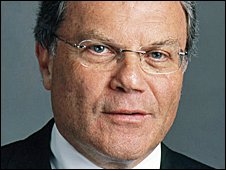 Some have calculated that the reward for the chief executive and founder, Sir Martin Sorrell, could be around £60m, if all went well. But that calculation is made on the assumption that WPP's share price doesn't rise over the coming few years - which would be very odd, since presumably the worst advertising recession in living memory will end one of these days.
So Sir Martin's profit from this scheme could be a multiple of £60m.
And in this case, quantum is absolutely the point.
Sir Martin and his colleagues have done very well out of previous schemes. They've been rewarded as though they were risk-taking entrepreneurs who owned their business outright.
But they are not owner-managers. This business is controlled by external shareholders. Sir Martin and his colleagues are employed by big institutions who are stewards for the retirement savings of millions of people.
The question for these shareholders, who vote later today on whether to approve this super-generous share scheme, is whether Sir Martin and his team are really going to be demotivated if they don't have the opportunity to earn five times the return of other investors in the company.
At this dire stage of the economic cycle, where exactly would Sir Martin and his team pitch up to receive the job security and perks of a giant multinational and the rewards of a small entrepreneurial company?
Today's WPP vote will be a bit like taking an X-ray of the big investment institutions: will it show that they've had the operation and that they've had their spines re-implanted?
UPDATE, 16:41: A majority of shareholders this afternoon voted in favour of WPP's stunningly remunerative share scheme. So Sorrell and his top team will still have a motive to turn up for work.
Suggestions that shareholders are on a mission to impose a new puritanism in British boardrooms were a bit premature.
 I'm
I'm 





Page 1 of 2
Comment number 1.
At 09:54 2nd Jun 2009, U13989085 wrote:You will also need to factorise Blind Greed, Risk Exposures, Liabilities, Financial Losses, Debt, Job Losses and bankruptcies into the long business term strategies of these rocket scientists
Complain about this comment (Comment number 1)
Comment number 2.
At 10:03 2nd Jun 2009, dunque wrote:I don't see any mention of the 20m in bonuses paid to employees of the FSA. I hope the irony of this is not ignored - talk about rewarding failure. Still, I guess this is the price of discretion to enable Gordon Brown to avoid any blame until he has collected his generous pension.
Complain about this comment (Comment number 2)
Comment number 3.
At 10:09 2nd Jun 2009, DickyJ39 wrote:Sorry Robert but when I was at school I was always taught that the average of anything is the total divided by the number of items that make up the total. i.e. the average salary of executives is the total of the salaries divided by the number of executives. The average salary therefore of 100 executives will be the total of their salaries divided by 100 but the average for 150 executives will be the total divided by 150.
Complain about this comment (Comment number 3)
Comment number 4.
At 10:12 2nd Jun 2009, Walmsl wrote:You ignored the fact that the FTSE 100 has different companies now versus 10 years ago. Further, you ignored 10 years of dividends.
Otherwise, insightful stuff.
In any case, employee pay went up 44% while the companies fell 23% (on your flawed analysis) - not something they deserve to be proud of either.
As a shareholder I would rather everyone was paid in shares. That way everyone has skin in the game and would actually care about their work rather than simply doing the absolute minimum required to ensure their salary.
Complain about this comment (Comment number 4)
Comment number 5.
At 10:14 2nd Jun 2009, shireblogger wrote:Robert,
Very good points here. What also must be borne in mind is the specialised treatment the FTSE boys get in comparison with the SMEs in this part of the cycle. To help them circumvent higher banking charges and spreads HM Govt have authorised the BoE to buy their commercial paper and bonds courtesy of central bank funds. Large gilt purchases by us are depressing yields and creating demand for their paper to get them through this phase so that these bonuses get paid. There is real inequity here.
Complain about this comment (Comment number 5)
Comment number 6.
At 10:18 2nd Jun 2009, Brian Golden wrote:Shareholder democracy is one of the greatest myths in the world today.
Its really very simple. Most votes are controlled by funds whose managers are answerable to executives on the same gravytrain who have no incentive to slow it down.
Ordinary shareholders have no power.
That's the trouble when people simply followed economic models like sheep - shareholder democracy is Anglo-Saxon so it must be good.
Hopefully, this myth will collapse now that the emperor's clothes have been laid bare.
Complain about this comment (Comment number 6)
Comment number 7.
At 10:20 2nd Jun 2009, Chris I wrote:But Robert, the bosses of the big investment institutions are hoping to keep in place these excessively generous remuneration schemes for themselves too and they will be worried that if they come down hard on others then at some stage someone will take rather a close look at them.
It's still all such a cosy club.
It is the disintermediation between those of us who have investments and pensions and actually put the money into these institutions and the actual companies themselves that is the problem.
There is nothing for it but to enact new legislation to break up this cartel.
We need new laws implemented to force all financial intermediaries to disclose much more info into the public domain, we need to remove some elements of limited liability that protect these investment company bosses, so that they are exposed to some degree of downside risk themselves if they get it wrong.
Maybe we also need legislation implemented to allow any large lender to a company to approve executive remuneration?
Complain about this comment (Comment number 7)
Comment number 8.
At 10:21 2nd Jun 2009, MichaelFowke wrote:It's great to see you back, Robert. I know blogging is tough, but you've got to stick with it.
As for Sir Martin Sorrell, he recently wrote about the future of capitalism in the Financial Times. But I didn't think much of it -
https://moneyistheway.blogspot.com/2009/04/martin-sorrell-and-future-of-whatever.html
But maybe he deserves the £60 million. I don't know.
Complain about this comment (Comment number 8)
Comment number 9.
At 10:21 2nd Jun 2009, Rio Carnival Girl wrote:All the more reason not to have a private pension. The pension fund managers are obviously not capable of effectively managing our pension investments !!!
As a director / owner of a small business my income is directly related to the financial performance of the business and I wish this was the case for larger businesses.
Complain about this comment (Comment number 9)
Comment number 10.
At 10:28 2nd Jun 2009, wykhamist wrote:It seems that the British public were not too worried about all the snouts in the trough while the economy was booming. The politicians and FSA should have been on the case, but since they were also coining it in they were not going to rock the boat.
Now the bubble has burst, and the little people are finding themselves destitute while those in power are still trying to get as much out of the system as they possibly can, regardless of the morality of their case.
This is not my idea of how a democracy should work, and brings home how totally corrupt our political system has become. Even those who have been proved to commit criminal fraud seem to be getting away with apologising and standing down, and have gold-plated pensions to fall back on.
All this money is being sucked out of ordinary people's wages, savings and pension funds, and will bleed the country dry.
The major parties are presenting the electorate with a choice between the status quo, presented as an agenda for reform which in fact will simply mean kicking things into the long grass, or some likely-as-not raving extremist party which could bring the country down completely.
It seems to me that our only hope is for a truly radical reformer to emerge, possibly someone like Daniel Hannen, who has links to the major parties but who can truly act in the country's best interest, to emerge.
If things carry on as they are we risk either widespread social unrest or complete penury. The country is really at a crisis point now, and we cartainly cannot wait until June 2010 for a general election.
Complain about this comment (Comment number 10)
Comment number 11.
At 10:29 2nd Jun 2009, coolblue3000 wrote:This comment was removed because the moderators found it broke the house rules. Explain.
Complain about this comment (Comment number 11)
Comment number 12.
At 10:38 2nd Jun 2009, Sutara wrote:When are people - investors, shareholders and the like - going to see through this old tuppenny-halfpenny 'give them the old razzle-dazzle' style of being a senior executive of a company?
What has happened to the idea of a honest day's money for a honest day's work? Why all this greed-driven talking yourself up? It doesn't lead to better functioning or more stable companies.
The answer to the why question, is that from their viewpoint, it's worth the risk. "Why not make myself out to be more capable and competent that I am and certainly better than everyone else on the planet? It's worth the risk the numpties will buy it."
But then why employ gamblers rather than managers?
Do you want your investments and, presumably, your financial futures skilfully and competently managed, or do you want them gambled with?
Step two then is to decide which individuals have the management skills and the integrity to look after your interests and which are risky gamblers who will look after their own.
Complain about this comment (Comment number 12)
Comment number 13.
At 10:58 2nd Jun 2009, Fixmer wrote:Could you let us know if the different composition of the FTSE 100 compared to 12 months earlier influenced this picture significantly? It would make sense for the total of executives of companies coming in (that presumably outperformed) to be higher than for companies dropping out (and presumably not performing so well).
I know this is probably wishful thinking, but it would still be nice to know.
Complain about this comment (Comment number 13)
Comment number 14.
At 11:13 2nd Jun 2009, watriler wrote:Puts the antics of M.P.s in context. It is surely one of the areas of shame for a Labour government that the extraordinary growth in the inequality of reward has taken place while the level of child poverty has hardly budged over the last 12 years.
Furthermore the institutional corruption of mutual back scratching of reward where the elite effectively fix their own pay and pay offs has become more extreme under this government. Until each large company has a social and small shareholder element in the non executive management of these large corporations the pay obscenities will continue.
In all the discussion of top pay very little is said about what these individuals actually contibute and how they have improved the company - in fact much of the controversy is about pay offs for whoping mistakes such as exemplified by Sir Fred's case but there are many others not just in the banking sector!
Complain about this comment (Comment number 14)
Comment number 15.
At 11:35 2nd Jun 2009, virtualsilverlady wrote:The sort of salaries these people are being paid is immoral at a time when even the lowest paid are on short time working or having to take pay cuts.
What do they do with this sort of money apart from buy big pads and cars. Most people could not even think of ways to spend it.
For years figures have been plucked out of thin air and paid to these CEO's not because they were anything special but because times were so good they could not fail.
The same goes in the public sector. Some of the salaries paid to the heads of some departments is absolutely obscene
Come the recession we have already seen how incompetent some of these people really are. Bankers being the first to be exposed. Many more to come.
Complain about this comment (Comment number 15)
Comment number 16.
At 11:41 2nd Jun 2009, virtualpaulmac wrote:Why are we surprised by this?
It hasnt changed for centuries and i cant see the latest self flagellation by MP's making any difference. I think we are heading for some serious social unrest and a political landscape change that will be unprecendented. However, does nayone think that even if Nick Griffin or someone similar joined the elite group of power brokers, that, very quickly they would not have their snouts in the trough as well?
Complain about this comment (Comment number 16)
Comment number 17.
At 12:10 2nd Jun 2009, mrsbloggs13c2 wrote:'why was any bonus paid last year?'
not all listed companies made losses and some actually make stuff that consumers want
lots of listed companies made profits, lots of it from overseas
this generated tax revenue that paid for lots of public sector workers and MPs expenses and interest on debt
profits also generated dividends, also taxable
some share owners hold shares for years for this reason and haven't lost money on their holdings
so it really depends on your perspective - a punt and a quick buck won or lost based on asset values or earnings based on long term share ownership
quite frankly, I sometimes think that those that can do, those that can't commentate
Complain about this comment (Comment number 17)
Comment number 18.
At 12:10 2nd Jun 2009, Peter wrote:Things don't change do they?
One rule for those at the top, and another for the workers.
Complain about this comment (Comment number 18)
Comment number 19.
At 12:20 2nd Jun 2009, quiteLondonLad wrote:Well that was boring!!
All this time for a blog and no inside information?
Recession over, case closed. See you in another 16 year or 5 if the conservative get in.
Complain about this comment (Comment number 19)
Comment number 20.
At 12:20 2nd Jun 2009, willowsacorns wrote:Why shouldn't Sir MS reap the rewards that his hardwork and dedication deserve. He built WPP into what it is and if the shareholders/non execs etc agree to it who are we to rant about it.
As always we in the UK have real knock em down attitude when it comes to success. Comments here say it is always the ordinary man that misses out but if that ordinary man/woman had perhaps applied themself better at school, tried that bit harder, paid more attention perhaps they would have done better. The ordinary man/woman does not want to be a CEO/Managing partner as the sacrifices they make in term of work/life balance are incredible. The trade off is in the money you make/benefits you get.
In this country it is always someone elses fault and it makes me sick.
Complain about this comment (Comment number 20)
Comment number 21.
At 12:21 2nd Jun 2009, Steve wrote:Welcome to the principal-agent problem, all nicely wrapped up in some catastrophic financial results!
Complain about this comment (Comment number 21)
Comment number 22.
At 12:23 2nd Jun 2009, Slug wrote:Here's a question for you given the breaking news about Weststar pulling out of LDV and the government being caught with no idea what to do next with manufacturing industry - AGAIN.
Weststar has pulled out of LDV rescue. Is this a negotiating ploy to force UK govt into putting in more money, are they waiting for it to crash completely and buy up the bits cheaply (Rover's Chinese adventures anyone?), or do they genuinely think that it is not a viable concern.
If the answer is the third choice, how realistic is it that Deripaska and Gaz (previous owners of LDV) are being touted as new part-owners of Vauxhall/Opel. If they are confirmed and the deal does go through, it could spell trouble for Ellesmere....
Complain about this comment (Comment number 22)
Comment number 23.
At 12:26 2nd Jun 2009, virtualpaulmac wrote:#17 I agree that there can be a little too much commentating as apposed to doing. However, i think most people agree with the principle of reward. Its simply the level of reward that is obscene. We must find a way to generate the share of reward in a more equitable fashion.
I like the idea of social shareholding, with a moral compass and enough clout to make a difference.
Complain about this comment (Comment number 23)
Comment number 24.
At 12:26 2nd Jun 2009, leanomist wrote:Rewarding Failure (and Poweromics) are starting to be challenged in Business but it's till going on ... !
... I think they are hoping people's memory spans will be short (which I can assure you on this occasion they will not). As you quite rightly point out, most corporate leaders are neither "owner-managers" nor "entrepreneurs" ... and take very little risk .. with their corporate careers, personal bank balances & pay/rewards that is ...
1. True entrepreneurs are innovative leaders who create long-term value, prosperity and growth (e.g. James Dyson) ... people we should nurture, support and reward ... (rather than hinder!)
2. Traditional executives, normally from the finance community, are rarely innovative and tend to systematically destroy long-term value, prosperity and growth (e.g. by failing to innovative and applying simple cost cutting exercises) to obtain a large bonus for achieving short-term financial targets and goals*... people we should challenge, stop and/or retrain in 'value management' ... (not reward with massive salaries, pensions, bonuses, and pay-offs for failure!) ...
Rewarding failure has had it's day ... and clear self interest, poor moral values and greed have also had their day too ... the application of Poweromics** is being challenged in Government and it's going to be challenged in business too ...
More people can see it now and it's not going to go away ... for instance I'm writing a Poweromics** blog with more examples to make sure it doesn't ... and to make sure its addressed once and for all ... and anyone who is doing the same will be linked from it too ...
Poor management and Poweromics** have had their day - and with the help of the internet they will soon change forever, and for the better ... because hard-working people will keep the pressure on until it does.
David Clift, a Future 500 Leader
* 21st century leadership and management are completely different to traditional leadership and management, and focus on continuously improving the long-term value of an enterprise and the lives of people ... not creating fear and sacking them.
** Poweromics = People using position and power for their own personal gain, based on poor moral values, self interest and greed ... take a look at my previous comments and at https://poweromics.blogspot.com for instance.
Complain about this comment (Comment number 24)
Comment number 25.
At 12:34 2nd Jun 2009, oldersmeowner wrote:It is sad to see that you (and those responsible for the rest of the comments posted) seem to have joined the Eeyore brigade. Everything is bad, everyone is greedy/stupid/fraudulent, the country is going to hell in a hand-cart. It is entirely negative and destructive.
Whilst there are clearly problems and unfairnesses in the present system the answer is not just to lash out at all and sundry. What is needed are positive proposals for change, and in particular far more real support (not the con of the current government "initiatives") for that segment of the economy that really generates wealth and whose CEOs don't get paid much and take real risks (mainly with their own money) - SMEs!
Complain about this comment (Comment number 25)
Comment number 26.
At 12:36 2nd Jun 2009, john Slade wrote:As like all these Institutions,Banking,Insurance,Pensions and Members of Parliament they all become self important clubs where they them selfs are the centre of the universe and worthy of great reward for their services.Definition of Club a number of people with a shared common interest.Alternative Co-operatives where all have a common interest all have equal shares.Perhaps this could solve the the problem
Complain about this comment (Comment number 26)
Comment number 27.
At 12:37 2nd Jun 2009, IR35_SURVIVOR wrote:work hard and you get stuffed with devious tax changes like IR35, but MPs are allowed to pay back when got caught with there snouts in the trough.
but its nice to see that you laid part of the criss on
"chums in banking, financial engineering, regulation, central banking and government"
THE G WORD AT LAST
Complain about this comment (Comment number 27)
Comment number 28.
At 12:38 2nd Jun 2009, Wee-Scamp wrote:£60m is considerably more than is invested in UK start-up clean tech/alternative energy companies.
Complain about this comment (Comment number 28)
Comment number 29.
At 12:44 2nd Jun 2009, mrsbloggs13c2 wrote:So how many frozen peas does it take to pay for Mr Peston's salary?
This is of course generated by the tax on the profit on the sale of the pea.
It might be easier if we did it in pounds of peas that have to be planted and harvested using land that was purchased by someone with plant and equipment also purchased by someone and frozen quickly and stored in a cold stored that was built and uses electricity and then transported in a trunker owned by someone in packaging manufactured somewhere and eventually appeared in your supermarket just in time for your dinner in a condition fit to eat without putting workers lives at risk.
How much would you pay someone that can manage this?
More or less than Mr Peston?
Complain about this comment (Comment number 29)
Comment number 30.
At 12:48 2nd Jun 2009, U13989085 wrote:21. antoniosteve wrote:
"Welcome to the principal-agent problem, all nicely wrapped up in some catastrophic financial results!"
+
Sorry to sound stupid, but for some clarification / disambiguation do you mean :
principal - financial organisations acting on behalf and in the interests of clients investments
agents - financial organisations acting on behalf of another financial organisation (which in turn is acting on behalf of and in the interests of their underlying clients)
or
agents pretending to be principals in countries out of tax jurisdiction in order to circumvent tax laws
or do you mean something else..
https://en.wikipedia.org/wiki/Principal-agent_problem
Complain about this comment (Comment number 30)
Comment number 31.
At 12:57 2nd Jun 2009, tb wrote:Simple. We need anti-greed legislation. The senior executives of any company can earn no more (including those ubiquitous bonuses) than 20 times what the firm's lowest paid employee makes. There'd be a lot of noise about lacking incentives and losing all the best people in a brain drain. It would be a better country without them.
Complain about this comment (Comment number 31)
Comment number 32.
At 13:04 2nd Jun 2009, GRIMUPNORTH77 wrote:People who run an SME would find it very difficult to run a FTSE 100 company and of course vice versa.
This argument is also true about an accountant v a plumber - both get paid differently but which is really worth more?
Unfortunately this article underlying theme 'It's not fair' seems simply to be written to generate posts from outraged bloggers already furious at Sir Fred's pension etc.
Complain about this comment (Comment number 32)
Comment number 33.
At 13:09 2nd Jun 2009, crb_dorset wrote:I don't know about the rest of you, but as a bog standard Englishman trying to run a small business in an ever-shrinking market with increasing overheads, later and later payments, more bureaucracy, worse services, sneaky taxes, devastated pension savings and savage bank charges I find these stories about the obscene amounts of money paid to the very few 'at the top' make me almost physically sick.
I'd pack it all in and go abroad without a backward glance - if only I could get a decent price for my house.
What a mess.
Complain about this comment (Comment number 33)
Comment number 34.
At 13:18 2nd Jun 2009, PrisonerNumber6 wrote:#32 - oldersmeowner - Your comment
Everything is bad, everyone is greedy/stupid/fraudulent, the country is going to hell in a hand-cart. It is entirely negative and destructive.
Whilst there are clearly problems and unfairnesses in the present system the answer is not just to lash out at all and sundry. What is needed are positive proposals for change, and in particular far more real support (not the con of the current government "initiatives") for that segment of the economy that really generates wealth and whose CEOs don't get paid much and take real risks (mainly with their own money) - SMEs!
... is bang on. We should be worried about the imbalance of GDP swinging as it has recently to nearly 50% public sector generated. This tipping point is dangerous. We risk becoming a totalitarian society economically, if we do not make things or sell our services (intellectually) to our trading partners. A slowdown is trade is temporary, a systemic shift in our economy towards reduced "real" productivity surely is the road to ruin.
Complain about this comment (Comment number 34)
Comment number 35.
At 13:23 2nd Jun 2009, e04445h wrote:Its not just the captains of Industry/politicians who think they should be remunerated irrespective of performance, just seen the FSA have decided to pay themselves almost £20 million in bonuses for overseeing the worst financial in living memory.
Figures obtained by Don Foster, the Liberal Democrat MP for Bath, revealed that the FSA paid out a total of £19.7 million to staff two months ago, an increase of 40% on last year's total, even as the banking system which it regulates had to be bailed out by the taxpayer.
The average payout to the 2,500 staff at the City watchdog was £8,000, although some staff members received much more, with one individual getting as much as £90,000.
Foster said the scale of the payouts looked particularly bad given the state of the economy at present. 'The size of some of these pay outs would be hard to justify at the best of times, but it looks especially bad in the current economic climate,' he said.
'Regulators must now follow the lead of those in the rest of the public sector who have promised to freeze executive pay.'
The figures also show that 174 staff at the FSA - around 7% - earn more than £100,000, and that these individuals were paid £3.9 million in bonuses.
The FSA is already under scrutiny in the wake of the financial crisis, having been attacked by the Treasury Select Committee for its handling of the Northern Rock fiasco and other elements of the crisis.
In an earlier hearing looking into the collapse of Northern Rock, the Committee said the financial services industry and consumers had 'lost confidence' in the regulator, while more recently the organisation has been attacked for not making public the results of banking stress tests.
Complain about this comment (Comment number 35)
Comment number 36.
At 13:26 2nd Jun 2009, fitzexpat wrote:Mr Peston, you're getting blinkered in only thinking economics and company directors. We are all involved, yourself included. In 1966/7 I travelled around Asia and wherever I spent time I would buy a history book to try to make sense of the current state of the country I was in. That way, I learned not just about other countries but also about my own, because history does repeat itself - as a matter of interest, India has understood cycles for thousands of years. Among the things I learned, one was that whenever an empire collapsed, the trade and stability that sustained it collapsed with it and thus society collapsed too. Very likely, in those times and places, they were like us and did not see what was actually crumbling around them. None of us can go on living the way we are. To think otherwise is uncivilised and small minded. It is disturbing that there are those in power who do not realise that the more they try to keep their lifestyles at the posh levels they are used to, the more they are wasting their time. (Of course, this recognition will affect employment at the luxury end of the market, but as this is already happening at lesser levels like motor cars and packaged holidays, it is inevitably only a matter of time before the posh part declines.) Those you mention will be very fortunate indeed if it benefits them any - future riches, these days, are but a mirage. The frivolities of the last sixty odd years are history - no room for that now, a different culture is needed. Such people would be better employed trying to keep our civilisation alive for their own survival's sake and recognising that they must provide service first and get paid proportionately afterwards. There are very worrying social, as well as economic, times ahead for all of us and we deceive ourselves if we pretend otherwise.
Complain about this comment (Comment number 36)
Comment number 37.
At 13:34 2nd Jun 2009, geoffg wrote:I really hate to say this - but if the executives are better at math than Mr Peston then they may well be worth the money.
Average = (total of samples) / (number of samples)
NOT = (total of samples) / 100!
Complain about this comment (Comment number 37)
Comment number 38.
At 13:38 2nd Jun 2009, 6mcfc2 wrote:We need to move to Thatcherism stage 2: genuine democracy. It was a good idea to encourage more members of society to feel that they are a part of it, by encouraging them to own shares in it. Share ownership schemes are a good idea.
Try telling that to HBOS shareholders? Yes, indeed, that is the problem. Millions of people have been turned off owning shares, because CEOs have destroyed value for the companies they run (and yes, then been handsomely rewarded for their efforts). The same is true of MPs, who stand to gain golden goodbyes when electors give them their redundancy notices.
But a damaged system is not a broken one. Employee-ownership and parliament can be reformed. The issue is power and who has it. The answer, of course, is that we have it: pension holders, citizens. Yet we have delegated it to MPs and fund managers and CEOs. They need to be held to account. We need imaginative solutions to transfer the power back to those to whom it belongs (us).
Decentralisation and regulation are part of the answer. So too is an acknowledgement of human nature and how it works: fear and greed. We are naturally greedy for ourselves (useful in terms of self-preservation). In a cultured/sophisticated society we accept limits to our freedom to be greedy (by taking what is not ours or seeking a greater share of it than is healthy for us, be it power or wealth) and thats where fear comes in. Laws. Regulations. The idea that we might be found out (shame and guilt are powerful tools to reign in our natural greed). How about removal of gongs?
But with the FSA paying itself absurd bonuses; MPs refusing to resign; companies now coming up with ever more inventive ways to pay themselves (WPP's fives); the Governor of the Bank of England and the Speaker having obscene pension pots; fund managers buying stocks this month that have done well since March just to look good and get their half yearly bonuses; civil servants and the public service with final salary pensions schemes - how do we get all these turkeys to vote for Christmas?
Ire towards politicians and fat cats (remember new Labours desire to cut them down to size!) is one thing; action and reform is another. Whom do we empower to act as guardians of those in power (apart from the absurdity of elections and votes at AGMs)? And how?
Complain about this comment (Comment number 38)
Comment number 39.
At 13:42 2nd Jun 2009, thinkb4 wrote:33 crb_dorset
Are you looking for a decent price for your house or one of the obscene ones from a couple of years ago!!!!
Likelihood is the price you can now get for it has become 'decent'!
Complain about this comment (Comment number 39)
Comment number 40.
At 13:49 2nd Jun 2009, SiriusWonderblast wrote:Good words by Shireblogger at #5.
Anyway, on the case as presented by Mr Peston, it would seem that CEO's have been busily axing their workers to pay their bonusses. Does that sort of thing happen??
It is a truth, and has been for a long time, that most top management are rubbish at building a business, which takes time, investment and innovation. They are generally pretty good at paring cheese and squeezing blood out of a stone for some time. Then they move to the next victim company. Seen it all too often. This is because it is how they have been conditioned to think as they rose through the ranks. Contrast with the mindset in countries such as Germany, wher the longer term view is more often held. That is something we need to get back to.
Complain about this comment (Comment number 40)
Comment number 41.
At 13:57 2nd Jun 2009, crb_dorset wrote:39 thinkb4
I perhaps should have written "...the bit of my house that I actually own."
It doesn't really matter. It's just a normal house - surrounded by the second homes of the previously well-to-do, many of which are now on the market...
Complain about this comment (Comment number 41)
Comment number 42.
At 14:09 2nd Jun 2009, IR35_SURVIVOR wrote:#20 did all you said along with a bunch of others then came along
New-labour with there tax and spend policy and getting the tax dodgers
so they brought in IR35, it did not get any tax dodgers but targetted the hard working self employed, Not those that were really dodgging taxes etc.
it not use that is knocking them down , its Zanu-labour that did it gov
and we are responding to that attack etc.
Complain about this comment (Comment number 42)
Comment number 43.
At 14:10 2nd Jun 2009, stanblogger wrote:Congratulations, Robert, on pointing out that many of those at the top are having a good recession.
They can look forward to an even more docile workforce. Making their jobs, which became much easier when Margaret Thachter emasculated the trade unions, even easier still. The low prices and negative inflation, which might not be good for their companies, are good for them as wealthy individuals. These facts are not often pointed out by the media.
Senior executives are often effectively barely accountable to share holders and hardly at all to anybody else. Anyone who has followed the parliamentary expenses scandals, will not be surprised that they too seem to have taken advantage of this situation of low accountability to feather their own nests.
Complain about this comment (Comment number 43)
Comment number 44.
At 14:16 2nd Jun 2009, Whistling Neil wrote:Robert, you miss stating the most obvious parallel of executive pay and the current argy bargy in Westminster.
Boards set up "independent renumeration commitees" made of non-execs who are also execs of other companies - A set pay for B sets pay for C sets pay for A. With the dissolution of the power of the unions in most of these businesses, the fact that the shareholders (fund managers) are fundamentally part of the ABC club there is no mechanism bar their own moral compass to resist the temptation to trough it. As demonstrated most just don't have the self control - would we not all be tempted if we were in that position? They and we are only human.
Such arrangements of 'self regulation' do not work and have been proven so in the case of parliament (and any other industry you care to think of) and time and again in the boardrooms. Most of these companies have no mechanism of restraint - moral or otherwise - so and so got 25% so so must we. It doesn't matter if the first in the chain was a star performer and justified it one year or morally bankrupt with their nose in the trough for all they could get, it is an amoral process.
Many companies have HR positions whos role is executive renumeration - identifying the renumeration for executives and ensuring it is 'competitive' with similar companies - i.e. keeping up with the Jones'.
No doubt the proposed WPP incentive scheme is the product of such a team of people who don't have any other job than working out how to pay the executives in a justifiable manner which seems entirely reasonable in isolation. It will not have occurred to anyone in the process to question the relative merits and morality of the process, they don't get rewarded for that.
However it seems a curious topic to return on when the UK headline business topic is Vauxhall/LDV and the motor industry - I had hoped you might get your mitts dirty and cover something other than the bored rooms and banks. Have you upset Lord M ?
Complain about this comment (Comment number 44)
Comment number 45.
At 14:18 2nd Jun 2009, copperDolomite wrote:why is anyone surprised at this being a system loaded by the wealthy to benefit the wealthy?
In my view any organisation that benefits from state handouts, tax relief etc, or employs a single person either as a direct employee or a contractor who requires state benefits (tax credit etc) in order to survive, is a failing organisation.
Failing organisations can not afford massive salaries, bonuses etc for anyone. They pay themselves handomely regardlessly.
Complain about this comment (Comment number 45)
Comment number 46.
At 14:20 2nd Jun 2009, U14010037 wrote:I am surprised that no mention has been made of the bonuses paid to the FSA. Some 40% mark up on bonuses paid during 2008.
One employee receiving a bonus payment of £90,000!!
Good money if you can get it man!
The FSA ar probably as culpable as any organisation for the current situation and being well rewarded for it as well.
Complain about this comment (Comment number 46)
Comment number 47.
At 14:29 2nd Jun 2009, Sutara wrote:25. At 12:34pm on 02 Jun 2009, oldersmeowner wrote:
"It is sad to see that you (and those responsible for the rest of the comments posted) seem to have joined the Eeyore brigade. Everything is bad, everyone is greedy/stupid/fraudulent, the country is going to hell in a hand-cart. It is entirely negative and destructive."
I disagree with you. It is perfectly reasonable to criticise and challenge greed, stupidity and fraud.
I would perhaps use the word 'con' perhaps rather than fraud as the latter is a legal term. But I do think some people are conning others about their alleged great abilities at managing companies and other organisations when, if you look at their outcomes at the company/customer or company/shareholder level they are delivering diddly squat.
On the other hand, I am very happy to praise and congratulate those who do have demonstrable management skills and who do deliver good outcomes for the companies they work for. Particularly if factored into those good outcomes are longer term corporate development, security of trade and thereby security for the investors and workforce, perservation of assets, and other such factors - as opposed to asset strimming and short term quick profits-on-paper and get-bonus-and-run thinking.
Sadly, I see more long-termism from companies outside the UK as the ones in it have, in far too many cases, seemingly signed up to an increasingly discredited Anglo-American way of doing business.
And if the country is going to hell in a handcart then do something about turning the handcart around. Propping up the status quo won't do.
Complain about this comment (Comment number 47)
Comment number 48.
At 14:44 2nd Jun 2009, 6mcfc2 wrote:I enjoy reading your blog whatever you choose to write about. There is always some new data and intelligent insight; often you treat us to a glimpse behind the scenes; your writing is enjoyable; I feel geuinely better informed. The withdrawl symptoms when you disappear for a few days are something we all have to live with and I happily forgive ;) as I'm sure you work extremely hard when in harness. Thank you Mr P.
Complain about this comment (Comment number 48)
Comment number 49.
At 15:11 2nd Jun 2009, stevewo wrote:Good theme here Robert.
At the moment 2% of the population have 50% of all the wealth.
The way things are going in about 10 years time 1% of the population will have about 90% of all the wealth.
It really is going back to a feudal society.
We are such a servile nation, always ready to tip our cap and say "yes guv".
All the guys who served in the war wouldn't tolerate this sort of injustice, but it is slowly creeping back. In the post-war years the rich-poor gap was far smaller.
Will we ever wake up? Shareholders and pension funds everywhere need to put their foot down....they are being taken for a ride.
Complain about this comment (Comment number 49)
Comment number 50.
At 15:12 2nd Jun 2009, U13953344 wrote:blistering barnacles Peston, are you now the 'BBC editor of bonus stories'?? why waste your highly-paid time telling us that CEOs and their friends on remuneration committees will always make sure they set the rules so that they can max out their bonuses, even in a recession! it is a great shame but the Anglo-Saxon way of doing business
I must therefore disagree with #48 unless it is deep irony; Peston very rarely gives us anything insightful - except by accident
It is fun trying to work out - John Le Carre-style - why Peston is covering the story he covers, as there is often some govt-inspired toe-in-the-water reason behind it
Today for instance I wonder if discussing the huge pay for City types is meant to provide a subliminal counterpoint to 'poor Mr Darling' facing the sack over 'only £350' .. allegedly
Bob where are you going to get your occasional inside scoops from if Mr Darling goes? from Ed Balls, the Child Minister? still, it would be nice to see Ed and Yvette in No. 11 for 11 months, if only to get them out of Stoke Newington
PS to #22 eddixon - don't pull out wooden leg mate; you know full well that Peston DOES NOT cover the car industry or for that matter any manufacturing; the demise of LDV, Vauxhall etc due to the govt being asleep at the wheel is of little interest. Car workers do not work in EC2 or live in N1 matey! personally, I find the GM bankruptcy and all the associated manouevres extremely interesting and important, but heh what do I know; a Toyota pickup with optional tail-gun is the vehicle of choice out here in Somalia when I'm occasionally on dry land
Complain about this comment (Comment number 50)
Comment number 51.
At 15:14 2nd Jun 2009, Tony Catt wrote:The people voting on this scheme may not understand how lucrative it will be for a few people. It may even be sold to them as a minimal cost way of rewarding successful management in the future.
The sooner that legislation is brought in to limit the management bonus payment schemes to the profits of the companies and the return to shareholders over the medium term, the better.
Then we would truly be rewarding consistent success rather than the "receive and run" bonus systems that are currently in place.
Complain about this comment (Comment number 51)
Comment number 52.
At 15:39 2nd Jun 2009, U13953344 wrote:#49 stevewo despite my criticism of Peston, I do agree with you that the general subject of inequality is an important topic and the Anglo-Saxon business model is increasingly creating an unequal society
I've mentioned it on here before, but would recommend a recent book called The Spirit Level, about the negative impact of this trend, which Labour have singularly failed to stop and the Tories will only reinforce when they do their stint in govt; here's the link to a review
https://www.guardian.co.uk/books/2009/mar/13/the-spirit-level
We need a new economic/social model but are not going to get it from any of the current crop of politicians, even Mr Obama, who for instance describes the US govt as a 'reluctant shareholder' of GM who won't be getting involved; like the US and UK govts on bank ownership; tell you what, if I owned 70% of a company and my multi-billion investment (of taxpayers money) was on the line, I would TAKE AN ACTIVE INTEREST IN RUNNING THE COMPANY
but I suppose that would require politicians to stop showing TOTAL DEFERENCE to the Wall Street and City of London clubs
Complain about this comment (Comment number 52)
Comment number 53.
At 16:24 2nd Jun 2009, U13900240 wrote:"Sorry Robert but when I was at school I was always taught that the average of anything is the total divided by the number of items that make up the total."
That got me for a while till I realised this was the top 100 companies. And a company only has one CEO. Therefore there would only be one hundred. Not one more or one less. By definition.
Complain about this comment (Comment number 53)
Comment number 54.
At 16:26 2nd Jun 2009, Optimist wrote:#42. IR35_SURVIVOR wrote:
"...so they brought in IR35, it did not get any tax dodgers but targetted the hard working self employed, Not those that were really dodgging taxes etc."
It is clear from your user name that you have an axe to grind regarding IR35, but the truth is that IR35 is a reasonable measure that was introduced to ensure that the tax paid by the self-employed was more closely aligned to that paid by full-time employees.
Complain about this comment (Comment number 54)
Comment number 55.
At 16:27 2nd Jun 2009, U13900240 wrote:"13. At 10:58am on 02 Jun 2009, Fixmer wrote:
Could you let us know if the different composition of the FTSE 100 compared to 12 months earlier influenced this picture significantly?"
Well, it could have made MUCH higher renumeration. Think.
We can see that doing worse isn't leading to appropriately lowered pay ("We need the best to get us out of this mess!"). But when your company does well (goes from 200th to 100th) then your CEO gets a whacking great big bonus.
This would seem to indicate to me that the renumeration of such CEOs would be HIGHER if you tracked back to the 12 month earlier CEO.
Complain about this comment (Comment number 55)
Comment number 56.
At 16:31 2nd Jun 2009, sihutchuk wrote:Thanks, Robert.
You're truly terrible at presentation but we need people like you! I'll sacrifice the presentation every time for the hard edged truth.
I get the impression that you are walking a fine line with your BBC bosses sometimes but keep pushing the envelope!
Complain about this comment (Comment number 56)
Comment number 57.
At 16:31 2nd Jun 2009, U13900240 wrote:"I really hate to say this - but if the executives are better at math than Mr Peston then they may well be worth the money.
Average = (total of samples) / (number of samples)
NOT = (total of samples) / 100!"
And in a FTSE100 list, where there are 100 companies and therefore 100 CEO's, what is the number of samples?
Complain about this comment (Comment number 57)
Comment number 58.
At 16:33 2nd Jun 2009, MarkofSOSH wrote:Why the obsession with bosses pay. They deserve, and need, every penny they can get. After all, they need to spend a fortune on big country houses on huge gated estates so that they don't have to breathe the same air as us less worthy mortals.
They need servants on call 24/7 to avoid them having to soil their hands with menial work.
They also have to travel in first class at all times, so they don't have to catch a glimpse of anyone less well off than they are less it offend their sensibilities.
When they go out for entertainment, they have to sit in the best seats with the best views - and need to be waited on hand and foot by a series of lackeys and flunkeys. Otherwise, they'll spend far too much of their leisure time having to look at poorer people - something that is alien to them from birth.
They need to send their children to the best schools to ensure that they grow up in the same cosseted bubble as they do.
All this costs millions.
You sound like you should be writing for Socialist Worker Robert.
Complain about this comment (Comment number 58)
Comment number 59.
At 16:35 2nd Jun 2009, akamrburns wrote:Shareholders have the power to do something about excessive salaries. They don't because the majority of the shares in the companies that pay obscene salaries are held by pension funds and their like. They don't want to rock the boat. Remuneration committees? They are a joke. Senior executives salaries etc are passed at AGM's 'on the nod'. This has to stop.
Time to sharpen the axe? Revolution in the air? Not such a far-fetched thought as you might think!
Complain about this comment (Comment number 59)
Comment number 60.
At 16:40 2nd Jun 2009, Belgian_Biscuit wrote:A great blog post as ever.
It seems to me this is just another facet of the general problems that have surfaced in the MPs' expenses scandal. For years the British public has been quite happy for those who rule us (including those at the top of big companies) to fleece us, because of the illusion that Britain was booming. It was an illusion built on a mountain of debt used to inflate house prices.
It seems that now that boom has unravelled, all of a sudden the public is beginning to wake up to what has been going on for many years.
I don't have a private pension and I have no intention of having one. Why pay a bunch of wideboys to gamble with my money, and take commission if they lose, and even more if they win? I've invested my money in my own company, in bonds and in gold. As the value of pension funds run by experts has crashed, my own stash is significantly up (largely due to the significant holding of gold).
Of course those managing pension funds also get rewarded handsomely even when the value of their fund drops - so I very much doubt they'll be making too much noise about WPP or other executive pay. These chaps are all in it together - if they make too much noise about others being rewarded for failure, they know its only a matter of time until the spotlight lands on them.
We need a fundamental change in the way politicians, executives and employees in general are remunerated - but those in power aren't likely to bring in a system that links their pay to their performance.
Complain about this comment (Comment number 60)
Comment number 61.
At 16:46 2nd Jun 2009, U13900240 wrote:"58. At 4:33pm on 02 Jun 2009, MarkofSOSH wrote:
Why the obsession with bosses pay. They deserve, and need, every penny they can get."
THIS is why the internet needs a SARCASM tag...
There really ARE people who believe this. You can see the same cognitive dissonance when you read people saying that 64k pa isn't enough to get MPs, which was why they took from expenses to make up their "correct" salary and so we must pay them more to stop them from asking for expenses.
Complain about this comment (Comment number 61)
Comment number 62.
At 16:52 2nd Jun 2009, AqualungCumbria wrote:Robert its quite simple .....the very same principle that applies to MP's who make there own rules up as they go along also apply to bosses of companies..did you expect them to take a wage cut ???
No chance,they have been get rid of staff left right and centre they will then hire back whats is needed at reduced rates they hope.
There is a very neat little club at the top of all companies in this country and they will only do what is right for themselves.
Complain about this comment (Comment number 62)
Comment number 63.
At 17:06 2nd Jun 2009, ghostofsichuan wrote:The rich get richer and the poor get poorer. Seems to be the history of the world. Nothing new here. This was simply the biggest swindle in the history of mankind. It has all been the process of looking at the mirror in the carival show. Anytime there is a lot of money available there will be a long line of people who will take it. They took your money the first time, why would you think they wouldn't do it again. Nothing has changed on that side of the street. Somalia pirates without the decency to be honest about what they are doing.
Complain about this comment (Comment number 63)
Comment number 64.
At 17:25 2nd Jun 2009, U13989085 wrote:Maybe FTSE 100 CEO's should find a strategy to raise funds and repay depositors in their troubled group company, a random blogger said in a public blog statement, like dipping into their own pockets or reducing their stonking bonuses.
Complain about this comment (Comment number 64)
Comment number 65.
At 17:58 2nd Jun 2009, rvpisneverinjureds wrote:brownwatch 363 days.....do us all a favour and do something right for a change and call an election right now.
Complain about this comment (Comment number 65)
Comment number 66.
At 18:25 2nd Jun 2009, cantankerous wrote:I worked with some of the biggest 'remuneration consultants' including Towers Perrin and Mercer. There were two drivers of change:
1. To deprive ordinary workers of decent pensions by switching provision from DB schemes (defined contribution = final salary) to DC schemes (defined contribution = stock market linked) generally with much lower employer contributions than required for DB;
2. The greed of the few - higher pay and pensions for the Board and their acolytes. Trough, trough, trough.
The 'renumeration consultants' were obscenely well paid for their 'work' - total pay statements, reports, etc. They searched for the highest paid equivalents in every country in the world when setting the pay for 'talent'. When comparing salaries for 'ordinary' workers, they looked for the lowest paid in the world. When comparing pensions, for the Board it was a worldwide comparison and usually resulted in the retention of the final salary scheme, sometimes, amazingly with a reduced qualification period for maximum pension. Decent pensions for workers were deemed unaffordable. In some FTSE companies the ludicrously generous pension schemes for a few so-called 'A' players cost about the same as the inadequate provision for ordinary staff and their families. Fred the Shred's huge pension for failure is not that unusual in the UK's boardrooms.
All of this was welcomed by the mutual back-scratching remuneration committees, who agreed huge payments for both remuneration consultants and their executives. The interests of shareholders and employees were simply ignored. The HR and actuarial professions have a great deal to be ashamed of in this matter, as does the government, which stoked the fire by taxing dividends received by pension funds and has ignored the huge problem for the last decade. Highly paid, and largely disinterested pension fund managers have ignored the issue. Amazingly, the remuneration consultants have now managed to expand their business into the public sector, where quango executives are now troughing and paying the ludicrous consultancy fees. But the result of this greed is that workers' families will face genuine poverty in retirement, and will have to be helped out by the State, while the few drink champagne on their yachts.
Complain about this comment (Comment number 66)
Comment number 67.
At 18:47 2nd Jun 2009, DaveC wrote:It just goes to show the difference in attitude between big business CEOs and owner managers of SMEs. Around 10 years ago I was working for a small company that found itself struggling. One of the first measure the two directors took to try and right the ship was to each take a 50% pay cut.
Ultimately, it didn't work and I (along with a few others) was made redundant a few months later, but they will always have my respect for choosing to take less for themselves in order to try and ensure the rest of us could keep our jobs.
Just don't see any of these CEOs doing that sort of thing.
Complain about this comment (Comment number 67)
Comment number 68.
At 18:51 2nd Jun 2009, romeplebian wrote:This comment was removed because the moderators found it broke the house rules. Explain.
Complain about this comment (Comment number 68)
Comment number 69.
At 18:57 2nd Jun 2009, marineengieeer wrote:You said the majority of shareholders of WPP, but is this not the holders of the largest blocks of shares (the aforementioned pension funds with directors on the board) who may be a minority of the shareholders. As already mentioned in the comments this is a small club of people who scratch one another's backs. These same people are on the boards of the banks which have caused this mess in the first place.
Complain about this comment (Comment number 69)
Comment number 70.
At 19:07 2nd Jun 2009, stevewo wrote:Re 60 DontCallMeDarling
Re 63 ghostofsichuan
Both of these posts seem spot-on.
Anyone who contributes to a private pension is going to lose....yet again. Money is like water in the environment, it never disappears....it just changes owners or it changes form.
The City wide-boys are much too fast for the sleepy old pension funds....those city boys chew them up before breakfast
The pension funds are sitting ducks...they always have been, and they always will be.
And the last 10 years do represent the biggest swindle in the history of mankind....beginning with the financial industry. Profits?? What profits??
Unfortunately the moral problems in Parliament are clouding the real problems in society, which are resulting in serious financial damage for most of us.
Robert is still on the case....long may it continue.
Complain about this comment (Comment number 70)
Comment number 71.
At 19:11 2nd Jun 2009, IR35_SURVIVOR wrote:#54 you have brought the governemnt spin on this one I see.
you have to read between the line on this one.
in 1999 £4b was votes out as share in the city saving £1b tax approx
but 75,000 contractor were alledgely steeling 350millon in tax.
do the maths on that one to.
if city gent got made redundant he would get state benifits
the self employed would get Jack unless they folded the company.
Then you have to look at the juduical review brought by the PCG and the Judge critised the language of the ministers involved.
IR35 was a SOP to the back bench whom thought they were getting at the city big cats.
Many of my fellow contractors were (past tense) labour followers not after that one.
PS also they wanted to tax you if you were a permie. but with none of the benifits like sick leave holiday etc, one this its was not was Fair
Complain about this comment (Comment number 71)
Comment number 72.
At 19:14 2nd Jun 2009, U13953344 wrote:#63 ghostofsichuan
careful who you compare to Somali pirates matey; the only board I would put a banker or CEO on is the one that starts on my deck and ends 20ft over a shark-infested sea
pirates are quite ethical you know, relatively speaking
Complain about this comment (Comment number 72)
Comment number 73.
At 19:30 2nd Jun 2009, PeerReview wrote:Institutional shareholders who vote for remuneration are run by a bunch of executives who are in turn voted for getting bigger salaries by their boards whose membership incudes executives whose remuneration is voted by institutional shareholders who ... The end investor, that is you and me, is completely alienated from this circular decision process.
Just as with the wide-spread banking fraud - the only proper word for 'sub-prime financial products' is fraud - this is a quasi-criminal activity resulting from either staggering technical incompetence or unwillingness to act on the part of the previous US and UK regulatory bodies. These CEO chaps are basically robbing us of our investments using a complicated 'executive pyramid' scheme which allows them to reward themselves avoiding any accountability. Just us with banking, regulatory intervention is imperative.
Complain about this comment (Comment number 73)
Comment number 74.
At 19:41 2nd Jun 2009, AverageCit wrote:Just another example of total denial, the western worlds business managers, think they are entitled to top salaries even if the Company's they are supposed to be managing, are Bust!
I suppose they are just doing the same as the Brown government take the money, never mind the share holders or voters.
Its a case of I am all jack, to hell with everybody else.
Complain about this comment (Comment number 74)
Comment number 75.
At 19:42 2nd Jun 2009, starry-tigger wrote:"Today's WPP vote will be a bit like taking an X-ray of the big investment institutions: will it show that they've had the operation and that they've had their spines re-implanted?"
Robert, I enjoyed your insights today, you've come back with a real vengeance!
There are no spines anywhere, and the backbone of the nation has been slowly and relentlessly removed in the last 30 years by a cold blooded system. The patient is dead, actually, like a filleted fish.
I not only feel sick when I read what the bonus is for the FTSE 100 CEOs, but I'm filled with awe that so few have stitched up the rest of us 60,000,000 suckers. Have we had a gun held to our heads?
No, we were just kept in the dark. The rest is as easy as taking candy from a baby. And, unless we insist on having all the ugly, boring facts spelled out so that we can understand them, the system we've currently got is going to continue.
* 24 leanomist Good luck with your campaign to rid the country of poweromics. Is there a challenge to it coming from government? I haven't noticed it.
What I find very interesting is the collapse of advertising. I fervently hope that the worst advertising recession in living memory never ends, and that the world demands something that does exactly what it says on the tin, otherwise it can get lost.
Complain about this comment (Comment number 75)
Comment number 76.
At 19:42 2nd Jun 2009, delminister wrote:the whole concept should be scrapped and reformed to reflect the peril this country is in.
bosses should expect to loose wages if they have to loose employees and if there are no profits then there is no bonuses.
bonuses should be linked to the health of the company, thus if it becomes bankrupt the bonuses should go along with it.
Complain about this comment (Comment number 76)
Comment number 77.
At 20:33 2nd Jun 2009, alexandercurzon wrote:NOT SURPRISED BY ANY OF THIS! Only goes to show how distorted our society
is.Particularly as so few of these people ever risk their own money and
so few of these people are really ENTREPRENEURS just GRAVY TRAIN TROUSER
MERCHANTS.
Complain about this comment (Comment number 77)
Comment number 78.
At 20:42 2nd Jun 2009, potatismos wrote:The biggest failure of an industrial company in US history and still no comment from the BBC Business editor?
Complain about this comment (Comment number 78)
Comment number 79.
At 21:08 2nd Jun 2009, romeplebian wrote:oh dont mention RP's connections elsewhere or ask him to do his job it gets moderated, this is a public message board which I part fund through my licence fee
Complain about this comment (Comment number 79)
Comment number 80.
At 21:11 2nd Jun 2009, JavaMan wrote:LDV down the drain, still at least the hard pressed bankers and politicians were saved. Nice one Gordon Brown stuff.
Complain about this comment (Comment number 80)
Comment number 81.
At 21:11 2nd Jun 2009, alexandercurzon wrote:ROBERT??
HAVE YOU NO VIEW ON THE LDV SAGA OR THE LOOMING VAUXHALL CLOSURE???
Complain about this comment (Comment number 81)
Comment number 82.
At 21:19 2nd Jun 2009, JavaMan wrote:Fill your boots, everyone else is.............
Complain about this comment (Comment number 82)
Comment number 83.
At 21:20 2nd Jun 2009, JavaMan wrote:81 Curzon, read my mind I see (80) ;-)
Complain about this comment (Comment number 83)
Comment number 84.
At 21:23 2nd Jun 2009, EnglishRefugeeInThai wrote:20# willowsacorns
it's not somebody elses fault. It's your fault.
Complain about this comment (Comment number 84)
Comment number 85.
At 21:41 2nd Jun 2009, Daniel Earwicker wrote:"The burden of national sacrifice required to get us through this mess does not appear to have been evenly distributed."
Jesus wept!
It's dead simple. If you're spending tax payer's money, it's the tax payer's business what you do with it, and therefore it's the concern of all of us, and you're accountable to all of us democratically.
But if you're spending money given to you by people through their own choice, that's just their business and yours. WPP's shares can be bought and sold on an open exchange. Anyone is free to vote with their feet and dump the shares if they think the boss is paying himself too much. What exactly is confusing you about this?
Complain about this comment (Comment number 85)
Comment number 86.
At 21:50 2nd Jun 2009, farview wrote:Congratulations Robert,
An excellent article. Please keep repeating this message at every applicable opportunity.
Complain about this comment (Comment number 86)
Comment number 87.
At 22:07 2nd Jun 2009, Tantivvy wrote:Underlying many of these posts is the disenfrachisement of shareholders. Shareholders should have control over these schemes for reward, both salary and share options. Not schemes which are founded on rock-bottom stock which will improve under almost every scenario.
Shareholder power must be made real
Complain about this comment (Comment number 87)
Comment number 88.
At 22:08 2nd Jun 2009, Alex Banks wrote:It should be noted that many of the bonuses will have been paid for performances through 2008. I myself in April 2009 received a month's salary (don't get excited, it was less than £2,500) through my company DHL. Our board however have decided to waive their bonuses despite being entitled to them; it would be hard to swallow given the thousands of jobs lost in DHL since the financial problems started.
Of more interest will be the bonuses awarded next year for 2009's performance. The payrises are a bit much though, I'll agree on that point.
Complain about this comment (Comment number 88)
Comment number 89.
At 22:18 2nd Jun 2009, courteouspankajkumar wrote:Wll done Robert. Keep it on. This train will have to stop one day. sooner is better. All greedy will suffer same fate as MPs.
Complain about this comment (Comment number 89)
Comment number 90.
At 22:30 2nd Jun 2009, hants_gw wrote:RE: 14. watriler
"In all the discussion of top pay very little is said about what these individuals actually contibute and how they have improved the company - in fact much of the controversy is about pay offs for whoping mistakes such as exemplified by Sir Fred's case but there are many others not just in the banking sector!"
This is absolutely bang on the problem. The rarely spoken fact that, on the whole, British executive management is of poor quality and nevertheless awards itself lavish pay for performance that is lucky to reach the level of mediocrity. Fred Goodwin is a perfect example of this, having been so incompetent that he destroyed RBS yet walking away with, as I recall, around three quarters of a million pounds a year "pension" at the age of forty. Where else can you get that sort of deal for being a total failure?
Then willowsacorns at 20 nicely lays out the basic fallacy of the people that just don't get it.
"Comments here say it is always the ordinary man that misses out but if that ordinary man/woman had perhaps applied themself better at school, tried that bit harder, paid more attention perhaps they would have done better. The ordinary man/woman does not want to be a CEO/Managing partner as the sacrifices they make in term of work/life balance are incredible. The trade off is in the money you make/benefits you get."
But that's not the problem is it? Fred Goodwin is a total failure, but still continues to pocket a fortune. This might perhaps have been shrugged off as an unrepresentative and unique case, except that Adam Applegarth and James Crosby were similar failures whose incompetence ruined Northern Rock and HBOS and both are still doing very nicely, thank you. Then we have to consider the three boards of directors who appointed these three men and left them in post while they lead their companies to disaster - what exactly were those idiots being paid for? And before we forget, Bradford and Bingley folded much as Northern Rock did, so their senior officers belong in the same hall of overpaid shame.
It isn't even a recent problem, as is proved by the demise of Barings and County NatWest. Nor is executive incompetence an issue for just the finance sector as GEC Marconi proved. Britain seems to be stuck with an executive management class that are both grossly overpaid and woefully inadequate for the job - and while that continues any talk of an economic recovery is pure fantasy.
Complain about this comment (Comment number 90)
Comment number 91.
At 22:43 2nd Jun 2009, oldrugbeian wrote:But I thought you said the Executive Gravy Train had shuddered to a halt!
Complain about this comment (Comment number 91)
Comment number 92.
At 22:46 2nd Jun 2009, Mark Adams wrote:This blog is outrageous. It is clear sensationalism. Trying to stir up more resentment from Johnny Pleb. "I can't earn that much, so why should they", I can hear him saying. The news report was introduced by showing pictures of a job centre and then launching into an attack on out top businessmen for getting what they deserve - I can see what you're upto Peston. These are top people whose bonuses are agreed by majority shareholders. This is the going rate for these high flyers. Or shall we cap their salaries? They'll leave this country quicker than you can say dole queue and be replaced by Johnny Half a Job, who'll really screw up our economy. How come we don't hear any comments about the rediculous wages that football players are on - £125000 a week for goodness sake - all that cash for diving, shirt pulling and feigning injury. Come on Peston, have a go at them, why don't you.
Complain about this comment (Comment number 92)
Comment number 93.
At 23:34 2nd Jun 2009, PDigby wrote:"I really hate to say this - but if the executives are better at math than Mr Peston then they may well be worth the money.
Average = (total of samples) / (number of samples)
NOT = (total of samples) / 100!"
Presumably Mr Peston was assuming that there are 100 samples in the FTSE 100?
Complain about this comment (Comment number 93)
Comment number 94.
At 23:39 2nd Jun 2009, PDigby wrote:"They'll leave this country quicker than you can say dole queue ..."
Good riddance. If HBOS had based its executive salaries on the lower centre quartile rather than the upper centre quartile, its shares would be worth several to many times their current value.
Complain about this comment (Comment number 94)
Comment number 95.
At 23:39 2nd Jun 2009, hants_gw wrote:RE: 92. adamsm28
"These are top people whose bonuses are agreed by majority shareholders."
Goodwin is an example of "top people"? A blunderer who destroyed a major bank? That's what you call "top"? Who would you choose as a top class athlete? Bernard Manning?
"Or shall we cap their salaries? They'll leave this country quicker than you can say dole queue"
Do you really think so? I mean really? If we'd capped Applegarth's pay would he really have emigrated before he destroyed Northern Rock? How about Crosby? Him too? We might still have HBOS as a functioning bank instead of a sink for taxpayers' money. It's just too good to be true. Who out there over the water would be dumb enough to hire any of them, do you think?
I notice that you try to justify their bloated salaries by appealing to "the going rate". Smart move. It's comprehensively demolished by earlier posts here that point out that director A approves bloated salary for executive B knowing that next week they will swap seats and in a different boardroom B will return the favour. But never mind, its still better than the alternative, which is ...
Try to justify their salaries based on achievements, based on value add, based on contributions that they personally made - not the achievements of others for which they have stolen the credit. I won't be mean and expect this for the executives that ruined RBS, HBOS, NR or B&B. I won't even mention Alliance and Leicester - who escaped a visit to the knacker's yard only because Banco Santander bought them just before the gates opened. No, let's pick an easy one. See if you can justify the salaries of British Airways' senior executives. Don't forget to mention the Terminal 5 fiasco. And this year's losses. And a bonus point if you include their decades long campaign to loot their longest established pension fund.
Face it. We need these people the way we need tapeworms.
Complain about this comment (Comment number 95)
Comment number 96.
At 23:41 2nd Jun 2009, Padraigpostal wrote:This comment was removed because the moderators found it broke the house rules. Explain.
Complain about this comment (Comment number 96)
Comment number 97.
At 00:06 3rd Jun 2009, JohnnyZero66 wrote:We must move from Price to Value thinking, such as the human capital of any company as real value. We need all to see a common sence of purpose, all together having similar moral compasses and long term goals
Not only is this a broken Society, we have completely lost our way, lack of vision and lack of Leaders has compounded our difficulties.
However, the British have great resiliance and they are finally waking up. We need a cultural revolution and a new look at values and morality as a Society, or we shall be truly lost. The NEXT SEVEN DAYS are going to be very important in Britain, particularly our Voice on Thursday
Complain about this comment (Comment number 97)
Comment number 98.
At 00:29 3rd Jun 2009, John_Graham wrote:#92 adamsm28
"I can see what you're upto Peston. These are top people whose bonuses are agreed by majority shareholders. This is the going rate for these high flyers. Or shall we cap their salaries? They'll leave this country quicker than you can say dole queue and be replaced by Johnny Half a Job, who'll really screw up our economy."
I find it ironic that "the going rate for the job" is always the first mantra to be used by the high-flyer (aka fat-cat) network to justify their obscene salary/bonus/pension packages while exactly the same mantra is used to justify pinning down the wages of the low paid.
And the threat that these "top people" will leave the country if they don't get what their over-inflated egos think they're worth is always the second mantra to be used if the first one fails.
As for Johnny Half a Job screwing up the economy, it's already been screwed up by the aforementioned "top people".
Or have I misunderstood your comment? Rather than having been conned into believing all that baloney about "top businessmen [not women?] getting what they deserve", you're actually exercising your sense of humour.
Complain about this comment (Comment number 98)
Comment number 99.
At 01:41 3rd Jun 2009, Alan McCrindle wrote:When the recession is finally revealed as a debt deflation depression, unemployment continues to fall along with a new wave of house and share prices declines, the end result will be riots.
We can see the fall out occurring in Politics now. The next cab off the rank with be the pension funds and the CEO's on inflated salaries who are receiving bonuses while others loose their jobs, houses, pensions etc.
The rise in CEO salaries and bonuses is correlated to the rise in the power of pension funds and the nature of renumeration of the funds managers - rewards for short term profits with no claw back for long term failures. It has been said that there is nothing like a bull market to make leveraged dunces look like geniuses.
Democracy has been captured by the finance industry
Complain about this comment (Comment number 99)
Comment number 100.
At 01:45 3rd Jun 2009, Four_Finger_Wu wrote:For those who've been out of school for a bit...
...the median is an average. The mode (the most frequently occurring number in a series) and the mean (the sum of the numbers divided by the number of numbers) are also averages.
But, the sum of the numbers, divided by 100, is not.
Unless, perhaps, your maths is average.
Complain about this comment (Comment number 100)
Page 1 of 2