

Measuring the global crunch
Official statistics tell us where we've been, rather than where we're going. But if the numbers are any good, they help to provide a bit of context and definition to our hunches and intuitions about what's going on in the world.
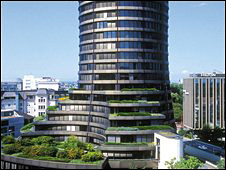 So if there's anyone left on the planet who's still sceptical that we've been living through the mother of all credit crunches, I would direct you to quarterly banking statistics published today by the central bankers' bank, the BIS.
These show a plunge of almost $1.9 trillion or just over 5% between the third and fourth quarters of 2008 in banks' international assets, their overseas loans and investments.
In other words, there was a massive contraction of lending across national borders.
Banks called in their loans to overseas banks and other overseas borrowers on a colossal scale: it was the biggest shrinkage in banks' international assets since records began at the end of 1977.
In fact it's exceedingly rare for there to be any contraction at all in cross-border lending. So this represents an unusual reversal of financial globalisation.
Of course we already knew that banks were calling in credit last autumn in a panicky and manic way, after the collapse of Lehman.
Now we have a measure of that panic (though note that these figures are about the stuff that goes on to banks' balance sheets, not other forms of credit outside the banking system - so it's not the whole story of the crunch).
Now it won't surprise you that the shrinkage in international business was particularly pronounced for British banks
The overseas assets of British banks shrank $891bn during the whole of 2008 - which represents an astonishing 65% of the contraction of all overseas lending and investing by the world's leading banks in that year.
That repatriation by the Brits of lending is merely the corollary of an eye-watering withdrawal of credit from the UK by foreign banks: the liabilities to overseas lenders of our banks shrank $793bn in 2008.
Why were British banks so exposed to the global credit crunch?
Well it's because in the preceding few years they expanded their overseas lending at a breathtaking and unsustainable rate.
According to BIS figures, British banks' overseas liabilities increased from $3.4tn in December 2003 to $7.3tn in December 2007.
In that context, the recent fall to $6.1tn in British banks' cross-border liabilities does not look like the end of the story - especially if cross-border flows of credit in general continue to diminish.
To put it another way, there's a strong likelihood that overseas funding of British banks will continue to be squeezed significantly in the coming weeks and months.
Some of that will be absorbed by British banks calling in their overseas lending.
But it also means that there's no realistic prospect in the coming months of our banks being weaned off their new dependence on funding provided by taxpayers - unless, that is, we wish to risk a further serious contraction of lending by banks to UK households and businesses.
 I'm
I'm 





Comment number 1.
At 17:13 29th Apr 2009, Prof John Locke wrote:so is the UK "best placed to weather the crisis" or not?
Complain about this comment (Comment number 1)
Comment number 2.
At 17:22 29th Apr 2009, GRIMUPNORTH77 wrote:When saw the title thought might not have been about banking - I was wrong!
I'm Robert Peston, the BBC's business editor. This blog is my take on the business stories and issues that matter.
There is less lending by banks.
Bankers got paid a lot of bonuses.
Banks haven't got any money without Government support.
Bankers are upset because they're not getting bonuses anymore.
Paradoxically bankers are also upset about an increase in tax rates above £150k - HA.
Banks share prices are going down.
Banks share prices are going up.
Some people at the very top of banks that caused this crisis have left with great big pension payments and pots.
These are the issues - I can not believe that every day I wait for the new Business editor blog just hoping, hoping.................
Complain about this comment (Comment number 2)
Comment number 3.
At 17:25 29th Apr 2009, neworldorder wrote:So I and my children will have to work harder and longer, to pay ever increasing taxes to give to the banks, so they can lend it back to us with interest to pay for falsely inflated house prices.
When we have a stroke at age 70, after 50 years of stressful working life, the government takes the house back off us to pay for a squalid carehome and minimum wage staff to start the cycle over again with the next generation of mugs.
GREAT!
Complain about this comment (Comment number 3)
Comment number 4.
At 17:41 29th Apr 2009, U13937281 wrote:(like a hells angel on acid)
our banks are
out of control
out of control
Complain about this comment (Comment number 4)
Comment number 5.
At 17:45 29th Apr 2009, grave_sniffer wrote:It's going to take years for the mass of the Great British Public to awaken to the fact that they have been/will continue to be swindled by the banking institutions. I can't wait to see the reaction once they do - if the current banking system lasts that long.
Complain about this comment (Comment number 5)
Comment number 6.
At 17:46 29th Apr 2009, somali_pirate_SP500 wrote:From the photo which accompanies Peston's story, it seems that the BIS have a really cool building!
And they seem to have started their own market gardens and allotments on the balconies and roofs of the lowest 7 floors or so
Which is highly commendable...... and might also suggest that they know something that today's stock markets don't
Aside from that I have nothing much to say about yet another banking story, except that we already know that there is an ongoing contraction of lending.........
Aside from the stockmarkets going wildly upwards today (it must be a greed day and not a fear day) the main business news that Robert doesn't report, includes: US economy shrank 1.5% in 1st quarter or 6.1% annualised (22% decline in exports); Germany expects economy to shrink by over 6% this year; LDV vans closes; Chrylser now only 2 days away from Chap 11 bankruptcy; GM nears their own Chap 11 bankruptcy; Vestas closes wind turbine plant on IoW to move it to the USA, where they expect a lot more business than here.......... need I go on
Come on Arsenal!
Complain about this comment (Comment number 6)
Comment number 7.
At 17:48 29th Apr 2009, Jan wrote:I for one am not at all surprised that other countries are withdrawing their cash from UK plc.
At least other nations are open and honest about their corruption if that's not a contradiction in terms. Our bankers and politicians would appear to have not an ounce of integrity between them. Yet they feel able to lecture the rest of the world on what to do and how to behave....
Complain about this comment (Comment number 7)
Comment number 8.
At 17:50 29th Apr 2009, brighterfuture wrote:This comment was removed because the moderators found it broke the house rules. Explain.
Complain about this comment (Comment number 8)
Comment number 9.
At 17:53 29th Apr 2009, muggwhump wrote:No realistic prospect of the British Banks being weaned of taxpayer support in the coming weeks and months eh? Years more like! The entire global credit system had, due to a compleat lack of oversight, degenerated into what amounted to people lending money that never existed to people who could never afford to pay it back. The government keeps maintaining that it wants to get credit levels back to where they were in 2007, I think they should get real and stop living in the clouds, we can never go back to those days unless the taxpayer underwrites lending in a massive way, for ever. And who really wants that?
We would as a country be exposed to massive potential losses not if, but when the next recession comes along, about 10 years after we come out of this one.
Complain about this comment (Comment number 9)
Comment number 10.
At 17:54 29th Apr 2009, oldrightie wrote:So where is Brown's saving of the world?
Complain about this comment (Comment number 10)
Comment number 11.
At 17:57 29th Apr 2009, skynine wrote:So we the British taxpayers are funding foreign debt; sounds like a good deal for the Americans. Shouldn't we just cut the debts loose and tell Obama it's his problem. The British taxpayers are not an international financial charity, or are we?
Complain about this comment (Comment number 11)
Comment number 12.
At 18:02 29th Apr 2009, owlpuss wrote:Just wanted to say that tickets for your Hay-on-Wye Festival talk are going fast! Was told this when I ordered one today.
Complain about this comment (Comment number 12)
Comment number 13.
At 18:09 29th Apr 2009, Doctor Bob wrote:It's pretty obvious that the "global economy" has rested on the rather stupid assumption that manufacturers can sell (or is it foist?) masses of stuff on unwary consumers that they don't need and probably don't want.
According to Brown, recovery will start once we can persuade consumers to borrow more to indulge in even more unnecessary consumerism.
Great!
Complain about this comment (Comment number 13)
Comment number 14.
At 18:11 29th Apr 2009, hardworkinglondoner wrote:So the banks in the UK have less to lend to people in the UK even after all the proping up of their balance sheets and quantitive easing... and it isn't going to stop getting worse soon.
So bye-bye to the green shoots of recovery for a long while (or was it weeds that people have been seeing pop up recently?) if the banks don't have enough money to loan to businesses (or people for mortgages to stop house prices continuing sliding).
Complain about this comment (Comment number 14)
Comment number 15.
At 18:13 29th Apr 2009, GrumpyBob wrote:3# Brilliant comments of how it is.
You just missed that the confiscated assets to pay for the care is
AFTER massive taxes and massive NI payments through the working life !
And still people vote for these dictators !
Complain about this comment (Comment number 15)
Comment number 16.
At 18:15 29th Apr 2009, stevewo wrote:We seem to be in a world where only 4 words and one expression matter in the British economy.
The 4 words....Barclays, HSBC, LLoyds, RBS.
The expression....How much is my house worth?
All else is irrelevant and unimportant.
This is a weird world.
Manufacturing? Industrial output? Research and design? Irrelevant.
It's also a very dangerous world, where we can go bust or be hopelessly burdened at the slightest trouble in these big banks, or in the property market.
We need to break them up.Individual parts must be bankrupted if they fail.
Their gambling, paricularily on property, is too dangerous now for all of us.
Our current situation is warped and dodgy.
All of our personal situations, our childrens' future, and the health of all of our companies is in the hands of the 4 big banks and the price of houses.
No good, major change in attitude needed.
Robert, I hope you agree....let's get the economy free from the shackles of banking and houses, let's get it back to reality and good sense.
"But the recession will bring us back to reality and good sense"....yes, but at such a terrible price.
Complain about this comment (Comment number 16)
Comment number 17.
At 18:16 29th Apr 2009, frncz1 wrote:I enjoy reading these comments, however depressing they may be. However please don't use 'eye-watering' so much. It is so idiosyncratic, and when was the last time numbers really made your eyes water, or made you take a breath, as in breathtaking?
Complain about this comment (Comment number 17)
Comment number 18.
At 18:31 29th Apr 2009, JavaMan wrote:So Robert,
What’s the difference between financial protectionism and protectionism really ;-)
Complain about this comment (Comment number 18)
Comment number 19.
At 18:32 29th Apr 2009, Nick Drew wrote:"no realistic prospect in the coming months of our banks being weaned off their new dependence on funding provided by taxpayers"
It's worse than that: the recent round of US banking 'stress tests' have revealed that their banks are still horribly under-capitalised. And these aren't even true stress-tests: they don't explore any really extreme scenarios.
It's almost certain that UK banks will also we swept up in the next phase of all this - a new, difficult round of large-scale re-capitalisation - which will both put another brake on lending, and drag governments in even further.
Complain about this comment (Comment number 19)
Comment number 20.
At 18:46 29th Apr 2009, ThorntonHeathen wrote:6. At 5:46pm on 29 Apr 2009, somali_pirate_SP500 wrote:
Aside from the stockmarkets going wildly upwards today (it must be a greed day and not a fear day).....
Now I begin to understand. Markets do not operate like a casino and investment decisions are not driven by misplaced optimism, blind panic, reactions to the rumours of the last 10 minutes etc. Its actually all explicable by the principles of biodynamicism i.e. growth of stocks, trimming of hedges and harvesting of profits on the appropriate day.
Thus, investment strategies which align with lunar trends and cycles should reap dividends. Or maybe the whirlwind.
Complain about this comment (Comment number 20)
Comment number 21.
At 18:47 29th Apr 2009, New_Hero wrote:Robert, Robert, Robert
When will you start talking about the other half of the problem - the bit all you 'clever' jounalists seem to forget... I'm talking about the DEMAND for credit, rather than the SUPPLY.
The politicans have focused the baying mob on the bankers to draw attention away from their own failure to dampen demand (members of the Magic Circle would call such a diversion a classic "Misdirection").
There is a massive story to be told about the political motives the Government had for not stopping the bubble (a 4-5 electoral cycle, desire not to be unpopular, stamp duty revenues, inability to balance the budget etc).
Come on Robert, up your game....
Complain about this comment (Comment number 21)
Comment number 22.
At 18:52 29th Apr 2009, Rugbyprof wrote:Hi Robert
Nice to see finally some 'investigative fact' journalism here.
And what's interesting is that 'boiling it down' the credit crunch damage is mostly been done to ourselves by ourselves.
By the way the credit crunch is not a credit crunch but the after effects of an 'asset bubble'. I trust that eventually this will be retrospectively acknowledged.
The credit crunch is s symptom not a cause.
The UK Government relied too much on financial services revenues (and real estate taxes in a giant 'ponzi scheme') to fund taxation.
Unfortunately the basic economic understanding of a nation that invented modern trading is woefully inadequate.
The UK Government is populated by people who've never traded in the real world. For their part, the bankers just got carried away, encouraged by lax regulation, ever increasing returns demanded by pension funds (particularly after GB's first raid on pensions) and of course knighthoods, selected public sector roles etc etc.
Very corrupt of course. So no real surprise. Of course these have now been replaced by envy politics which will continue to drive a wedge between wealth creators and wealth spongers.
I can't think of a worse example of socialism that is anything but divisive.......at some pint in 2010 we may see a halt to the current economic dive but I'm wondering at what point do Alistair Darling (and G Brown) going to face the firing squad/hangman because surely the damage they've created is far worse then any act of British treason in history, not even Guy Fawkes could have achieved this.........
I just have to face the consequences and pay for it......but please pass the rope or the rifle I've got no qualms with that.........
Complain about this comment (Comment number 22)
Comment number 23.
At 18:56 29th Apr 2009, rwolff wrote:When I last posted about UK overseas debt, which is much more of a banking issue than one of government debt to foreigners, 1) your moderators deleted the link to the world bank spreadsheet that showed the extent of the problem and 2) I was told not to worry as the banks had lots of assets aka loans outstanding to cover their exposure.
Is now the time for you to do a little digging, Robert? What is the currency risk underlying this situation?
Complain about this comment (Comment number 23)
Comment number 24.
At 19:04 29th Apr 2009, kaybraes wrote:Why would anyone overseas want to risk capital by investing in a country which is being run by the most incompetent government seen since the second world war. Browns fiscal reputation is being derided abroad, and his great plans to save the world have been seen now as no more than rhetoric and bluster with no substance. If anyone wants to invest money relatively safely then Britain at the moment certainly isn't the place to do so. Perhaps a change of government and a new political philosophy may change things, but I suspect the damage done may prove a problem for inward investors for many years to come , but for as long as there is a danger of a return to a Labour government in the foreseeable future.
Complain about this comment (Comment number 24)
Comment number 25.
At 19:13 29th Apr 2009, markus_uk wrote:RP: "To put it another way, there's a strong likelihood that overseas funding of British banks will continue to be squeezed significantly in the coming weeks and months".
I hope you meant "in the coming years and decades". The overseas funding off Britain cannot continue. Game over! Britain will need to rely on its own economic power. Much needs to happen!
Complain about this comment (Comment number 25)
Comment number 26.
At 19:13 29th Apr 2009, Jericoa wrote:In my reductionist way of looking at these things forget about the finance system look at what it is telling us about the real world.
We have advanced technology and are too efficient at making 'stuff' and extracting commodities from the earth for everybody to work unless we want to make amountain opf stuff we do not need and gives us no pleasure at tjhe expense of the planet we live on !
That situation will only get worse with time if we continue on the same path.
Any 'recovery' along similar lines to the current economic model will eventually run slap bang into availability of resources (as seen in the oil price / iron ore / copper price spikes) or failing that conflict through over-population fighting for those limited resourses is also likely.
That is what the curent model requires to happen in order to continue.
The bottom line is we can not carry on with a global economic model which requires that we make ever more and more stuff, ever more and more effciently.
Why do we do that?
In order that we make more and more profits to invest in making more and more stuff for more and more people more and more efficiently ad infinitum of course.
The only slight problem with that is that this beautiful planet is NOT ad infinitum.
The ruling elite, particularly those in finance have grown very wealthy on this system by playing with the 'profits' part of the equation described above.
From their incredibly privaleged perspective they don't much feel like giving it up despite the rather obvious impossible nature of trying to sustain its growth. That is a pretty selfish and destructive and manipulative view on their part.
It is worse than that even!
In this country Tony Blair's poison chalice to the nation is that we do not have mainstream political parties seperated on ideological grounds anymore. They are all offering the basic same message along the lines of making the existing system work again..except it can not in the long term as described above...
They may be able to patch it up for a few years but that is about it in my view.
The strategies both here and in the US are focussed around 'buying time' and 'hoping something will turn up'. Noboddy in the political, financial or media elite is even talking about the rather obvious impossibility of the way things currently work, if they do they interview some inplausible person from Green Peace (or similar) wearing a baggy jumper living in a comune somewhere..
They are all part of the same elite club that relies on the system continuing as is in order to maintain their very privaleged position. I dont think it is a deliberate conspiracy, it is just human nature but we can not afford that aspect of our human nature anymore without risking ruining the whole planet.
There is no vision, there is no ideology to even debate anymore since the material defeat of socialism in various forms. The only thing we are being offered is different takes on 'how to restore the system back the way it was'
For the avoidance of doubt I am not a communist. Something completely new is required by way of a world operating system which takes account of how far we have come in terms of understanding ourselves, where we live and the technology and efficiency that comes from it.
Those alternative views must be out there somewhere (I have some ideas on what the answers may be) but noboddy in a position to publisise it is acknowleging the fundamental problem let alone actively encouraging debate about how it may be resolved outside of free market capitalism!!
I am not religious by nature but that is not to say religious texts don't have useful things in them.
To quote the Old Testament 'where there is no vision the people perish'.
Is anybody else awake out there?
We have started a seperate discussion group forum called the lobby group which those inclined to find will be able to do so on the net and we keep trying to promote debate along different lines to those currently pursued by mass media. it is not much but it is all we can do at the moment.
Jericoa
Complain about this comment (Comment number 26)
Comment number 27.
At 19:35 29th Apr 2009, stilllitterarty wrote:Measuring the global crunch ...by the falsetto coming from the caaarstraaataaaing agencies
The things can only get better LaboriAAA's LOT that couldnt get an oversized sperm bank to go to work on an egg, will have the ATM 'S mashed and replaced with plastic butts free at point of use to wellfare recipients[bankerrs] who will be encouraged to get the most out of the resultant sinurgees
Complain about this comment (Comment number 27)
Comment number 28.
At 19:53 29th Apr 2009, noninflatable wrote:"Why were British banks so exposed to the global credit crunch?
Well it's because in the preceding few years they expanded their overseas lending at a breathtaking and unsustainable rate."
I think what you mean, Robert, is that thicko British bankers were conned into buying those toxic American financial sausages - the delicacies consisting of unbelievably bad debts so minced and mixed that it was impossible to recognise the deadly nature of their ingredients.
The American shysters who created them gave them a fancy name and attached a fancy label that told a good story about risk spreading and our thicko, incredibly gullible bankers gobbled them up.
Everybody else seemed to pronounce these dubious green sausages delicious, so why not?
Complain about this comment (Comment number 28)
Comment number 29.
At 19:55 29th Apr 2009, Beatsy wrote:#26 Jericoa
Spot on! Just sums it up entirely. But who'll ever vote for what's really needed?
Complain about this comment (Comment number 29)
Comment number 30.
At 20:00 29th Apr 2009, John_from_Hendon wrote:One thought that comes to mind is the the 40$tn of total debt is a fraction of the 'real' debt, isn't it? (40tn from 1.9tn = 5 percent above) Also the problem of the 600$tn or so of off balance sheet derivatives etc. makes all these figures a nonsense.
WE MUST HAVE REAL - ALL INCLUSIVE ACCOUNTS PRODUCED
even if they frighten the horses! Basel2 is timid and everything should be marked-to-market otherwise it is just a pointless wasting our time considering these partial figures.
[NB when a bank 'passes' a stress test what is the point when most accounts cover just a small part of the contingent liabilities!]
These figures are just 'an Oliver Twist begging bowl' being used by the banks to steal the peoples money - NO proper accounts = NO more Money and what's more we must have a banking salary and bonus cap at 250,000 GBP until they come clean. If they don't like it let then go overseas [or we could withhold their passports too until we get proper figures!]
Complain about this comment (Comment number 30)
Comment number 31.
At 20:23 29th Apr 2009, mrsbloggs13c2 wrote:What's going on in the world is that money lent to banks is now being lent to governments
Complain about this comment (Comment number 31)
Comment number 32.
At 20:36 29th Apr 2009, U13937281 wrote:I think economic models should factorise-in the following financial variables
(1) No Money
(2) No Spending
(3) No Borrowing
(4) No Investment
(5) No Growth
(6) No Truth or Honesty
Complain about this comment (Comment number 32)
Comment number 33.
At 20:42 29th Apr 2009, Jericoa wrote:#29 Beatsy
''But who'll ever vote for what's really needed?''
No signifixcant numbers of people will vote for it at the moment you are right, but they would if the media put even half the effort into it as they do to promoting the status quo.
I think people will vote for an alternative vision if it is compelling and backed up by debate and publicity. Once it reached a critical mass it would sweep the self interested incumbents away.
The trouble is since the intellectual collapse of the socialist ideal there has been no debate on anything fundamental about how we live and interact with others. The media as a whole are simply a mouth piece for which ever press baron or government party owns them.
That is why the BBC's response to this is so disappointing. Since Alaistair Campbell pulled out the BBC's teeth following the weapons of mass destruction affair it appears as if there is an unspoken 'gentlemans club' complicity between politics, finance and media to promote the status quo, which is, funily enough, in their own interests.
Even our education system is geared that way, people are not taught the art of free thinking, they are spoon fed facts and figures and measured by a string of multiple choise 'tick box' exams throughout their schooling. They are, in fact, trained to be compliant and be rewarded by being compliant without free thinking getting in the way.
Nobody will vote for it because any alternative views are portrayed as being held by some unconvincing 'swampy' type character in a baggy jumper and a cheeky smile by the mass media'.
We are in a democracy at the moment that only gives the illusion of choice.
People will vote for it alright, embrace it in fact if it is worked out, debated and given a tangible credible voice.
There is no deliberate conspiracy going on, I think it is just the natural end product of the darker side of human nature and the system the world is currently run by.
Jericoa
Complain about this comment (Comment number 33)
Comment number 34.
At 21:00 29th Apr 2009, RATM_kick wrote:This comment was removed because the moderators found it broke the house rules. Explain.
Complain about this comment (Comment number 34)
Comment number 35.
At 21:00 29th Apr 2009, prudeboy wrote:#26 Jericoa
In the developed country that we live in there are two forms of Social Security where the state pays folk to be inactive.
Some folk have to sign on.
Others become bankers and their hangers on.
Active folk get ripped off, but most of all by the bankers.
If banking did not exist what would the bankers do?
Hundreds of thousands of people think that they are doing a worthwhile job.
Are you going to prick their bubble?
Complain about this comment (Comment number 35)
Comment number 36.
At 21:10 29th Apr 2009, What a state wrote:#26
superb
I found this site below. Hope its the correct one
https://lobbygroup.org/
Complain about this comment (Comment number 36)
Comment number 37.
At 21:29 29th Apr 2009, RATM_kick wrote:This comment was removed because the moderators found it broke the house rules. Explain.
Complain about this comment (Comment number 37)
Comment number 38.
At 21:30 29th Apr 2009, RATM_kick wrote:for those who are interested in alternative blogs etc :-
google "RATM" ......
Complain about this comment (Comment number 38)
Comment number 39.
At 21:40 29th Apr 2009, stilllitterarty wrote:Why were British banks so exposed to the global credit crunch?
Indeed,why was Nearo exposed to the fire of Rome ,or Joahnah exposed to the whale or dung beetles to sh.....or why do Gordons boomerangue pies in the sky keep coming back no matter how hard he threw them .... a conundrum to tax the finest minds.
The credit crunch, where exponential debt creators get ropeadoped by imponential debt junkies and back off with more credit being given where credit is due, the banksters were ahead on points but lost their tier one capital in the final round with the judges declaring a tec nickall self knockout end to the unregulated rumble in the jungle .
Complain about this comment (Comment number 39)
Comment number 40.
At 22:32 29th Apr 2009, anglophile8 wrote:Roberts post reminds me of a story which I think is apropos.
Shortly after class, an economics student approaches his economics professor and says, "I don't understand this stimulus bill. Can you explain it to me?"
The professor replied, "I don't have any time to explain it at my office, but if you come over to my house on Saturday and help me with my weekend project, I'll be glad to explain it to you." The student
agreed.
At the agreed-upon time, the student showed up at the professor's house. The professor stated that the weekend project involved his backyard pool.
They both went out back to the pool, and the professor handed the student a bucket. Demonstrating with his bucket, the professor said, "First, go over to the deep end, and fill your bucket with
as much water as you can." The student did as he was instructed.
The professor then continued, "Follow me over to the shallow end, and then dump all the water from your bucket into it." The student was naturally confused, but did as he was told.
The professor then explained they were going to do this many more times, and began walking back to the deep end of the pool.
The confused student asked, "Excuse me, but why are we doing this?"
The professor matter-of-factly stated that he was trying to make the shallow end much deeper.
The student didn't think the economics professor was serious, but figured that he would find out the real story soon enough.
However, after the 6th trip between the shallow end and the deep end, the student began to become worried that his economics professor had gone mad. The student finally replied, "All we're doing is
wasting valuable time and effort on unproductive pursuits. Even worse, when this process is all over, everything will be at the same level it was before, so all you'll really have accomplished is the destruction of what could have been truly productive action!"
The professor put down his bucket and replied with a smile, "Congratulations. You now understand the stimulus Package."
Complain about this comment (Comment number 40)
Comment number 41.
At 22:36 29th Apr 2009, Co-operateordie wrote:#33 "No signifixcant numbers of people will vote for it at the moment you are right, but they would if the media put even half the effort into it as they do to promoting the status quo."
I quite agree. There is another way. It is called co-operation, and it works. The Co-op is now back as the fifth biggest retailer, although the media only seem to recognise Tesco/ASDA/Sainsbury's/Morrison's then skip to Aldi/Netto obviously £10 billion turnover doesn't count. Also the mutuals have weathered the financial storm better due to being forced to keep more prudent lending levels. Also my local credit union is still lending unlike most banks. There are hundreds of worker co-ops employing thousands of people who manage their businesses very well despite having very low differentials (and many have a single wage level). This gives the lie to those who say that we have to pay psychopaths huge sums or we lose "talent."
If we really want to create a better economy based on more sensible values then we can. Just get involved in co-operative organisations, make your views known at meetings, stand for election, and put your money where your heart is. Twenty years after the collapse of the eastern bloc we are seeing the collapse of western free-market values. Let's build the new economy now!
Complain about this comment (Comment number 41)
Comment number 42.
At 22:39 29th Apr 2009, citygambler wrote:Jericoa,
We won't see it in our lifetimes but in 100 years there will be no oil left. We can assume that by then those in positions of power and influence will have manipulated public opinion in the more positive ways that you suggest, as there won't be any option other than to develop and use the currently derided 'alternative' energy sources and this could lead to a re-thinking of attitudes in other areas as well.
Complain about this comment (Comment number 42)
Comment number 43.
At 23:08 29th Apr 2009, stmewan wrote:11. skynine wrote:
"So we the British taxpayers are funding foreign debt; sounds like a good deal for the Americans. Shouldn't we just cut the debts loose and tell Obama it's his problem. The British taxpayers are not an international financial charity, or are we?"
This is an important question. What risks are legitimate for the British taxpayers to be exposed to and who has the right to expose them to such risks?
If the British taxpayers had not been exposed to funding its banks' foreign debt it is highly probable PM Brown and his Chancellor would have had to resign some time back. The British taxpayers are keeping in employment two individuals who 'failed absolutely' in their vital supervisory role of the UK banks (i.e. RP: Why were British banks so exposed to the global credit crunch?) and consequentially far far too many diligent employees are and will lose their jobs.
RP goes on to say: 'The overseas assets of British banks shrank $891bn during the whole of 2008 - which represents an astonishing 65% of the contraction of all overseas lending and investing by the world's leading banks in that year' and 'In that context, the recent fall to $6.1tn in British banks' cross-border liabilities does not look like the end of the story'.
So the most incompetent banks and regulators by a country mile were British. How many more innocents are to lose their jobs, whilst those who failed abysmally in their supervisory roles, continue to try and tough it out whilst repeatedly claiming they are doing the right thing and Britain is the world leader in all important matters?
This is not cricket but the mere adding of insult to injury.
Mr. Clark or Milliband please step forward urgently to at least end these insults.
Complain about this comment (Comment number 43)
Comment number 44.
At 23:13 29th Apr 2009, U13937281 wrote:±±± Measuring the global crunch ±±±
PACMAN
PLAY GAME
Use the arrow keys to move, eat the dots avoid ghosts.
Add your high score to our high score list.
HIGH SCORES
1 GBP = 1.11 EUR
Complain about this comment (Comment number 44)
Comment number 45.
At 23:16 29th Apr 2009, delminister wrote:Why were British banks so exposed to the global credit crunch?
Well it's because in the preceding few years they expanded their overseas lending at a breathtaking and unsustainable rate.
does this statement just proove how poorly the british government regulated our banking industry.
also exposing the banks to such harm should not be rewarded those responsible should be brought to book.
should the banks now appologise for drop kicking this country with the help of this government into our worse debt problems since before records began.
Complain about this comment (Comment number 45)
Comment number 46.
At 23:23 29th Apr 2009, gj_kingston wrote:Report some business news please.
Or change your job title from business editor to banking editor.
Complain about this comment (Comment number 46)
Comment number 47.
At 23:40 29th Apr 2009, bobkidory wrote:All this tax payer funding the banks. HSBC raised their target price on Lloyds to 150p today. The government is getting 40 billion shares at 38p. If the target price is reached this equates to a notional profit for the government i.e. the tax payer of 45 billion pounds. The FT has a high end price for Barclays of about £2.30 but this has already been exceeded. The high estimate for Lloyds is £3.90. If this was exceeded by a similar amount say £4 this would equate to a notional profit of 145 billion pounds for the government. At the present price of 103.5 the government is in profit to the tune of over 25 billion pounds.
Complain about this comment (Comment number 47)
Comment number 48.
At 23:47 29th Apr 2009, OhRogan wrote:Oh my me,
18. JavaMan1984 - Exactly what I was thinking.
Mr. Brown: Protectionism is very bad! We won't be doing any of that will we G20?
G20: No sir! *snicker*
Mr Brown: What was that China! Come on! Out loud, boy! Is that gold in your pocket!
Seems to me that protectionism has been going on for some time then, with a swift reversal of global trust and monetary flows. This has happened before....can't quite remember what the consequences were...
'I have in my hands this bit of paper'...
'We will fight them on the beaches'...
Some would argue it's inevitable.
Complain about this comment (Comment number 48)
Comment number 49.
At 23:54 29th Apr 2009, OhRogan wrote:Oh a lesser spotted business stories:
21,000 GM workers in America to be fired... and lots of outsourcing to China. yet not a squeek Robert! Common man, stand up, be counted!
Chrysler dead.
The markets rallied today for 2 reasons (So I have heard) :
a) Shorting of the airline/holiday/pork industries
b) Cause some a single large institutional investor was buying up lots of futures.
Might be wrong i don't know much about these things.
Complain about this comment (Comment number 49)
Comment number 50.
At 00:26 30th Apr 2009, angloscotty wrote:Re Jericoa @26 and the several people who appreciated the message.
I wholeheartedly agree with the sentiments expressed and would like to draw attention to a recent document which was published in March by a government sponsored group called the Sustainable Development Commission. The document had the title "Prosperity Without Growth - The transition to a sustainable economy" and eloquently put the case for replacing our current debt-driven consumerism with a system which works in harmony with nature.
The following extract from the summary gives a flavour of the report.
Every society clings to a myth by which it lives. Ours is the myth of economic growth. For the last five
decades the pursuit of growth has been the single most important policy goal across the world. The
global economy is almost five times the size it was half a century ago. If it continues to grow at the
same rate the economy will be 80 times that size by the year 2100.
This extraordinary ramping up of global economic activity has no historical precedent. It’s totally at
odds with our scientific knowledge of the finite resource base and the fragile ecology on which
we depend for survival. And it has already been accompanied by the degradation of an estimated
60% of the world’s ecosystems.
For the most part, we avoid the stark reality of these numbers. The default assumption is that
– financial crises aside – growth will continue indefinitely. Not just for the poorest countries, where
a better quality of life is undeniably needed, but even for the richest nations where the cornucopia
of material wealth adds little to happiness and is beginning to threaten the foundations of our
wellbeing.The reasons for this collective blindness are easy enough to find. The modern economy is structurally reliant on economic growth for its stability. When growth falters – as it has done recently – politicians panic. Businesses struggle to survive. People lose their jobs and sometimes their homes. A spiral of recession looms. Questioning growth is deemed to be the act of lunatics, idealists and revolutionaries.But question it we must. The myth of growth has failed us. It has failed the two billion people who still live on less than $2 a day. It has failed the fragile ecological systems on which we depend for survival. It has failed, spectacularly, in its own terms, to provide economic stability and secure people’s livelihoods.
It is surely a sad reflection of our current predicament that nobody in government seems to be willing to even discuss the recommendations that they have used our money to have produced.
I also noted in the post budget debates in parliament that a few MP's (three to be precise) actually raised the possibility that this financial crisis was really a wake-up call that our profligate ways were leading us into a catastrophe.Three out of 633 MP's is not much, but it could be the start of some genuine green shoots.
Might I suggest that the lobby group should try to get both the commission and the MP's on board, in its endeavours to have genuine alternatives to the status quo put into the political arena?
Complain about this comment (Comment number 50)
Comment number 51.
At 00:29 30th Apr 2009, JavaMan wrote:48 OhRogan,
'Seems to me that protectionism has been going on for some time '
indeed it has .............They didn't want to scare the horses in the stable.
This was not the first attempt at globalisation either. Look up Opium thingy from Hong Kong on days gone by, this will show you what is likely to come methinks.
Complain about this comment (Comment number 51)
Comment number 52.
At 00:39 30th Apr 2009, puzzling wrote:"unless, that is, we wish to risk a further serious contraction of lending by banks to UK households and businesses."
I read that as "Nothing changes, banks are still holding UK holdholds and businesses hostage."
Complain about this comment (Comment number 52)
Comment number 53.
At 02:48 30th Apr 2009, copperDolomite wrote:Somali, the building looks a bit bent and buckled to me!
There are plenty of us who are well aware of the scrounging bankers and the welfare they are getting - was it even means-tested like your grannies application for help? Nope!
The problem is all the politicians are in on the game, so it will continue.
Not a single penny should go to a single business in this country unless they can demonstrate they were not involved in this giant swindle.
If it was up to me, I'd hit every rich banker and dealer in this country with a 99% tax rate against all payments and assets; and that is just for those who walk out of court with a not guilty verdict.
Complain about this comment (Comment number 53)
Comment number 54.
At 03:02 30th Apr 2009, copperDolomite wrote:#42
Why wait until the oil has gone beofre being forced to think?
Gambling that the ores used to fuel the nuclear power stations won't peak, then....
Complain about this comment (Comment number 54)
Comment number 55.
At 04:25 30th Apr 2009, saga mix wrote:scotty @ 50
The global economy is almost 5 times the size it was half a century ago. If it continues to grow at the same rate the economy will be 80 times that size by the year 2100
absolutely fine and nothing to worry about - the population growth needs watching but, as regards economic activity, there is no reason to think that we will not continue to enjoy (subject to the occasional blip such as we're going through now) continual exponential(ish) improvement to our material standard of living - economic growth is perfectly natural and is not to be feared - quite the opposite, in fact
Complain about this comment (Comment number 55)
Comment number 56.
At 06:13 30th Apr 2009, Daryl wrote:This comment was removed because the moderators found it broke the house rules. Explain.
Complain about this comment (Comment number 56)
Comment number 57.
At 06:17 30th Apr 2009, futuremindset wrote:This comment was removed because the moderators found it broke the house rules. Explain.
Complain about this comment (Comment number 57)
Comment number 58.
At 06:39 30th Apr 2009, Rampro wrote:Press on Preston, "Nothing to see here". oh, and Sagamix worries me.
Complain about this comment (Comment number 58)
Comment number 59.
At 06:43 30th Apr 2009, godfreybrown wrote:Ever since the 1950's when our empire (that once provided the UK with cheap mineral wealth and captive markets for its shoddy goods) started to break up, the UK has struggled to maintain the standard of living that the citizens of this country's had come to expect.
Since then succesive UK government's (Conservative and Labour) have been buying time in order to stay in power. They achieved this by selling off most of the nations assets and then squandering the North Sea oil bonanza that they were fortunate enough to inherit.
Once the assets had all been sold off and the revenues from North Sea oil started to dwindle, the government decided to bank (please excuse the pun) on the banking industry to provide the extra money needed to balance the economy.
I strongly suspect that many of the people working in the city and banking industry realised that this was going to be the last opportunity for them to make the vast amounts of money they had become used to.
So they decided to make hay while the sun was still shining and by whatever means possible and to hell with the future long term consequences of their actions. So they went on a buying and selling frenzy using borrowed money.
The rest as some might say is now history and God only knows what the future holds for the vast majority of us.
Complain about this comment (Comment number 59)
Comment number 60.
At 07:32 30th Apr 2009, chrissolen1 wrote:There is an old phrase, 'the maltese breaststroke': it probably refers to bankers and such !! They are moneylenders, they have always been moneylenders and when they find it tough going they look after themselves. Why does anyone think differently. Always spread loans/savings across the banks and not all with one. Banks will survive with a lot of business/private going down on the way.
Complain about this comment (Comment number 60)
Comment number 61.
At 08:21 30th Apr 2009, caslad63 wrote:How dumb are the members of this Government? in particular the talentless , spineless Mr Brown? Why don't they do the right thing and cut the massive ammount of money spent in wages and stupid projects of the Public sector. Because it will lose Votes?? Not really they haven't a Cat in Hells chance of getting re-elected, so it wont matter. May as well go down as the Party that had the guts to do the right thing when it was needed. If he doesn't, then Mr Brown will be remembered as the Worst Prime Minister the Country has ever had.
Complain about this comment (Comment number 61)
Comment number 62.
At 08:22 30th Apr 2009, riverside wrote:''According to BIS figures, British banks' overseas liabilities increased from $3.4tn in December 2003 to $7.3tn in December 2007.''
I understood that loans were in fact assets and only became liabilities when there was a default. So are these assets or liabilities.
This just raises the same old question. Just why should the UK taxpayer be propping up private banks' subsidiaries overseas. Further just how leaky is the system in terms of cross border debt flow.
Complain about this comment (Comment number 62)
Comment number 63.
At 08:23 30th Apr 2009, chriss-w wrote:I am in complete sympathy with #3 Newworldorder; with #26Jericoa, #50 Angloscotty and many others. But saying that the current system is bust does not build a new system; and blaming governments and banks will not change things for the better. The old saying that "people get the government they deserve" applies.
However imperfectly it does so, democracy functions by constraining Governments to give the electors what they want or face the sack. Those who would govern have learnt the rules of this game. The endless cycle of material 'growth' goes on because no-one is going to vote for someone who offers them 'less'. The greed is not only in the banks and politicians: the politicians, in particular, are a reflection of all of us.
Can people change? I don't know. People did not seem to be so selfishly individualistic when I was a boy: but then, I was a boy, and it was a World of material austerity, and one which followed a War in which people were obliged to pull together for the greater (but also their own) good.
I am instictively drawn to the observations at #41 co-operateordie - that the solution lies in a more mutualist approach. But I wonder whether enough people could be persuaded to co-operate or share if this meant settling for less.
On the other hand, I also observe that for all our material wealth we do not seem to be any happier. Individualism and competitiveness appears to place huge stresses on most people; and I have noticed that people in other parts of the World, who have far less than we do, take greater pleasure in the little they have - and are less afraid because they have less to lose. They co-operate because they need to; and value the people around them (who are not displaced by the mindless babble of two-dimensional celebrities).
The question posed by Jericoa turns on whether it is possible to retain the 'humanity' of simple pleasures in a world of material wealth and material values? Or is that 'humanity' a selfish response to poverty that becomes redundant in a World of plenty?
Complain about this comment (Comment number 63)
Comment number 64.
At 08:44 30th Apr 2009, stevewo wrote:Do you remember the situation in the late 1990s?
House prices were at sensible, affordable levels, banks were bumbling along, and the economy was stable, if not spectacular.
And that is the key to our future.....stability.
That sort of economy works in this country, but as soon as you introduce "booms"...we collapse into mayhem.
We're not going to discover gold under Hampshire or oil under Yorkshire.
We have to plod.
We don't have the glorious industries of the past.
We have to plod.
Banking can only be our new golden industry if it is fiercely regulated.
Our economy of the late 90s was plodding along just fine...and then came G. Brown.
Complain about this comment (Comment number 64)
Comment number 65.
At 08:44 30th Apr 2009, riverside wrote:55 saga
Sadly I think you are a tad optomistic saga. There are plenty of reasons to think long term growth must ease. BTW - in what way does watching population growth change anything, or are you suggesting that the UK instructs other countries what to do with their populations, because that is where the population growth is. If you are talking about the UK population then the situation is all 500Million EU citizens have the right to come and live here. If one says everytime somebody losses then somewhere somebody wins, then yes an individuals position can improve. If you start placing a proper environmental cost against industrial process and all waste disposal then I think you will find that any product or services will cost more so the implications are sustainability will reduce our material standard of living. Moving pollution processes to low labour zones is a 'neat' trick but unfortunately the processes are still on the same planet. But hey the Isle of Wight is roughly the same size as Hong Kong, so why not just redesignate it as a free enterprise zone and develope it. Move all the banks there, restrict access to the mainland. : )
Complain about this comment (Comment number 65)
Comment number 66.
At 08:51 30th Apr 2009, Luke wrote:I feel that most of the people who have caused the damage have now left with their winnings - maybe that was the evil plan all along for the numerous bosses of companies, to rack up unsustainable successes, cream off the proceeds and bunk off when the decay begins to set in. Most of the damage has already been done.
The only real solution to get us out of this mess is to get ordinary people back into work, so that they can pay their mortgages and bills, and have some left over to spend in the shops. Maybe Sir Fred Goodwin has some spare money to employ a Butler or something like that.
Complain about this comment (Comment number 66)
Comment number 67.
At 08:51 30th Apr 2009, riverside wrote:63 chriss-w
''The greed is not only in the banks and politicians: the politicians, in particular, are a reflection of all of us.''
This is not correct only a minority of the population voted for this government due to the electoral process.
Complain about this comment (Comment number 67)
Comment number 68.
At 08:52 30th Apr 2009, magicblackfrog wrote:As Obama says "We can't go back to an economy that is built on a pile of sand - on inflated home prices and maxed-out credit cards; on overleveraged banks and outdated regulations."
Pity the lunes here cant see that, house prices are still way to high and the sooner that house pricing is brought back to reality, prices based on value rather than greed the better for all.
Brown still has his head deeply buried in Obama's sand.
Complain about this comment (Comment number 68)
Comment number 69.
At 09:00 30th Apr 2009, riverside wrote:68 magicblackfrog
Was the last word 'sand'?
Complain about this comment (Comment number 69)
Comment number 70.
At 09:09 30th Apr 2009, SiriusWonderblast wrote:Seems someone convinced these clowns that, in our bright shiny new world of the noughties, there were no such things as borders. Then they found that there were. Except when it comes to sorting out the mess created, which on my reading of your article is that we, the British taxpayers, are to finance China's economic recovery both by buying their goods and shoring up the credit lines that let us buy their goods, i.e we send our money to China, twice.
Call me simple, but if the taxpayer must dole out phenomenal sums of money then why the four X doesn't Crash start putting the money into UK industry instead? The amount spent could develop vast amounts of innovative product, and that has to be a better bet than innovative banking. Might mean writing about something different, mind you.
Complain about this comment (Comment number 70)
Comment number 71.
At 09:26 30th Apr 2009, Sutara wrote:55 sagamix
Does that mean, then, that we would need, in 2100, Eighty more Planet Earth's worth of food crops, fresh water supplies, oil, minerals, gas, chemicals, iron ore, etc., etc, than we needed fifty years ago to feed all this growth?
Because if it does then we are truly, as a global society, up the creek without a paddle.
I just mention that because human beings have a traditional methodology for solving conflicting demands for limited resources. It called start a war and kill off the competition for those resources.
So if anyone thinks that the recession could not possibly lead to another major war on the grounds that all us jolly civilised nations are going to agree to condemn protectionism - then perhaps its time to think again.
Complain about this comment (Comment number 71)
Comment number 72.
At 09:35 30th Apr 2009, remoteislander wrote:Thanks to the usual suspects for excellent blogs, but particularly grimupnorth, pirate and sagaman.
TM - StH
Complain about this comment (Comment number 72)
Comment number 73.
At 09:52 30th Apr 2009, saga mix wrote:glan @ 65 and sutara @ 71
no, I'm not a natural optimist or anything - but there's no reason to think our era is anything special - bet every era thought that - things will be invented in the future that we can only dream of - that's been the way of human history - why should it change? - so no, Sutara, we won't need 80 times more natural resources, we'll make oil from air! (not literally, of course, but you know what I mean, yes?) and by keep a watch on the population, Glan, yes I mean Global - generally talking Global here, not UK which I believe will get richer in absolute terms but significantly poorer relative to other parts of the world
Complain about this comment (Comment number 73)
Comment number 74.
At 10:28 30th Apr 2009, spareusthelies wrote:The question is our Government, Top bankers, politicians, knew this was going on at the time and knew that if it imploded like it did that it would turn out catastrophically for the ordinary people they were ruling over. So if it was their job to be LEADERS, why weren't they doing it?
I include our Opposition parties here who have typically only jumped on the bandwagon when it was too late and begun finger pointing now, not years ago. I think that British people generally appreciate this and hence why they have little faith in politicians. Why, for example, were the Tories (and Labour!) not saying the credit explosion had gone too far back in 2007 or earlier? Cameron has admitted recently they should have done more to expose the dangers building up in banks. This doesn't sound like effective leadership to me. On the contrary it shows what we'll get if they are elected. We'll be swapping one set of numpties for another?
Our leaders have failed because the Investment and Banking industry is pretty much all that was left of true value in this country, i.e one that mattered in terms of the strength of Sterling. (North Sea oil is the other but, the belief is, this will fade strongly.) The fact that Labour didn't bother to appreciate this and take sensible steps to increase the level of protection in this industry (regulation, legal or otherwise) is by definition incompetent!
None of our leaders treat the idea that hi-tech manufacturing is viable. Yet our main continental competitor, Germany, has no such problem with this.
The mentality of our glorious British Establishment has been far too narrow for far too long and has now gloriously failed its people in one of the worst possible ways.
There is precious little sign it has the imagination or vision to develop this country in the really broad way that is needed, other than to keep all our proverbial eggs in the banking and service industry basket.
Looking round at the British public I somewhat despair that, in general, all that seems to matter to them now is pointless rubbish like Celebrity Culture. When what they need to be doing is getting motivated about changing the way we are ruled. It's as simple as that. Our current Establishment has no wish to change its way of doing things for you. Apart from anything else it seems to like the wealth that washes over towards it.....and then there's the expenses. Don't even go there, another story.
Complain about this comment (Comment number 74)
Comment number 75.
At 10:30 30th Apr 2009, DebtJuggler wrote:70. At 09:09am on 30 Apr 2009, SiriusWonderblast
Hear, Hear!
Complain about this comment (Comment number 75)
Comment number 76.
At 10:40 30th Apr 2009, IR35_SURVIVOR wrote:I think Mr Peston should be called the BBC Bank Editor
then we ca nyet a buisness blog as well.
Complain about this comment (Comment number 76)
Comment number 77.
At 10:52 30th Apr 2009, burringo wrote:Can somebody explain me why the figures for the UK banks are so disproportionally high?
Complain about this comment (Comment number 77)
Comment number 78.
At 12:14 30th Apr 2009, Star_Trekker wrote:It appears that we want to have our cake and eat it too. We are schizophrenic when it comes to bank lending. We want them to lend the way they used to, but we do not want them to take risks doing it. We cannot have both. If we decide to regulate banks to control the amount of risk they assume we will inevitably reduce the amount of lending that they do, except under the current circumstances where banks are doing that on their own.
The question of a proper regulation for banks and hedge funds is not a trivial one and the future health of our economy hinges on getting it right, of striking a proper balance between the amount of lending and the amount of risk.
Complain about this comment (Comment number 78)
Comment number 79.
At 12:41 30th Apr 2009, FearandLoathing wrote:Please correct me if I have got this wrong.
British banks have called in $891 Bn of loans to foreign banks, companies and individuals, and foreign banks have called in $793Bn worth of loans to british banks, companies and individuals. This to me looks like a net position of $91Bn for Brtish banks which they could use to increase lending to UK companies and individuals. If this trend increases i.e. more assets are withdrawn by british banks to overseas lenders than foreign banks to british lenders then the availability of credit to UK borrowers will increase.
It matters not where the assets and liabilities(loans and deposits) of a banks balance sheet resides, what's clearly important is that risk is accounted for properly and enough capital is maintained by individual banks to give sufficient confidence in that insitution to avoid bank runs and credit crunches.
I think you've done your old trick of using big numbers and confusing analysis to alarm people and keep the story going.
In what form do you anticipate tax payer funding to come. Lloyds have a rights issue coming up to raise extra capital which will no doubt be funded virtually entirely by shareholders, RBS is a nationalised bank and therefore doesn't need further capital as it is backed by the government, Barclays has been given a clean bill of health and looks to be able to operate independently (despite your best efforts, where exactly do you see the need for more capital??
Complain about this comment (Comment number 79)
Comment number 80.
At 13:22 30th Apr 2009, SiriusWonderblast wrote:Thank you, BankslickerminustheR. And, spareusthelies - Viva la revolucion! I'll be in the front of the jeep, with the cigar.
Complain about this comment (Comment number 80)
Comment number 81.
At 13:41 30th Apr 2009, Luke wrote:#69 - I wonder if this friendship with US presidents is making Gordon Brown look more like Richard Nixon every day. Surely someone else has noticed.
Complain about this comment (Comment number 81)
Comment number 82.
At 13:42 30th Apr 2009, godfreybrown wrote:Re: 74 Sparehus the lies
I agree with your comments that the members of Parliament (on all sided of the house) the bankers and many of our leading industrialists probably knew what was going on but far too many of them were afraid to speak out about what was going wrong or to take the necessary actions to stop the borrowing frenzy from getting out of hand.
I ahve long believed that the problems that have bedevelied the UK economy since the end of World War 2 and the way the country has been governed since then is because our Parliamentary system of governance is inherrently flawed.
Although our Parliamentary system is often hailed for being a model of democracy that has more to do with the rules of law and order and civil liberties etc.
In reality this country has never ben governed by the broader poicies of a Parliamentary system. Instead it has been the party political dogma of the ideological thinking of the party in power that has decided or dictated the way the country has been governed. By its very nature this method of government is more tribal and when the party in power changes so do the fortunes of the tribes that follow them.
Our Parliamentary system and the way the country is governed needs to better reflect the concensus of Parliament in order to meet the aspirations of all its citizens.
Complain about this comment (Comment number 82)
Comment number 83.
At 13:58 30th Apr 2009, riverside wrote:70 SiriusWonderblast
Brown Midas can't put money into UK industry without agreement with the EU which is designed to stop one country buying competitive advantage. FX is the only real advantage I can see which is why the french keep grizzling about the low pound.
Complain about this comment (Comment number 83)
Comment number 84.
At 15:35 30th Apr 2009, AverageCit wrote:#74 spareusthelies
Great blog
I Agree 100%
Complain about this comment (Comment number 84)
Comment number 85.
At 17:24 30th Apr 2009, chriss-w wrote:#67 Glanafon
It's true that only a minority voted for the Government; just as it is true that a minority will probably vote them out next year. Politicians play the game (win or lose)according to the rules.
The rules could be changed. You could have a rule that a Government has to get an absolute majority - but that would probably require mandatory voting to get the numbers up. More likely you could move to proportional representation. That has the merit of more representative government (albeit at the price of continuous coalitions) but systems based on large consituencies and party lists put more power in the hands of party managers and further divorce the interests of the representatives from those of the represented.
In any event, the point remains that we have the government we chose. The question remains whether, after the next election, a new Government will take the unpopular decisions that will be needed to get things onto a path to recovery - or will the need to secure a popular mandate result in their resorting to populist measures?
And do you think that people would re-elect a government that promises them "less"?
Complain about this comment (Comment number 85)
Comment number 86.
At 11:21 2nd May 2009, KenHarvey wrote:Robert,
"But it also means that there's no realistic prospect in the coming months of our banks being weaned off their new dependence on funding provided by taxpayers - unless, that is, we wish to risk a further serious contraction of lending by banks to UK households and businesses."
That statement indicates that there is an option; that we can have one or the other. We cannot and shall have both.
The core factor at the very heart of the position going forward, is the totally unknown extent of the doubtful debt on banks balance sheets which has not been provided for. Unimaginable amounts will have to be provided for bad debts eventually, which will make a mockery of the profits that are now being announced by many of the banks.
These vast amounts will not be within the compass of the capital backing of the banks, nor of their ability to raise fresh capital. The taxpayer will be providing the backing for a decade. Domestic lending in real terms will shrink regardless of outside pressures.
Nothing is being done to address this. Actions taken so far lead towards hyperinflation and I see no sign that a change of government would improve things.
The man in the street has the right idea - he usually does. He has cut his spending to the bone. Government needs to do likewise. The aim should not be reconstruction, but survival.
People don't understand where all of the money has gone, yet the answer is perfectly simple. Like Madoff's billions it has been spent!
It has been spent on dividends, on taxes, on obscene salaries and bonuses, on courtesy boxes at Lords and Ascot, on conferences in far flung resorts, on MP's expenses, on advertisements on footballers'jerseys and Formula One racing cars, and bottles of vintage champers. The income wasn't real but the expenditure was. Now you and I have to pay for all of the good times. I hope that you enjoyed a glass or two champagne, because you and I are now required to pay for boatloads of it.
Complain about this comment (Comment number 86)
Comment number 87.
At 12:17 27th Jul 2009, Apartments wrote:Looks like my plan to retire before the age of 70 is becoming less and less likely. Thanks Gordon :(
Complain about this comment (Comment number 87)
Comment number 88.
At 08:43 29th Sep 2009, y8gamesy8 wrote:I agree too.
[Unsuitable/Broken URL removed by Moderator]
Complain about this comment (Comment number 88)