

Time to hug a banker?
Are we in danger of cutting off our noses (in an economic sense) to spite our ugly mugs?
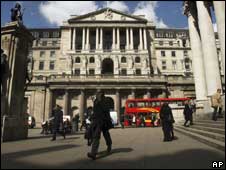 Or, to be more explicit, is there a risk that we could do irrevocable harm to one of the few industries - financial services, the City of London - which has a significant competitive and comparative advantage?
This matters.
Because if we are entering a sustained period of low global growth - if there was a bubble element to the prosperity of the past few years that won't return - then we're going to need the odd world-class industry more than ever, to generate overseas earnings, to pay our way in the world.
For the past couple of hundred years or so, we could point to our banks, insurers, lawyers, accountants and related business as among the best in the world.
And even where the firms based in London weren't British in a strict legal sense, they provided employment and tax revenues to the benefit of the UK.
However right now, it's fashionable - and many would say reasonable - to loathe banks and bankers.
The wholly plausible argument is that top bankers' greed and inability to control the risks they were running has brought the economy to its knees and is causing misery to millions.
The pricking of a credit bubble - which they pumped up - is now devastating manufacturing industry from South China, to Japan, Germany and the British East Midlands.
In fact, there's evidence that the financial services industry, whose excesses have caused (to a large extent) the first global recession for more than 60 years, will suffer less than businesses which make solid, real stuff for export.
It's an argument for another time whether most opproprium should fall on lenders who provided dangerously cheap credit or borrowers who used that credit to construct surplus manufacturing capacity - which is now being painfully written off.
 But it does add insult to our injury that some of those bankers responsible for our woes are still receiving hefty bonuses (even if payment at Royal Bank of Scotland, for example, is being deferred) and others have retired with lavish nest eggs or on fat pensions.
It just doesn't seem fair, does it?
Can you blame President Obama for lashing out at AIG - which wouldn't be alive today without almost $200bn of support from American taxpayers - for paying bonuses to bankers whose crazy deals almost killed the giant insurer?
Isn't it understandable that in Britain Sir Fred Goodwin's pension pot of more than £16m turned him into a lightning rod for public ire about the boom-to-bust journey of the banks?
But here's the terrible truth: we need banks and bankers, to secure our own future prosperity.
And though we might want to shame all decent people into choosing any career but one in the City, that would not be very smart.
We can perhaps all agree that the UK became too dependent on growth generated from the City.
During the past few years, when 10% of economic output, a third of growth and many tens of billions in tax revenues were generated by financial services, we did have far too many of our eggs in one basket.
Many would say our dependence on the City was the culmination of decades of failure to broaden the base of our economy: an indictment of the industrial policies of successive governments.
But to say that the City became relatively too big and important does not mean we should shrink it to nothing.
That would be a fast route, almost certainly, to penury.
The City, obviously, has to change.
Banks have to get better at measuring and containing financial risk.
They have to help us, in general, to borrow less and save more.
They have to vastly improve the services and products they provide to households and businesses for the generation of sustainable wealth.
Also - and importantly - they will probably have to do all this for less remuneration and rewards that are more closely aligned to the interests of their customers and owners.
But if the City can change its spots, then the onus would probably be on us to forge a new entente, a new compact, with banks and bankers - for their good and ours.
 I'm
I'm 






Page 1 of 3
Comment number 1.
At 10:43 17th Mar 2009, MrTweedy wrote:Britain had a trade surplus in banking and insurance - our exports of invisible services were greater than our imports.
"The UK traditionally counterbalances its shortfall in trade in goods with a surplus in the supply of services, such as transport, banking, and insurance, to the rest of the world." source - BBC
With our financial industry on the back foot, sterling has fallen against all world currencies.
What else can we export?
Complain about this comment (Comment number 1)
Comment number 2.
At 10:47 17th Mar 2009, anewworld wrote:Hug a banker!
Myners offers a grudging respect to Sir Fred for his "dexterity" in forgoing his salary....of 1.5m whilst securing his pension pot of 16m!
It is this "honour among thieves" that sickens me.
What a cunning fox.
Complain about this comment (Comment number 2)
Comment number 3.
At 10:49 17th Mar 2009, BasaltRocky wrote:Robert,
Why today post a banal blog entry on the general macro-economic benefit of banking in society ?
There are so many shenanigans going on out there right now, with bigger than huge sums of money being splashed around by Government, and with various entities creaming off 0.25% of it here and 1% here, that our economy and wealth distribution is changing irreversibly. This follows the slightly smaller scale but longer-term shenanigans of previous years.
And then there's the rapid devaluation and future taxation-at-slavery-levels of Mr UK Average.
As a journalist, you have the chance to point out and highlight a small part of these ongoing shenanigans !!
And yet you keep silent, instead posting bland comment !!!
Ouch !!
Complain about this comment (Comment number 3)
Comment number 4.
At 10:50 17th Mar 2009, Hawkeye wrote:Robert,
Your suggestions are predicated on the assumption that banking generates wealth. I get a sense that the last 20 or 30 years of "prosperity" created by the financial sector was a mirage. High Finance (especially derivatives) merely transfer wealth, not create it.
We were not more productive as a nation, or even through globalisation. Getting low cost labour to make things for us is not "innovative". We need a profound champion of sound economic principles, not the obfuscation of finance.
To paraphrase Von Mises: A man should not delude himself that he has found an innovative way to heat his house, by burning all his furniture.
Complain about this comment (Comment number 4)
Comment number 5.
At 10:52 17th Mar 2009, Dave Manchester wrote:Well this government virtually said only the financial sector mattered, and the rest could could be glorified tourism not too long back.
We're now reaping the consequences of having some sectors grossly outsize others, rather than having a balanced economic base from which to rest the economy of.
The UK has been like an unbalanced see-saw, the massive the public sector liabilities on one side, everything other than the financial sector on the other, with the financial sector being the moving fulcrum to try and balance it all out.
As for bubbles, we're seeing the wisdom now of managing boom and bust in the Thatcherite way, rather than maintaining the boom through debt like the Brownite way.
All systems fail at some point, but Browns has been catastrophic, and the snivelling and spinning liar still tries to wriggle out of all responsibility.
Complain about this comment (Comment number 5)
Comment number 6.
At 10:55 17th Mar 2009, Bppby wrote:Because I want my money back from the greedy, sociopath Knights it doesn't mean I want an end to banking until the end of time.
Why link these two things in the same blog? Weird.
Complain about this comment (Comment number 6)
Comment number 7.
At 10:56 17th Mar 2009, romeplebian wrote:The onus is not on us at all Robert, it is up to these people proving to us that they can be what they should be.
lets think about this one,
has any other industry plunged us into this much debt before ? no
has any other industry made the money for its employees like this one before ? no
have the public lost more out of this industry than any other before ? yes
the profits generated by the city over the last ten years has been wiped out, the rich poor gap is growing, how in Gods name do we have to be in any way forgiving for this ??
What about concentrating on the positives, the institutions who have acted and operated like proper banks and building societies ??
Yes we need a banking service, but we dont need the millstone that we have now.
Lets face it what do our financial experts have left to peddle, there is no money out there and many of the businesses are pot less anyway, having gone from progit centres to borrowing to feed the monster that is shareholders and directors bonuses
It wasnt the UK who became dependant on the City's rate of growth it was the government past and present, rather than having a balanced outlook they saw the city as the place to be.
So you can keep banging on about how its the publics fault, and everyone borrowed too much and how the city whizzkids are gods etc etc etc.
People do not want the boom bust cycle of the past 100 years, and it is now when it cant get much worse that the system is changed,
otherwise in a few years time, we will have another boom for a minority of the population, whilst the rest suffer, and then we will get to pick up the pieces of the next boom
Complain about this comment (Comment number 7)
Comment number 8.
At 10:58 17th Mar 2009, jd6969preston wrote:Better layout Bob!
Complain about this comment (Comment number 8)
Comment number 9.
At 10:58 17th Mar 2009, joeplumber wrote:So all the money pumped in to the banks will be paid back by the banks so that our children and grandchildren will not be lumbered. I think not.
Had we have let the banks go it is Johnny foreigner who would have picked up the tab, not my children and grandchildren.
We are one the last legs of a failed system the quicker everyone realises the better.
Complain about this comment (Comment number 9)
Comment number 10.
At 10:59 17th Mar 2009, somali_pirate_SP500 wrote:PIRACY HAS A PROUD TRADITION IN ENGLAND but you go too far this time!
for the next few years the British govt (whether Lab or Tory) would be wise to tone it all down and at least pretend to properly regulate the City; otherwise the UK will be risking severe sanction from both the US and EU
and let's not forget that the meltdown began at 1 Curzon Street, Mayfair, where AIG ran their big CDS operation; the SKULL AND CROSS-BONES STILL FLIES THERE
and that RBS execs may be sued in the US
and that London is a major hub of the tax avoidance and off-shore tax haven industry in the Caymans, Channel Islands etc etc
for the next few years it would be best to just separate investment banking from the High St banks
the City will become a dull place, much as it was up until 1986; just regular banking
as for the general wealth and well-being of the UK people like Robert should read The Spirit Level, the new book about the harm that inequality is doing to EVERYBODY in the UK and US; rein back on the City bonus culture and we will have gone a long way to create a better country
Complain about this comment (Comment number 10)
Comment number 11.
At 11:01 17th Mar 2009, RefMinor wrote:This comment was removed because the moderators found it broke the house rules. Explain.
Complain about this comment (Comment number 11)
Comment number 12.
At 11:01 17th Mar 2009, spur22 wrote:This comment was removed because the moderators found it broke the house rules. Explain.
Complain about this comment (Comment number 12)
Comment number 13.
At 11:04 17th Mar 2009, hughd22 wrote:I don't loathe bankers, they're just doing their jobs. It's the foolish politicians I despise, who were (and probably still are) obsessed with the glamour and glitz of the city and fooled the bulk of us into thinking that, through low interest rates and light-touch regulation, we were somehow all 'rich' because of house price inflation. Until there's some sanity in the housing market, decent security for tenants (and proper safeguards for landlords), and a recognition that if your house goes 'up' in value by a few quid it doesn't mean you can spend the difference!
Complain about this comment (Comment number 13)
Comment number 14.
At 11:05 17th Mar 2009, BrokenArrow1962 wrote:'there's evidence that the financial services industry, whose excesses have caused (to a large extent) the first global recession for more than 60 years, will suffer less than businesses which make solid, real stuff for export.'
Only because the Government has determined as much - many banks would be and should be bankrupt without such taxpayer generosity.
The tone of your article once again suggests that the UK is 'good' at banking - that we have a large number of highly skilled operators. CLEARLY WE DON'T and the rest of us will be paying dearly for that misconception for some years to come.
Complain about this comment (Comment number 14)
Comment number 15.
At 11:05 17th Mar 2009, Steve wrote:Robert,
You quite rightly state that there was a bubble element to growth over the last few years.
You also state that financial services had too much of UK economic output.
So how much of the UK's growth has been purely illusory?
Rebalancing the economy will not just mean hugging a banker and hoping they've learnt some lessons, it will also have grave consequences for public spending. So maybe we're going to have to like each other a lot more and be prepared to provide the support to those less fortunate.
Complain about this comment (Comment number 15)
Comment number 16.
At 11:06 17th Mar 2009, possumpam wrote:Robert. You know perfectly well that a Leopard never changes its spots.
It also has teeth and claws for as long as it lives.
It has a huge appetite and needs to often kill and devour its prey in order to maintain itself. Rarely
does any prey escape this awesome predator but
if it does, that prey is maimed for life.
The only harmless Leopard is a dead Leopard.
Complain about this comment (Comment number 16)
Comment number 17.
At 11:06 17th Mar 2009, Zootmac wrote:Too big to loath?
I don't think so.
Complain about this comment (Comment number 17)
Comment number 18.
At 11:06 17th Mar 2009, lordBeddGelert wrote:Can I just say that I really DETEST these super-wide columns !!!
This is not a book, it is a blog, and one should be able to read each line with a sweep of the eye - reading it like a news paper column - we are reading this on laptops and wide screen, not those flippin' kindle things.
Please, change it back, because this format stinks very much indeed.
Complain about this comment (Comment number 18)
Comment number 19.
At 11:07 17th Mar 2009, jd6969preston wrote:Bob,
I don't think you`ll find many bleeding hearts around when it comes to the banks and financial services. This industry has gotten away with the biggest fraud in history over the past decade and many men and women have become richer than beyond their wildest dreams. And for all of that what do we as a society have to show for it??? Sure they have created great wealth on paper amongst things that don't really exist.
It sounds like you are asking us to put our faith in this lot again. Enough is enough Bob!
https://creditcrunchedoutinuk.blogspot.com/
Complain about this comment (Comment number 19)
Comment number 20.
At 11:07 17th Mar 2009, Clive of India wrote:The banks that cannot fail" should be split up into smaller units which CAN be allowed to fail. Investment and retail banking should also be separated so that retail is virtually risk-free and investment banking is riskier, but offers much greater rewards or losses. Retail banking should not involve ANY bonuses at all. ALL banking products should all have to pass a stiff regulatory test BEFORE they can be introduced. ALL banking risk models should be published openly.
ALL company directors should be obliged to put their assets (principally homes) at risk if they fail to act honestly, honourably and in the interests of shareholders. Yes, directors may choose to go abroad - (oh yes, they will all go (NOT)) but there are plenty of candidates who could replace them and perhaps the old boys club would then be broken for good. I have no problem with directors earning big rewards for good performance, but too often there are great rewards for failure or at best modest performance which any passing mug (with half a brain) in the street could have achieved. Small company directors wanting a loan are currently being asked to put their houses on the line by banks - this ensures that the reason for the loan MUST be convincing at least to that director. PLC directors take no such risk currently and yet reap vast rewards for success AND FAILURE - this is totally wrong and MUST be stopped.
Performance MUST be measured and be rigourously checked before any bonus is paid and it must be over at least a 5 year period (even after they have left the company). This would stop the bright spark who works for 2-3 years as a director, causes mayhem, gets bonuses, then jumps ship before the proverbial hits the fan! Directors also should be forced to undertake recognised and meaningful qualifications in their field. There are far too many duffers out there in bsiness AND POLITICS and its about time they were stopped in their tracks.
So, how wouldl the above affect entrepreneurs? well it wouldn't, these proposed measures would only come into force when a company had reached a certain size at which point it would be reasonable to enforce the new rules.
The ability of large companies to simply swallow up other companies by taking on vast amounts of debt should be regulated.
Complain about this comment (Comment number 20)
Comment number 21.
At 11:08 17th Mar 2009, Bombero wrote:It's a shame we could not comment on Robert (son of Lord) Peston's comments on Jon Stewart's slaying of Jim Cramer on the Daily Show; "BBC business editor Robert Peston said that he did not feel UK financial journalists could be accused of being too easy on financial institutions." He would say that, wouldn't he? Being a "UK financial journalist" and all.
Complain about this comment (Comment number 21)
Comment number 22.
At 11:09 17th Mar 2009, stanblogger wrote:It is true that with most of the world's financial services institutions on their knees, there is a great opportunity for those which are able to recover quickly and start working effectively.
But the lessons of history must be learned, if UK institutions are to lead the field. One of the most striking is that none of the top executives in RBS and HBOS had any formal qualification in banking. It has become clear that they also had little understanding of the calculation of risk or of what was liable to happen when the asset bubbles started to burst.
The promotion and recruitment processes of these and other large companies must be reformed to ensure that only those who have a really thorough understanding of the business they are to run, get to the top. The promotion of favourites and skilled greasy pole climbers should be stopped.
Complain about this comment (Comment number 22)
Comment number 23.
At 11:10 17th Mar 2009, Japanbytes wrote:Hmmmm. So you would like us to forgive and forget?
These 'sharks' also want forgiveness - does this ring a bell?
They are after all only 'money changers' they want to blame us for taking on too much credit, we didn't regulate them enough, their shareholders have and are losing money, they want us to bail them out and then so like a doting parent - it's ok all is forgiven - on yer bike!
Complain about this comment (Comment number 23)
Comment number 24.
At 11:11 17th Mar 2009, johnproblem wrote:We should blame it all on Wall Street - they invented all those glittering derivatives that the City bought. In the old days, when the City was populated by chaps, there was a chance that the phrase 'Timeo Wall Street et dona ferentes' would have sprung to mind. Not with the new breed of investment banker. They were dazzled by the sleight of hand of Wall Street's most accomplished card players. And the promise of out-bonusing their mates, and acquiring Lambos and yachts and gallons of Krug. We need them, perhaps, but - like my dog - they need to be on a strong leash.
Complain about this comment (Comment number 24)
Comment number 25.
At 11:11 17th Mar 2009, Turkishmoon wrote:It would be stupid to throw the baby out with the bath water but anyone who has dealt with banks, in better times, as I have when running a small business, will not forget their smug arrogance. Yes the banks do need to be better controlled and remuneration packages must be brought in line with the real world, but how do they change their culture? Maybe by weeding out the fat cats and introducing professionals who really understand their business, would be a good start. If that was followed by treating small businesses as customers and not second-rate servants, then that would be a transformation in the banking sector that would be welcome. However, I am not sure how you achieve such a fundamental change in culture in organisations that know from experience that if they fail, the government will bail them out!
Complain about this comment (Comment number 25)
Comment number 26.
At 11:13 17th Mar 2009, AqualungCumbria wrote:"10% of economic output, a third of growth and many tens of billions in tax revenues were generated by financial services"
But all these figures need to be re-assessed because they were not correct they were flawed it was figures on a piece of paper not real money...
The manufacturing industry, thats the one we have sold off to slave labour in the east is whats required,or a world war..and with russia and china both posturing i hope we can get some of our manufacturing industry back.
Complain about this comment (Comment number 26)
Comment number 27.
At 11:13 17th Mar 2009, doctor-gloom wrote:Robert, this is a flawed argument. You are effectively peddling the now discredited 'Porter thesis' on competitive advantage. It's not about kicking the banks. It's about making sure that our economy is not damaged by them. We had a large financial sector because we were dealing in dodgy securities. Furthermore, given the current state of the stock market and other asset values out there any gains from the so called competitive advantage of our financial system have been lost. That competitive edge has shown itself to be an illusion, a fiction, nothing more. Like it or not we simply cannot afford not to bash the banks. Otherwise we will miss the opportunity to restructure UK plc. We simply cannot afford to be overly reliant on the chancers in the city ever again.
Complain about this comment (Comment number 27)
Comment number 28.
At 11:13 17th Mar 2009, shmirsh wrote:You state that there is a "terrible truth" that we NEED banks and bankers. Why? The people running these banks, such as Fred Goodwin are hapless fools. Any randomly selected hapless fool could have made equally awful decisions which led to economic meltdown. We do not need THESE bankers. Get rid of the failures that are still in place. Fine the failures who have been kicked out due to the mess they have caused.
The banks themselves are hopelessly lost in their own smoke and mirrors game and have institutionalised the very problems against which we now rail. We do not need THESE banks!
We need new ideas, not continuing reliance on the same old ideas that got us in this mess in the first place.
Innovate!
Complain about this comment (Comment number 28)
Comment number 29.
At 11:14 17th Mar 2009, relevanceman wrote:Robert,
Let me comment on your first 'low hanging fruit':
'comparative and competitive advantage'
Surely you are saying London's Financial entities ability to lose vast sums of money whilst filling their own boots with the aid of cheap/underpriced and mainly foreign loans?
Finally one question that has been nagging me is this:
How much tax was paid by fred goodwin/RBS when his pension pot was increased by £8 million or more?
Surely a significant tax liability was immediately raised?
The tax books I have breezed through do not give an answer, could a blogger please help and let us all see if in fact the £8 million was in fact a nearer £13 million uplift (based on 40% tax).
Complain about this comment (Comment number 29)
Comment number 30.
At 11:17 17th Mar 2009, Sasha Clarkson wrote:"But if the City can change its spots ........"
This is the crucial one Robert. Not without much public humiliation and a truth and reconciliation commission I think. For a century at least, the city has existed to cream off wealth created by others, not to create that wealth. Look at the wild daily fluctuations in share prices. The Economy's real prospects do not fluctuate daily like this. Some institutions are clearly still gambling with other peoples money, creating commissions, fees etc. These people do not create wealth - they are parasites and should be regulated/taxed to reduce their numbers and make sure that, as far as possible, "investment" is for long term creation of real wealth, not a euphemism for betting other people's money and newly created debt on the market casinos.
The culture of adulation of city institutions needs to stop. Is it, as the news media would suggest, always a good thing when share prices go up? Looking at history, clearly not. Too many politicians and journalists are still communicant members of the church of Mammon!
An interesting article is this:
https://us.ft.com/ftgateway/superpage.ft?news_id=fto101020081710215595
- an article by Lord Myners last October, full of adulation for Goldman Sachs. He does mention their past spectacular failures, but as if they don't matter. In fact, the collateral damage at the time was huge. These people are human and if anything more fallible and with less conscience than the rest of us.
Complain about this comment (Comment number 30)
Comment number 31.
At 11:20 17th Mar 2009, Leigh Caldwell wrote:This is a good article, but it doesn't really go into the underlying issue. Too many people make a fetish out of manufacturing - as if the only valuable things in life are physical possessions. Not so!
We get more value, throughout our day-to-day lives, from human interaction, knowledge, and other services than from the physical objects around us. What's more, the whole point of the modern economy is that managing the marketing, financing and delivery of products and services is a critical part of making sure they happen effectively. Expertise in doing this is just as valuable - or more so - than being the people whose hands weld the objects together and put them in boxes.
I keep seeing this myth coming up, and Robert has made a good start at dispelling it. More is needed please! For example to argue against the guy discussed in the following article:
https://www.knowingandmaking.com/2008/12/economic-misconceptions.html
Complain about this comment (Comment number 31)
Comment number 32.
At 11:20 17th Mar 2009, Wee-Scamp wrote:Ah well. Here we go. Robert Peston is now leading the vanguard to rehabilitate the City and restore bankers and others to what they believe is their rightful place in society which is essentially at the top of the British establishment.
We would be foolish in the extreme if we let this happen.
Complain about this comment (Comment number 32)
Comment number 33.
At 11:22 17th Mar 2009, Maria Ashot wrote:Time to hug a banker? No, not quite yet, Mr Preston.
Others also make vital contributions to the economy. And charge far less.
These same "others" receive precious little in the way of help or understanding from bankers themselves.
Well, now the shoe is on the other foot.
Now banks can see how all the effort they failed to put into building excellent relationships with average clients (As used to be the norm) translates into considerable ill-will -- deserved, indeed earned, by many bankers.
Ultimately, banks are buildings & institutions; bankers are people. We need the institutions and perhaps some of the buildings. But people who failed to grasp the very basics of "customer support" deserve to lose their jobs, their careers, and their reputations/
Let them do what some others have had to resort to do, to survive. Today the BBC Front Page even seems to be advocating "prostitution to make ends meet," based on New Zealand's social experiment. As a woman and a mother of a lovely young girl who will struggle to find honest work thanks to these bankers (as I have), I am APPALLED. It has com to this: to urging women to debase themselves gratifying perfect strangers to make ends meet: and yet you ask em to "hug a banker."
Well, what has the banker done for me, lately? Charged usurious penalties and fees, engaged in outright lies and even thrift of money from my account (Wells Fargo, and they admitted it, and kept the money), repossessed my only vehicle 8 years ago (on a 45-day late payment, even after I brought it current with all kinds of extra fees on top of that; and we have all five been walking ever since), and denied me even the measliest credit to sustain my business.
I shall keep you posted if the situation changes. (On the other hand, I will gladly hug you, Wise One, any day.)
Complain about this comment (Comment number 33)
Comment number 34.
At 11:27 17th Mar 2009, stevewo wrote:No, not yet.
The government should rush through NEW LEGISLATION, where, if a company is saved from certain bankruptcy by HMG, all contracts with all staff can be re-negociated (salary, bonuses and pensions).
The Americans should do the same.
These incompetent "executives" are laughing at us and making fools of the government.
It's not rocket science.
HMG needs to ACT, not waffle.
Complain about this comment (Comment number 34)
Comment number 35.
At 11:31 17th Mar 2009, Motorskills wrote:AIG is being excoriarted for paying bonuses with taxpayer money; Robert, any chance you will ask the recipient banks whether they will do likewise?
If they had any sense at all, THEY would pay for the AIG bonuses, a slight offset to the PR mess they rightly fnd themselves in.
Complain about this comment (Comment number 35)
Comment number 36.
At 11:32 17th Mar 2009, Vinshada wrote:The fact that banking services became the corner-stone of British survival should make people look to an alternative, rather than build it up only to see it fall again.
Service industries in general and especially banking services are shaky, as there will always be someone somewhere in the world willing to do it for less. It's not like it requires any specialist knowledge or skill, just a stable political situation.
It's far better to be dealing with the inelastic demands like agriculture, construction etc.
Complain about this comment (Comment number 36)
Comment number 37.
At 11:33 17th Mar 2009, sanity4all wrote:This comment was removed because the moderators found it broke the house rules. Explain.
Complain about this comment (Comment number 37)
Comment number 38.
At 11:34 17th Mar 2009, invisiblehandadvisor wrote:A vast majority of bankers doesn't need to be hugged, they need to be strictly controlled and taxed like any other profession, maybe even more so because of the huge sums involved. Fast and easy money corrupts, any time.
Please read more at:
https://globalinsights.wordpress.com/
Complain about this comment (Comment number 38)
Comment number 39.
At 11:36 17th Mar 2009, doctor-gloom wrote:I imagine it's not easy moderating these blogs but I have to say, someone has to beef-up the moderation process. There's hardly any chance of commenting on other blog entries etc. at the moment. Is anyone listening?
Complain about this comment (Comment number 39)
Comment number 40.
At 11:37 17th Mar 2009, jd6969preston wrote:The FSA is going to cap mortgages to 3 times a person`s salary. No more 100% mortgages on offer from your banker friends Robert.
"FSA To Cap Mortgages to Three Times Salaries"
https://creditcrunchedoutinuk.blogspot.com/
Complain about this comment (Comment number 40)
Comment number 41.
At 11:37 17th Mar 2009, stevewo wrote:There are many important industries in this country, not just financials.
But it's funny how the financial industry is the only one that pays itself in lottery jackpots.
That's because it's the only one that has access to everyone elses' money.
This has to stop, regardless of how important the industry is.
There is undeniable public anger.
Complain about this comment (Comment number 41)
Comment number 42.
At 11:37 17th Mar 2009, Nick Drew wrote:we certainly need bankers - of course - but what exactly should they be permitted to do, given how vital it is that they stay afloat and healthy ?
Most pertinently, should retail banks be allowed to pursue investment bank strategies ? This seems to lie at the core of the banking story of the hour, namely Barclays travails. Their keenness to continue operating BarCap in the manner of the last few years is seemingly forcing them into all manner of contortions.
Complain about this comment (Comment number 42)
Comment number 43.
At 11:39 17th Mar 2009, U13868622 wrote:[Unsuitable/Broken URL removed by Moderator][Unsuitable/Broken URL removed by Moderator]In the last few days we have heard rhetoric about putting ethics back into economics, the need to help the global poor and the need for a fundamental reform of the international regulatory system. Thoughts become actions. And we need a quantum change in economic thinking. With the G20 approaching it is time for unified action. A more positive and resilient economic mindset is required. [Unsuitable/Broken URL removed by Moderator]
Complain about this comment (Comment number 43)
Comment number 44.
At 11:39 17th Mar 2009, RagJunky69 wrote:The bonus solution should be quite easy to solve - Pay none of them - globally.
In the current situation, it’s an extremely feeble argument..."We must maintain a high level of bonus to retain the best people".
Cobblers!
All of the worlds financial districts are in pretty much the same position, so if half a dozen Governments lay down the law and no bonus is paid in, say, London, New York, Paris, Frankfurt and Tokyo, where would the "Rats leaving a sinking ship" hot shot bankers turn up? Delhi? Sydney? Moscow?
I don’t think so. Because if they left the golden zones now, there might not be such an easy route back in the future when other NEW bums are on THEIR old seats.
Tell them all "NO". Call the big global bluff.
Most thinking people are abhorred by the scale of these payouts, so few within and none without the industry would dare complain. Two of the biggest players/victims/felons - the UK and US - could have led the way by agreeing not to pay. Simply dismiss any legal argument and if they want to fight for the money - let them. The public would surely be solidly behind any and all Governments taking this course of action to save PUBLIC money.
In general, I believe we have been FAR FAR FAR to easy on the people - and companies - responsible. A number of CEO's/COO's and Chair people should currently be serving 6-12 months and about half a dozen banks shouldn't actually exist right now.
No deterrent has been demonstrated to future individuals. In fact, were doing the opposite by allowing reward for incompetence and folly.
Sadly, this WILL happen again.
Complain about this comment (Comment number 44)
Comment number 45.
At 11:40 17th Mar 2009, Don_Kuan wrote:I don't mind they are rich if they pay tax honestly, otherwise I don't see any difference between them and the new age travellers.
And why Fred is still 'Sir' if he treats Britain like this? I thought 'Sir' is for honest characters that contribute to the country, not opposite in every possible way.
I am very surprise that we rely on financial services that much and not on R & D to push our economy.
To me, one of the biggest mistakes this country has made is not to push renewable technology early enough and let other european countries to grab the market. I firmly believe Britain easily has the skill, brain and the talents and this country is well suited for high skill manufacturing. We can't keep worry about those little factories in the villages and keep counting down how many have close down.
We need to push the big picture ahead to create more jobs than worrying to lose them.
Complain about this comment (Comment number 45)
Comment number 46.
At 11:41 17th Mar 2009, fuzzyairhead wrote:Robert, you can't honestly mean it?
hug a banker?
With the outrage, emotional sentiment and anger in this country, mainly amongst the unemployed who have now been told they will be long term unemployed because bankers had their fingers in the tills, they should be grateful they still have jobs and haven't been lynched.
And we should all be grateful we don't have suicide bombers here.
That could end up bein a very nasty hug!
Complain about this comment (Comment number 46)
Comment number 47.
At 11:45 17th Mar 2009, thorasgain wrote:"A golden oppertunity"
As far as the public is concerned, the banks are the second most powerful institution in the land. The first is the law, which has the power to lock you away. The banks have the power of bankruptcy or repossesion.
The banks can bankrupt, or reposses, just then when things are going wrong. Thats the cause of animosity, but when things go wrong; job loss etc, there is no one else to turn to, and the banks rightly say we must cover our exposure.
There is within the system of banking no fall back position for the borrower!
Transparency and trust: The banks are certainly not transparent; the credit rating of an individual has become in the computer age an art form. For example a late payment on a credit card has a negative effect on a persons credit rating- is that fair? What else plays a role, how are we to find out what effects our credit ratings? Are we supposed to become model citizens?
The banks are not perfect:How often at the end of a banking day is there too much or to little cash in the branch office, because a bank teller has miscounted?
Can I trust my bank? I think a lot of people don't trust their banks- maybe on a day to day basis yes.
Can I trust my bank with matters which go on in the city of London. After your report from yesterday about Credit Default Swaps- a form of betting? And the reluctance of AIG to name and shame, trust and tranparency does not exist at the top levels.
Golden oppertunity: Trust must be regained, and a lender of last resort would be useful for individuals and businesses facing unexpected financial problems.
If the bank lends me an umbrella when the sun is shining, it cannot be allowed to take it back when it rains, or atleast there must be a way of finding another umbrella when it does rain: Boom or bust!
Complain about this comment (Comment number 47)
Comment number 48.
At 11:45 17th Mar 2009, doctor-gloom wrote:Oh by the way Robert, any thoughts on Darling's caving-in to the banking lobby on on banking regulation? His 'lets do more voluntary stuff' attitude? The rot is setting in. This government is just doing what it does best, promising lots and delivering little. We need laws not voluntary codes of conduct.
Complain about this comment (Comment number 48)
Comment number 49.
At 11:47 17th Mar 2009, gordont10 wrote:Yes, we do need bankers and, although they are a convenient scape goat at the moment, some deservedly so, we should also remember that no one forced us to borrow to excess and that non of us were decrying large gains in our "investments" and house prices were we? The blame for this unholy mess lies with ALL of us, not just politicians and bankers. We should all have the courage to admit our part in it all and stop looking for someone else to blame, or to demand a meaningless apology from.It would be a lot better if we concentrated on getting out of the mess and leave the inquest till later.
Complain about this comment (Comment number 49)
Comment number 50.
At 11:47 17th Mar 2009, sportingpunter wrote:As someone who has spent his career in banks (now at a hedge fund), I think a reduced reliance on The City in this country will ultimately be a postive thing for society. Although the vast majority of people who work in these places had nothing to do with the excess leverage they built up (despite constant media nonsense tarring them all with the same brush), the fact remains that earnings in many of these roles are excessive a) relative to the value they add and b) relative to other careers. Most people in the The City can't seem to grasp that a trader can only make $100m a year for his bank if he is given a lot of capital. How much would that same trader earn if he worked for himself at home? Answer - not very much. The bulk of the rewards should have gone to the providers of that capital - i.e. the shareholders. Instead, boards plundered these businesses on behalf of employees. A hedge fund typically charges a 20% performance fee. Investment Banks charge their shareholders 50%! (typical compensation ratio).
Secondly, most of the returns made are a function of market conditions, not skill. There has never been an attempt to place hurdle rates on performance in these banks.
Finally, I am glad earnings will be lower in The City. A lot of my friends did other careers - Military, Doctors, Lawyers, Media, etc. Twenty years ago these would have been good enough to send their kids to private school (a basic benchmark for upper-middle class aspirations). Today, unless you work in The City, you have no chance. What a dull society it will be if finance is the only career you can do to get the moeny to do right for your kids.
Complain about this comment (Comment number 50)
Comment number 51.
At 11:49 17th Mar 2009, Henry Quimper wrote:Maybe I am losing critical faculties in my old age, Robert, but I find it hard not to agree with every word you have written. I am a net saver and rely on income from my savings to supplement my pension. The savings income has been destroyed. Bank bashing is not going to restore it. Getting the banks run sensibly will and we will need good people - not testosterone poisoned salesmen to run them
Complain about this comment (Comment number 51)
Comment number 52.
At 11:49 17th Mar 2009, TheEnglishman wrote:Financial Services has a list of 'scams', from Front End Loading of Pensions, through Misselling based on the 'Commission Principal' to what is in effect Insider Dealing in the City where the Pensions funds lend shares for short selling and allow Bankers to pocket mouth watering sums, and all their power comes from the plebs pension money. As for Government, that too is corrupt, the sleaze in parliament aside, Myners , the man who paid the Piper on our behalf didn't even have a tune to call, and then claims he couldn't have called it even if he did. Bankers, the City and Politicians all need to be sorted out, the sad thing is that the Lib-Lab-Cons are, to all intents and purposes, the same party, so a vote for any of them is a vote for the status quo. Where is Guy Fawkes when you need him?
Complain about this comment (Comment number 52)
Comment number 53.
At 11:52 17th Mar 2009, anewworld wrote:The peculiar harrassed expression on the faces of the MPs questioning Lord Myners worry me.
The idea is afoot that we cannot legally reclaim the benefits these bankers have accrued.Harriet Harman only made matters worse by wading in threatening legal redress without checking her facts.
Here is something that can be done today;
Set up a new tax band of 90 % for all PENSION income over 100K per annum.
That would leave Fred with 120,000 per annum ( slightly less than a prime ministers wage). It would give back the taxpayer 580 k per annum.
Cancel all FURB's pension arrangements. These unapproved schemes are just a scam to redirect profits over and above legal pension plans.
Obviously tax planners will look for another loophole to exploit but in the meantime we will sleep peacefully knowing that Fred and co are not able to escape the tax.
Complain about this comment (Comment number 53)
Comment number 54.
At 11:52 17th Mar 2009, ruralwoman wrote:Bankers are a sideline, it's the lack of effective regulation that allowed incompetent greedy people at the top of the banking muck heap to get away with their swag.
My finger of loathing is not pointing at my excellent demoralized female banker who truly deserves a hug,
or even the sacrificial public scapegoat Fred Goodwin, but instead poked directly at the people in charge of our financial system for 11 years up to and during the point of meltdown... crash Gordon and co.
Loveeeee this new blog, clean and simple.
Complain about this comment (Comment number 54)
Comment number 55.
At 11:54 17th Mar 2009, relevanceman wrote:Robert,
Let us not forget that UK banks (other than RBS THAT HAVE GIVEN UP THEIR TAX LOSSES) will be able to pay no corporation tax due to their very high losses n 2008 so the government will not be getting much tax out of them for some time.
Also the, as Vince Cable, said 'limp wristed' AD announcement of volunary self regulation as to tax avoidance it appears to me that the government wishes to rewind the clock back to the casino days of 2005/6 as quickly as possible so that labour can govern for another four years as, to paraphrase GB he knows the answer to UK's problems!
Complain about this comment (Comment number 55)
Comment number 56.
At 11:54 17th Mar 2009, AlwaysKnowsBest wrote:Perhaps we do need bankers, but we don't need people like Fred Goodwin, who have done unimaginable harm to the economy and to the lives of millions of ordinary people but don't have the decency to acknowledge and take responsibility for what they have done.
Complain about this comment (Comment number 56)
Comment number 57.
At 11:54 17th Mar 2009, GRIMUPNORTH77 wrote:I was entitled to a bonus contractually last year c.10% of my salary - I have not taken this although I still hope to once our cash flow allows. I have no equity stake in my business. I just want my business to survive.
The bankers/AIG on the other hand have taken the bonuses they are contractually entitled to. Their attitude being - is in my contract.
At the same time our government/US Govt has kept these companies afloat because we 'need them'.
This may or may not be the case but until the individuals within the banks start acting responsibly and as if they care about the rest of the country then the rest of us have no other natural reaction than to go on loathing them and also mistrusting them to ever put their house in order.
I now quote from your article
'The City, obviously, has to change.
Banks have to get better at measuring and containing financial risk.
They have to help us, in general, to borrow less and save more.
They have to vastly improve the services and products they provide to households and businesses for the generation of sustainable wealth.
Also - and importantly - they will probably have to do all this for less remuneration and rewards that are more closely aligned to the interests of their customers and owners.'
I do not believe that any of the above will happen UNLESS a new competitor is set up that is big enough to do all the things above but without the greed - this will take all he business away from the big banks and force them to commercially change their attitude. The 'Peoples Bank' is needed to be the catalyst to change the 'City banks' for the better.
The leopards in the City now are the same leopards with the same spots - once the jungle returns back to normal so will they - we need a new animal in the jungle to force them to change and I'm sorry but I don't think this is Lord and Lady FSA who lunch and dinner with Lord and Lady Bank.
Complain about this comment (Comment number 57)
Comment number 58.
At 11:55 17th Mar 2009, ima_confused wrote:This comment was removed because the moderators found it broke the house rules. Explain.
Complain about this comment (Comment number 58)
Comment number 59.
At 11:55 17th Mar 2009, stevewo wrote:THOSE WHO ARE SUPPOSED TO BE "LOOKING AFTER" OUR MONEY HAVE BEEN "HELPING THEMSELVES" TO IT.
That is the widespread public view, and it seems is not far from the truth.
Are we all slaves?
Are we all flogging our guts out evey day just to keep 50,000 top financial people supplied with mansions, ferraris and Carribean villas?
Do we have to pick up a TRILLION pound bill for this incompetent lot every ten years?
Reform, reform, massive reform.
Complain about this comment (Comment number 59)
Comment number 60.
At 11:55 17th Mar 2009, magicblackfrog wrote:Good God man, look over your shoulder at what is really going on, you continualy go on about the banks as if they are the countrys wealth creators, THEY ARE NOT, when they have finished creaming off cash for themselves not a great deal is left for either their shareholders or the country at large.
Their purpose is to look after the wealth created by others, they use financial illusions to appear as wealth creators and when, as now the funny money dissapears the real wealth creators are left to pay the bill.
The Government will also find their supply of funny money will have to be removed from the balance sheet sooner or later and it will again be the real wealth creators who pick up that bill, albeit with a new "Fat Controller" in charge.
Complain about this comment (Comment number 60)
Comment number 61.
At 11:57 17th Mar 2009, ima_confused wrote:This comment was removed because the moderators found it broke the house rules. Explain.
Complain about this comment (Comment number 61)
Comment number 62.
At 11:59 17th Mar 2009, frontstops wrote:"The pricking of a credit bubble - which they [the banks] pumped up - is now devastating manufacturing industry"
How can you in all conscience continue to place prime responsibility with 'the banks' when it has become clear that monetary policy failed in its task of securing financial stability and when it has been admitted that the FSA's supervision of individual banks was inadequate? Mr Brown was the author of all this and let there be no doubt about that.
Complain about this comment (Comment number 62)
Comment number 63.
At 11:59 17th Mar 2009, SuperJimBowen wrote:An interesting theme for once.
I do worry about what the reaction will be as a result of this mess. sadly, I think we'll go to a position of hyper-regulation. However, the SEC have shown quite clearly that increasing the number of tick boxes, forms to be filled and hoops to jump through doesn't work. It just means people don't appy common sense.
We need a regulator who can act as a proper policeman. Someone with commercial nouse, experience and above all some common sense (ie not another Lord Myners.) They need to have proper power and be well paid.
Complain about this comment (Comment number 63)
Comment number 64.
At 11:59 17th Mar 2009, HLFBYD wrote:Tens of billions in tax revenue, hundreds of billions to bail out. Net debt rather than in credit. Declare RBS bankrupt and Nationalise it, that would sort out all fat cat pensions. Make Boards finacially liable for irresposible pay and pension packages and common sense pay may take place. To pay people for non existant profits is shear stupidity.
Complain about this comment (Comment number 64)
Comment number 65.
At 12:01 17th Mar 2009, karl wrote:Robert,
Why is the government in such a pickle over Shred's pension and the decision made by the RBS Board?
As I understand it, the directors of a company are personally liable for all decisions they make when a company is insolvent or obviously about to be so. If they are seen to be stripping the company for their own gain, these decisions can be overturned by the liquidators and all assets retrieved.
RBS was effectively bankrupt and salvaged by the govt/taxpayers. Therefore, the board is collectively and individually liable. I would love to see the looks on the faces of the other directors if they were ordered to repay the £17m personally.
Complain about this comment (Comment number 65)
Comment number 66.
At 12:02 17th Mar 2009, diginomics wrote:What is Brownsianism?
The Government's actions are an entirely one-sided implementation of Keynesianism, applied with an assumption the economy is already “mixed”. That is to say “y” million bankers are required because there is no need to change the current “mix”. This is an entirely new form of Keynesianism, which would be better called “Brownianism”. It effectively represents a “freezing” of our comparative trade advantage for the medium term, since in “one fell swoop” the government has committed all its credit worthiness to no planned changes of “human capital” or “skill sets”. If financial services were a special type of cheese, we are now committed to selling our cheese to the world, no matter what the future demand for it.
While the UK will continue to abide by the most important foreign policy directives from the United States, certain changes must now occur to establish ourselves as a more independent provider of financial services. Some divergences in the foreign policy of the UK and the United States will be attributed to the new president’s impact. However such divergences are going to become driven by our need to sell a special type of cheese! The second consequence is that the UK population employed in any sector outside of the financial services sector (except in the export of some goods) is going to face long-term economic hardship.
The “freezing” of our comparative trade advantage under “Brownianism” means the possibilities of Keynesianism to use subsidies to begin the export of new products are limited. The underlying Keynesianism management theory, that global trade is pursued along the principles of “mixed economy” so skills from the labour market are optimised, is lost. As Government investment can be only be directed into export advice for existing visible good manufacturers, there is an urgent need to increase the export of existing digital (especially security) products. Anything that exploits new opportunities from the probable divergence between the foreign policy of the UK and the United States. These divergences will occur in tandem with the need to secure and enhance the external demand for our financial services, which will grow fastest around new export markets.
However any divergence between the foreign policy objectives between the United States and the UK could escalate to the level of distrust prevalent in the 1970s before the “special relationship” was established by Prime Minister Thatcher. The great unknown, like the new American president Barak Obama, is whether those two forces will be self-cancelling (negate each other) or less likely (but more dangerously) combining towards greater instability. In that case Brownianism could result in a hyper-divergence of UK foreign policy from the United States and a significant shift of the UK’s export of financial services marketplace to Chinese investment.
Complain about this comment (Comment number 66)
Comment number 67.
At 12:03 17th Mar 2009, Dreaming_Ben wrote:Amusingly provocative Robert. But NO, ... sorry ... it just isn't true that the financial industry in the form that it took from 1986 to 2008 confers a net benefit to the rest of society. By and large the bankers are playing a zero-sum game against the rest of us. And winning.
Complain about this comment (Comment number 67)
Comment number 68.
At 12:05 17th Mar 2009, truths33k3r wrote:This blog is drivel. The state we are in could not have happened without fractional reserve lending, yet you never mention it.
Complain about this comment (Comment number 68)
Comment number 69.
At 12:07 17th Mar 2009, PETER CLOSE wrote:YES WE NEED BANKS AND BANKERS --- BUT NOT THE ONES WE'RE SADDLED WITH AT THE MOMENT!
Complain about this comment (Comment number 69)
Comment number 70.
At 12:07 17th Mar 2009, allmyfault wrote:Most of the bankers I have met are barely talented or competent.
They may know the rules of their own arcane game and seem to re-write them as they wish; so perhaps appear to be highly skilled and essential. But that is a deception. They are over-paid, selfish and have been for the past 20+ years, very dangerous.
The unholy alliance they made with the Blair/Brown governments to give them the freedom to wreak havoc and steal the booty, should never be forgotten.
We owe them nothing................
they should not be allowed to forget that they are our servants.
We don't need to nationalise them, just take over the remuneration committees and stamp on them every now and again.
Nevertheless-
Regards,
Complain about this comment (Comment number 70)
Comment number 71.
At 12:07 17th Mar 2009, Tumbleworld wrote:Sympathy for the Devil, Robert?
I don't think so.
This isn't about shaming decent people out of banking. There aren't many decent people left _in_ banking -- it's been a magnet for greedy, fraudulent scum for far too long. As it currently exists, the industry is toxic.
It needs to be inoculated against profiteers and fools whose only interest is getting rich. That means rewards have to be controlled from outside -- you don't trust the fox to run your hen-house.
If what remains can be world-class, great. If not, we're far better off with no world-class industry at all than with an industry that's world-class at destroying our society's foundations. And if that means we have to shave a bit off our noses (and our belts), then it's well worth it for a more sustainable, fairer life.
Complain about this comment (Comment number 71)
Comment number 72.
At 12:09 17th Mar 2009, daysof49 wrote:Nobody could stop the “Roller Coaster”
I believe that human behaviour led naturally to the current “crisis” - once controls previously in place were relaxed.
With the continuing loss of mass production industries, successive governments (in the USA and UK particularly) looked more and more to Wall Street and the City to “save” the economy. All our short-termist governments could see was tax revenues! Nobody dared look ahead. Nobody in power that is! Plenty of doom-mongers were ringing warning bells decades ago. (this is a matter of public record). The mass-media went along for the ride as usual, and doom and gloom (and realistic prognoses) were derided, proponents sidelined and castigated, and so the party continued!
Who in power could pull the plug? Who could say “NO” to the vast streams of revenue (which were irreplaceable)? Who would do this - and get thrown out of office for being such a “party pooper”? Nobody.
Now that we are in this mess, who or what can pull us out? I believe that a complete restructuring of capitalism is not only necessary, but inevitable. It will take leadership of the highest calibre and guts to enable society to redefine our National Goals. For a start we have none, and almost never had had, except short term goals (like win the World Cup or some such nonsense). The longer the powers that be keep trying to reinstate a defunct system the longer it will take to restructure and the more pain we will all suffer.
The Victorians had some great institutions. Their society wasn't perfect but perfection appears to have been the goal! The Quaker industries produced their mini welfare states for employees, the Building Societies were instituted for ordinary workers for their mutual benefit, and the country prospered! Was this coincidence? Unbridled capitalism has resulted in unbridled greed and disaster. A disaster whose extent has barely been glimpsed as yet, I believe. But a necessary disaster and out of which can grow a new society, not Capitalism, Communism, Consumerism or even Socialism, but Cooperativeism! Something else the Victorians came up with.
Lest you think I wish a return to 1900 values let me assure you that that is not the case! We have achieved a lot since then, the Internet, religious freedom, racial, gender and sexual equality (these are not total I know). Capitalism has brought many wonderful things, but at the expense of human dignity – people are still expendable – second in importance to money and property. This will be the change - the new paradigm. As to growth? Sustainable use of the planet is the only way forward, oil, gas, coal even uranium – all will be gone in a very few years.
Unbridled greed is also threatening social freedoms and leading to mass psychotic dependence on sex, drugs, alcohol, shopping etc etc. George Orwell and Aldous Huxley were remarkably accurate in their respective works. Is the world for money or for people? Is it for all or for a few? The next few years are going to be interesting, to say the least!
Complain about this comment (Comment number 72)
Comment number 73.
At 12:10 17th Mar 2009, mattwilleyuk wrote:It seems to me that one of the problems is that Senior Management across the board in finincial institutions worldwide saw their employment as some kind of Dynasty-making excercise - trying to create a legacy for generations of their family to come, through short-termism and no thought for the institution employing them.
Goodwin, unless you had forgotten, you were 'employed' by the bank to serve as an employee, not abuse that positon to hoard as much personal wealth as possible.
I suppose this more of a damning indictment of attitudes to personal service in general and the responsibility, both social and corportate people should carry when gaining such positions - this is sadly lacking.
'In it for the Money' of course we all are, but as a Global society, shouldn't we aspire to more than just this?
Complain about this comment (Comment number 73)
Comment number 74.
At 12:12 17th Mar 2009, Woundedpride wrote:Robert,
I don't have 'a new entente' with my greengrocer. I don't have 'a new compact' with my newsagent. Why on earth do I need to worry about the feelings of bankers? Are these the same bankers who, when offered the opportunity of state underwriting for the toxic assets on their balance sheets, say they are 'happy to negotiate'? Negotiate? Pull them down, I say.
The domestic market for financial services is clearly top heavy, under-regulated, and run by risk-loving twenty year olds at one end and small-brained board directors at the other - for whom 'customer' equals 'prey'. After bringing down the financial system on which we all depend (for our pensions, our savings, out investments, and even for the jobs our businesses create) they deserve nothing less than harsh treatment so that this NEVER NEVER happens again. There could be a competitive advantage, even, in having a 'boring' banking regime and firm but reasonable regulation.
Complain about this comment (Comment number 74)
Comment number 75.
At 12:13 17th Mar 2009, PETER CLOSE wrote:IT WASN'T "US" - THE UK - THAT PUT ALL OUR EGGS IN ONE BASKET. IT WAS GERRYMANDERING BROWN'S FLAWED MODEL THAT BOOSTED HIS CLIENT STATE WITH OVERPAID, GOLD PLATED PENSIONED PUBLIC SECTOR NON-JOBS AND OVER-REWARDED THRIFTLESS BENEFIT CHEATS AND THEN PAID FOR IT ALL WITH A CORRUPT FINANCIAL SECTOR BUBBLE!
Complain about this comment (Comment number 75)
Comment number 76.
At 12:14 17th Mar 2009, NoddingHomer wrote:# 34 - stevewo
Just what I said yesterday.
Only chiming in again today, because a momentum needs to build before the next outrage.
Other than that, a "truth and reconciliation commission" (#30 - sashaclarkson) could possibly help.
So too could the idea that ill-gotten bonuses stay with the recipient, but have to be invested in risky but worthy green technology.
As far as I'm concerned, they could keep a ten-fold return on such investments if, e.g., it brought us all solar cells which convert more than a small percentage of sunlight into usable energy (current ones are very inefficient in that regard).
Complain about this comment (Comment number 76)
Comment number 77.
At 12:16 17th Mar 2009, Ernie wrote:No, not time to hug a banker.
Juggling numbers around to make bigger numbers, throwing ever more into the air until it's impossible to keep them all up, that's not productive. It's all a massive, consensual illusion.
We need to decouple the wider economy from the risk-taking jokers. If that means sacrificing some of their potential profits coming into the UK in the form of tax, so be it. Their actions should never be allowed to have such an impact on the rest of the economy.
Complain about this comment (Comment number 77)
Comment number 78.
At 12:16 17th Mar 2009, NoddingHomer wrote:PS Web designers, opinions seem to differ on the new format. I'm not commenting other than to say that it simply doesn't work for me - there's a massive white space between comment #2 and comment #3.
Anyone else got that problem?
Complain about this comment (Comment number 78)
Comment number 79.
At 12:18 17th Mar 2009, Mr_Polo wrote:Nobody complains that we need financiaol services and yes they should be competitive.
BUT
The rewards are so much greater that any other worthwhile career that no wonder 50% of our science graduates went into the city.
Fees and rewards need to be inline with other industries if we ever to solve this issue.
If we dont - then we will only have our-selves to blame
Complain about this comment (Comment number 79)
Comment number 80.
At 12:20 17th Mar 2009, JavaMan wrote:Hug a Banker (sure, whilst I dip his pocket).
Sneaky McSneak from McSeaksville.
Complain about this comment (Comment number 80)
Comment number 81.
At 12:20 17th Mar 2009, Hornstein wrote:What hog wash! Bankers are there to support industry and commerce. Even the Swiss understand this. Starting with Margaret Thatcher successive governments have written off the manufacturing industry encouraging instead to put all our eggs in one basket thus over relying on the financial sector for our prosperity. It is blatantly obvious that bankers will always remain greedy, regulators will remain incapable of supervising them and governments will cosy up to the bankers for their own political ends. These banks but for the idiotic generosity of the taxpayer are actually bankrupt. Nothing world class about that. Banks should never be allowed to grow to such an extent that they become too big to fail. Indeed if they had not been allowed to grow so big we probably would not have been in the mess that we are now in.
Complain about this comment (Comment number 81)
Comment number 82.
At 12:21 17th Mar 2009, Kudospeter wrote:Totally agree RP, Despite the greed of a relative few, London does have a highly skilled workforce in Finance. It is important to emphasis what is good about the city and to show the errors of the past will not be repeated
Complain about this comment (Comment number 82)
Comment number 83.
At 12:22 17th Mar 2009, RefMinor wrote:This comment was removed because the moderators found it broke the house rules. Explain.
Complain about this comment (Comment number 83)
Comment number 84.
At 12:23 17th Mar 2009, RMutt-Urinal wrote:Funnily enough every day I feel like hugging a banker by the throat.
Complain about this comment (Comment number 84)
Comment number 85.
At 12:24 17th Mar 2009, Reaper_of_Souls wrote:Robert,
Regretably accurate.
As a country we export little else except services and the city provides by far the largest proportion of those exports.
Anyone with a basic understaniding of portfolio theory would know that allowing the nations economy to go in such a direction whilst offering potential higher returns, vastly increases the risk exposure.
Something the successive governments seem to have ignored due to the short term objectives inherent in our political system.
It is however noteworthy that different elements of the financial service industry make considerably different contributions to the nations wealth.
Some "oil the wheels" internally, some are more outward facing.
The issue in much of this is the lack of barriers between the various elements and the resultant multiplication of risk and the inability to compartmentalise the impact of issues in one area.
Its also not just down to the bankers, the illusary NuLab "economic miracle" was based on over inflated asset prices fueled by debt and encouraging spending off the back of these unrealised gains.
Its not just that the governement didn't do enough to prevent the situation, it actually sought to encourage it and to profit from the resultant short term feelgood factor.
Complain about this comment (Comment number 85)
Comment number 86.
At 12:25 17th Mar 2009, nerowatching wrote:Surely you meant to ask "is it time to mug a banker".
Complain about this comment (Comment number 86)
Comment number 87.
At 12:30 17th Mar 2009, therkband wrote:Hmmmm - I wonder what type of work most of the readers of Mr Peston's blog do?
Banks do have to take a level of blame, but anyone sitting on a house and worring about the reduction of value - when they've been bleeding the equity dry constantly remortaging - only have themselves to blame.
Complain about this comment (Comment number 87)
Comment number 88.
At 12:31 17th Mar 2009, stanilic wrote:The simple reality is that the bankers were allowed to run riot by a government that was mesmerised by the idea of money for nothing from nothing. Anyone with real experience of life knew this was nonsense.
This is not just a case that we were all let down by the banks, but also the reality that we were let down by government as well. The only people capable of stopping the feeeding frenzy was the political class and they just joined the struggle for the trough. In my view they are more culpable.
Yes, we are people who have been betrayed. I do not blame the bankers as a group. There were some who were out of order and who could still come under the scrutiny of the courts in one way or another and rightly so. There needs to be a culture change in banking and it will happen for the simple reason it has to. What they need, and never had since 1997, is effective regulation rather than the over-bearing regulation which is likely to happen now.
We need to remodel our economy so that manufacturing industry, research and development, scientific research and investment in wealth producing and employment sustaining enterprises are at least as important as the City. This is the lesson to be learned.
Complain about this comment (Comment number 88)
Comment number 89.
At 12:32 17th Mar 2009, makerofsense wrote:This comment was removed because the moderators found it broke the house rules. Explain.
Complain about this comment (Comment number 89)
Comment number 90.
At 12:37 17th Mar 2009, Dorset Wurzel wrote:This blog sounds like the gambler telling the balliffs that he will win it all back.
Complain about this comment (Comment number 90)
Comment number 91.
At 12:37 17th Mar 2009, apollo_mcqueen wrote:Great new design!
Almost designed to be read through a small applet while "at work", as most of us are!
Far better than Twitter in that respect - lol!
Complain about this comment (Comment number 91)
Comment number 92.
At 12:37 17th Mar 2009, PrisonerNumber6 wrote:Banks need to show real contrition by action. Free up capital from taxpayers into our SME sector. There is a paucity of credit in this vital area right now. It is real and painful and will create massive unemployment in the UK if not immediately addressed.
The SME sector is in effect subsidising the consumer (via lower mortgage rates than commercial lending rates). This is not right. Consumers consume. SME's create goods and services that we consume. Why is our government so weak on enforcing this basic issue of our economy.
Probably because our career politicians (with notable exceptions like Clarke and Cable) have no idea how the private sector actually works. They just grab the tax pounds and waste many of them. That at least is a consistent in these turbulent times.
Complain about this comment (Comment number 92)
Comment number 93.
At 12:38 17th Mar 2009, redrobb wrote:For all those who have fleeced the rest of us, I'd just wish your current UK home address's get posted over the internet and get kept up to date. I'm praying for what goes around comes around for anyone who has finacially benefited from these crimes.
Complain about this comment (Comment number 93)
Comment number 94.
At 12:39 17th Mar 2009, RuariJM wrote:Some excellent responses here but there's a particular topic in your article I would pick up on, Robert.
"During the past few years, when 10% of economic output, a third of growth and many tens of billions in tax revenues were generated by financial services, we did have far too many of our eggs in one basket."
Too right. At the same time, we were being told 'we don't make anything any more'; 'manufacturing is finished'; everything's made overseas, now'; and no-one wanted to get into 'dirty-fingernail stuff'. While all this talk of 'not making anything' was going on - and being repeated by the media ad nauseam; I don't recall you contradicting it, Robert, but I'm open to correction - the 'declining' manufacturing sector was responsible for 18 per cent of GDP - that's nearly twice as much as financial services. It understates the contrbution, too, as 'manufacturing' essentially means the engineering sector as construction, oil&gas, chemicals and pharmaceuticals have their own indices.
At no time did manufacturing threaten to bring down the economy by its out-of-control behaviour. The finanical services sector's losses in the past year are eye-watering; RBS alone, with £28 billion loss in 2008, wiped out all its supposed 'profits' for the past few years. Add in the government's guarantees of its at-risk 'credits' (dodgy deals and weird, weird loans) and the loss adds up to MORE than RBS and its constituent banks, like Williams & Glynns, National Provincial, Westminster Bank, etc have made in profits since they were FOUNDED.
The wonderful '10% of GDP' and all the taxes on all the so-called profits are illusory. It was very much the Emperor's New Clothes - those who had the temerity to suggest that it was meaningless, that trading money for its own sake was not an added-value activity, that lack of control was leading to ever-more dangerous behaviour, were dismissed: we 'didn't understand modern banking' - just as the tailors said only the very intelligent and tasteful could appreciate the beauty and cut of the New Clothes.
What rubbish and how clear it all now is.
It is costing us far, far more than the supposed contributions to GDP and the Exchequer - which are now being rapidly reversed.
Wasn't the writing very clearly on the wall when Barings went down? The senior executives then confessed they had no idea what the derivatives were. Didn't the writing become clearer when two whizz-men from the City took over at GEC, got out of its longstanding main business (defence, which only offered 8 per cent returns) and turned a £3 billion cash mountain into bankruptcy and obliteration in less than two years? Surely a new record for either profilgacy or incompetence - and, equally surely, a clear indication that these guys simply don't understand a real business?
Yes, we do need a banking sector, unfortunately; but no, it is not yet time to hug a banker. A lot more contrition and humility will have to be shown - and a lot more sense in dealing with businesses that have the potential to generate the wealth to get us out of the mess - before it will be time even for a consoling pat on the elbow.
Complain about this comment (Comment number 94)
Comment number 95.
At 12:39 17th Mar 2009, drdavidlowry wrote:Robert
It's not just the banks that need reform. Tomorrow we await the FSA's promised new tough regulatory regime. Is the FSA up to the task and fit for purpose? History might give some indicators.
When he was merely the Chief Secretary to the Treasury, current Chancellor Alistair Darling told Parliament what would be delivered by the new banking sector regulator, the FSA, when he introduced the Second reading of the Bank of England Bill over eleven years ago.
“Through the Bill and other measures, we are setting in place a system of accountability that, frankly, has not existed until now,“ he claimed (Official Report, 11 Nov. 1997 : Column 711et seq).
He went on to state “With the transfer of banking supervision to the new Financial Services Authority, there is an opportunity to look at the overall impact on the financial sector of charges. We want to ensure not only that regulation is effective but that the costs are fully justified. For that reason, we are consulting on the cash ratio deposit scheme during the passage of the Bill. I want to make it clear that the intention is that the overall cost to the financial sector should be no greater than before, and preferably less. Both the Bank of England and the FSA will bear down on the costs to the industry, and therefore on the costs that have to be borne by the public."
Justifying the measures, he said boldly said as a a hostage to fortune” The previous Government talked about cutting red tape; we are doing it.”
He ended with a flourish ”In the week in which the new FSA came into existence, recognising the fact that the industry transcends political and geographic boundaries, it signed a memorandum of understanding with the Securities and Exchange Commission and the Commodity Futures Trading Commission in the United States. …”
"Regulatory reform was inevitable and, indeed, it is what the industry and the public want. The old system was far too fragmented," he concluded, and it was “very costly, whereas the new system will deliver better regulation. The unprecedented scope of the powers of the FSA will, of course, ensure a better co-ordinated approach. …We are making the tough decisions and putting in place the institutions to deliver economic stability and growth, so that everyone can share in higher living standards and greater job opportunities in future.”
(https://www.publications.parliament.uk/pa/cm199798/cmhansrd/vo971111/debtext/71111-06.htm%29
Indeed?
Dr David Lowry,
Stoneleigh
Complain about this comment (Comment number 95)
Comment number 96.
At 12:43 17th Mar 2009, ysidat wrote:Hug a Banker, but watch his hands carefully and never trust him.
Complain about this comment (Comment number 96)
Comment number 97.
At 12:44 17th Mar 2009, apollo_mcqueen wrote:If the argument for bonuses "it retains the best staff" is true - And, as we're being led to believe, these huge salaries and bonuses are a thing of the past, then surely it won't be a case of hugging an existing banker, as they'll have walked?
We need to focus on the next generation of bankers (those middle managers still working their way up) and get them thinking straight.
Those still clinging on are tainted, won't do the same work for less, so will be gone soon enough! Good riddance!
Stupid, greedy idiots to a nan!
Complain about this comment (Comment number 97)
Comment number 98.
At 12:46 17th Mar 2009, euro-fan wrote:Robert, perhaps what you really meant to say was that what we actually need are gifted, qualified financiers in management and directorships. Not the old boy's network of pass the job around - and clueless non-execs.
Complain about this comment (Comment number 98)
Comment number 99.
At 12:49 17th Mar 2009, rossglory wrote:there are planty of things i'd like to do to bankers.....hugging's not on the list!
Complain about this comment (Comment number 99)
Comment number 100.
At 12:50 17th Mar 2009, peterdough wrote:No Robert. Pie(shop) in the sky stuff. We still haven't got to the bottom of all this and really should be more on the case about it. We know the banks have got to lift their game, manage risk, lend better and so on. What we need to hear is the "how", the carrots and sticks, they're also the tools to get to the bottom of it all. We need to drum it into them so conclusively that it don't happen again. The only way you're going tackle short-termism is to punish the perpetrators, and if that seems too much like harsh work, we're sorry, we're just not going to sit back and take it while they go about looting, or they're just going to keep getting away with it. Not pretty but there it is. Transparency is all you need, the same rules and regulations that got jetisoned years ago. I wouldn't think it's too difficult to administer globally, much like the crime authorities do now. Now there's a start.
Complain about this comment (Comment number 100)
Page 1 of 3