

Banks should be boring
Today investors on the stock market gave something of thumbs down to shares in Royal Bank of Scotland and HBOS - which means that we as taxpayers will almost certainly end up owning around 60 per cent of Royal Bank of Scotland and about 40 per cent of a new super-bank created by Lloyds TSB's rescue takeover of HBOS.
Think about that for a second - because it is one of the great events in the history of the British economy.
Both of these giant banks are central to how we create wealth in this country.
They look after the savings of countless millions.
They lend to countless millions.
They grease the wheels of capitalism.
But the incompetence of RBS and of HBOS means that we as taxpayers have had to bail them out to the tune of £31.5bn.
Chances are that this is the moment when future historians will say that the tide turned decisively against almost-anything-goes, laisser-faire financial capitalism (what I described yesterday as an important strand of Thatcherism) - which has been the prevailing ideology for almost 30 years.
It'll end because some bankers themselves have been chastened and will choose to mend their ways - and others will be hectored into doing so by the City watchdog, the Financial Services Authority, and the Treasury.
Till just a few weeks ago, the City and our banks - the financial services industry - swaggered that they were the great British success in a country with few other world-beating industries.
But as boom year followed boom year, and fat bonus followed fat bonus, many banks and bankers became over-confident, arrogant.
They forgot the essence of good banking, which is to know your customer, to measure the risks when lending or investing, and to never lend more than the customer can afford.
A great and enduring bank is almost invisible, a dull and self-deprecating provider of basic services - not the puffed up, too-clever-by-half firms that many big banks became over the past few years.
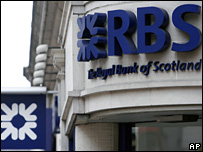 The humiliation of RBS and HBOS will probably cut all our hubristic banks down to size - it should return us to a world of simpler, safer banking.
Which would probably be a good thing - although it means the City of London will probably shrink over several years.
And that'll be a drag on the economy as a whole - unless and until they achieve what many would like them to do, which is to provide finance and nourishment for wealth-creating industries that are less prone than is the City to boom and bust.
 I'm
I'm 





Page 1 of 2
Comment number 1.
At 17:26 13th Oct 2008, esowteric wrote:For what it's worth, these are the safeguards as I see it:
-- A return to prudent lending (eg mortgages with at least a 20% deposit and no more than 3x salary), which will ensure that house prices fall and become more realistic and affordable;
-- Shady 'off balance sheet' items that are currently invisible to us to be declared on balance sheets as 'dodgy assets' and 'potential liabilities';
-- A minimum acceptable and gradually increasing fractional reserve requirement for banks asap;
-- Governments legislating to make certain mad-cap contracts -- or 'bets' -- in truly monstrous and looming derivatives (eg credit default swaps) null and void before they really sink us ... if international law will allow a change in the rules when the race has already begun;
-- Investment in value, not in debt.
Complain about this comment (Comment number 1)
Comment number 2.
At 17:29 13th Oct 2008, delminister wrote:i hate i told you so's but any fool looking at the figures would have noticed that the banks would need at least 10 times what they recieved just becouse the shares market is dropping and globaly it seems the stockmarket will continue to hit prices untill it is shut down or it will continue to eat billions like jelly beans.
but hey the government knows best who are we to argue with there over hyped muched publicised concepts that has them riding to the rescue on a wave of taxpayers money playing to the press and looking good.
Complain about this comment (Comment number 2)
Comment number 3.
At 17:29 13th Oct 2008, Greavesthatarelean wrote:Thanks, Robert...a spledidly worded piece... and about time the Banks and their executive officers be called to account. In a sense they are, or maybe, should be, 'public servants'. That is what some are about to become. then let them serve...with pride, with dignity and with some degree of skill and expertise.
Complain about this comment (Comment number 3)
Comment number 4.
At 17:30 13th Oct 2008, mickric wrote:What about the good news today? Shares rocket? Feel good factor index up a point or two? How can six points down be a plunge, yet six points up is not mentioned? Reporting needs to be a balance to remain credible.
Complain about this comment (Comment number 4)
Comment number 5.
At 17:30 13th Oct 2008, Woundedpride wrote:What they forgot, Robert, was that just because everyone else is doing something doesn't mean it is any *less* risky. Risk thinking seems to have gone out of the window at the banks and that, ultimately, is the fault of management.
There is a history of our financial sector creating risky products, sating itself on them and then coming to grief. Think of railway shares in 1845; think of junk bonds in the 1980s; and now, CDS products in the 'oughties'.
What we need is not so much regulation as a sustained effort to save financial institutions from themselves. I say let's outlaw - with stiff penalities - dealing in any derivative instruments without a clear statement of risk/return, and don't let the financial sector ever use the argument again that, just because they can see three thousand others dealing in rubbish products that they must be safe products...
Complain about this comment (Comment number 5)
Comment number 6.
At 17:30 13th Oct 2008, notjustapainter wrote:Having logged on and gone past the news front page photo of the 2 guys( supposedly ) at the top, you have to almost want to launch a caption contest. The blank look on the PM's face- incredulity at how his Chancellor is making a complete mess up - or the slight of hand gesture from Alistair....could be a case of the right hand not knowing what the dodgy-looking left hand is doing. And Tony..? has to be laughing all the way... but maybe not to the bank(s).
Complain about this comment (Comment number 6)
Comment number 7.
At 17:32 13th Oct 2008, Maddalo wrote:'The humiliation of RBS and HBOS will probably cut all our hubristic banks down to size - it should return us to a world of simpler, safer banking'.
This will be as nothing compared to the humilaition of our hubristic Prime Minister once his smokescreen of twisting spin and endless parade of out and out falsehoods clears. Dear Gordon has always been one for burying bad policy and mistakes under shovel loads of dark arts complexity. People are on to you my old son regardless of political affiliation. Nice to see Mandy and Campbell back, real progress there!
Complain about this comment (Comment number 7)
Comment number 8.
At 17:32 13th Oct 2008, Buddhaman wrote:This is a giant sticking plaster. We need a wholly new approach to global finance that recognises that we cannot have infinite economic growth in a finite ecology.
Only if that nettle is grasped is there likely to be a sustainable future on the planet.
Complain about this comment (Comment number 8)
Comment number 9.
At 17:39 13th Oct 2008, rugby8685 wrote:So what guidelines does Brown give to banks to lend as much as last year? A simple case would be a small retailer who has a £100,000 overdraft with a second charge on his house as collateral. He now wants to renew his overdraft. Problem now is that the value of his house has gone down so that security is no longer available. What does the Bank do?
As a taxpayer and now a shareholder in the Bank I would not want my money risked in this way....and of course this is how we got into this sorry state in the first place. Bad banking. No more of it, Brown.
Complain about this comment (Comment number 9)
Comment number 10.
At 17:41 13th Oct 2008, Cheese_Me_Too wrote:Of course the bank shares are falling. The government is taking over a chunk of them which means that the shareholders percentage of the total is reduced, hence the shareprice falls. It would have been astonishing if they hadn't.
Much more important is how the shares in almost every other industry are rallying today which suggests confidence that the crisis might now pass.
Complain about this comment (Comment number 10)
Comment number 11.
At 17:43 13th Oct 2008, littlekeefer wrote:Do you think the banks will mend their ways? Let's face it, they will be chastened for a few years, then when things get better will be claiming "have to pay rate for the job", "global job market" etc.
The idea of Brown or Cameron or Clegg going to one of those banquets at the Mansion House and saying "your wages are too much" is a joke.
Speculative bubbles go hand in hand with the expansion of the economy. Marx pointed this out about 1847 (British railway swindle), 1857 (European wide slump). Since then we have had 1929 and the 1980s.
Read volume three of Capital on money and credit; its very instructive.
Complain about this comment (Comment number 11)
Comment number 12.
At 17:47 13th Oct 2008, Blogpolice wrote:Now its all over, how about a story on who leaked what to whom and when. We will need this when in a few years time the government sells these shares at a massive profit. So I presume it wasn't a government official?
Complain about this comment (Comment number 12)
Comment number 13.
At 17:47 13th Oct 2008, adamsmiththegreat wrote:Agree with the first comment but let us be clear that a return to old-fashioned relationship banking means that the economy will grow slowly for some time to come if lending is restrained by banks' balance sheets.
Not complaining but it will be painful for all of us.
Complain about this comment (Comment number 13)
Comment number 14.
At 17:47 13th Oct 2008, virtualsilverlady wrote:I agree that what we need is exporting and manufacturing industries to replace the lost financial services that will inevitably flow out in the coming months,
Problem is manufacturing has been run down to such a low base it cannot fill the gap needed to provide jobs in the short term.
An even greater problem is the low cost of labour in Asia which we cannot compete with.
Research and Development was always our strong point but Asia is now overtaking us there too.
Companies in Europe are so heavily restricted by Health and Safety and Employment Laws they will be trading with one hand tied behind their backs against somewhere like China which has a free for all attitude to such things.
China will not change so Europe has to decide whether to chuck these laws out of the window to be competitive or just look on in envy as we all disappear down the tubes. Any quick fix this government is looking at is just that. A quick fix!
Perhaps everyone should be looking to move elsewhere if they want some sort of future.
Complain about this comment (Comment number 14)
Comment number 15.
At 17:50 13th Oct 2008, David1984 wrote:There is very little objective evidence that banks, in this country atleast, lent excessively. Indeed reading the interim results of the likes of Lloyds TSB and HBOS indicates that though, impairment losses are up, they have not exceeded normal operating profits. Indeed HBOS recorded an mortgage impairment loss this year of 0.09% of the total amount lent out for mortgages, well within a normal profit margin. Also, it is worth checking out an old Barclays annual report: [Unsuitable/Broken URL removed by Moderator]it reminds us of happier times when banks were actually allowed to make a small loss without having their face stuffed full of used notes.
Complain about this comment (Comment number 15)
Comment number 16.
At 17:51 13th Oct 2008, englishjoe wrote:...But they are still reaping the rewards of what are basically 'ill gotton gains'. Can we re-address this - so rent control for the millions living in 'buy-to-let' flats and houses?
Complain about this comment (Comment number 16)
Comment number 17.
At 17:51 13th Oct 2008, pharmagossip wrote:https://www.huffingtonpost.com/2008/10/12/economic-dishonor-roll-vi_n_134018.html
Let's start pointing out the villains and clearing them out.
From now on I only want to see them running whelk stalls!
Complain about this comment (Comment number 17)
Comment number 18.
At 17:52 13th Oct 2008, Soundbite73 wrote:Banking is dead. Long live banking.
I worked for a major bank in the 90s as it struggled to recover from the last recession and house market crash. Bankers were circumspect about their lending for roughly 5 minutes before they realised that prudent lending practices would not deliver sufficient profits.
That said, the bank in question appears to have curbed enough of its hubris in the noughties to have avoided going cap in hand to taxpayers (so far.) So perhaps there is some small hope for the industry.
Complain about this comment (Comment number 18)
Comment number 19.
At 17:56 13th Oct 2008, farview wrote:"A great and enduring bank is almost invisible, a dull and self-deprecating provider of basic services - not the puffed up, too-clever-by-half firms that many big banks became over the past few years."
You could say the same thing about BBC reporters too. They should be reporting the news and not being too clever by half.
Complain about this comment (Comment number 19)
Comment number 20.
At 18:03 13th Oct 2008, Nickbb161 wrote:I always thought the idea of borrowing money to buy shares was a BAD idea? How prudent is that Mr Brown????!
And to demand that banks raise their mortgage lending to last year's levels is frightening.
A comment by one of the senators during the US bailout debate was that investors should be BUYING shares. And this just prior to the market DROPPING 30%.
I agree that something big needs to be done, but not propping up an artifically high property market nor buying into bank shares too early when they could have been purchased for next to nothing when the proverbial really hits the fan.
Gordon Brown scares me. What scares me more is that the UK population now appear to believe he knows what he is doing. Have they learnt nothing?
Complain about this comment (Comment number 20)
Comment number 21.
At 18:04 13th Oct 2008, mendicance wrote:Well, Robert, Polly Toynbee and the rest of the folks over at the Guardian would be proud of your latest blog.
Double blows at Capitalism and Thatcherism in one piece.
The debacle at our Banks proves once again that people are venal, sheep-like and self interested, but it does not prove that the system is necessarily wrong. Some very good things will emerge from this purge (such as bonuses in the form of shares), but we must never forget that it is us, the public, that borrowed more than we could afford. It's not just bad lending, it's bad borrowing that's at fault.
Complain about this comment (Comment number 21)
Comment number 22.
At 18:11 13th Oct 2008, starofthesouth wrote:As a german, my true dream is, that this concerted action of mainly GB, France and Germany, with the whole Eurozone, will have success and will change the views of some eurosceptics in the UK, especially in England.
The problems that took the whole world in, were, imho, based in the USA, and the anglo-american way of economy was not able to hinder their mistakes. Just the opposite.
Remember, as the US proclaimed their Paulson plan, the share markets went down. After Europe and GB stood together today, they boomed. And how much easier it would have been, if the UK was part of the Eurozone.
And how much luck we had, that one of the "big three" countries was in charge as european presidency in this crisis.
Imagine the problems we will have in the next year, when Sweden and the CR will have to lead.
How much easier we could manage it, if the political union would have be agreed. With a presidency that does not rotade every 6 months, if you have to handle problems that take years to solve.
And not lady luck would decide, wether a big country with all his diplomatic and economic ressources speaks for Europe, or maybe Malta.
Complain about this comment (Comment number 22)
Comment number 23.
At 18:11 13th Oct 2008, GeneralDreedle wrote:The media seem to be painting this deal as something very simple and certain to work. In fact they are portraying it as almost too good to be true. Is it?.
Complain about this comment (Comment number 23)
Comment number 24.
At 18:13 13th Oct 2008, mendicance wrote:Oh, and Buddhaman (comment 8, above), one thing has been proved by this crisis, and it is that when the chips are down, no one really gives a damn about global warming. Including me. It is just a western middle class angst that is in any event a non-issue to 80% of the world's population.
Complain about this comment (Comment number 24)
Comment number 25.
At 18:15 13th Oct 2008, Retro Gamer wrote:Have these banks really promised to maintain mortgage lending at 2007 levels? Surely this has to be a misunderstanding of some sort, as that cannot happen. Somebody somewhere is having a laugh, because it would be beyond stupid to even contemplate maintaining anything approaching 2007 lending levels. Surely nobody in the treasury would be so naive? It has to be a joke, it simply must be.
Could we have some clarification on this? It may seem like a minor point, but it really is of paramount importance. If it turns out that this is the way the government expects these banks to be run we are in a very, very serious trouble. At a time like this we need to have confidence in government, not just banking institutions.
I'm really scared now.
Complain about this comment (Comment number 25)
Comment number 26.
At 18:17 13th Oct 2008, kt0157 wrote:You can't have "get back to basics" of lending only to people who will pay the loan back, and at the same time meet the Government condition that money is lent to small businesses in trouble, and lending must get back to 2007 levels. Madness.
Complain about this comment (Comment number 26)
Comment number 27.
At 18:18 13th Oct 2008, knoseykneel wrote:Robert, I agree with much of what you say. As the banking industry is commoditised it will shrink of its own accord.
The same applies to life insurance. It should comprise only whole life and term. Endowment policies are a con to earn commission.
The same applies to pension schemes. It is a disgrace that pension contributions are placed in equities instead of gilts. It came about in the sixties, when inflation started to erode cash values. Once inflation was under control, equity-linked pensions continued because the entire financial services industry was now on the gravy train.
The same applies to the share market. The gambling is a smoke and mirrors device behind which it is possible to cream as much as legally possible in fees and otherwise.
Each is a method to confiscate cash surpluses accruing to the working and middle classes after they have seen to basic needs for food and shelter. People do not think they know enough to take personal responsibility so they entrust their surplus to third parties under the delusion it will be invested in their interests.
Once all these activities are commoditised, there will be a big reduction in employment in the financial services sector. Unfortunately, government will lose a major portion of its revenue stream.
Also, a political party stands behind any government, making the laws. Unfortunately it cannot guarantee the longer term interests of its constituents because it is only temporarily in power.
For these reasons I cannot see change coming from the top. The whole edifice is comprised of thousands of hands all washing each other.
Instead, it is a bottom up, evolutionary process. Bubbles depend on gullibility.
Perhaps before the end of the century individuals will start putting their own surplus money to proper use. Just like 500 years ago when many western people eventually got fed up at not being allowed to deal with their god direct but had to go through a priest. Many people decided to deal direct and, lo, the reformation happened, and the heavens did not cave in.
This process of disintermediation – getting rid of the middleman – at that time was helped by the invention of the printing press, which enabled rapid diffusion of knowledge and information. People made up their own mind once they realised they had one. So, too, today, it is possible that the internet may serve the same purpose. Five hundred years ago, self-determination related to ones subjective internal world and religion; now it relates to the objective outside world and money.
When will people start caring about their own money? After which big recession? Who knows.
Complain about this comment (Comment number 27)
Comment number 28.
At 18:18 13th Oct 2008, Chris B wrote:Gosh, everyone really believes the Gordon hype about fat unethical bankers.. Attack is the best form of defence. What about the government, when did they pipe up about the silly levels of lending? By all accounts they still think lending needs to *resume* to those levels. What we have experienced is not so much the instability of individual banks, but of the system itself. And the stability of the system is not the responsibility of the individual bank. It's the responsibility of the government.
Complain about this comment (Comment number 28)
Comment number 29.
At 18:19 13th Oct 2008, emgebees wrote:Wow- to think I should live to see this. The phrase- absolutely amazing - is overused but this is absolutely amazing. Looks to me as if Brown and Darling have really done the business- so thanks to them both. It does not quite go far enough for me to forgive some of the stuff Labour have done but they have come good in a crisis even if in part they and other Governments have been at fault - and I think they have done the right ting- it still might not work but I think it gives us the best shot. At the same time as protecting us taxpayers pretty well, they have given a good Presbyterian bloody nose to many a greedy so and so in the City without I think reducing its potential to be a real money earner for the UK and for many who work in it. The City of the future will probably be a much better place to work but with fewer multi millionaires.The shares obviously took a nose dive as the conditions on the bail out means the classic value of a share- present value of future cash flows accruing to it- is not a lot just now.
The real sting in the tail for a couple of Scottish MPs is what would the SNP do now in an independent Scotland- give the rest of us our money back with interest! £35bn is quite a pill for them to swallow.
Complain about this comment (Comment number 29)
Comment number 30.
At 18:19 13th Oct 2008, Simon wrote:I'm starting to think that the BBC actually WANTS turmoil in the world economy. It's the best day so far in this 'crisis', a recovery plan has been detailed, all of the major stock markets have seen record (?) gains in the space of one day. And what can the BBC muster up in the top headline position? "Bank shares fall despite bail-out".
Just doom and gloom. It seems it's all the BBC can do. The Corporation has been extremely irresponsible in its reporting over this entire issue. Confidence plays such a huge part in the world economy, and yet the BBC seems hellbent on eroding confidence at every opportunity.
I'm all for reporting the facts, no matter how bleak they are, but get a grip, BBC. You can almost see the news anchors salivating on BBC News.
Complain about this comment (Comment number 30)
Comment number 31.
At 18:20 13th Oct 2008, slipmesomeskin wrote:It's only about a year ago when Sir Fred was so bold to say to his staff that they will all get the maximum 10% profit share for years ahead! No there's a banker that didn't have a clue what was going on in his organisation.
You should be ashamed Fred, but you did the right thing and resigned (or were you pushed!). But at least you've got your pension hey! Tough times ahead for Sir Fred - I fear not.
Complain about this comment (Comment number 31)
Comment number 32.
At 18:24 13th Oct 2008, Nicholas wrote:Surprisingly testy little piece Robert - though nowhere near what the broad mass of the new shareholding English public would say to these chaps if we could get them in a quiet room for 10 minutes or so!
BTW in relation to Pt 8, are you aware of the biggest video on You Tube ever - released October 1st 2008 - which is "Zeitgeist:Addendum". Inter Alia it starts by saying that Fractional Reserve Banking can NEVER work.
I, and many others would certainly appreciate your views.
Complain about this comment (Comment number 32)
Comment number 33.
At 18:29 13th Oct 2008, OldSouth wrote:Amen, and amen again.
Let's hear it for boring banks and bankers, who understand that steady growth of capital trumps everything else.
Complain about this comment (Comment number 33)
Comment number 34.
At 18:29 13th Oct 2008, Jimliveinhope wrote:I am a little concerned.
I presume that, assuming the global banking industry comes out of this mess, these banks will be privatized again at the earliest opportunity.
Why then is the Lloyds TSB/HBOS merger, for which competition law had to be temporarily "adjusted", still proceeding.
Surely the purchase will be part-funded by the taxpayer leaving us with a privatized superbank later on when, in fact there was no need.
Would it not have been better to have fully nationalized HBOS and bailed Lloyds TSB, leaving a greater level of high street competition at the turrnaround.
Complain about this comment (Comment number 34)
Comment number 35.
At 18:29 13th Oct 2008, colplugwellington wrote:HBOS and RBS being bailed out? Is this not a fiendish Sassenach plot to take over venerable Scottish institutions on the cheap?
Complain about this comment (Comment number 35)
Comment number 36.
At 18:29 13th Oct 2008, Firey Shandy wrote:You have changed your tune Robert, in February while pouring scorn on Northern Rock you described HBOS and RBS as "well run banks".
The wheels are in motion the day of reckoning for you, Vince Cable and Mervyn King is coming soon.
Complain about this comment (Comment number 36)
Comment number 37.
At 18:31 13th Oct 2008, nohindsight wrote:Risk appears to be getting a bad press at the moment.
Most of the UK, if not all, has benefitted from the risks that not just banks but most organisations have taken in the past.
But ultimately greed took the banks (and some house buyers and stock-market investors amongst us) over the edge and that's far worse than risk.
Greed amplifies problems. And greed along with disproportionate returns is what stuffed us in the end.
But don't stop risk altogether - we need it to a certain extent to keep growing.
Complain about this comment (Comment number 37)
Comment number 38.
At 18:33 13th Oct 2008, pilsden wrote:Robert I think it unfair not to include the regulator the FSA in the incompetence quotes.
A colleague of yours pointed out that letting the pack out without a lead was bound to lead to this it seemed the FSA held the door open for the pack.
Can you also tell us if the package etc so heralded by GB was created by the Bank of England.If this assumption is right it shows the folly of oversight and regulation in the same place .
I worry if the architect of the supervisory failure is now in charge of the failed banks.
Lunatics in charge of the asylum springs to mind.
Complain about this comment (Comment number 38)
Comment number 39.
At 18:34 13th Oct 2008, ironhippocrat wrote:Robert Peston it is quite outrageous that you and your BBC colleagues should lump Lloyds TSB with HBOS and RBS and to claim as you have just done that Lloyds has been guilty of the poor lending that characterised the other two. This is just not the case. But for the take over of HBOS, which I hope will not take place, Lloyds would probably be similar to Barclays and not require the Govt's help.
You should perhaps consider Sir Tim Congdon's words today. Shareholders in Lloyds like the other banks' shareholders will be impoverished by compelling the Banks to take loans. It is tantamount to theft and quite wrong.
Complain about this comment (Comment number 39)
Comment number 40.
At 18:35 13th Oct 2008, riverside wrote:Where are these wealth creating industries. There has been precious little support for any new technology, any high tech infrastructure. Can you make any more banal comment than this. Do you think everybody else is just leaving a vacuum for Britain to leap into. There is no strategic thinking in this country.
Complain about this comment (Comment number 40)
Comment number 41.
At 18:36 13th Oct 2008, warwick wrote:My god. People are on these blogs thanking the Great Clunking Fist for having saved the world's financial systems. Are they all mad?
The man who declared the end of boom and bust, the man who tried to fool the economy into thinking that house prices were going to rise ad-infinitum. The man who has just taxed away our futures, our childrens' futures in the pointless hope of re-inflating an already burst bubble.
The markets have a rally for one day and people are declaring that the bad times are over. He might as well have declared that in his hand he had a piece of paper.
It's nice to have a bit of good news, but god, if you think that it's over, you are sorely mistaken.
There are trillions and trillions out there in funny money and debt that needs servicing.
It has not even begun.
Complain about this comment (Comment number 41)
Comment number 42.
At 18:40 13th Oct 2008, Jem_Wallis wrote:Let's hear it for the Cooperative Bank then! It would be a supreme irony if in a couple of years the only surviving domestic privately-owned bank were one set up on communitarian - indeed 'socialist' principles. I suppose making a virtue of 'small-c conservative' banking fundamentals also helps.
Complain about this comment (Comment number 42)
Comment number 43.
At 18:43 13th Oct 2008, Russel_s_h wrote:How is a Government Debt Obligation better than a CDO which seem to be the cause these problems in the first place. They both seem to expand the money supply without limit to keep the system running.
Complain about this comment (Comment number 43)
Comment number 44.
At 18:45 13th Oct 2008, tony_was_here wrote:"some bankers themselves have been chastened and will choose to mend their ways" and some are arrogant bar stewards who have expressed no remorse even though their actions will result in a poorer standard of living for millions.
fred the shred and mcdollop should be stripped of titles and pensions.
Complain about this comment (Comment number 44)
Comment number 45.
At 18:47 13th Oct 2008, stuntedmonk wrote:You now have to ask, as a country what have we left to generate money? Consumerism was funded by this credit "party". We have little in the way of manufacturing. Farming has been bankrupted by supermarkets. Finance was all we had...
Complain about this comment (Comment number 45)
Comment number 46.
At 18:51 13th Oct 2008, saga mix wrote:Spot on, that man Peston ...
Complain about this comment (Comment number 46)
Comment number 47.
At 18:53 13th Oct 2008, beauchiefs wrote:Of course Brown wants banks to keep lending, its the only way the country has survived during his term with mirrors and smoke screens.
Complain about this comment (Comment number 47)
Comment number 48.
At 19:03 13th Oct 2008, TommyMurphy13 wrote:'Farview' wants his BBC reporters to be "dull and invisible".
I think the vast majority of contributors to this blog would strongly disagree with you Farview.
It really was a cheap shot lifting Robert's quote and flipping it back at him like that.
Are you not capable of original thought?
Complain about this comment (Comment number 48)
Comment number 49.
At 19:07 13th Oct 2008, molieres wrote:.. and which Chancellor has been responsible for not noticing, and certainly not correcting, the hubris of banks over the last 10 years?
And which Prime Minister now seems to be suggesting that it will be A Good Thing if house prices resume their rise, when we all thought the real problem was that they were already way too high, with prices propped up by too much debt?
And who was it who allowed part of this hubris, excessive debt and property bubble to be generated by a tax regime that made house ownership a one-way bet for buy to let landlords, made it easy for them to buy with debt, and help drive prices out of the reach of ordinary people (unless they took on too much debt...)?
When it comes to hubris it doesn't come in a much more obvious package than Gordon ('I have achieved an end to boom and bust') Brown!
Complain about this comment (Comment number 49)
Comment number 50.
At 19:07 13th Oct 2008, sweetsmellofsuccess wrote:You can pretty much guarantee that whenever someone says "it's the end of an era" that it isn't. Eras are usually seen to have ended only in retrospect, and even then, it's a matter for debate.
Anyone who worked in the finance sector in the late 1980s will recognise the views doing the rounds at the moment. Reckless lending, spiralling house prices, people must view homes as a nest not a nest egg, banks demanded all their money back at once, banks must think longer-term, back to basics, lessons must be learned, etc.
It took the banks about three or four years to go back to exactly the same foolishness. And they will again. The government have proven (with water, gas, electricity, telecoms and railways) that they are poor, weak, largely ignorant regulators. They will want to offload the banks as soon as possible so that they can demonstrate a return on the loans made to the banks, and get it off the national debt figures.
For a couple of years, the smarmy, arrogant, vacuous 'City boys' will keep their heads down and take no bonuses. Then it will start again. We need to attract the best of the best. A suitable reward for expertise. Encouraging innovation. We'll get the same old lie about the City producing 25% of our GDP (it does nothing of the kind). The media will fall under the lazy spell of how world-class the City allegedly is.
Plus ca change...
Complain about this comment (Comment number 50)
Comment number 51.
At 19:09 13th Oct 2008, prudeboy wrote:The Law of Unintended Consequences.
What effect will a perceived reviving economy have on the elections in the USA in 3 weeks time?
Might Gordon be taken off Barack's Christmas Card list?
Complain about this comment (Comment number 51)
Comment number 52.
At 19:11 13th Oct 2008, Friendlycard wrote:Banks should indeed be boring, but blaming this mess on Thatcherism is way too simplified, if in any way this is meant to exonerate her sucessors (of either party).
Let's remember that Mrs Thatcher left office almost two decades ago. I'm not defending Thatcherism in any way, but there are two points that really should be made in the interests of balance.
First, Mrs Thatcher inherited an economy on the brink of collapse after years of serial Labour failure - that's why her policies were drastic, too much so with hindsight, but big problems need drastic actions. Anyone remember the IMF bailout, or the winter of discontent?
Second, since then we've had the hapless Major and the 'end of boom and bust' Blair/Brown regime.
This blog seems overtly pro-Labour, something which doesn't surprise me at all. But opinion polls and focus groups seem to be saying two quite distinct things about Brown:
1. 'We'll trust him to deal with this mess for the next eighteen months'
2. 'After that, we'll chuck him out'
If that's what the public mood really is, it's encouraging.
And it makes sense. We're in for a nasty recession. There will be many casualties, amongst them this government.
Complain about this comment (Comment number 52)
Comment number 53.
At 19:13 13th Oct 2008, clearargument wrote:In this long saga of battles to contain the fall-out of subprime lending and casino- style derrivatives, hardly anyone seems to defend the interests of the common shareholders.
Shareholders are considered to be collateral damage in this battle, they took a risk and therefore suffer the consequences. But who are these shareholders, apart from big pension and investment funds?
Millions of average UK citizens.
Now the Chancellor and the PM insist on RBS, Lloyds and HBOS shareholders loosing their dividends for years to come.
How do they expect bank share prices to rise under these circumstances? Why would anyone take up the rights issue now?
If politicians were concerned with limiting the fall out of part-nationalisation for average bank shareholders, they could have at least allowed the dividends to be paid in shares, if circumstances improve. Now there is little incentive to either keep holding these shares or to take up the rights issue.
Complain about this comment (Comment number 53)
Comment number 54.
At 19:16 13th Oct 2008, excellentcatblogger wrote:Robert,
Can you prove and provide evidence that both RBS and HBOS have been incompetent?
If so and when? Did you provide this information to the BoE and FSA, and if so, when?
Complain about this comment (Comment number 54)
Comment number 55.
At 19:17 13th Oct 2008, Chris I wrote:Quite right, Robert.... and a very good thing too.
It has certainly been the case that a large part of the so called success story of the City of London in the financial services sector has been a complete sham - a bubble that has served those within it very well, but which has left the rest of the country in a complete pickle now that it has burst.
esowteric in 1 makes some good points. To expand and add others:
Off balance sheet vehicles/SIVs set up by banks etc were indeed always a complete con. Given that if these vehicles failed, the banks knew they would still have to stand by them, they have simply deluded themselves (and the rest of us) that both sides of these things don't constitute any part of their assets and liabilities. What an amazing deception perpetrated in full view of the regulators....!
Basel 1, Basel 2, might as well be Bo**cks 3, and Bu***it 4.... the capital adequacy ratios of 6% etc always were stupidly low.
Mad cap contracts - agreed. Urgently needs to be some better transparency and understanding of these instruments for everyone involved, but particularly amongst the very directors of the banks who use them. (... I'd like to see the FSA setting exams for each and every bank director, testing their understanding of these instruments, and then not licensing them to use anything their directors cant understand, compute and explain.....).
Additionally maybe this is a good time to draw a greater distinction between betting and banking, along the lines of..... if you wish to call yourself a bank, then you can only use these regulated instruments. However, you are very welcome to use any other mechanisms, in which case you will call yourself a Betting Shop/Index etc. (..... Royal Scottish Betting plc or Morgold Lynch Bets Inc)
And one other aspect of this so called 'light touch' regulation regime that has proved inequitable and confusing that we should clear up at the same time are these quasi British territories/associations/dependencies etc that confuse people by, on the one hand, apparently coming under the British umbrella of regulation etc but, on the other hand, being 'offshore'. While they may not in any way be regulated by Britain, they nevertheless trade on Britain's name, and consequently cause this confusion. Now that we finally have seen through the 'dont regulate in case we kill the goose that lays the golden egg' sham, we should also now move to regulate all British dependencies if they want to stay as such.
Lets leave the dodgy offshore financial centres to other countries.
Complain about this comment (Comment number 55)
Comment number 56.
At 19:17 13th Oct 2008, courteousoldhand wrote:intriguing that Victor Blank didn't just ditch the HBOS merger. The prize in a less competitive world must be enormous for LloydsTSB to accept, apparently unnecessarily, HMG as a 40% shareholder in the combined entity. Or perhaps arms were twisted so hard that Dennis Stevenson had a few moments in the driving seat...We'll never know ! But can we expect HMG's preference shares to be paid off very fast in this case? !
Complain about this comment (Comment number 56)
Comment number 57.
At 19:18 13th Oct 2008, markus_uk wrote:A good summary of what has happened and some of the implications. I'd just like to add here, that lending to households (for mortgages) must not only be subject to creditworthiness, but must also (as a sum) reflect the total savings by other customers. In future there cannot be net borrowing in the sense that the British society as a whole borrows from the rest of the world to live now and pay later (never). This will not be possible again unless Gordon Brown can convince some unsuspecting Martians to invest in UK Ltd., but I guess it might be rather the US or China who are the first to visit Mars and tap into this new source of unlimited and unearned money.
Complain about this comment (Comment number 57)
Comment number 58.
At 19:23 13th Oct 2008, RuairidhEcosse wrote:Oh I do love the Downing Street PR machine and their spin today.
They seem to be forgetting now that the UK Government's proposed solution was based on a Swedish model from the early 1990's.
It's not all down to our Scottish duo. Although, I do have to say Gordon is at long last looking a much more confident leader. Poor David. Ho-hum.
Complain about this comment (Comment number 58)
Comment number 59.
At 19:24 13th Oct 2008, Friendlycard wrote:25 Retrogamer:
Absolutely right. Maintaining borrowing at last year's level is both (a) impossible, and (b) daft.
Business will need ongoing loan capital, but at lower levels as the economy contracts.
Maintaining mortgage lending at 2007 levels is impossible, and would only result in people buying houses in a falling market (because the house price-to-earnings ratio needs to correct down into the historic 3.5-4.0x range from the recent peak of about 8.0x).
As for maintaining credit card and other consumer borrowing at 2007 levels, the very idea would be madness. Not just banks but consumers too need to learn to be prudent and realistic. Capitalism may or may not be dead; living on credit cards and tick most certainly is.
We do indeed need clarification of a statement which, taken at face value, seems crazy.
Complain about this comment (Comment number 59)
Comment number 60.
At 19:31 13th Oct 2008, RDG wrote:Hey Robert, remember what you said two weeks ago? "Buying HBOS shares is like buying a £10.00 note for £6.50"
Or this one "The Lloyds TSB, HBOS merger will happen without further revaluation"
Took your advice and loss a fortune!
Thanks from all the people who have collectively loss billions because of your misleading quotes and sensationalised reporting!
Complain about this comment (Comment number 60)
Comment number 61.
At 19:33 13th Oct 2008, crash-leicester wrote:Finally, we might just get the high speed rail system 20 years later than needed. If the price of a busted bank is the delivery of effective infrastructure:- bring it on! Jobs, technology, engineering and manufacturing skills. Why not?
We have dropped so far into the falsehood of wealth creating financial services that we even based our creation of homes for people on low incomes on the rising land and property market. Complex deals are unravelling everywhere. Sites with planning permission for valuable mixed use regeneration schemes are stopped dead through the lack of credit. We have no plan B. What a sorry state to be in.
I don't feel smug. Like most of you I let this happen.
Complain about this comment (Comment number 61)
Comment number 62.
At 19:36 13th Oct 2008, roddymccorley wrote:Now about those credit default swaps....
how about declaring them non-binding? Would it really be the end of life as we know it? Or would it be a bad thing?
Complain about this comment (Comment number 62)
Comment number 63.
At 19:39 13th Oct 2008, markus_uk wrote:25. RetroGamer
Yes, I would like to know that too. I read it this morning and I cannot stop thinking and worrying about it. My gut tells me that this statement has something to do with someones desire to be reelected. Hopefully "lending like in 2007" is just an empty slogan...
Complain about this comment (Comment number 63)
Comment number 64.
At 19:43 13th Oct 2008, courteousoldhand wrote:How long have Barclays been given ?
Will Marcus, John and Bob pull it off ?Will reality catch up with them ? Or can they do a 'Morgan Stanley' ?What do you think, Robert ?
Please let us know soonest!
Complain about this comment (Comment number 64)
Comment number 65.
At 19:45 13th Oct 2008, Jen wrote:If posters are going to analyse Robert's comments, then they should look closely at some of the language he has used.......it shows that he has been reading the blogs and just toned some of it down for broadcasting!
I'm glad the roller coaster tended to be fairly straight and steady today - I was getting a severe headache with all the ups and downs!
I'm still not convinced it's a lasting solution though - but again, we'll have to suck it and see.
Still no balance sheets for banks or governments? No declaration of off book debts? No prosecutions, no investigations, and no repayment of bonuses?
No change there then!
When I heard the story of the attempted storming of parliament, I thought it was angry public and got all excited! Oh well, angry climate protesters is just as good!
At least it gave everyone else something to talk about for 10 minutes!
Complain about this comment (Comment number 65)
Comment number 66.
At 19:46 13th Oct 2008, jonisrael wrote:It most certainly means that we are not near the absorbing that asset values are more uncertain than at any time since the 1929. This is the crux of the matter. What is a traditional asset worth? The production of ballon debt (CDS CDOs, etc.) has had the effect of putting a question mark over the 'real value' of an asset. Until the money market and funds are confident of a floor, the attraction of financial equities is very hard to determine. At the moment the whole of the OECD is looking to create, or uncover, a stable financial 'nucleus' among the myriad of exotic particles that have spun out of orbit. The difficulty, to extend the analogy, lies in ascertaining the decay life of what is left and its affects. This is not over by a long chalk and as more banks seek capital in the *next* quarter, the solidity of the system will be even more tested.
Complain about this comment (Comment number 66)
Comment number 67.
At 19:47 13th Oct 2008, solpugid wrote:"....which is to provide finance and nourishment for wealth-creating industries"
One wants to add, 'if we had a few real industries'. Kind of evokes again the word "Thatcherism" that appears in your blog. There is never just one person to blame. But there's one who'd go on the shortlist.
Robert, thanks for some great reporting.
Complain about this comment (Comment number 67)
Comment number 68.
At 19:49 13th Oct 2008, guardbook wrote:Esowterics first safeguard (#1) is well taken but too vague to be really helpful. Seen from afar, the UK housing market is simply crazy.
Very roughly, the present average price of a UK house is £160K: average salary, £25K. From now on, there's no real prospect of a reputable (part-) nationalised bank lending a creditworthy working couple more than 3.5 times the man's verified taxable income, and on three cast iron conditions: that the principal is less than 80% of the market value of the property; the lender's survey is favourable; and the monthly repayments are not more than 30% of the man's after-tax income.
Some simple arithmetic shows that average house prices in the UK must still fall, to about £105K. Higher average prices than this and prospective purchasers will have to find the additional equity themselves. With the risks of recession, rising unemployment, and higher taxes to meet the interest expense of the bail-out, banks' lending policies are set to be unprecedently cautious.
For houseowners who may wish to sell in the foreseeable future, such a fall seems a ludicrous prospect. But the massive changes in the banking landscape will not put the speculative lending policies of the past 15 years in the hands of a lot of sentimental, more ethical loan officers. Not a bit of it! The new generations of loan officers will be job's-worth bureaucrats who will not be paid for performance but to follow the rule book, period! That's how the hideous nationalised industries run by successive Labour governments treated us from 1945 to 1979. Ugh!
Anyone who has a debt to a nationalised bank should watch out. Within a few months friendly, helpful, courteous, customer-friendly banking will be long-forgotten by most bank customers, and much lamented by their wretched debtors. Banks will feel like most post offices, but the buildings will look posher!
Complain about this comment (Comment number 68)
Comment number 69.
At 19:54 13th Oct 2008, bookhimdano wrote:This comment was removed because the moderators found it broke the house rules. Explain.
Complain about this comment (Comment number 69)
Comment number 70.
At 19:55 13th Oct 2008, John_from_Hendon wrote:So RBS, HBOS and LloydsTSB are 'saved', but what of Barclays?
Is Barclays really as strong as it makes out? HSBC has reasonable first tier capital ratios, but Braclays must raise 10bn pounds as ordered by the FSA. Is it known who these benefactors might be?
The also have been a massive tumult of concern about the throw away line that mortgages should return to 2007 levels, even though this does not appear in the Treasury statement. Has anyone traced the source of this statement?
What provision is being made for the rescue of the other banks and building societies? Do they need rescuing? Some statements we made about this last week, but all is silent now.
Complain about this comment (Comment number 70)
Comment number 71.
At 20:02 13th Oct 2008, dgamble wrote:Robert writes ... "investors on the stock market gave something of thumbs down to shares in Royal Bank of Scotland and HBOS" ... a good theory, but not the correct one.
The market is simply reflecting the new valuation of these shares ... no dividends and a greatly diluted share value has now been priced into HBOS and RBS. Lloyds also gets hit because they are being dragged down by the agreement to consume and digest HBOS.
Barclays ... who opted out ... are up .. not as much because they have declared no dividends ... but still up because no dilution for shareholders .... yet.
Complain about this comment (Comment number 71)
Comment number 72.
At 20:15 13th Oct 2008, alexandercurzon wrote:SADLY HERE WE ARE AGAIN SO: HALIFAX ,BANK OF SCOTLAND, LLOYDS TSB ,RBS,NATWEST.
WELL YOU CAN HAVE ALL OUR MONEY SO LONG AS YOU THROW IT AROUND LIKE YOU DID IN 2007!!!!!!!!!!!!!!!
HOW STUPID?
ITS TIME THESE GUYS WERE BROUGHT TO BOOK.
ALL BOARD MEMBERS/DIRECTORS MUST RESIGN.THEY MUST ALL BE SUBJECT TO CRIMINAL BANKRUPTCY & ALL BE SUBJECT TO 15 YEAR DISQUALIFICATION NO IFS NO BUTS.
BROWN MUST CALL AN ELECTION.
LET THE PEOPLE DECIDE.
Complain about this comment (Comment number 72)
Comment number 73.
At 20:16 13th Oct 2008, KarlsOpinion wrote:Have to agree with 41. What have we learnt from overly sharp rises like todays stock market performance?
Overly sharp if not directly proportionate falls.
House prices went through the roof 5 years ago at an unatural rate and we thought that this was natural. The gov should have intervened then but it never.
Tip of the ice berge i think.
Complain about this comment (Comment number 73)
Comment number 74.
At 20:19 13th Oct 2008, hitthebid wrote:27 knoseykneel says:
'Perhaps before the end of the century individuals will start putting their own surplus money to proper use.'
I agree with the knoseykneel' sentiment and I think that Brits are singularly poorly educated in money and related quantitative matters.
Although it seems not to have helped them avoid the crisis, it is, nevertheless, very noticeable how much more financially savvy the average US citizen is.
Returning to the UK after 14 years in the US we were astonished to see the ridiculous and naive adverts for financial services that people here seem to fall for.
Some fundamental money-sense could surely be taught in schools, enough to enable the kids to handle money sensibly and to enable them see through the rubbish pushed out at them by banks and insurance companies, and to see through the spinning and manipulation of economic, employment, inflation and other social statistics by the politicians.
It should not take a century to create a much more financially-literate and effective society, given some good, numerate school-teachers.
Complain about this comment (Comment number 74)
Comment number 75.
At 20:22 13th Oct 2008, Wellcaught wrote:Has anyone done the numbers on Lloyds TSB
Preference shares are on offer at 12% and if the shareholders do not take them up there will be no dividends for a few years on their ordinary shares.
So:-
Cancel the HBOS takeover, buy the Pref and take up the ordinary rights. Keep the dividend at say half the current level.
Is that not a better deal than the one the government is offering.
Why not do this instead of buying Gilts from HMG,getting 5%, and letting the government take 12% from Lloyds with it??
Complain about this comment (Comment number 75)
Comment number 76.
At 20:25 13th Oct 2008, KarlsOpinion wrote:60. RP is a reporter not a financial advisor. Peston is doing an awesome job.
Complain about this comment (Comment number 76)
Comment number 77.
At 20:28 13th Oct 2008, DebtonourDoorstep wrote:The taxpayer is now well and truly on the hook as any sensible private investor will be looking to ship out of banks where the government is involved and move it into other areas. No dividend for up to five years doesn't sound appealing.
There will therefore probably be a continuing slide in the value of bank shares at RBS, Lloyds, and HBOS with greater levels of government funding going in just to keep them afloat.
An alternative and better use of central government funding would be to introduce a mortgage interest tax credit for low income borrowers, combined with an insistence that central bank funds being pumped into the market go out on loan to enable households to reschedule their finances over the business cycle. Changes are also needed to court powers to allow them to modify mortgage agreements when borrowers are in default. That would put a floor under the housing market and allow it to readjust over the long term. At the moment the government and bank of england are treating the symptoms and not the causes
Complain about this comment (Comment number 77)
Comment number 78.
At 20:29 13th Oct 2008, Clive of India wrote:#56
an offer of enoblement has been known to work wonders in the past!
Complain about this comment (Comment number 78)
Comment number 79.
At 20:30 13th Oct 2008, southcoast-tangerine wrote:Robert, i doubt you'll read this but here goes.
As much as i admire your professionalism i do wonder why you see that Thatcher was the panecea to the ills of the banking industry.
I dont ever recall you mentioning Thatcherism in the negative tones that you have recently and to put this into context, when did the French and Germans and any other country you care to mention that is in this mess ever embrace the virtues of the Iron Lady?
The banks have got us where we are and since Mrs T went out with the bath water we have (as a country) embraced what she stood for regardless of ones polital persuasion
Complain about this comment (Comment number 79)
Comment number 80.
At 20:36 13th Oct 2008, graybaker wrote:great blog as usual
can someone explain to me why the HBOS Lloyds TSB deal is still going ahead?
how can a company that is having to borrow money from taxpapers being allowed to skip competetion rules to take over another bank that also is also getting a tidy handout! and if HBOS are getting a couple of billion pounds loan why does it still need taking over? logic defys this??
Complain about this comment (Comment number 80)
Comment number 81.
At 20:42 13th Oct 2008, FairJohn wrote:Dear Robert,
I like your blog and you have provided good information on the credit crunch.
I also like boring banks and invested in Lloyds TSB , which was very boring and responsible, but had a reasonable dividend.
However for some reason it decided to involve itself with HBOS and the government and ended up with less capital per share than it had before.
How did it do this ?
Kind Regards
John
Complain about this comment (Comment number 81)
Comment number 82.
At 20:43 13th Oct 2008, MOG wrote:The banks and regulators got it wrong over the last few years but, think about it, we now have the regulators running the banks!
Complain about this comment (Comment number 82)
Comment number 83.
At 20:43 13th Oct 2008, dickie56 wrote:So we have maybe bailed out the banks. Some of the top bankers may lose their jobs. Others will take their place and after a couple of years as the economy begins to pick up history WILL repeat itself.
The ONLY thing which drives this economy is the housing market. Prices will rise again and people will still demand to buy a house, and a car and have two holidays a year and to furnish the house with the latest designer kitchens etc etc. The politicans will not have guts to not allow it to happen and we will be back o 130% mortgages while the estate agents up the prices and the mortgage brokers lie on their applications or find ways around the rules.
History repeats itself UNLESS the government and FSA have the guts to say NO.
Vote
Have they the Guts Yes?
Have they the guts No?
Complain about this comment (Comment number 83)
Comment number 84.
At 20:43 13th Oct 2008, PaulRBear wrote:I'd really like to believe that we are seeing the dawn of a new world. But I'm not so sure. When I arrived in Britain in 1991, homes were being repossessed left right and centre. Everyone was talking about negative equity. As a result, the banking industry decided to restrict mortgages to 3 times people's annual salary. Then when I left Britain in 2004, banks were lending up to 6 times annual salaries, forgetting the lessons painfully learned a few years earlier...
Complain about this comment (Comment number 84)
Comment number 85.
At 20:46 13th Oct 2008, jimk60 wrote:Posts 14 and 45 have got it right, what is our national industry now? We have no big manufacturing base, house building was the last big employer we had and that is wrecked, banking is bust, that just leaves agriculture and they are under the thumb of the supermarkets. The utilities all belong to foreigners (Electricite de France own the power stations, Germans own the water), manufacturing has gone to China who now have the buying power to pick up shares in what is left of our industry and prop up the surviving banks. As 14 says, we could move somewhere else, but where?
Complain about this comment (Comment number 85)
Comment number 86.
At 20:47 13th Oct 2008, bb_odiham wrote:Whilst it's good to see banks cut down to size, it hardly helps when the public have to pick up the tab.
The "never never" is about to be abruptly cut and this fake economy is going to crash around the governments feet - an entire generation at ease with a seemingly never ending supply of credit is going to be stranded.
We could see a "winter of discontent" to rival that of 1978-79
Complain about this comment (Comment number 86)
Comment number 87.
At 20:56 13th Oct 2008, Wee-Scamp wrote:Four or five years ago I sent an email to one of now departed CEOs asking him why it was that despite its huge profits his bank wasn't prepared to put up any risk equity capital to fund high growth start-ups or uni spin-outs.
After a while I received a letter back from him saying basically that it wasn't a part of their strategy. I keep that letter on my wall and may now get it framed.
I did write back asking why it wasn't part of their strategy but I don't think I ever got a reply. Obviously that was far too difficult a question for him to answer!
Complain about this comment (Comment number 87)
Comment number 88.
At 20:57 13th Oct 2008, dickie56 wrote:New Law. Banks cannot grant mortgages to the public. Only Building Societies not listed on the stock market. No Society can give a mortgage for more than 75% of the valuation of the property NOT THE MARKET PRICE.
Don't all howl at me at once or hang me from the nearest tree.
Complain about this comment (Comment number 88)
Comment number 89.
At 20:58 13th Oct 2008, willowtoo wrote:#68
I have seen the same comment several times now and am driven to comment on the fallacy.
The assumption implicit in the calculation is that every house costs the average amount and everyone buys the average house starting from zero.
Just suppose a really expensive house is on offer at £10M and a 100 cheap ones are for sale at £100,000 then the "average" house is for sale at a touch over £200,000.
Average is a dangerous construct to base any calculation on.
Very few people start in the middle, they start with a small house, pay down some of the mortgage, build up equity and move to another, more expensive, house.
That is not to say that house prices will not come down, maybe by a lot, but spurious arithmetic is not bringing any clarity to this.
Complain about this comment (Comment number 89)
Comment number 90.
At 21:02 13th Oct 2008, John Bull wrote:Whats all this about Thatcherism?
Did the other eurpean countries, who are also experiencing problems, embrace Thatcherism?
Didn't Gordon Brown remove even more reglatory safeguards than Thatcher?
Complain about this comment (Comment number 90)
Comment number 91.
At 21:03 13th Oct 2008, E_Greenhalgh wrote:Thought that you would be interested to know that this morning I received a letter from BOS which among other things said "Using sophisticated modelling tools our Investment Review can: Open up financial options you may never otherwise be aware of"
Complain about this comment (Comment number 91)
Comment number 92.
At 21:03 13th Oct 2008, neillamont wrote:Robert, I quite agree with your analysis about Thatcherism/monetarism – its as if a whole stage in modern capitalism (1979 - 2008) has unravelled and been discredited in a matter of weeks. But I worry that memories can be very short – a quick recovery might make it more difficult for us all to learn lessons. And the big issue is what next!
Much media coverage of the crisis focuses on the crisis in confidence and financial bad practice. But there is less linkage with deeper, difficult and more intractable issues – such aas the unsustainability of unlimited economic growth, dwindling energy resources (peak oil, peak uranium), our difficulty at feeding the world’s population (with rising population, rising food prices, environmental damage), and the real biggie – climate change and a threat to the entire biosphere.
One way forward would be a new economic settlement that includes environment/sustainability as a key element – an interesting article in Sunday’s Independent was titled “A green New Deal can save the worlds economy”
Complain about this comment (Comment number 92)
Comment number 93.
At 21:03 13th Oct 2008, TopHatSilly wrote:Can someone answer this question for me.
(please ignore the figures I'm making them up)
For every £1 deposited in the banks, the banks would lend out £30, so they would go to the money markets for the additional £29, where does the money markets get that £29 from?
Complain about this comment (Comment number 93)
Comment number 94.
At 21:04 13th Oct 2008, carregwen wrote:I thought it was laissez-faire, not laisser-faire. Or am I wrong?
Complain about this comment (Comment number 94)
Comment number 95.
At 21:04 13th Oct 2008, David wrote:It's amazing. If someone had addressed the Labour Party Conference last year calling for nationlistion of the Banks they would have denounced as crazy. How the world has changed in 7 days!
Complain about this comment (Comment number 95)
Comment number 96.
At 21:14 13th Oct 2008, Tantivvy wrote:There will be a public inquiry; only its form is unknown. A judicial inquiry or a class action? Either way it will be 2012 before it sees light. Probably two parliaments away.
What offers do we hear for the mammoth RBS Gogar complex about to downsize? Vaunted economist FM "wee Eck" must have comfort to offer?
Complain about this comment (Comment number 96)
Comment number 97.
At 21:14 13th Oct 2008, The Callant wrote:What is becoming very clear in the light of the banking fiasco is that banks as well as airlines, insurance companies, computer businesses and all the other global players complete with unintelligible call centres in the East have become UNMANAGEABLE.
The banks along with the other business types I have mentioned are basically too big to be managed properly and all the IT wizards in the world will never replace a human with a brain and authority talking to another human who deserves the respect of dealing with a human with a brain rather than a system or machine that simply wastes time, money and causes grief.
There is obviously a maximum size for any business or organisation before it becomes totally inefficient and introspect.
The NHS is another example.
Maybe businesses that get to a certain size should automatically be split or nationalised in the public interest!
Complain about this comment (Comment number 97)
Comment number 98.
At 21:21 13th Oct 2008, alexandercurzon wrote:IN NOVEMBER 2006 I PRESENTED/SERVED A STATUTORY DEMAND ON HALIFAX PLC.
NEEDLESS TO SAY THE DEMAND WAS IGNORED.
I CONTACTED ALL REGISTERED DIRECTORS INCLUDING LORD STEVENSON AND VISITED THE COMPANY SECRETARY IN PERSON.
I WAS STILL IGNORED. THE HALIFAX ONLY RESPONDED WHEN A WINDING UP PETITION FORM WAS FAXED TO THEM.THEN THEY HAD THE CHEEK TO THREATEN TO SERVE ME WITH AN INJUNCTION.
THESE ARE THE KIND OF PEOPLE THAT RUN HALIFAX BANK OF SCOTLAND.
THEY ONLY RESPOND WHEN ITS TOO LATE NOW THEY HAVE A FURTHER CHANCE TO SQUANDER OUR MONEY.
Complain about this comment (Comment number 98)
Comment number 99.
At 21:22 13th Oct 2008, PetersKitchen wrote:BUBBLES, Bubbles, bubbles
You can not provide paper worth nothing to support paper worth nothing. There is not enough notes out there to pay for this stupid, stupid world 'task force' to move lending.
In order for these corporations to survive they need to lend, in order to lend they need people to borrow. In order for people to borrow they need to be credit worthy. The old days of credit worthyness has gone and now they have to be 'REALLY' credit worthy. Lending collapses, interest rates a lowered to nothing and in some countries the Government pay you to borrow.
But you cant because you are not worthy,you have lost your job
Ford and GM are bankrupt the 10s of thousands of subsidiaries go bankrupt.
DOES THE GOVERNMENT OF THE WORLD PUT MORE MONEY IN ?
Of course not, as they are bankrupt as well
Hanker down, protect your family because this is going to be a long, horrible, world changing event that will see unrest and strive not seen for ninety years.
Read! God Dammit read!
Complain about this comment (Comment number 99)
Comment number 100.
At 21:22 13th Oct 2008, strategycall wrote:The People now own half the Banks
- oh really ?
Just like the People own the National Health Service would that be ?
Yes just what we need with an army of Bureaucrats swamping the Front Liners, with decisions being taken for political rather than finanacial (or Health) reasons.
Quangos, Control Groups and Gov Depts stuffed with people who never made a financial decision in their life but who 'have shown party loyalty'.
So bung the equivalent of Councillors and Partichekniks a few hundred grand each for working 3 days a month and for having no idea; and yet who will be running what is left of the Finance Industry.
So very NewLabour
- lots of flag waving
- lots of money
- no real analysis
- no real problem resolution
What book debts were cleared off with the handouts ?
Or does nobody know what our money went towards because nobody has reported the Book positions and the future borrowing Liabilities to the 'owners'
ie the People
Will mortgages become more affordable for the first time buyers ?
Will pensions and SIPP's be improved ?
Will the Government 'spend, spend, spend, until you die' messages be reined back?
'Exceptional Times need exceptional responses' (Brown, Darling, Cooper, etc etc, offering the standard party line)
aka - 'we will indulge in sleight of hand, illusion and cover up, whenever we feel like it, so clear off instead of asking questions we were too dim to ask'
More Central Control, bigger Spends, bigger Taxes, more inflation and more Cock-ups envisaged.
Or should I simply reserve judgement and trust in the past record of Brown and co?
Which as an option, doesn't exactly sound too confidence filling.
Complain about this comment (Comment number 100)
Page 1 of 2