

Stamp phobia
I was supposed to be interviewing the chancellor this morning about the lessons of the credit crunch.
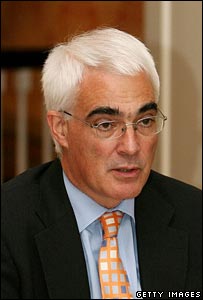 It was something I'd arranged with the Treasury over the past fortnight, to mark the anniversary of when it became much harder for our banks to raise money and a serious downturn in our economy began.
I was an hour from asking Alistair Darling my first question when I received a call from the Treasury. An official enquired whether I would be asking the chancellor about his plans for stamp duty, following all those reports that he is planning a temporary suspension of that tax on house purchases.
Stamp duty would never have been the heart of the interview. But I could not ignore it.
The precipitous fall in house prices we are seeing is part of the fall-out from the crunch. So Mr Darling's plans for possible changes to an important tax on housing transactions are material to any general discussion of the causes, consequences and future shape of the economic mess we're in.
It would have been weird to ask nothing about stamp. And what I particularly wanted to know is what the chancellor would say to potential house purchasers who may be holding off doing deals in the hope that stamp will be waived in the autumn.
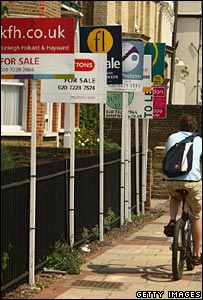 That is a relevant question because we were contacted by estate agents yesterday claiming that the uncertainty over what will happen to stamp duty is further reducing activity in the already flat housing market, to the extent that they are quite concerned.
Long story short, I could not tell the Treasury that I wouldn't ask about stamp.
And the Treasury then cancelled the interview.
Which didn't surprise me or make me feel particularly grumpy. It would have been absurd for me to skirt around stamp, but the chancellor feels the resonant subject isn't quite within the spirit of the interview he agreed.
However the much more important point is that the chancellor feels he can say nothing about stamp, that to utter a world right now would be to pour petrol on a raging fire.
If he were to imply that there is not going to be a cut or suspension, and then there was a change, well he would be toast.
And he couldn't announce the details of any stamp plans he may have, because the Treasury doesn't know what's affordable so many weeks before the Pre-Budget Report - and, anyway, it would be wholly inappropriate to announce a tax change so potentially important during the summer recess.
So Alistair Darling has chosen to keep schtoom. But that too has a cost.
The prevailing view since his Today interview of earlier this week is that he is going to make a stamp change. And that may well be encouraging those thinking of buying a property to delay, thus sending the housing market from torpor to coma.
 I'm
I'm 





Comment number 1.
At 13:01 7th Aug 2008, iamagreatskier wrote:Interesting blog but the major point is not so much stopping or postponing stamp duty [which would be nice] rather the fact that it does not guarantee that the lenders will actually lend anyway. If lenders will nto lend then it hardly matters about stamp duty.
Complain about this comment (Comment number 1)
Comment number 2.
At 13:02 7th Aug 2008, warwick wrote:I'm not sure why you bother interviewing politicians anyway. It's not as if you get any truth out of them.
I seem to remember Gordon Brown at a conference with George Bush recently saying something along the lines of how strong the British Economy was and that we had the lowest inflation in the western world. As I recall even Bush looked a little bemused.
You'd be better off interviewing a snake.
Complain about this comment (Comment number 2)
Comment number 3.
At 13:10 7th Aug 2008, PetersKitchen wrote:Robert
The ability of anyone to purchase a house in the present climate will have absolutely nothing to do with whether stamp duty tax is put back a few months before it becomes due or indeed whether is waived at all.
It is wholly dependent upon the borrowers ability to pursuade a Bank to lend them money at a reasonable rate and deposit.
Take a look at your own blog of the avearge LTV of NEW MORTGAGES from the biggest lenders and I think you will find that this is just going to be a political manoevre that will just get estate agents wetting them selves for a few weeks before getting the phone calls explaining that the mortgage was not obtained.
And while Im at it, what about HIPS? You are only going to put your house on the market in this climate if 1. Your desperate. 2 Your dillusional as to the amount you can get for your property.
Take a look around, many dilutional people about or are they desperate?
Oh but stripping Stamp Duty out of the equation will be the Darling to the crisis wont it not
Complain about this comment (Comment number 3)
Comment number 4.
At 13:17 7th Aug 2008, PetersKitchen wrote:or are they desperate dilusional?
Complain about this comment (Comment number 4)
Comment number 5.
At 13:19 7th Aug 2008, lionHeretic wrote:I am shocked that anyone is considering bolstering the housing market. I believe that any attempt to boost the market in this way is foolish.Everyone has known that house prices have been far far too high for the last 5 years. All we are seeing at this moment in time is a 'correction'. Quite why this government seeks to resist this correction for anything other than political reasons is beyond me. Any changes to stamp duty will simply stop this much needed correction.
However, I do feel sorry for this chancellor, he is in a situation where he is damned if he does and damned if he does not. For the sake of the country we need houses to come back to an affordable price. However, this cannot be done with out a lot of pain. Pain which the electorate are not willing to take.
Complain about this comment (Comment number 5)
Comment number 6.
At 13:20 7th Aug 2008, fingerbob69 wrote:Our darling Darling is a fool.
Our Great Leader is the king of fools.
This country will be in ruins by the time The Great Leader is forced by Parliamentry timetable to call an election.
The 18 years they spent out of office the last time will seem like but a short weekend tryst in the country compared to the long dark night being prepared for them this time round.
Complain about this comment (Comment number 6)
Comment number 7.
At 13:23 7th Aug 2008, nikki noodle wrote:"to utter a world" - maybe you could just have a quiet world in his ear....
Complain about this comment (Comment number 7)
Comment number 8.
At 13:27 7th Aug 2008, jollybigdog2uk wrote:If the stamp was not to be paid at all then this would effect the market as buyers would then be able to use this money to bump up their desposit and therefore likely to get a better mortgage.
However if it was just a suspension and due to be paid in say a years time, then I dont see what difference it would make.
Complain about this comment (Comment number 8)
Comment number 9.
At 13:30 7th Aug 2008, Ian_the_chopper wrote:Agree with Post 3 re stamp duty. This is the a mere triffling aspect of the current problem.
The chancellor is delaying because he simply does not know how much money he will have or alternatively he is looking to delay a decision until there is some bad news to bury. That way he can be seen to be caring and doing something.
The real issue is that to get a mortgage now you need a ten percent deposit at the very least and to buy to let or if you are self certified you probably need at least a 25% deposit.
As interest rate deals are slowly moving the right way (i.e. downwards for first time buyers) it is economically rational for a 1st time buyer to wait at least two or three months before buying.
In three months time a flat I see today at £130,000 will almost certainly be available for £ 125,000 or less and not subject to stamp duty.
In the Chancellors pre budget statement in the autumn I would imagine an immediate rise in stamp duty exemption to probably £150,000 to "help first time buyers". I would also expect to see a temporary halt on stamp duty for an initial period of six months for properties between £150,000 and £250,000.
In November expect to see more unsold flats on the market as buy to let deals and current cheap two or three year mortgage deals expire and people have to sell.
I would expect to be paying £8,000 to £10,000 less, if I was a first time buyer for a two bedroom flat at the end of this year than now.
I would also expect to get a 3 year fixed rate mortgage deal at at least 0.5% better than at present and also pay less to apply for the mortgage.
All the time if I had any sense my money would be earning at least 6% whilst on deposit.
Complain about this comment (Comment number 9)
Comment number 10.
At 13:49 7th Aug 2008, Chris B wrote:Not only is interfering in the housing market wrong, it is unlikely to work.
With the market falling 20% per year, suspending stamp duty will make little difference, as you will still gain from waiting out the price falls.
Wait another month, and you save 1.5% *plus* the stamp duty. Wait another, and you've saved 3% plus the stamp duty.
Even the threat of reintroducing stamp duty (0.9%?) after a while would not make any rational buyer rush to buy in such a falling market, as the increase in tax is eliminated after three weeks of price falls. The cost may go up 0.9% tomorrow, but it will still be down 0.5% after a month, and more the month thereafter.
Complain about this comment (Comment number 10)
Comment number 11.
At 14:05 7th Aug 2008, HardWorkingHobbes wrote:I've managed top save a deposit of just over 2 years salary.
Assuming I can borrow 4 times salary this means I can theoretically afford a house 6 times my income.
Round my way the average house is 10 times my income, the average flat is 8 times income so why would defering a tax of 1% make any difference to me buying a house?
Complain about this comment (Comment number 11)
Comment number 12.
At 14:07 7th Aug 2008, JohnConstable wrote:HMG are done for.
This political threshing about is just symptomatic of their deep malaise.
The economy is going to be in the doldrums for the next two years, which means NL are not going to be re-elected in 2010.
The political timetable shows us that the SNP referendum on full independence will occur on St. Andrews Day in 2010.
When, a few months before, the Tories lead by 'Dave' will have, by default, filled the boots at Westminster.
I believe that that will be enough, coupled with the remarkable Alex Salmonds astute leadership of the Scottish government, to see the 'United Kongdom' fold.
By then, the economic (and political) recovery of England wil lbe underway.
This Englishman looks forward to a better future for all people who live in England.
We just have to be patient for a little bit longer.
Complain about this comment (Comment number 12)
Comment number 13.
At 14:26 7th Aug 2008, Prof John Locke wrote:Surely the point of this story has nothing to do with the stamp duty, but more importantly that a cabinet minister refuses to justify his actions to the electorate. Did the treasury really expect you to conduct an interview without asking the most relevant question? if so then they are more incompetent than i ever imagined.
Complain about this comment (Comment number 13)
Comment number 14.
At 14:32 7th Aug 2008, threnodio wrote:A minister who requires advance notice of questions is a coward. A minister who cancels because he does not like the questions is a buffoon.
Complain about this comment (Comment number 14)
Comment number 15.
At 15:07 7th Aug 2008, JohnConstable wrote:# 13 and #14
The hapless viewer/listener hardly ever knows what goes on 'behind-the-scenes' with these interviews.
The all-important context is simply unknown.
For example, in some TV interviews that Tony Blair did with Jeremy Paxman, the viewer would have no knowledge that out-of-camera-shot, facing Paxman, stood a glowering Alastair Campbell and on one occasion, Blairs eldest son.
Furthermore, the viewer hardly ever knows what precisely has been arranged before hand .. i.e . which subjects or specific questions are 'off-limits'.
Therfore, I commend Robert Peston for lifting the lid ever so slightly on all this.
Complain about this comment (Comment number 15)
Comment number 16.
At 15:11 7th Aug 2008, loyalnorth wrote:'and the Treasury then cancelled the interview'
Best news I have heard in some time - no matter what the subject.
At long last- the Treasury (in this case) have seen sense, made a decision without dithering. Robert let's hope many more of your future interviews are cancelled, then we may not have to put up with your tabloid, sensationalist reporting methods.
BBC - Get to grips and sort out your business editor to ensure he represents what the BBC should be about - balanced reporting.
Complain about this comment (Comment number 16)
Comment number 17.
At 15:22 7th Aug 2008, virtualsilverlady wrote:Perhaps silence is golden where this government are concerned.
'Titanic' comes to mind {John Prescott}
Every time one of them opens their mouth another hole opens up as a result.
There are so many holes it has ended up as a yawning chasm.
Never mind! Won't we all be rescued by the Autumn statement?
I don't think so. They'll have all jumped overboard by then.
Complain about this comment (Comment number 17)
Comment number 18.
At 15:29 7th Aug 2008, Lynnegh wrote:I thought market manipulation was a financial crime. Why is the government trying to "stimulate" the housing market when many thousands of people have no hope of ever owning a home at current prices. The cost to earnings ratio is ludicrous. Stop fiddling with taxes and schemes for first -time buyers. Let the market find its own level, and let us have some proper bank regulation so the fat cats can no longer feed their faces at shareholders' and taxpayers' expense.
Complain about this comment (Comment number 18)
Comment number 19.
At 15:40 7th Aug 2008, PetersKitchen wrote:Treasury denies stamp duty plan
Suggestions that the government has put forward a proposal to let home buyers delay stamp duty payments are "simply wrong", the Treasury has said. ...
...But the Treasury said the story had been "speculation" and a "number of options" were being looked at.
Perhaps the removal of this totally inept chancellor and even more inept boss along with the gov of the BOE
Each had there remits - two arnt upto it and the third (in my opinion) has deliberately ditched their remit to keep inflation at around 2% by refusing to increase rates.
Or there again, told not to! Oh but hes independant isnt he?
Complain about this comment (Comment number 19)
Comment number 20.
At 15:40 7th Aug 2008, ExcellenceFirst wrote:Comment 5 : lionHeretic
"Everyone has known that house prices have been far far too high for the last 5 years."
Well if everyone's known about it, 99% of them kept remarkably quiet during the period until about 3 months ago, when it became socially acceptable, nay essential, for a chic person to display in public that he/she held this view.
Go back to last Christmas/New Year. Read the articles in the media, and the comments in such blogs as this one and see what proportion of "everyone" was actually public-spirited and socially consciencious enough to put their neck on the line to attempt to stop what, apparently, they were fully aware was lunacy.
Bloody bandwagon jumpers! And these are the people who believe they have an entitlement to run our society.
Complain about this comment (Comment number 20)
Comment number 21.
At 15:41 7th Aug 2008, OgdensNutGoneFlake wrote:And if it is a deferral of stamp duty, does that mean the government can repossess the property if it is not paid up?
Laughable!
Complain about this comment (Comment number 21)
Comment number 22.
At 15:42 7th Aug 2008, Hippy god says Peace and Love likes RT wrote:Hmmm, people are still buying Houses round my way.
For sale board up, Sold board a few days later !
I guess it goes to show how you can't generalise about Houses.
Of course, I'm not privy to how much the Houses sold for.
But they did sell.
Go figure.
Complain about this comment (Comment number 22)
Comment number 23.
At 16:45 7th Aug 2008, Prof John Locke wrote:22
"I'm not privy to how much the Houses sold for.
But they did sell."
in an auction today a house (Northern Rock repossession) which was on the market for £116,000 six months ago sold for £67,000.
Complain about this comment (Comment number 23)
Comment number 24.
At 16:54 7th Aug 2008, Hippy god says Peace and Love likes RT wrote:Those round my way weren't auctions !
The Guardian believes interest rates will be lowered in the Autumn.
This does seem the most likely action , as Inflation in this country is imported commodity inflation rather than wage inflation.
Best to avoid fixed rate mortgages.
Complain about this comment (Comment number 24)
Comment number 25.
At 17:30 7th Aug 2008, The Count wrote:supercalmdown
Where I live it is a mixed bag, some properties go For Sale and then Sold really quickly, if they don't go Sold quickly they aren't going Sold at all.
The Sold boards are staying up for ages though.
Complain about this comment (Comment number 25)
Comment number 26.
At 17:46 7th Aug 2008, anti-schtoom wrote:Journalists! Learn to spell STUMM!
Complain about this comment (Comment number 26)
Comment number 27.
At 17:49 7th Aug 2008, parastatal wrote:There is nothing like keeping uncertainty in the air. This is something the government is very good at. And, uncertainty is what compounds economic problems. Well done Chancellor.
Complain about this comment (Comment number 27)
Comment number 28.
At 17:58 7th Aug 2008, U11846789 wrote:A strange mess in the UK.
The economy has been fine for years under Labour.
Recent Conservative economic policies have failed in the USA - and they are having a terrible effect on the economy of the UK.
But the way out, according to most people, is to be to vote Conservative?
Strange. Very strange.
Complain about this comment (Comment number 28)
Comment number 29.
At 18:04 7th Aug 2008, Dharmesh1990 wrote:If he had pre-announced it to the BBC, Darling would be accused of "spinning" with a tactical leak. When he doesn't, he's "creating uncertainty". Maybe the reason we have so little trust in politicians is that we attack them whatever they do?
Furthermore, maybe new policy should be announced by the Chancellor of the Exchequer to the Parliament of the United Kingdom and not in an interview with Robert Peston.
Complain about this comment (Comment number 29)
Comment number 30.
At 18:09 7th Aug 2008, CarrotsneedaQUANGO2 wrote:True to form eh
Too little too late and with an awful lot of dithering before too little actually gets done.
Complain about this comment (Comment number 30)
Comment number 31.
At 18:22 7th Aug 2008, shiveringJamJim wrote:Why are people so smarmy about the fact that house prices are falling?
"Everyone knew that...." As someone else said, not everyone else knew.
"It was obvious that..." Actually, had it not been for the sub-prime scandal, what would have happened at worst would have been a gradual correction, not the catastrophic collapse, driven by the crisis of confidence we are seeing at the moment.
"First-time buyers stand to benefit..." Do they really? No-one is offering any mortgages anyway and even if they do, they need to save the equivalent of more than a year's NET after-tax salary in to be offered a highly expensive deal they can't afford. What guarantees are there that things will ever improve for them on that front?
"Prices will fall another 10-15-20 per cent in the next two years..." And what if they do? Future buyers will still have paid two years' extra rent, quite possibly the equivalent of any "gains" they make by falling prices, certainly at the FTB entry level into the market. And almost certainly the equivalent of the mortgage they would have paid anyway.
Except they'll have delayed the point at which their mortgage is paid off by the same amount of time.
Ironically, every aspect of human behaviour is expressing itself in this headlong panic NOT to buy, just as it did when prices were rocketing. People can't bear to be left behind, either when pricesare rising or falling.
A few years back, the doom-mongers thought they'd called the market. In fact, they got it wrong for years. Prices carried on rising and those who gained were those who ignored the doomsayers and bought. They have also paid off a chunk of their mortgages, bought with mortgages that will NEVER be as cheap again.
On the way down exactly the same will happen.
Most people will stay out of the market not just for two years but for three, four, five. They'll be waiting to call the housing market turn even as its happening before their eyes.
Prices will start rising again and they'll miss on that period of growth, renting out all the time and paying more than they should. It's what happens with shares all the time and that's exactly what happened in the early to mid-1990s with house prices then.
"The Chancellor shouldn't do anything to support the market..." As it happens, I couldn't give a monkeys as it doesn't affect me personally. My mortgage is almost paid off and I'm not selling. But even I can see that the collapse in the market is partly contributing to a wider collapse in the economy, with the possibility of tens of thousands of jobs being lost, possibly hundreds of thousands.
When that takes place, what do you suppose happens to the government's coffers? The answer is that the Treasury loses a massive amount of money from people no longer paying income tax, or VAT on their purchases. Instead, it ends up paying billions for poeple to sign on.
People on this site are treating the issue of the housing market as if it's some kind of virility symbol - "You can't possibly do anything to 'rescue' homebuyers, the market needs to find its own level" - without realising that there are huge knock-on consequences if you do nothing.
Still, what do I care? I'm OK. You carry on with your ToyTown Economics about how you want prices to fall back to a "realistic" level before you buy - as if life were ever that simple.
Complain about this comment (Comment number 31)
Comment number 32.
At 18:23 7th Aug 2008, stevewo wrote:Do you get the feeling that a fifth-form economics student could have run the country better over the last 5 years?
That is probably painfully true.
Stamp duty tinkering will make no difference now.
We need to go back 5 years and install a Chancellor who knew what he was doing, and got the property market under CONTROL. Too late now, ignorance has triumphed.
Complain about this comment (Comment number 32)
Comment number 33.
At 18:27 7th Aug 2008, Colin wrote:No doubt Clown et al are making sure their many cronies are informed about Treasury policy first so they can short the market, before Clown's sock-puppet chancellor deigns to inform the 'little people' NuLabour love to sneer at.
Complain about this comment (Comment number 33)
Comment number 34.
At 18:30 7th Aug 2008, John_from_Hendon wrote:This stamp duty nonsense it cretinous idiocy!
First fiddling with or deferring a tax to (presumably) return the market to the status quo ante will not work, and anyway is not advisable.
Second: this is the height of the silly season when presumably the Treasury is being looked after by the second or third string people as the other will be on holiday so what we hear today will be scotched as soon as the real Mandarins return from holiday.
Third: the people who will actually benefit will be Estate Agents, Developers and Bankers as any artificial stimulus will turn itself into more margin for them.
Rational pricing sells property, not silly, unaffordable gimmicks.
If the Chancellor ups his borrowing by the 6 billion he will lose will it not put more pressure on the Bank of England to raise interest rates which in itself will put downward pressure on house prices?
Also the pre announcement is far too reminiscent of the election rumour of last autumn!
Complain about this comment (Comment number 34)
Comment number 35.
At 18:40 7th Aug 2008, gmhillier wrote:@ 28: The Midland 20
The World economy was pretty good while Labour was claiming the credit - at least it was here in the US until last year. You are leading into the argument that GB took all the credit for the good times but shifts the blame for the bad times.
The economy is one of the main driving forced for CHANGE in the presidential elections coming up in November (even John McCain is trying to distance himself from GW Bush). I think it is the same back home in the UK. It's not neccessarily the Conservative fiscal policy that people are looking for, but ridding themselves of a Labour government that appears to be failing on many fronts.
Complain about this comment (Comment number 35)
Comment number 36.
At 19:36 7th Aug 2008, Hippy god says Peace and Love likes RT wrote:People need to remember that New Labour has been following thatcherite doctrine ever since they were elected !
What do we end up with ? Nearly all our small banks takenover or bought out.
Industry gone overseas, and what is left owned by foreign companies.
And of course privatised infrastructure.
Does anyone believe the Conservatives will behave any differently ?
Or indeed had they been in power instead, it would have made no difference!
Of course a lot of these posters are pro Tory campaigners........
Complain about this comment (Comment number 36)
Comment number 37.
At 19:52 7th Aug 2008, Friendlycard wrote:There used to be a convention that Chancellors (a) did not discuss possible fiscal measures ahead of the announcement, and (b) that, when the announcement came, tax changes were implemented immediately.
This was a wise rule, designed to avoid distorting markets, and Mr Darling would have been wiser to observe it.
As a result, Chancellors seldom gave interviews and, when they did, it was understood that they could discuss the economy but not the tax system, let alone possible changes.
Back in the late 1980s (in 1988, I think), the then Chancellor announced the ending of dual mortgage tax relief but gave several months' advance notice of the change. The result was a sharp spike in house prices as couples rushed to use dual relief whilst they still could. After the event, of course, house prices fell significantly. A very big mistake.
This time, the mistake is, if anything, worse, and the resulting uncertainty could have a serious effect on the housing market. Anyone thinking of buying a house is likely to put the decision off until the Stamp Duty issue is clarified. I do not often find myself in sympathy with estate agents, but when they complain about this bungled issue they surely have a valid point.
What Mr Darling COULD have done would have been to announce the abandonment of the perverse, costly and much-derided HIPS scheme. It might have looked a good idea on paper, but it should be binned.
After the Stamp Duty gaffe, and confidence that one might have felt in this Chancellor has gone up in smoke.
Complain about this comment (Comment number 37)
Comment number 38.
At 20:42 7th Aug 2008, heatonfan wrote:"Shivering jim jam" - your economics are toytown, not those you criticise.
Why are mortgage rates high and changing irrespective of bank base rate? Because house prices are too high, people borrowed too much and there were huge defaults on the products which raised the finance for lenders to lend.
When house prices come down (by 33% or so) to more sustainable levels, then lending is less of a risk and first time borrowers will be able to borrow a sensible amount with a sensible deposit. Everyone will be better off save for those who bought in the last 4 years who suddenly need to sell.
The problem is that the market rose so sharply both here and the US that the correction the other side of the peak will be sharp as well. And just as it is falling, we enter into a period of lower living standards as commodity inflation bites, taxes are higher than ever and unemployment rises.
House prices will not be stabilising for a few years yet - if you need to sell, reduce your price now and get before they fall further.
Complain about this comment (Comment number 38)
Comment number 39.
At 20:52 7th Aug 2008, dualfleeced wrote:Never mind stamp duty what about the extra £120 higher rate tax payers will have to stump up this tax year
I work in payroll and have just received the instructions for adjusting tax codes for the much vaunted "repayment" of low paid workers who were affected by the scrapping of the 10% tax band.
Everyone on an "L" code will automatically get an extra £600 tax free allowance which at 20% is eqivalent to £120 per year. That part was shouted from the roof tops at the time of the announcement.
I did not hear at that time the handout was going to be funded by higher rate tax payers but that appears to be what is going to happen.
With the instructions is the dictat that basic rate limits will reduce from £36,000 to £34,800. Not only drawing more people into higher rate tax but also charging higher rate payers 20% (the difference between basic rate and higher rate) of £1200 ie £240 per year. So the government will give higher rate taxpayers £120 but charge them £240 for the priveledge. Due tothe nature of pay as you earn this debt must be caught up with on the first month it is instigated so whilst low rate payers will get £50 in September high rate payers will lose the ame amount.
This is dastardly behaviour whether you think higher earners should pay more tax or not; it was not made clear at the time and will hit at the heart of the swing voters that labour is trying to cling onto.
I am surprised that this has not been picked up upon so far.
Complain about this comment (Comment number 39)
Comment number 40.
At 21:06 7th Aug 2008, Jacques Cartier wrote:The best way to transfer ownership of a house is to give the buyer a receipt for the money and say nothing to anyone else about it. Cut the government out of the loop at every turn.
It's mad to spend so much and just get a "stamp" in return. It's less use than the HIP pack. You can't even use it to post a letter, because the post office wouldn't recognise the style of the stamp.
I'd definitely opt out. They can lick their stamp and stick it you-know-where.
Complain about this comment (Comment number 40)
Comment number 41.
At 21:16 7th Aug 2008, Pamery wrote:HIPS, stamp duty, the 10% U-turn, the non-dom U-turn, the Corporation tax U-turn, the CGT U-turn, the fuel tax rise U-turn, the waste of taxpayers' money on Northern Rock, dodgy accounting for PFI deals, the raid on pensions, fostering the debt bubble, fiddling the inflation stats....the astonishing incompetence goes on and on
The only reasonable question to ask Darling or Brown in an interview would be "Why haven't you resigned yet"
Complain about this comment (Comment number 41)
Comment number 42.
At 21:48 7th Aug 2008, NorthernThatcherite wrote:I work in the residential land and property sectors which are undergoing a severe and painful price correction right now. The price bubble was created by past overlending caused by ineffective regulation on behalf of HMG and FSA.
We cannot avoid the market correction and in land sales I can report that land values have dropped at least 30% over the last 12 months alone but appear to be bottoming out now. The same will happen to house prices but probably by something less than 30%. So far house prices have dropped 10% or so in the last 12 months and need to drop another 10% over the next year, which, when combined with lower interest rates ( which will happen) and greater mortgage availibility will bring on the "bottom " of the market by this time next year. After which we will have a subdued upturn that we can all enjoy once again.
The sooner the market bottoms out the sooner it will recover naturally.
I am against any policy which trys to manipulate the market at a huge future expense to the taxpayer in a desparate attempt to save this tired, failed and discredited Gov't's poltical skin.
As the blessed Margaret once said.............."you can't buck the markets"..........and she was right...........and is right.
If the Government really wants to help the vulnerable it should look for more efficiencies in the public sector (we all know there is huge waste there) as is the private sector now. If need be the Gov't should FREEZE expenditure so that any extra taxes colected over the next 2 years can be diverted to the poor and the pensioners.......the rest of us WILL survive.............we don't need ineffectual £120 tax bribes thrown at us like confetti at a bye-election!
The Gov't's economic policy is increasingly not about making the right long term decisions for economic stability but about futile politically motivated "on the hoof" gimmicks. It is just not sound policy and is not good for this country.
This latest stamp duty fiasco is already a gimmick that has gone wrong. All Darling needs to do is say...............there will be NO HELP..............and the market will carry on correcting itself.................now that they've created uncertainty over this policy they've done the same to the housing market.........this will result in less houseer sales as buyers hold back thus extending the pain.................Does anyone in the Treasury have a brain cell located in the common-sense department?
Such stupid people!
Complain about this comment (Comment number 42)
Comment number 43.
At 22:05 7th Aug 2008, SuspiciousDavid wrote:What appears to have been missed is that in the current housing market the revenue from stamp is virtually nil anyway. To abolish stamp in the current climate therefor would have a negligeable impact on tax revenue. To introduce a "buynow,pay later" scheme would be cloning the credit schemes that got us into the mess we're in now.
Complain about this comment (Comment number 43)
Comment number 44.
At 22:11 7th Aug 2008, cormont wrote:Incompetence ! Wasnt the CHANCELLOR previously the Transport Minister ? in retrospect look at the state of that now,what was his previous job !! I believe it was to do with Education,same old story,all down the PAN .
In the 90s my house was valued at £130,000,I HAD to sell for £80,000. £50,000 less.
When I first purchased interest rates were 16%,perish the thought ! BUT, what must be,depends what state this Government LEAVES it in !
Property will fall to 4 times average income. ie. £80,000
Complain about this comment (Comment number 44)
Comment number 45.
At 22:17 7th Aug 2008, housingman wrote:Front end anxiety about kickstarting the first time buyer market may be forelorn. house prices need to fall to sensible levels compared to income - everyone's stopped talking about loan to income ratios - and those should be lower than ever for mortgages to be affordable due to cost increases on food and fuel.
Whilst all this is slooshing around the social rented sector is getting a pounding- demand was at record highs before the CC -now with repo's climbing - including the new phenominon of BTL landlords defaulting on their mortgages and putting innocent tenants into homelessness.
The situation is dire - soon folk are going to demand of us in the business to get our fingers out and fill up these unsold empty homes so they don't have to sleep on someone's floor or worse
Dear Mr Peston - come and talk to me about what its like downstream of the first time buyer market
Complain about this comment (Comment number 45)
Comment number 46.
At 22:18 7th Aug 2008, MaxSceptic wrote:The reason Darling would not speak about stamp duty is that he could not speak about stamp duty: he doesn't have a policy.
Perhaps he's waiting for Gordon to return from Southwold so that they can dither together.
Nest time ask him about something soft and fluffy.
Complain about this comment (Comment number 46)
Comment number 47.
At 02:44 8th Aug 2008, DistantTraveller wrote:What is telling is the supreme arrogance of the Treasury to cancel an interview which had been planned well in advance because Darling didn't want to answer a question.
These petty politicians should remember that they are public servants. Journalists are entitled to ask questions about government policy. "No comment" (or cancelling the interview) is not an acceptable response from a Chancellor.
Darling clearly thinks he should not be held to account.
Complain about this comment (Comment number 47)
Comment number 48.
At 06:51 8th Aug 2008, godfreybrown wrote:One of the problems confronting a so called free society is that interviewers, reporters, editors and programme producers can use whatever medium is at their disposal to michieviously and irresponsibly report on what is happening in order to create a story and to keep themselves in work.
In the case of "stampgate" I'm sure the Treasury is considering such a move but this will be only one of many ideas, under review, on ways to try and break the deadlock in the housing market. In any case I hardly think removing stamp duty for a limited period is going to dramatically transform the present housing market situation. Although it might make a small number of people happy in the short term, in the longer term it might make matters worse.
There are now far too many people working in the media who believe their job is to create the news and not just simply to factually report what is happening in it's proper context. Sadly too many stories are being deliberately over-hyped and that is just adding to the confused state of affairs.
Complain about this comment (Comment number 48)
Comment number 49.
At 07:57 8th Aug 2008, Italianexpert wrote:I have to agree with post 48. I would go as far to say that the media carries at least equal blame with the Americans, greedy bankers and other governments for the present troubles. The media has done what it has done before - talk people into depression. The economy is cyclical and talking it down helps no one - except journalists. The fact we have an ineffective government is beside the point.
As to bankers - I wouldn't trust some of them to wash my car. Many live on a different planet and think of their own pockets and corporate profit exclusively.
Complain about this comment (Comment number 49)
Comment number 50.
At 08:33 8th Aug 2008, lionHeretic wrote:ExcellenceFirst wrote:
"Everyone has known that house prices have been far far too high for the last 5 years."
Well if everyone's known about it, 99% of them kept remarkably quiet during the period until about 3 months ago, when it became socially acceptable, nay essential, for a chic person to display in public that he/she held this view. "
That is strange because for the last 5 years there have been nothing but tales of woe about first time buyers not being able to get on the housing ladder. First time buyers reached record low levels and complaints about how hard it was. Of course along came 110% morgages so we could all go along thinking everything was ok.
As for people not expressing something even when they know it. Has it not occured to you that some times when something is so bad, people will just hide from it? The media has been more than happy to put together rising houses prices and the low numbers of first time buys and yet failed to put two and two together. I doubt that the media is really that thick so I am going to presume that some people just did not want to be a merchant of doom.
As you put it yourself, only now has it become socially acceptable for people to say what people have known for a long time.
As for me jumping on the bandwagon. For the last 4 years I have been in a strong postion to buy a property. I took one look at what was going on and decided not to. I know I am not the only one. What seemed so obvious to me, obviously was not obvious to all those people on the "house prices going sky high can only be good" band waggon.
Complain about this comment (Comment number 50)
Comment number 51.
At 09:16 8th Aug 2008, shiveringJamJim wrote:With reference to the post immediately above this one (50): so you decided not to buy for the last four years because you thought property prices were too high?
What does that mean in practice? Had you bought back in 2004, your might have paid 50-60 per cent of the price reached at the end of last year. Even if prices fall another 10 or 20 per cent in the next tear or two, it us unlikely they will reach the levels seen in 2004.
But even if they DID, by the time the market reaches its very bottom - and assuming you call it absolutely on the button, which most people don't - you will still have paid rent for five or six years. That's probably cost you tens of thousands of pounds.
Meanwhile, someone who bought in 2004 with a typical repayment mortgage would have paid off at least 10 per cent of their loan, possibly 15 per cent, if they were paying a little faster than the average. And they would have enjoyed some of the cheapest mortgage rates seen in the past 40 years.
Sometimes it pays more not to be so clever...
Complain about this comment (Comment number 51)
Comment number 52.
At 09:51 8th Aug 2008, Slug wrote:As it's the availability of easy credit that got us into this whole financial mess, what on earth is the government doing by adding to the problem with a deferrment of stamp duty? 'Buy now, pay in 09' is the preserve of cheap sofa salesmen, not governments.
Also, what happens if someone goes into arrears owing stamp duty as well as their mortgage? Is the government going to take first charge and be seen to repossess properties? Not a vote winner, I think.
If they are going to start deferring stamp duty, would they also consider deferring my tax bill?
Complain about this comment (Comment number 52)
Comment number 53.
At 09:53 8th Aug 2008, thulefule wrote:Odd comments to the effect that dropping/suspending SDLT is 'manipulation' and in most cases coming from the usual suspects manely the tinder-dry, let-'em-get-repossesed, please-jack-up-the-interest-on-my-super-crazy-high-interest-deposit-account, free-marketeers.
As far as I was aware SDLT is not a natural phenomena but instead is, of and in itself, manipulation of or interference with the market - it's basically HMRC reckoning that when times are good and we're all filling our boots in the proerty market they can ger away with tapping us for a few percent along the way.
A truly free market in property would surely involve no attempt by government to tax transactions between willing buyers and willing sellers.
Complain about this comment (Comment number 53)
Comment number 54.
At 09:57 8th Aug 2008, lionHeretic wrote:In response to the post above me. In my area in the last 4 years house prices have only risen by 35% up until the fall and have since fallen back 15%.
Any low rate on interest on a short term fixed would not have conpensated. Further more in the short term I am getting more interest from my bank savings (aka deposit)
I could have bought 4 years ago, at the same rate everyone else did wiht a nice 100 or 110% morgage, calculated at that level with a very high price of a house and low interest rates, I could have then come out of my 5 year deal soon with interest rates several percent higher than they once were and suddenly find like a lot of people that I cannot really afford my payments or have to compromise other areas of life to make the payments. All of a sudden your plan does not make any sense. I could then struggle on for another 5 years in a financial struggle in another fix rate morgage at the current higher rates, so after 10 years I have paid off some of my morgage but with the added bonus of not being able to afford much else in that last decade.
Sounds extreme, but that is the exact circumstances my friends find themselves in now.
Instead I have chosen not to follow the crowd, to slowly develop my deposit, so I can avoid the huge bear trap which is already engulfing a lot of people.
If I sound Like a smart arse I am sorry, it is not intentional. But over the past few years I have watch the whole nation believe that some how a huge housing boom will keep growing without any chance of it poping. If that pop occures now, I don't know, this could just be the start. But I am not willing to join the bubble just before it pops.
Complain about this comment (Comment number 54)
Comment number 55.
At 10:13 8th Aug 2008, Zubedaky wrote:Shivering jim jam post# 51, not sure maths is your strong point.
You mentioned paying rent is a waste of money when you could be paying towards capital.
Have you ever seen a repayment mortgage schedule? The capital repayment is loaded towards the end of the mortgage, in the early years only a small element goes towards capital repayment, perhaps 1% a year if that at the outset.
In any event, as I understand it, in recent years it has almost become the norm for buyers to take out an interest only mortgage, so there is no repayment at all! No doubt the prevalence of this practice will have added a further small percent uplift to prices over the years.
I am currently renting and my own personal view is that unless you can secure a 20-25% reduction on an advertised price now, you would be foolish to buy just now. Particularly when, as another comment put it above, you can get 6% on cash in the bank.
So when is the time to buy?
I worked at Barclays centralised mortgage lending business back in the early 1990's (the good old days when we were selling fixed rate money at 13.75%!), as I recall then, prices fell for 2 years and then spluttered for another 2 after that. Given that experience and my own personal circumstances, I figure it might be sensible to defer entering the market again until the end of 2009 - at the earliest. Why waste money otherwise?
However, for those forced to buy in the short term - assuming there is such a thing! - why would you buy before the October PBR? You would clearly be risking wasting the value of your stamp duty.
Furthermore, given the calibre of Caroline Flint's responses on Newsnight last night - more of an aimless, angry rant - it is clear that HMG is all at sea and not thinking rationally at this point. My prediction, expect some idiotic meddling in October. It won't be sensible nor in anyone's long term interests, but for buyers may nevertheless be worth wating for.
Complain about this comment (Comment number 55)
Comment number 56.
At 11:35 8th Aug 2008, courteousnewcitizen wrote:Couldn't agree more with 54 and 55 or disagree more with 51. Its nonsense to say that rent is money down the drain. it is simply the COST of your accommodation, which reflects the desirability/size/location, etc of the property. When you mortgage, in today's world, 6% of the purchase price + stamp is the COST of your mortgage. You may repay it the way you like, i.e. cash down purchase or 100% mortgage. The fact is that you would get 6% on your money more or less risk free.
It follows that if it is not your final house where you may want to raise a family, etc. you should rent if it is less than 6%. It doesn't matter if you bought in 2004, you are worse off financially the DAY you rmake an over priced purchase, over-price defined at paying over 16 times the rental value.
If it is your final house, then perhaps these calculations are not as important, a bit like buying a ferrari. Our standard of living improves when the price of plasma TVs, sofas and ferraris falls, WHY on earth should housing be any different?
High house prices are bad for everyone, and nobody 'makes' money on their first house anyway. Its inly your second or third house that can be called an 'investment' compared to stocks/bonds/gold, your first house is an EXPENSE. And the higher it goes the more difficult it is to MOVE to a better house and the WORSE your living standrad becomes.
The only real winner is Gordon stamp duty.
When will the british realize that their ponzi selling of everm ore epensive houses to each other is a joke and leads directly to 'rip-off' britain?
Am so glad its correcting. Houses are worth 16 times rent, rent is a function of everything, GDP, wages, employment, deman, supply, everything. That is all they are WORTH.
Complain about this comment (Comment number 56)
Comment number 57.
At 13:14 8th Aug 2008, doctor-gloom wrote:I thought things were going crazy around where I live when I started seeing 2 bed semis and terraced properties on the market for £200,000 plus. Crazy, just crazy. They've been marked down now of course, but my God, what madness.
Complain about this comment (Comment number 57)
Comment number 58.
At 13:17 8th Aug 2008, ExcellenceFirst wrote:Comment 48 : godfreybrown
"There are now far too many people working in the media who believe their job is to create the news and not just simply to factually report what is happening in it's proper context."
Half sort-of right and half maybe seriously wrong, I'd say.
There indeed a lot of media people trying to create stories rather than report them. But I'd say that they are doing no more than responding to what their readerships demand. Many do not want to have to believe that human existence is a complicated business. They want, demand perhaps, to live in a safe, simplistic environment where the good and the bad are sharply defined, and where certainty about anything can be established in two or three sentences, and abandoned at any time it becomes expedient so to do. The media people who cater for this group are, obviously, largely creating fiction, because the reality is that life isn't like this. But they are responding to a situation rather than creating it.
When you write that the media's job is "just simply to factually report what is happening in it's proper context" you may merely be suggesting that the media is an inappropriate place in which to carry out an audit of authority's actions and decisions. Fine, there can be a debate about which body should be responsible for the audit. If, on the other hand, your drift is that the only audit we need is for individual members of the public to assess the legitimacy of authority from the the information with which they are presented, then I'd suggest you are being rather more credulous than is wise.
Complain about this comment (Comment number 58)
Comment number 59.
At 13:39 8th Aug 2008, brownandout wrote:Surprise surprise, clueless Darling does not understand that comments about possible help for the market will be seized on by a desperate housing sector, yet again demonstrating how incompetent this government are.
Stamp Duty is an anachronism and has distorted the market over the years and prevented free movement of labour and penalised those that need to move for work etc. It has failed to control rising prices (the way to do this would be via CGT tax). The reality is the Public finances are in such a shameful mess that dopey Darling and crew have no room to manoeuvre and remove or reduce a tax that now brings in billions
Complain about this comment (Comment number 59)
Comment number 60.
At 14:01 8th Aug 2008, doctor-gloom wrote:Excellencefirst:
What are you on about?
'you may merely be suggesting that the media is an inappropriate place in which to carry out an audit of authority's actions and decisions'
Are you doing an essay for media studies 101???
Complain about this comment (Comment number 60)
Comment number 61.
At 14:21 8th Aug 2008, TheresOnly1Soupey wrote:Lets get one thing straight - altering any taxation to re-inflate the housing market - BAD IDEA.
I find it amazing that the market forces only serve their purpose in good times, and not in bad.
Government intervation may alleviate the concerns of some householders, but will artifically subsidise the housing market - which will lead to a much bigger deflation in the future.
It's better to 'let off steam' now, gradually, than simply saving it up for a bigger blow out later.
The Government doesn't need to do anything - if it meddles in this it will cause more harm than good. Just because a few daily mail readers are scared their £3m homes might only be worth £2.5m - does not mean we should start subsidising markets. It's hillarious that homeowners have such a big influence on the government, considering only 69% of the population are 'homeowners' and only a sub-set of that actually have a mortgage.
Just like the motoring groups, the Government would be foolish to listen to the 'loud minority' at the cost of the 'silent majority'. However the Government's track record for going against the grain, and making tough, but correct, decisions is very poor.
This is the result of a society where the loudest get more recognition than the rest - it can only end in failure...
Complain about this comment (Comment number 61)
Comment number 62.
At 14:22 8th Aug 2008, ExcellenceFirst wrote:Comment 50 : lionheretic
I'm sorry that you should think that my earlier comment was aimed personally at you. It wasn't.
Over the last 20 years or so, we've moved away from a mindset that discussion is about supporting or criticising ideas to one in which the default assumption is that support or criticism is of the person, not the idea. As a result, it's become virtually impossible to have a general discussion of ideas, particularly mainstream ideas, because the moment anyone questions an idea's validity, the discussion transmogrifies into one about the integrity of the idea's supporters.
Or maybe it's just me, and things have always been like this. It doesn't seem like it though.
Complain about this comment (Comment number 62)
Comment number 63.
At 14:24 8th Aug 2008, U9461192 wrote:What you should have done Robert is what Gordon Brown would have done. Agree not to ask him about Stamp Duty.
Then, when you had him on camera ask him about the governments plans for tax on the sale of houses.
But you only asked about stamp duty. I didn't use the words 'Stamp Duty' therefore its a legitimate question. It's exactly the sort of contemptible disingenuous remark you'd get from Gordon Brown so Darling should be well used to it by now.
Gordon Brown goes down in history for me as the man, who prior to election 2001 refused to answer a straight question 'Do you have any plans to increase NI'. His risible, contemptible wriggle out was that he wouldn't answer the question because then you'd just ask him a question about some other of the 200-odd taxes he could vary.
The day after Labour got re-elected. Guess what? 1p on National insurance.
It'll be in the archives somewhere. It should be shown nightly to remind anybody who doesn't already know what kind of a man we have as prime-minister.
The man is utterly contemptible. He treats us all with contempt and it is incumbent upon the media to return the favour on our behalf. In fact I'd be even happier if the BBC simply refused to interview Brown or Darling or any of this government since they are simply used to propagate a one-sided hail of misinformation.
If you must interview them perhaps you could have them silhouetted and their voices dubbed by an actor like we used to do with the IRA. No platform for this band of pirates. Call their bluff. See if they really will privatise you if you don't broadcast what they tell you.
Complain about this comment (Comment number 63)
Comment number 64.
At 14:31 8th Aug 2008, TheresOnly1Soupey wrote:.....and another thing - why is everyone blaming the government here?
I understood the statement to be that the treasury is looking at a 'range of options' - one of which of course has to be taxation (stanp duty).
Just because the home owning journo's want to start freaking out at stories which are simple not there - why is that now the governments fault?
Lets not forget that the Northern Rock crisis was started by a media expanded leak which was incorectly - now their inability to get the facts right has probably created a further slump in the market. Strangely the fault seems to be dumped back at the governments door.
I have watched a number of interviews over the last couple of days - it really shows how dumb journalists can be because they simply can't understand IT WAS NEVER SAID BY THE TREASURY - and the whole thing is a case of chinese whispers fuelled by a gossipy an obsessed media who all have their own agenda's.
...still, I guess that what passes for journalism these days...
Complain about this comment (Comment number 64)
Comment number 65.
At 14:43 8th Aug 2008, ExcellenceFirst wrote:Comment 60 : doctor-gloom
"Are you doing an essay for media stdies 101???
Not really. I'm just trying not to be too presumptive about godfreybrown's position regarding audit of authority. A generation ago it probably would not have been necessary, since in the event of my misinterpreting his position, the godfreybrown of those days would have merely sought to correct me, rather than score points by humiliating me, as would happen today. He'd have been more interested in having the discussion than in winning it.
CYA. The 21st Century motto.
Complain about this comment (Comment number 65)
Comment number 66.
At 14:44 8th Aug 2008, n1 wrote:Some have complemented you for bringing this to our notice, but isn’t this just another promotion of a non story? You knew all along that Darling was quiet rightly never going to answer a market sensitive question like this.
So now we have the situation where a news story has made the news out of a so called leak? (source and reliability unknown?), a news story has made because the government will rightly not confirm or deny a market sensitive rumour and now you are making a news story because the government will not give you the opportunity to ask a question it knows and more importantly you know it cannot answer without causing further upheaval to the property market.
Wouldn’t your time be better spent investigating where this leak came from, after all its the leak and not any change to stamp duty that is disrupting the market, I guess the next easy story is going to be blaming the Government for another leak, when it seems to me the only people benefiting from leaks like this are those that oppose the government. Continuing Leaks like these do not help anybody and will only hinder a government be it Labour or Conservative.
On the subject of stamp duty no one seems to have asked the question that, if this a temporary suspension what about the market disruption when its re introduced or do you see that as other opportunity for “news”
People complain about government spin (which I think has been reduced considerably under Brown) but isn’t this a good example of media spin, Darling will not give you the opportunity to make a story out of him not answering a question you know he can’t, so you make a story out of the fact he will not give you the opportunity, spun as if you are doing a public service by highlighting this.
Complain about this comment (Comment number 66)
Comment number 67.
At 15:08 8th Aug 2008, ExcellenceFirst wrote:Comment 55 : Zubedaky
Your point about the tiny capital element in the early-year instalments of a repayment mortgage is exactly the one with which, among others, I had drafted a reply to Shiveringjamjim's earlier Comment 31.
This poster suggested that there would be no obvious benefit arising from renting for 2 years and then buying at 10-15-20 per cent lower prices. Maybe someone with tables could tell me whether at any rate of interest the monthly repayments on an 18 year mortgage of 90% of value are higher than those of a 20 year mortgage at 100%.
Complain about this comment (Comment number 67)
Comment number 68.
At 15:11 8th Aug 2008, doctor-gloom wrote:65 Excellencefirst:
I think I understand what you're saying, you don't like the way things are discussed these days. Well, sorry to tell you but this quaint old world of discussion/argument you've construced only exists as a 'Socratic/platonic ideal'. 'Real' argument/discussion is often far from polite and sometimes quite hostile. Furthermore, ad hominem criticisms are nothing new. Whether it should be like this though, is quite another issue. There's probably a book out there somewhere called 'discourse, morality and contemporary argumentation' that looks at this very issue. I wouldn't get too hung-up about it though.
Complain about this comment (Comment number 68)
Comment number 69.
At 21:08 8th Aug 2008, Mad_Mad_Max wrote:What is this 'Schtoom'? Do you mean Shtoom?
Maybe I should just keep quiet about it.
Complain about this comment (Comment number 69)
Comment number 70.
At 22:42 8th Aug 2008, knoseykneel wrote:#65 Excellencefirst.
Yes, your point is quite correct, in my opinion.
The reason they go hostile is that they do not know how to debate issues. It may have to do with the educational system, especially since the Labour socialists dismantled it, or it may just be a cultural thing: they have never been taught how to manage ambiguity long enough to handle it, so they seek premature closure. Personal confrontation is the only way they know how.
Anyway, when they do go personally hostile it is so easy to boot them out of the park it does not really matter.
Complain about this comment (Comment number 70)
Comment number 71.
At 23:04 8th Aug 2008, knoseykneel wrote:#65 Mad_Mad_Max
I was under the impression that shtoom is an open-source cross-platform VoIP softphone, implemented in Python.
Perhaps you are thinking of schtum, as in keeping schtum, an English word or, at least, the English phonetic pronunciation of a foreign word which obviously has precedence over any actual foreign spelling.
Complain about this comment (Comment number 71)
Comment number 72.
At 09:45 9th Aug 2008, Firey Shandy wrote:Stamp duty is a crazy tax why should I pay about 50% of my take home pay to the government because I want to move to a house that suits my family.
It should be called children tax.
Complain about this comment (Comment number 72)
Comment number 73.
At 10:32 9th Aug 2008, godfreybrown wrote:Excellencefirst
My comments about the way some people in the media report on matters to bring them to the attention of their readers or viewers appears, in your case, to have touched a raw nerve.
Firstly let me say that I strongly believe that everyone is entitiled to their own point of view and in a free and democratic society they should be allowed to express those views providing they are not inflamatory or because it might incite unruely behaviour. In that respect I have had many a long discussion with people whose views have been opposed to mine but I was always taught to repect other peoples point of view and when that happens I always endeavour to make sure we part as friends.
Regarding "stampgate" the point I was trying to make was everyone knows the government is continually discussing and reviewing way to improve the mess the financial and housing markets are in and stamp duty will be just one of many initiatives under discussion. More importantly given the magintude of the problems bedevilling the housing market I personally couldn't see why such a fuss was being made over a point that might or might not be under discussion and more importantly one on which no government decision had been reached. The government quite rightly needs time to evaluate all the points they discuss before an announcement can be made, one way or the other.
I must concede that it might have been better if Alistair Darling had simply told the reporter/s present that he was not prepared to discuss matters under revies and they should wait until an official announcement was made and to leave it at that.
More importantly reporters and journalists should respect the fact that people like Alistair Darling cannot have an open forum to discuss items that might or might not be under under government review until an official announcement has been made. Reporters should not try to second guess what is simply being discussed and then reporting it as though it were fact, thereby raising false hopes in some quaters of the population. Once an announcement has been made then they can, if they so desire, perhaps have a field day.
Complain about this comment (Comment number 73)
Comment number 74.
At 21:48 9th Aug 2008, ExcellenceFirst wrote:Comment 73 : godfreybrown
With the exception of your point regarding the need to exempt from free speech views that are inflammatory or might incite unruly behaviour, I don't think there is really anything I disagree with in your post.
If the stamp duty rumour was started without foundation by a journalist after a "free" story then I agree that this was highly irresponsible, and he should be censured for it. But, as you also rightly say, the response of government ministers ought to have been seen to be quite simple:-
"I don't intend to comment on this matter, nor should you expect me to"
Maybe if the government could demonstrate it's own squeaky-cleanness in this area it would have more of a leg to stand on. Yet the image built up is of a government that believes by right that the media should be little more than an extension of the government information service, and is prepared to bully its way towards achieving this. Behave tolerably towards the media and perhaps they will behave tolerably, too.
Complain about this comment (Comment number 74)
Comment number 75.
At 11:11 11th Aug 2008, Cassandretta wrote:If the Chancellor really wanted to boost the housing market he would end the 3% stamp duty on houses over 250,000, or raise it to a sensible level (500, 000?) or at least amend the tax so that it was payable only on the amount over 250,000 rather than the whole amount.
But I don't hold out much hope for any of these. On the subject of interest rates
the treasury and the MPC resemble nothing so much as rabbits trapped in the glare of oncoming headlights. Too frightened to jump to one side or the other, they still where they hare hoping against hope that this is the 'right' policy.
Prudent? Possibly.
Confidence-inspiring? hardly.
Correct? I wouldn't bet on it.
Complain about this comment (Comment number 75)
Comment number 76.
At 13:57 12th Aug 2008, labourbankruptedusall wrote:When you make the entire UK economy die by killing the property market due to your own massive incompetence, you owe a duty to the country to make a decision, and to make it now.
Once the property market stalls almost 100% (which it now has done thanks to this dithering), that knocks-on to the rest of the economy pretty quickly.
Brown/Darling have managed to murder the entire UK economy purely due to the fact that they can't be bothered to look at the figures and make a decision in a timely fashion.
With those kinds of decisions, you don't tell anyone about any of it until you've looked at the books and made your choice, and you ponder that decision for as short a time as possible to avoid uncertainty, you take advice, look at the figures, and then you make/action your decision immediately. Anything less is, like Cameron says, pure intentional recklessness.
Brown/Darling should go to prison for such massive recklessness. If someone did what they've done in a private company they'd be in prison (or fired on the spot) for gross negligence and intentionally causing massive financial damage.
Why are these people still in power? When your chancellor single-handedly intentionally murders the entire economy and the prime minister just sits back and does nothing, it's most definitely time for a march to Parliament in a bid to physically kick them out the building.
Election please!
Complain about this comment (Comment number 76)
Comment number 77.
At 18:03 12th Aug 2008, carl c wrote:Problem is, Alastair D cannot afford to get rid of or even significantly reduce stamp duty since the government has already 'lost' revenue from the postponed 2p fuel duty and bailing out the 10p tax disaster. Oh yes, and bailing out Northern Rock too!
I think the government is caught between a rock and a hard place - it knows (as stated in other comments) the UK economy is now heavily dependent on the property market but it cannot afford to lose reveune to try and help it. The only tool is rhetoric and to tell us the government knows how hard it is for everyone, oh yes and as a government minister robot repeatedly said today in interview' oil prices.... oil prices... global... global..... ' when asked specific questions about inflation and cost of living.
Bottom line is the housing market will take years to recover to the levels it reached in early 2007, now we have a buyers market again this in unlikely to change soon.
Complain about this comment (Comment number 77)
Comment number 78.
At 12:23 13th Aug 2008, Gdmbblog wrote:Since the Treasury and Chancellor started hinting that they were planning a Stamp Duty ‘incentive’ the debate has been about what would be done and would it make any difference.
It is striking that no political capital has been reported recently by the opposition that this is a tax on housing mobility which was greatly increased by Gordon Brown as Chancellor.
A huge number of first time buyers have been brought into this tax as the threshold (£125,000) has not been raised in line with housing costs. Furthermore the tax rate was increased to 3% over £250,000 and 4% over £500,000. The rules were so badly conceived that a buyer ended up paying £15,000 stamp duty if they paid £500,000 for a property and £20,040 if the purchase price was £501,000!
During the years of a fast rising housing market these taxes were quickly absorbed, but as values have fallen from their peak and the market become more difficult they are a significant extra burden.
Whilst the present Government has set a high spending agenda which needs to be financed, the burden on the ‘prudent’ ‘stakeholders’ in the housing market is totally disproportionate and high value areas such as London are particularly vulnerable. The UK housing model has for many years relied on the concept of the property ladder, starting at the bottom and working up as finances and family or work circumstances change. In 2007 the average mortgage loan was around 85% and the average London house price was £340,631 in December 2007, so the ‘average’ London house buyer was paying the equivalent of £10,219 or around one fifth of their equity in tax, meanwhile the average UK first time buyer paid £166,734, bringing them comfortably into the lower threshold for stamp duty.
We need a clear idea from the Government as to whether they intend to continue to use Stamp duty as a disincentive for property ownership and mobility. The UK economy has in the past greatly benefited from the financial and social mobility which has been enabled by transaction costs which are below many of our competitors in Europe. Furthermore these transactions have fuelled a large number of other industries which create jobs and generate wealth and tax revenue.
This is an issue of principle fairness and practicality. A stamp duty holiday would stimulate the market in the short term but a serious overhaul of the current ill conceived structure is also vital.
Complain about this comment (Comment number 78)