

Hunter gives it away
- 17 Jul 07, 08:00 PM
Suddenly, giving it all away is all the rage.
Just in the past month, a pair of City superstars, Peter Cruddas and Chris Hohn, have disclosed charitable donations running to hundreds of millions of pounds.
But it is a competitive field, and they are being leapfrogged by the Scottish entrepreneur, Tom Hunter, who is pledging to transfer at least a billion pounds to his charitable foundation - which funds educational projects in Scotland and anti-poverty initiatives in Africa.
All this largesse reflects the astonishing sums being earned by successful individuals in today's entrepreneurial Britain.
However Britain's megawealthy have until recently been far less philanthropic than their US rivals.
With the gap between rich and poor widening, some of the super-rich are concerned that they will find their wealth-creating activities curbed by politicians, if they are not seen to be making more generous charitable contributions.
Hunter also has another motivation. Since becoming rich beyond his wildest dreams in 1998 with the sale of his business, he says his main reason for making yet more money is the thought that most of it will go to good causes.
Not-so-private equity
- 17 Jul 07, 12:00 PM
Sir David Walker was recruited by the private-equity industry to assess whether it was communicating adequately with the outside world. He knew the answer before the off – since for most partners in private equity firms the “private” bit of their moniker is a way of life.
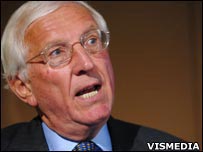 Walker says such secrecy is no longer appropriate. No surprise there. The Treasury has made not-very-veiled threats that if private equity firms don’t do a better job of telling their employees and other interested parties (including largely ill-informed politicians) what they’re up to, they could find themselves compelled to do so.
Also, there is a semi-respectable intellectual case for greater disclosure, which is that they now control such a big and rising share of the British economy (they are responsible for an estimated 8 per cent of UK private-sector employment) that there is a public-interest case for having clearer oversight of their activities.
Walker himself – as someone who believes that private equity spurs productivity improvements and economic growth – hopes that harvesting more robust data on private equity will turn out to be good for the firms.
He is convinced that analysis based on reliable information – which he acknowledges is in short supply – would put paid to criticisms that private equity is largely a “bubble” phenomenon created by cheap credit markets and rising share prices.
He believes that private equity will be able to demonstrate that it creates wealth to a large extent through superior operational management of companies.
That said, he does acknowledge that the capital structure of private-equity owned businesses is probably superior to that of many public companies.
Or, to put it another way, he is bemused that listed businesses haven’t followed the lead of private-equity-owned ones by borrowing more and borrowing in a more sophisticated way.
For me, therefore, the most welcome of his recommendations are those that should allow the current heated and emotional debate about private equity to be replaced by one that actually has access to proper facts.
So, for example, Walker wants private-equity firms to disclose by category the source of their equity funding – which will show that any superior returns they make are distributed largely to overseas investors, rather than to British pension funds.
He also urges that private-equity firms publish a breakdown of their returns to show what proportion of their profits comes simply from riding on the back of rising stock markets, what share comes from financial engineering and what part comes from genuine productivity and trading improvements in the businesses they own.
Another proposal is that the private-equity partnerships should publish an annual account of their respective investment philosophies and how they oversee and direct companies in their portfolios.
Finally he wants private-equity owned businesses to behave a little more like public companies by publishing proper annual reports of their financial and operational progress within four months of the year-end and shorter six-monthly statements.
Critics of the industry will say this is all motherhood and apple pie – and that Walker is merely deflecting from more important debates about how little tax private equity pays and its impact on employment.
Except that these debates are less informed than they might be, in the absence of the kind of information which Walker’s proposals should yield.
So one reasonable concern is that some private-equity firms will ignore whatever code-of-practice emerges from Walker’s review, because they will view it as burdensome and intrusive.
And although the media, politicians and trade unionists may name and shame them, these firms won’t give a stuff, so long as they continue to receive oodles of cash from their overseas backers.
The BBC is not responsible for the content of external internet sites
I'm Robert Peston, the BBC's business editor. This blog is my regular take on the business stories and issues that matter.
Click here for all the business news
The New Capitalism: Download a PDF [37Kb] with my thoughts on how the global crisis occurred and what the re-made economy will look like


Archives
« July 2007 »
| Sun | Mon | Tue | Wed | Thu | Fri | Sat |
|---|---|---|---|---|---|---|
| 1 | 2 | 3 | 4 | 5 | 6 | 7 |
| 8 | 9 | 10 | 11 | 12 | 13 | 14 |
| 15 | 16 | 17 | 18 | 19 | 20 | 21 |
| 22 | 23 | 24 | 25 | 26 | 27 | 28 |
| 29 | 30 | 31 |
Being Discussed Now
- Will Thiam survive at Pru?(50)
- BP's financial pain is America's pain(407)
- Government cuts private pensions(137)
- Peston Picks is moving(46)
- HSBC banks on UK(61)
- What price a Greek haircut?(91)
- The big PPI lesson for banks(85)
- RBS opposes internal firewalls(97)
- Lloyds to settle PPI claims(136)
- Lloyds: back in the red?(27)
Websites linking here
- "Robert Peston at the BBC [gets blogging's] deepest utility: an essential intellectual tool as well as a means for distributing stories"
Website: Slugger O'Toole - "Peston, Murdoch and Marr sounds like a firm of dodgy solicitors, but they are, of course, the names of important prognosticators of our media future"
Website: Nick Baines - "Politicians really should be stepping up to make these arguments, but in their absence BBC reporter Robert Peston does a pretty good job of summing up"
Website: SqueezeBox - "I outline how blogging went from being an activity by a handful of journalists to being adopted by some of the BBC's biggest names, such as Business Editor Robert Peston, despite at times vehement opposition from within the corporation"
Website: Reportr
Robert's TV/Radio reports
- Rock criticised over risk taking
Broadcast: 20 March 2009 - Row over Sir Fred pension advance
Broadcast: 17 March 2009 - Testing times for China's economy
Broadcast: 12 March 2009 - Chinalco president on Rio Tinto deal
Broadcast: 06 March 2009 - China's factories 'in trouble'
Broadcast: 06 March 2009

Latest from BBC News blogs
Nick Robinson: |  |
Douglas Fraser: |  |
Brian Taylor: |  |
 |
Richard Black: |  |
Jonathan Amos: |  |
- News Editors
- Sport Editors
- Journalism Labs
- BBC Internet Blog
- Radio 4 Blog
- Peston's Picks
- Nick Robinson's Newslog
- Stephanomics
- Mark Easton's UK
- Mark Mardell's America
- Nick Bryant's Australia
- Andrew Harding on Africa
- Gavin Hewitt's Europe
- Soutik Biswas' India
- dot.Rory
- Science: Jonathan Amos
- Richard Black on environment
- Today: Tom Feilden
- Fergus Walsh's medical files
- Newsnight: Paul Mason
- Newsnight: Mark Urban
- Torin Douglas
- Will Gompertz's arts
- Phil Coomes on photojournalism
- Magazine Monitor
- Mark D'Arcy in Westminster
- NI: Mark Devenport
- Scotland: Brian Taylor
- Scotland: Douglas Fraser
- Wales: Betsan Powys
- Martin Rosenbaum on FOI
- 5 Live Breakfast
- Newsnight
- PM programme (iPM)
- World Tonight: Robin Lustig
