

Turning up the heat
- 8 Oct 07, 11:03 PM
Helpful bunch the European Scrutiny Committee. Their report on the European Reform Treaty questions, perhaps even undermines, just about all the government’s main claims for that controversial text. Heaven knows what the whips are coming to. In my days in Westminster there would have been trips to St Lucia here, a murmured word about a knighthood there, and perhaps the odd broken arm. At any rate, it’s rare for a Labour-dominated committee (nine out of 16 members) to produce a report quite so unhelpful to the government.
The veteran Eurosceptic Bill Cash is on the committee and perhaps his always detailed analysis went on so deep into the night that he penned the whole thing while the others slumbered. The headline is that the MPs of the European Scrutiny Committee find that the European Treaty is "substantially equivalent" to the constitution.
Damning
True, they pull their punches in the end. While they conclude that the treaty is pretty much the same as the constitution (or "hated constitution" if you have a Wapping keyboard and press F3) it adds that this is true for those countries without opt-outs. As Britain does have them you might think this is of little consequence. But read on, and it’s damning.
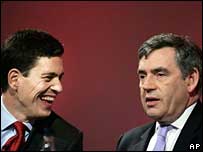 They say they understand why the government wants to distance itself from the old constitution but add, "We would wish to explore the reality and significance," of this approach, adding that it could be "misleading". They say it is up to the government to prove that the new treaty is "significantly different" from the old constitution, adding that despite the British opt-outs "we are not convinced". They demand that the government spells out what battles it has won to make the treaty so different for the UK.
It doesn’t stop there. They question the worth of Britain’s opt-outs and clarifications. They say they are “concerned” that the treaty will mean changes that will increase the EU’s powers over national law and so national governments. They want our government to state what safeguards it has against this.
They then go on to be "concerned" that European courts will gain greater rights over UK law. They pick two examples and suggest that Britain might face tougher laws on the length of the working week and on discrimination (they seem to assume that this would be a bad thing) and want “concrete evidence” that this won’t happen.
No negotiation?
They highlight what the Conservatives call the "ratchet clause": a change that would mean that an agreement of all governments could mean the abolition of the national veto from a certain area of policy, without the need to call a special summit. They again ask for the government to spell out its safeguards against what they call a “further erosion of transparency and accountability”.
They criticise the lack of transparency in the negotiating process and suggest the government was "bounced" because a draft text was produced just a couple of days before the summit, apparently without any negotiation. I think here they either deliberately or accidentally misunderstand both what happened and a fairly obvious difficulty for governments.
The German presidency didn't hold formal negotiations with a text on the table. Instead they showed relevant parts to the very senior civil servants from each country. I know for a fact that at that stage the exchanges were detailed, and in Britain’s case were discussed with Tony Blair.
It was a rather clever sort of negotiation that didn't allow 25 other countries chip in every time the Germans reached an agreement on an idea or form of words. The committee would like Parliament to have been more fully informed at this stage.
I certainly wouldn’t relish being the foreign secretary who stood up to say: "We’re telling the Germans we’re not giving up any vetoes, but of course that’s not our real position, we’ll stick out for justice and home affairs, but even that depends on what we can get on foreign policy, which is our real bottom line." To then return to the poker game would not be easy.
'Sloppy'
Like all good parliamentarians everywhere these MPs are most concerned about their own rights and save their full fury for a suggestion that parliaments could be legally bound to "contribute actively to the good function of the union". They call this "objectionable". Although the clause is specific, and wouldn’t for instance prevent Parliament voting to withdraw from the Union, one can see their constitutional point.
This report turns up the heat on the government, but does it have any real effect?
The words "Jon Cunliffe" are rather spat in Brussels these days. He’s Gordon Brown’s top civil servant dealing with the EU and he’s ordered diplomats and lawyers to tighten up what he apparently regarded as a rather sloppy document.
If Mr Brown wants to make a fuss at the summit in a couple of weeks’ time this will strengthen his hand. Perhaps the whips aren’t so wet after all.
No referendum
- 8 Oct 07, 10:36 AM
The referendum campaigners’ last best hope has just vanished. Not that those who want a referendum on the European Reform Treaty will shut up shop and go home. Far from it. The campaign will intensify and reach something of a peak over the next few weeks. And perhaps that is at least one reason why their moment may have passed.
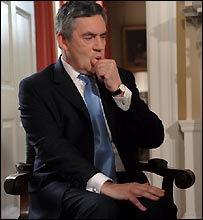 I’m writing of course about Gordon Brown’s decision not to hold an autumn election. Had he decided to “bring it on” there was a slim chance that he might just have promised a referendum to remove the subject from an election. Some politicians in Britain do believe in referendums for their own sake. Mr Brown is not one of them, and as a rule of thumb prime ministers in the UK only offer referendums to remove an issue from an election, or to solve internal party strife. Brown didn’t want a referendum and I personally didn’t think he would be pushed. But it was just possible. Now I can see no reason why he would grant one.
The election would have been fought against the background of a European Union summit that would have been held two weeks before polling day. It would have been a real headache for Mr Brown. Would he go to Lisbon and make a fuss that most would realise was rather drummed up for domestic reasons? Would he snub an important summit on grounds of the election, laying himself open to charges he was ignoring vital British interests? Would he have gone and agreed to the treaty and laid himself open to the wrath of the Sun and the Telegraph? It would be inevitable that for a few days at least Europe would be at the top of the election agenda. And no-one, not the cleverest strategist, politician or journalist, can really guess how an issue would play after that. It could just fade and be replaced by a row about taxation or health. But it could run, on and off, right up to polling day, poisoning the atmosphere.
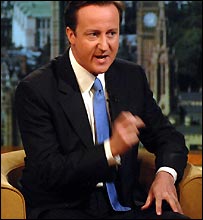 The Conservatives were going to make Europe an election issue. One source told me it would be among their top five or six issues. William Hague is scarred by the failure of his “Save the Pound” election and would have been cautious. But it would be easy to raise the issue of trust and easy to sum up several complex arguments about the treaty as “He’s giving more power to Brussels”. It occurred to me that perhaps this was an important factor in not holding an election. It wouldn’t of course be the only one, or main one, but it would have been part of the mixture that could have turned toxic for the Prime Minister. I see Jackie Ashley in the Guardian suggests not only the Murdoch press but the man himself may have played a vital role in shaping Mr Brown's decision.
The whole affair will mean that we will know even less in the future about the decision-making process in government. You just can’t tell the children that you might decide something. They need certainty when mummy and daddy have had their private discussions. The whole affair shows how little room politicians have to think. They can’t be allowed to semi-publicly mull over a decision.
There is little doubt that Brown’s most senior lieutenants were talking up the idea of an early election and getting journalists to write it up. But we hacks are obsessed by dates. One reason: journalism is about facts, making the unknown known. But elections also directly effect our lives, with weeks of intense work, plans cancelled, weekends put to one side, and so when they are is a matter of intense personal interest.
But it is also true that the media needs this narrative. For some reason they fell for the line that this stunningly cunning politician would be a low-octane charisma-less failure as PM. When he wasn’t, they were more impressed by the image shift than they should have been. So they need a reason to declare the honeymoon over. This is it. I rather think it will have put Mr Brown off speculation about votes in general, and that goes for a referendum too.
The BBC is not responsible for the content of external internet sites
Description
Archive
« October 2007 »
| Sun | Mon | Tue | Wed | Thu | Fri | Sat |
|---|---|---|---|---|---|---|
| 1 | 2 | 3 | 4 | 5 | 6 | |
| 7 | 8 | 9 | 10 | 11 | 12 | 13 |
| 14 | 15 | 16 | 17 | 18 | 19 | 20 |
| 21 | 22 | 23 | 24 | 25 | 26 | 27 |
| 28 | 29 | 30 | 31 |
Being Discussed Now

Latest from BBC News blogs
Nick Robinson: |  |
Douglas Fraser: |  |
Brian Taylor: |  |
 |
Richard Black: |  |
Jonathan Amos: |  |
- News Editors
- Sport Editors
- Journalism Labs
- BBC Internet Blog
- Radio 4 Blog
- Peston's Picks
- Nick Robinson's Newslog
- Stephanomics
- Mark Easton's UK
- Mark Mardell's America
- Nick Bryant's Australia
- Andrew Harding on Africa
- Gavin Hewitt's Europe
- Soutik Biswas' India
- dot.Rory
- Science: Jonathan Amos
- Richard Black on environment
- Today: Tom Feilden
- Fergus Walsh's medical files
- Newsnight: Paul Mason
- Newsnight: Mark Urban
- Torin Douglas
- Will Gompertz's arts
- Phil Coomes on photojournalism
- Magazine Monitor
- Mark D'Arcy in Westminster
- NI: Mark Devenport
- Scotland: Brian Taylor
- Scotland: Douglas Fraser
- Wales: Betsan Powys
- Martin Rosenbaum on FOI
- 5 Live Breakfast
- Newsnight
- PM programme (iPM)
- World Tonight: Robin Lustig
