- Helen Boaden
- 18 Oct 07, 03:40 PM
Just possibly, you might have noticed that this is a big day at the BBC – a day when our vision for the future has been laid out and its consequences in terms of job losses. (You can read an edited version of a speech I gave to the staff of BBC News earlier today.)
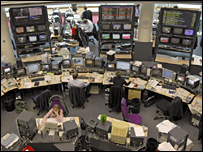 Essentially, a reduced licence fee settlement, together with tough efficiency targets, mean that we need to radically change the way we work to best serve our many different audiences. In the biggest overhaul of BBC News in 15 years, we are going to become truly multi-media. You can get an idea of what we have in mind from my speech to the staff of BBC News.
We may be reducing posts in News but we don’t plan to reduce quality. As you can see from our list of investments, we’re putting money into good old-fashioned journalism as well as new services via our web. We treasure our specialist talent because we know their skills, expertise and range of contacts add immeasurably to our authority and distinctiveness.
Under our plan, they all come together to deliver their work in audio, video and online. And our big programmes – Today, Newsnight, Panorama – will continue to deliver their excellent journalism on radio and television but with the best websites we can offer, allowing audiences a truly interactive experience if they want it.
Most change is difficult and at times, painful. Undoubtedly we will not find the implementation of all this to be plain sailing. But standing still is not an option because our audiences are changing and we must change with them. As the brilliant architect of our plan, deputy director of news, Adrian Van-Klaveren, wryly pointed out to me today: “This is just the end of the beginning.”
Continue reading "Reorganising BBC News"
Helen Boaden is director, BBC News

- Richard Sambrook
- 18 Oct 07, 10:57 AM
Among its decisions about the future of the BBC yesterday, the BBC Trust also approved the launch of BBC.com - which will mean international users of our website will see advertising on selected pages in the near future. There will be no change and no advertising for UK users. BBC.com will encompass all types of content, but news will be at the heart of the site.
There are a number of reasons behind this decision. The bulk of the BBC is funded by the UK licence fee paid by every household with a TV in Britain. However, under the new BBC charter, we are not allowed to use licence fee funding for the benefit of international audiences. The BBC website has a large number of international users and advertising seems to be the obvious way for them to contribute to the costs of the site. In addition, profits from the site will be reinvested in the BBC's journalism and we believe will enable us to more strongly develop the site for international users.
Advertising around BBC News is nothing new for international audiences. BBC World TV news has been a commercial channel since its launch 16 years ago. Some World Service programmes are re-broadcast on commercial FM radio stations. As with both those examples, BBC.com will carry the same public service journalism as it currently offers, but distributed on a commercial platform.
We will not be offering highly intrusive advertising and are taking significant steps to manage any potential conflict of interest between advertisers and editorial content to ensure our journalism is not compromised in any way.
We recognise that some users will be unhappy with this change. However in tests and surveys in advance of this change the majority of international users did not express a strong objection and a majority of those surveyed in the UK agreed with the principle of advertising for international users.
In the first phase, advertising will be introduced, probably next month, on selected high traffic pages visible only to those logging in from outside the UK. In a second phase, advertising will be rolled out across more of the site, again only when viewed from outside the UK.
Richard Sambrook is director, Global News