


X-Factor for Africa?
- 15 Sep 06, 12:49 PM
I’ve been at a seminar entitled: “Telling stories in an interconnected world: the challenge to broadcasting”.
 The details of the discussion are off the record but I hope no one minds me quoting the title.
The challenge is pretty huge. We chatted, admittedly in the cloistered comfort of a Cambridge college, with all sorts of TV types, academics, and pressure groups about some of the big issues - climate change, China, the developing world - and the recurring concern is that fewer and fewer people want to watch programmes about that stuff.
As you’re reading this you’re probably one of the few, and I’m sure you worry too that in a digital age many viewers, particularly young viewers, simply tune out of news and current affairs, if the TV was even on in the first place.
The aim of the conference was - what to do about it.
I’ve always been deeply suspicious of the idea that you can sugar the pill of current affairs by coating it in a game show gloss. X-Factor for Africa anyone?
But many are convinced people are actually thirstier than ever for information and ideas about the issues they care about, and that they often think news programmes don’t deliver those.
One problem is that we have tended to report what politicians, countries, and international organisations are doing, when viewers are much more interested in what people are doing and in issues which transcend national borders.
By happy accident we did a bit of transcending this week with our programme on the best public services in the world. The idea was to look at what people - and okay, governments - are doing around the planet to improve their quality of life and see what lessons we could learn from that in Britain.
On Wednesday we featured healthcare in Cuba, transport in Portland, Oregon, education in Qatar and prisons in Denmark, and asked a group of interested parties, practitioners and - perhaps crucially -not Westminster politicians to discuss them.
The overwhelmingly positive response suggests that in this undoubted challenge we may be on to something.
Peter Barron is editor of Newsnight

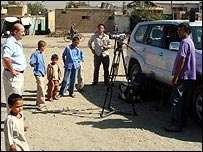 The answer might surprise you - it's Kabul. The city is one of the first in the world to be a giant wireless zone. Using "wi-max" and a trusty laptop, correspondent Alastair Leithead can broadcast from pretty much anywhere in Kabul - and all at a fraction of the cost of traditional satellite links.