


Questioning Mr Blair
- 12 Sep 06, 12:57 PM
Should the BBC’s political editor, Nick Robinson, have asked about UK politics during press conferences over the last three days given by Tony Blair with the Israeli, Palestinian and Lebanese leaders?
Nick’s questions - used in his reports on TV and radio bulletins - have sparked a heated debate on his blog. Some contributors feel they were totally inappropriate - one brands him “an embarrassment to his profession.” Others are supportive - one says that asking about important domestic issues is valid “anywhere at any time.”
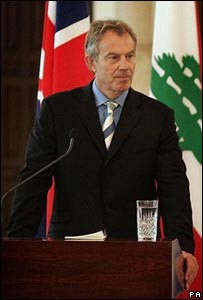 It’s a tricky issue. On foreign trips like this, a group of newspaper journalists, broadcasters and agency reporters travels with the prime minister, and - often to the bemusement of foreign leaders - takes every opportunity to pester Mr Blair about what’s going on back in the UK.
At the BBC we try to do more than this. We have huge numbers of different programmes and platforms and audiences with different interests, and we try to cater for everyone.
So yes, of course we ask about domestic politics; but we cover the diplomatic story as well, allowing editors back in London to decide which angle is the right one at a particular time for their audience.
In the Middle East over the past few days, we’ve had Nick Robinson and Five Live’s John Pienaar in place to pursue domestic politics; but we’ve also had the Middle East editor Jeremy Bowen, and correspondents based in the region such as James Reynolds, Matthew Price and Alan Johnston on the diplomatic story.
The reporting across three days has reflected different aspects of the developing stories.
So for example the BBC One Ten O’clock News on Sunday night led with Gordon Brown’s interview with Andrew Marr, and included Tony Blair’s reaction to it, which Nick Robinson then talked about from Jerusalem. But the programme also included a report by Jeremy Bowen on the substance of what the prime minister had discussed with Mahmoud Abbas.
Would it have been right for Nick Robinson NOT to have taken the opportunity to ask Mr Blair about what his Chancellor had said? Surely not – domestic politics can’t be put on hold while the prime minister travels abroad.
Political junkies will remember only too well Margaret Thatcher’s performance on the steps of the British Embassy in Paris in November 1990 after she’d failed to beat Michael Heseltine outright in the first vote for the Conservative Party leadership.
The BBC’s fearless chief political correspondent, John Sergeant, pounced with his killer question: “Mrs Thatcher, could I ask you to comment?”
Her spokesman Bernard Ingham then brushed Sergeant to one side to allow Mrs Thatcher to declare her intention to fight on. Two days later, she resigned.
Who remembers now that she was actually attending a meeting about European security? I’m sure John Sergeant was right NOT to ask about that.
When the history books are written about this past weekend, will Mr Blair’s Middle East trip be remembered as a moment when negotiations restarted between the different sides in the Middle East, or as a significant staging post on Mr Blair’s way out of Downing Street. As the old reporting cliché goes, only time will tell.
But at least Nick Robinson’s questions opened up the possibilities for alternative versions of history.
Gary Smith is editor, political news