

Welcome to Week Two
Post categories: Episode 2, Message from Marcus
 |15:30 UK time, Tuesday, 2 August 2011
In order to see this content you need to have both Javascript enabled and Flash Installed. Visit BBC Webwise for full instructions. If you're reading via RSS, you'll need to visit the blog to access this content.
.
Once you’ve watched the programme you’ll be ready to crack the next stage of our Code Challenge which includes the intriguing: Master of Mosaics. This game is all about spotting the symmetries hidden inside a sequence of beautiful tiles that conceal the fabled Fyodorov family vault. Maybe it's because I spend my life researching the fascinating world of symmetry that this is one of my favourite games of the Code Challenge. Get to the end and another crucial clue will be unlocked.
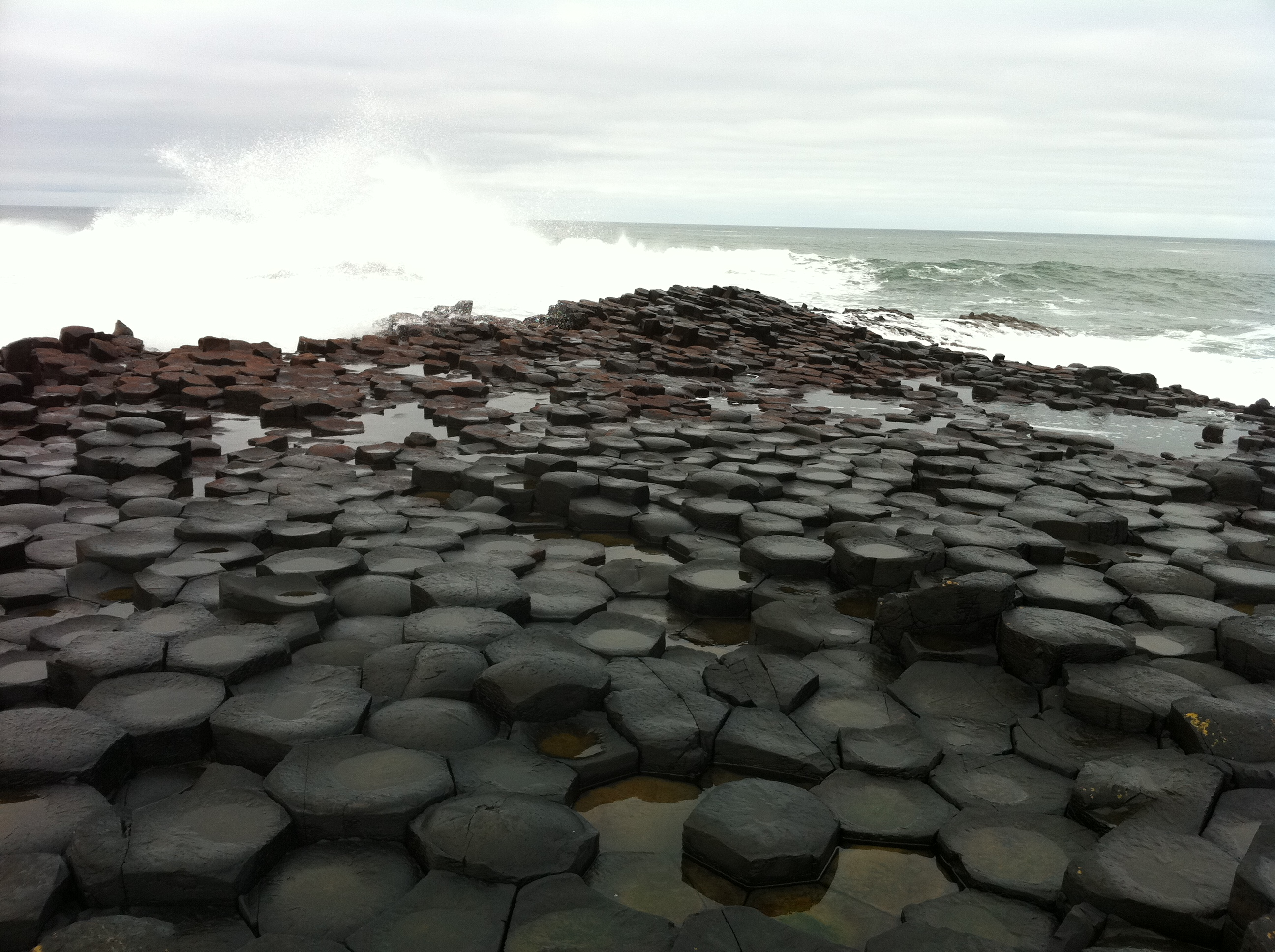
When we started to make The Code the producers asked me where I would like to go to capture the dramatic examples of mathematics at work . Perhaps I should have said the Bahamas or Hawaii but instead I said that I’d always wanted to go to the northern tip of Northern Ireland to see one of the mathematical wonders of the natural world: the Giant’s Causeway.
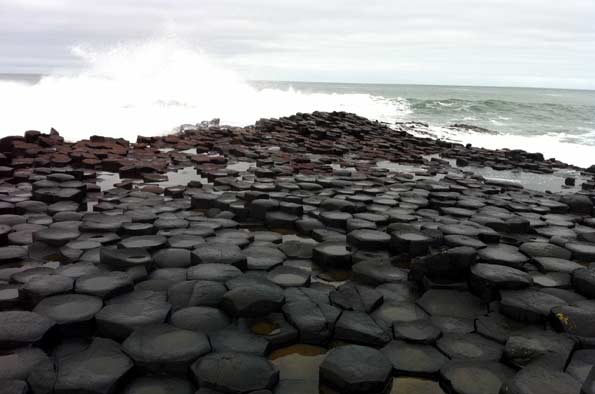
The Giant's Causeway in Northern Ireland
I’d seen pictures of the thousands of strange hexagonal columns that cover the coast like a beehive but nothing prepares you for witnessing such beautiful geometry up close. Although filming was absolutely freezing and I almost got swept out to sea by a freak wave, the Giant’s Causeway is a dramatic backdrop to the opening of programme two and it conveys the powerful message that the most efficient solutions to nature's problems are often mathematical.
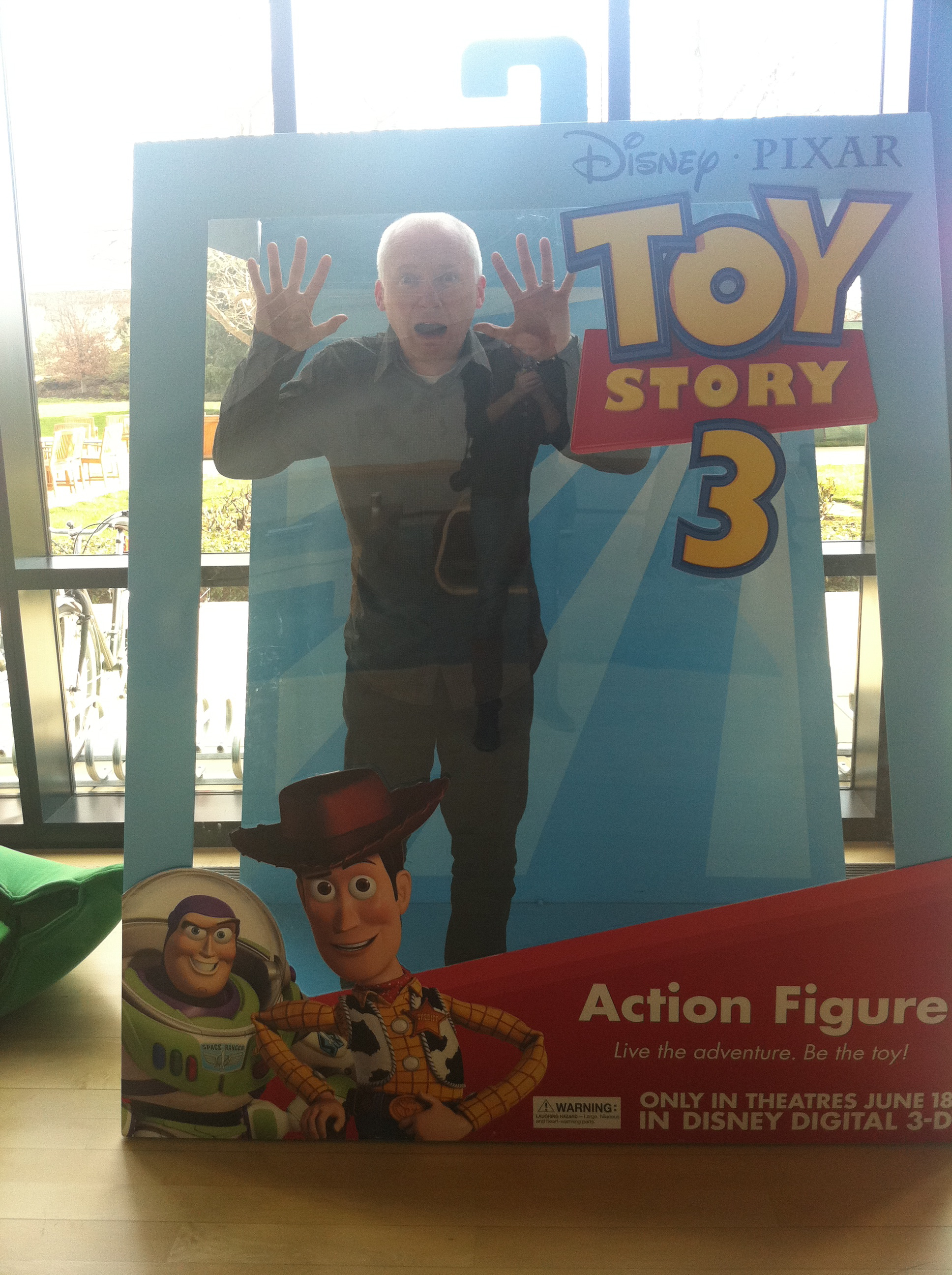
But our trip to the Giant’s Causeway was probably eclipsed by a visit we made towards the end of the programme to Pixar studios to find out how the film-makers are using mathematics to create the virtual worlds of films like Up and Cars. I think most people’s impression is that Pixar is populated by artists meticulously illustrating the movies frame by frame. But surprisingly, a good proportion of the employees are more versed in the mathematics of fractal geometry than paints and brushes. The great discovery of the 20th century is that the mathematics of fractal shapes is the code behind the way many things form: from trees to mountains, from clouds to waterfalls.
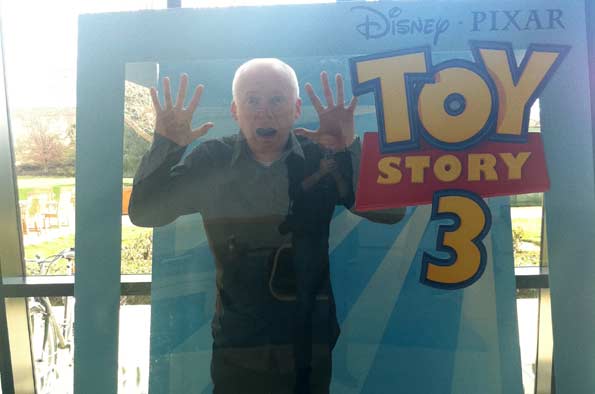
Marcus du Sautoy at Pixar
Most exciting of all was getting a sneak preview of one of Pixar’s new movies. It was so confidential that we weren’t allowed to point our cameras anywhere near the storyboards hanging on the walls and we were all sworn to secrecy. But I can tell you that mathematics will once again be one of the key ingredients in bringing those pictures to life.
I hope you enjoy the second programme and best of luck with this week's puzzles. You're nearly halfway through the hunt, keep going!


Comment number 1.
At 00:03 4th Aug 2011, pa1mcd wrote:I guess you are kinda right with the idea of numbers being so important in how things are fashioned, but really it is light and image. Light has a numerical value, it has strength in the air in vibrations and colours. If you believe in God you would read God spoke ... into existence, which is literally right because the words God used have power. Air waves (vibration + force), tone (Colour) , and of course breathe (substance). So "In the beginning (Time) God created the Heavens (space) and the earth (Matter). Time space matter are the start of creation. Great programmes thanks BBC Paul
Complain about this comment (Comment number 1)
Comment number 2.
At 07:14 4th Aug 2011, steven isle wrote:Oh dear, the religious nutcases will try to see god in everything. Anyway, excellent programme; clever linking of biology, geology and architecture with maths. I thought the illustration of naturally forming geometric shapes using bubbles was brilliant.
Complain about this comment (Comment number 2)
Comment number 3.
At 09:38 4th Aug 2011, Martin Monk wrote:pa1mcd's comment illustrates nicely the problem of sifting sense from nonsense and supporting claims with evidence. Programme 2 itself appeared to me to be making claims that I would refute. The comon patterns across a variety of natural phenomena, many of which have to do with spacial arrangements, were stunning as presented. Particularly the soap bubbles. However, the natural phenomena take priority and the mathematical analysis can be superimposed on them. The natural world comes first. The mathematics, although common, does not supplant surface tension, cooling patterns, the action of hormones and enzymes. PIXAR can only mimic nature in a digital-virtual environment: not reality.
Complain about this comment (Comment number 3)