
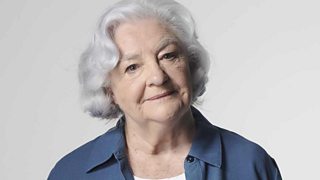
Jill Archer (Patricia Greene) supplied by BBC Pictures for use on The Archers
Poor old Jill has been under a lot of strain since the burglary. I spoke to Patrica (Paddy) Greene, who has played Jill since 1957.
What are your memories of joining the programme?
I had never done any broadcasting before. I did an audition. I was working in Oxford Rep at the time, and I wanted to do classical theatre. That was my aim – haha. I had a phone call from [Archers producer] Tony Shryane saying will you come and audition for a part and I was frightened and I said I couldn’t because I was working. Then he said it was for a sexy blonde in a tea tent. And I thought ooh, that sounds a bit of all right.
There were lots of other actresses there who were all radio actresses. I remember coming in and thinking I shouldn’t be here really. I went last, and because I’d spoken to Tony I did a sexy voice. The other girls did it straight. So I came in like Fenella Fielding and got the job.
What was it like being in a show that was central to the lives of so many people in the country?
My father was delighted because this was the first time he could be proud of me. Suddenly I’d stopped being an actress. I was a broadcaster and that was much better for him at work.
But I couldn’t do it. I really couldn’t. The one and only time I’d had a lesson in radio at drama school they said “you’ll never broadcast. You sound like a fairy in hockey boots.” So I only did the audition because I was out of work.
When the script said (APPROACH), I approached the microphone not talking. And Norman [Painting, who played Phil Archer], bless him, would whisper and say “no, while moving forwards use your voice.”
I was terrible, really awful. I remember asking Anne Cullen [Carol Grey, later Tregorran] how to do it. She took me on one side and gave me a lesson in half an hour which helped enormously. She was wonderful. All the men were in love with her. She was adrip with chains and jewellery and she just stood there doing it beautifully.
She taught me things like you use a different voice when you’re on the telephone, or talking to the vicar, or your lover, or your char. Also you have different paces. Sometimes you’re fast, sometimes you’re slow. I hadn’t thought of any of that and it was very good advice. I’ve passed it on several time to other people.
What are your memories of joining the programme?
I had never done any broadcasting before. I did an audition. I was working in Oxford Rep at the time, and I wanted to do classical theatre. That was my aim – haha. I had a phone call from [Archers producer] Tony Shryane saying will you come and audition for a part and I was frightened and I said I couldn’t because I was working. Then he said it was for a sexy blonde in a tea tent. And I thought ooh, that sounds a bit of all right.
There were lots of other actresses there who were all radio actresses. I remember coming in and thinking I shouldn’t be here really. I went last, and because I’d spoken to Tony I did a sexy voice. The other girls did it straight. So I came in like Fenella Fielding and got the job.
What was it like being in a show that was central to the lives of so many people in the country?
My father was delighted because this was the first time he could be proud of me. Suddenly I’d stopped being an actress. I was a broadcaster and that was much better for him at work.
But I couldn’t do it. I really couldn’t. The one and only time I’d had a lesson in radio at drama school they said “you’ll never broadcast. You sound like a fairy in hockey boots.” So I only did the audition because I was out of work.
When the script said (APPROACH), I approached the microphone not talking. And Norman [Painting, who played Phil Archer], bless him, would whisper and say “no, while moving forwards use your voice.”
I was terrible, really awful. I remember asking Anne Cullen [Carol Grey, later Tregorran] how to do it. She took me on one side and gave me a lesson in half an hour which helped enormously. She was wonderful. All the men were in love with her. She was adrip with chains and jewellery and she just stood there doing it beautifully.
She taught me things like you use a different voice when you’re on the telephone, or talking to the vicar, or your lover, or your char. Also you have different paces. Sometimes you’re fast, sometimes you’re slow. I hadn’t thought of any of that and it was very good advice. I’ve passed it on several time to other people.
Paddy interviewed at the time of the 60th anniversary:
Patricia Greene on auditioning for the role of Jill Archer and how accents have changed in the drama over the years.
How has Jill changed over the years?
To tell you the truth, not much. She’s very much more able and pious and good than I’ve ever been. She’s only done one wicked thing as far as I can remember. She ran over a deer once. But I see signs in scripts coming up that she’s got another side to her. Hooray!
What’s she been like to play over the years?
I like her, and I wouldn’t do anything to hurt her. She’s done me good really. I’ve not gone the actress way, I’ve gone the WI way a bit.
A huge part of your time on the show has been when Jill was married to Phil.
That’s right. Breakfasts at Brookfield with Judy Bennett [Shula] playing three children. Yes, that was quite fun.
But for some years now you’ve been playing Jill the widow. Has that changed things for you?
Yes. I am myself a widow, so quite a bit of it was true. It is true that widows become invisible and you lose status. You become an embarrassment, really. You just stop going to dinner parties because you’re an extra. I hope she’s going to be less invisible.
Is there a worry that as a widow you’re looking for another man?
In real life, when I became widowed, one or two old boyfriends came sniffing around. I went out to lunch with a couple of them but had no intention whatsoever of going through all that again. I don’t know about Jill. I don’t think she will.
What are the story highlights that stick in your mind?
You see, Jill’s never had storylines of her own. I remember when we left Brookfield, Phil had a two page speech about how he was going to divide the farm up, and all Jill said was “yes”. Moving into Glebe Cottage she had to say “ooh, isn’t it small.” And I tried to imbue that with as much passion as I could. I don’t know if anyone noticed really.
I’m sure they did. How has the show changed over the years?
Well of course it mirrors the editor’s view of it. It was very domestic and agricultural when I first came in. And then with Bill Smethurst [1978-1986] it was the glory of the Grundys. You know, the Grundys became the leading characters and they were very funny. And with Vanessa [1991-2013] we brought the surrounding shire into the programme and a lot more people came in. So it became a bit diverse, really.
It’s relatively early days with the current editor Sean O’Connor, but have you seen changes?
Oh indeed we all have. It’s more fun, and it’s tighter.
What are your hopes for the future for Jill?
Well, there's a lot of pressure for her to go back to Brookfield for a bit. That would be nice. I could forsee all sorts of things happening there.
Keri Davies is an Archers scriptwriter and web producer.
Learn more about Paddy and Jill in our Who's Who
