The Importance Of Reading Ernest
Today was my last time with John Toal on the Saturday Magazine show. It's been a lovely three years with the firm, but life is getting busy in other places and there's always the danger that too long in the reviews seat can find you repeating yourself and getting complacent. Se we all parted on the best of terms and the ever-thoughtful Mr Toal presented me with a vintage version of 'The Old Man And The Sea'. Cheers, pal.
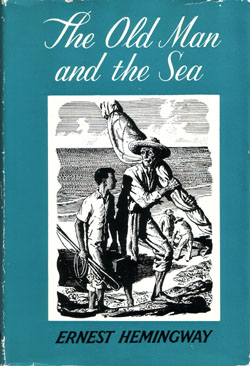 I'm not sure how he knew it was my fave book, but the offer was appreciated. I've read many of the Hemingway works, starting with 'A Farewell To Arms' and working my way through the bullfights, the hunting trips, the suicide scenes and the extra-pithy short stories. I also love his memoirs of Paris in 'A Moveable Feast', which makes you want to haul a Royal typewriter over there and get busy around Boulevard Saint-Germain. His instruction to budding writers, to start with a declarative statement, has echoed in my head over several decades now.
Some of the guy's macho elements do become tiresome after a while, but by the time he'd reached 'The Old Man and The Sea', Ernest had cut out the posturing and settled into a more profound rhythm. Hem always denied that the book was some kind of metaphor, that it was simply about marlin fishing, others disagree. It's about a search for the big idea, the life work, the defining quest.
In February 2001, I was in Cuba with the Manic Street Preachers and I took the afternoon off to visit Cojimar, setting for the novel. It's no longer a secluded fishing village, and the writer's local, La Terraza, is only too happy to take the tourist dollar. But still I got an enormous thrill out of being there and knowing the actual Old Man, Gregorio Fuentes was still on the island, an actual legend. He's gone now, and so I'm gonna read the book, once more, with feeling.