BBC BLOGS - Spaces & Places

Archives for July 2010

One Workplace - One man and his Rhubarb

Post categories:

Chris KaneChris Kane|11:52 UK time, Thursday, 29 July 2010

The Workplace team is big and diverse and here is yet another example of the things our colleagues get up to.

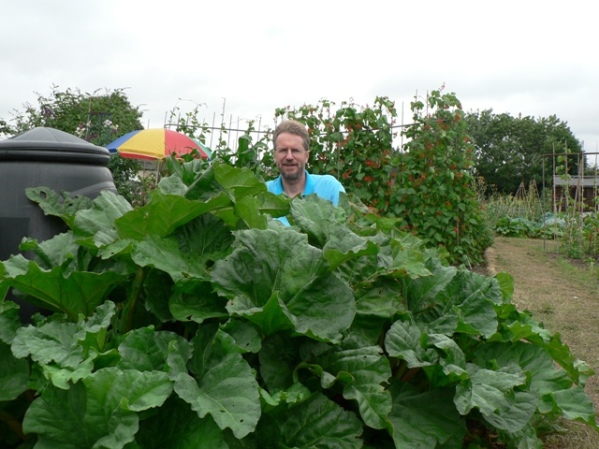
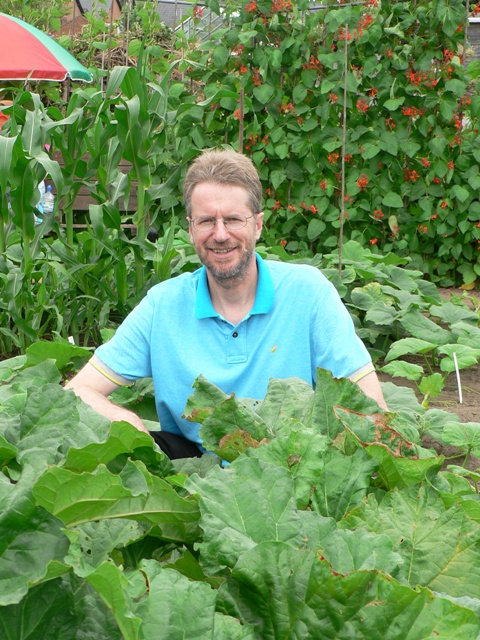
During the week, John Blades is our expert on the world of health and safety, but in his spare time he is a dab hand in the garden.

John is a really keen gardener and over the last few months has shared the fruits of his labours with colleagues in White City. Producing award-winning rhubarb is a key focus for him as the photos below indicate.

John has shared the rhubarb, along with cherries, in return for a small donation to Children in Need. Colleagues should keep an eye out for the next produce which is likely to be runner beans.

A man with true green figures! 

P1130226sm.JPG

P1130227s.JPG

Michiru School - my full report

Chris KaneChris Kane|09:49 UK time, Friday, 23 July 2010

Thanks to thousands of sales of One Water in BBC catering outlets I had the opportunity to see for myself the end result last week. I am still amazed that the simple idea of using some proceeds from selling bottled water can deliver such enormous benefits.

This was reinforced by the trip and helped me build on the insights gained from last year's visit to Lesotho. Our 17 person party descended on Michiru Lea school last Monday morning. I was joined by Kate Smith and Hilary Friel plus representatives from Salford University and Aramark. The School is located in the south of Malawi not far from Ballantyne. We left the tarmac road just outside the town for the three mile off-road journey - I was struck by the size of the craters and boulders as we bumped our way up to the school.

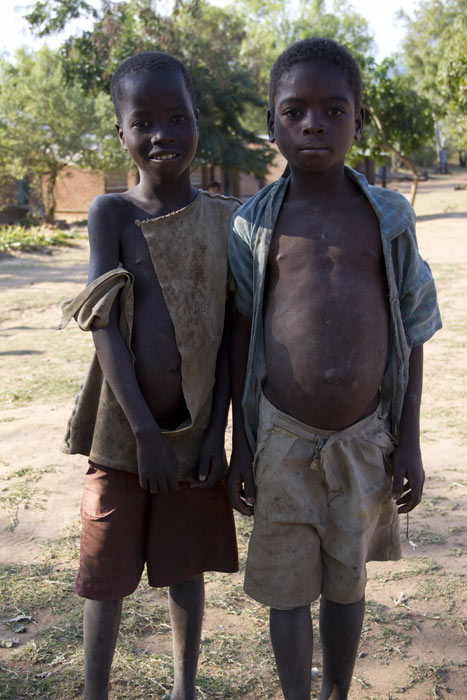
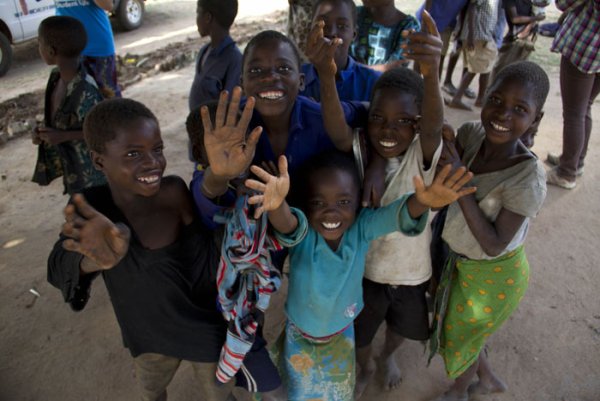
There the staff and children greeted us enthusiastically, the smiles of these African faces are disarming and the excitement among the hundreds of children was clear.

I met Dyton Malazini, the Headmaster, who took me on a tour of the school buildings. In many ways they reminded me of derelict factory buildings in the UK, abandoned as a consequence of recession. The school comprised nine classrooms, six latrines and four teachers' school houses, one of which was completely inhabitable. In fact, to me all of them should be condemned.

The Headmaster showed me his nursery garden which was started a few months ago as a result of having the new pump. He hopes that the radishes, lettuces and other vegetables can be the start of a proper school garden. Then he can sell the produce to help buy desperately needed school books and equipment. I was amazed that the annual government grant for this school is equivalent to £25.

Walking around the school I was struck by the pride taken in bringing learning to the children. Although 1,500 pupils are registered, absenteeism is rife and only 600 to 700 were present for our visit. This is due to a variety of factors - many parents don't see the need for education, girls on reaching puberty have to stay away one week in the month, also as they get older girls are required to help with family chores such as fetching water. In many parents' eyes, it's more important to heard goats than go to school.

A key part of the visit was when the school assembled for a song and speeches. Along with the local chief, the Headmaster, his staff, and a fair proportion of his 1,500 'learners' came together in the schoolyard to thank us for the 'wonderful gift' of a clean water supply. Speaking in faultless English, we heard how the playpump is making such a big difference. Installed a few months ago, big strides are already being made in terms of teaching the children about personal hygiene. Given the huge amount of diseases rampaging across the country, the simple act of washing hands can be very beneficial. Measles, for example, is part of growing up here in the UK - in Malawi, it can prove fatal. HIV is the major problem and it was heartbreaking to realise that up to half of the young faces I saw in the schoolyard that morning may not see their 40th birthday. The best way of summing up the visit is repeating the words of the Headmaster: 'water is life'.

The facilities provided are a joke by Western standard. The school bell is actually the carcass of an old fire extinguisher. The number of classrooms is inadequate and many are just empty rooms, with any blackboards well and truly worn out. Most pupils have to sit on bare concrete floors. This image of concrete floors made shiny by many thousands of schoolchildren sitting on them will stay with me for a long time.

To round off the morning's visit, we presented the school with some footballs, Frisbees, skipping ropes and pencils. As they only had two footballs the arrival of ten brand new ones caused a mini riot of excitement.

The children challenged us to a game of football for the lads and netball for the girls. Hilary Friel, Aramark Catering Manager, decided to opt out of netball and show off her prowess at ball handling skills. She was not to be outdone however, as JCI's Kate Smith recalled her school day netball skills to great effect in the ladies game.

I was struck once again by the excitement and gratitude expressed by the simple act of bringing some gifts. These children delighted in showing off how they can use the skipping ropes, and playing with a Frisbee was a complete novelty to them! Once the initial euphoria died down the teachers carefully gathered up the balls and Frisbees. The latter will be used as plates, while the footballs will be carefully guarded for future use.

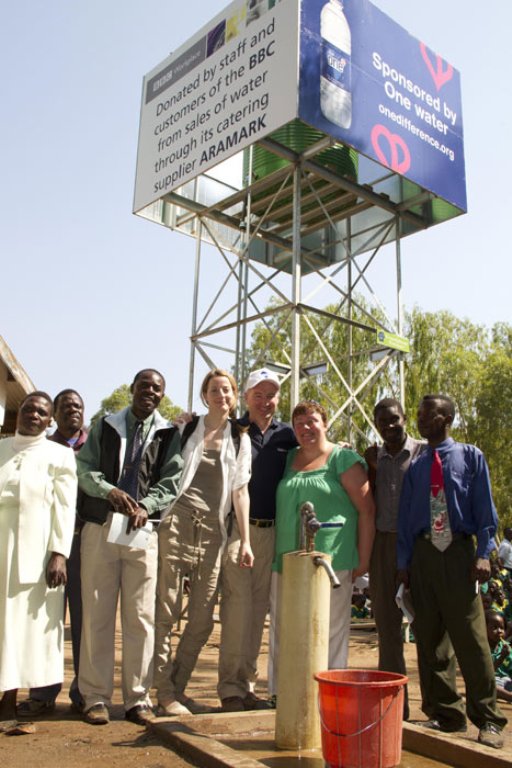
The three of us representing Aramark, Johnson Controls and the BBC, felt proud and privileged to make this visit. We saw for ourselves how the pump is truly part of school life and how much the children enjoying playing on it.

We saw the enormous deprivation and the huge hunger for learning. We saw when we returned unannounced later in the week that things were pretty much as we found them on our first visit. Even at 7.30 in the morning there were a few pupils happily playing on the playpump, while the pump pushed much needed clean water into the storage tank. We returned because we were able to provide a further helping hand by buying the school some gardening equipment - they were overjoyed.

I struggle to adequately summarise our experiences, but let me round of by once again quoting the Headmaster: 'water truly is life'.
Groupinmalawi.jpg

A big day out for our Zina

Post categories:

Chris KaneChris Kane|18:45 UK time, Tuesday, 20 July 2010

Earlier this year I had the opportunity to recommend sombody from the Workplace team to attend one of this summer's Royal Garden parties.

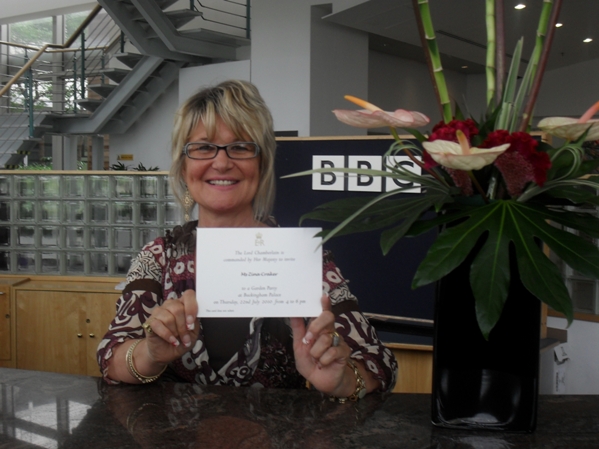
It was really exciting to hear that Zina Craker, one of our long serving front of house representatives, received the gold imbossed invitation and she's now off to meet her Majesty at Buckingham Palace.

We have been on tenterhooks for some time as there were lots of formalities to be completed in advance of receiving confirmation of the invitation. But as the photo below shows, Zina has her invite firmly in her grasp and there's no stopping her now!

ZinaC.JPG

My visit to Malawi - what an eye opener

Post categories:

Chris KaneChris Kane|17:50 UK time, Monday, 19 July 2010

Last week was quite a week as 17 of us covered a lot of ground in our visits to schools and orphanages in Malawi.

The trip was designed to help us see for ourselves how the One Water PlayPumps scheme works on the ground. It would be fair to say that our eyes were well and truly opened. I suspect that for some if not all of the group it will be a life-changing event.

Why you may ask? What's all the fuss about?

For me, it's all about two things; compared to Malawi, and many parts of Africa, we have it so good in the UK, and secondly, providing access to clean drinking water can have a huge beneficial impact. One of the most stunning phrases we heard during the week sums it up in three words: 'water is life'.

The trip reinforced for me the conclusions I reached from last year's visit to Lesotho - that the PlayPumps concept is truly amazing. Contrary to the views held by some people, it does not use child slave labour. The socio-economic benefits it brings to villages in the African bush are significant.

I'm in two minds, however, on how we in the UK best support this initiative. On the one hand I'm impressed with the relatively simple strategy of Aramark (the BBC's catering partner who, along with our FM partner JCI, support BBC premises), only stocking and selling the One Water product. Over the last 18 months, sales of One Water have delivered three pumps, with a fourth on the way.

Thanks to everyone in the catering teams who push the sales. Remember every 70,000 bottles sold gets us another pump!

Then on the other hand, having seen for the second time the battle for life, the appalling deprivation and the needless suffering of little children, I'm embarrassed we're not doing enough. We take so much for granted in the UK and in Western countries generally.

Once again, this type of trip has provided me with another opportunity to ground my thinking about what's really important in life. Having seen for myself how things play out on the ground the following three words sum it up for me: it's so wrong. We in Western society have our problems but compared with these countries we have an abundance of riches and we take it all for granted. Sharing even a little would make a huge difference to people in Africa and other disadvantaged places around the world.

Writing this on the long journey home (roughly 26 hours), I debated with myself how best to provide a concise summary of the week gone by. Apart from reporting the facts I also feel the need to talk about the emotions we felt, the experience we shared and the insights we gleaned. I'll have a go at this over the next few weeks with the help of some of my fellow travellers but let me wrap up this report with some facts taken from our trip:

  • 2,700 kilometres travelled within Malawi (excluding flights)
  • 3,000 pupils visited in the various schools
  • Malawi's population has one of the highest HIV rates in the world
  • Only 7% of the 12 million population have electricity
  • 36 - 40 is the average life expectancy
  • One elephant was seen during our travels.

IMG_5488_2one-malawi-04.jpg

Lessons from Michiru School

Post categories:

Chris KaneChris Kane|08:29 UK time, Saturday, 17 July 2010

It was no ordinary Monday morning this week. I spent it along with Kate Smith and Hilary Friel visiting Michiru School in Malawi to see the Aramark/BBC Playpump in action.

For me the visit went far too quickly, but once again I was stunned by the welcome we got - the 1,500 school children and 26 teachers had been preparing for our visit for ages!

I intend to write a more detailed report of the visit when I get back but I wanted to share with you the phrase that sums up the visit for me. It's buzzing around my head like an angry bumble bee. It's a very simple three words used as part of the Headmaster's speech of thanks: WATER IS LIFE.

In the UK we have an abundance of the stuff but did you ever stop to consider how you would manage if no water came out of the taps and you had to spend hours fetching it from a local well?

The visit showed us how the One Water initiative is crucial in helping these communities have access to water, changing lives of people in Africa.

schoolchildren.jpg

We have arrived in Malawi

Chris KaneChris Kane|14:00 UK time, Wednesday, 14 July 2010

With two days under my belt and having spent 28 hours travelling to the heart of Malawi, I have at long last grabbed a few minutes to jot down a few notes.

Seventeen of us from all parts of the UK and the Emerald Isle have found ourselves in a place that is very different to our homes. Experiencing this contrast is one of the key benefits of undertaking a trip of this nature and believe me we have seen some very different things.

Each of us can see, hear, feel, smell and touch the very different aspects of life in Africa. We now all truly realise just how good things are in the UK!

malawivan.jpg

One Workplace and One Water

Post categories:

Chris KaneChris Kane|09:02 UK time, Friday, 9 July 2010

I'm off to Africa tomorrow night to see the BBC workplace playpumps, if you wish to keep track of what we get up to, have a look at the One Water Facebook site;-

https://www.facebook.com/onedifference?v=app_4949752878#!/onedifference?v=app_4949752878

Malawi here we come -

Contract extensions for ONE Workplace

Post categories:

Chris KaneChris Kane|10:00 UK time, Monday, 5 July 2010

I am pleased to confirm that both the Johnson Controls FM contract for London and Scotland, and the Balfour Beatty contract for the English Regions have been extended to March 2014 and were signed off on the 29 June.

This means we can continue to build on our excellent relationship and work together as ONE Workplace. We can look forward to working with the teams over the coming years - a crucial time of change as we move to Salford and into New Broadcasting House in London.

We're underway at the Wales Drama Village

Post categories:

Chris KaneChris Kane|16:03 UK time, Friday, 2 July 2010

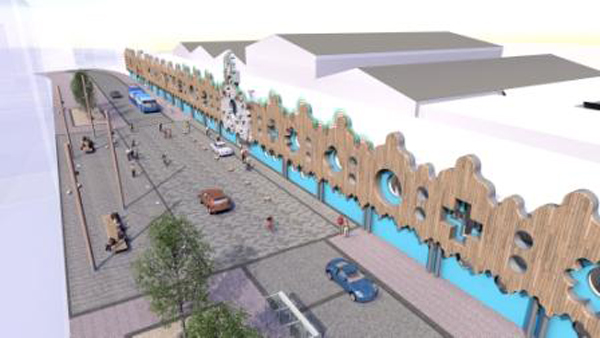
Last week saw the first of the piles going in on site at the new Drama Village in Wales, marking the start of our latest major project.

The new 170,000 sq ft (15,800 sq m) production village at Roath Basin will provide a home for Casualty and enable fellow creatives from Dr Who and Pobol y Cwm to work under the same roof from 2012.

Doctor Who and The Sarah Jane Adventures are to move from their studios near Pontypridd and the first Casualty episode made in Wales will be on screens early in 2012.

See the BBC Online News article for further details.


Cardiff_Drama_centre.jpg

BBC © 2014The BBC is not responsible for the content of external sites. Read more.

This page is best viewed in an up-to-date web browser with style sheets (CSS) enabled. While you will be able to view the content of this page in your current browser, you will not be able to get the full visual experience. Please consider upgrading your browser software or enabling style sheets (CSS) if you are able to do so.