

Meera Modi - Guest post #1
Post categories: Diversity, Guest Blog
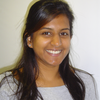 |16:40 UK time, Friday, 28 August 2009
Who are you?
Meera Modi. I am a W1 team project assistant on an Extend Scheme placement. Extend is a BBC-wide work placement scheme arranged through BBC Academy. It offers appropriately experienced and/or qualified disabled people a great opportunity to gain six months paid work experience within the BBC.
What's your background?
Born and raised near London, I was sent to a boarding school for the deaf called Mary Hare Grammar School from the age of 11 years old, which is based in Berkshire. I was there until the end of my A-Levels. I believe that spending seven years in boarding school away from home has helped me to mix with people from a diverse range of backgrounds and cultures, as the students came from mixed economic backgrounds and even different countries, with some from as far away as India, Bangladesh and Malaysia. I then spent 3 years studying for my Multimedia BA (Hons) at the University of Nottingham Trent.
What Does Diversity mean to you?
Since you have asked me to contribute to this blog, I have been thinking about diversity and what it means. For example, I realise people have multiple identities. I myself could be classified as follows:
• Deaf
• British Asian
• Female
• Under 25
Diversity means "respect the difference" and I hope to explore some more of my experiences both in life and at the BBC on my Extend placement in a series of blog posts between now and November.


Comment number 1.
At 00:36 28th Aug 2009, dennisjunior1 wrote:Meera:
Thanks, for the excellent post that was set up....
=Dennis Junior=
Complain about this comment (Comment number 1)
Comment number 2.
At 04:29 28th Aug 2009, akaskyman wrote:This comment was removed because the moderators found it broke the house rules. Explain.
Complain about this comment (Comment number 2)
Comment number 3.
At 08:07 28th Aug 2009, aaditya1488 wrote:This comment was removed because the moderators found it broke the house rules. Explain.
Complain about this comment (Comment number 3)
Comment number 4.
At 08:46 28th Aug 2009, juicyzcl wrote:This comment was removed because the moderators found it broke the house rules. Explain.
Complain about this comment (Comment number 4)
Comment number 5.
At 18:43 1st Sep 2009, Chris_K_comments wrote:Meera
thanks very much for starting this dialogue, I think your story is well worth telling. Over the coming weeks lets see can we get others to engage????
Chris Kane
Complain about this comment (Comment number 5)
Comment number 6.
At 13:55 2nd Sep 2009, Meera_M wrote:I am pleased to have been asked to blog, Chris.
If anyone has any comments or questions about anything I write, please feel free to post. I am always happy to respond.
Complain about this comment (Comment number 6)
Comment number 7.
At 18:52 2nd Sep 2009, Chris_K_comments wrote:Meera
I was fascinated to hear that the capital D and lowercase d for some deaf people represents the fact they are a linguistic minority. Deaf has become like the name of that group.
How do you feel about this, is it a form of labelling?
Chris
Complain about this comment (Comment number 7)
Comment number 8.
At 17:05 3rd Sep 2009, Meera_M wrote:Capital D deaf people use BSL (British Sign Language) as their first language, creating strong social bonds with each other by sharing the same language as each other. It represents a community, culture and identity for deaf people. Therefore, they don't consider themselves disabled.
Compared to lowercase d deaf people who don't use sign language and consider themselves disabled because they have grown up in an oral education with English as their first language.
Therefore, in the hearing community it's perceived as a label however in the deaf community it is an identity to be proud of. I personally don't feel it matters as I am Meera! Labelling is about categorising people and the deaf community varies in many ways.
Complain about this comment (Comment number 8)
Comment number 9.
At 09:38 4th Sep 2009, Chris_K_comments wrote:Meera
As I have shared with you when we first met I felt a bit awkward as I didnt want to cause offence - do you have any tips?
Chris Kane
Complain about this comment (Comment number 9)
Comment number 10.
At 12:22 4th Sep 2009, Meera_M wrote:Just treat deaf people like you would anyone else. We are not intellectually disordered or simple-minded - we are ordinary people just like you. So what is useful for you to know when communicating with a deaf person? Take care to make your speech clear. Just speak clearly - but not too slowly! If you speak too slowly, it becomes difficult to lip-read you. I have encountered so many people who exaggerate the pronunciation of words, thinking this makes whatever they are saying clearer. It doesn't, it makes it worse as it distorts the lip pattern - It's amazing how many people do this.
To get my attention, I can hear my name being called sometimes, but if that doesn't work, tap me on my shoulder, wave within my field of vision, or even throw a light object at me (although this tends to be done by friends and family - obviously, people are not comfortable just throwing things at each other!)
Complain about this comment (Comment number 10)