
Editor's note: This episode of Bookclub is available to listen online or for download, and a repeat can be heard on BBC Radio 4, Thursday 8th August, 3.30pm.
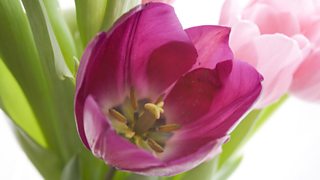
tulip
The tulip fever that infected Holland in the 1630s is probably easier for us to understand today than it would have been, say, five years ago. It is one of the biggest, maddest financial bubbles in history. Indeed, economics students are still told about it as the prime example of what happens when a commodity takes on an unreal value, in this case the humble tulip. One day it was worth a few pennies; by an insane process of inflation it was soon being exchanged for houses and businesses and as for the variety Semper Augustus… I can say no more without spoiling the plot of Deborah Moggach’s novel, Tulip Fever. Some of them became so valuable that it ruined families and businesses and, more or less a whole country, when the music stopped and someone asked: what are they really worth? Of course, we don’t need to go back to the seventeenth century these days to find examples of what a financial bubble can do – the lesson of the tulip has too many contemporary echoes - but Deborah’s story uses the sheer excitement – or horror – of the period to weave a wonderful love story into the tangled politics, secular and religious, of the time.
Deborah Moggach discusses her novel Tulip Fever.
The plot revolves round Sophia, married to an old man who does nothing for her, and who falls in love with a painter called Jan Van Loos. From the start of the story, we’re embroiled in the heady artistic world of the time and Deborah’s enthusiasm for the world of the Dutch artists – which sometimes approaches obsession. This was one of the main threads in our discussion with this month’s readers. It’s fair to say, I think, that many of them thought I was too firmly disposed against the husband, Cornelis, who may be unattractive but – I conceded – probably got much more in return than he deserved. In the end he loses his strong religious faith, and finds more contentment. With Sophia, it is the other way round – though I will not spoil the beautiful end of the novel by going into any more detail.
It was not surprising to learn that Deborah had been inspired to write the book by a Dutch painting she bought – “sub-Vermeer” she said, in case any of us were getting ideas – and she described it in a way that persuaded everyone of the passions that lay behind her story. “A woman is getting ready to go out, and she’s wearing a lovely fur fringed jacket of the period, some pearls to put round her neck. Her manservant brings her glass of wine. I hung it in my sitting room and I got sucked in – where is she going, perhaps somewhere she shouldn’t be? And that triggered the whole thing, and my love affair with Dutch painting, which so many of us share, inspired the book.”
Her feeling for painting, which brings the delicacy of high art together with the comings and goings of everyday life, results in a story that teases out Sophia’s hidden life – the passionate world that can’t be touched by Cornelis, however hard he tries. So the painter is the answer.
But of course there is nothing simple about this affair. The country in which they live is in the grip of a collective madness, which no one can explain but which infects everyone. The tulip becomes the innocent agent of mayhem, its beauty turning into an instrument of financial disaster, and we follow the fortunes of the lovers and their families and friends against the background of a society which has moved in the blink of an eye from prosperity and stability to collapse and perpetual uncertainty.
I do hope you enjoy Deborah Moggach.
And if you’d like to come to one of our programmes, our next recordings are with Matthew Hollis on his Costa Winning biography of poet Edward Thomas, Now All Roads Lead to France and Khaled Hosseini on his global bestseller The Kite Runner. Both recordings are in October at BBC Broadcasting House London W1A 1AA, tickets are free and available from the Bookclub web page.
Happy reading
Jim
Listen to Deborah Moggach discussing Tulip Fever on Bookclub
The BBC is not responsible for the content of external websites.
