
Author Peter Jukes on the challenges of condensing 130 days of testimony into a 45 minute Afternoon Drama
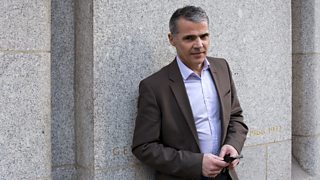
© Olivia Beasley
It was the strangest sensation of deja vu. As Neil Pearson (a hero of mine ever since Drop the Dead Donkey and Between the Lines) pulled the velcro fastener of my satchel and then started typing away on my iPad keyboard, I was taken back to the 8 months I spent at the Old Bailey, tweeting out half a million words from the phone hacking trial.
Condensing the 130 days of testimony from the ‘trial of the century’, with witnesses ranging from archbishops to Hollywood actors, into 45 minutes of radio drama seemed at first an impossible task. What was the narrative thread which could help a listener navigate through the byzantine court process and legal arguments? It rapidly became apparent that the thread would have to be me, partly because I created a new model of funding journalism during the process, and also because I was the target of several amusing mishaps, and then some worrying threats.
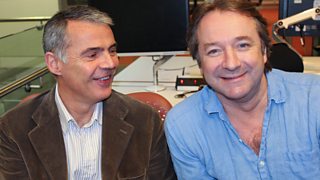
Over many years of drama writing, this is the first time I’ve used myself as a dramatic device, and I’m not sure it would have worked without Neil Pearson adding an overlay of charm, wit and intelligence (missing in the original version).
I’ve always been interested in research (it gets me out of the house). Drama writing has taken me on helicopters to crime scenes and stabbings, through RAF fast jets to open heart surgery. I went undercover in Hull while researching the BBC 1 drama series In Deep and out and about with police chaplains in Bristol while researching the Radio 4 series Bad Faith. But this is the first time I’ve based a drama entirely on fact and reportage. Which has one advantage…
There’s no debate with producers or cast about the language or the story: as a writer I have the ultimate answer “this happened.”
Power trips aside, I’m completely staggered by the way the cast and production team created a wild but comprehensible whirlwind tour through Britain’s longest and most expensive criminal trial. Fellow court reporters agree that it vividly conjures the atmosphere and tension of Court 12 of the Old Bailey, the defendants such as Rebekah Brooks, Clive Goodman, Brooks’ assistant Cheryl Carter: witnesses such as Jude Law and Sienna Miller; and above all the hidden legal debate and moral struggles that took place behind the scenes between the 21 bewigged barristers, and the judge, Mr Justice Saunders.
Modern courts are theatrical and full of drama, but not the typical drama one expects from TV and other fiction. There is tension, jeopardy, humour –barbed subtexts beneath the courtly language. But since the phone hacking trial was about major media figures, the media was to a certain extent itself on trial. A large part of the defence case was that Brooks and others could not get a fair hearing against the background of prejudicial comment, particularly in social media. Virtually every morning a defence barrister would rise and complain “My Lord, there’s been a Tweet”…
Only radio could capture the pace and impact of this brave new world of online communication while remaining true to the theatrical traditions of the barristers’ benches.
Peter Jukes is an author and journalist based in London.
Afternoon Drama: Beyond Contempt is on Radio 4 on Friday 10th October and will be available to listen again for 30 days.
The BBC is not responsible for the content of external websites
