Hello
I'm sitting in the middle of Green Park, near the middle of London, in the middle of the afternoon, just after the middle of the week. Piccadilly to the right, Buckingham Palace to the left, the Ritz, a green sward (!) behind me, and before me an autumn landscape: stripped trees with just a few leaves hanging on and the ground carpeted in russet, dead, brown leaves, sometimes in thick piles - quite wonderful to slush through.
Thursday is always an exceptional day.
By the time I've finished In Our Time at quarter to ten I have a feeling I've done much of a day's work, as I get up at about five to do the final swotting before I meet the three profs. I didn't read English at university and so there are gaps as well as the inability to keep up with the textual pyrotechnics that many of my contemporaries, or those younger than me, can indulge in so easily after their literature courses.
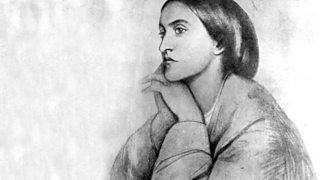
So Christina Rossetti, save for In the Bleak Midwinter, which I recognised very early on (at the time when I didn't know that carols were actually written by people) was wonderful to sing, was relatively new to me. I didn't know about the quite extraordinary, bizarre, erotic (innocently so, I think) Goblin Market. But I did know about Remember. I came across that as I was writing my last novel and wove it into the end of that novel. I think it is a most remarkable, mysterious, moving and true poem.
Out, then, after In Our Time, after a brief talk on King Lear for a Shakespeare programme, to accompany Tom Morris in our quest for the history of the written word.
This time to the British Museum.
Three locked doors took us into the storeroom of papyrus in the Egyptian section. Almost four thousand examples there and in Richard Parkinson, a brilliant explainer along the way. Poems, lists, a story that foretold the ghost in Hamlet... treats all the way and then, as often on Thursdays, a lunch with a pal.
It's a day for lunch, because by about midday I've just about had it and a pick-me-up with a friend and a couple of glasses is just the ticket. This time it's Nick Elliott whom I met in 1977 when I joined LWT. In fact, it was he who persuaded me to join LWT. He was the best Head of Drama there's ever been in this country, for ITV and then for the BBC and back to ITV, and now happily retired in deepest Dorset, with his wife turning out one of the great gardens and himself following up a pursuit which he began in university (in the betting shops) i.e: horses, now the ownership of a few - remarkably successful, as you would expect from Nick. There's little to beat lunch with a good friend. As I get older, there's near as dammit nothing to beat lunch with a very good friend.
So, over the russet leaves, there's a gaggle of joggers, innocently employed, pounding their knees into cartilage problems. What else is going on? Well, as Harold Wilson once said, I'm going on, this time back to the British Museum to talk to an expert on cuneiform script.
Best wishes
Melvyn Bragg
PS: Tom Morris and I have just returned to the British Museum to look at the very earliest writing which is on cuneiform tablets. One thing which is intriguing about it is that it is accountancy. It began as accountancy and it stayed as accountancy for hundreds of years. So, we all owe a lot to those accountants.
PPS: The British Museum, as we found in the British Library, is in some rooms aswarm with young children, well supervised, looking intently at the exhibits. It's quite wonderful that this opportunity exists. It is one of the glories of this country - a big plus on the bright side - that the free libraries and free galleries movement has gathered such strength and brought in so many people who would not have dared cross the threshold before. They're astounding, our galleries; they are really wonderful.
- Download this episode to keep from the In Our Time podcast page
- More about the In Our Time archive of podcasts to download and keep
- Sign up to receive the newsletter by email
