Archives for August 2011

Securing Freedom: The 2011 Reith Lectures continue

Blog comments are currently unavailable. Find out more.

Post categories: , , 

Paul MurphyPaul Murphy17:30, Tuesday, 30 August 2011

The first part of the 2011 Reith Lectures entitled Securing Freedom were presented by Burmese pro-democracy leader Aung San Suu Kyi. In the second part of this year's lectures marking the 10th anniversary of 9/11 the former Director-General of MI5, Eliza Manningham-Buller will discuss how, once secured, a country maintains its freedom.
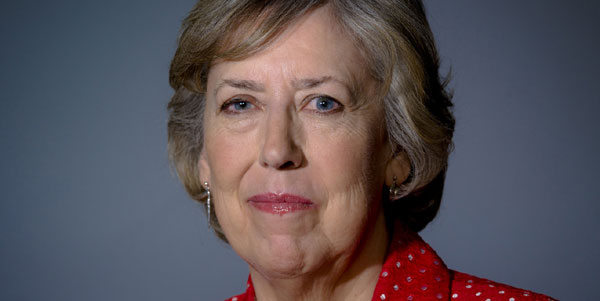
Eliza Manningham-Buller

The series of three lectures starts on 6 September. A number of related archive programmes are being made available online in the meantime.

You can access these programmes via the Radio 4 Documentary of the week podcast page. You can listen online or download the programmes to listen to later. Each programme is available on the website for seven days.

Here's the list of programmes - the first two are already available, others are being added daily and will continue thoughout the duration of Eliza Manningham-Buller's lecture series. There's more detail on the 9/11 - Ten Years On page on the Radio 4 website.

(MI5) The Real Spooks from December 2007, available now

BBC security correspondent Gordon Corera looks into the shadowy world of Britain's security services, forced into radical change after 9/11. He gains amazing access to serving undercover officers who talk frankly about their role.

With us or Against Us - 4 programmes from 2002, available Wednesday 31 August; Thursday 1 September; Saturday 3 September and Sunday 4 September

The inside story behind the coalition set up in the wake of the terrorist attacks of September 11th. The series charts the behind-the-scenes negotiations which radically altered international relations, creating unlikely alliances and unexpected diplomatic concessions. Ed Stourton talks to the major players (including US National Security Adviser Dr Condoleezza Rice, British Prime Minister Tony Blair, President Pervez Musharraf of Pakistan and former Israeli prime minister Shimon Peres), as well as the fixers and negotiators who worked to bring about a major realignment in global diplomatic relations.

From Monday 5 September the following programmes will also be released on a daily basis: The Hunt for Bin Laden (2011); GCHQ: Cracking the code (April 2010); MI6: A Century in the Shadows (August 2009); How Islam Got Political - a one hour Analysis special (November 2005); File on 4: How to Close Guantanamo? (November 2007)

Paul Murphy is the Editor of the Radio 4 blog

  • Jenni Murray interviewed Eliza Manningham-Buller on Woman's Hour on Thursday 2 September. You can listen online via the Radio 4 website. You can also hear Suzi Quatro and Sue Johnston on the programme.
  • Eliza Manningham-Buller was Director General of MI5, the British Security Service, from October 2002 until her retirement in April 2007. She led the organisation through the changes in the wake of 9/11.
  • Eliza Manningham-Buller's Reith Lectures will be broadcast at 9am on September 6th, 13th, and 20th and chaired by Sue Lawley.
  • Details of all of Radio 4's programmes around 9/11 visit the 9/11 - Ten Years On page on the website.
  • To subscribe to the Reith podcasts go to: https://www.bbc.co.uk/podcasts/series/reith
  • Follow @BBC_Reith on Twitter and share your thoughts by using the hastag #Reith.
  • The Reith archive: More than 60 years of lectures and transcripts
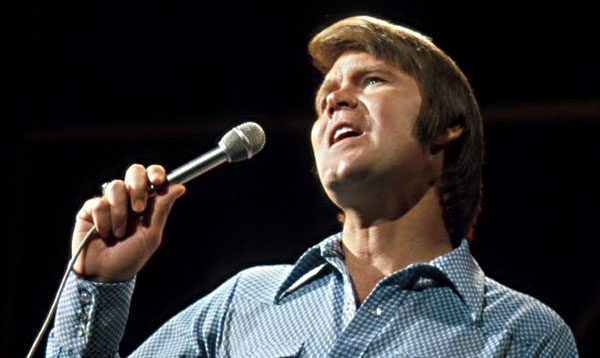
Q: So what kind of music do you play on Radio 4? A: This week, that'd be Glen Campbell...

Blog comments are currently unavailable. Find out more.

Post categories:

Paul MurphyPaul Murphy16:00, Friday, 26 August 2011

Glen Campbell

Tweet that says

Glen Campbell featured on Friday's edition of the Today programme talking about his forthcoming album and tour. He and his family spoke to Peter Bowes about his philosophical approach to the onset of the Alzheimer's with which he was recently diagnosed. There's a magical few bars of Gentle on my Mind and Campbell's recollections of the song Wichita Lineman, the subject of this week's Soul Music on Radio 4, which in turn inspired lots of feedback like the tweet above.

Wichita Lineman tells the story of a lonely lineman in the American midwest, travelling vast distances to mend power and telephone lines. In the programme we hear from some real life linemen about the reality of the job and their thoughts about the song.

Karen Gregor, the programme's producer writes on the Radio 4 website:

"Shortly after the interview [with Campbell] was recorded, Campbell went public about his diagnosis of Alzheimer's. His contribution to the programme is brief, and includes an acoustic performance of the song. It was a real privilege to record this, appropriately enough, down the line."

You can hear Soul Music: Wichita Lineman currently on the Radio 4 website. It's also being repeated tomorrow, Saturday 27 August at 3.30pm on Radio 4. The Today programme interview with Glen Campbell and his family is on the Today website.

Paul Murphy is the Editor of the Radio 4 blog

Questions, Questions: Last in the series

Blog comments are currently unavailable. Find out more.

Post categories:

QQ TeamQQ Team13:45, Thursday, 25 August 2011

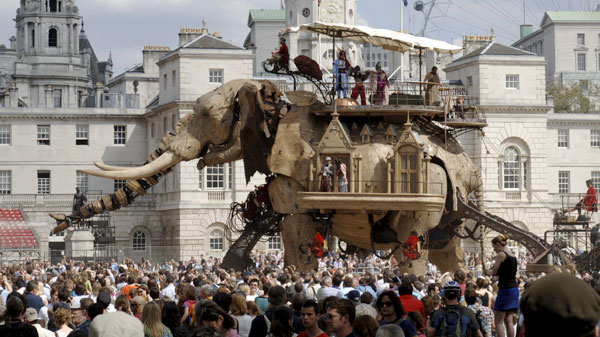
a mechanical elephant

In the last programme of the series Stewart Henderson got more than a little peckish when listener Edward Giles asked why bacon is the only thing to come in rashers and not slices. Food Historian Ivan Day cooked up some answers.

Having had his fill of meaty morsels, Stewart was feeling like something a little lighter so he set about digging up some answers to a listener's question about allotments. Melanie Hughes-Jones wanted to know whether her dream of owning an allotment was to be shattered by roadside pollutants. Dr Gillian MacKinnon from the University of Glasgow and Emma Hockridge, Head of Policy for the Soil Association, joined Stewart to offer expert insight.

And from land to sea, Stewart was in his element as he trod the boards at Cornwall's coastal theatre, the Minack, a fitting location to answer the question of why the Ancient Greeks placed their theatres in some of the most beautiful locations by the sea. Director Phil Jackson and Classics Professor Edith Hall lent us their theatrical expertise.

Always a man to go out on a high, Dave Dodd took flight in a wind tunnel to answer Jane Brittain-Long's question: can a man become airborne if he holds onto the back of a speeding car? Definitely not one to try at home but it certainly made for an entertaining ride.

But for an altogether safer journey, why not try a mechanical elephant? Never heard of one? Well, our twitter follower KingLear had heard tales of these beasts from his mother. He got in touch with Questions Questions to ask whether these machines had been a mere mirage or did they really exist. We tracked down some of their past owners and heard your nostalgic stories of witnessing these mechanical wonders.

That's it, Goodbye.

The Questions Questions team
  • The picture shows a giant mechanical elephant parading around Horse Guard Parade in an outdoor performance of 'The Sultan's Elephant' by the French theatrical group, Royal de Luxe, in London, Friday, May 5, 2006. The story tells of a Sultan who dreamt about a little girl and travelled in his elephant time-machine in search of her.
  • Listen to earlier episodes from this series of Questions, Questions on the Radio 4 website.

Black Roses: The Killing of Sophie Lancaster - Four years on

Blog comments are currently unavailable. Find out more.

Post categories: , , 

Simon ArmitageSimon Armitage20:00, Tuesday, 23 August 2011

Editor's note - In 2007 a young student, Sophie Lancaster suffered fatal injuries while protecting her boyfriend Rob from a ferocious attack by a group of youths. She later died on August 24th 2007. Black Roses: The Killing of Sophie Lancaster is a drama documentary marking the anniversary of her death in which Sophie tells her own story through a series of poignant poems written by poet Simon Armitage alongside her mother, Sylvia Lancaster remembering her daughter's life. On the blog Simon writes about meeting Sylvia and the making of Black Roses - PM.

Sophie Lancaster

As soon as I heard about what had happened to Sophie Lancaster in the park that night, and more so after hearing that details that came out following the court case, I felt as if I wanted to get involved.

It seemed to me that Sophie had been killed because she was different, and for no other reason, and as well as feeling angry and upset about it, I probably felt some underlying kinship with her, having grown up in a small northern community not unlike Bacup where to be different was to risk ridicule or aggression. Also, in images and photographs that begin to circulate, Sophie seemed so innocent, beautiful and vulnerable, yet she met with terrifying and almost unimaginable violence.

I met Sylvia, Sophie's mum, not long after the offenders were jailed, and was immediately struck by her great courage and her determination not to let her daughter's killing go unnoticed.

In Black Roses, Sylvia's brave and sometimes harrowing testimony is interspersed with poetic monologues in Sophie's voice, based on Sylvia's descriptions of her daughter's life and death, and their heartbreaking goodbye when the life support systems were eventually switched off.

I wanted to give Sophie her voice back, allow her to speak again, and to celebrate her attitudes and character as well as commemorate her.

Black Roses isn't an easy listen, but of everything I've ever written it seems to have made the most impact, in terms of listeners getting in touch and wanting to sympathise with Sophie or to relate similar episodes of prejudice and intolerance in their own lives.

I never mean to campaign or to crusade when I sit down to write, but on this occasion I hope I have done justice to Sophie's story and to Sophie as a person.

Simon Armitage wrote Black Roses

The origins of the Notting Hill Carnival?

Blog comments are currently unavailable. Find out more.

Post categories: , , 

Paul MurphyPaul Murphy16:45, Tuesday, 23 August 2011

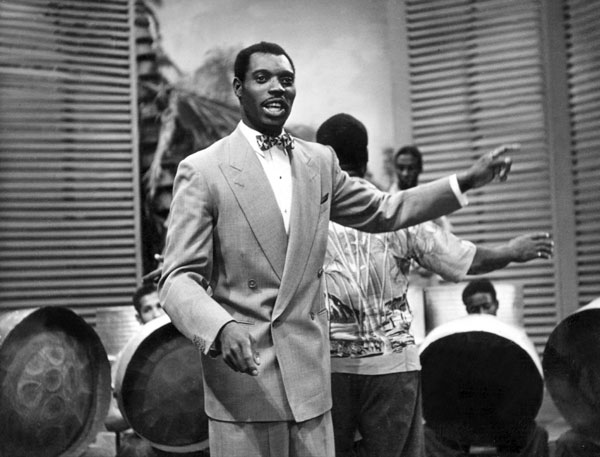
Lord Kitchener

Calypsonian Lord Kitchener on the BBC TV programme Caribbean Carnival, 1951

In the opening episode of Stories from Notting Hill, Kwame Kwei-Armah pinpoints the West Indies cricket team's victory over England at Lord's in 1950 as a seminal event in the Notting Hill Carnival's origins even though it pre-dates it by some years. This memorable win, the first time the West Indian team had beaten England on their home turf, led to an impromptu victory march by the West Indian supporters around the ground and along the street from Lord's down to Piccadilly Circus led by calypsonians Lord Kitchener and Lord Beginner.

In the programme Alexander D Great, UK Calypso Monarch explains further:

"That procession stated or declared to the British public how Caribbeans celebrated - with joy and with laughter and with jumping and dancing - an event like this, and the carnival is also representative of the same thing. And maybe this was the first time that the British public saw the Caribbean spirit in Britain in the open air."

You can find out more about the early days of the Notting Hill Carnival in the first episode of the series. It's available for the next six days.

Paul Murphy is the Editor of the Radio 4 blog

Val McDermid's Village SOS

Blog comments are currently unavailable. Find out more.

Post categories: , , 

Val McDermidVal McDermid01:00, Friday, 19 August 2011

Ed's note: Next week you can hear Val McDermid's five part Woman's Hour drama Village SOS on Radio 4. It's part of a larger project that includes a BBC One series and a BBC Learning campaign. More details at the end of this post - PM.

village sos logo

It was a bizarre pitch. "We're making a reality show about projects designed to help struggling village communities regenerate their economies. And we'd like you to write a murder mystery drama serial based round the Village SOS concept."

Because, of course, there's nothing that regenerates a village economy like a juicy murder...

But I was intrigued, because I do believe crime fiction is the perfect vehicle to shine a light on the society we live in. Also, I hadn't written any radio drama for more than ten years, and I've always enjoyed a challenge. So I said yes.

It turns out the biggest challenge was to keep the distance between reality and fiction.

I live in a seaside village in Northumberland. I chose to set the drama in a seaside village in Northumberland.

Now I'm awaiting transmission with deep trepidation, hoping friends and neighbours don't make the mistake of thinking these murderous villagers are based on them.

Val McDermid is an award-winning crime writer

  • Listen again to Val McDermid on Woman's Hour from Friday 19 August talking about the project.
  • The five part Woman's Hour Village SOS ties in with a BBC One series and BBC Learning campaign. In the BBC One series, six villages were given BIG Lottery Fund grants to start a rural enterprise. In the Woman's Hour Drama, Val has written about a seventh, fictional village which receives a grant to turn a deconsecrated chapel into a performing arts centre. But on the day of the planning committee results, the project manager is found murdered in the chapel and so DCI Marion Bettany, played by Helen Baxendale, is called in to investigate.
  • Village SOS will run every weekday from Monday-Friday, August 22-26, at 10.45am and 7.45pm on Radio 4. An omnibus edition can be heard on Radio 4 Extra on Saturday, August 27 at 12 noon.
  • Follow Radio 4 on Twitter or see a full list of Radio 4 accounts on Twitter
  • Join the Radio 4 page on Facebook

The Thinking Allowed Newsletter: High rise and low morals

Blog comments are currently unavailable. Find out more.

Post categories: , 

Laurie TaylorLaurie Taylor16:30, Thursday, 18 August 2011

Ed's note: The Thinking Allowed newsletter gets sent out on Wednesday mornings and while its primary purpose may be alerting listeners to the contents of that afternoon's programme it's always a great read in its own right. In the newsletter this week Laurie Taylor paid tribute to his friend and colleague Robert Robinson so it felt fitting to share it here. There'll also be a special programme on Radio 4 paying tribute to Robert Robinson this Saturday. Details about this and subscribing to Laurie's newsletter at the end of the post - PM.

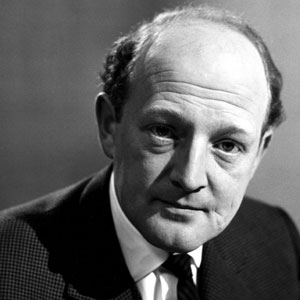
Robert Robinson, journalist and broadcaster.

Robert Robinson, journalist and broadcaster in 1962.

In the week in which I learned with great sadness of the death of my old friend and colleague, Robert Robinson, it was perhaps inevitable that I should find myself recalling some of his wry observations about how life should properly be lived.

I particularly remember the day when he discovered that I lived in a flat. He told me that quite frankly, he'd expected nothing else. There was something about my bohemian posturing which suggested that I would be unsuited to a proper house.

In his customary manner he then warmed to his theme and suggested that people who lived in flats had a far more transient, nomadic character than those who preferred houses. Indeed, he would expect adulterers and libertines of all kinds to be over-represented in flats. For what flats and apartments lacked was any solidity or weight or sense of permanence.

If you lived in a house you always had the feeling that you were rooted to the space that the house occupied. Your foundations went down into the ground and your house grew up from the ground. You were part of an organic entity.

Flats, by contrast, had no such base. They were merely anonymous units coupled to other anonymous units. They had never been family homes for long periods of time. They had never developed a distinctive history. They had simply been residences for people who were passing through on their way to somewhere else.

I didn't argue with Bob.

By then I'd already learned that there was far more enjoyment to be had from allowing him to embroider a theme than from challenging him to an argument about its premises.

But his views stayed in my head and I often found myself constructing a counter - argument to justify my own continued occupancy of flats.

Couldn't it be said, for example, that the impermanence of flats was a positive virtue? People who lived in houses were surely more likely to develop static conservative attitudes to life than those who occupied more flexible and transient accommodation.

And might not flat dwellers also be far more sociable than house owners in that they were obliged to rub shoulders with those who lived on the same floor as themselves, with those they met in the lift, with those they ran into when they were collecting mail from the communal hallway?

And weren't those who lived in flats also likely to have a more heterogeneous collection of acquaintances than house-dwellers. For whereas a street usually only contained people from one socio-economic class, a block of flats could include rich penthouse owners as well as renters of lower economic status who occupied the basement or lower ground apartments.

Flats could also inspire a real sense of community as residents came together to further their mutual interests, to clean up the common parts, or organise a Royal Wedding party. They encouraged co-operation rather than individuality and privacy.

However, now that I've read a new book on a seventeen storey commercial and residential block in Hong Kong's tourist district, I realise that I've barely begun to understand the range of functions that such buildings can sustain. Chungking Mansions is home to a huge variety of people, but, according to author and anthropologist Gordon Matthews it is not a place of darkness but a beacon of hope - a wonderful experiment in living.

Also today: Is there any evidence that targeting the parents of gang members can reduce children's involvement in gang culture?

Laurie Taylor presents Thinking Allowed

Questions Questions: "Why does bacon come in rashers and everything else in slices?"

Blog comments are currently unavailable. Find out more.

Post categories:

QQ TeamQQ Team13:30, Thursday, 18 August 2011

bacon and eggs

This week Stewart was basking in the reflective glory of cats' and dogs' eyes after listener Robin Atack asked us to find out why our furry friends' eyes appear to glow green in flash photography.

Gordon Kirk asked us to put to bed the old wives' tale 'when swallows fly high, the weather will be dry'. So Stewart met the RSPB's Dave Flumm at one of the country's largest reed beds where swooping swallows congregate.

Reporter Emily Williams visited Jane Austen's house to make sense (and sensibility) of hair jewellery. It's a fascinating social history of death, love, and plaits which took her to the depth of Sweden where they still practice the craft.

Listener Linda Ireneschild was plagued by the problem of nits. She wanted to while away a few hours in the tub whilst defeating the troublesome critters so she asked us: can nits be drowned? Parasitologist Ian Burgess was on hand to provide an answer but possibly not the one she wanted to hear...

And when everybody drank beer to stay hydrated, were they all drunk? Stewart was joined by brewing historian Dr James Sumner and historian of medicine Dr Katherine Foxhall to explore our tipsy past.

Next Thursday, in the final episode of the series, Stewart is treading the boards at the Minack theatre and is joined by classicist Professor Edith Hall to discuss why the ancient Greeks situated so many of their theatres in dramatic coastal locations.

And he'll be marveling at a jumbo feat of engineering as we try to find out what happened to the mechanical elephants built by Frank Stewart in the 1940s.

Not wishing to leave our listeners languishing in puzzlement, we are still trying to solve the following questions before the end of this series. Please post your comments below if you can help.

Question 1: Why does bacon come in rashers and everything else in slices? No butcher or dictionary can help our listener, can you?

Question 2: If you have an allotment by a busy road, how does it affect the plants? Are they still safe to eat?

Question 3: Have any of you seen those aforementioned mechanical elephants? Our listener has mentioned the Thaxted elephants made by Frank Stewart but what happened to them?

There's still a small window of opportunity to get your questions answered so please do send them our way. Send them to questions.questions@bbc.co.uk, call us on 03700 100 400, or leave them as comments on this blog.

We also welcome questions and comments on Facebook and Twitter using the hasttag #R4QQ. You can also post your comments here on the blog or reach us directly using the Contact Us form.

The Questions Questions team

Listen online: The History of Titus Groan

Blog comments are currently unavailable. Find out more.

Post categories: , 

Paul MurphyPaul Murphy10:47, Thursday, 18 August 2011

In case you missed The History of Titus Groan in Saturday's Classic Serial slot you have until Sunday afternoon to hear it in its entirety on the Radio 4 website (details at the end of this post).

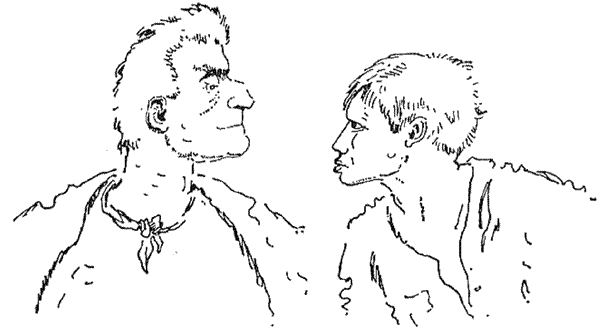
Drawing for Titus Groan

Titus and Muzzlehatch: Image courtesy of the Mervyn Peake Estate

In The Guardian radio critic Elisabeth Mahoney has written a lovely piece about the nervousness she felt, having loved the 1985 adaptation, on hearing that Brian Sibley was tackling the novels for Radio 4 yet again. Not only that but:

"...it was a hugely ambitious project: Peake's three novels plus the concluding volume by Peake's wife, Maeve Gilmore, rediscovered last year, made into six hours of Classic Serial."

She writes that not only is this a "terrific new adaptation" but it also captures

"...every brilliant thing about Peake: the glorious writing; the strangeness; the collision of voices and realities; the satire of now - whenever now is as you read or listen - and the beautiful, vivid conjuring of fragments of the past."

If you're at all daunted by the idea of the six hours of radio drama then do read Mahoney's review - if her enthusiasm doesn't sell it to you nothing will. If you have heard Titus as it's been broadcast then you might like to read about the production and how it came together on the blog. More links below.

Paul Murphy is the Editor of the Radio 4 blog

Afternoon play: Higher

Blog comments are currently unavailable. Find out more.

Post categories: , , 

Gary Brown14:15, Tuesday, 16 August 2011

Graduation ceremony

I've wanted to do a series about Higher Education for some time. I taught part time at a university for ten years and always thought it was an area ripe for satire. The expansion of tertiary education in the Blair years meant our newer universities were unprepared for the overload of bureaucracy, ideology and sheer student numbers.

And let's be frank - with the government's desire to get fifty percent of young people into higher education - thing's were never going to be the same again.

So when Joyce Bryant's brilliant script landed on my desk in 2008 I was well chuffed. Since then we've recorded six episodes of Higher, the marvellous misadventures of Hayborough University ranked 132nd in the University league table.

What makes it work?

It has the pace and vigour of farce but the texture of real detail. Joyce works in a university and knows whereof she speaks. The endless meetings, the backstabbings and the sheer panic has an authenticity which many university professionals acknowledge. And with the raising of fees and the cutbacks the satire has become all the more acute. Buzz words such as 'scoping of synergies' (i.e cuts) have now become current.

It also helps that we have two wonderfully comic central performances from Sophie Thompson as the hapless head of geography and Jonathan Keeble as the venal Dean.

This is not the gentle comedy of the cloister and high table, this is the high energy farce of the breeze block and grotty cafeteria. The world of the pile 'em high universities - and there are many more hilarious tales to tell. So keep tuned.

Gary Brown is the producer of Higher

  • You can hear today's episode of Higher on Radio 4 at 2.15pm and for seven days afterwards on the Radio 4 website. Details here.
  • There is another episode of Higher broadcast next Tuesday, 23 August also at 2.15pm. More details here.

Tributes to Brain of Britain's Robert Robinson

Blog comments are currently unavailable. Find out more.

Post categories: , 

Paul MurphyPaul Murphy13:00, Monday, 15 August 2011

Many tributes were paid over the weekend to the much-loved broadcaster Robert Robinson who died at the age of 83. Over five decades he presented a wealth of radio and TV programmes for the BBC including Brain of Britain, Ask the Family, Stop the Week, Call My Bluff and the Today programme.

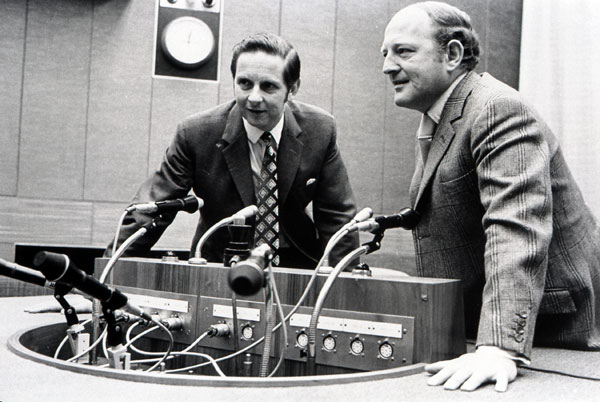
John Timpson and Robert Robinson

John Timpson and Robert Robinson, presenters of Radio 4's Today, 1971

On the BBC News website Caroline Raphael, commissioning editor for BBC Radio 4 comedy, called her former colleague a "radio legend":

"[Robinson had] one of the most recognisable and pleasurable voices on radio. Many of the Radio 4 listeners will have grown up listening to Robert and enjoyed his quiet, wry intelligence. We'll miss him."

Of Robinson's time at the Today programme, starting in 1971, the Telegraph wrote:

"In hiring him, the BBC took a gamble. Robinson had never been heard regularly on radio before. Neither, as it turned out, had he ever actually heard the programme himself, being an habitual slugabed who always slept through it... But Robinson quickly hit his stride, striking up a winning on-air camaraderie with the avuncular Timpson. In Robinson's hands, the 30-second cue (introduction) to an item became an art form. 'Bob learned to use words to fashion lexicological objets d'art,' Timpson observed."

Paul Murphy is the Editor of the Radio 4 blog

"...Hooky chatting to John Cooper Clarke? That's only a Mark E Smith away from Salford Bingo heaven!"

Blog comments are currently unavailable. Find out more.

Post categories:

Paul MurphyPaul Murphy13:15, Friday, 12 August 2011

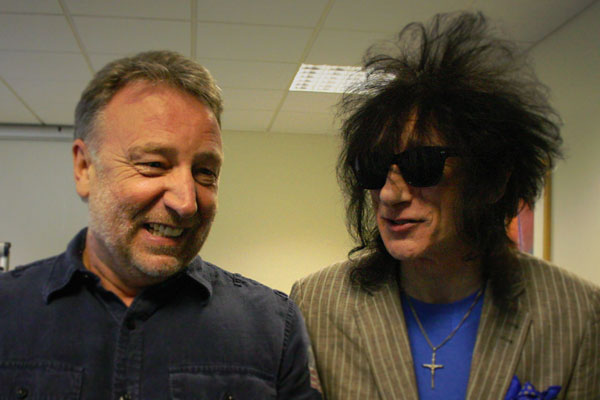
Peter Hook and John Cooper Clark

Following on from Simon Day's interview of Peter Hook in last week's episode where they chatted about (amongst other things) the rise of punk, Joy Division and bass playing, tonight's Chain Reaction sees Peter Hook talking to John Cooper Clarke about Salford, doing adverts in the 1980s and John Cooper Clarke's appearance on the GCSE syllabus.

Paul Murphy is Editor of the Radio 4 blog

Afternoon Play: Two Pipe Problem - Here Doggie

Blog comments are currently unavailable. Find out more.

Post categories: , 

Michael ChaplinMichael Chaplin16:45, Thursday, 11 August 2011

Editor's note: Anne Reid and Honor Blackman join Richard Briers and Stanley Baxter in this latest Two Pipe Problem, the detective-comedy-drama set in a retirement home for the theatrical profession. Michael Chaplin, the creator and writer of Two Pipe Problem takes us back to the very beginning. If you missed it you can hear if for the next seven days on the Radio 4 website and there is another episode on Radio 4 tomorrow, Friday 12 August at 2.15pm -PM.

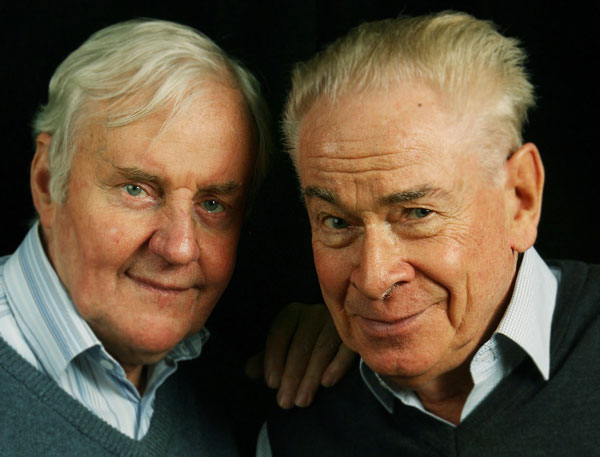
Richard Briers as William and Stanley Baxter as Sandy in the BBC Afternoon Play

Richard Briers as William and Stanley Baxter as Sandy in the BBC Afternoon Play: The Two Pipe Problem

I often get asked where my ideas come from. Other writers I know seem to find the question irritating. I find it interesting, and believe the answer can be instructive, for me and maybe for the questioner too.

So...

Two Pipe Problems began in the fertile ground of the Daily Telegraph, an article I read years ago about Denville Hall, a retirement home for actors.

The thought of it made me smile - all those thesps sitting around in their dotage and still performing. I jotted it down in a notebook, but for a long time it stayed there. It remained a situation, not a story.

Then I went to Australia and woke one night in a hotel overlooking Sydney Harbour, with what seemed a good idea in my head (this happens rarely, by the way): namely, the notion that there might be two central characters in my fictional home; they'd once played Sherlock Holmes and Dr Watson in a TV series of the 1960s; even more potent, they disliked each other intensely, but were kind of stuck with each other.

These men, William Parnes and Sandy Boyle, would lead a shifting cast of rich eccentrics, but the Sydney Harbour notion gave me what I call a story engine: each week William and Sandy would investigate mysteries they encountered in the course of their sheltered lives in the Old Beeches, Pinner.

We aren't talking serial killings here (have you been to Pinner?).

Over the course of nine plays, the sleuths have looked into nothing more earth-shattering than the theft of a ventriloquist's dummy, the loss of a ceremonial sword in a Buckingham Palace lift and why a memory man can't remember anything any more - the kind of stories that wouldn't detain Lee Child but which give me much scope for comedy and its near-relation, pathos. For retired performers are people too - and maybe more vulnerable than most.

In achieving both, I'm unbelievably lucky to have had the services of Stanley Baxter and Richard Briers, and stellar support from the likes of Anne Reid, Geoffrey Palmer, Barry Cryer and the late, great Ken Campbell.

People seem to like working on the show. I take no credit. Apart from anything else the crack between takes - what might be called the anecdotage - is quite superb.

One story of my own. When I went to Denville Hall to research the characters, I interviewed a delightful chap on the cusp of 90 who told me of his life. As I prepared to leave, he touched me on the arm, smiled and inquired gently: "This play of yours - I don't suppose there's a part in it for me?"

It's an utter pleasure and privilege to write Two Pipe Problems for Radio 4. So please meet me at Baker Street Station and we'll catch a Metropolitan Line train for that beguiling place, the Old Beeches...

Michael Chaplin is the writer of Two Pipe Problem

  • The Afternoon Play is on Radio 4 at 2.15pm Monday to Friday each week. You can also listen via the Radio 4 website for up to seven days after each play is broadcast.

Questions Questions: "If you have an allotment by a busy road, are the vegetables still safe to eat?"

Blog comments are currently unavailable. Find out more.

Post categories:

QQ TeamQQ Team14:45, Thursday, 11 August 2011

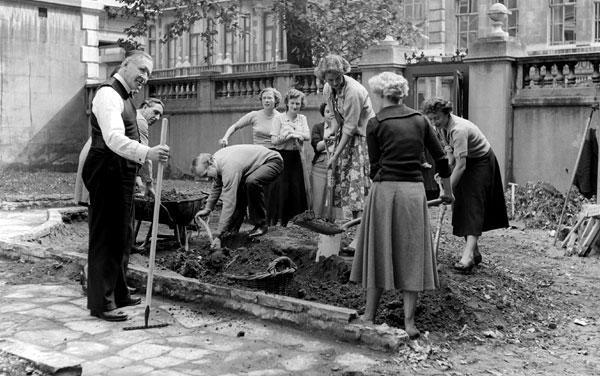
Garden with gardeners

This week we almost lost Stewart in the twists and turns of the hedge maze at Glendurgan Gardens near Falmouth. But he managed to find his way out in the end and was joined by one of the world's most famous maze designers, Adrian Fisher, to explore the role of mazes throughout history.

Listener Darren Cash was gazing at the sky when he spotted beautiful rays of light that appeared to splay out from just behind the clouds. Stewart was joined by Dr Paul Kinsler from Imperial College London to explain the phenomenon, known in physics as crepuscular rays.

Our technological whizz kid Dave Dodd visited a data centre with computer networking expert Andrew Smith to find out how many power stations it takes to keep the internet going.

We got our hands dirty at the Roman remains at Verulamium in St Albans to ask: Why is archaeology underground? Did the earth swallow ancient sites?

And listener Morag Williamson, who was unamused by the memory of a laughing record she couldn't quite remember the name of, sent us off in search of the 78 that had tickled her all those years ago. Using our powers of deduction, and the tremendous response from you on the Radio 4 Facebook page, we managed to get her laughing again.

On Thursday 18th August, in the penultimate episode of the series, we'll be exploring a subject that is no laughing matter - nits. Is it possible to drown them? Stewart risks wrinkly toes to find out.

There will be more hairy moments (oh dear), as Emily Williams looks into the history of hair jewellery.

We'll also be finding out if there is any truth in the old wives tale: When swallows fly high, the weather will be dry.

And we shed light on our ancestors' drinking habits and find out what the medical effects were of drinking alcohol to stay hydrated when water was too polluted to be safe.

If you'd like to help us with the following problems, do get in touch:

Question 1: Why were many ancient Greek theatres situated by the sea?

Question 2: At what point would a man holding onto the back of speeding car become airborne?

Question 3: If you have an allotment by a busy road, how does it affect the plants? Are they still safe to eat?

As always we'd love you to send us your questions. The series is fast approaching its end so hurry!

Please send them to questions.questions@bbc.co.uk, call us on 03700 100 400, or leave them as comments on this blog.

We also welcome questions and comments on Facebook and Twitter using the hasttag #R4QQ. You can also post your comments here on the blog or reach us directly using the Contact Us form.

The Questions Questions team

  • This week's picture is from the BBC archive. Caption details: "BBC Town Garden 01/01/1952 © BBC - BBC staff volunteers digging in the BBC Town Garden in Cavendish Place."

Some summer listening

Blog comments are currently unavailable. Find out more.

Post categories: , 

Leigh AspinLeigh Aspin16:20, Wednesday, 10 August 2011

Editor's note: I asked Leigh, Radio 4's interactive editor, to share some ideas about things from the Radio 4 archive that listeners might enjoy over the summer and in particular programmes that they could download, put on their MP3 player or mobile phone to enjoy on their travels - PM.

The Archers

One of the most highly appreciated services we offer on the Radio 4 website is archive programme collections. You can listen online to everything we broadcast for at least 7 days after transmission but we're able to make quite a number of our programmes available in perpetuity, and have started to build some bigger archive collections.

Highlights from the past year include:

And we haven't stopped there. In the last few months, a little more under the radar, we've been building out some other programme audio archives back to around 2007, including:

The range of subjects and guests within these collections is an embarrassment of riches that will fill many happy weeks and months of listening. Radio 4 listeners won't need a recommendation from me to explore them. And there'll be more to come.

One way in which we can make this service even more useful is by making the audio portable. As a rule, more people choose to download our programmes than listen in real time via the website.

The advantages of downloading programmes are several:

  • the programmes are yours to keep forever
  • once downloaded you don't have to be online to listen to them
  • you can transfer them to portable and mobile devices and therefore you're not tied to a computer to listen
And I think that last point is increasingly important for digital audiences.

So we're starting to offer more of our archive content in this way, notably with the 500+ available editions of Desert Island Discs. There's no better holiday listening for speech radio fans so make sure you download some programmes to take with you on your mp3 players this summer.

The Reith Lectures and 100 Objects are also downloadable, as are up to 50 different programmes each week. Next up will be the complete In Our Time downloads in September (by popular request).

If you're new to downloading, it's an easy habit to start - here's an introduction.

Leigh Aspin is Interactive Editor at BBC Radio 4

Here's a selection of Radio 4 podcasts to download and take on holiday with you (find them all here) Ones marked with a * have more than one episode available to download:
  • Play of the Week (updates on Fridays)
  • Friday Night Comedy - Currently the latest episode of Chain Reaction. The News Quiz takes over from the 9th September.
  • Comedy of the Week - A different comedy every week
  • Documentary of the Week updated on Fridays
  • Books and Authors* - featuring Open Book, Bookclub and A Good Read. 61 episodes at the moment.
  • Desert Island Discs* - there are over 540 episodes of DID you can download. The most recent 42 are here and all available episodes can be found here and can be searched in a variety of ways.
  • Great Lives* - currently 22 episodes are available
  • In our Time* - currently 42 episodes are available
  • Material World* - currently 49 episodes are available
  • More or Less* - currently 23 episodes are available
  • Reith lectures* - This year's are here; 1948-1975 are here and 1976-2010 are available here.
  • The Film Programme* - currently 45 episodes are available
  • The Infinite Monkey Cage* - currently 10 episodes are available
  • Thinking Allowed* - currently 49 episodes are available
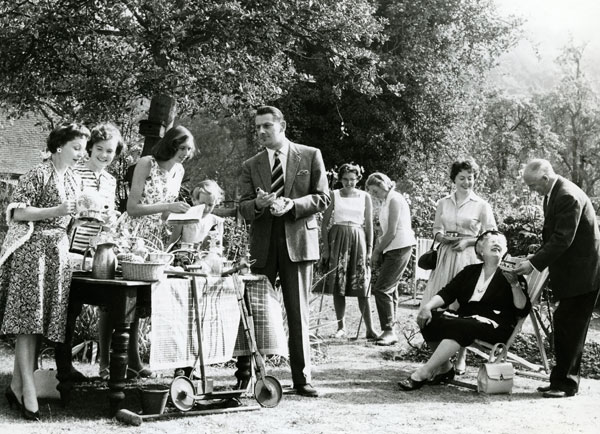
  • Caption from the archive: "The Archers (R4): 1959 01/09/1959 © BBC Picture Shows: Church Fete in Ambridge in the summer of 1959 - Irene Prador as Madame Garonne(extreme left), Michael Shaw as Charles Grenville (centre), Courtney Hope as MrsTurvey and Harry Oakes as Dan Archer(extreme right)"

Send us your nominations for the BBC Food and Farming Awards: You have until 14th August

Blog comments are currently unavailable. Find out more.

Post categories:

Sheila DillonSheila Dillon13:44, Tuesday, 9 August 2011

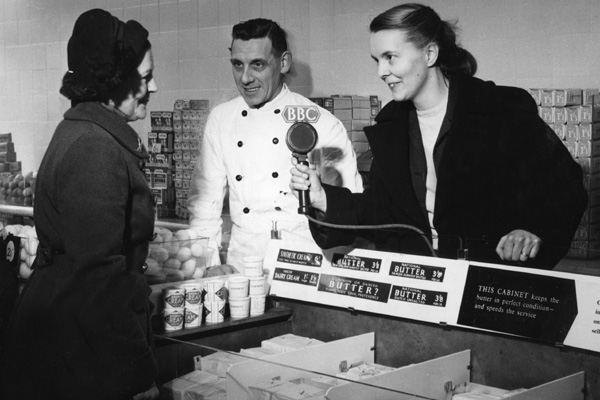
London housewife talking about her preference in butter with the shop-keeper,1954

We go into this year's 12th BBC Food and Farming Awards with food prices up and less cash around. But what's clear from surveys and the fortunes of the supermarket chains is that price isn't everything in the decisions people are making about food in tough times: quality and localness are still big draws.

Not that the awards are about posh, expensive food. Last year's Takeaway prize was won by Mr Dutchy's Caribbean in Northampton. Our judge, former Michelin Guide inspector Simon Parkes, was impressed: the dishes were freshly cooked, authentic, tasty and a good meal could be had for a fiver.


Our best food producer was young baker Alex Gooch: his bread costs a lot more than a supermarket's white sliced loaf, but then you can live off his loaves. And you won't have tasted anything better than his sourdough, or his rye fruit loaf or, in fact, anything he bakes. The winning market was Stroud Farmers' Market. Although it's in the Cotswolds, it's not posh: it's a market that brought a town centre back to life and is packed with producers selling food in at all price ranges.

When The Food Programme and Radio 4 set up the BBC Food and Farming Awards in 2000, we did it not just to hand out well-earned plaudits. We wanted to wake people up to the importance of food, to the way it shapes society and us.

All through the years when cheap food at any price was the standard policy in the UK, hundreds of producers, cooks, farmers and chefs kept faith with the idea that food matters. Then in the post-BSE world, as it seeped into the public consciousness that perhaps knowing where your food came from was important, their values spread. But top-notch bakers, such as Alex Gooch and last year's BBC Food Champion Richard Bertinet, as well as cheese-makers, farmers, butchers, cooks, campaigners for abattoirs and allotments, veg growers and shopkeepers, are still not honoured in the way they deserve for making the UK a more civilised place.

So help us give them their due. Send us your nominations for Britain's food champions. Do it now and make the UK a better place! To nominate and get more information, go to the BBC Food and Farming Awards website.

Sheila Dillon is the presenter of Radio 4's The Food Programme.

  • Make your nominations for the BBC Food and Farming Awards 2011 before the 14th August.
  • Picture from the archive: "BBC European Service: Danish Section 24/02/1954 © BBC. A London housewife talking about her preference in butter. A programme broadcast in the BBC Danish Service surveys the demand for butter in Britain where butter rationing ends on 8th May 1954."

Listen online: Chain Reaction - Simon Day and Peter Hook

Blog comments are currently unavailable. Find out more.

Post categories:

Paul MurphyPaul Murphy10:44, Tuesday, 9 August 2011

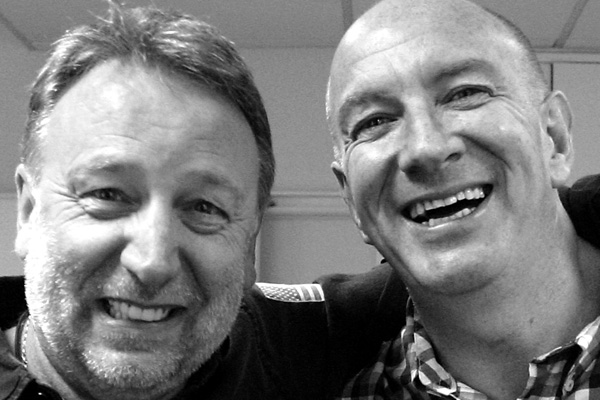
Hook and Day

Last week Rhys Thomas interviewed Simon Day; this week Simon Day puts the questions to Peter Hook (Hook's on the left in the picture), best known for playing bass in Joy Division and New Order.

The interview covers the early days of punk, Joy Division becoming New Order after the death of Ian Curtis, and Hook's current DJing career:

"I thought DJs were arrogant and overpaid", he says, "So when I became one I fitted right in".

You can listen to the Rhys Thomas-Simon Day and the Simon Day-Peter Hook episodes of Chain Reaction until this Friday on the Radio 4 website when Peter Hook puts poet and fellow Salfordian John Cooper Clarke in the hot seat.

Paul Murphy is the Editor of the Radio 4 blog

Round-up: "Radio 4? What sort of music do they play then?"

Blog comments are currently unavailable. Find out more.

Post categories:

Paul MurphyPaul Murphy13:50, Monday, 8 August 2011

Madonna

In the Telegraph critic Gillian Reynolds has written in praise of Radio 4. This follows on from last week's record listening figures for the station. Reynolds says that while there's so much happening in the news it's unsurprising that people want to know more but:

"Even so, last Thursday's news that listening figures for the Today programme are at their highest ever was a shock. Aren't we constantly told that this is the age of citizen journalism, that Twitter, Facebook and blogs now reign supreme?"

Further on, still on the subject of Today, she strikes a chord that some listeners may recognise:

"In spite of the infuriating tendency of Evan Davis and Justin Webb to drop their voices on the final syllable of any significant name, Jim Naughtie's habit of asking questions as long as the tail of a rising kite, Sarah Montague's giggle, John Humphrys's habitual nipping at the nose of any interviewee, the perennial perkiness of the sports reporters, or the peculiar habit they all share of starting an interview with 'Umm...', we love Today."

Elsewhere she picks out comedies like Cabin Pressure and the The Pickerskill Reports. But what she identifies as being key to the current success is the relationship Radio 4 has with its audience:

"We trust Radio 4 to know its stuff, tell us the truth, respect us. It seldom disappoints. If it does, we switch off. Right now, it's a treasure trove."

*

Radio 4 boss Gwyneth Williams was interviewed in yesterday's Observer and talked about many things including the cut in short stories on Radio 4, the death of Nigel, her background in news and the changes on Sunday nights (while perhaps hinting at a racier past than one expects from a R4 controller):

"Our research showed that on Sunday nights people feel a bit sad. I agreed with it, but then, perhaps I am just someone who never did her homework."

*

In the same paper the editorial focussed on the Archers with the bold opening statement:

"Nigel did not die in vain. When Nigel Pargetter fell off the roof at his stately home Lower Loxley, The Archers received a surge of listeners."

The paper goes on, saying:

"Apart from the unfortunate Mr Pargetter, Radio 4 in general is in robust health...Whatever the cause, it's plain that a fatality works wonders in Ambridge. So who might be next for the chop?... Ruth, anyone?"

The story featured on Sunday night's What the Papers Say. So who did the producers get to read out this item? No, really - it was Graham Seed, perhaps best known as Nigel Pargetter...

*

Finally, bad news for Madge in the Independent:

"Her mantelpiece may be heaving with Grammys and Novello awards and she may have millions of fans worldwide but Madonna has failed to win a much tougher audience: Radio 4 listeners."

The source of this chagrin?

"The singer is one of many well-known musicians who have failed to make the grade in the British public's Desert Island Discs."

Paul Murphy is the editor of the Radio 4 blog

Generations Apart: Kwabena, Sandra and David

Blog comments are currently unavailable. Find out more.

Post categories:

Fi Glover12:14, Friday, 5 August 2011

The editor: On Monday 8 August Fi Glover launches Generations Apart, a new series for BBC Radio 4 which tracks the fortunes of two groups of people at very different stages in their lives - the first Baby Boomers born in 1946, and the 'children of the nineties' born at the same time as the world wide web. More details at the end of this post - PM.

Kwabena

Child of the 'nineties: Kwabena

Sometimes people leave more of a mark on you than you expect don't they? And Kwabena is one of those people - he's one of the 21 year olds we are talking to for our series - and until today I'd only heard his voice as the producer Sue Mitchell had been out to interview him before.

He is a musician and hopes that he can make singing his career. I didn't expect him to be quite so charming in the flesh - which is not to do down his immense vocal talents. But there is something about him that is a bit mesmerising and I can't help thinking that he is destined for bigger things than just our Radio 4 series.

I hope so anyway because he has a voice to die for and, as he puts it, singing is his life. He agrees that he has some kind of singing Tourette's - where he just can't help but break into song whenever and wherever he is - but he's got such a fabulous voice who cares?

I can't wait to go and see one of his concerts. I'm preparing myself to feel quite old when I do though - (I view the mosh pit as out of bounds these days) but the weird thing about making this series is that because we are tracking two groups of people - 21 year olds and 65 year olds - I get to feel ancient (and dowdy) one day and then young and naive the next (and still dowdy).

I have started cycling more since meeting Sandra and David (both 65) - on the basis that if they can tone up and speed up to become triathlon champions in their 60s then really I should be able to power myself and my chubby calves into the West End three times a week in my forties.

I wonder whether our series will inspire you in the same way. I hope so.

Fi Glover presents Generations Apart

The History of Titus Groan: Titus leaves Gormenghast

Blog comments are currently unavailable. Find out more.

Post categories: , , 

Brian SibleyBrian Sibley16:30, Thursday, 4 August 2011

Editor's note: You can still hear the first four episodes (of six) of The History of Titus Groan on the Radio 4 website. Episode five is on Radio 4 this Sunday at 3pm and on the website soon afterwards. Brian Sibley, who has dramatised Mervyn Peake's classic novels blogs on dealing on the story of Titus after he leaves Gormenghast - PM.

Drawing for Titus Groan

Titus and Muzzlehatch: Image courtesy of the Mervyn Peake Estate

When Mervyn Peake's Gormenghast was first published in 1950, readers got to the end of the book and found that Titus Groan rides away from the ancient ancestral home that had been the setting for Peake's epic tale of ambition, intrigue, revenge and the relentless struggle between tradition and change.

Those early readers had no idea where Titus would go or what would become of him. Worse, they had to wait a further nine years, until the publication of Titus Alone, to find out and, when they did, it came as something of a shock, as it may also do for listeners following the radio dramatisation. Endlessly pursued by faceless representatives of authority, the character now finds himself in an alien world of motorcars and aeroplanes, where society is controlled by industrialists and scientists.

As a dramatist, having spent many months locked in the stifling, ritual-bound world of Gormenghast castle, I felt as anxious and uncertain as our hero when we had to turn our backs on the great sprawling castle and head off into the unknown.

Although I was sorry that there was no more dialogue to be written for Steerpike, Prunesquallor, Bellgrove and the others, there was the immediate compensation of a new and fascinating cast of curious and intriguing characters: Muzzlehatch, the bizarre menagerie-owner; the intensely loving Juno; and the beautiful, but dangerous, Cheeta and her sinister scientist father.

What also became quickly clear was that regardless of the new experiences that crowd in upon Titus, he is constantly haunted by the ghosts of his past, as a result of which we never totally lose sight of the arcane world he left behind.

Although the Titus books are often referred to as 'The Gormenghast Trilogy', Mervyn Peake's original intention was for a cycle of books, the next of which was to have been called Titus Awakes. By the time Titus Alone was published, however, Mervyn Peake's health was in serious decline and when he died in 1968 he had written no more than a fragment of his next book.

A few years later, his widow, the late Maeve Gilmore, took up the task and completed Titus Awakes. I read it first thirty years ago when Maeve loaned me the manuscript and when its publication was finally announced this year, I wanted to weave something of Maeve's Titus Awakes into Mervyn's Titus Alone and make of it a single story.

Drawing on an emotionally powerful episode from the fourth volume, I have tried to unite the two authors who - both as husband and wife and as artists - were so much part of each other's lives with the fate of their shared character and, at the same time, bring Titus' story full circle with a fitting and poignant coda.

Brian Sibley is a writer and broadcaster whose radio dramatisations have included The Lord of the Rings, The Chronicles of Narnia, The Pilgrim's Progress and works by Roald Dahl, Ray Bradbury, James Thurber and J B Priestley. A former Secretary and Chair of the Mervyn Peake Society, he has been a long-standing friend of the Peake family and contributed an introduction to the recent publication of Maeve Gilmore's Titus Awakes.

Questions Questions: When everyone drank beer instead of water, because it was too polluted, were people always drunk?

Blog comments are currently unavailable. Find out more.

Post categories:

QQ TeamQQ Team14:09, Thursday, 4 August 2011

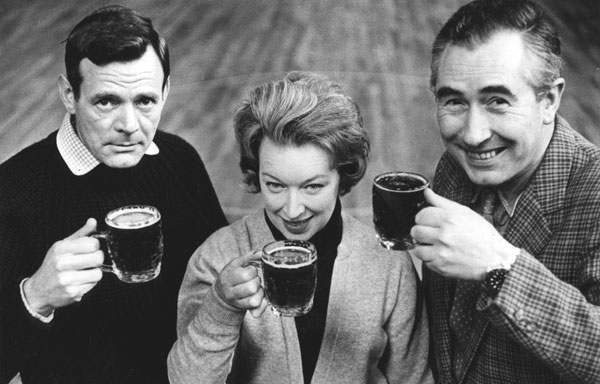
Eric Merriman, June Whitfield and Peter Jones.

This week's programme was a smorgasbord of tiny bespangled bugs, teapots, ancient granite furniture and...wing woms.

Listener Keith Rogers posed a question about the reasons behind the differing shapes of tea and coffee pots. Stewart was joined by Antiques Roadshow star Henry Sandon, along with his favourite Worcester porcelain, to explain.

Stewart found shelter from the gale force winds of the Cornish moors by the giant stone tables of old - called quoits. He met archaeologist Andy Jones along the way to explain their significance.

Emily Williams performed an Alice in Wonderland shrinking act go undercover with the flea circus.

And, yes, we've teased you long enough. A wing wom is...

Listen again to find out.

Now onto next week. On Thursday 11th August, Stewart will be solving two natural world puzzles that have been taxing a couple of our listeners. One high up in the clouds and one buried deep, deep down. Listen in to find out if the earth is getting fatter and to explore the reasons behind the phenomenon known as crepuscular rays.

Plus, Dave Dodd will be telling you how much power you're using to read this blog post, and we lose Stewart in a maze. Well, not really since he wouldn't be able to bring you his piece on the social functions of the landscape puzzle if we had.

If you'd like to help us with the following problems, do get in touch:

Question 1: When everyone drank beer instead of water, because it was too polluted, were people always drunk?

Question 2: At what point would a man holding onto the back of speeding car become airborne?

Question 3: If you have an allotment by a busy road, how does it affect the plants? Are they still safe to eat?

And, of course, send us any of your own questions. There's still plenty of time for the QQ Team to get digging.

Please send them to questions.questions@bbc.co.uk, call us on 03700 100 400, or leave them as comments on this blog.

We also welcome questions and comments on Facebook and Twitter using the hasttag #R4QQ. You can also post your comments here on the blog or reach us directly using the Contact Us form.

The Questions Questions team

  • Editor's note: The picture is from the archive and the caption reads: "Mild and Bitter 02/03/1966 © BBC left to right: Eric Merriman who has written and will be introducing the new revue series Mild and Bitter with the stars June Whitfield and Peter Jones." In no way am I implying that a) they're drunk or b) the water in 1966 was too polluted to drink. I just didn't have any pictures of beer drinkers from more polluted times - PM.

Record listening figures for Radio 4: RAJARs Q2 2011

Blog comments are currently unavailable. Find out more.

Post categories: , , , 

Gwyneth WilliamsGwyneth Williams08:13, Thursday, 4 August 2011

The Rajar listening figures. A picture by Adam Bowie.

I am on holiday in Wales (glorious river noise, mountains and sun) and keep having to go up the drive to use the Blackberry so I had given our audience guru, Alison Winter, the land line to find me instantly with her quarterly much-awaited phone call bearing RAJAR data - RAJAR is the body that calculates and releases the official radio listening figures every quarter.

Sure enough - and right on the expected time - her expert tones delivered rather good news: new records all round for Radio 4 and 4 Extra. A record across all genres: news, drama and comedy.

Congratulations to brilliant programme-makers everywhere for this audience appreciation of your work. News records include Today, the World at One (which I am about to extend in length), PM and the Six O'clock bulletin. Eighty-seven per cent of Radio 4 listeners listen to some of our news output on a weekly basis. This is heartening.

I am most pleased, however, this time, with the Radio 4 Extra record of 1.6 million. This demonstrates that listeners are responding to the rich archive and additional programmes seductively put together by my colleague, Mary Kalemkerian, Radio 4 Extra's Head of Programmes, and her team.

And now, pay particular attention to the words of the audience research guru Alison Winter. Here she is to explain all:

Always good to be the bearer of good news and this quarter gave me that very opportunity. It was with some trepidation, though, that I opened the file detailing the latest radio listening figures, mindful of the "best ever" figures we reported last time round.

But these figures have surpassed them. 10.85m UK adults now listen to Radio 4 each week, nudging up from 10.83 last quarter and a good deal up from the figure we reported at this time last year, 10.4m. And Radio 4 listeners are incredibly loyal to the station too, tuning in for, on average, 12h 15m every week - an exceptional figure among those stations that broadcast to the whole of the UK.

As Gwyn points out above, this isn't the work of one or two programmes or even one particular genre. It's thanks to strong content across the board. In addition to the programmes already mentioned, Front Row, The Archers, Woman's Hour and You and Yours are examples of programmes that will be celebrating record figures today. Breakfast is a key time for radio listening and our own Today goes from strength to strength too, this time attracting 7.18m weekly listeners.

Speaking of audience, again we find increases across the board this time round: Radio 4 continues to do an admirable job of attracting both men and women in almost equal measure, and there are increases in the number of listeners across different ages.

And of course this was the first quarter that we saw figures for the newly-relaunched Radio 4 Extra, which is now the most listened to digital-only network.

The 1.6m figure mentioned above is up from 1.16m last quarter and, together with the record Radio 4 figure, points to a healthy appetite for speech radio of this kind.

Finally, to put all of this in context, we know, today, that more people than ever before are listening to the radio in the UK - 47.62 million of us to be exact. And we're listening for longer than ever, consuming over 1 billion hours of live radio every week.

So while there's good news for Radio 4, Radio 4 Extra and their listeners, the wider story is also of a radio sector that's still relevant and actually going from strength to strength.

Gwyneth Williams is Controller of BBC Radio 4 and BBC Radio 4 Extra

Is Economics the new Rock 'n' Roll?

Blog comments are currently unavailable. Find out more.

Post categories: , , 

Innes BowenInnes Bowen17:52, Tuesday, 2 August 2011

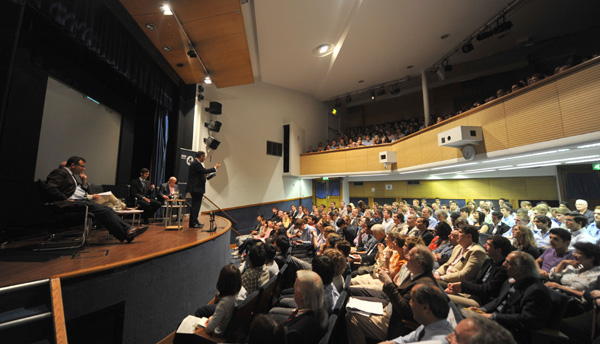
LSE

Who would have thought that one way for Radio 4 to catch the attention of a younger audience was to organise a debate about two dead economists, with a septuagenarian member of the House of Lords as the star attraction?

Last Tuesday night, around 1000 people queued around the block at the London School at Economics to attend a Radio 4 debate about the ideas of John Maynard Keynes and Freidrich August von Hayek. In the 1930s, these two giants of economic thought advocated sharply contrasting responses to the Great Depression: Keynes argued for more state intervention and Hayek for a more free market approach.

As Western economies struggle to recover from the latest slump, the ideas of Keynes and Hayek are being eagerly revisited by a younger generation. There are even two rap videos (here and here) on the Keynes v Hayek controversy.

The audience at the LSE was mainly young - I'm guessing the average age was about 23. Our presenter, Newsnight's Economics Editor Paul Mason, tested opinion before the speeches.

Team Keynes, consisting of Keynes's biographer Robert Skidelsky and economics blogger Duncan Weldon, got an enthusiastic cheer from the audience. For Hayek's defenders, Professor George Selgin and management consultant Jamie Whyte, the whooping was even louder.

"I applaud the Hayekians' eagerness to come and hear the Keynesian case," joked Lord Skidelsky.

The debate went beyond the LSE auditorium into the Twittersphere, as the audience ran a live commentary using the hashtag #lsehvk, which was followed enviously by those who were turned away at the door - a large lecture theatre and two overspill rooms still didn't provide enough seats to meet demand.

"@DuncanWeldon You were amazing at #lsehvk. Go Keynes! (I said it)," was the verdict of 20 year old Emily Finch, a film festival administrator.

From 18 year old @vklmonro "#lsehvk - amazing debate. couldn't have cheered for Hayek any louder."

It was obvious that people had come to applaud their team rather than to make up their minds.

As Lord Skidelsky emerged from the LSE Old Building, he was surrounded by fans. "I can't believe I'm actually meeting you," one awestruck young man told the peer. Afterwards, in a nearby pub, a cheer went up as Professor Selgin and Jamie Whyte arrived for a post debate celebration attended by over 100 Hayekians.

"I didn't know so many young people think economists are like rock stars," said the event's producer Daniel Tetlow.

So, what on earth is going on? Well here's my theory. If you are a 6th former or a university student, the financial crisis of 2008 is probably the defining event of your politically conscious life. Understanding how we got into the financial mess we are in, and how to get out of it, is more than an issue of intellectual curiosity for that generation.

The effects of the economic downturn are being felt more acutely by the young than they are by the typical Radio 4 listener (average age 55 and likely to have paid off the mortgage). And if last week's debate is anything to go by, the youth are demanding a return to some older and more radical thinking.

Innes Bowen is Assistant Editor, Radio Current Affairs

  • You can hear the Keynes vs Hayek debate on BBC Radio 4 on Wednesday, 3 August at 20:00 BST. The programme will be repeated on Saturday 6 August at 22:15 BST.
  • Join in the Keynes vs Hayek debate on Twitter using the hashtag #lsehvk

The Controller of Radio 4 and 4 Extra talks to the Radio Academy

Blog comments are currently unavailable. Find out more.

Post categories: , , , 

Paul MurphyPaul Murphy16:58, Tuesday, 2 August 2011

Roger Bolton and Gwyneth Williams

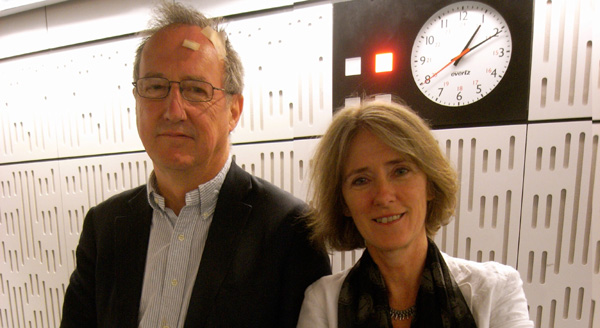
Feedback's Roger Bolton and Radio 4's Gwyneth Williams before last week's Feedback in which Williams answered listeners' questions about the schedule changes and other matters.

Like buses, interviews with the Controller of Radio 4 like to arrive in tandem. Last Friday Gwyneth Williams appeared on Radio 4's Feedback to answer listeners questions put to her by Roger Bolton on the changes she's making to the schedule, particularly around extending the World at One. You can listen to the Feedback piece here on the blog.

Also recorded last week is a longer quizzing of the controller by the Radio Academy's Trevor Dann that you can now download as a podcast or listen to on the Radio Academy website. Gwyneth Williams talks at length about the schedule changes, short stories on Radio 4, the future of Radio 4 on long wave, radio drama and the importance of online and digital to Radio 4's future. She also reveals what she's been listening to most recently on the radio.

Paul Murphy is the Editor of the Radio 4 blog

Just One More Thing: Columbo!

Blog comments are currently unavailable. Find out more.

Post categories: , , , 

Peter McHugh10:39, Monday, 1 August 2011

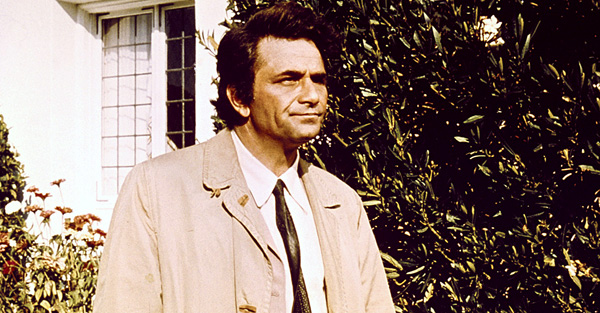
Peter Falk

The raincoat, the cigar, the spluttering convertible car, the villain's deed in the first scene and the final "...just one more thing".

The American TV detective series Columbo was a literature inspired, award-winning, rule-breaking, television original spanning over thirty years. It turned the 'whodunit?' into the 'how-do-you-catch-them?'

But just who were the people that were able to keep millions of people around the world glued to their seats when you already knew who had committed the crime in the first five minutes?

That was the question that presenter, crime writer Mark Billingham, and myself wanted to answer in 2007. For both of us, Just One More Thing: Columbo! was a true labour of love. There were setbacks, delays and might-have-beens. Yet, in the end, with a little of that Columbo tenacity, we managed to assemble a truly all star cast. The Emmy Award-winning Bill Link as: The creator of Columbo; Steven Bochco, creator of Hill Street Blues and LA Law as: The story editor on Columbo; Oscar-winning Jonathan Demme, director of Silence of the Lambs as: Director of Columbo. Guest star Robert Vaughn (Magnificent Seven et al) as: The villain.

And of course, always looking for a pencil, Columbo himself: Mr Peter Falk. When we spoke with him he was warm, charming and befitting his thoughts on his most famous creation, "very, very, funny".

In the programme we hear about the raincoat, Dostoevsky and the inverted mystery form. From class war to voyeurism. From fights over the scripts, to people being banned from the film lot. From the pressure to deliver the big 'pop' ending, to the wife you never saw (or did you?). What came across most, though, was a feeling of love for Columbo - the character and the man playing him.

Sometimes television, and especially so called 'genre' television, can be seen as being 'disposable'. Yet, we found that Columbo was a touchstone for American Presidents as well as for people around the world. In recent days, MPs reviewing the success of police enquires said it was Columbo, not Clouseau, that would be the benchmark for forensic analysis. That's quite an achievement for a forgetful, fictional, TV detective.

I tried my utmost to make Lt. Columbo a guest at his own biography. He often helps the programme along, with little pointers and reminders. Of course there had to be one final question, and as Mark Billingham has recently said, the thrill of Peter Falk, as Columbo, asking "er... just one more thing, Mr Billingham, Mr McHugh", will be something we will treasure for a very long time.

I hope the chance to hear this documentary again will stand as a small tribute to mark the passing of one of the great screen actors, Peter Falk.

Peter McHugh is the producer of Just One More Thing: Columbo!

More from this blog...

Categories

These are some of the popular topics this blog covers.