Archives for July 2011

Moving the furniture at Radio 4

Blog comments are currently unavailable. Find out more.

Post categories: , 

Roger BoltonRoger Bolton13:45, Friday, 29 July 2011

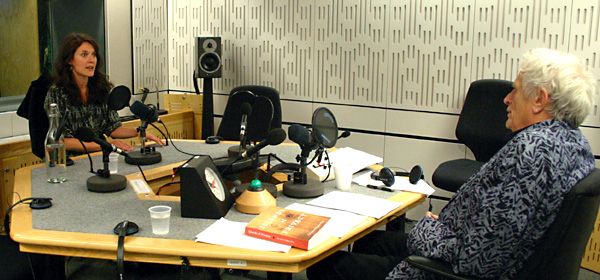
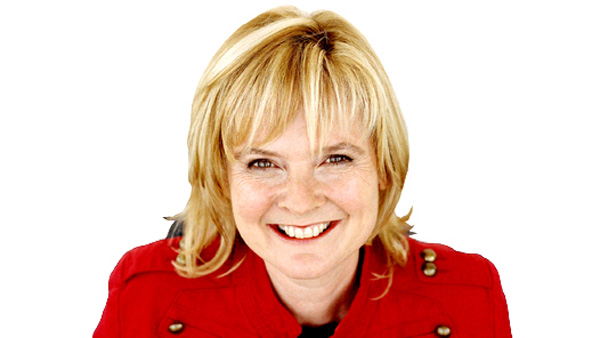
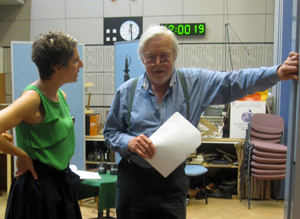
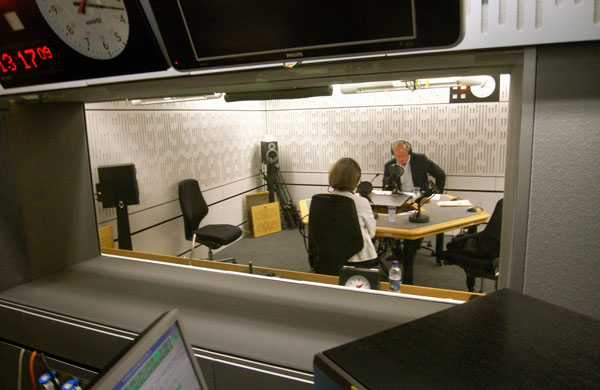
Gwyneth Williams and Roger Bolton recording Feedback for BBC Radio 4 in studio 70B, Broadcasting House on 27 July 2011.

You change Radio 4 at your peril, for the slightest alteration to the schedule is likely to produce a rebellion, and not just in the Home Counties. David Hatch, Controller from 1983 to 1986, learned that the hard way when he introduced Rollercoaster, which almost ran him over.

His successor Michael Green, (1986-1996) had to summon up all his courage when he decided to move Woman's Hour from the early afternoon to the morning. He was attacked from without and within, won through, but still has the scars to show for it.

The Controller who made the most significant changes to the Radio 4 schedule in the last 30 years, and arguably ever, was James Boyle (1996-2000). Widely reviled at the time, many of his changes have stood the test of time and he is held in considerable respect by his successors, but he soon retired hurt to Scotland.

His successor, Helen Boaden, (2000 - 2004) now Director of News, was told not to make waves and instead go round hugging and reassuring the staff, which she did to great effect. Mark Damazer (2004 - 2010) a history graduate and Americophile, changed the content to suit his interests and cleared the decks for The History of the World in 100 Objects, but it is his successor, the present Controller who has proposed making the most radical changes since Mac Birt (James Boyle).

Gwyneth Williams is proposing, among other things, to extend the World at One by 15 minutes, and moving programmes like Feedback to 4.30pm. She is cancelling series like The Choice, Taking a Stand and Americana, introducing a new science show and trimming the number of short stories, much to the disgust of celebrities like Stephen Fry and Joanna Lumley.

All this, of course, before she has to implement any cuts which may result from Delivering Quality First initiative which has to save 20 per cent of the BBC's budget. This week Ms Williams came into the Feedback studio to answer listeners' questions.

In order to see this content you need to have both Javascript enabled and Flash installed. Visit BBC Webwise for full instructions

Feedback is now off the air until September 16th - but please don't stop writing to us.

Roger Bolton is presenter of Feedback

Questions Questions: What are the origins of hair jewellery?

Blog comments are currently unavailable. Find out more.
Post categories:

QQ TeamQQ Team14:04, Thursday, 28 July 2011

The mid point of the series is fast approaching and we’ve already been inundated with fabulous questions from you.

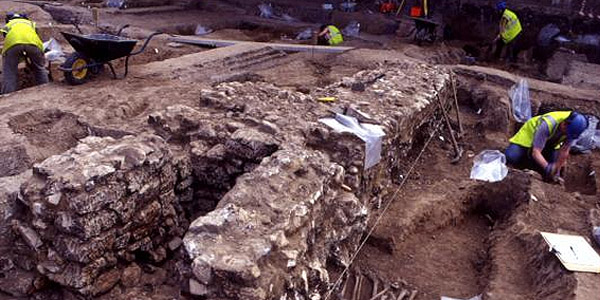
Archaeological sites near the Globe Theatre

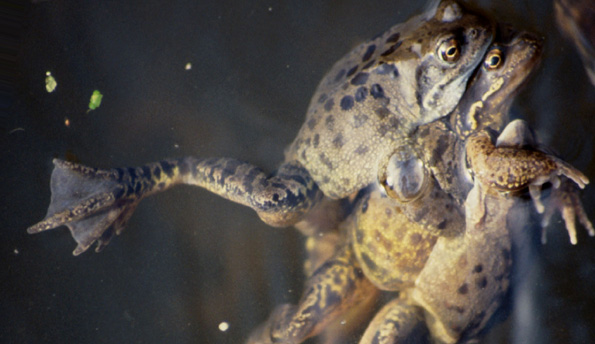
This week a question from listener Barry Greenwood prompted Stewart to ponder, excuse the pun, the spawning rituals of frogs.

Stewart was marching to the beat of listener Phyll Ward's drum as he addressed her question on protest chants, and Ron Stubbs asked us why County Durham is the only English county to use the prefix County.

QQ reporter Dave Dodd finally laid to rest those stories about **church bells ringing** from the depths of drowned villages using a fancy microphone, a sonar testing facility, and a very heavy bell. You can satisfy your curiosity by listening again to the programme.

In the next QQ on Thursday 4th August, we’ll be exploring the microscopic marvels of the flea circus – are they really using fleas? Stewart has been traipsing around the moorland looking for the meaning of Neolithic quoits, large stone structures that are dotted around our landscape.

And, the question on everyone’s lips – what is a wing wom? finally gets an answer. It’s a tale of nonsense words, frustrated parents, and…trifle. Listen in to find out.
We’ve had some great responses to questions posed in the programme and online. Many of you have touch-typed your way onto the airwaves - we hope you enjoyed hearing your questions and contributions on air. Please keep on commenting on our Radio 4 Facebook posts, contacting us on Twitter using #R4QQ, and contributing here on the blog.

You can also reach us directly using the Contact Us form. We’d still love your solutions to the following problems.

Let us know your theories below.

  • Question 1: Is it possible to drown nits?
  • Question 2: What are the origins of hair jewellery?
  • Question 3: Is the earth getting fatter? Our listener asks: All archaeological sites are beneath the ground - sometimes several feet down. Do they sink into the earth, or does material pile on top of them?

Keep your own questions coming in and you may find that niggling puzzle solved by the QQ Team.

Please send them to [email protected], call us on 03700 100 400, or leave them as comments on this blog.

The Questions Questions team

More on the Radio 4 schedule changes: Short stories: Update

Blog comments are currently unavailable. Find out more.

Post categories:

Gwyneth WilliamsGwyneth Williams10:17, Thursday, 28 July 2011

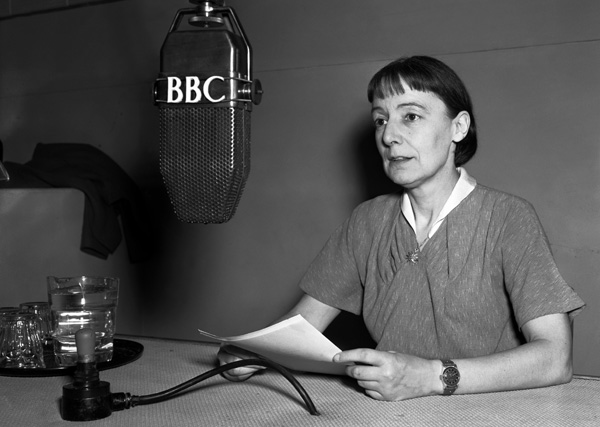
Stevie Smith

From 1949, archive caption reads: "Miss Stevie Smith, poet, one of the finalists in the BBC Third Programme Short Story Competition, reading her story Sunday at Home"

Short stories and contributions from writers are an integral part of Radio 4's programming. This week Michael Morpurgo gave, I believe, the most moving contribution to our coverage of the tragic events in Norway in an eloquent essay in which he spoke of Beowolf and the meaning of that ancient legend of struggle set in Scandinavia. One of the commissions I am most pleased with since coming to Radio 4 is the series of Letters to the Arab World, commissioned from Arab writers and broadcast in the early days of the Arab Spring. If this appeals to you I recommend another series of letters, again by leading writers, which will be prominently scheduled at the tenth anniversary of 9/11, entitled The 9/11 Letters. We have already broadcast two of the Booker prize longlist titles and there are another two to look forward to in August and September: A Sense of Ending by Julian Barnes and On Canaan's Side by Sebastian Barry. We are and will remain the largest commissioner of short stories; we broadcast 150 original single plays a year, 40 of which are by new writers to radio; we broadcast three dramas a day as well as a raft of regular arts programmes such as Front Row, Open Book, Saturday Review and many others. My commitment to broadcasting new writing is underscored by the launch this coming weekend of a new arts commission: a poetry workshop presented by the poet Ruth Padel. All this is alongside regular daily adaptations and dramatisations of classic and contemporary literature.

There seems to be widespread misunderstanding about the level of reduction in the number of short stories to be broadcast on Radio 4 from next April. For those who are interested in the details they are as follows: as part of an Autumn schedule change I am proposing to extend The World At One by fifteen minutes. One of the results of this is that I have had to reduce the number of scheduled short stories. I have already said that the reduction will be about a third but let me be more precise. The number of stories will be reduced from 144 to 104 next year from April. I will broadcast in addition (and with great pleasure) the 5 shortlisted stories from the BBC National Short Story Award. Radio 4 Extra will launch in October a new strand of programmes highlighting short stories which will draw from the rich archive as well as commissioning some 25 new stories from publications. Thus for the listener the total loss of scheduled short stories across both networks is approximately 10. I have invited the Society of Authors to talk to me today in order to clarify our plans and I have already met Bernie Corbet from the Writers' Guild.

Arts and cultural programming, as all Radio 4 listeners know, are at the heart of our schedule and I plan to keep it that way.

Gwyneth Williams is Controller of BBC Radio 4 and BBC Radio 4 Extra

The Return of The Pickerskill Reports: Series 2

Blog comments are currently unavailable. Find out more.

Post categories: , , 

Andrew McGibbon11:30, Wednesday, 27 July 2011

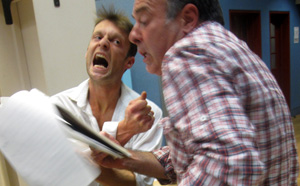
Behind the scenes during the recording of the second series of The Pickerskill Reports.

Series 2 starts on Wednesday 27th July at 11:30am

For four days in April an ordinary house in London became Haunchurst College for Boys, the setting for The Pickerskill Reports. The kitchen became the dining room; the garden became the college grounds, the forest, and playing fields; the living rooms the offices, staff room and study and a vaulted room, the school classroom and school hall.

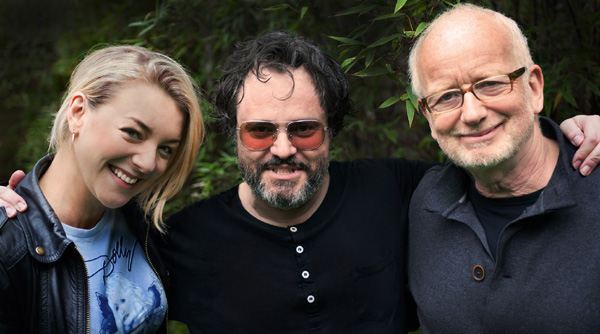
As the holder of the recording equipment I was essentially the headmaster, marshalling Ian McDiarmid as Dr Henry Pickerskill, Sheridan Smith as the wily Lady Beauchamp, pupils Kris Saddler, Jack Edwards, Joe Cooper, James Rowland, Louis Williams, Harry McEntire, Tom Kane, Jahvel Hall and fellow masters and staff Toby Longworth, Michael Feast, Mike Sarne, Mia Soteriou and Tony Gardner, in and out of different rooms.

At times it felt like a bizarre Edinburgh Fringe show where actors take over a town house dragging the audience with them as they perform scenes in different rooms.

Why do this for radio when you can simply gather everyone around a microphone?

Well, because it feels very real. Everyone is in motion, charged with a happy tension, no one is hanging about in a green room and the atmosphere of a school comes alive through this dynamic, fast moving recording session.

Sheridan Smith, Andrew Paresi and Ian McDiarmid

Sheridan Smith, the holder of the recording equipment and Ian McDiarmid

School days were not the best days of my life so Dr Henry Pickerskill is perhaps a projection of who my favourite teacher might have been - a responsible English master, who inspired me, who I most wanted to emulate, who came closest to revealing possibilities for adulthood and revealed that the predictable cycle of human folly should not put me off trying to punch through the walls of conformity. Owwch!

There is always something compelling about school stories the pupils and the teachers in particular. You know who the famous fictional ones are - Mr "Chips" Chipping, Miss Jean Brodie, Rattigan's Andrew Croker-Harris and Miss Camilla Dagey Fritton of St Trinian's.

As Dr Pickerskill looks back, his memoirs are soaked in mordant observations about human nature, his shortcomings, those of the staff and the wonder and promise of those boys he deems to possess "originality". Their letters back to him, form the core of each tale and seem to bear out his belief that they were going to be significant in some way - often with the police not far behind! Of course he can't help deploying his "spirited iconoclasts" sometimes to get himself out of tricky political situations that emerge at Haunchurst College but in spite of his honey-tongued, waspish and ever-so-slightly pretentious prose style as Dr Henry Pickerskill, he is the extraordinary teacher.

And for four intense days, an ordinary house becomes the extraordinary Haunchurst College!

Andrew McGibbon is the writer and director of The Pickerskill Reports

The House I Grew Up In: New series and podcast

Blog comments are currently unavailable. Find out more.

Post categories: , 

Wendy Robbins17:13, Monday, 25 July 2011

If you're not familiar with The House I Grew Up In, it's a series in which I get to visit the childhood homes and neighbourhoods of influential Britons, uncovering the experiences which shaped their lives.

This year, for example, in the first programme of the new series, Baroness Shirley Williams recalls an epic, international childhood with her famous mother - the writer and feminist Vera Brittain.

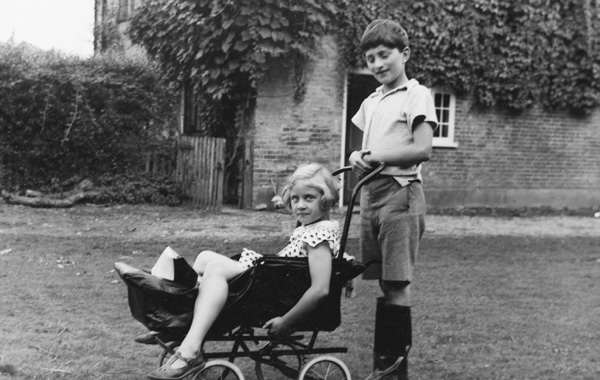
Shirley Williams and her brother, John

Shirley Williams and her brother, John

Baroness Williams explained to me how the family had a housekeeper, Amy Burnett, who she described as a second mother. Amy was a bright girl who got into grammar school but couldn't take up the place as her parents couldn't afford the school uniform. Instead, she went to work in service for Shirley's mother.

So strongly did the young Shirley Williams empathise with Amy Burnett that she insisted her parents take her out of her private school as a young child and send her instead to the local state school, where Amy's friends' children went. She was immediately aware of the differences not just in class sizes and teachers but in lifestyles and aspirations.

It's not difficult to trace the forces that shaped Shirley Williams the politician - famous supporter of comprehensive education, and tireless campaigner against social injustice.

It's always fascinating to me to make connections between childhood experiences and the type of writer, politician, scientist, academic, people later become.

Ahead of the news series, Radio 4 has published a new podcast of The House I Grew Up In, featuring highlights of the past four series. This includes my encounter with the actor and playwright, Kwame Kwei-Amah. It was quite something to stand in the room in his west London childhood home where Kwame changed his name, at the age of 12, from Ian Roberts, to Kwame Kwei-Amah, after watching an episode of the television programme Roots.

Former Tory MP, Jonathan Aitken, took me back to a hospital in Dublin, where he spent three years at the age of four strapped to a bed, immobile, with tuberculosis.

He told me how he drew upon this experience when - many years later - he was sent to prison for perjury.

This year I listened in disbelief outside another house, as one of this year's guests, the campaigner against forced marriage, Jasvinder Sanghera, described to me how, at the age of 15, she was locked in her bedroom in Derby by her parents, when she refused to marry a much older man from India.

What we experience as a child shapes and forms so much of what we become, and The House I Grew Up reinforces how memories of these early years can nourish and sustain us - even in the most extreme circumstances.

Wendy Robbins is the presenter of The House I Grew Up In

  • Wendy Robbins meets Baroness Shirley Williams for the first programme in the new series of The House I Grew Up In on BBC Radio 4 at 9.00am on Thursday, 4 August 2011.
  • Listen to or download the podcast on the Radio 4 podcast pages.

Voices from the Old Bailey: Exploring the Old Bailey's online archive

Blog comments are currently unavailable. Find out more.

Post categories: , , , 

Tim Hitchcock16:02, Monday, 25 July 2011

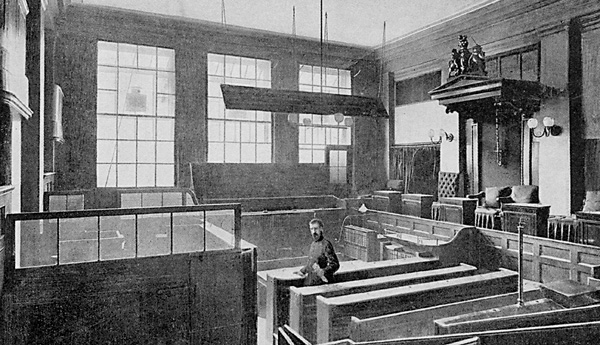
Old bailey court room

Most people, when they go to the Old Bailey Online look for a name, a place, or perhaps a crime.

As the largest collection of transcribed trial accounts on the web, the site is used by thousands of family and local historians searching for lost black sheep, and local villains.

It has also been mined for dramatic stories of fear and loathing, redemption and despair, and has formed the grist of dramas such as Garrow's Law. Australians looking for convict ancestors, dramatists keen to find a narrative arc in the tragedy of crime and punishment; and academic historians searching for the perfect illustrative anecdote, all visit the site in their thousands every day.

Amanda Vickery's new series of Voices from the Old Bailey, which started on BBC Radio 4 this week, forms a new and different way of making these courtroom tragedies speak to a modern audience. And what they are all looking for is the connection to the past that only comes with detail and emotion.

Family historians, for instance, all want a name and an occupation, an age and a physical description, but more than this they want to hear in recorded testimony the voice of an ancestor. And sometimes a single word is worth a thousand pictures.

Radio 4 listeners can explore the darker sides of their family trees by searching for criminal forebears too. If your surname was Burt, for example, you might search simply for the name "Burt" and find Samuel Burt, convicted of forgery. Modern day Burts can read their ancestor's eloquent plea to the court - he was an effective orator, but ended up being transported on the first fleet to Australia.

When I search the old Bailey's 127 million words, I always look for just those few expressions that cross the centuries.

I look for emotions, and when I find them, it seems as if all the fancy dress, and generations of difference immediately fall away in the face a simple feeling. When we were looking for trials that could bring the Old Bailey Proceedings to life on air that was my strategy. I searched for particular kinds of words and phrases: frightened, terror, 'out of my wits', 'shaking with fear', and what came up again and again, were trials in which the harrowing emotional experience of a single crime are described by the people who suffered it.

'Out of my wits', for instance, brings up 25 trials. In the end, we did not use any of these trials in the broadcasts, but among them was the trial of five men for assaulting William Wilson on Salt Petre Bank late one night in 1781. Knives were pulled and the threat was made to 'let his puddings out' - and leave him to die. That phrase, 'let his puddings out' even now makes me tense my stomach just a bit with anxiety. And in its turn 'puddings out', leads to two other trials in which a phrase drawn from butchery, was applied to first a man and then a woman. Word by word, emotion by emotion, and just as easily starting from an ancestor or a place as from a single word, the Old Bailey Online makes it possible to trace a line of continuity through the records from the seventeenth century to the twentieth.

I always say of the Proceedings, that all human life is there. And it is true that lords and beggars, shoemakers and laundresses can all be found among the thieves and their victims, but what I really mean is that every sensation from fear to joy, from pleasure to pain, everything that ties us directly to our predecessors and makes us part of 'human life' is there.

If you're inspired to delve into this criminal archive, start here at the Old Bailey Online homepage. The site includes a video tutorial, Getting Started, to help you navigate this rich source of archive, and a Guide to Searching.

Professor Tim Hitchcock is co-director of Old Bailey Online; London Lives and Connected Histories

Questions Questions: Can the church bells of drowned villages be heard ringing from the depths? Is it possible to drown nits? Is the earth getting fatter?

Blog comments are currently unavailable. Find out more.

Post categories:

QQ TeamQQ Team11:53, Monday, 25 July 2011

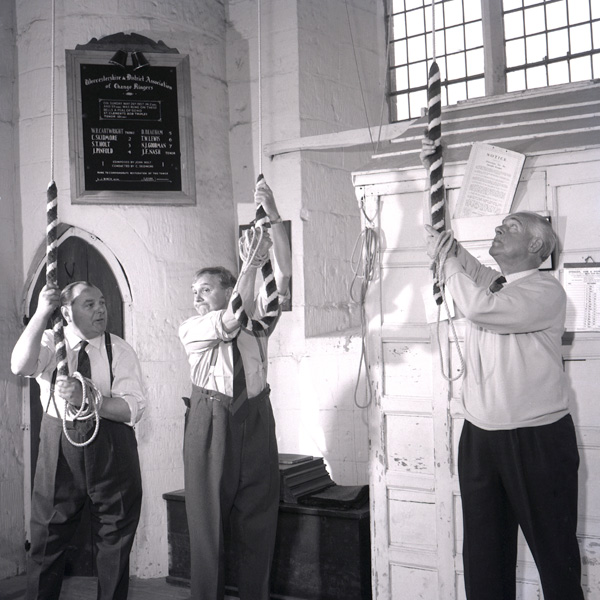
Characters from The Archers bell ringing, 1959.

From the BBC picture archive, 1959: "The Archers: Bob Arnold as Tom Forrest, Chris Gittins as Walter Gabriel and Harry Oakes as Dan Archer. Bell ringing is the favourite pastime of many Ambridge characters. "

It was wonderful to be back on the air on Thursday. We featured Mrs Heilwen Goodall's brainteaser about, well, the brain and specifically its ability to recognise one voice from another.

Joyce Janes and Pippa Young had their query aired about collective names for birds, sending us off on a quest to the British Library to find the answer and Stewart unearthed the haunting music of Cornwall's tin mining past.

We've already received fascinating comments in response to our questions: What is a wing wom and have you ever seen a flea circus? But please do keep them coming in.

And we're already onto the next batch of your queries. In the second edition of QQ on Thursday 28 July Stewart will be pondering the rhythmic structure of protest chants across the world; listener Phyll Ward has observed that many chants seem to follow the same pattern regardless of the location of the protest. Why could this be? And we'll be explaining how frogs know exactly what day of the year to spawn.

Our science reporter Dave Dodd is always up for a challenge.This week he's lugging a 100 kilogram bell up to a lake in Yorkshire and back down to Dunwich to meet zero visibility diver Stuart Bacon. Together they'll be getting to the bottom of whether the church bells of drowned villages can be heard ringing from the depths.

The QQ team would like to thank everyone for making us feel at home in our new online spaces on Radio 4 Facebook, on Twitter using #R4QQ, and here on the blog. We're looking forward to including lots more of you in the programme so please do keep getting in touch via those methods or, more directly, using the Contact Us form.

But this is no time to be resting on your investigative laurels - we need your help again to solve these puzzlers (please note that any comments may be read out on the programme):

Question 1: Is the earth getting fatter? Our listener asks: All archaeological sites are beneath the ground - sometimes several feet down. Do they sink into the earth, or does material pile on top of them?

Question 2: Why is County Durham the only county in England to use the form County Durham, which is usually found in Ireland, as in County Cork, County Galway etc.?

Question 3: Is it possible to drown nits?

As well as your thoughts on these points, we, of course, always need your questions.

Please send them to [email protected], call us on 03700 100 400, or leave them as comments on this blog.

The Questions Questions team

The Slanket of Con: Origins

Blog comments are currently unavailable. Find out more.

Post categories: , , , 

Clugston and CorfieldClugston and Corfield17:20, Friday, 22 July 2011

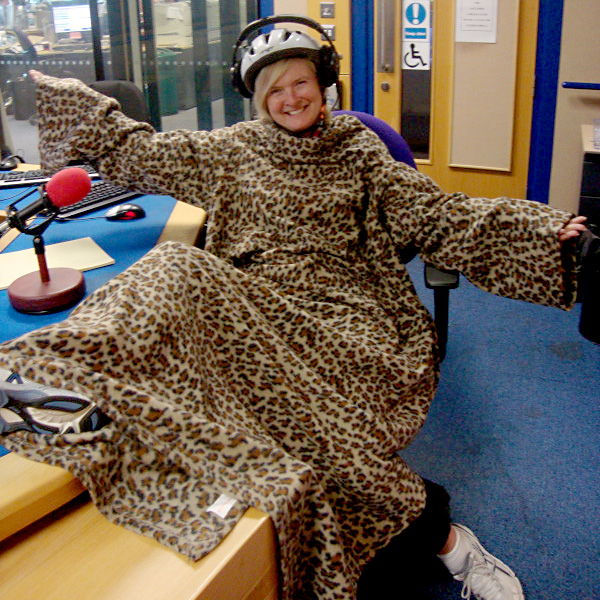
Martha Kearney in the Slanket of Con

Martha Kearney in the Slanket of Con. Martha subsequently tweeted: "I have reached the pinnacle of my career thanks to Corrie Corfield..."

Editor's note: Some of you will be familiar with the Slanket of Con, some of you will have no idea what's going on. I first saw it being discussed online which in turn led me to the Slanket photo album, already viewed over 10,000 times. So I asked Corrie Corfield and Kathy Clugston, known to you as two of the voices of Radio 4, to explain all.

Corrie: We can lay the blame for The Slanket of Con firmly on Twitter! A few of us who spend hours in the Radio 4 Continuity studio and like to tweet started to make comments about how cold it was in the studio. Which it is. We have to sit under an air vent that seems to blast nothing but an Arctic gale. Various replies on Twitter suggested we needed a garment called a "Slanket" to keep us warm.

Kathy: The slanket is technically mine. Having read our nonsense on Twitter, my friend Mark (@mark_simpson) gave it to me for Christmas when I went home to Belfast. He agreed that the leopard skin marvel could be donated to Continuity for the use of us chilly announcers. As soon as Corrie set eyes on it, she whipped out her camera and starting snapping us in ridiculous poses. It made us laugh so much we thought people on Twitter would love it too. And so it began.

Corrie: Can't remember what possessed me to drape The Slanket over the shoulders of the lovely and extremely well known Michael Buerk but he was our first victim. Poor man had popped into 40B (The R4 continuity suite) to do a trail for The Moral Maze and the next thing he knew he was covered in a bizarre polyester tent. He was however a natural. After that the initial idea of just snapping the announcers grew into photographing as many of the famous voices on Radio 4 as possible. The reaction on Twitter has been amazing and now we get suggestions of who should be Slanketted next (along with concerned tweets about the cleanliness of the garment). What I have noticed though is the minute the leopard print monstrosity is upon the wearer their thespian tendencies are unleashed.

Kathy: Various colleagues have taken pictures, but Corrie is our main photographer while I "run" the website. She has a great eye for a pose and amazing powers of persuasion, especially useful in the beginning when no one had a clue what it was all about. When John Prescott came in to read the Shipping Forecast for Comic Relief, Alice (Arnold) and I were on duty and weren't sure if we had the nerve to ask. Alice braved it and before he could think twice about it, we flung the Slanket over him and I took a picture with my phone. I love it that people are such good sports.

Corrie: The Slanket of Con lives in a drawer in 40B in Broadcasting House marked "BUNS" (don't ask) but recently it's been on an away day to Television Centre where the news programmes originate. It may not be the only time it's liberated from the confines of BH as there are still quite a few Radio 4 regulars to be bagged. The Today presenters have so far managed to escape but now a Dame (Jenni Murray) and a Lord (John Prescott) have worn it perhaps they'll be easier to persuade. And I really want to get Melvyn Bragg. That would be the icing on the cake. Or perhaps that should be The Jewel in The Slanket.

Corrie Corfield and Kathy Clugston are part of the talented Radio 4 Announcers Team

Today on Feedback; Your questions for the R4 Controller

Blog comments are currently unavailable. Find out more.

Post categories: , , 

Roger BoltonRoger Bolton13:43, Friday, 22 July 2011

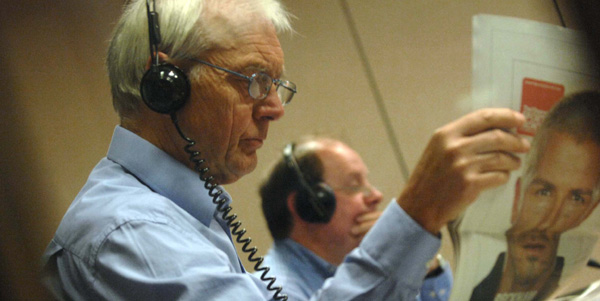
John Humphrys and James Naughtie during a broadcast of Today

Editor's note: You can leave your questions for Roger to put to the Radio 4 Controller on next week's Feedback in the comments on this blog post - PM.

Just after 4am in the Today office at BBC Television Centre in west London.

The programme team has been working since eight the previous evening. The journalists have five hours to go and coffee cups litter the tables fighting for space with every conceivable newspaper and magazine. Arguably the last three hours are the most important, when they are dog tired but have to be at the top of their game for the programme's transmission.

Each three-hour Today programme has around 100 items, some of which will bite the dust if there is a breaking or developing story. Producers soon learn the art of standing down an interviewee, and of phoning up another at some unearthly hour.

This morning's presenters, Sarah Montague and John Humphrys slip into the office, the latter having parked his bike outside.

I am slightly astonished that the BBC is happy for such a central figure to be cycling in the dark in west London at such an early hour, but JH is overflowing with energy as if he has consumed half-a-dozen espressos already.

Enter stage left a Feedback listener, Francesca Fenn, an avid Today listener , who has been given an access all areas pass to find out what goes on behind the scenes. I would like to tell you that she is accompanied by Feedback's presenter as well as its producer, but I'm afraid I didn't get there until after six am, for budgetary reasons of course.

The vast majority of the audience, and there are more than seven million of them , are a pretty vociferous lot, so I was not short of questions to put to the Today editor when I interviewed him a couple of days later.

First, here is a snapshot of what goes on behind the scenes at the apparently smooth running show.

In order to see this content you need to have both Javascript enabled and Flash installed. Visit BBC Webwise for full instructions

Our thanks to listener Francesca Fenn who has gone back to bed.

Two days later when I talked to the Editor of Today, Ceri Thomas, the News International hacking scandal was beginning to quieten down.

In order to see this content you need to have both Javascript enabled and Flash installed. Visit BBC Webwise for full instructions

Our thanks to everyone at the Today programme for placing no restrictions whatever on where we could go.

Next week I'll be talking to the Controller of Radio 4 about the schedule changes she has made, one of which is to move this programme from its Friday slot at 1.30 to 4.30pm in the afternoon.

Do let me know what you want me to ask her. You can leave a comment below.

Roger Bolton presents Feedback

Thinking Allowed Newsletter: 'Do you promise not to tell?'

Blog comments are currently unavailable. Find out more.

Post categories: , , 

Laurie TaylorLaurie Taylor16:00, Thursday, 21 July 2011

Mirca Madianou and Laurie Taylor

It's a perfectly ordinary looking box file, with the perfectly innocuous title 'Letters'. But it's not stacked alongside the other box files in my study - the ones labelled 'Tax' and 'VAT', 'Personal Documents', and 'Miscellaneous'. Instead, it has been neatly fitted into the space between the top of the spare wardrobe and the ceiling, so that it can only be accessed with the help of a small step ladder. Over the last thirty years it's sat in many similarly inaccessible places: behind the cleaning things in the space below the stairs, underneath the spare bed, at the back of the airing cupboard, and for a short time only, on the top of the bathroom cistern.

When everyone else is out of the house, I periodically check its contents. Yes, everything is still secure and in proper chronological order. All the letters from Gillian, my very first girl friend, are bundled next to the postcards from her successor, Marjorie.

And Marjorie's loving thoughts are neatly succeeded by Helen's carefully written expressions of affection.

There's nothing obsessive about all this. Oh no. I don't sit and read through all these letters. They've now become so familiar that I only need to flip through them in order to discover the critical sentences: the ones in which the writers mention my enormous attractiveness, my overpowering intelligence, my superb wit, before going on to promise eternal love and devotion.

My life would have been a great deal less pleasant if I'd not owned and maintained my letters box file. While others need to resort to drink and drugs in order to ease doubts about their worth, all I need to do is climb on a chair, fish behind the top of the wardrobe, and I'm already only a second away from Janet's admission that she'll never find anyone to compare with me 'in the whole wide universal world.'

My box file is my only truly private possession. It is my only store of secrets. If others ever ask about its contents I say that it's 'strictly personal' and change the conversation.

But in my more honest moments, I know that I only want to keep it so secret because any public exposure of its contents would quickly reveal that many of the so-called love letters carried quite other messages: unfortunate references to duplicities and dishonesties, to my physical and sexual inadequacies (in one PS, Janet actually compares my performance with that of her tennis coach and finds me 'lacking').

I did once come home and find my Letters box file sitting in the middle of the coffee table.

'Oh sorry about that', said my partner Emma, 'It fell down when I was putting things in the wardrobe. Hey, don't look so worried. I checked. It's got nothing in it. Only boring old love letters.'

The nature of privacy and secrecy. That will be the topic for discussion when I talk to the author of a new book called 'Islands of Privacy'.

Also in the show - How Filippina migrant mothers fulfil their parenting duties - by mobile phone. Mirca Madianou talks about her study of mothers in Britain and their children back home.

Ed's note: Listen to or download this episode of Thinking Allowed (along with 46 other episodes) on the Thinking Allowed podcast page - PM.

Laurie Taylor is the presenter of Thinking Allowed

More on the Radio 4 schedule changes: Short stories

Blog comments are currently unavailable. Find out more.

Post categories: , , 

Gwyneth WilliamsGwyneth Williams18:08, Wednesday, 20 July 2011

Stevie Smith

From 1949, archive caption reads: "Miss Stevie Smith, poet, one of the finalists in the BBC Third Programme Short Story Competition, reading her story Sunday at Home"

Some concern has been expressed about the reduction in the number of short stories on Radio 4 from next April; we will broadcast 100 rather than 150. I wanted to explain my thinking behind this decision - taken very much in the context of the overall schedule changes for the Autumn which I announced last week.

Above all I want to make it clear that Radio 4 is committed to broadcasting new writing and new writers and my plans for the network very much reflect this reality.

Radio 4 aims to broadcast more of "the best that has been thought and said in the world", in the words of Matthew Arnold. This brilliant analysis of culture as an active force is very much the text that inspires me as controller. Culture and Anarchy was written in the most turbulent times of the nineteenth century as science displaced certainty so the echoes of Arnold's thesis ring particuarly true now.

And this aspiration lies behind our choices in the annual Radio 4 commissioning round which is just drawing to a close. We will soon have commissioned 500 out of 1,365 ideas for broadcast next year. Many more will be commissioned on a rolling basis throughout the year.

Each year Radio 4 broadcasts 13,000 programmes. We have just signed off on 22 plays by first or second time writers to radio in the Afternoon Play slot and over 60 pieces of new writing for 2012/13 across all our drama slots - and there will be more to follow as we have an ongoing commitment to commission nearly 150 original single plays in the afternoon drama slot alone.

We will commission 100 short stories each year, some of which will also be broadcast on Radio 4 Extra. In the autumn on Radio 4 Extra we will introduce a new short story slot each day Monday to Friday for archive stories and a limited number of new commissions.

We have just announced the Alfred Bradley Bursary for new writing in the North and we will broadcast the winner on Radio 4. We plan to join up with the World Service and support the International playwriting competition, again broadcasting winners on Radio 4.

We will continue to support the BBC National Short Story Award and broadcast winners across the week on the network - look out for the judging line-up which will be announced next week.

I hope that my Autumn schedule changes will inspire and engage listeners.

There will be a new prime-time science programme at nine in the morning presented by the physicist Jim Al-Khalili, a new interview programme called One to One designed around the passions and interests of presenters, new comedy for Sunday night, including new programming from some of the most talented writers and comedians working today like John Finnemore, Rory Bremner (repeated from Thursday night with new satire), Sue Perkins and others.

The World At One, presented by the formidable Martha Kearney, will be extended to forty-five minutes to take account of the extraordinary news agenda, both national and international. WATO, as we call it, has felt increasingly hemmed in at thirty minutes. Stories now develop faster and need a fresh eye by lunchtime. Parliament sits in the morning now and WATO needs to cover emerging issues. This leaves too little time, in my judgement, for other stories.

One of the results of extending the World At One, as I mentioned in my blog when I made the announcement last week, is that the number of short stories on Radio 4 has been reduced. We will still broadcast around 100 short stories on Radio 4 from April 2012 rather than 150, which is the current number. Some of these will also be broadcast on the new Radio 4 Extra short story strand.

My plan is to showcase the Short Story on Radio 4 and Radio 4 Extra as much as I can.

Other programmes have also been affected by the schedule changes on the network such as, for instance Americana, which has been decommissioned. In essence, I have made the editorial decision to add an hour and a quarter of programming each week and thus need to make space in the schedule.

I do want to make it clear that my commitment to writing, new writing and the BBC National Short Story Competition on Radio 4 remains. I am proud that Radio 4 is the place where most new writing is commissioned and broadcast and I fully intend to keep it that way.

Gwyneth Williams is Controller of BBC Radio 4 and BBC Radio 4 Extra

Reviews round-up: News, Bigipedia, Fourthought and The Sinha Test

Blog comments are currently unavailable. Find out more.

Post categories: , 

Paul MurphyPaul Murphy17:55, Monday, 18 July 2011

Editor's note: At the time of writing programmes featured below are still available to listen to online, follow the links to the programme pages -PM.

Visiting Indian cricket team from 1959

Radio reviewer Elizabeth Day in yesterday's Observer praises Radio 4's "flagship trio of news programmes - Today, The World at One and PM" for their "penetrating and reflective analysis" of the hacking story (and the fact that radio doesn't have pictures):

"On the wireless, there were no grinning images of Rupert Murdoch glimpsed through the dark glass of a speeding Range Rover. There was no overused library footage of Rebekah Brooks... And, happily, no sign of Steve Coogan pontificating loudly with a reddening face, looking increasingly like a drunken Tudor king spitting out chicken bones."

We learn in the same piece that Day's not a fan of Ambridge Extra, complaining that "the dialogue between Archers characters (in the main programme) has become ridiculously clunky, designed to explain overly complicated plot developments in the spinoff".

She ends her column with an appeal on behalf of comedy sketch show Bigipedia:

"...a hilariously mad portrayal of information overload in the computer age. Last week's episode came complete with pop-up advertisements for "baby epilators" designed to leave your newborn's skin 'smooth as, um... a baby.

In the Independent's radio review Chris Maume contrasted Four Thought's examination of the rise of Americanisms and American usage in everyday English with presenter of The Sinha Test, Paul Sinha's defiance of Norman Tebbit's cricket test. Maume writes:

"There were good jokes and some nice stories. He remembered England vs Turkey at football, when the home fans struck up a chorus of 'I'd rather be a Paki than a Turk'. His dad started crying, and said: 'Finally, after 35 years of hard work, we're off the bottom rung.'

Paul Murphy is the Editor of the Radio 4 blog

  • In case you missed Roger Bolton's Bob Dylan tribute as part of Feedback's 'visualisation' of last week's show it's still on the blog.
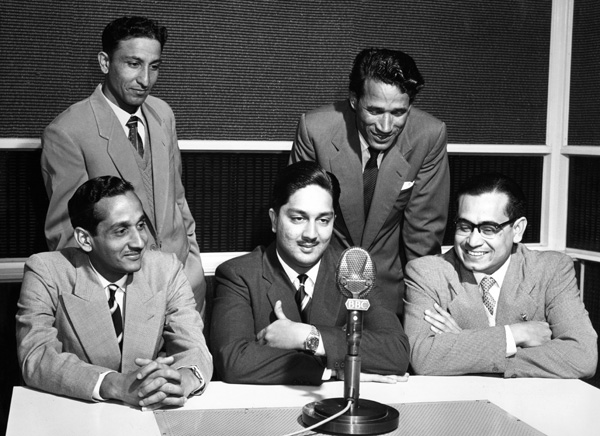
  • Picture caption from the archive: "BBC Eastern Service: Indian Section 21/04/1959 © BBC picture shows - members of the visiting Indian Cricket team taking part in a BBC Hindi Service programme. Standing L-r : P.G.Joshi, R. Bhartiya, BBC Hindi Service. Seated l-r : D.K. Gaekwad (Captain) , H.H. Maharaja of Baroda (manager) ; and Pankaj Roy (Vice Captain).

Radio 4 Appeal update: July 2011

Blog comments are currently unavailable. Find out more.

Post categories: , 

Sally FlatmanSally Flatman04:00, Sunday, 17 July 2011

Last time I reported from the Radio 4 Appeal I'd been recording Ben Fogle for the Campaign for National Parks.

Their broadcast goes out this Sunday and ties in with the charity's 75th anniversary. Richard Reed has been supporting the charity for over 50 years. This wonderful picture is of him in 1936 standing on the boundary stone at Beachy Head on holiday.

Richard reed

Richard spent many of his childhood holidays in the South Downs, the newest National Park. You can read his account, including tales of target practice at Beachy head.

Do you have any memories of family holidays spent in these wonderful National Parks? Do share them on the Radio 4 Appeal Facebook page.

Personally the photograph of our family half way up a hillside, heroically picnicking in all weathers, always make me smile.

Another charity I mentioned last time was Book Aid International. It was presented by one of the charities supporters Alan Bennett. So far Book Aid International has raised £8000 from that appeal. You can read about the camp mentioned in that appeal.

The charity also has a lovely quote from George, one of the young readers at a children's project in Kenya. He has high ambitions based on what he is learning at book club, I wonder which children's authors he has been reading?

"It really teaches me that I must work hard for my life so that when I grow up I can be one of the greatest people in the world... and I can help people who are needy. I can also be one of the greatest professors in the world."
Kate Adie

Finally to last week's DEC appeal for East Africa.

By the very nature of these emergency appeals we never have much time to turn them around. So finding a presenter and researching and recording the appeal have to happen very quickly. Twitter played a part for the first time for me. I happened upon @andrewwander who was tweeting from Dadaab, the large camp in Kenya from which the BBC's Ben Brown had been reporting. I'm fascinated by how twitter can connect us - so I tweeted explaining that I was writing a radio appeal and would love to know more about the people in the camps. Within 10 minutes we were in contact.

Having access to that first hand experience was invaluable.

Kate Adie came to record our appeal straight from the From Our Own Correspondent studio at Bush and on Friday the appeal was broadcast on radio stations across the UK. One week on and the DEC tells me they have raised £15 million pounds at the time of writing.

Thank you as ever on behalf of all the charities that benefit from the generosity of Radio 4 listeners. Follow me on twitter @flatmansally to get news on the Radio 4 Appeals.

Sally Flatman is the Radio 4 Appeals Producer

Visualisation on the radio: Feedback

Blog comments are currently unavailable. Find out more.

Post categories: , 

Roger BoltonRoger Bolton14:10, Friday, 15 July 2011

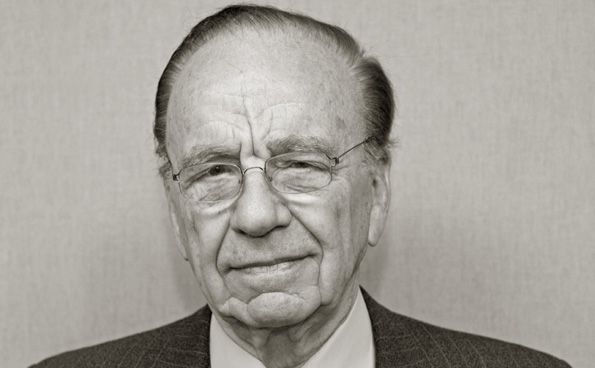
Rupert Murdoch

Did the BBC devote too much time in its news programmes to the meltdown of Murdoch's media empire? One of the topics in this week's Feedback.

The BBC's annual report came out this week, though you may hardly have noticed given the dominance of the coverage of the Murdoch meltdown, (something we discussed in this week's Feedback.)

What caught my eye was not the sums paid to star presenters (I couldn't bear to look) but what the BBC spent on radio in the year 2010/11.

Not allowing for inflation, spending on Radio 1 went up 9.8%, on Radio 2 by 11.3%. Radio 4 received an increase of 6.3%.

So these three stations had increase above inflation.

Radio 5 live by contrast had an increase of only 0.3% before inflation and Radio 3 was the hardest hit of all. It had a cut of 7.3% which, when you add inflation comes in real terms to a reduction of at least 10%.

Now doubtless there are detailed reasons for this but it does give a very rough insight into the BBC's priorities.

In Feedback this week we also look not at the past year but to the future of radio and it appears to be in vision, or at least visualised.

In other words if you listen online there is an increasing amount of visual accompaniment to be enjoyed or endured, be it live streaming of concert performance or the opportunity to see Chris Moyles standing up.

Victoria Derbyshire's show on 5 Live is also visualised, and as I am a Derbyshire fan, I seized the opportunity to go and talk to her and her editor about it.

We met last Tuesday at 8am in Television Centre as Victoria prepared her morning show.

In order to see this content you need to have both Javascript enabled and Flash installed. Visit BBC Webwise for full instructions

Here are some of those links as discussed in that piece.

And at the risk of being accused of bandwagon jumping - we've done our own bit of visualisation - (taken from an original idea by Bob Dylan...)

Next week - "Feedback - The Movie"... Perhaps.

By the way, in two weeks time I will be talking to the Controller of Radio 4 about the schedule changes she has just announced, which include getting rid of Americana, On the Ropes, The Choice and Taking a Stand, extending the World at One to 45 minutes and moving programmes like Feedback to later in the afternoon.

I will have lots to ask her, not least about that, but do tell me what else you'd like me to raise. Ways to contact us are below.

Roger Bolton is the presenter of Feedback

  • Listen again to this week's Feedback, produced by Karen Pirie, get in touch with the programme, find out how to join the listener panel or subscribe to the podcast on the Feedback web page.
  • Read all of Roger's Feedback blog posts.
  • Feedback is on Twitter. Follow @BBCR4Feedback.
  • Picture caption: "22/01/2006 BBC Media tycoon Rupert Murdoch before being interviewed by Jeff Randall on BBC Radio Five Lives Weekend Business programme, Sunday January 22, 2006."

Questions Questions returns to Radio 4

Blog comments are currently unavailable. Find out more.

Post categories:

QQ TeamQQ Team11:58, Friday, 15 July 2011

Questions Questions: Frogs in a pond

One of our listeners observed a mass of frogs appearing on just one day this spring. Has anyone else observed the same occurrence this year and why do you think this happens? Do any other creatures do the same when breeding? (Ed's note: See below on how to provide your answer.)

Questions Questions is back with a new series starting on Thursday 21 July. For the next six weeks, presenter Stewart Henderson will be donning his thinking cap and setting off in search of answers to life's niggling queries. You can ask us anything at all, from the origins of obscure local words to testing madcap scientific theories.

This blog will be our new online home where we'll be telling you what's coming up in the programme, asking for your comments, and, most importantly, inviting you to ask us your questions and help us find some answers.

In the first programme of the series, Stewart will be investigating how you can distinguish one voice from any other in just a split second and why collective nouns for birds are so often disparaging - what could possibly be the origins of a 'deceit of lapwings', for example.

We all know of the rich musical heritage of the coal mining industry. But what about tin? Stewart has been scaling rickety ladders and crawling through pitch-black tunnels in a bid to discover what made the tinners sing. There'll be songs beneath ground and on wild windswept cliff tops.

But before the programme returns on Thursday we'd like your comments on the following questions (Just leave a comment at the bottom of the blog):

Question 1: What does wingwom or wingwoms mean? One listener remembers this family term from her childhood. Have you heard it? Or do you know of any family terms that have entered widespread use in your area?

Question 2: Mazes are great fun but what were their other social functions throughout history? Perhaps you know of mazes which served as outdoor meeting rooms, places for secret trysts, or provided entertainment for dinner guests.

Question 3: One of our listeners observed a mass of frogs appearing on just one day this spring. Has anyone else observed the same occurrence this year and why do you think this happens? Do any other creatures do the same when breeding?

As well as your thoughts on these points, we, of course, always need your questions. Please send them to [email protected], call us on 03700 100 400, or leave them as comments on this blog. Please note that if you leave a comment you may be contacted by us.

Questions Questions returns on Thursday 21 July

The Thinking Allowed newsletter: We're all Labour here

Blog comments are currently unavailable. Find out more.

Post categories: , , 

Laurie TaylorLaurie Taylor16:30, Thursday, 14 July 2011

Laurie Taylor

Editor's note: This episode of Thinking Allowed is available to download or listen to online on the Thinking Allowed podcast page. More listening options at the end of the post - PM.

Even though my dad had to undergo 'instruction' by a priest before he was allowed to marry my Catholic mother in church, it did nothing to alter his view that all religion was nonsense.

Not that he exactly enlarged upon this view. He simply contented himself with brief irreverent interjections whenever the subject arose.

So, for example, when my mother embarked upon a lengthy story about how she'd prayed to Saint Anthony in an attempt to learn the whereabouts of a lost brooch, he would lean forward wearily, wave an arm across his chest as though sweeping away an irritating dust cloud, and mildly inform everyone in the room that mother was talking 'her usual muck'.

His expressions of political allegiance were equally laconic. Any canvasser who knocked on our door at election time and found it opened by dad, was brusquely told 'We're all Labour here', before the door was closed firmly in their face.

Because 'we were all Labour', there was never much talk about political issues in our family. But, under dad's influence, we all took it for granted that the Conservatives only looked after their own kind.

And in dad's vocabulary, this put them on a par with the Rotarians.

Even though I've asked other members of my family, I've never been able to discover the exact origins of any of my father's obsessive hatred of the Rotary Club. But from the age of six or seven I'd come to regard its members with much the same degree of hostility that my mother reserved for Satan and his works.

Rotarians, dad repeatedly told anyone who cared to listen, were local business people who conspired against the ordinary folk. They'd pass business on to each other. So, if anyone local died, the undertaker would pass on the news to the man who ran the floral tribute shop who'd pass on the news to the local probate solicitor.

'They're all in it together', dad would constantly assure us.

He was so adamant about the perniciousness of the Rotarians, that when I grew up, became a university lecturer and was invited to talk one night to the local branch I hesitated for several days before replying.

What could I do? Even though my father was long dead by that time, an acceptance would feel like jumping on his grave. And after all didn't the fourth commandment of my mother's Holy Roman Catholic Church demand that I honour my father?

I eventually wrote back and said that I was too busy. I chose not to mention dad's eccentric belief that all Rotarians were crypto-fascists or indeed that my final decision had been based upon nothing more (or less) than my 'mother's muck'. Sometimes less is more.

Children and politics. That'll be up for discussion when I meet the author of a research paper called The Form of Children's Political Engagement in Everyday Life. That's at four o'clock today or after the midnight news on Sunday or on the Thinking Allowed podcast. Also in this programme - remembering the 1981 Liverpool riots.

Laurie Taylor is the presenter of Thinking Allowed

This episode of Thinking Allowed was first broadcast on Wednesday 13 July 2011 and is repeated on Sunday 17 July 2011.

Supermarket Symphony and Late Nights at the Blue Boar: Music on Radio 4

Blog comments are currently unavailable. Find out more.

Post categories: , 

Paul MurphyPaul Murphy20:00, Wednesday, 13 July 2011

Supermarket Symphony and Late Nights at the Blue Boar are two excellent programmes on Radio 4 that you might have missed* but can still hear online if you're quick.

The first, which might not sound that thrilling on the page, uses a specially created score interwoven with interviews recorded in a supermarket. It inspired The Guardian's radio critic Elisabeth Mahoney to write:

"Supermarket Symphony (Radio 4, Friday) was one of those transfixing radio experiences. Nina Perry's composed feature about the hidden beauty and rhythms of a supermarket was a delightful, life-affirming half-hour."

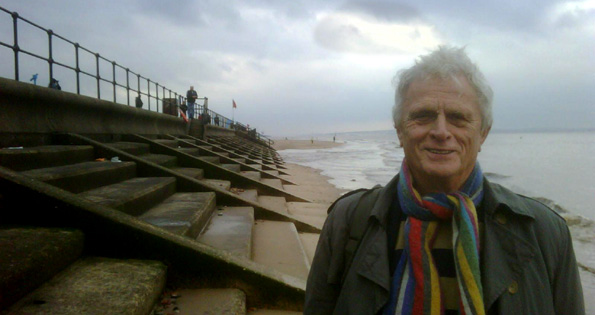
The second, a music documentary with music journalist Pete Paphides, featured the Watford gap motorway service station cafe and "60s pop star hangout" The Blue Boar and contributions from various rockers.

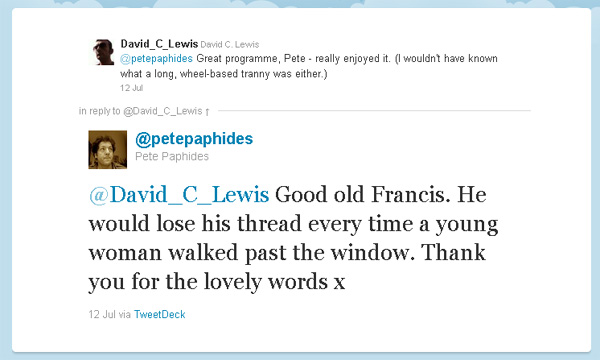
Twitter

On Twitter Paphides reflected on presenting the show and the difficulty of doing the interviews in situ. Apparently Status Quo singer Francis Rossi "..would lose his thread every time a young woman walked past the window."

Supermarket Symphony is available to listen to for another two days on the Radio 4 website. You can also hear Late Nights at the Blue Boar online.

Paul Murphy is the Editor of the Radio 4 blog

*Supermarket Symphony was one of Graham Seed's choices on Pick of the Week but I was away and missed that too. Graham said "it was a little gem of a documentary... specially composed music reveals the surprising beauty of its everyday sounds". There's also a story from the cheese counter that will move even the most hard-hearted supermarket hater to tears.

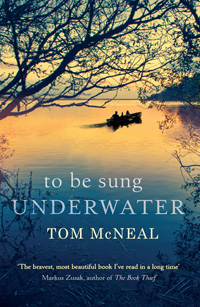
To Be Sung Underwater by Tom McNeal: BBC Radio 4 Extra's Book at Beachtime

Blog comments are currently unavailable. Find out more.

Post categories: , , , 

Tom McNealTom McNeal17:03, Wednesday, 13 July 2011

Tom McNeal's book To be Sung Underwater

Editor's note: Radio 4 Extra have been running a season of readings for the summer, Book at Beachtime. Each of the books in the series has been adapted in five parts and is broadcast on 4 Extra Monday to Friday at 2.30pm and is then available to listen online for seven days afterwards. This week's book is To Be Sung Underwater by Tom McNeal who introduces it on the blog - PM.

First of all, I'm thrilled to have To Be Sung Underwater on Radio 4 and just wish my publisher would fly me over and put me up in the Lake District cottage where my wife and I spent our honeymoon so I could listen to the reading at my leisure. Joking, of course. Mostly, anyhow. Well, not completely.

To Be Sung Underwater began with Willy, who is loosely based on a childhood pal who never quite got over the woman that dropped him cold. My friend never forgot, and his girlfriend never looked back.

The great thing about writing fiction is that you get to change things, so I gave Willy what my friend deserved: a more interesting and less self-absorbed girlfriend who, years later, would remember Willy.

Enter Judith.

Northwest Nebraska is where my mother was born and raised and where I spent my childhood summers even though I was raised in Southern California. I've lived in Nebraska as an adult, and it has the same effect on me that it has on Judith: she breathes more easily there, her senses dilate, sounds and sights seem slightly amplified.

She, like me, is drawn to the place, and yet it isn't her home. It thus seemed to me like the right place for Willy and Judith to meet, fall in love, separate, and come together again one last time, and also the right place to examine what makes a good marriage and a happy life.

Tom McNeal is the author of To Be Sung Underwater

Schedule changes on Radio 4

Blog comments are currently unavailable. Find out more.

Post categories:

Gwyneth WilliamsGwyneth Williams12:10, Sunday, 10 July 2011

Martha Kearney

Presenter Martha Kearney. The World at One will be extended as part of a range of Autumn schedule changes.

Rather a busy week here at Radio 4. It was ten to five on Thursday when we heard about The News of the World closing down. I am in the middle of our annual commissioning round and so was in close conversation with Jeremy Howe, drama commissioner, and Tony Pilgrim, maestro scheduler. We stopped our discussion of Ulysses and thought instead (with sympathy) of Eddie Mair drafting his opening sentence. I could count on him not to say 'hacked to death'.

I wandered upstairs to the Media Show to suggest a special the next day - noon we agreed if Steve were up for it. He was of course (Steve Hewlett that is, the guru for this and other media tales). I was back in time to hear Eddie introduce what has to have been one of the best PM programmes (or any programme) on a breaking story for quite a while. And yes, Steve was with Eddie, to add his sixpence. Then back to, where were we, oh yes ... moving on to Trollope.

This blog is really about Radio 4 this Autumn. We have some new programmes and a schedule change coming up. I have decided to extend The World At One. With the faster development of stories following Today (especially now that Parliament sits in the morning) there simply is not enough time to cover the full news agenda, both foreign and domestic. The excellent Martha Kearney runs out of time when she is just getting going - and besides I have got tired of extending WATO every time a story breaks. This has happened too often since I have been here and listeners get fed up if they are looking forward to other planned programmes.

All these programmes remain, by the way, in the new schedule; they are simply (for the most part) put into the afternoon after the play at three o'clock (details are below). We are also launching new comedy on Sunday night: John Finnemore in his first solo show. I am thrilled to have new political satire from Rory Bremner on Radio 4, Tonight, which starts Thursday nights and will repeat into the Sunday slot, and Sue Perkins with a new panel game, Dilemma - and there's more to come.

We will have a new science programme on Tuesday mornings at nine o clock presented by the physicist, Jim al-Khalili, with the aim of getting us up to speed on the science and scientists that are changing the world we live in - who knows, I might even be able to understand the introduction to my daughter's PhD by the end of the first series. A new 15-minute interview programme called One to One will (some have said, alarmingly) let presenters follow their passions. Americana is closing. It is a terrific programme and has done well, taking us deeper into some of that vast country's untold stories. I will certainly continue to commission programmes about the US - it is after all the world's superpower and has huge impact on us here in the UK - as well as on other parts of the world, including building up our European coverage. Readings will diminish but we will add some on to Radio 4Extra and we will continue to brag about our brilliant Radio 4 short stories and back the BBC National Short Story Award to the hilt.

This job is about choices. I have made some. I hope they keep Radio 4 listeners happy and listening.

Gwyneth Williams is Controller of BBC Radio 4 and BBC Radio 4 Extra

Details of the Radio 4 schedule changes.

  • The last time The World At One duration was changed was in 1998 when it was reduced from 40 minutes to half an hour.
  • The Life Scientific will be broadcast on Tuesday mornings from 9-9.30am, after which One to One will run for 15 minutes.
  • The narrative history series will move from its 3.45pm slot to 1.45pm, following on from The World At One. The first series at the new time will be A History of the Brain, presented by Professor Geoff Bunn.
  • Rory Bremner's show Tonight will be broadcast from Sunday 16th October at 7.45pm (originated Thursday before at 11pm).
  • From November, the short stories (currently running at 3.30pm, Tuesday-Thursday) will be rescheduled with some broadcast at 3.45pm on Friday and some at 7.45pm on Sunday.
  • From next spring, the number of short stories will be reduced from three to one a week on Radio 4. There will also be readings on Radio 4 Extra.
Those programmes that followed The World At One at 1.30pm will, on the whole, be broadcast between 3-5pm, from 7th November. The reorganisation of the afternoon schedule will be run along the following lines:

Explaining 'the Rajars'

Blog comments are currently unavailable. Find out more.

Post categories: , , 

Roger BoltonRoger Bolton13:55, Friday, 8 July 2011

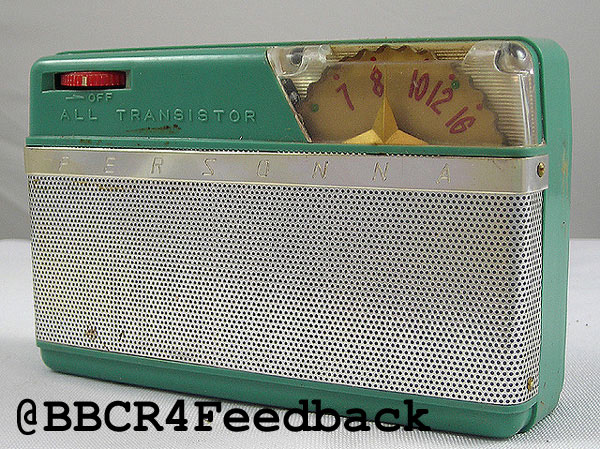
Vintage transistor radio

I always thought that the average Feedback listener was younger than I am, better dressed and more intelligent, and now I know it's true. I also now know that 1.4 million of you tune in to the programme every week.

Well I'm guessing about the intelligence and the quality of clothes, but the audience figures are certainly kosher. How do I know? Because RAJAR told me so. RAJAR stands for the Radio Joint Audience Research, and is jointly owned by the BBC and its commercial rivals.

Every year 100,000 RAJAR surveys are completed, detailing what people listen to and when. Up to now they have used paper diaries, but this month listeners are able to switch to filling in their listening diaries online if they want to do so.

It was the evidence from RAJAR that helped the BBC decide to move many of its children's programmes off radio and on to online, because they found that not enough young people were listening and that the real audience for such programmes had an average age of 48.

Some Feedback listeners wonder how reliable RAJAR's research is so this week I went to see its Chief Executive, Jerry Hill:

In order to see this content you need to have both Javascript enabled and Flash installed. Visit BBC Webwise for full instructions

So how useful is this research to the BBC? Alison Winter leads a team of eight audience researchers in the BBC's audio and music department. I asked her what role the Rajar data plays in her work?

In order to see this content you need to have both Javascript enabled and Flash installed. Visit BBC Webwise for full instructions

By the way, I'm sorry that we couldn't run our much trailed Today feature on Feedback this week. They won't allow me into the programme's offices without a minder, and she was sick this week. We'll keep trying.

Roger Bolton is presenter of Feedback

  • Listen again to this week's Feedback, produced by Karen Pirie, get in touch with the programme, find out how to join the listener panel or subscribe to the podcast on the Feedback web page.
  • Read all of Roger's Feedback blog posts.
  • Feedback is on Twitter. Follow @BBCR4Feedback.
  • RAJAR (Radio Joint Audience Research) is jointly owned by the BBC and commercial radio trade body the Radio Centre. Under the existing, paper system, participating listeners are asked to record their radio listening in quarter-hour time blocks for one week.
  • The most recent RAJAR figures for 'linear listening', not including on-demand listening or podcasts, for the first quarter of 2011 are on the RAJAR web site. The next Rajars, for the second quarter, are due on 4 August.
  • There's a press release describing the new online diary on the RAJAR web site (PDF).
  • Picture by Roadsidepictures. Some rights reserved.

The History of Titus Groan: Radio 4 Classic Serial

Blog comments are currently unavailable. Find out more.

Post categories: , , , , , 

Jeremy Mortimer10:00, Thursday, 7 July 2011

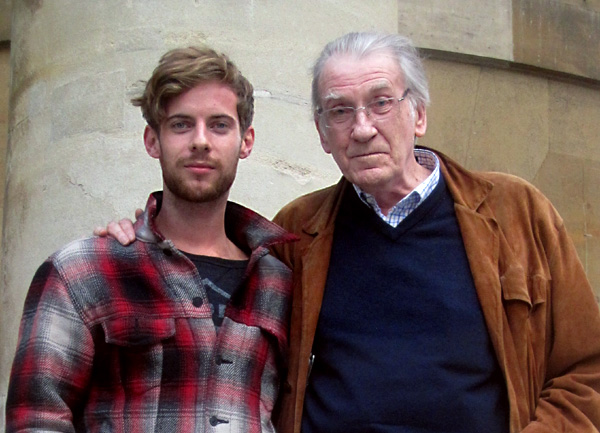
Titus Groan (Luke Treadaway) with the Artist (David Warner).

Brian Sibley is a bit of a legend in radio. Presenter (Radio 4 arts programme Kaleidoscope and the World Service arts magazine Meridian), contributor and playwright, he paired up with writer Michael Bakewell on the classic dramatisation of Lord of the Rings, he did the complete Narnia series, and back in 1985 he did a classy, award-winning adaptation of Mervyn Peake's Titus Groan and Gormenghast for Radio 4.

So when he got in touch in January 2010 to suggest that we extend the Titus franchise with Peake's third book, Titus Alone, and with the as yet to be published conclusion to the series - Titus Awakes (written by Peake's widow, Maeve Gilmore) - I just had to see if I could get Radio 4 to sit up and take interest.

And did they. Jeremy Howe, Radio 4 drama commissioner, suggested that we present all four books, in an epic 6-hours of the classic serial. The decision came in June last year, and, with the full backing of the Peake estate, Brian started work.

We had lots of tricky decisions to take - how to keep Peake's extraordinary prose, how to split the episodes, how to manage the tricky transition when Titus leaves Gothic Gormenghast and enters the stream-punk sci-fi world of Titus Alone. Brian decided that he wasn't even going to look at his 1980s scripts. He was going to start again from scratch. We devised a punishing script delivery schedule, and booked a twelve-day recording stint for late May.

Irma Prunesquallor (Tamsin Greig) with Professor Bellgrove (William Gaunt )

On the 25th May there was a cast of twenty actors gathered in a room in Broadcasting House for the first read-through. And what a cast: Miranda Richardson confessed to being a die-hard Peake fan, Paul Rhys rehearsed a few owl noises, James Fleet and Tamsin Greig tried out a few Prunesquallor laughs, and Fenella Woolgar and Claudie Blakley started talking (and thinking) in unison as the identical Groan twins.

Steerpike (Carl Prekopp) fighting with Barquentine (Gerard McDermott)

The recording schedule was like something out of Gormenghast's ritual box, literally hundreds of scenes, featuring dozens of deaths, a number of falls from great height, fires, floods and mayhem in a menagerie. But at 6.00pm on Saturday 11th June, David Warner and Luke Treadaway staggered out of the studio and posed for a final picture on the steps of All Souls. The recording was done.

Roger Goula is an amazing composer. His music paints Titus's world in a fantastic array of aural colours. And Peter Ringrose has matched the music with a brilliant sound design. I hope that you all enjoy listening to the fruit of their labours, and that you enjoy entering for a while into Mervyn Peake's extraordinary world.

Jeremy Mortimer is Executive Producer Audio Drama

Leader Conference: What will the papers say?

Blog comments are currently unavailable. Find out more.

Post categories: , , , 

Hugh LevinsonHugh Levinson15:40, Wednesday, 6 July 2011

Andrew Rawnsley

Editor's update: There are some great pictures and a summary of the discussions from the first programme in this series of Leader Conference on the website - PM.

Tonight Andrew Rawnsley chairs the first of four live studio debates called Leader Conference. The programmes will follow the format of the main daily editorial meeting that takes places at many of Britain's leading newspapers, known as the leader conference. It's where the senior journalists get together to argue about the editorials which the paper will publish the next day are going to say - whether it's a Times leader or what The Sun Says.

Leading articles are one of the most important features of any newspaper's pages. Yet how they come to be written remains essentially a mystery to all but the participants.

We aim to cast light on that process over the coming weeks. But this is also debate to a purpose. As with most newspapers, we're going to talk about three subjects in the news which we think are important. Often - but not always - one topic will be domestic, one international and one will look at the news in a lighter vein. At the end of each discussion one of the journalists will be invited by Andrew, in his role as editor of what we might call The Daily Rawnsley - to summarise what the leading article will say―and why.

Over the coming weeks, Andrew will be joined by top figures from across Britain's newspaper industry. These will include writers from the tabloids and the broadsheet papers, from London titles and those based in other parts of the UK, from those with a right-of-centre political perspective and those with a left-of-centre one.

The Daily Rawnsley has no allegiances. Its readership is the Radio 4 audience and what matters in Leader Conference is the persuasiveness of the arguments that are made not the force with which they are put. That is the essence of live discussion - but here there is a premium on resolution of the debate to reach a settled view on the issues.

One thing this series won't be is a dour survey of tired old opinions. Andrew Rawnsley will present an entertaining, often amusing and always lively programme - helped, we hope, by Radio 4 listeners. We'd like your views on what our leaders should be saying. You can e-mail us at: [email protected] or join us on Twitter at #Radio4.

So, let the debate commence...

Hugh Levinson is an editor in BBC Radio Current Affairs

Torchwood: The Lost Files on Radio 4

Blog comments are currently unavailable. Find out more.

Post categories: , , 

Kate McAll Kate McAll 08:00, Wednesday, 6 July 2011

Torchwood cast

Torchwood fans don't miss much.

Earlier this year when Gareth David-Lloyd suddenly cancelled a gig with his band to go to Los Angeles, where Torchwood: Miracle Day was being filmed, the rumours soon started flying.

In fact, he was being flown out by BBC Cymru/Wales Radio Drama to record three new Torchwood radio plays for Radio 4, all set pre-Miracle Day.

Just like the last time we did Torchwood radio, getting the cast together in one place was going to require a small miracle. So, with John Barrowman, Eve Myles and Kai Owen in LA, it made sense to take Gareth to them. The television shoot was about to wrap and I had the privilege of joining the cast on the Warner Brothers lot for the last day of filming. You make a left on Forest Lawn Drive through Gate 7 into film-making history. It's hard not to be impressed.

There was 'Captain Jack' stepping out of his trailer, while 'Gwen', straight from hair and make up and looking gorgeous, flew by on a golf-buggy. On set Bill Pullman stands in the shadows in some bruising looking make-up.

Then, after the all night shoot, and a brief rest for the actors, it was straight into Mark Holden's Radio studios in West Hollywood. We're joined by Hollywood royalty Juliet Mills, Martin Jarvis and Ros Ayres. Five days later we emerge blinking into the sunlight - and three plays under the umbrella title Torchwood: The Lost Files are recorded and ready to be taken back to Cardiff.

Oh, and there's a very special surprise for Ianto fans in one of them!

Kate McAll is Executive Producer, Radio Drama at BBC Wales

Radio 4 Extra's Book at Beachtime: To the Moon and Back by J Mansell

Blog comments are currently unavailable. Find out more.

Post categories: , , 

Jill MansellJill Mansell15:30, Tuesday, 5 July 2011

Editor's note: Radio 4 Extra have been running a season of readings for the summer, Book at Beachtime. Each of the books in the series has been adapted in five parts and is broadcast on 4 Extra Monday to Friday at 2.30pm and is then available to listen online for seven days afterwards. This week's book is To the Moon and Back by J Mansell who introduces it on the blog - PM.

It really is the weirdest thing. One minute these people don't exist. The next, I've invented them, put them down on paper, breathed life into them. For a whole year, I'm the only person in the world who knows what they're like. Then they appear in book form and hundreds of thousands of people suddenly get to know and care about them too.

The characters that sprang from my brain will make these readers laugh and cry and miss their stop on the bus. Isn't that amazing? Sometimes my invented characters inspire people to change their own lives in quite radical ways. That's a responsibility I never thought I'd have to bear...

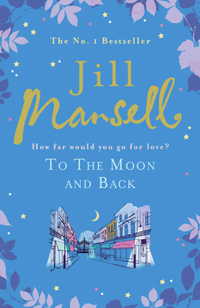
Book cover: To the Moon and Back

The other aspect of writing that never fails to amaze me is the way I'm able to fly through some scenes... sparkling dialogue pours out of its own accord and it all feels so effortless it's a joy. The next day, every word has to be squeezed out like juice from a desiccated lemon and getting to the end of the page feels like the hardest thing in the world...the storyline is utter dross and the characters have all died on their feet.

And yet, when I or my editor reads the finished manuscript, it's impossible to tell which bits were easy to write and which gruellingly difficult. (For this, I am grateful!)

I'm so thrilled to be having my characters brought to life for Book at Beachtime by Radio 4 Extra. They probably won't sound the way they did when they were inside my head, but that doesn't matter - they might be better!

And I can't wait to hear how the scriptwriter will abridge and reshape the story, a whole other skill in itself. To the Moon and Back is one of my favourite novels and it's received the best reviews I've ever had, so I can't wait for more people to meet the characters in it.

My own longstanding partner isn't a great reader but he always listens to the plays on Radio 4 so he'll finally get to hear some of my work when this airs. I fully intend to shackle him to his digital radio and force him to listen to it!

Jill Mansell is the author of To the Moon and Back

Reith lectures 2011, lecture two - Aung San Suu Kyi: Dissent

Blog comments are currently unavailable. Find out more.

Post categories: , , , 

Jennifer ClarkeJennifer Clarke14:20, Monday, 4 July 2011

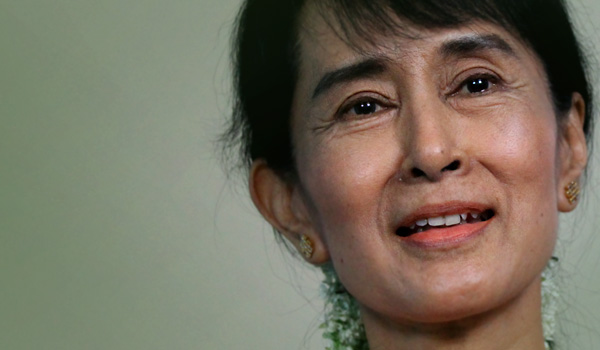
Aung San Suu Kyi

This morning we held a live chat during Aung San Suu Kyi's second Reith Lecture, Dissent. Lots of people joined in, by typing comments directly into the live chat, by emailing the programme via the Reith pages on the Radio 4 website and by tweeting using the hashtag #reith.

You can replay the resulting conversation below (it might make sense to listen to the lecture while you're doing so) and subscribe to the Reith 2011 podcast.

Listen to or download the podcasts of the first two 2011 Reith lectures from the Reith podcast page.

You can also watch a video of Aung San Suu Kyi's second 2011 Reith lecture. A transcript of Aung San Suu Kyi's second lecture is available as a PDF.

Jennifer Clarke is senior multiplatform producer, Radio Current Affairs

Radio 4 Bookclub: The Music Room by William Fiennes

Blog comments are currently unavailable. Find out more.

Post categories:

Jim Naughtie15:30, Sunday, 3 July 2011

Editor: Radio 4's Bookclub, where authors discuss their best known book with readers, is broadcast on the first Sunday every month and is presented by James Naughtie. Jim writes a monthly newsletter that goes out a few days before broadcast which we also post on the Radio 4 blog.

William Fiennes

This month Bookclub talks to William Fiennes about his book The Music Room. More details of how you can listen to this episode of Bookclub and the extensive archive are at the bottom of the page - PM.

One of the qualities of The Music Room that I most admire is the way that William Fiennes manages to write the story of his older brother - who died as a result of epilepsy when he was 41 - without a touch of mawkishness, nor as he put it to us on Bookclub by turning it into a 'misery memoir'.

Holding the line is difficult when you're talking about something so intimate - a family life shaped by a mysterious and sometimes frightening illness, the feeling of loss that is still with the author, an attempt to recreate the atmosphere of childhood. I think he gave our readers the clue when he was asked why he thought it read like a novel and replied that although it was about someone real, whom he knew and whose life he experienced first-hand, it was a book of the imagination, in which particular images created a life around themselves.

He cited the opening of the book in which a firework explodes in church and he uses the image to explain how the book works - as the discovery of consciousness exploding in the world, about his brother Richard, the family, himself.

The first thing about the family is that it is unusual. William was brought up in Broughton Castle (though it is never named in the book) and padded through its halls as a boy looking at clanking suits of armour and vast portraits, pursued by (friendly) ghosts. There was a moat, and a history that turned the place into a tourist haunt and a place where filmmakers came to recreate the past. Not a normal place, and Richard - whose illness William only came to understand after his death - was what he calls "a novel person", whose story is the inspiration for a book which William describes as "a way of remembering, loving."

Part of the pleasure of life, he told us, is that there is good and bad. The bad times, when Richard was in the grip of his illness and found it hard - as William puts it - to judge his own strength have to be part of the story, because it would have diminished him to leave them out. "This book is the grown-up me trying to approach Richard," he says.

The Music Room is not easy to define, like The Snow Geese which was William's first book and was shortlisted for the Samuel Johnson Prize for Non-Fiction. The title is taken from the room in the castle where William was happiest as a boy and where he played. "It is an important place because there are strong memories of Richard in here. He would sing, play the double bass there....the tuning fork of him was sounded in there." And, because it is written as a recollection of a life that has ended, it includes William's own exploration of the history of neuroscience, to discover the things he didn't know about brain disorders when his brother was alive.

He was asked an intriguing question by one of this month's group of readers, about the recurrence in the book of the idea of thresholds - between the conscious and the unconsciousness, the private world of the castle to the public world outside, the feeling of swimming in the moat with pike nibbling at your feet and then rising to the sunlight above. He acknowledged that the idea was one he'd thought about a great deal and that it did represent one of the themes in the book. "One of the stories is about a young boy, the 'me' figure, pushing through a door in the music room into this world which is rather strange and threatening and full of ghosts and the subconscious."

The consequence is that The Music Room is about the writer's journey - into his past and also, in the present, into the world that he did not understand when he wishes that he had. Richard - 'Rich' to William - emerges as a figure of great complexity and the focus of great affection. "This book is about caring for people close to you and the places you live in."

I do hope you enjoy the book, and our discussion, on Sunday July 3 at 4 o'clock on BBC Radio 4 and again on Thursday July 7 at the same time.

Our next recording is in Edinburgh on September 19th, when Iain Banks will be talking about his first, remarkable, novel The Wasp Factory.

If you want to be part of the reading group on that occasion, or at a future recording, just visit our website.

Happy reading.

James Naughtie presents Bookclub

Feedback: Whatever the weather...

Blog comments are currently unavailable. Find out more.

Post categories: , , , 

Roger BoltonRoger Bolton13:46, Friday, 1 July 2011

Jack Armstrong, one of the team of weatherman from the Meterological office, 1963

It was raining cats and dogs in London this week, with thunder crashing around Wimbledon and great forks of lightening slashing through the black clouds. That is when the sun wasn't beaming out of a flawlessly blue sky.

One day I was sweltering on the Tube, cursing the fact that I hadn't brought a bottle of water with me, while the next I was hiding from a cloudburst in a shop doorway, much to the irritation of the owner.

Changeable weather I think you'd call it.

And of course I blamed the weather forecasters for not warning me about it. (They had of course, I just hadn't listened, or rather understood what I was being told.)

In the UK we always seem to be blaming the weather and its messengers, while making more and more demands of the forecasts.

"Please tell us exactly when it will rain at the Test match", is one such query the BBC's weather team received recently.

Mind you some listeners are baffled by forecasts that include phrases like these:-

"Showers will squeak up",

"We'll have a weatherfront sitting down", and

"We are going to have a sandwich of weather today."

For Feedback this week I went to the BBC's weather centre, which is not located on some blasted heath or exposed coastline, but occupies a small space in the now doomed Television Centre in west London.

Apparently the weather team will be some of the last people to leave that famous doughnut when it closes in the next year or so.

I walked along the corridor past the gleaming photos of the predominantly young forecasters, dreaming of the long lost days of Bert Foord and Michael Fish, to meet the people who really know what pressure is, not least when they have to cut a bulletin in half with virtually no warning because a Today interview has over run.

I talked first to one of the Weather Centre's clients, the managing editor of Radio 4, Denis Nowlan.

In order to see this content you need to have both Javascript enabled and Flash installed. Visit BBC Webwise for full instructions

Roger Bolton presents Feedback on BBC Radio 4

  • Listen again to this week's Feedback, produced by Karen Pirie, get in touch with Feedback, find out how to join the listener panel or subscribe to the podcast on the Feedback web page.
  • Read all of Roger's Feedback blog posts.
  • Feedback is on Twitter. Follow @BBCR4Feedback.
  • The picture shows Jack Armstrong, one of the team of weathermen from the Meterological office in 1963.

More from this blog...

Categories

These are some of the popular topics this blog covers.