Archives for May 2011

Classic serial - Plantagenet: He that plays the king...

Blog comments are currently unavailable. Find out more.

Post categories: , , 

Jessica DromgooleJessica Dromgoole13:07, Tuesday, 31 May 2011

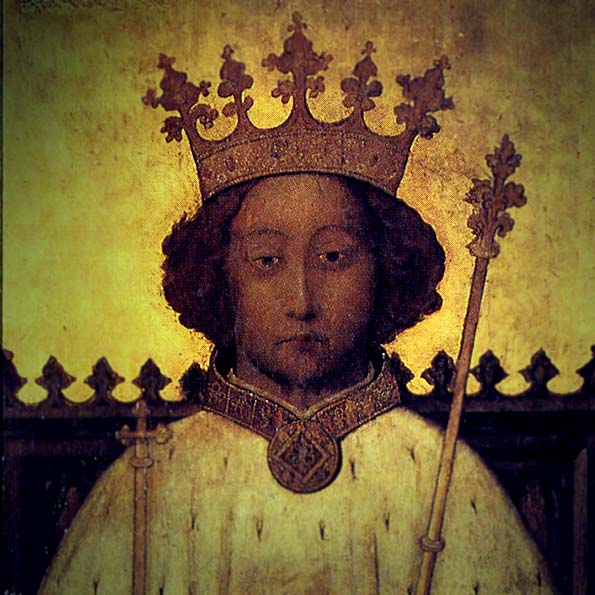
Richard II

A portrait of Richard II

Plantagenet, alone in the great roll call of the Classic Serial, is based on a book that is almost impossible to try to get through. Holinshed Chronicles, the Elizabethan equivalent of the Ladybird Book of Kings and Queens, is a very tough and uncompromising read. Buried beneath the careful and dispassionate prose, however, are some extraordinary dramas. The death of Gaveston, Edward II's favourite, is described thus:

"When the king had knowledge hereof, hee was wonderfully diſpleaſed with thoſe Lordes that had thus put the ſayde Earle vnto death, making his vowe that he would ſee his death re|uenged: ſo that the rancour which before was kindled betwixt the king and thoſe Lords, began now to blaſe abrode, and ſpred ſo farre, that the king euer ſought occaſion howe to worke them diſpleaſure."

This gave Mike Walker enormous freedom to take these narratives his own way. In each of the three plays in this bundle - Edward I, Edward II and Richard II - he has found a story that is true both to the larger than life understanding of royalty and to the humanity of the people and relationships depicted. Which made these audio-comic-books-with-feelings enormous fun to work on.

Jessica Dromgoole is a Radio Drama producer
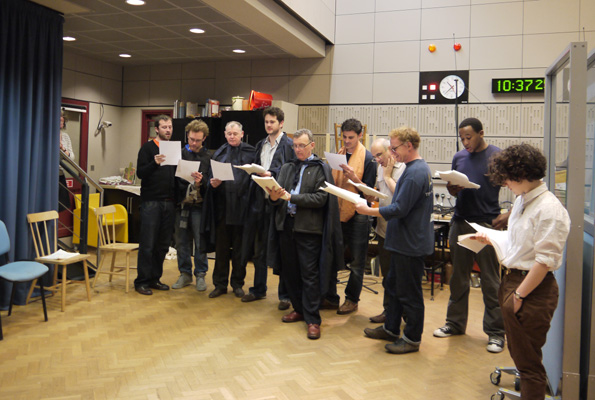
The company of actors

Caption: The company softly intone medieval latin to recreate the sound of Westminster Cathedral behind Edward and Margaret's wedding.

  • Episode 1: Edward the First - Old Soldiers is available to listen to on the Radio 4 website.

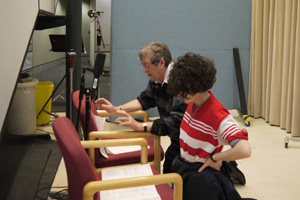
    Philip Jackson and Ellie Kendrick

    Caption: Philip Jackson and Ellie Kendrick kneel at the microphone together to create Edward and Margaret at prayer.

    Philip Jackson on playing Edward I:

    "He was very tall, which is not a great help on the radio, and yet physical characteristics do inform the way you play somebody even though you can't see them. So, yes, I played him as a tall man! I have rarely played kings, and this is the wonder of radio: that actors are able to do things they would not do in other media.

    I tried to assume a level of authority in the public scenes, but my favourite moments were really the more domestic scenes with Ellie Kendrick and Sam Troughton, and this is where Mike Walker's writing was superb. All three of us responded to the intimacy of these moments and we formed a strong sense of real people in real situations, and of people trying to live their lives in just as identifiable a way as in a more naturalistic, modern context."
  • Episode 2: Edward II - The Greatest Traitor

    Jeremy Mortimer, Trystan Gravelle and Hattie Morahan

    Caption: Jeremy Mortimer works on the script with Trystan Gravelle and Hattie Morahan. Hattie's skirt is a prop to create bustle when she moves, and the floor is strewn with pebbles to help recreate the sound of a beach.

    Hattie Morahan loved the challenges of playing Isabella:
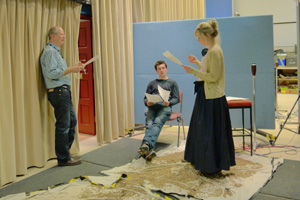
    "She's known today to have been a very formidable presence in the court, but what was fun was exploring the context of her boldness. She finds herself completely isolated in the very male world of the court, and is marginalised by her husband, the King, so has to engage in political conspiracy in order to survive. She's straight-talking, tough, irreverent and passionate; a devoted mother, ruthless with her enemies and those less intelligent than herself, and eventually (though not without a fight) an impassioned and reckless lover."


  • Episode 3: Richard II - And all our Dreams will End in Death

    Patrick Kennedy and Blake Ritson

    Caption: Richard II (Patrick Kennedy) and his nemesis Henry Bolingbroke (Blake Ritson).

    Patrick Kennedy on playing Richard II:

    "The first thing that struck me once I'd got over the fact I wasn't being asked to play Shakespeare's Richard II, was how funny Mike Walker's script was. Sometimes when you get a radio script you can't help thinking it would help if they could see you but with Mike's script the voice was so strong, it was sardonic, funny and elegiac all at once and I felt it would convey all you needed. I suppose there was something about the petulant, effete, spoilt, weak, cunning little Richard that Jessica and Jeremy thought I was right for and I hope I lived up to expectations.

    Blake Ritson played his arch-rival, Henry Bolingbroke, who is "A monster. I channelled the thuggish spirit of a hundred horrid rugger buggers I encountered at school. Lord Flashheart without the charm and added sneer. The character aged over 20 years and no need for prosthetics - I love doing radio plays!"
  • Read The Guardian's Radio Review:Classic Serial - Plantagenet by Elisabeth Mahoney:
    "...There is no resisting the Classic Serial - Plantagenet (Radio 4). Mike Walker's retelling of this dynasty's story swoops you up with magnetic narration - you're gripped, even if you know how it ends - and bold production. His portrait of Edward I opened with a big, ominous dollop of music and dramatic juxtaposition of enemies..."


Boy Racers: From Karting to Formula One

Blog comments are currently unavailable. Find out more.

Post categories: , , 

Tamsin Barber12:29, Monday, 30 May 2011

Editor's note: While Lewis Hamilton might be in the news today for the wrong reasons, Boy Racers - available to listen to on the Radio 4 website for the next seven days - follows the same arduous path to the top that Hamilton took and hears from some of the drivers looking to become the stars of tomorrow. (PM)

racing car

Britain has a long and successful association with motorsport and Formula One in particular, boasting champions such as Jackie Stewart, Nigel Mansell and Lewis Hamilton.

For someone who passed their driving test five years ago - and hasn't driven since - I wanted to find out how someone becomes a professional racing driver and why they want to drive round and round a track at eye-watering high speeds for a job.

There are many routes to F1, but most young drivers start out in karting, initially as a hobby encouraged by their fathers. I found seventeen year old Alex Lynn and eighteen year old Oliver Rowland, through the British Racing Drivers' ClubSuperstars scheme, a mentoring programme for up and coming drivers.

Having made the transition from karts to cars, both are in the early stages of their professional racing career, with the ultimate goal being Formula One World Champion. Team-mates - and rivals - they compete in the same category: Formula Renault UK, the same route that Lewis Hamilton followed.

I first met the boys in March at a testing session early one misty morning at Rockingham circuit in Corby, Northamptonshire. This is part of the training before the first race weekend of the season at Brands Hatch in Kent.

Never having been to a race track or seen any sort of live motorsport, I wasn't sure what to expect. The cars, which are like smaller versions of F1 vehicles, were lined up from the various teams. Each car costs sixty thousand pounds and has two mechanics that spend all day tweaking the engines, hoping to make the car go that all important hundredth of a second faster.

Training is gruelling - hours are spent in the gym - drivers need to be fit enough to be able to turn the steering wheel at high speeds and also maintain their weight so they can fit into the small cars. Most of their time is spent travelling up and down the country to various training facilities, working closely with the team to improve the car, as well as psychological and media training.

The noise at Brands Hatch, cars zooming past at 150mph, and competitive atmosphere creates an exhilarating event, and the appeal of the sport became clearer. What struck me and my presenter Aasmah Mir most, was the complete dedication to training and driving. For the mechanics, drivers and their families, motor racing is a way of life. When talking to Alex and Oliver about their desire to win - the love of driving instantly comes across and their eyes light up at the thought of competing.

Formula One only has 24 drivers, so competition is tough, but after watching these two teenagers, I reckoned one of them might just have what it takes to make it.

Tamsin Barber is the producer of Boy Racers.

Lenny Henry on Radio 4: What's So Great about Snooker?

Blog comments are currently unavailable. Find out more.

Post categories: , 

Lenny HenryLenny Henry09:43, Saturday, 28 May 2011

Video: Lenny Henry being interviewed by John Parrott at the Crucible during the making of 'What's so Great about Snooker?'

Editor's note: In this three-part series Lenny Henry explores the iconic status of people or things held dear by many.

"Yeah, I'll blog about snooker", I said to Paul Murphy, the blogmaven at Radio 4. Then there was a long silence as my fingers lay dead and wrinkly on the computer keyboard like dead wrinkly things that didn't know what to do next.

I'd actually recorded the programme so I knew what I thought. I'd spoken to John Virgo and teased him about all the funny phrases they use in snooker like 'kissing the pink' and 'they're playing safeties' and 'I'm gonna punch that guy in the white gloves. Why's he keep putting the balls back on the table after they've been knocked in the holes?' You can tell I'm a snooker fan, can't you?

My experience at the Crucible revved me up no end, I have to admit. First day of the world championships and my producer Simon Elmes and I are sitting right down the front next to the action. Two tables are set up side by side and four players are announced and take their stations at the tables -two at each. Then a big partition comes down and splits the playing area into two... and two games begin. For those of us on the left hand side, there was a strange frisson of envy every time we heard a collective sharp intake of breath or a smattering of applause from the right hand side. Our game was pretty good - but the one on the right sounded like a right old ding dong. We'd been ripped off.

The other thing was that the commentators are incredibly excited fellows, broadcasting for the benefit of those listening in on specially rented ear pieces and also for radio and television. Every time a halfway decent shot is achieved you can hear this sort of 'GET IN!' or 'YES, NOW THAT'S SNOOKER!' emanating from several dozen ear pieces, really loud. Quite a few audience members reel back with blood seeping from their ears as they react to the cacophony.

Your first day at the Crucible theatre, this legendary snooker venue, is a real learning experience. There are loads of blokes as you'd expect; but also quite a few women spectators and a fair amount of little kids too. I notice that as the games drag on, as they invariably do, there is completely unashamed yawning going on. The kind of yawning that, if you were at a dinner party telling a good story and someone did it, you'd actually lean across the table and slap them for being so rude.

At the snooker no one cares as long as it's a silent yawn. Any more noise though and I suspect you'd get a snooker cue up the nose hole.

The reason I'm here is for my radio show 'What's so great about?'. In the course of two years we've assayed Samuel Beckett, Jackson Pollock, Method acting, Shakespeare's plays, and lots of other things. The new series features Snooker, Chaucer and The Pogues. Three subjects I know absolutely nothing about. Well, I say that... Snooker was something my mum would watch if it was on - particularly during the Ray Reardon, Terry Griffiths, Dennis Taylor, Steve Davis period. We'd all have to watch and listen to her yelling out (as she also did when she watched any Western movie that featured John Wayne) 'G'wan Steve Davies! Him good yu see?'

So, I guess I'm interested in the game because there's a potent memory of watching it with my mother, but also, for the uninitiated, there is something incredibly tactile about those reds, pinks and blues, the green baize - all that extra stuff - the triangle, the rests, the cue extensions. For some people like Terry Griffiths - snooker, and all the accoutrements that go with it, is an enchanting game - a dance, almost a ritual.

Shame there's no black players apart from Rory McLeod. There was a guy called Michael Gordon back in the day, and there's someone called Joseph Rhone but that's it. There are women players but not enough to make a dent on the world championships.

It's still a very blokey, very vanilla game. But hey, what do I care? I'm a footie (although not that much), basketball ( I watch it when it's on) kinda guy. I can't play snooker to save my life, and the one time I was brave enough to ask for lessons at the Crucible, backstage in the 'practice area' this grumpy scottish guy called Stephen Hendry practically told me to bog off.

Honestly. But for the stray 'D' we're practically family and he wouldn't even let me break.

Damn you Hendry...

Lenny Henry presents What's so Great...?

Bringing Vasily Grossman's Life and Fate with Kenneth Branagh to Radio 4

Blog comments are currently unavailable. Find out more.

Post categories: , , , , , 

Alison Hindell14:57, Friday, 27 May 2011

Editor's note: It's been known for a while that Radio 4 were adapting Vasily Grossman's Life and Fate, a great passion of Radio 4's former controller, to run over one week. It's been announced today that Kenneth Branagh will be playing the central role of Viktor.

Producing the Radio 4 dramatisation of Life and Fate has been something of a revelation to me. The brainchild of Mark Damazer, former Controller of Radio 4, for whom it is the greatest novel of the twentieth century, it was for me entirely unknown.

Most listeners are in the same boat as me although, as a Russian speaker, I was surprised I didn't even know the title. So I read it. And felt fairly convinced it was an impossible challenge. Fabulous prose, complex characters, beautifully translated but too long, too many characters to follow, what slot could possibly accommodate it?

But with the help of two experienced radio dramatisers, Jonathan Myerson (who had actually read the book) and Mike Walker (who hadn't, but read it fast) we have found a way round some of those obstacles.

The novel is a sprawling epic, telling the loosely interconnected stories of members of one Russian family and their different experiences during the Battle of Stalingrad, the battle which clinched the defeat of the Germans in WWII. It works almost like a series of longish short stories: the number of characters named in the novel runs to over a thousand though the timespan is only a few months (Sept 1942 - April 1943). And the locations range from the frontline in Stalingrad to the Lubyanka in Moscow, from a Russian labour camp to a Nazi gas chamber, from Kuibyshev to Kazan, from the northern forests to the river Volga and more.

But the storylines of each group of characters largely stand alone so it is possible, for example, to read only the chapters about Viktor (the character most closely based on the author himself, Vasily Grossman) and get a complete story. And that structural device turned out to be the key to unlock a dramatic structure.

We decided to take over every drama slot in a single week and, rather than a straightforward linear retelling of the book, try and make each play stand alone by focussing on one set of characters. So we hope listeners can dip in and out without feeling they have lost the thread if they miss an episode or two (though we are also offering chances to catch up via series stacking and downloads for those who want the full experience).

I've recorded the first three hours since last June, an unusually long-drawn-out experience for radio drama which tends to work closer to the wire than that. But we wanted to benefit from several different groupings of the Radio Drama Company, our actors' repertory, and the dramatisers needed time to write the different scripts. Jonquil Panting will direct another three hours or so in June and then I will do the final parts in July - in which, I am thrilled to say, Kenneth Branagh will take the key role of Viktor.

I have now read the book three times though still not in Russian. It's not hard or obscure though I will admit there aren't many jokes. There are such compelling characters, such sharp, tiny detail, such profound but clear comments on life - and indeed fate - that it lives up to re-reading. I hope our dramatisation can distil some of the essence of what has become my Desert Island book and raise the profile of this little-known treasure.

Alison Hindell is Head of Audio Drama

  • The eight-hour dramatisation of Life And Fate by Vasily Grossman will take over every drama slot (apart from The Archers) across a week in September.

Feedback: Slut walks and the Moral Maze

Blog comments are currently unavailable. Find out more.

Post categories: , 

Roger BoltonRoger Bolton13:47, Friday, 27 May 2011

I have chaired a couple of editions of the Moral Maze on Radio 4 and it was terrifying - and not just because it was live and not recorded.

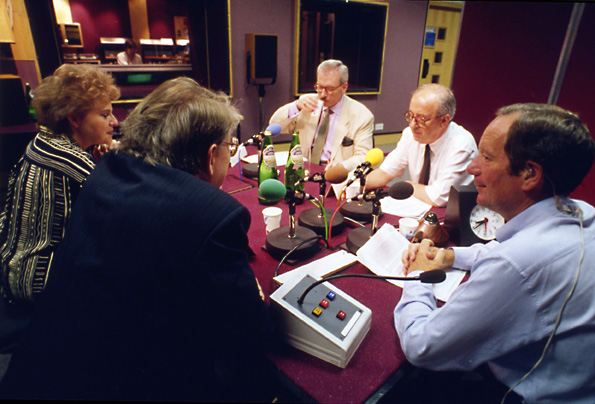
Imagine trying to control all those formidable and passionate intellects on the panel; especially when they spend most of the programme with their back to you, facing the witness they are interrogating. (The Maze table is a rectangular one. The panellists sit two aside and the witnesses are at the opposite end to the (quaking) presenter.)

Michael Buerk, Edward Pearce, Janet Daley, David Starkey and Rabbi Hugo Gryn from 1994

Editor's note (PM): Although this was taken many moons ago it gives you an idea of the set up that Roger refers to. Caption info: "The Moral Maze : 1994 01/01/1994 © BBC Picture shows - (clockwise from front) Michael Buerk, Edward Pearce, Janet Daley, David Starkey and Rabbi Hugo Gryn in "The Moral Maze" (TX: 15, January 1994)."

Michael Buerk seems to have a natural authority which imposes itself on the most recalcitrant panel member. I was reduced to tugging at their elbows and on one occasion told Dr David Starkey not to be rude. I shall never forget the slow motion swivel as he turned towards me, indignation puffing out his cheeks and chest. He'd been described as 'the rudest man on radio' and wore the badge with pride, as Gilbert Harding had done many moons ago.

Dr Starkey is no longer a panellist but Melanie Phillips does moral indignation as well as anyone.

But did she go too far last week when the subject was 'Slut Walks' and the witness she was interrogating was Elizabeth Head from the London Slut Walk?

Here is an example of their exchanges along with views from some Feedback listeners. The stand in chairman is David Aaronovitch.

In order to see this content you need to have both Javascript enabled and Flash installed. Visit BBC Webwise for full instructions

Many listeners were in no doubt that Ms Phillips had overstepped the mark. Actually I am being too polite.

One listener accused her of being 'absolutely obnoxious, sneering, personally insulting and patronising in the extreme', and that was just for starters.

The executive producer of the Moral Maze is Christine Morgan who is also Head of Radio Programmes at the BBC's Religion and Ethics Department. I asked her if she thought Melanie Phillips had gone over the top?

In order to see this content you need to have both Javascript enabled and Flash installed. Visit BBC Webwise for full instructions

Also in this edition of Feedback I talked to the Controller of English Regions, responsible for local radio stations and having to repel cost cutting boarders as the BBC works out how it can adjust its spending to the reduced licence fee.

Next week I will be in Carlisle, visiting Radio Cumbria to see whether it truly serves its community and where savings might be made. They are hosting a phone in with their editor Nigel Dyson and myself and will be taking calls from their listeners but I'd like to hear from you as well if you have a view on local radio. If you'd like the chance to take part in that phone-in you can ring 0845 3051122 any time between 9 and 10am on Tuesday 31st May, you'll be charged at the local rate from a BT landline but calls from mobiles will vary between operators. We'll be broadcasting the best bits in next week's Feedback.

Or email me at the usual address, [email protected], and tell me what you think of local radio or any other BBC radio station.

Feedback also wants to hear from Britain's young radio critics. Do you listen to the radio? Do you have opinion about it? We want to know what you think! If you are aged 13 or under then send us no more than 250 words saying what you love (or hate) about any BBC radio programme. You can write to

Feedback,

PO Box 67234,

London SE1P 4AX

or email [email protected]. Please include contact details for your parent or guardian. The deadline Monday 6th June.

Roger Bolton is the presenter of Feedback

The Today programme: The "radio show that one in eight of us now tune in to"

Blog comments are currently unavailable. Find out more.

Post categories:

Paul MurphyPaul Murphy17:45, Thursday, 26 May 2011

Jon Henley's written a profile of Radio 4's Today programme in The Guardian:

The Today programme is, of course, a legend, but now we know it has never been more popular: the latest figures put its audience during the first three months of this year at 7.03 million, 600,000 more than last year and an absolute (if slightly controversial) record.

This seemed like enough reason to publish a few pictures from the earlier days of the programme.

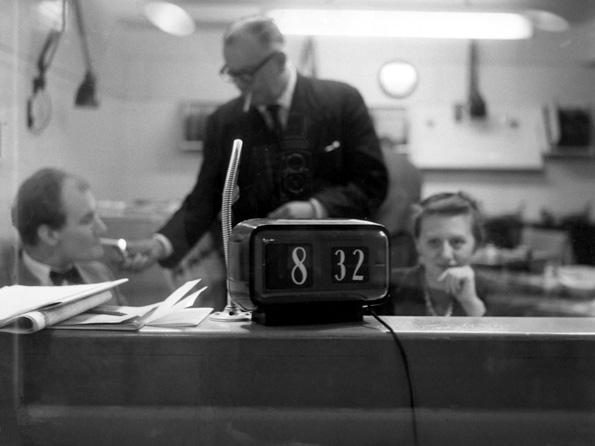
Robert Craddock, producer, John Sykes and Maureen Milton-Dinnis, studio manager from 1959

Caption reads: "Today : 1959 07/05/1959 © BBC picture shows - L-R: Robert Craddock, producer, John Sykes and Maureen Milton-Dinnis, studio manager. The comperes view from the studio into the control cubicle, as the time-check clock shows that the programme is about to finish."


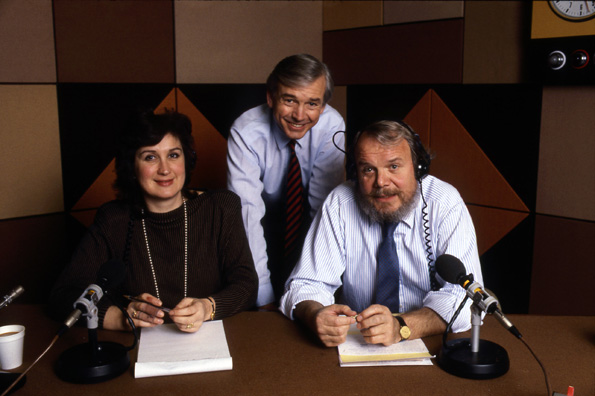
Jenni Murray, John Humphrys and Brian Redhead

Caption: "Today : 1986 (Radio 4) 16/12/1986 © BBC Picture shows the new line up for Radio 4s early morning Today programme (l-r) Jenni Murray ; John Humphrys and Brian Redhead."


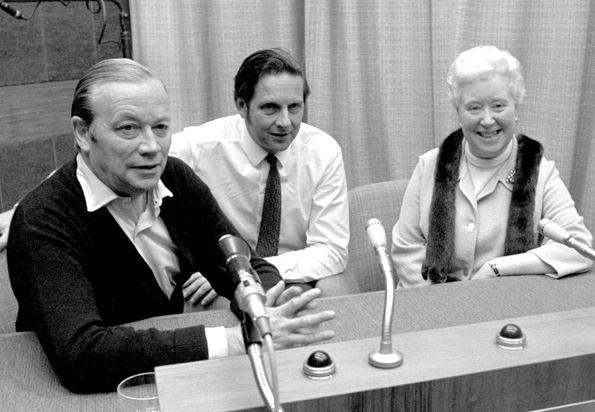
John Timpson, Jack de Manio and Pat Simmons, on the Today Programme, 1971

Caption: "John Timpson, Jack de Manio and Pat Simmons, on the Today Programme, 1971 14/05/1971 BBC Library file, dated 14-05-1971. TIM, alias Pat Simmons, tells the time on the Today Programme, presented by Jack de Manio (left), and co-presenter John Timpson."


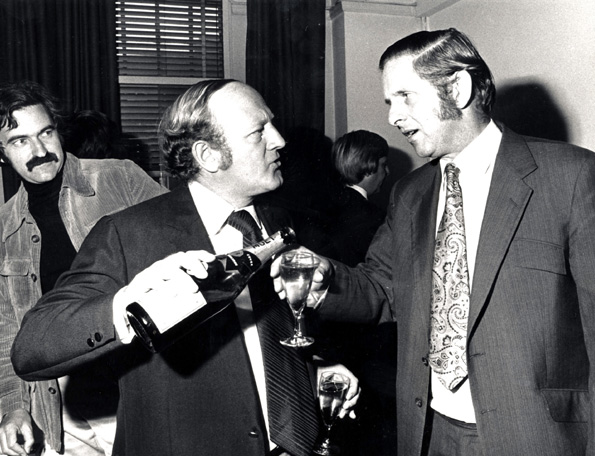
Robert Robinson pours a drink for co-presenter John Timpson at Robert Robinsons farewell breakfast party

Caption (with original typos): "Today (R4) 05/07/1974 © BBC Picture shows - Robert Robinson pours a drink for co-presenter John Timpson at Robert Robinsons farewell breakfast part on Friday 5th July, the day he left BBC Radio 4s 'Today' programme. Des (Desmomd) Lynam, occasional co-presenter of the programmew, looks on. 'Today', Radios 4s regukar early morning news programme, can be heard every day except Sunday."

Paul Murphy is the acting editor of the Radio 4 blog

Comedy on Radio 4: How Dave against the Machine came to be written

Blog comments are currently unavailable. Find out more.

Post categories: , , 

Dave Lamb17:52, Wednesday, 25 May 2011

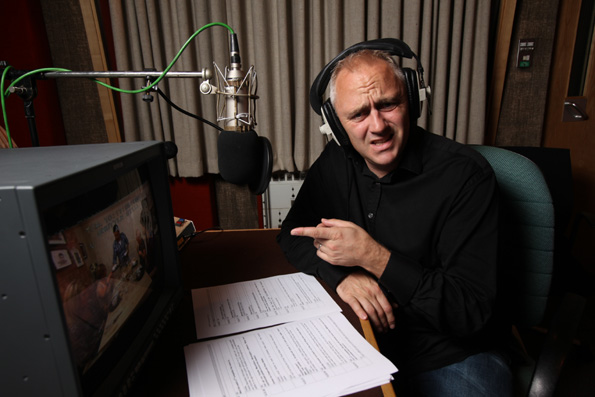
Dave Lamb

Editor's note: A new comedy for Radio 4, Dave against the Machine starts this Thursday night at 11.00pm written by and starring Dave Lamb. We asked Dave where the idea for Dave against the Machine came from. This is what he sent us.

I am best known as 'that sarcastic bloke who takes the mickey out of people's scallops on Come Dine With Me'. From my voice on that programme, not my normal voice, people deduce that I am a camp, confident man (with a moustache strangely enough) who sits in a small cupboard and passes judgement on the disturbed. In reality though, if anyone's a bit disturbed, it's me.

About three years ago I realised I had become frightened of the world.

A number of incidents over a number of years had contributed to this state of affairs, some real, some imagined, but there it was. And this realisation left me with two options: either I could curl up in a ball under a duvet until all the bad things had gone away or I could try to make a joke out of it.

Dave against the Machine is my attempt to pursue the latter course.

It all began on Wednesday 20th September 2000 at 10 o'clock at night when there was a mortar attack on the MI6 building in London. I was living opposite it at the time and in the immediate aftermath of the incident my flat was within the cordoned-off area. When the news broke I headed home to see what was going on and as I approached the police tape near Lambeth Bridge on the opposite side of the river to the Houses of Parliament I passed two men heading in the other direction. One of the men had a large tube over his shoulder. Both were laughing. Now I don't know much about bomb-making but I suspect that to launch a mortar bomb you probably need a length of pipe and I'd imagine that if you have just scored a direct hit on your target you'd be laughing.

As soon as I arrived at the scene I reported my information to the first police officer I came across. He thanked me for my vigilance and said that someone might be in touch with me at a later stage for a formal statement.

The cold, steel grip of fear. I immediately imagined myself in a courtroom stood opposite terrorists waiting to be charged. Several of their associates waiting to silence me if the verdict went the wrong way, silence me even if it didn't. I waited for the follow up call. I waited all night, wide awake, occasionally whimpering - nothing. The next morning the sound of the phone's ring shot through me like a bolt of electricity. Sweating and with a quivering hand I reached for the receiver and lifted it to my ear.

They had been two architects on their way home from the pub. The policeman thanked me once again for my vigilance. This is clearly something they have to say because they were keen to thank me the next time I phoned them as well - I'd seen two men digging in St. James's Park (a fingertip search of the area I'd indicated yielded nothing) - and also the time after that - I'd seen a man with a holdall walking down the railway line outside Waterloo station (he worked for Network Rail).

Over the years, the Climate of Fear got to me. I finally realised I had to do something about the situation though when a man stopped me in Clapham and asked me to start his car while he tinkered with the engine. I refused. I immediately assumed he had stolen the car in order to commit some dreadful atrocity in it and wanted me to put my fingerprints all over the interior to give him an alibi and put me in the frame for whatever he was about to do. I walked away from the man quickly, even breaking into an embarrassing little trot if I remember rightly. I had lost my grip.

But rather than heading to my bed for a month, I invented Dave Railings, a man who is more frightened even than I am at my lowest moments. And the fact that Dave is now out there saying all the embarrassing things that I sometimes think, but which I realise make me sound a bit like a paranoid lunatic, is a great comfort. Is Dave Railings right or wrong to be so frightened? Well, that remains to be seen...

Dave Lamb is an actor, writer and voice-over artist.

Daleks on the 7th Dimension: The voice meets the philosopher

Blog comments are currently unavailable. Find out more.

Post categories: , , 

Mary KalemkerianMary Kalemkerian17:29, Monday, 23 May 2011

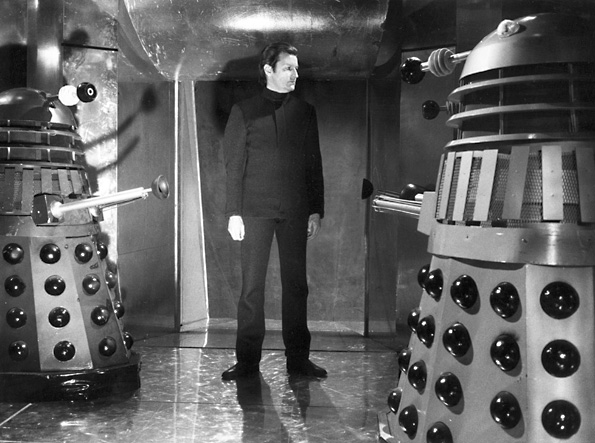
Picture shows Aubrey Woods as the Controller with Daleks

The 7th Dimension, featuring sci-fi, fantasy and horror programmes was always one of the most popular zones on Radio 7, and continues to be on Radio 4 Extra.

With the strand broadcasting one hour every day and repeated at midnight, it is quite a challenge to track down enough archive material to include in this slot.

The Doctor Who dramatisations are an excellent addition, and I'm pleased that we have acquired some 'new to the network' Doctor Who dramas, featuring Peter Davison as The Time Lord.

From feedback, Peter's debut on Radio 4 Extra is clearly being enjoyed.

Presenter of the 7th Dimension Nick Briggs is, as some of you may be aware, the voice of the Daleks and other sundry Whovian monsters.

This week one of the Radio 4 Extra studio guests is Dr Robin Bunce who has contributed to a recently published book, 'Doctor Who and Philosophy'. Dr Bunce is Director of Studies for Politics at Homerton College, Cambridge, and his chapter in the book is called 'The Evil of the Daleks'. This seemed an appropriate opportunity for the voice of the Daleks to meet and interview an academic who is obsessed by them.

I was just hoping that Nick would go easy on Dr Bunce and not attempt to exterminate him!

The interview turned out to be absolutely fascinating and you can hear it serialised in the 7th Dimension starting tonight at 6.30 pm and repeated at midnight.

Mary Kalemkerian is Head of Programmes at BBC Radio 4 Extra

  • Picture caption reads: "Dr Who: The Day Of The Daleks (3K) 22/10/1971 ©BBC Picture shows Aubrey Woods as the Controller with Daleks.

Choosing your Desert Island Discs

Blog comments are currently unavailable. Find out more.

Post categories: , , , 

Alice Feinstein09:00, Monday, 23 May 2011

Roy Plomley

One desert island, only eight tracks of music to keep you company. What will you choose?

From today Kirsty Young is offering you a unique opportunity to take part in Desert Island Discs. Cast yourself away and share the eight tracks that you would take with you to a desert island.

All you have to do is go to the Desert Island Discs website, enter your eight tracks and nominate the one track you would save from the waves if the tropical sea threatened to carry off your selection.

Nominations will close at 2pm on Friday 3rd June and Kirsty will then reveal the listeners' choices in a special live celebration of Desert Island Discs on Radio 4 on Saturday 11th June at 9am.

If you search the Desert Island Discs archive you can find the choices of everyone who has been interviewed on the programme since it began in 1942. There are more than 2,850 castaways to search and over 500 episodes of the programme to listen to and download.

You can search by castaway or by music choice so you can check whose choices you share. Will you be like Sir Michael Caine, Elton John and Steve Coogan and choose Elgar's Enigma Variations? Or like Twiggy, Spike Milligan and Antonio Carluccio and choose Yesterday by The Beatles? Or will you choose a spoken word recording like Judi Dench, Noel Coward and Princess Grace of Monaco who all took some Shakespeare?

It doesn't have to be music or poetry - Ann Widdecombe chose the sound of a hippo, Matthew Pinsent chose cricket commentary. What is the soundtrack of your life? The tracks you can't live without - the tracks that will transport your imagination back home or back in time and lift your spirits in your island isolation?

The most popular track with castaways over the years is Beethoven's Symphony Number 9 in D Minor which has been chosen by 97 castaways including Martin Sheen, Paulo Coelho and Dr Susan Greenfield. The top ten most chosen tracks by castaways are all classical recordings. Will the listeners agree?

We also want to know why you've chosen these pieces. What's the story behind your soundtrack? The memories trapped in each track? We'll be featuring listener's stories on the website and in the live programme on the 11th June.

Cast yourself away at the Desert Island Discs website.

Alice Feinstein is the Editor of Desert Island Discs

  • Go to the Desert Island Discs website to enter your eight tracks and nominate the one track you would save from the waves if the tropical sea threatened to carry off your selection.
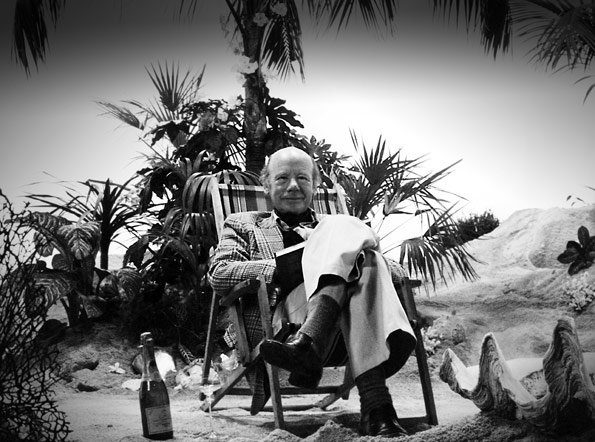
  • Picture caption: "Arena: Desert Island Discs 22/12/1981 © BBC Picture shows - Roy Plomley, presenter of 'Desert Island Discs'. On BBC2, Tuesday February 23 1982, Arena celebrates the 40th anniversary of one of the worlds longest-running series in broadcasting - Radio 4's Desert Island Discs. Here we can see Roy Plomley, who has presented the series since it started, relaxing on his 'desert island', specially built for Arena's programme."

Feedback - Radio 4 Extra: A rose by any other name would smell as sweet

Blog comments are currently unavailable. Find out more.

Post categories: , , 

Roger BoltonRoger Bolton13:48, Friday, 20 May 2011

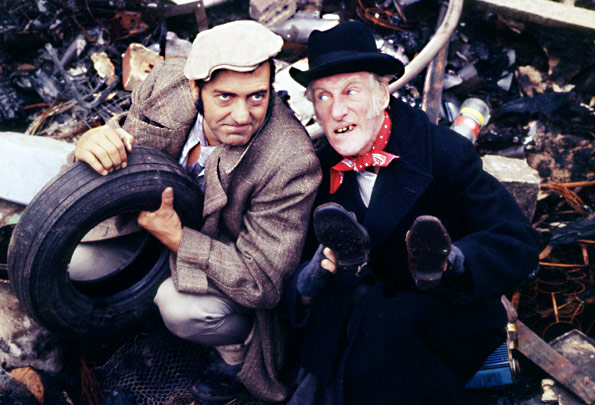
Harry H. Corbett as Harold Steptoe and Wilfrid Brambell as Albert Steptoe

The BBC digital station Radio 7 has changed its name to Radio 4 Extra, but some Feedback listeners don't like the smell.

Amaechi Ihetu told us that she was 'disappointed that listeners have lost a true gem'. Tina Taylor wrote 'I don't want to hear repeats of Desert Island Discs'.

Fred Whalley was among a number of listeners who were sad to lose the children's programming that they had enjoyed on 7, and even some Archers addicts claim to be indifferent to Ambridge Extra. Others, like Galen White, question the wisdom of putting the Ambridge Extra omnibus straight after the Archers Omnibus, an obvious ploy to get addicts to cross from 4 to 4 Extra.

Well these are early days and the retitled network has only been broadcasting for a few weeks, but the BBC Trust was clear that something had to be done to improve the size of audience. The last figures suggest Radio 7 had a 0.6% share of listening, making it a vulnerable target at a time of belt tightening.

On the other hand the Trust's David Liddiment made it clear, in a Feedback interview earlier in the year, that he didn't want the network to change that much and that 'most of the programming (on 4 Extra) would be recognisable to a Radio 7 audience.'

There are benefits to the change of name. The Controller of 4 Extra is Gwyneth Williams, Controller of Radio 4, and this means that there can be more complementary programmes between the two networks and more trails for 4 Extra on its Big Sister network.

The Head of Programming of 4 Extra is Mary Kalemkerian who did the same job for Radio 7. On Wednesday she came into the Feedback studio to talk down the line to two listeners. Rae Streets was in Cambridge and John Shellard in Sheffield. They did not pull their punches.

In order to see this content you need to have both Javascript enabled and Flash installed. Visit BBC Webwise for full instructions

Feedback is now on the air until the end of July.

It's likely to be a long hot summer for BBC management as it spells out the detailed consequences of the cut in the licence fee, and tries to get approval from the BBC Trust, and ultimately you, for the changes that they think unavoidable.

More salami slicing or cuts in actual services?

We'll soon find out. Make sure you let us know what you think. Leave a comment on the blog or get in touch via the Feedback web site.

Roger Bolton is presenter of Feedback

  • Listen again to this week's Feedback, produced by Karen Pirie, get in touch with Feedback, find out how to join the listener panel or subscribe to the podcast on the Feedback web page.
  • Feedback is on Twitter. Follow @BBCR4Feedback.
  • Picture info: "Steptoe and Son: S5 29/01/1970 © BBC Picture shows - Harry H. Corbett as Harold Steptoe and Wilfrid Brambell as Albert Steptoe pictured here in the junkyard in series five of 'Steptoe and Son'." You can hear Steptoe and Son on Radio 4 Extra.
  • RAJAR (Radio Joint Audience Research) and is the official body in charge of measuring radio audiences in the UK. It is jointly owned by the BBC and the RadioCentre on behalf of the commercial sector. Details of the Radio 7 .6% share of listening quoted above can be found here. By way of comparison Radio 4's figure for the same period is 12.30%.

Falling for Françoise

Blog comments are currently unavailable. Find out more.

Post categories: , , 

John Andrew17:35, Thursday, 19 May 2011

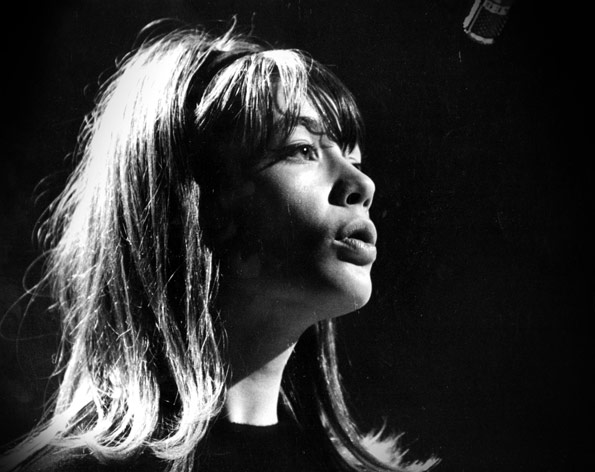
Francoise Hardy

Picture the scene. A girl walks down the street, alone and unloved, while around her loving couples hold hands and gaze into each other's eyes. That was the theme of 'Tous Les Garcons et les Filles de Mon Age', a self-penned melancholic song which in the early 1960s catapulted Françoise Hardy to Europe-wide fame, and achieved something rare: being one of the few French language songs to make the British charts. Globally it sold around two million copies-shifting more records than the legendary Edith Piaf did in eighteen years.

In Britain, Françoise had no shortage of schoolboy admirers. And I was one of them.

She suddenly made learning O and A Level French that much cooler. Hardy stood out from other girl singers of the time on both sides of the Channel. There was no fancy hair style or heavy duty cosmetics. Her hair was long and straight, her make-up minimal. She had a natural, wholesome look that made her the perfect 'girl next door.'

One of the fans I talk to in Falling for Françoise tells the story of a French girl who came to England to stay with a penfriend and turned out to be a dead ringer for Françoise. All his schoolmates made a beeline for her but he got there first. It was the start of a 10-day whirlwind romance that took in such delights as the Droitwich Lido.

But it wasn't just school boys who fancied Françoise. Just about every male rock star was effusive about her too. Mick Jagger called her his 'ideal woman' and David Bowie said that 'for a long time I was passionately in love with her. Every in male the world and a number of females also were.'

One of her most remarkable encounters was with Bob Dylan during his 1966 concert at the Paris Olympia. Dylan, she recalls, was 'in bad shape' and not singing well. In the interval he sent her a message to say he wouldn't complete the concert until she'd come to meet met him in his dressing room. It was an awkward encounter but later that day he gave a her a a private preview of two new songs later to become classics: 'I Want You' and 'Just Like a Woman'.

In a frank and often self-effacing interview, Françoise plays down the adoration and tells me she's always been uncomfortable with fame.

She says that like many of her early fans, she was a shy and anxious child and jokingly suggests it might be to do with the circumstances of her birth. She was born in Paris during an air raid warning in January 1944 when the city was still under Nazi occupation.

Home life was hard. Her father was largely absent. Her mother had to work hard to keep Françoise and her younger sister well fed and clothed On one of her father's rare appearances he gave her a guitar. Soon she was writing her own songs, as many as one a day. Eventually she successfully auditioned for the Vogue label. It was the start of a string of hits which included 'All Over The World' - a regular choice on The BBC Light Programme's Two-Way Family Favourites.

Though now approaching her seventies she looks as stunning as ever, though the long brown hair has given way to a grey, cropped cut.

More than fifty years since her first hit Françoise is still making albums. She's worked with a string of British musicians including Damon%20Albarn, the late Malcolm McLaren and the young singer/songwriter Ben Christophers.

EMI have signed her up for two more albums but with typical self-doubt she worries whether she can write enough new material to fill them.

This most reluctant of French icons though is sure of one thing. She says she's rarely happier than when curled up in bed with a book by her favourite author, Henry James.

John Andrew is a broadcaster and journalist.

Cerys Matthews: Bob Dylan and Me

Blog comments are currently unavailable. Find out more.

Post categories: , , , , , 

Cerys Matthews15:26, Wednesday, 18 May 2011

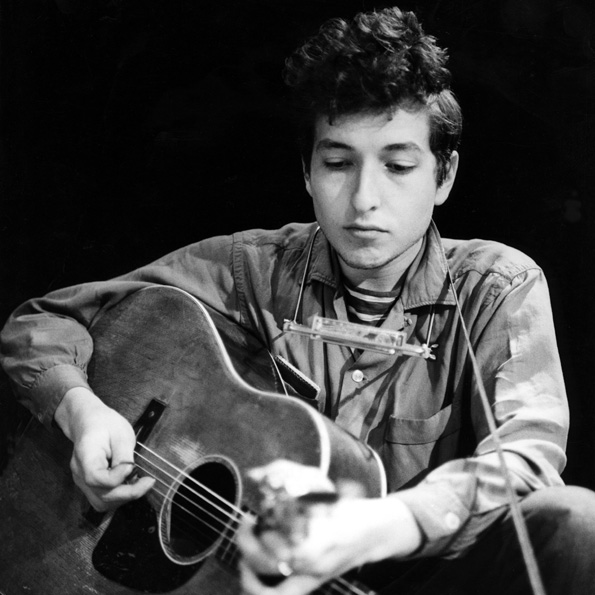
Bob Dylan

Editor's note: Bob Dylan's 70th birthday is on 24th May. There are many Dylan-related programmes on Radio 2, Radio 4 and 6 Music. To help mark the occasion the Radio 4 blog asked Cerys Matthews what Dylan means to her.

When I was a child, my father would make me mixes on cassette tapes. He was a huge Bob Dylan fan, so naturally Dylan's songs featured heavily. I fell in love with his music then.

And as I started to collect folk songs from around the world - Ireland, Scotland, America - I started to recognise some of these musical references in Dylan's songs.

Dylan is an explorer, a magpie. Like Elvis Presley, he took what was marginal and brought it into the mainstream: you can hear a hint of a traditional melody, or an echo of a familiar turn of phrase, reworked into an amazing contemporary new song, which crosses boundaries.

You can recognize the dialogue structure of the traditional ballad, 'Lord Randall' ("Where have you been all day Henry my son?"), in 'A Hard Rain's A-Gonna Fall', for example. It's part of the folk tradition for songs to travel and evolve and be made more local to where you're singing them. Have a listen to Odetta's version of the old spiritual 'No More Auction Block', and you'll find its melodic traces in 'Blowin' in the Wind'.

And to my ears, when I hear that most Dylanesque style of delivery on 'Subterranean Homesick Blues' - a list of words tumbling relentlessly over the melody - I'm also hearing Memphis blues man Frank Stokes's talking blues style, from the 1930s.

When Dylan started his reign as a radio DJ on his Theme Time Radio Hour, his wealth of knowledge about the roots of music became even more apparent, as he played artists like Ruth Brown, Geeshie Wiley, Henry Thomas and the Memphis Jug Band.

So I see Bob Dylan as a map - no matter where he leads you it's bound to be somewhere magical.

Happy Birthday Bob!

Cerys Matthews presents Cerys on 6: Sunday 10:00 to 12:00 on BBC 6 Music

Joe Cornish, Attack the Block director, on The Film Programme

Blog comments are currently unavailable. Find out more.

Post categories: , 

Steve BowbrickSteve Bowbrick18:15, Friday, 13 May 2011

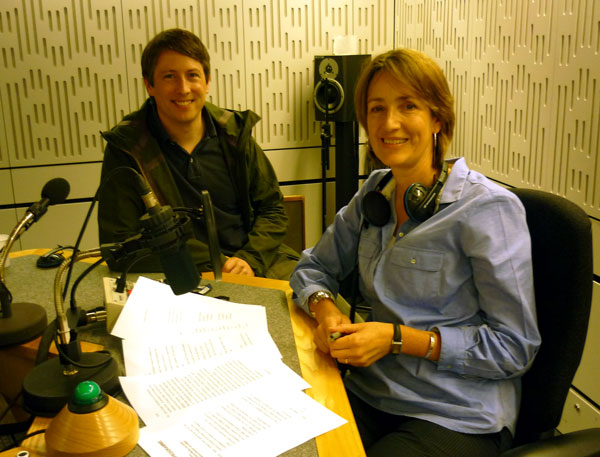
Joe Cornish and Francine Stock in the studio for Radio 4's Film Progamme.

Jo Cornish came into BH to talk to Francine Stock about his new film Attack the Block on this afternoon's Film Programme. Listen again on the Radio 4 web site and download the programme to your computer by signing up for the free podcast. Mark Kermode reviewed the film a couple of weeks ago and Joe's long-time partner Adam Buxton has mixed feelings on the Adam & Joe blog. Listen to Adam & Joe's 6 Music show tomorrow morning at 1000.

Steve Bowbrick is editor of About the BBC

Rather fabulous - the Q1 Rajars are in

Blog comments are currently unavailable. Find out more.

Post categories: , , , , 

Gwyneth WilliamsGwyneth Williams00:01, Thursday, 12 May 2011

The Rajar listening figures. A picture by Adam Bowie.

"Rather fabulous" - she really did say that a moment ago on the phone. I am referring to our Radio 4 audience guru, Alison Winter. It was a momentary lapse as she is, as you might expect when it comes to figures, well... measured... Thus you will gather that the first quarter RAJAR listening figures for Radio 4 are cheering: a record reach in fact of 10.8 million. This means that 10.8 million people have listened to Radio 4 for at least five minutes a week in the last three months. This time last year the figure was 10 million. So congratulations to all programme-makers.

The previous all-time highest reach of 10.4 million was in the second quarter last year. Our best guess then was that this was because of the general election and the interest that generated. There has been no general election this time so it could be that once those listeners found us we managed somehow to hang onto them. Perhaps instead they have become entranced with the Arab Spring and our coverage of the Middle East... Or perhaps they just love John Humphrys - reach to the Today programme was a record 7.03million.

Share for Radio 4 too is slightly up at 12.3 per cent which makes it broadly consistent with last year when it was 12.2 per cent. (Share is the proportion of all listening to all radio in the UK) I find this heartening as it means that people are continuing to listen to Radio 4 for rather a considerable length of time- in fact they listen for around twelve hours a week. Given the explosion of choice in the media and the seemingly relentless demands on our time this commitment from our audience feels significant and privileged.

Among specific audience groups, we now have more women listening to Radio 4 than ever before - 5.49 million every week (vs. just under 5.34 million men). There are high figures among our core, very loyal, older audiences but at the same time we have more under-35s listening to Radio 4 than at any point since 2003.

And then there is Radio 7, now transformed into Radio 4 Extra. Weekly reach there too is a record 1.159 million. These record figures are in tune with the trend for radio which is something to celebrate but my personal view is that the greatest value they bring is to give all of us at Radio 4 the confidence to set them aside and concentrate on making the best programmes we can for our cherished and discerning audience.

UPDATE 2pm, May 12th: I have more news on this record quarter - and all credit to Radio 4's production teams. We have record listening figures for the following: comedy programmes across the week (5.22 million), our drama throughout the week (7.1 million), The Archers (2.49 million for lunchtime listening and 5.01million across the week); You and Yours with 3.33 million - and along with her Sony Gold Special Award, Jenni Murray and the Womans Hour team can celebrate a record listening figure of 3.56million across the week.

Gwyneth Williams is Controller of BBC Radio 4 and BBC Radio 4 Extra

I Did It My Way: Roy Hudd

Blog comments are currently unavailable. Find out more.

Post categories: , , , 

Peter Reed17:33, Tuesday, 10 May 2011

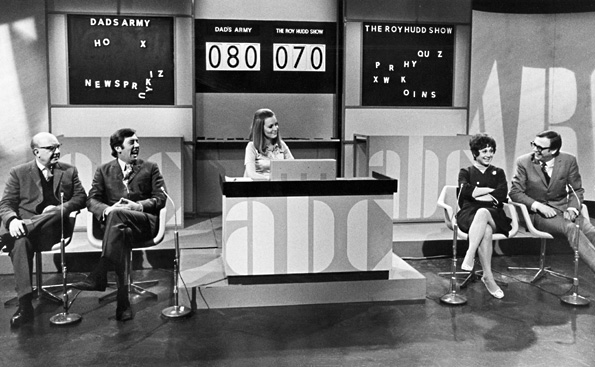
Arthur Lowe, James Beck, Maggie Penn, Sheila Bernette and Roy Hudd

The much-loved comedian Roy Hudd turns 75 on Monday, but we hear he's got no plans to simply put his feet up and relax with a slice of birthday cake.

Instead Roy will be starring in his very own birthday bash - a week of shows at the Brick Lane Music Hall in East London.

Radio 4 extra is also marking Roy's birthday with another chance to hear our 3 hour special I Did It My Way (Saturday 14th May 09.00 & 20.00). Roy will be looking back over his long radio life and times - as well as talking about his love of Music Hall and Max Miller in particular.

He'll be sharing behind-the-scenes stories of making his on-air hit shows and recalling some of the many stars he's worked with - as well as revealing his more dramatic side as an actor.

Roy will also reveal one of his favourite items of radio memorabilia from his past - it was far too big to bring in the studio! - as well as describing how his long-running The News Huddlines finally came to an end.

Roy will be telling me about his thoughts on political correctness in comedy - as well as answering questions sent in by our listeners.

This was the second time I'd been lucky enough to interview Roy - and he didn't stop making us all laugh during the recording.

Here are Roy's choices from his own back catalogue: The News Huddlines (06/6/79), The Newly Discovered Casebook of Sherlock Holmes (16/01/1999), the Sony Gold winning Huddwinks (14/8/86) and Peter Tinniswood's play The Scan (29/09/1999).

Many happy returns Roy for Monday!

Peter Reed is a Senior Producer at BBC Radio 4 Extra

Radio 4 at the Sony Awards

Blog comments are currently unavailable. Find out more.

Post categories: , , , , , 

Paul MurphyPaul Murphy16:36, Tuesday, 10 May 2011

Bob Hill

It was the Sony Radio Academy Awards last night ("the radio industry's equivalent of the Oscars"). Here's where you can hear this year's gold winners from Radio 4 which were cunningly rescheduled into some of the station's repeat slots when the nominees were announced.

The winner of the best speech programme award was Infinite Monkey Cage which we've featured on the blog before. The new series starts on BBC Radio 4, Monday May 30th at 4.30pm (repeated on Tuesday evenings at 11pm) for 6 weeks. In the meantime you can listen to some earlier episodes via the Radio 4 podcast page.

Matthew Price won news journalist of the year for his work for Radio 4. You can listen to one of his recent reports on the Syrian protests.

The winner of the best feature was Heel, Toe, Step Together made by Falling Tree. Heel, Toe, Step Together (pictured above, Bob Hill) "tells the story of two people who met at an East London market one day and the unlikely friendship that blossomed through dance" and you can listen to it again at 13.30 this Sunday, the 15th May on Radio 4 and for seven days after that on iPlayer.

For the judges the winner of best drama Every Child Matters is a story that "drew them in whilst portraying the reality of the contradictions, conflicts and complexities facing the professional staff working in child protection". You can hear Every Child Matters this Thursday at 14.15 and for seven days after that on iPlayer.

Jenni Murray won the gold award, a 'special award that lies within the gift of the Committee'. This is what the Guardian said:

'On a night when female winners were thin on the ground, Radio 4's Woman's Hour presenter Jenni Murray received the prestigious gold award. The judges said it rewarded a "career of exemplary broadcasting, for her incisive yet sensitive interviewing skills, her championship of the woman's perspective and the inspiration she has given to others".'

On this Thursday's Woman's Hour Jenni Murray talks to Kate McCann about the ongoing search for her daughter.

Paul Murphy is the acting editor of the Radio 4 blog

Bob Block: Life with the Lyons on 4 Extra

Blog comments are currently unavailable. Find out more.

Post categories: , , , , , 

Mary KalemkerianMary Kalemkerian08:51, Saturday, 7 May 2011

The Lyon Family : Barbara, Richard, Bebe Daniels and Ben Lyon

Bob Block was a comedy writer whose name might not be familiar to you, but you've more than likely heard or seen some of his work.

Here's a clue to one programme you might remember if you're of a certain vintage: "It's Friday! It's 5 o'clock! And it's...... Crackerjack!"

Apart from Bob's quirky scripts for this long-running BBC TV children's favourite - he was also the creator and writer of Roberts Robots, Pardon My Genie, Galloping Galaxies, and the hugely popular BBC TV series Rentaghost.

Bob also wrote scripts and gags for comedy greats of his day such as Dave Allen, Ronnie Barker, Kenneth Connor, Kenneth Williams, Terry Thomas, Hattie Jacques, June Whitfield, Hylda Baker, Rolf Harris, Ken Dodd (and the Diddymen) and many more.

In radio, he was best known for co-writing the domestic sit-com Life with the Lyons, featuring real life married couple Ben Lyon and Bebe Daniels along with their children Barbara and Richard. The supporting cast included the inimitable Molly Weir as Aggie the housekeeper (you may remember Molly from her long-running 1970s TV commercials for a famous floor cleaner, and she also played Hazel McWitch in Rentaghost).

Ditching the typical musical interludes in BBC radio comedies of the time, Life with the Lyons ran for ten series between 1950 and 1961. Each series had a very long run. Series three was on-air for an incredible 33 weeks. And so successful was the show, that it later switched to TV.

Unfortunately, as with so many series, not all of the radio programmes were retained. Only three Life with the Lyons programmes are currently in the BBC Sound Archive. These were broadcast on Radio 7 in March this year, and following the broadcasts, we received an interesting note from Bob's daughter Tricia.

Here is part of her email:

You have just started broadcasting Life with the Lyons weekly on your excellent station and I was delighted to suddenly discover it was on last Wednesday. My Dad, Bob Block was the co-writer of the show right through its life and the particular one you broadcast last week from January 1955 was one in which he also acted (as Harold, Barbara's wet boyfriend). I was born in the October of 1955 and Dad had told me about the episodes he'd acted in, but I had never heard any before. I have listened to it several times on the iPlayer..... it also featured my Godmothers, Molly Weir and Doris Rogers, both of whose voices I hadn't heard for such a long time. It would be very special for my family and me to have a copy of this as my Dad is 89 now and hasn't been very well recently. I have to admit the programme brought tears to my eyes.

Sadly, we heard last week that, on 17th April, Tricia's father, Bob Block had died. He was in his 90th year. But in a further twist to the story, a listener/collector in Scotland had also heard the programmes that week, and contacted us to say that he had over 200 episodes of Life With the Lyons, all taken from Ben Lyon's original reels and all in very good condition. As a tribute to Bob we'll be scheduling a season of Life with the Lyons, which we'll be freshly digitising from the "Scottish collection" and you'll be able to hear them in the near future on Radio 4 Extra.

Mary Kalemkerian is Head of Programmes at BBC Radio 4 Extra

Kate Bush on Front Row: The Presenter's Cut

Blog comments are currently unavailable. Find out more.

Post categories: , , , 

John WilsonJohn Wilson16:00, Thursday, 5 May 2011

Kate Bush

You won't catch her on the television chat show circuit. She won't be touring the radio studios to plug the new album. And as for a concert, forget it. So I'm slightly thrown when my mobile rings, flashing up 'private number', and a vaguely familiar voice says "Hello John, it's Kate Bush here".

In 2005 ago she broke a 12 year silence when she spoke to me on Front Row about her album Ariel. Now Britain's most successful solo female artist is on the line with a suggestion: "Would you like to come down to my house to talk about the new record?"

I didn't take much persuading and, last week, headed to rural Berkshire. Kate was charming, funny and hospitable. She has a beautiful home, a large Georgian property shielded from the outside world by mature trees and wooden gates. She guards her privacy fiercely.

We drank tea and chatted about gardening, our kids and art. Then we sat together on a plump sofa in the sitting room and - with the digital recorder rolling - discussed her re-return to the public eye. The new record Director's Cut re-works tracks from two previous albums, The Sensual World (1989) and The Red Shoes (1993), to create something new, warm and intimate.

Within moments of the edited version of the interview being broadcast on Wednesday's Front Row it was clear - from the internet-buzz - that the legions of Kate Bush fans wanted more. So here's a slightly longer version of our conversation, minus the music which I mixed in for the live broadcast. I know for some Kate Bush fans it still won't be enough, that they'll want to hear every pause, evasion, stone-wall response from the interviewee. But, trust me, in this case, less is more...

In order to see this content you need to have both Javascript enabled and Flash installed. Visit BBC Webwise for full instructions

John Wilson has worked as a presenter and reporter on Front Row since it started in 1998

  • Follow Front Row and John Wilson on Twitter.
  • The interview with Kate Bush from the broadcast programme can be heard here.

More from this blog...

Categories

These are some of the popular topics this blog covers.