Archives for May 2010

Norman Painting's memorial service

Blog comments are currently unavailable. Find out more.

Post categories: , , 

Andrew CaspariAndrew Caspari15:30, Friday, 28 May 2010

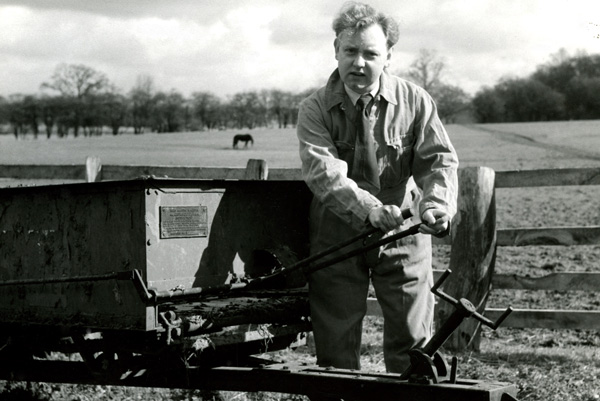
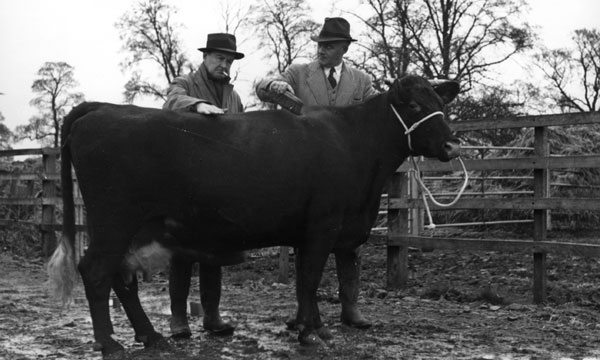
Norman Painting with Muck Spreader in 1954

The fields of Borsetshire were transplanted to St. Martin-in-the-Fields Church in Trafalgar Square yesterday for Norman Painting's memorial service. The church was packed with hundreds of those who knew, worked with, loved or simply listened to Norman's searingly distinctive voice as he played Phil Archer for nearly sixty years. This was a remarkable service in memory of a remarkable man. It was clear we were there to remember and celebrate Norman and not Phil Archer. However Phil was never far away. Clips of some of the great scenes were played, Ysanne Churchman who played Phil's first wife Grace read a Thomas Hardy poem with Alison Dowling (Lizzie) and Patricia Green who plays Jill Archer spoke of Norman's great kindness and spirit.

Other readings and memories were delivered by Stephen Fry, Alison Dowling, Trevor Harrison (Eddie) and Tim Bentinck (David). The music had a strong pastoral tone as we sang We Plough the Fields and Scatter and listened to a magical performance of Vaughan Williams' The Lark Ascending. The Organ Voluntary was, as some of us predicted, 'Barwick Green'!

It was a splendid occasion - Our sadness punctured by warm memories, humour and beautiful music and readings. I think Norman (and Phil) would have approved.

Here are tributes to Norman from Radio 4 Controller Mark Damazer and Editor of The Archers Vanessa Whitburn. They sum up an extraordinary man.

You can listen to the service itself on The Archers website.

In order to see this content you need to have both Javascript enabled and Flash installed. Visit BBC Webwise for full instructions

In order to see this content you need to have both Javascript enabled and Flash installed. Visit BBC Webwise for full instructions

Andrew Caspari was a Radio 4 Commissioning editor for ten years and is a lifelong Archers fan. As Head of Speech Radio and Classical Music, Interactive he is currently supervising the relaunch of the Archers web site

  • Read the text of Mark Damazer's tribute here and Vanessa Whitburn's here.
  • Visit The Archers web site and The Archers messageboard for more about Norman and his legacy.
  • Vanessa Whitburn wrote about Norman here on the blog when he died in October last year.
  • The picture shows Norman with a piece of agricultural machinery in 1954. It's from the BBC's picture library.

The Reith Lectures 2010 - join the debate

Blog comments are currently unavailable. Find out more.

Post categories: , , , 

Steve BowbrickSteve Bowbrick16:33, Thursday, 27 May 2010

In order to see this content you need to have both Javascript enabled and Flash installed. Visit BBC Webwise for full instructions

The 2010 Reith Lectures are all in the can and the first of Martin Rees' Scientific Horizons lectures will be broadcast next Tuesday at 0900.

In Scientific Horizons, Professor Rees, President of the Royal Society, Master of Trinity College and Astronomer Royal, explores the challenges facing science in the 21st century.

In the first lecture - Scientific Citizen - Professor Rees discusses the relationship between the government, the media, scientists and the public. He is also then questioned by a live audience, which includes the then Science Minister Lord Drayson, Professor David Nutt and Professor Lisa Jardine.

And this year we're trying something new. During the first programme we're inviting listeners to join us for a live online discussion on the Radio 4 blog. This will bring together comments from Twitter (using the hashtag #reith), email (to [email protected]) and online in one place. You will also be able to listen to the programme live on the page.

To join in, come back to the blog at 0900 next Tuesday 1 June and we'll be ready. We'll bring donuts. And in the meantime, learn more about the lectures from Radio 4's Reith pages and follow the lectures on Twitter: @reith_lectures.

Steve Bowbrick is editor of the Radio 4 blog


David Cameron, tipster

Blog comments are currently unavailable. Find out more.

Post categories: , , , , 

Steve BowbrickSteve Bowbrick08:59, Thursday, 27 May 2010

Cameron Tipster

If you're a regular Today listener you'll know that the daily racing tips are a treasured (and sometimes comical) element of the the programme's sports coverage. So it seems quite appropriate that when Garry Richardson, the programme's long-serving sports presenter, came into the Today studio at the end of this morning's 8:10 interview, he took the opportunity to ask your new Prime Minister to provide two tips of his own. Here they are:

In order to see this content you need to have both Javascript enabled and Flash installed. Visit BBC Webwise for full instructions

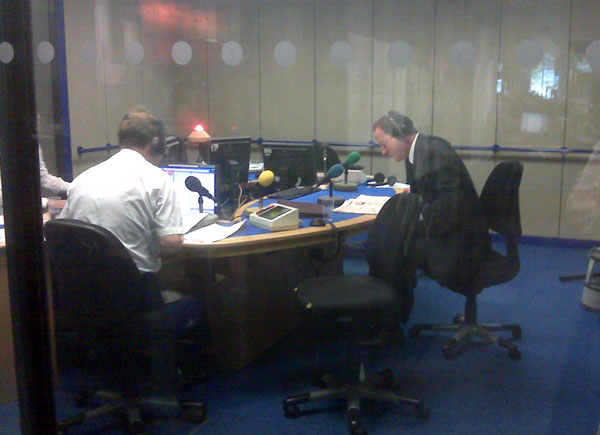
The picture, showing David Cameron making his selections, was taken by World at One presenter Martha Kearney through the studio's glass wall and posted on her Twitter account, @marthakearney.

Steve Bowbrick is editor of the Radio 4 blog

The Sandford Awards for religious broadcasting

Blog comments are currently unavailable. Find out more.

Mark DamazerMark Damazer13:58, Wednesday, 26 May 2010

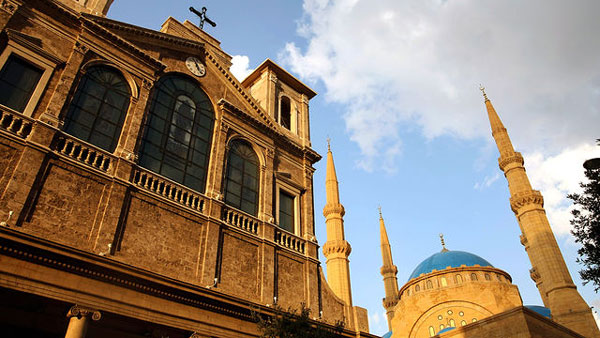
church and mosque

I went to the Sandford St. Martin awards last night for the best religious radio and television broadcasts for 2009 - the blue riband event for the genre.

The ceremony was held at Lambeth Palace. Roger Bolton presided over the TV awards and was as robust (or should that be peppery) as any listener to Feedback would expect (he's written in The Guardian that there ought to be a 'Religion Editor' at BBC News).

Radio 4 has more space than any TV channel and it is significantly easier for us to parade our wares. We have a number of brilliant programme makers - both inside the BBC and in the Independent sector - and yesterday some of them were rewarded. There were 15 shortlisted programmes and Radio 4 carried off the booty.

The Radio awards were as follows:

Winner: Twin Sisters: Two Faiths (Radio 4)

Runner up: The Understanding (Radio 4).

Merits: Treasures out of Darkness, from the All Things Considered series (BBC Wales); Dear God (BBC Coventry & Warwickshire); Something Understood presented by Mark Tully in conversation with Jean Vanier (Radio 4).

The winner was made by Ladbroke. I remember where I was when I listened to it. In a traffic jam at the Oval in London. It was one of those moments. We have repeated it already but I shall try and run it again. It is extraordinary (and you can listen to it on the iPlayer) - about two sisters who are adherents to different religions and are both devoted to one another - but apart. And their dying mother - a lifelong non-believer who questions herself.

The Understanding, made by BBC Radio Drama, was one of my favourite plays form 2009 - linked to one of my passions - Inside the Ethics Committee. A play about an ethical dilemma involving a Jehovah's Witness couple and a powerful surgeon.

And Something Understood - made by Loftus - was a cracking edition of a long running Radio 4 strand. The point about these programmes is that they are not aimed at the religious. They are compelling radio. For everybody. Full stop.

Mark Damazer is Controller of BBC Radio 4

The Truth about Goldman Sachs

Blog comments are currently unavailable. Find out more.

Post categories: , , , , , 

Paul LewisPaul Lewis17:24, Monday, 24 May 2010

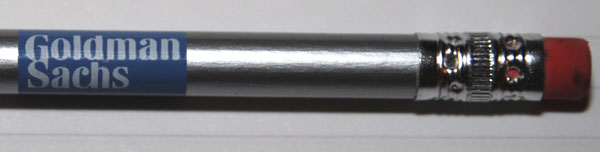
Goldman Pencil

Radio 4 sent me to New York to find out The Truth About Goldman Sachs. And I can exclusively reveal the shock answer: it is beige.

The New York-based investment bank (more on what that means later) has moved into a brand new Global Headquarters right by the square where the twin towers once stood. One of the world's most profitable ($13.4 billion after tax in 2009) and successful banks, it owns and designed the new building - though $200 million came from US taxpayers. But if you expect ostentation comparable to the triple, storey-high neon signs which once circulated the name Lehmann Brothers round that now bankrupt company's Times Square headquarters, you will be disappointed.

No name. No logo. Just the address, 200 West Street, cut out of the plain grey stone portico above its doors. At an almost intimidating distance across the large entrance lobby sit three identically clad receptionists. To their left droop the flags of the United States and New York. But on the acres of plain beige stone wall behind them there is nothing even to hint who might occupy 200 West Street. Nor anywhere in the vast triple height lobby clad in plain beige stone and floored with large square charcoal grey tiles. One insider told me that the décor, which is the same throughout, was 'tasteful but understated'. Then insisted in an understated but tasteful way that this revelation was off the record.

I travelled up to the 11th floor Sky Lobby, where more plain beige stone looked down on workers rushing with their lunch from the canteen back to their desks. This large interchange gives access to the upper floors so I headed for Floor 42 and Meeting Room J to wait for the Partner I would interview and admired the view over the Hudson River to Goldman's other 42 storey tower dominating the opposite shore. Finally I spotted the Goldman Sachs branding - a plain blue grey square with the name picked out in white. On a pencil. Left on the table should I wish to make notes and had forgotten my own. I didn't. I hadn't. But I kept the pencil.

And investment banks? They buy stuff. They sell stuff. Sometimes their own stuff. Sometimes for other people (but don't turn up unless you have at least $25 million). So why do so many hate Goldman Sachs with such a passion? And why has the US regulator, the Securities and Exchange Commission (think the Financial Services Authority on steroids, with attitude, and armed) filed charges of securities fraud against the bank?

Is it because as well as buying and selling stuff Goldman Sachs also buys and sells bets on whether the stuff it buys and sells will go up or down in value? And buys and sells insurance against losing money on those bets. And places bets itself that stuff it sells to clients will go down when its clients hope it will go up. Is that it? Probably not. Goldman Sachs has always done that. And in any case it isn't gambling, the Partner tells me, it is allocating capital and, she insists, investment.

Paul Lewis in NYC

Or is it because almost half of its vast profits are divvied out among the staff? In the past fifteen percent of the fund - which in 2009 was $16.2 billion - has gone to the 400 or so partners (do the math, as they say here). Much of the rest goes to the 'revenue generators' (principally the ones who buy and sell all that stuff) and the balance to the 'Federation' of support and administrative staff.

It is this remuneration - which the bank prefers to call 'compensation' rather than 'pay' - which strikes at the heart of Middle America where average household income is $50,303 a year and falling. Each partner in the US got millions of dollars in 2009 on top of their $600,000 pay. And of course most people outside the banking world do not understand what that job is. Or what its purpose is.

That may not be the truth about Goldman Sachs. But is it a truth. And one it has yet to deal with.

Paul Lewis is presenter of Money Box, Money Box Live and The Truth About Goldman Sachs

  • The Truth About Goldman Sachs is on Radio 4 tonight at 2000 and on the iPlayer for seven days.
  • Edward Stourton profiled Lloyd Blankfein, CEO of Goldman Sachs on Radio 4's Profile in April.
  • The picture shows the pencil Paul picked up in that Goldman conference room. There are more pictures here.

Reith Lectures 2010

Blog comments are currently unavailable. Find out more.

Post categories: , , , 

Mark DamazerMark Damazer16:35, Wednesday, 19 May 2010

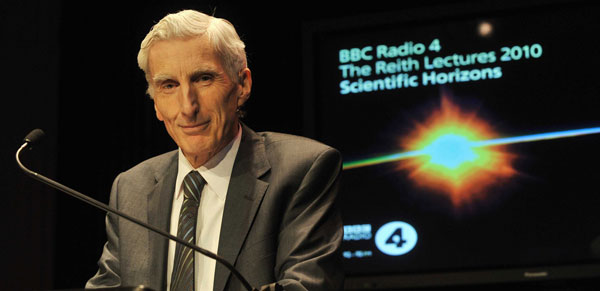
Martin Rees

Editor's note: keep up with the lectures and contribute to the discussion on Twitter. Follow @reith_lectures and use the hashtag #Reith - SB

We have just finished recording this year's Reith lectures - given by Lord Rees - or Martin Rees as he prefers to be called. There are four of them - broadly based on the title 'Scientific Horizons.' I've enjoyed them a lot. Martin is President of The Royal Society, Master of Trinity College, Cambridge and Astronomer Royal. Amongst other things...

Martin was a natural for the Reiths - not least because the BBC as a whole is putting in a lot of effort on air this year to make it 'The Year of Science.' The lectures address the role of scientists, politicians, civil servants, journalists and the wider public in creating a more sophisticated debate about science and technolgy - in the hope of achieving more rational outcomes. The audience on each occasion has responded vigorously and there are some good jokes there too.

Lecture three is different - about cosmology and the limits of physics. There was an elegant argument about the notion of a fourth dimension and other life forms and about the different ways different scientists attack problems. In some ways science can be studied as very separate disciplines. You could see the generalists in the audience working hard - but (as with In Our Time) enjoying it hugely. There were lots of scientists there too. It was recorded at The Royal Society - so a home fixture for Martin. David Willetts, the new Science Minister, came at short notice and gamely took a question on funding. Lord Drayson had been at the first lecture - on the night the coalition was formed. The lecture was recorded at the point Gordon Brown resigned and David Cameron walked into Number 10. The audience was captive but Martin had them paying attention. We updated them all at the end.

I moved the Reiths to 0900 a few years ago - with a Saturday evening repeat... Previously they had two evening slots. It seems to me that the Reiths remain a big BBC moment and should be placed in a peak slot. The audience has responded well. I think they will do so this year too.

Mark Damazer is Controller of BBC Radio 4

  • This year's lectures will be broadcast on Tuesdays at 0900 on Radio 4 from 1 June and will be available as a podcast.
  • The Reith team at Radio 4 have been taking pictures throughout. There are more pictures, taken at the third recording at the Royal Society here.
  • Last year's Lectures, on morality and democracy, by Professor Michael Sandel are still available to listen to on the Radio 4 web site.
  • The picture shows Lord Rees at the lectern for the first of this year's lectures. It was taken by a BBC photographer.

A History of the World returns

Blog comments are currently unavailable. Find out more.

Post categories: , , , , 

Neil MacGregorNeil MacGregor11:28, Monday, 17 May 2010

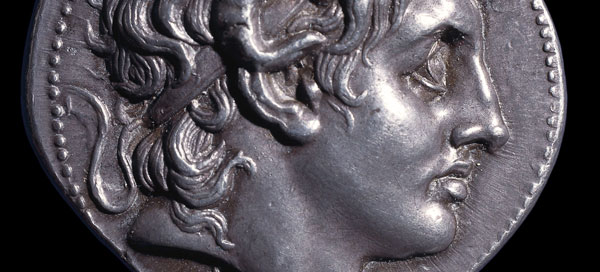
alexander coin

Editor's note: We're hosting Neil MacGregor's post here on the blog to mark the beginning of the second set of objects from A History of the World in 100 Objects on Radio 4 today. You'll find regular posts by curators and editors over on the History of the World blog and on the project's Facebook page - SB

On the eve of the second set of A History of the World broadcasts on Radio 4 I'm grateful for a chance to reflect on what's been, but also to look forward to what's coming.

Back in January we started this dauntingly ambitious year-long project with the very earliest objects made and used by our most distant ancestors, and travelled in time right up to the dawn of the so-called 'golden age' of Confucius, ancient Athens and the Persian Empire.

But, as you will soon hear, that was just the start. Far from sitting back and enjoying our objects' new celebrity status both here at the Museum and online we've been planning, researching, writing and recording the next set of broadcasts - in fact I'm writing now in a rare break from a hectic recording schedule as we put the finishing touches to the upcoming programmes.

From the 17 May we begin the next 40 episodes in our 100-part series. We launch with a week about the great Empire Builders from around 2,000 years ago - parachuting into a world dominated by the Roman Empire, Han China and the India of Ashoka and we end with a week which explores how the faithful use objects to connect with their gods. From a fourth century BC coin bearing the image of Alexander the Great to the sculpted head and shoulders of an Easter Island statue from around 1000 AD we are about to embark on another epic journey.

I've learnt a tremendous amount, not just about our collection and its power to tell stories, but about the patterns and themes that thread their way through world history. What's emerging more and more as we research and write is how inter-connected our history really is.

There is a tendency to imagine we are the first to live in a global world, when in fact international connections have been an enduring theme in world history for many thousands of years.

For me, there's a real delight in discovering, as we dig deeper and deeper that people are always preoccupied by the same issues - we're all concerned about the same things, no matter where we are or when we live.

Our current series runs through until 9 July, with the final set of programmes due to be aired in September. But of course the broadcasts are just one part of a tremendous project stretching to all corners of this country and, through the BBC World Service, beyond., We've been inviting you all to add your objects to the website and take part in making a collective history of the world.

So, I hope you'll be listening to the new series and I hope you'll be inspired to join the project and add your history alongside ours.

Neil MacGregor is Director of the British Museum and presenter of A History of the World in 100 Objects

Overkill? Roger Bolton on Radio 4's election coverage

Blog comments are currently unavailable. Find out more.

Post categories: , , , , 

Roger BoltonRoger Bolton13:25, Friday, 14 May 2010

wilson

Editor's note. This week's item from Radio 4's Feedback programme concerns the network's extensive coverage of the post-election drama in Westminster, 'busting' the schedule and coverage of the Liberal Democrats. Did Radio 4 get it right? Tell us what you think in a comment below - SB

"Deceitful weasels", "double crossing two faced shysters who would sell their mothers for political gain", "untrustworthy and treacherous."

That is how some gentlemen of the press described the Liberal Democrats for their negotiating tactics before they formed a coalition with the Conservatives. When David Cameron and Nick Clegg gave a press conference together in the garden of No 10 Downing St they were described as being like Morecambe and Wise.

You would not of course expect BBC journalists to give vent to such feelings but it had been a long night, or rather a succession of long nights.

I hope BBC News doesn't have to make overtime payments any more because instead of being tucked up in bed for the weekend, after the usual exhausting election night and the frenetic campaign which preceded it, the Beeb's journalists were still out on the streets of Westminster six days later, as cabinet posts were finally being allocated.

So it was thrilling but exhausting for them, how was it for Feedback listeners? Did they enjoy it as much as the reporters?

(Having worked on BBC election coverage in the distant past I was just plain jealous of those involved in the action. There is something thrilling about being with politicians who don't know if they will have a job tomorrow and have no more idea of what the result of the election will be than anyone else. Time stands still, personal fortunes change by the second. History is made in front of you).

Even the most poker-faced parliamentary candidate finds it difficult to disguise their emotions. Now they know their fate and everyone has had some sleep, we brought together a panel of listeners to discuss their views with the deputy Head of BBC News, Steve Mitchell, who is also Head of News Programmes.

In the Broadcasting House studio with Mr Mitchell were David Lloyd and Emma Blamey. Samera Haynes Khan was in a BBC Manchester studio and Brenda Steele was on the phone from the Black Isle, just above Inverness.

David Lloyd began our discussion with a comment about the leaders' debates:

In order to see this content you need to have both Javascript enabled and Flash installed. Visit BBC Webwise for full instructions

Feedback is now off the air until July but please keep in touch. We read everything you write and we are keen to come back all guns blazing.

Roger Bolton presents Feedback on BBC Radio 4

  • Listen again, get in touch with the programme, find out how to join Feedback's listener panel or subscribe to the podcast on the Feedback web page.
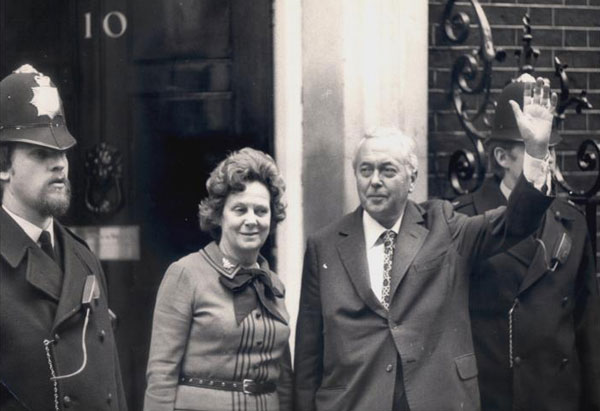
  • The picture, from the BBC's picture library, shows Harold Wilson leaving Downing Street with wife Mary during another dramatic period in Westminster, in 1974.
  • Radio 4 head of Scheduling Tony Pilgrim wrote about the network's extensive election schedule changes on the blog yesterday.

Schedule busting for election 2010

Blog comments are currently unavailable. Find out more.

Post categories: , , 

Tony Pilgrim09:19, Thursday, 13 May 2010

schedule

When to stay with the story and when to leave it and get back to business as usual? This is the question we have been asking quite a lot at Radio 4 over the past few days. And as many of you will know, on a number of occasions we have stayed with the story, extending news coverage and displacing scheduled programmes.

We do not do this lightly. Part of Radio 4's appeal is that, while complex, its schedule does not change shape very often. If you want to you can plan your listening for just those slots or programmes that you know will be there, according to the radio listings or as part of your regular habits. So finding that a news programme has been extended and what you thought you were about to hear has disappeared can be an upsetting experience.

But providing quality, distinctive news and current affairs coverage is a key part of what Radio 4 does. If the 'current affair' is as historic and unique as that which has evolved in Westminster since last Friday, it's expected that Radio 4 will be sharing and examining it with its listeners.

Yes there are rolling live news services available, and it is right that they stay with the big stories continuously. And yes we have a number of news sequences and other programmes on Radio 4 where we can look back at what happened an hour or two prior to coming on-air. Sometimes this is not quite enough.

We do our best to keep the key planks in place - though even The Archers might one day have to be delayed if there is something seismic launching at 1400 or 1900!

It won't happen very often, and we hope that most of the election-linked disruption to the schedule is behind us for the time being. Much of what we have displaced in the past weeks has had an airing elsewhere in the schedule, and is available on the iPlayer.

But we are a UK-wide, mass audience station. Just occasionally it will be right to bust the schedule, to help our listeners to remember "the moment I heard the news that...", and to help them do that together as one.

Tony Pilgrim is Head of Planning and Scheduling at BBC Radio 4

  • The Radio 4 schedules for FM and LW are on the Radio 4 web site. Changes to the schedule are always highlighted on the web site.
  • You'll also find a useful online radio schedule on the Radio Times web site.

Six Sony Golds for Radio 4

Blog comments are currently unavailable. Find out more.

Post categories: , , 

Mark DamazerMark Damazer08:38, Tuesday, 11 May 2010

Sony_Award.jpg

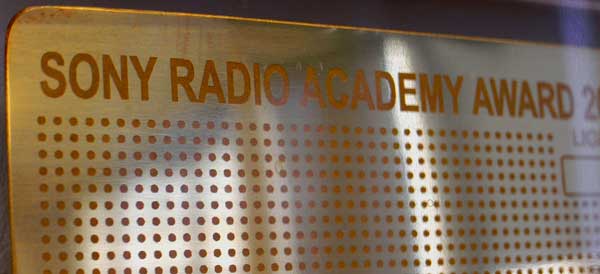
We had a good night at the Sonys - six Golds, four Silvers and five Bronzes (here's the full list).

Winning a Sony Gold can often be a career highlight and (no names) there were some awards last night, not just Radio 4 ones, that left a very big glow.

The margins on these occasions are rather fine. It is not obvious in most categories who is going to win. I sit at the table and try and pick the winner just before the roll call of honour is unveiled - and I don't get it right all the time. Far, far from it. Every now and then I am amazed by proceedings - sometimes pleasurably so - sometimes less so. But that is all part of the fun of the fair and I can say that I have judged the Sonys on several occasions and the judges take their work seriously. And the central Sony committee is impeccably chaired by Tim Blackmore.

It is the overall standard of Radio 4 that helps define the station. Everyone is spurred on by the demands of the audience and the standards the programme makers set for one another.

The Sonys take place at the Grosvenor House in Park Lane. There is no phone or Blackberry reception so I spent the evening in a febrile state (though repressed) trying to see where the politics of the nation was heading. The News teams broadly did not seem to be disappearing up and down stairs - so I assumed either that they too were blind to the outside world or that nobody has gone to the Palace. A correct assumption.

So - back on the election front - there will probably need to be more schedule changes to accommodate the drama. But keep with it - the coverage is good.

Mark Damazer is Controller of BBC Radio 4

  • The Sony Radio Academy Awards first took place in 1983 and are administered by trade body The Radio Academy. The full list of winners is on the web site and you can watch the awards ceremony (hosted by Chris Evans) too.
  • Radio 4's gold awards include 'best interview' for Jenni Murray's interview with dismissed Haringey director of social services Sharon Shoesmith. Listen to the interview here on the blog.

Roger Bolton interviews Archers editor Vanessa Whitburn

Blog comments are currently unavailable. Find out more.

Post categories: , , , , 

Roger BoltonRoger Bolton20:25, Sunday, 9 May 2010

Archers 1951

Editor's note: Feedback is Radio 4's weekly accountability programme. Each week, while the programme is on-air, we're publishing one item from the programme here on the blog for your comment. This week's item is about The Archers. Roger Bolton introduces it - SB.

Some Archers listeners remember a time when agricultural and rural issues dominated the programme, now they think it's all about sex. As evidence they point to Lillian's flirtation with Paul, and Pip spending the night with Jude, a much older man. Then there is Helen's attempts to become pregnant using donor insemination.

Mind you many of us feel that sort of thing pales in comparison with the steam that came from Jolene's shower a few years back. Feedback receives constant correspondence about the Archers so this week, partly to escape the constant election coverage of which many listeners have tired, I travelled to Ambridge with a panel of listeners to talk to the editor of the programme, Vanessa Whitburn.

I had a quick coffee in the Ambridge village hall beforehand with Linda Snell, to catch up on the latest gossip, and then went to the BBC's Birmingham studios where I met listeners Rhys Phillips from Cardiff and Siobhan Pitel from London. We were joined on the line from Radio Cumbria by Janet Mansfield and on the phone from the Cotswolds by smallholder Nell O'Connor.

In order to see this content you need to have both Javascript enabled and Flash installed. Visit BBC Webwise for full instructions

Next week is the last Feedback of the present series and in it a panel of listeners will be reviewing the BBC's election coverage with some of those responsible for it. If you want to be part of the panel please get in touch via the web site.

Happy Listening!

Roger Bolton presents Feedback on BBC Radio 4

  • Listen again, get in touch with the programme, find out how to join Feedback's listener panel or subscribe to the podcast on the Feedback web page.
  • The Archers is on-air six days per week, at 1400 and 1900 weekdays and 1000 (omnibus) and 1900 Sunday. The Archers web site has lots of useful information, including, at the moment, a poll about Helen's donor insemination plans and a link to the thriving Archers messageboards.
  • The Radio 4 blog spent a week with the Archers at the end of last year. Read the blog posts from Archers Week here. There are some photographs from behind the scenes too.
  • The photograph is from the BBC's picture library. The caption reads: "Robert Mawdesley as Walter Gabriel giving Harry Oakes as Dan Archer his opinion on the cow entered for the Borchester Show."
The making of Radio 4's election night highlights

Blog comments are currently unavailable. Find out more.

Post categories: , , , , 

Hugh LevinsonHugh Levinson20:09, Friday, 7 May 2010

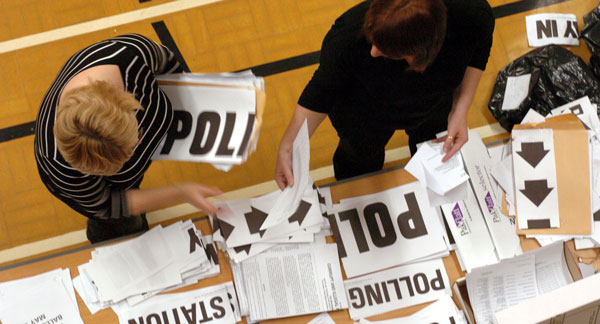
election count

Editor's note: listen to the 15-minute montage of Radio 4's election night coverage below - it's a real rollercoaster - and it was delivered minutes after the programme went off-air. I asked Hugh Levinson, who made the montage with colleague Tom Brignell, to tell us how they did it - SB.

Our mission: To boil down the election night's programming on Radio 4 into a single snappy podcast with all the highlights, ready for download the next morning. Simples!

Except for the fact that the studio we were using in the Radio Current Affairs department isn't really equipped for this task. A massive engineering feat by colleagues Jonathan Glover and Masood Ilyas got it into working order. I had perhaps foolishly agreed to stay up all night to make the podcast, as had studio manager Tom Brignell.

We had a foolproof plan to get through the wee small hours. We'd take it easy during the day on Thursday, roll up just before the start of the programme at 10 p.m., relaxed and ready to go. Somehow it didn't work out that way. Both of us worked a full day before we even got into the studio. However, as seasoned radio professionals, we'd ensured we were supplied with the appropriate resources. Namely a large bag of chocolate caramel shortcake and enough coffee to give Rip Van Winkle palpitations.

Then the fun began. I sat in one room, listening to the coverage from Jim Naughtie and Carolyn Quinn. I frantically scribbled notes - 50 pages by the time 6 a.m. rolled round - and marked up sections for Tom to cut. The only problem with this brilliant plan was my handwriting, which is apparently illegible to mere mortals like Tom. Somehow, he managed.

I was listening out for the magic moments: the breathless atmosphere of the counts at key marginals: the tearstained interviews with failed candidates: and of course the bit where Jim Naughtie talked about a horse getting into a polling booth. Around 3 a.m. I started to flag and was close to hallucinating, but perhaps that was just the bright lights of the set on the TV election special.

Some dramatic results and a spellbindingly unusual interview with Nick Griffin helped pull me through towards dawn. As 6 a.m. rolled round, Tom and I compressed the 8 hours down to a super-snappy 15 minutes. Doesn't time fly when you're having fun.

Click here to play the election night highlights.

Hugh Levinson is an editor in BBC Radio Current Affairs

Making podcasting more enticing

Blog comments are currently unavailable. Find out more.

Post categories: , 

Andrew CaspariAndrew Caspari17:05, Friday, 7 May 2010

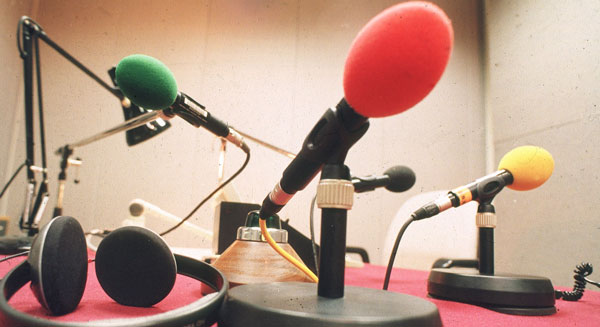
microphone

At BBC Radio we are pretty proud of our success with podcasting. Around 10 million editions of BBC podcasts are downloaded each month in the UK - Around 20 million across the whole world. The numbers are impressive.

However I often wonder whether we could do much better than that. "Ask not how many podcasts there have been but how many more there could be."

Listeners often tell us they would like to be able to save programmes and hear them when it suits them and being able to take programmes with you on an MP3 player or mobile phone is also attractive. On the other hand people also tell me that podcasting seems very complicated. It feels rather geeky or indeed expensive. So we commissioned some research and are going to experiment with some new ways of describing what I think is a really terrific offer.

Our first go is the new trail for A History of the World which John Humphrys has recorded. We worked hard to try to make the whole business enticing and simple and John is one of the least geeky people around:

In order to see this content you need to have both Javascript enabled and Flash installed. Visit BBC Webwise for full instructions

A History of the World has proved hugely popular with over 3.4 Million editions downloaded so far. It is unique in that we can offer the full series of podcasts forever. You can listen or download them from the A History of the World web site.

So if you think there are things we can do to make podcasting feel easier or make it more attractive do let us know. Words like 'subscribe' ("sounds like something you have to pay for") or 'download' ("I don't like clogging up my computer") are particularly unpopular. We will try to do better.

Meanwhile A History of the World is back on May 17th for 8 weeks or 40 more podcasts.

Andrew Caspari is Head of Speech Radio and Classical Music, Interactive

  • There are currently 262 BBC podcasts. Learn about them and subscribe here.
  • Give us your own suggestions for how to sell podcasts to the millions of people who haven't tried them yet - snappy catchphrases or clever communication ideas - in a comment below.

The Radio 4 Appeal: Contact a Family

Blog comments are currently unavailable. Find out more.

Post categories: , , , , 

Sally FlatmanSally Flatman14:37, Thursday, 6 May 2010

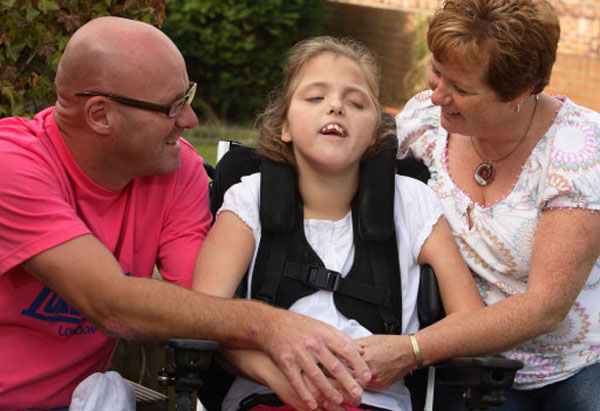
Contact a Family

Editor's note: last year listeners gave over £1.5 Million to the weekly Radio 4 Appeals. Here, producer Sally Flatman highlights this week's appeal, from Muriel Gray - SB

Please take 5 minutes to listen to Muriel Gray talking about a wonderful charity called Contact a Family. Listeners' donations to this charity could make a difference to hundreds of families who are bringing up a disabled child. Take a look at the charity's web site where families, who are, as Muriel explains, often very isolated, are put in touch with others who are facing the same challenges and given support and advice.

In her Appeal Muriel describes how Contact a Family has been a lifeline to many families with disabled children over the last 30 years and appeals for donations to ensure their work with often vulnerable families continues.

Listen to Muriel talking about the experience of families of disabled children:

In order to see this content you need to have both Javascript enabled and Flash installed. Visit BBC Webwise for full instructions

And listen to the appeal in full on the Radio 4 web site.

Sally Flatman is producer of the Radio 4 Appeal

Election day looms

Blog comments are currently unavailable. Find out more.

Post categories: , , 

Steve BowbrickSteve Bowbrick20:13, Wednesday, 5 May 2010

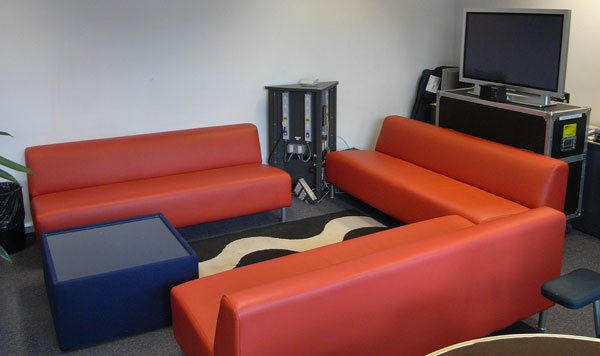
Sofas

Radio 4's election - like yours - is almost over. The BBC's election rules state that, from 0600 tomorrow, all discussion of the parties and their campaigns must stop until the polls close. On the blogs and messageboards this means we'll be asking people to stop leaving comments of a political nature during that period. Some forums and threads will be closed. The online guidelines are here.

In the meantime, I urge you pop over to the PM blog and listen to this hilarious item: Carolyn Quinn gives Eddie Mair a tour of Radio 4's election night studio - a facility that Eddie speculates "they must have spent hundreds of pounds on."

Tonight's PM saw the last of Tim Harford's enlightening ElectionWatch items - in which Tim disassembles the key campaign numbers and claims - from charter schools to opinion polls to net migration and national debt. You can hear all 23 of them on the More or Less web site. More or Less proper returns on 21 May.

One of the highlights of Radio 4's campaign (don't listen to me: ask Twitter) has been the three-nights-a-week treat of the Vote Now Show, a twist on the Now Show format involving commentators and reporters of all kinds as well as all the usual comic suspects. My favourite items were interviews with Robert Peston - on banks, a hung parliament and who really runs Britain - and Mark Kermode - reviewing the party political broadcasts, both of which were caught on video. Watch Peston here and Kermode here.

Another highlight of Radio 4's election coverage has been Today's panel of eight floating voters. Listen to the last of their contributions, from this morning's programme.

Politics junkies will have relished the extended editions of the World at One. I especially enjoyed 'Martha's lunch party' (with its Beatles theme tune and home baking) - this is the kind of stuff that has the current affairs addicts wishing it was an election all year round. Today's lunch guests were Tim Bell, Philip Gould and Tom MacNally.

Steve Bowbrick is editor of the Radio 4 blog

  • Radio 4's election night coverage starts at as soon as the polls close tomorrow evening and carries on until it neatly segues with the Today programme Friday morning.
  • Tonight's Vote Now Show is the last one. Listen to this week's editions on the Radio 4 web site or subscribe to the podcast (which will cleverly revert to the Friday night comedy after the election).
  • Tomorrow's PM is the special 'non-election edition', full of non-election content, much of it suggested by listeners. Like an oasis in the midst of all this election stuff for you election-phobics.
  • The photo shows the red sofas at TV Centre on which Martha's lunch club has taken place daily.

Roger Bolton interviews Mark Damazer for Feedback

Blog comments are currently unavailable. Find out more.

Post categories: , , , , 

Roger BoltonRoger Bolton20:25, Sunday, 2 May 2010

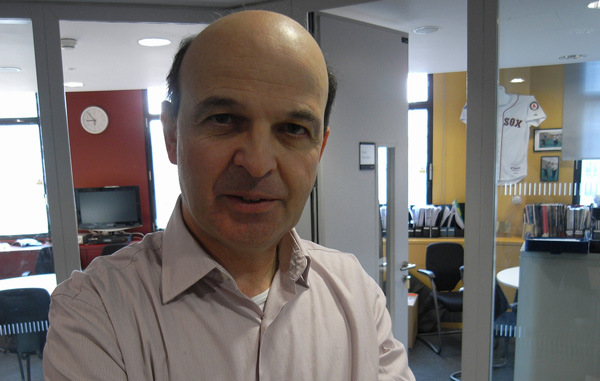
Mark Damazer

Mark Damazer, the Controller of Radio 4, does not hide his love for the new-found land across the ocean. His office on the fourth floor of BBC Broadcasting House is full of Americana, including a large framed Boston Red Sox shirt, and when I interviewed him for the latest edition of Feedback I thought I saw a portrait of George Washington in the corner.

I suppose it could have been a picture of Harry Redknapp, the manager of Tottenham Hotspur, the Red Sox's only rival in the sporting affections of the outgoing Controller, who is to become Head of St Peter's College Oxford in the Autumn, but Mr Rednapp, unlike the first President of the United States, does not have wooden teeth, or slaves for that matter.

Among the dreaming spires, in the Georgian elegance of the Head's Lodging, Mr Damazer will no doubt reflect on his six years in what he called "the best job in broadcasting by a 100 miles". How proud a record does he have? Most listeners seem to think he has done a pretty good job, certainly audiences are high, and there have been a large number of critical successes.

But some listeners wish he had been more restrained in his commissioning of all things American, some feel he overdosed on history in general, and others mourn the cutbacks in drama and the death of the Friday Play, attributable in part, they believe, to budget cuts. Then there is another termination for which he is undoubtedly responsible, that of the much loved UK theme.

On Thursday I talked to him about these concerns, and about the recent breakdowns in transmission, and the playing of the wrong recordings among other unfortunate presentation errors. I also asked him whether he and other radio bosses and their producers take seriously what their listeners think, as apologies by BBC representatives on Feedback are pretty rare.

Before we began he was keen to point out that he was far from being a lame duck Controller, that his successor will not be appointed for some weeks, and that he had a lot of major decisions still to take. He also agreed to come on the next series of Feedback to talk about some of his favourite Radio 4 programmes. Then he started to deal with his listeners' concerns.

In order to see this content you need to have both Javascript enabled and Flash installed. Visit BBC Webwise for full instructions

By the way can I just add about the outgoing Controller that he has been a staunch supporter of Feedback, and has always been prepared to come and face the music. I hope his successor feels the same way.

Roger Bolton presents Feedback on BBC Radio 4

More from this blog...

Categories

These are some of the popular topics this blog covers.