Archives for October 2009

Live blogging Front Row from Maida Vale

Blog comments are currently unavailable. Find out more.

Post categories: , , , , , , 

Steve BowbrickSteve Bowbrick19:00, Friday, 30 October 2009

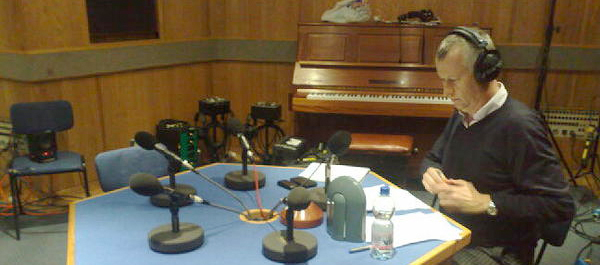
John Wilson recording Front Row in Maida Vale studio 5

1900 Studio MV5, Maida Vale. All around me is the organised chaos of the studio's 75th anniversary celebration. We're on-air in 10 minutes. Bill Paterson, soprano Jane Manning and composer Anthony Payne are in the studio already.

1910. Listen live to the programme here https://www.bbc.co.uk/programmes/b00nds0r.

1915. On air. Presenter John Wilson is walking down from the street talking into a mike. We expect him in the studio about...now.

1918. Poet Paul Farley arrived carrying a sheaf of notes - he claims not to have finished the poem yet!

1924. If you're tweeting about the event, use the hash tag #maidavale.

1930. In the next studio, a funk act is playing for Craig Charles' 6 Music show. Pic here.

1936. We're listening to a tape about the Radiophonic Workshop. Bill Paterson, Jane Manning and Anthony Payne are remembering Delia Derbyshire. "What a character she was..."

1940. Paul's poem is hand-written in a big blue manuscript book.

1943. An incredibly evocative tape of Maida Vale history. Joy Division, Ivor Cutler really stood out for me - my Peel legacy.

1945. Paul Farley tells me he's only feeling the stress of producing his poem now. He looks exhausted.

2012. In the green room. Production team and guests winding down. Taxis arriving. Not sure if live blogging a short programme like Front Row really works. What do you think? Is it worth doing again?

Steve Bowbrick is editor of the Radio 4 blog

  • Front Row is Radio 4's nightly arts review programme - on at 1915 Monday to Friday. Listen again to the Maida Vale special. And scroll to the bottom of this page for a short video of John Wilson at Maida Vale.
  • Maida Vale's 75th anniversary was pretty busy. The hash tag was #maidavale

Norman Painting, 1924 - 2009

Blog comments are currently unavailable. Find out more.

Post categories: , , 

Steve BowbrickSteve Bowbrick16:00, Thursday, 29 October 2009

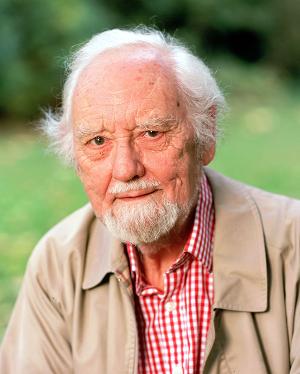
Norman Painting who played Phil Archer in The Archers

Editor's note. I asked Vanessa Whitburn, Editor of The Archers, for some words about Norman Painting, who died today:

The sad news about the death of Norman Painting is only a few hours old; and already messages of love and condolence have been pouring in from friends and fans alike. They are a tribute to the man who made the part of Phil Archer very much his own; and has been an integral part of The Archers for almost 60 years.

My own memories of Norman are of a colleague, and a trusted friend. In the 1970s, when I was a rookie producer, I remember him taking me out for a meal, to talk to me about what it was like being an actor, and on 'the other side' of the mic. It was a generous gesture for someone like me to be given such a master class by one of radio's biggest stars - and his advice stays with me today.

I take such comfort from the fact that Norman got his wish, and continued playing the part for which he was so well loved, right up until the end of his life. Norman was with us at The Mailbox only two days ago, recording with Patricia Greene, transforming studio 9D into the kitchen at Glebe Cottage. Norman was always glad to be in studio, and it is testament to his love of his work that, however he was feeling, once the script was in his hand, he became Phil Archer. He and Paddy even enjoyed a joke about the mischievous side of Phil and Jill's relationship, with Norman insisting that he was still scared of Paddy whenever he thought Jill was being a little too fierce!

The Archers - actors, production team and fans, will miss Norman terribly. I am thankful for his wonderful contribution to the programme, and also for his friendship over many years.

Vanessa Whitburn is Editor of The Archers

Live blogging Jon Ronson's radio features workshop

Blog comments are currently unavailable. Find out more.

Post categories: , , , , 

Steve BowbrickSteve Bowbrick14:07, Thursday, 29 October 2009

15:27. Closing the discussion, Jon and Laura play us moving clips from a feature about a woman misled for years by her husband who pretended to be a deep cover CIA operative until he was revealed to be a bigamist.

15:07. Jon hates the kind of 'authoritarian' reporting that characterises mainstream media. He retains the capacity to believe the stories he covers, doesn't dismiss them.

14:58. An audience member asks if Jon writes everything down in advance but we learn that he doesn't: "I won't plan. I love the fact that it's free flowing." He can do this because everything he does is pre-recorded.

14:48. Interweaving a story about being thrown into a lake in Cardiff aged sixteen with a disquisition on memory - a clip of an interview with Graham Linehan.

14:43. Jon celebrates the speed of making radio features but he and Laura slightly disagree about the time it takes to edit a radio programme. 2 days or 4-5 days?

14:37. Now we're hearing a clip from David Shayler's press conference at which he announced that he is a messiah. Another example of Jon's readiness to keep quiet and let the story unfold.

14:33. Now we're hearing a clip from Jon's conspiracy programme in which he swears at 7/7 conspiracy theorist David Shayler: a huge compliance issue at the time but a hit with listeners who thought it was a blow struck for rationality.

14:28. On the key question of critical distance, Jon says you can't be too distant and critical: you have to be respectful of even the strangest opinions: even when interviewing Robbie Williams about aiens or David Icke about lizards.

14:22. One of Jon's big worries is alienating contributors so he's happy that Robbie loved the programme. He also remembers making a programme with Ian Paisley and being told afterwards that both republicans and loyalists involved like the programme.

14:20. Introducing a clip from his Robbie Williams alien abductee programme, Jon says he learnt an important lesson - when to keep quiet - by allowing Robbie to take over presenting the programme, for instance.

14:15. Introducing 'Jon Ronson On', Jon tells us that he initially wanted to bring NPR favourite 'This American Life' to Britain...

14:09. Jon Ronson and his producer Laura Parfitt have started with their workshop about making radio features with an anecdote about how they met - visiting a sex shop in France, apparently.

More good RAJAR news

Blog comments are currently unavailable. Find out more.

Post categories: , , 

Mark DamazerMark Damazer09:29, Thursday, 29 October 2009

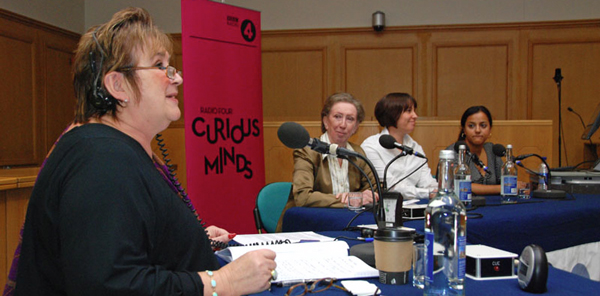
Jenni Murray presents Woman's Hour in front of an audience at Derby University

Well - the latest figures for Radio 4 are very, very gratifying. Indeed they are the best since a new measuring methodology was introduced a decade or so ago - and it's not possible to compare them with what happened before.

Briefly, 10.22 million people listen to at least 15 minutes a week - but lest you think they only listen for 15 minutes a week before rumbling around for Planet Rock or daytime television - they listen on average for 12 and a quarter hours.

Radio 4 listening accounts for 12.4 % of the radio market. That's close to a record too. The figures neither include podcasting nor do they capture the listening to programmes after they've been broadcast on the iPlayer. So overall consumption of Radio 4 is a bit higher than the RAJAR figures.

I need to say (not, I know, for the first time) that RAJAR figures alone go nowhere near determining how we are doing. Radio 4 is about quality and range. Excellence (subjective as it is) matters more than anything. But it is obviously good that more people are tuning in.

I don't think there is a single reason for the growth in the numbers... but I do think that it is the particular demands and nature of the audience that drives us all on. We know that the listeners want intelligent conversation, argument, debate, drama and wit. The many producers who successfully make programmes for Radio 4 - both in-house and from independent companies - know that the audience expects quality with no short-cuts. In other words - the audience raises our game.

The individual programme figures take a bit of time to digest - but we do know that our biggest programme, Today, with 6.6 million listeners across the week is steaming along and there are terrific figures too for Woman's Hour and You and Yours.

Mark Damazer is Controller of BBC Radio 4

  • RAJAR (Radio Joint Audience Research) is jointly owned by the BBC and commercial radio trade body the Radio Centre. Participating listeners are asked to record their radio listening in quarter-hour time blocks for one week.
  • The RAJAR figures for 'linear listening', not including on-demand listening or podcasts, in a table and the official quarterly press release (PDF).
  • The Guardian's RAJAR story leads on Radio 4's performance
  • The picture (by Stan Was) shows Jenni Murray presenting Woman's Hour in front of an audience at Derby University. The RAJAR figures show that Woman's Hour is doing particularly well.

Radio 4 amongst the students

Blog comments are currently unavailable. Find out more.

Post categories: , , , 

Steve BowbrickSteve Bowbrick08:42, Thursday, 29 October 2009

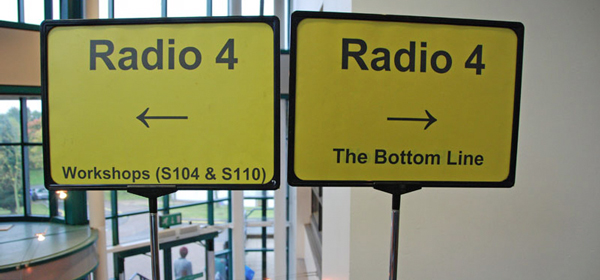
BBC Radio 4 signs at Derby University

The Bedford campus of the University of Bedfordshire is home to a small advance guard of Radio 4 programmes for the next two days. The goal, as explained by Mark Damazer here, is to bring to the attention of the nation's students the range of Radio 4 programmes they'd be sure to like. I'll be in Bedford too and I'll be covering events for the blog.

Follow @radio4blog on Twitter for updates from sessions and recordings. If you're at any of the events and using Twitter, use the hash tag #R4UniTour so we can keep track of the conversation. Keep an eye on the Radio 4 pool on Flickr for pictures from the event (mostly by Stan Was who's already uploaded a lot of good ones from the first leg of the University tour).

And if you're a student or a staff member at the University, take a look at the special pages on your web site or get over to the Campus Centre Theatre in Bedford (the events aren't open to the wider public). Today you'll find workshops and masterclasses from the BBC College of Journalism, from the BBC's writersroom project and from top newsreader Chris Aldridge. A features workshop from producer Laura Parfitt and Jon Ronson, a BBC careers exhibit and recordings of With Great Pleasure and The News Quiz. Tomorrow there are more workshops, including more from the writersroom and one about social media by... me. And recordings of Laurie Taylor's Thinking Allowed and Nick Mohammed: Apollo 21.

Steve Bowbrick is editor of the radio 4 blog

Adapting Our Mutual Friend for radio

Blog comments are currently unavailable. Find out more.

Post categories: , , , , , 

Jeremy Mortimer12:00, Tuesday, 27 October 2009

In order to see this content you need to have both Javascript enabled and Flash installed. Visit BBC Webwise for full instructions

Of course making a Hollywood film, or directing at the National Theatre may be all very well (I wouldn't know as I haven't done either) but there are times when there is simply nothing more rewarding than being in the radio studio working on a really meaty drama serial. Over the last few months I've had the chance to work on the twenty episode dramatisation of Dickens' Our Mutual Friend, and the Radio 4 Blog people thought it might be an idea for us to share some of the behind the scenes stuff about the making of a big radio drama. So here is my diary of the work that went into the first, crucial part of the process - the scripts.

And you can listen to a short conversation between me and writer Mike Walker here:

In order to see this content you need to have both Javascript enabled and Flash installed. Visit BBC Webwise for full instructions

October 2007. The last day of recording Dombey and Son. We are doing the Dickens narrations with Alex Jennings, and he asks which Dickens we're going to do next. Mike Walker (writer) Jessica Dromgoole and I (producers) have been having snatched conversations about this, but haven't reached a conclusion. Mike and I have worked on four Dickens dramatisations for the R4 Woman's Hour drama slot - Nicholas Nickleby (2001), The Old Curiosity Shop (2003), and David Copperfield (2005). Dickens' novels seem to fall so naturally into short episodes - possibly because he wrote them in serial form. The characters seem to be perfectly formed for radio, and the audience has responded well to the brilliant Dickens mix of comedy and high drama. So what next?

May 2008. The decision has been taken, and we have sent the proposal to Radio 4 Drama commissioner Jeremy Howe. We have gone for Our Mutual Friend. We're a bit nervous about this because it is Radio 4 Controller Mark Damazer's favourite Dickens. But we're excited by the challenges posed by Dickens' sprawling novel (his last complete work) in which corpses, identities and reputations rise and fall in the tidal reaches of London's great river.

July 2008. We get the green light. Our Mutual Friend will be broadcast in twenty episodes starting in November 2009. We have already done a breakdown of the story into the four weekly parts, but now we have to break it down into its fifteen minute episodes, making sure that no episode uses more than seven characters. It is quite a challenge. We book the drama studio in Broadcasting House for nine days recording in May 2009.

September 2008. Over the summer we have all been re-reading the book. Mike submits a revised episode breakdown and we have a long meeting in which we sort some key questions about the plot, and try to get to the bottom of the character of John Rokesmith - the Mutual Friend himself.

November 2008. The first ten scripts come in. Always an exciting moment. How will the characters behave - do we care about them. It is clear immediately that Bella Wilfer is going to be a star. Feisty, funny and impetuous. We're still not so sure about Rokesmith. Who is he?

December 2008. With recording just a few months away the pressure is on. We now have 15 of the scripts, but we know they will need to go through a couple more drafts. We're confident that Mike can do it. He seems to be able to live and breathe Dickens. He doesn't so much adapt the books as re-make them for radio. Every episode needs a cliff-hanger, and every character needs their own moment in the sun.

January 2009. 2 January 2009. My email to Mike Walker:

I think you have done a grand job in pulling it all together - and there are some truly excellent scenes. But I reckon that for draft 2 we need to do quite a bit of honing and polishing just to keep the listeners on track, and we need to underline the two key romances of the story so that they know whose lives they are following. I found that the Riderhoods, and to a degree the Wegg/Venus stories slightly got in the way at times, and I found my attention wandering. Also lost track of Bradley and Eugene. Really hard to underline without being too obvious, but we can use Dickens more, and I think that it is about getting the nuances right in the story.

We now have first drafts of all twenty scripts. We need a long script meeting to sort out the key moments in the climax of the story - a business of multiple revelations.

February 2009. Second draft scripts come in thick and fast. We still need to make more of the Dickens narration. We are strict with ourselves in the use of this. It is not to be used to tell the story - that's the role of the drama. But we want the listener to be able to see how the characters affect their creator. Dickens has written that his characters tend to write themselves. He watches their antics and is often surprised by what they do.

March 2009. Third draft scripts come in. All the stories now interweave in a way that we think the listeners will be able to follow, and the various denouements seem to work. There are some exciting action sequences which will be tricky to pull off in the studio, but we're up for the challenge. Jessica and I have started a scene breakdown, which will become a vital tool as a recording schedule.

April 2009. The Radio Drama Company - a small team of actors contracted to the Radio Drama Department - is a crucial resource for us, and we have now cast quite a few key roles from the company. Music is also crucial to the production. I have just been to a showcase of graduates from the National Film and Television school and was very struck by the work of a young composer, Roger Goula. Jessica and I listen to his work and invite him in. Roger appears undaunted by the challenge of writing music for twenty episodes of a radio serial, or by the fact that we want him to present us with key themes before we start recording.

1st April. We get the good news that Alex Jennings is free to take the role of Dickens. Of course his availability might change, but it feels like a good start.

On the day that we receive the final scripts (9th April) we start casting in earnest. Our wish list is a mix of old friends and new actors we have never worked with before. We start sending out scripts.

20th April. Our first choice for the part of Jenny Wren is Nicola Miles-Wildin, who Jessica auditioned over the phone. Nicola uses a wheelchair and some of the production team need to complete wheelchair evacuation training in Broadcasting House. We spend a few hours lowering each other downstairs in a chair with caterpillar tracks.

22nd April. The recording schedule has been completed. Over eight recording days we will be recording a new scene every twenty minutes. Jessica and I will direct on alternate days.

1st May 2009. 10.00 am. Twenty-two actors assemble, together with Mike and Roger, in a windowless room in Bush House for the readthrough, which will take most of the day. Everyone is nervous, but excited. Alex Jennings starts:

Behold! London. And the river - silver and black under the moon - silver and silent... A big man, hunched at the prow - grizzled hair - wind blown face... peering up-river at the coming tide.

Jeremy Mortimer is Executive Producer, BBC Radio Drama

  • Look out for further blog reports on the recording process, with contributions from Jeremy's fellow-producer Jessica Dromgoole, composer Roger Goula, studio manager Colin Guthrie and members of the cast.
  • Radio 4's 2007 production of Dombey and Son
  • A fascinating account of the serialisation of Our Mutual Friend in 1864 and 65 by Robert L. Patten at Rice University and of the great dust-heap from R.H. Horne.
  • We'd love to hear your thoughts about Dickens dramatisations you have heard and enjoyed on the radio. And which of the novels do you think Radio 4 should tackle next?
  • There are production photos of the whole cast, taken for Radio 4 by Phil Fisk, here.

Got a question for Olympics Minister Tessa Jowell?

Blog comments are currently unavailable. Find out more.

Post categories: , , , , 

Steve BowbrickSteve Bowbrick09:12, Tuesday, 27 October 2009

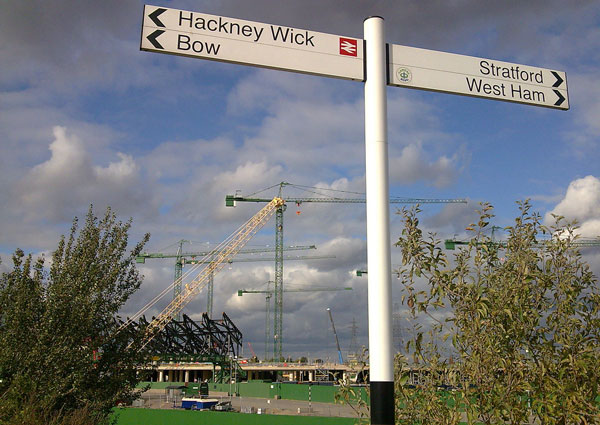
Signage for Olympics 2012 London

Paul Scoins, who works on You & Yours, emailed me: "I wondered if this might be worth flagging up... We've got Tessa Jowell on today to take calls on people's views on the 2012 Olympic legacy."

The programme looks like this:

First half:

  • Are you still as enthusiastic about the Games as you were when they were won?
  • What kind of impact do you think the Games will have on the whole of the UK?
  • What will be the economic impact of the Games? Should the money be spent elsewhere?
  • Are you concerned that there is a metropolitan bias to the Games?

Second half:

  • Is the infrastructure needed for the Games to be a success in place?
  • What will be the legacy of the Games - long term jobs, investment in sport, culture?
  • Where is the 'added value' to be had? Is the UK making the most of the tourism opportunities?

If you'd like to join in and question the minister, the lines are open now. Call 03700 100 444 or fill in the form on this page. Full details are on the You & Yours home page.

Paul is particularly interested to hear from people directly affected by the Games construction and people who live in Stratford or the other affected areas of East London.

Steve Bowbrick is editor of the Radio 4 blog

Vote vote vote! For your favourite neglected book

Blog comments are currently unavailable. Find out more.

Post categories: , , , 

Mark DamazerMark Damazer08:02, Sunday, 25 October 2009

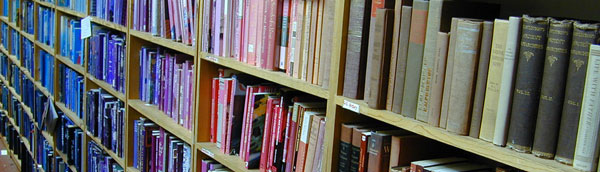
Rainbow books - arranged by colour

We are coming up to half-way through our initiative to bring to light brilliant books that have been unfairly/unreasonably/incorrectly/shamefully cast aside - by public indifference/daft publishers/the cruel hand of fate/rotten luck. Mariella Frostrup, Queen of Books, is interviewing a glittering group of 10 authors on Open Book. Each author champions a book that - in their view - has been unreasonably neglected.

The authors are: Ruth Rendell, Susan Hill, Beryl Bainbridge, William Boyd, Colm Toibin, Michael Morpurgo, Hari Kunzru, Val McDermid, Joanna Trollope and Howard Jacobson.

Last week Mariella interviewed five of them - and in this week's programme (Sunday 1600, repeated Thursday 1600) she will interview the other five. All ten of them are passionate about their neglected classic - so the obvious thing to do is to read the lot.

But in the meantime - vote. Because you will decide which one of these books is top of the neglected classics pile and we will then adapt it on Radio 4 - probably in the Classic Serial slot. So you're helping shape the schedule. Who knows - we might even do more than one of the ten.

You vote by going to the website. Voting will start immediately after Open Book is transmitted on Sunday.

We'd also like to hear what your favourite neglected classic is. And we may well reflect what you say on the programme too in coming weeks. I have my own neglected classic - which I happen to believe is the finest novel, neglected or not, written in the twentieth century. I am afraid/delighted you will end up hearing it at some point on Radio 4. But for the time being I want you to vote for the ten glorious specimens on offer. We have already received a lot of correspondence about Neglected Classics - so please do your literary duty!

Mark Damazer is Controller of BBC Radio 4

Planet B, series two

Blog comments are currently unavailable. Find out more.

Post categories: , , , 

Kip BerengerKip Berenger16:21, Friday, 23 October 2009

In order to see this content you need to have both Javascript enabled and Flash installed. Visit BBC Webwise for full instructions

Editor's note: here's a first for the Radio 4 blog. A post by a fictional character. Kip Berenger will make his appearance in series 2 of Radio 7's Planet B, starting on 29 November. He spoke to lead writer Matthew Broughton:

I suppose you'd call me a heavy user. I'm going to say that up front -even if it makes me sound a bit geeky. But, I'm a big fan of virtual game playing - and Planet B goes further than any other. It's out there. It's serious. I don't want to sound over earnest. But my brain and I spend a lot of time in Planet B.

I'm totally comfortable in its 'virtual universe of infinite possibility.' It was that tag line that attracted me - that and "Planet B where you can be whoever you want to be." I was curious immediately. They were saying it was somewhere I could lose myself - and that's what happens with all the best games - total immersion.

Of course, what I know now, that I didn't know then - is that Planet B is much more than just a game. It's a wild wild place.

Planet B is made up of millions of virtual worlds - big and small - each different in nature and sophistication.

I love that I can hop from world to world. You never know what you're going to get - or how you're going to get it! My favourites have genre themes. It's like starring in your favourite films. One moment you're in a Western having a high noon gunfight with someone calling themselves East Clintwood - the next you're being chased by zombies - or having an intimate date with the most beautiful woman in the world. It's a ride.

Some of the harming games can be pretty edgy. I've been 'killed' on more than one occasion. It makes things more authentic. You're thrown out, and have to log back in and start again... There are cheats too. Experienced gamers can get ahead. I'm an experienced gamer and a good one. (I feel like a tool writing that last sentence - but if I don't blow my own trumpet no one else will.)

People talk about Planet B being 'dangerous.' Well... it is owned by a corporation, that has an iffy 'history'... and some people are not what they seem. Rogue avatars (avatars not controlled by human beings) can be unpredictable. And... You do hear horror stories about people dying for real while their minds are online... but I read somewhere that every year people die by drinking tea that's too hot. So what are you going to do? I'm not unduly worried. It keeps me on my toes.

I'm completely aware that Planet B is a universe created by architects and technicians - but, as soon as you upload your brain - that's it - the real and the virtual blend - and they've got you. You know... In a good way! (I think...)

Things have been changing recently. Keeps it interesting. I could live in Planet B full time. And maybe, one day, I will.

Kip Berenger is... erm... a character in a comedy drama series

  • Series two of Planet B starts on 29 November at 1800 (repeated at midnight) and continues weekly at those times.
  • Series one of Planet B is on Radio 7 now. Listen again here.
  • The clip at the top is a unique binaural trailer for the programme. Put your headphones on for a pretty absorbing effect. And you can embed the clip on your own blog or profile. Just click the 'embed' button, copy the code and away you go.
  • Here are three more trailers for the new series:

In order to see this content you need to have both Javascript enabled and Flash installed. Visit BBC Webwise for full instructions

In order to see this content you need to have both Javascript enabled and Flash installed. Visit BBC Webwise for full instructions

In order to see this content you need to have both Javascript enabled and Flash installed. Visit BBC Webwise for full instructions

And now, live from Derby...

Blog comments are currently unavailable. Find out more.

Post categories: , , , 

Steve BowbrickSteve Bowbrick14:57, Friday, 16 October 2009

R4postcards.jpg

A small corner of Radio 4 has decamped to Derby for two days - to record some big programmes (inlcuding a fantastcially exciting live Woman's Hour this morning, with lots of audience participation), to run some workshops with students and to generally spread the good word with the students and faculty of Derby University.

I've been busy recording short vox pops - I've been asking students to tell me four things they know about Radio 4. Many photographs have been taken, both by me and by Stan Was, a Radio 4 producer. And I've been covering events on Twitter (the hash tag is #R4UniTour). Over the next few weeks we'll be visiting two more universities - at the University of Bedfordshire and in Cardiff - and I'll be covering events here on the blog. Watch this space.

Steve Bowbrick is editor of the Radio 4 blog

Changing the weather

Blog comments are currently unavailable. Find out more.

Post categories: , , 

Mark DamazerMark Damazer11:56, Monday, 12 October 2009

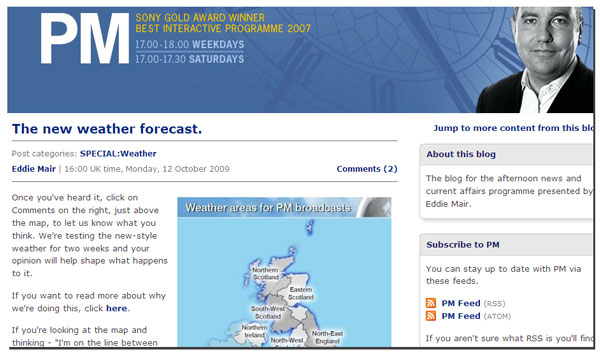
Changes to Radio 4 weather on the PM blog

For quite some time we've been musing about the weather on Radio 4.

We know it's a very important part of the schedule and I am frequently assailed by listeners who think we don't give it enough attention, are not clear enough or are negligent about their part of the country - and more. Much more.

Last month PM and iPM tried various different ways of doing a weather forecast - and there was a great deal of audience reaction. Peter Gibbs - from the Met Office - was the man at the helm.

From today we are going to try a new way of telling the audience about the weather on PM. The key changes are:

  • Forecasters will use a new standard map of UK weather regions, so the naming of region will be consistent.
  • Cear signposting of each region before each bit of weather information.
  • The forecaster will pick out some major population centres and the narrative will normally flow from South to North (although this will change in the case of major weather disruptions elsewhere).

So - we'd like to know what you think. Respond here or on the PM blog and I will peruse your responses. It's not a vote - and we will have to decide what we think is editorially best - but I will note your applause, abuse, doubts etc. With interest.

  • The changes are previewed on the PM blog and you'll be able to hear the first of the new forecasts at 1757 this evening.
  • UPDATE: less than an hour after the first of the new bulletins the PM blog has already attracted 87 comments about it.

An interesting week for Radio 4 in the media

Blog comments are currently unavailable. Find out more.

Post categories: , , 

Steve BowbrickSteve Bowbrick15:03, Friday, 9 October 2009

Evan Davis and Jim Naughtie on Today

The Today Programme is always in the news. The Telegraph runs with the Voice of the Listener and Viewer's gong for Today (and Radio 4 in general). In the same paper Tim Walker wonders why Today didn't send Naughtie or Humphrys to the Tory conference in Manchester.

The Times (and everybody else) carries coverage of Ben Bradshaw's angry Twitter attack on Evan Davis' Osborne interview on... Today.

Guardian radio reviewers are now 'curating' the stuff - providing links to iPlayer so you can listen to the programmes they review. It had to happen. And, of course, it's almost all Radio 4.

Jane Thynne in The Independent says that the assembly of noblemen and women on Monday's Start The Week "felt a lot like gatecrashing the House of Lords' tea room".

On her blog, Joanna Leahy, an 'Irish nomad in Norway', was surprised by a call from The World Tonight PM. She was interviewed about Norway's status (according to a UN report) as best place to live on the planet.

Back in The Telegraph, Jod Mitchell reviews four Radio 4 documentaries, including last week's Black men can't swim and of presenter Matt Blaize he says: "he did what a documentary-maker should do - investigate a single question and suggest a straightforward answer."

And, to finish, Twitter - as usual - is full of clever thoughts about Radio 4 programmes. Don't take my word for it - search for yourself.

Steve Bowbrick is editor of the Radio 4 blog

Making History is back

Blog comments are currently unavailable. Find out more.

Post categories: , , , , , , , , 

Vanessa CollingridgeVanessa Collingridge08:58, Friday, 9 October 2009

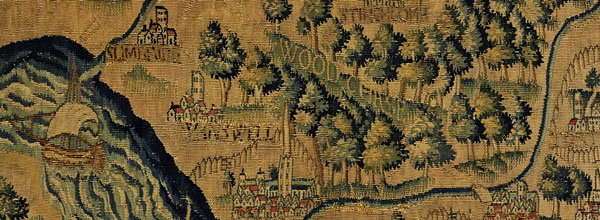
Detail from the Sheldon tapestry map of Gloucestershire

Series 23 of Making History is under way and the email traffic is pouring in. Two weeks ago, we somehow managed to find three consecutive days for location interviews in which Nick must have driven about 500 miles as we worked our way around Norfolk, Bury St Edmunds, Tetbury in Gloucestershire and Oxford amongst other places, arguing about the best way to structure an interview or govern the country... (the conversations get pretty wide-ranging after day two when we're stuck in the car and we've run out of family news and "who's doing what" trivia).

We strike gold in East Anglia when we meet up with an old friend of mine, Dr John Davies, who's Curator of Norfolk Museums and a world expert on Romano-British culture and Queen Boudica in particular. He takes us out to see a group of archaeologists who are in the last few days of a major dig to locate some Roman remains - and at the eleventh hour are just revealing a complete human pelvis in the brick red soil - the first time it's seen daylight in nearly two thousand years. This is all pretty amazing stuff and it raises as many questions as it answers.

Next morning, we visit the local museum in Mildenhall to hear the story of the first race from Britain to Melbourne. The staff there have done a great job of tracking down all sorts of memorabilia, from pictures to flying gloves and oral histories about the event from local people. My dad was an aeroplane nut all his life and it's suddenly clear why he was so obsessed: these photos from his childhood are almost unbelievably glam. Those pilots really were the rock and roll stars of their day...

Our next story takes us to a churchyard in deepest Essex where we look for signs of the old cattle drovers who bypassed here on their route from the grazing lands of Wales to the markets of London and Southeast England. We meet up with a listener who has done some fantastic research into the men and their travels and we pass a very enjoyable morning deep in conversation and recording.

Another huge schlep in the car and we're in Oxford with me failing dismally to remember how to get to the Bodleian Library (the sign of a misspent education). My sense of direction is legendary... for being absolutely appalling. So Nick avoids putting me in the driving seat if it's humanly possible. However, after at least two or three phonecalls for assistance, Nick Millea, Map Librarian at the Bod, emerges and guides us safely inside. What he has to show us is quite astounding: the Sheldon Tapestry Map dates from the 1590s and is an exquisite piece of workmanship. Displaying part of Gloucestershire, the silk and wool map lays out miniature pictures of every village, town and landscape feature of significance in the sixteenth century. It seems far more detailed than the only other map available at the time - by the Elizabethan cartographer, Christopher Saxton. So how did the cartographers get this information and how accurate are these pictures?

Unusually for Making History, it's not our listeners but Nick Millea himself who is asking for our help. He wants the Making History audience to take a look at the Sheldon map of Gloucestershire (there's a link from the Making History home page) and then compare that with any surviving landscape features from the period. For example, does the picture of Horsley compare with the village today? And what about Tetbury or Beverston Castle? If the woven images are found to be based on reality then it makes the map hugely significant as it will be the first time that we know of in Britain where people have gone out into the landscape to make actual surveys that are then incorporated into the map itself.

It's nice to think that our series will be quite literally making history...

Vanessa Collingridge is presenter of Making History

  • Making History programmes are archived on the Radio 4 web site indefinitely so you've got plenty of time to listen to episode one of the new series. You should get your skates on, though, if you want to help the Nick Millea with his Sheldon Map challenge.
  • The picture is a detail from the Sheldon tapestry map of Gloucestershire. There's a much bigger version on the Bodleian Library's web site and that's the one you should use if you plan to compare its features with the real world to help Nick Millea.

Radio 4 garlanded

Blog comments are currently unavailable. Find out more.

Post categories: , 

Mark DamazerMark Damazer10:36, Thursday, 8 October 2009

Today studio

Last night The Voice of The Listener and Viewer - a group that campaigns for quality television and radio, whether from the BBC or elsewhere, garlanded Radio 4 programmes.

A large number of broadcasters - editors, controllers, commissioners, broadcasters - were asked to choose their five favourite radio or TV programmes over the past 25 years. The results were revealed last night at BAFTA in a small theatre full of broadcasting panjandrums - past and present. Hosted by Andrew Marr.

I had voted - for three radio programmes and two television ones. I will not reveal my radio choices. On the TV front I think I chose Edge of Darkness and Blackadder - or it may have been Newsnight or Channel 4 News. I can't quite remember.

Suffice to say Radio 4 did spectacularly - perhaps embarrassingly - well. Number 25 - Test Match Special. Number 16 - In Our Time. Number 13 - From Our Own Correspondent. Number 4 Clue. Number 1 - repeat Number 1 - Today. And for good measure - The Proms on Radio 3 finished runner up. It's a very good spread of what Radio 4 has on offer.

Among the TV programmes in the top 25 were - Edge of Darkness, Blackadder, Morse, World in Action (Death on The Rock), State of Play, Our Friends in the North, Newsnight, Channel 4 News, Jewel in The Crown etc. So we were in illustrious company.

I grant you the VLV is more interested in high quality broadcasting than many - and I detected a natural empathy for Radio 4 - but even so this was a wonderful moment for Radio 4 and for radio in general. It's a tribute to the programme makers and the talent who created these programmes and a reflection of the lust the Radio 4 audience has for quality - whether in News and Current Affairs, ideas or comedy.

We will celebrate soberly and parsimoniously - but we are much cheered. And more than 25 years after the arrival of breakfast television Today goes from strength to strength. There remains a huge appetite for the programme - the occasional wart and all. Because it delivers impartial, vigorous, broad and - yes - witty journalism that is unmatched at that time of the day. By a crack team.

Mark Damazer is Controller of BBC Radio 4

Afghanistan: Is It Mission Impossible?

Blog comments are currently unavailable. Find out more.

Post categories: , , , , 

Steve BowbrickSteve Bowbrick19:01, Wednesday, 7 October 2009

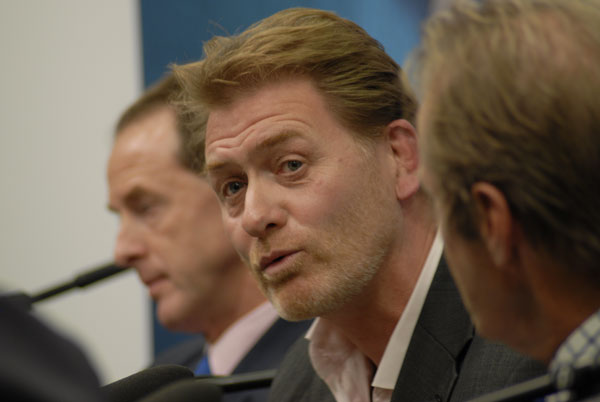
Afghanistan debate

Eric Joyce MP.

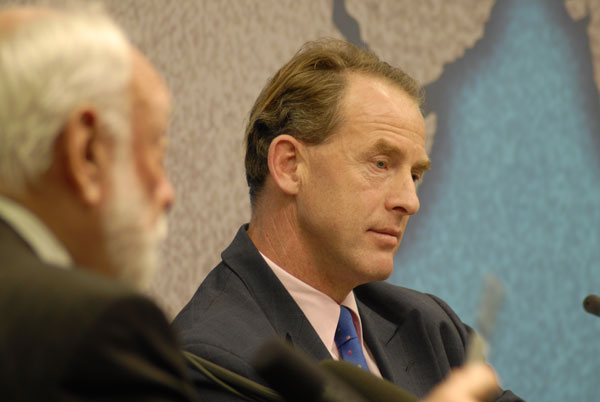
Afghanistan debate

Brigadier Buster Howes, Head of overseas operations, MOD.

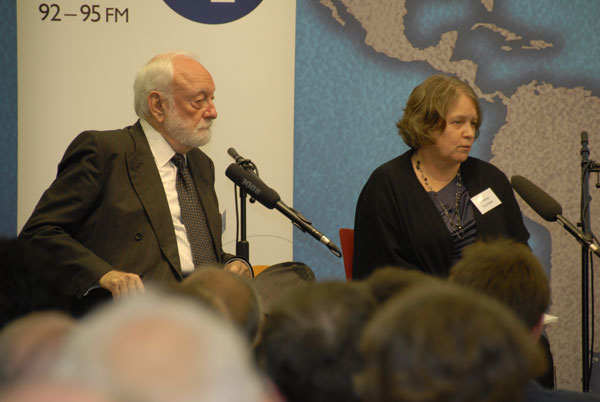
Afghan debate

Francesc Vendrell, former EU Special Representative to Afghanistan and Lindsey German, Stop the War Coalition.

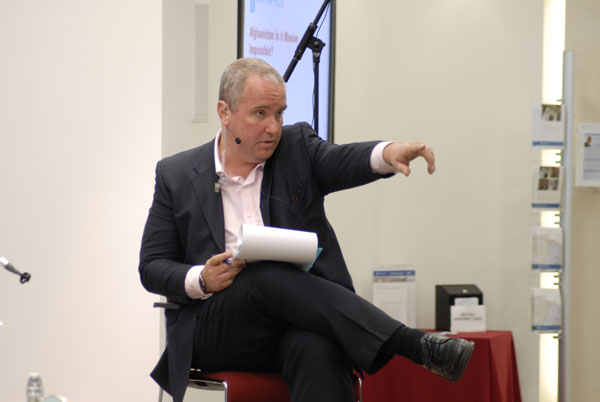
Afghanistan debate

Eddie Mair, presenter

Afghanistan debate

Eddie Mair, presenter

To warm you up for tonight's debate about the war in Afghanistan, chaired by Eddie Mair, here are some pictures taken at the recording. They were taken by photographer Tully Chaudry.

Steve Bowbrick is editor of the Radio 4 blog

Steve Bowbrick is Editor of the Radio 4 blog

What are your big money worries?

Blog comments are currently unavailable. Find out more.

Post categories: , , , 

Paul LewisPaul Lewis17:24, Wednesday, 7 October 2009

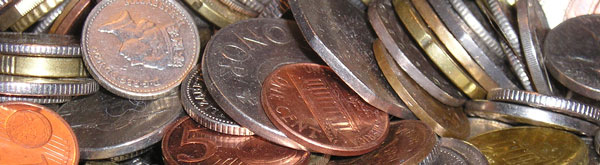
Coins

I ask because Money Box Live will be live from Glasgow on Wednesday October 14 as part of the BBC's Money Matters Roadshow. The programme will be taking questions live from an audience at the Buchanan Galleries shopping centre on savings, investments and pensions.

Last time we did this - in Manchester in February - I was really pleased to meet the people asking the questions, and dozens more around the show throughout the day, to talk money. Hundreds of people were helped throughout the day. The queues for advice on saving, investment, and pension planning were by far the longest. So this time we have decided to take those as our topics for Money Box Live.

I would like to hear in advance what you - Radio 4 blog readers - would like to ask about cash savings, investing a bit of money, or putting hard-earned wages into a pension. I can't promise we will answer your specific query. But I will make sure that the main subject areas you raise are covered one way or another. Click here to let me know.

The Money Matters Roadshow will be open all day from 8am to 6.30pm at the Buchanan Galleries. So if you happen to be in Glasgow on Wednesday 14 October why not come along for free money advice?

There will be 30 financial experts offering confidential help to all comers and you will see some of the BBC's top financial journalists. Plus you can join the audience and watch Money Box Live go out live - and see what we all look like! You might even get your question answered live on air.

Money Box Live from Glasgow is broadcast live on Wednesday 14 October at 3pm on Radio 4. And there will be an extra half hour of questions and answers published on our website later.

I would love to see you there!

Paul Lewis is presenter of Money Box and Money Box Live

News for online listeners using RealPlayer

Post categories: , , , 

Steve BowbrickSteve Bowbrick17:04, Wednesday, 7 October 2009

Editor's note: this blog post is by Mark Kortekaas (BBC Audio & Music), Ian Myatt (BBC Nations & Regions) and Karl Kathuria (BBC World Service). I'm 'cross-posting' here because I know a lot of Radio 4 listeners still use RealPlayer to listen online - SB

At BBC Radio we try to deliver the best experience for users of our streaming services. We constantly review our services to make sure they deliver 'public value'. The four drivers of public value are: Reach, Quality, Impact and Value.

When streaming services are evaluated against these measures, we take into account where different formats might need to be implemented, evolved or deprecated.

The streaming service provided in RealMedia format has been with us at the BBC since 1996. At the time it was the best option available, but more recently alternative methods of delivery have become just as important. These include Windows Media and Flash.

When evaluating services with our public value tests along with the costs of the services, we came to the decision that RealMedia was something we needed to phase out.

Continue reading this post and leave comments on the Radio Labs blog where it appears in full.

Today's Disasters Emergency Committee Appeal

Blog comments are currently unavailable. Find out more.

Post categories: , , , , , , , , 

Steve BowbrickSteve Bowbrick09:59, Tuesday, 6 October 2009

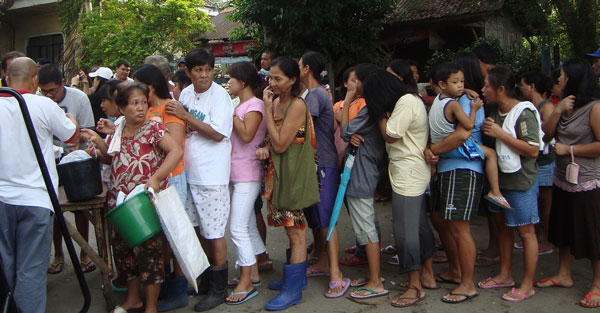
Typhoon Ondoy Philippines

The Today programme finished a few minutes early this morning so that the network could fit in one of its occasional Disasters Emergency Committee appeals - this one for the people of Indonesia, The Philippines and Vietnam affected by last week's typhoon and earthquake. You can listen again to the appeal and make a donation on the programme's web page, where you'll also find instructions for how to make a donation.

Female Sexual Abuse - Breaking the Silence

Blog comments are currently unavailable. Find out more.

Post categories: , , , 

Mark DamazerMark Damazer13:27, Monday, 5 October 2009

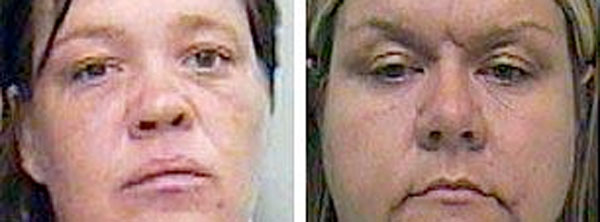
Vanessa George and Angela Allen mugshots

We've made a late change to the schedule tonight at 2000 to put in a programme; Female Sexual Abuse - Breaking the Silence - presented by Penny Marshall. The programme - about women who sexually abuse children - talks to those who have been abused and includes accounts from those who have been abusers.

We have been working on this for a while - and had thought we would broadcast it after the judicial process had run its course in the Vanessa George case. We had expected that to be a little later than now... but the documentary was more or less made by the time of last week's court case ( with the guilty plea ) and so we decided to transmit it a little earlier - with the George case fresh in the memory.

It's a moot point as to how often we should make this sort of change. This one was a tight call. In the end it's a matter of judgement and instinct about when the programme will be at its freshest and/or sharpest for its audience.

So some of the newspaper listings and The Radio Times (through no fault of theirs) is wrong . We have deferred transmission of the programme that was due to be broadcast at 8 pm tonight - the second of a two part documentary series on the attempt to regenerate Morecambe - for a fortnight.

Naming a new science programme

Blog comments are currently unavailable. Find out more.

Post categories: , , , , , 

Alexandra Feachem18:30, Friday, 2 October 2009

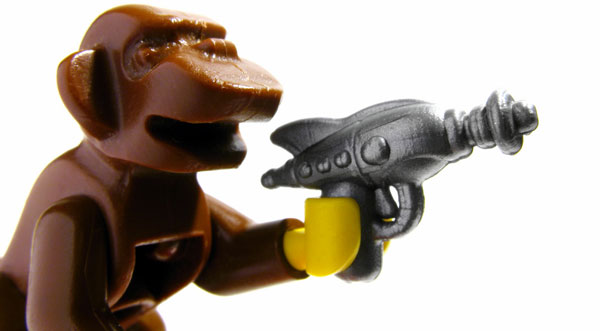
Monkey Raygun

We've got a new programme in the works. It's an irreverent, witty, unashamedly opinionated science show with physicist and former pop sensation Brian Cox and comedian and science enthusiast Robin Ince. But what shall we call it?

Less than two months until first transmission and even more alarmingly, only one week until our first publicity deadline and still no title - ahh! How, in just a few words, do you convey all that the comedy genius of Brian Cox and the physics know-how of Robin Ince (or is that the other way round?) will bring to the greatest science show you'll ever hear... and I'm not biased obviously, I'm just the producer.

The Science Unit have been mulling hard and it turns out that we are a lot funnier then we thought - or at least we think we are - it is very hard to tell now. Early favourites included several plays on already established titles including I'm sorry I Haven't a Clone and Drop the Dead Dolly. Some truly terrible puns emerged including The Abi Titmus Test (vetoed for fairly obvious reasons), and Here's looking at Euclid which is so bad it's almost brilliant.

Well known science phrases have been put to good use: Particle Zoo, Periodically Funny (we could shoot ourselves in the foot with that one - suppose we aren't?!), and The Infinite Variables have all made the short-list. And our working title of Top Geek, a sneaky nod to our ambition to do to science what Jeremy Clarkson has done for cars, and never meant as a serious consideration, has turned out to be a surprise contender, although it does seem to be the Marmite of titles - loved or hated (more candidate names here). Robin came up with the genius title of The Infinite Monkey Cage. It's so weird its sort of perfect and is certainly a favourite amongst the production team and the Science Unit... but does it tell us what the programme is about and does it matter?

And Mohit Bakaya, who commissions science programmes for Radio 4, adds:

More generally, the issue of titles is an interesting one. In the age of podcasting and iPlayer it makes sense for titles to have that 'Ronseal' quality - to do exactly what they say on the tin. That way people searching for business programmes, for example, know what they're in for when they come across In Business. But what about The Bottom Line? Would they know that that would be of interest too?

Yet sometimes purely descriptive titles can seem a little prosaic. How does one convey attitude, wit, something new and different and be recognisable in the age of the internet? That's the challenge!

Chain Gang on Radio 7 - drama that you write

Blog comments are currently unavailable. Find out more.

Post categories: , , , , 

Paul ArnoldPaul Arnold16:10, Thursday, 1 October 2009

chain

The nice people at Radio 4 have asked if I'd like to blog about a drama I'm producing for its digital sister-station, Radio 7. It's not something we've been asked to do before, so I'm guessing they, like me, are intrigued by the rather unusual nature of it.

The first thing to say about it is that it's short. Each episode is only a couple of minutes long, but it does mean that we can feature it on 7 in those gaps which would be filled with things like the shipping forecast on Radio 4. And we're hoping at that length it will go down well as a podcast too - we're adding in a bit of behind-the-scenes recording for that.

The other thing about it is that it isn't finished. This isn't just carelessness or brinkmanship on our part, but rather a deliberate ploy to engage our listeners in the process of storytelling. We've asked the award-winning short story writer Robert Shearman to write the first episode. That went out on Radio 7 on Saturday night at 1755, after which we've been asking people to head off to the website to send in their storylines for episode two. We've just been looking through those, and there's an amazing sea of creativity out there. Robert is at work now dramatising the best one which we'll record tomorrow and broadcast on Saturday. Hopefully it will all build to a fitting climax just before Christmas (we've some special plans for this), and we can all sit down with our turkey sandwiches on Boxing Day to enjoy the whole story together for the first time.

And what's the story about? Well, Brian and Susan Ferguson are enjoying a relaxed meal on their honeymoon. Brian heads off to pay the bill, and suddenly there's another woman at the table, issuing Susan with a dramatic warning. The stranger's name? Mrs Ferguson... the other Mrs Ferguson. There is a further twist, believe it or not in a two minute episode, but I'll leave that for you to hear - the whole thing will remain on iPlayer through the Autumn.

Now we know you're a clever lot on Radio 4, curious minds and all that, so it'd be great if we could persuade a few of you to defect for just a few minutes to join our Chain Gang. Listen out on Saturday night, and then and get writing some storylines for episode three...

Paul Arnold is a producer at BBC Radio 7

  • Chain Gang is on Radio 7 at 1755 Saturdays. You can listen to the whole series until a week after the final transmission thanks to the wonders of the 'series catch-up trial'. You're invited to take a survey about series catch-up here.
  • At the end of episode one you can hear a fascinating interview with the drama's cast about the bewildering process of recording a drama that hasn't been written yet.
  • The previous series of Chain Gang won a Sony Radio Academy Award.
  • There's a podcast to subscribe to too.
  • Robert Shearman wrote 'Dalek', the episode of Doctor Who which brought the Daleks into the 21st century.

More from this blog...

Categories

These are some of the popular topics this blog covers.