All you need to know about Nielsen symphonies ...

Phil Hall
BBC Symphony Orchestra
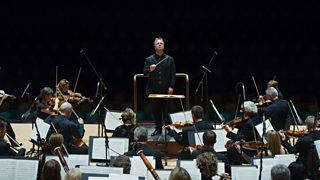
Sakari Oramo conducts the BBC Symphony Orchestra. Photo: Sim Canetty-Clarke
BBC Symphony Orchestra chief conductor Sakari Oramo continues his Nielsen series on Friday the 16th, with the Third Symphony. It starts with 26 bangs, as Sub-Principal Viola Phil Hall explains in this insider’s guide to the symphonies
Anniversary years often provide a useful opportunity for reviewing a composer's output. In 2015 we have the sesquicentenary of the birth of two of Scandinavia's greatest symphonists: Finland's Jean Sibelius and from Denmark, Carl Nielsen. In our 2014-15 Barbican season the BBCSO has elected to celebrate the six symphonies of Nielsen with chief conductor Sakari Oramo. A canny decision as Sakari has just finished recording them all for the Swedish BIS label with his ‘other’ orchestra, the Royal Stockholm Philharmonic, to much critical acclaim.
One of the nice things about doing a complete symphonic cycle (with the possible exception of those by Beethoven and Brahms) is that new discoveries will be made because you have probably not played them all before. There are inevitably some that are performed much more than others and often it is the earlier ones that are overlooked in favour of the composer's more mature works.
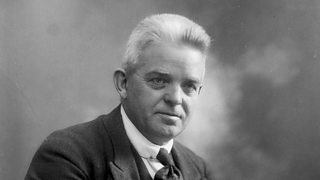
Carl Nielsen
It has been 25 years since we last played Nielsen's first two symphonies. When he wrote his first symphony Nielsen was still a jobbing second violinist in the Royal Danish Orchestra in Copenhagen. He must have been a brave man (I can't imagine having a big piece of mine performed by critical colleagues!) yet the work was a success. Working on it with Sakari I was struck by some of the piece's novel ideas ‒ unusual use of instruments and key relationships ‒ but more so by how much like the Nielsen we all know and love it sounded. Sure, you can detect other influences (notably Brahms) but the piece already bears his quirky stamp, trademark energy and difficult fugal writing.
Even more so the Second Symphony which positively brims over at the start. As with four of the others, Nielsen gives this symphony a subtitle ‒ The Four Temperaments ‒ and each movement reflects these human moods brilliantly.
The optimistic Third Symphony ‒ Sinfonia Espansiva ‒ (my personal favourite which we will perform on Friday) starts with a bang; well, 26 bangs actually, the same note repeated, before launching into a typically urgent theme. Calm is restored in the bucolic second movement with the unusual inclusion of a wordless soprano and baritone.
The best known and most dramatic is the Fourth, known as The Inextinguishable; it is a continuous ‘tour de force’ relenting only for a brief quasi-Baroque passage in the middle. Written during the First World War, the double timpani ‘battle’ at the end is usually worth the ticket price alone!
Another battle of sorts takes place in the Fifth symphony, this time with the orchestra and a snare drum which seemingly tries to disrupt things in the first movement. The piece is also quite war-like but unusually in just two parts. In the second part the drummer plays in the distance, off-stage, as if defeated by the orchestra. Twenty years ago this led to an embarrassing situation when the BBCSO played it in Munich. The over-zealous usher tried to stop Kevin Nutty playing his drum off-stage saying: ‘You cannot play that here, there is a concert going on!’
The final Nielsen symphony is probably the most difficult and (ironically) sub-titled Simple Symphony! Although he reverts to four movements it is easily his most quirky and contains a movement for just wind and percussion instruments (with no real melody!) and is probably the only symphony ever written to end with a bassoon raspberry!
