
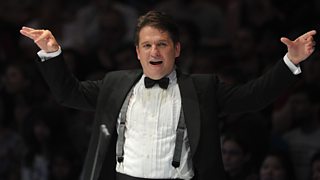
Keith Lockhart, Principal Conductor, BBC Concert Orchestra. Photo: Chris Christodoulou
2014 marks the beginning of the worldwide observance of the centennial of World War I. As such, it is the perfect time to reflect on the changes wrought by 'the war to end all wars.'
When the smoke cleared in 1918, most of the social and political structures that had defined life in Europe since the beginning of the Holy Roman Empire had disappeared. This change not only had profound political consequences, but was reflected in people’s new attitudes toward social convention, religion, and artistic expression. Composers, and other artists, simply didn’t recognise the world around them.
World To Come
As a cataclysm like the First World War closes some windows for good, it opens doors for fresh voices and new ideas. In the years immediately following the conflict, innovation and new energy in classical music moved away from its traditional European epicenter. New York was the quintessential 'modern city' of the 1920s. Skyscrapers shot upwards, and the energy and optimism of its inhabitants soared right along with them. Composers availed themselves of the edgy harmonies and catchy rhythms of jazz – the first musical art form that was truly and indigenously American. This was the world in which Aaron Copland penned his Music for the Theatre in 1925. This was not the Copland we revere today – the gentle poet of the American expanse – but the Copland of whom Walter Damrosch (who was about to conduct the premiere of Copland’s Organ Symphony in 1924) said, 'I’m sure you’ll all agree that if a young composer can write such a symphony, in five years he should be capable of murder!' John Alden Carpenter also made full use of this new and intensely American musical material in his 1921 ballet Krazy Kat, in which the iconic characters in this oh-so-Roaring Twenties comic strip come to life on stage. Leonard Bernstein was born in the waning months of the First World War, and his 1944 ballet Fancy Free evokes New York at the very top of its game.
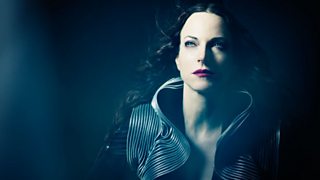
BBCCO Maya Beiser Photo: ioulex
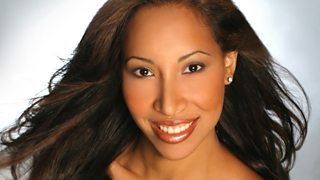
American soprano Nicole Cabell: performing Knoxville - Summer of 1915. photo: Devon Cass
Some composers, like Arnold Schoenberg, resolutely left the past behind them and marched into the future, brandishing a musical language that would have been unrecognisable to nineteenth century ears. Others looked to the past for reassurance – Maurice Ravel based his Le Tombeau de Couperin on Baroque dance forms from the heyday of the French empire, but dedicated each individual movement to the memory of one of his friends lost in battle. George Butterworth was another casualty of the war, one of 'the flower of England’s youth', cut down in his prime, leaving us to speculate on how profound his influence over music in the 20th century would have been. Other composers, like Leoš Janáček and Béla Bartók, looked to their country’s folk tales and folk music of a simpler time, ironically echoing the surging nationalism of the late nineteenth century – which itself fanned the flames of the conflict to begin with. Perhaps my favorite music on this programme is Samuel Barber’s sublime Knoxville: Summer of 1915, a setting of James Agee’s words that evokes a simpler time, 'when old people sat on their porches, rocking gently and talking gently.' Although Barber’s and Agee’s world was one far removed from the European conflict, its sweet and sad nostalgia for a World Once Known is the thread of continuity through this entire programme, as composers stared into an uncertain future, and longed for a world that would never be again…and perhaps never was.
World To Come
Monday 24 February, 7.30pm
Southbank Centre: Queen Elizabeth Hall
Broadcast on BBC Radio 3 at 2pm on Tuesday 1 April
World Once Known
Monday 31 March, 7.30pm
Southbank Centre: Queen Elizabeth Hall
Broadcast live on BBC Radio 3
