Tracing the roots of Singapore’s traditional music was always going to be tricky as this tiny island seems to have been a passing place with a constant stream of traders, settlers and those journeying through. Malay, Indian, Chinese, Tamil and Armenian are just some of the cultures that have arrived in Singapore over the centuries.
But I’ve since discovered that a result of this passing through of people has led to Singapore becoming home to traditions now lost in their country of origin, where traditional music techniques and tastes have metamorphosed. As such, pockets of Singapore preserve historic musical genres, like a sort of living cultural museum – something you’d be forgiven for missing at first glance; give the country’s slick and modern image.
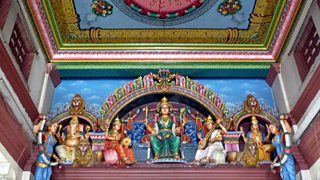
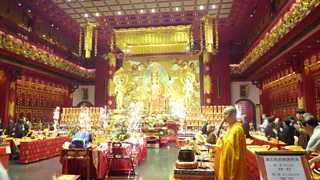
Walking down a street in china town, my colleague Robert Winter and I hear bursts of temple drums from the old Sri Mariamman Hindu Temple. Further along at the Buddha Tooth relic temple a Buddhist monk intones to the chimes of giant bells. I’m very aware that there is no one sound of traditional Singapore.
...So, as a taster of one style among many we pay a visit to the
Thau Yong Amateur Music Association...
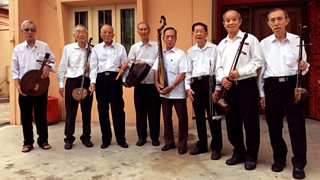
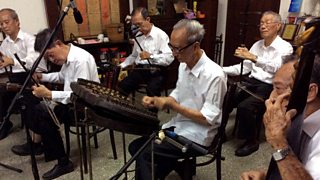
Rob and I are greeted by a room of immaculately dressed senior gentlemen in white shirts and pressed trousers. Mr Yeo is one of the longest standing members of the group. He tells me they play a style of Waijiang music once the preserve of educated and elite gentlemen living in the Guangdong province of China. He says this particular style of music is now extinct on the mainland.
Everyone here plays from memory, kept in tempo by the pulse beaten out on small wooden blocks. Apparently there used to be a teacher here who taught the tunes – the basic lines were learnt from a score, then embellished and pulled about as the musicians became familiar with them, similar to a jazz musician playing a standard. Except here there is a room full of players each negotiating their own way round the melody of ‘Little Peach Red’, a sound that needs to be heard to be fully appreciated.
That evening we meet students from the
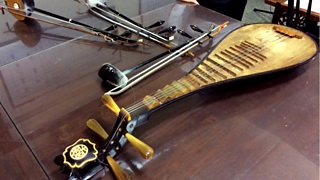
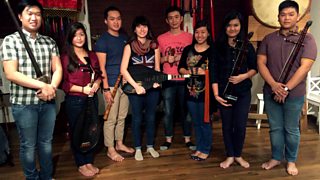
Siong Leng Musical Association, who play Nanyin or ‘southern pipes’ music – another export from southern china. Lyn, one of the students tells me ‘People think this is music for old people, like funeral music. I myself thought this until I really listened to the words. Actually it’s very sad, the songs are about romance, love and eloping; it never ends well’.
Nowadays Lyn and the group play Nanyin music at temples, libraries and museums encouraging more Singaporeans to learn about this part of their country’s heritage – one of the many diverse layers that lie beneath this city’s shining surface.