BBC BLOGS - Radio 3 Blog

Archives for August 2011

Backstage with Petroc

Blog comments are currently unavailable. Find out more.

Post categories:

Petroc TrelawnyPetroc Trelawny|14:51 UK time, Wednesday, 24 August 2011
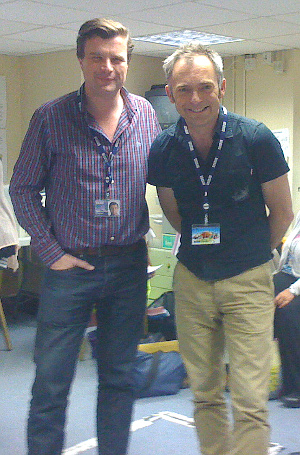
Photo of Petroc Trelawny in the production office with Charles Hazlewood

One of the new features of TV coverage of the Proms this year has been the prominence given to Late Night concerts. If the cameras have been in for the first show of the day, why not keep them there and record the second? Already BBC4 viewers have enjoyed a sequence of Percy Grainger’s music in a programme exploring its folk roots, with Northumbrian piper Kathryn Tickell; Nigel Kennedy’s solo Bach concert goes out on last night-eve, and you can catch the visual tricks, as well as the home-made sound effects of the Spaghetti Western Orchestra this Friday night on BBC 4 at 7.30pm.

Last Friday, Charles Hazelwood and I got to chew the cud in the tiny (and not-in-any-way-Tardis-like) room allocated to Proms presenters. Ritula Shah joined in the fun as well. The room – in reality a boxed-off corner of the main office – is where we do research, iron shirts, and sit on the off-white sofa learning scripts. I think it was white once... Ritula, star presenter of Radio 4’s The World Tonight, made her Proms debut alongside Charles in the live broadcast of the first of the Chamber Orchestra of Europe Brahms concerts. Then I took over to introduce Brahms for solo piano, and Brahms re-thought by Schoenberg, in the late concert.

As if things weren't complicated enough for presenters, I fronted it live on Radio 3 (you can listen to the concert here) as well as recorded for TV. The first bit was straightforward enough – a link from the platform to introduce the wonderful pianist Angela Hewitt. ‘Can you speak direct to the the camera,’ said the TV producer in my ear. Simultaneously, from the radio producer standing next to me: ‘You’ll need to ignore the camera and address the whole audience’. Always good to be in agreement! It seemed sensible to go for the latter option in the end, a good illustration of the sometimes complex issue of balancing the needs of the ticket-buying RAH audience, and the license-fee paying listeners and viewers at home.

The next link, into the Proms premiere of Schumann’s Introduction and Concert Allegro, was exclusive to Radio 3; TV viewers will see a brief interview with Angela at that point, recorded earlier. Then things got really complicated. BBC Scottish Symphony Orchestra conductor Andrew Manze, great sport that he is, had agreed to chat live about Schoenberg’s orchestration of Brahms’ first Piano Quartet during the long stage move. We relocated to a dressing room backstage, where after the Schumann I filled for two minutes for radio listeners, telling them about upcoming Proms. Then I silently manhandled our maestro on to the right spot, dropped my script on the floor, eyed the camera, and paused for just a second before introducing Andrew, and chatting with him about Brahms for five minutes.

The aim was to make it sound smooth and uninterrupted for radio listeners – I think we got away with it, thanks in a large part to Andrew’s enthusiasm and passion. You can judge for yourself how it all comes together on TV; it’s shown on BBC4 on Friday 2nd September. Not that you’ll be watching for the presenter – we merely offer packaging and context – it’s the music that counts, and the BBC Scottish Symphony Orchestra, Angela and Andrew managed to produce a thrilling concert which perfectly suited the late night mood.

Read the rest of this entry

Musicians' Guide to Noise and Hearing available now

Blog comments are currently unavailable. Find out more.

Post categories:

Ruth HansfordRuth Hansford|10:50 UK time, Tuesday, 23 August 2011

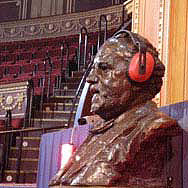
Image of bust of Henry Wood wearing ear defenders

For the last three years, BBC Safety Manager Ruth Hansford has been conducting research into musicians' hearing. The result is a fascinating and entertainingly illustrated full colour 48-page guide on noise, its effects, and how to deal with them it's freely available and should be consulted by musicians of every genre and non-musicians with an interest in the subject. Here, Ruth describes how the guide came about, and how professionals can contribute to Part II a Toolkit for Managers

Did you know the BBC is the UK’s second-biggest employer of professional musicians? The Ministry of Defence employs around 1,300, while the BBC has over 400 instrumentalists and singers on full-time contracts, plus a roster of hundreds more freelance musicians we engage for specific projects – for example a programme that requires double or triple woodwind and brass, a big percussion section, or a specialist instrument like a theremin – or if a player goes off sick.

We have a lot of ears to look after. We’ve known for many years about the risks associated with prolonged exposure to the high sound levels that orchestras and singers are capable of producing. Where in the past there was a deal of scepticism about 'Health and Safety gone mad', it seems there is now more of a consensus that there is a real issue to address, and that we must all work together to ensure we keep the show on the road looking after our musicians’ hearing and equipping them for a long, healthy career in music.

For a whole year starting with the 2008 Proms season, I investigated the noise exposure of BBC musicians across a range of projects, from Rodrigo’s Guitar Concierto de Aranjuez for guitar (louder than you’d expect) to Carl Orff's Carmina Burana (every bit as loud as you’d expect), up and down the country in over 30 venues.

Three things came out of this: first, there’s no ‘one-size-fits-all’ solution for classical music as there are so many variables – repertoire, venues and individual musicians; second, it requires collaboration between musician colleagues, teachers and managers at all levels; and finally, it’s a long haul – it takes time to change old habits and think about hearing protection as a matter of course.

Last July we held a seminar in Broadcasting House bringing together 140-plus people from the sector: orchestras of all kinds including pit orchestras, musicians, acousticians, health professionals and safety colleagues including several from the Health & Safety Executive, the unions, conservatoires and many more. This was the basis of a wide-ranging partnership that has resulted in the publication of a Musicians’ Guide to Noise and Hearing, now available on the BBC website.

Read the rest of this entry

Notes from a Composer. Part 3 : Time Travel

Blog comments are currently unavailable. Find out more.

Post categories:

Michael Zev GordonMichael Zev Gordon|15:40 UK time, Wednesday, 17 August 2011

Composer Michael Zev Gordon is writing a new piece for the BBC Symphony Orchestra. Here's his third post explaining the process and his thoughts along the way.

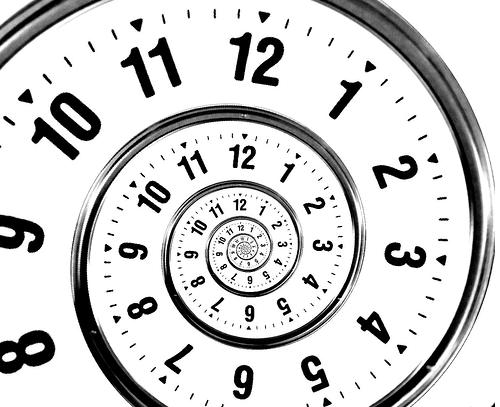
time travel image

Time changes. We know that the same period of time feels very different depending on so many factors: what you are doing, the intensity you are doing it with, your interest in it, your mood, what's going on around you. An hour can feel like a minute, a minute and hour. And things that seem an eternity in the present can appear as almost nothing in the memory. Music's orbit is time; as I heard the Finnish composer Kaiha Saariaho once remark: we composers are the masters of time. Our notes are shaped in it; they direct the listener through it. Music can appear to speed up the passage of time or spread it out to unchanging stillness, or anything in between. And I want to bring this into explicit focus in my new piece.

Up until the later 19th century and into the 20th, interest in how time passes in music was fairly rare. Pieces were of course fast or slow. But rates of change of musical events were comparatively steady regardless of speed, directedness towards cadence points standard. Even now, most music does not play too much with time; a 3-minute fast piece does not necessarily appear to last less than a 3-minute slow one. And yet, if you think, say, of the stillness and subtle fluctuations of notes and silence at the start of Debussy's Prelude a l'aprés-midi d'un faune, or the shifting patterns in Morton Feldman's music, you know very different kinds of musical time are involved than in Mozart or Tchaikovsky. Much of this interest in time in the 20th century and beyond has, I think, to do with slowing it down, towards a sense of what I like to call infinite time. There are specific ways to do this: by subverting or submerging pulse or regularity, or conversely, as in some of the early minimalists, reaching towards stasis through extreme repetition. Much of this has in turn come from Western responses to the East: drawn-out spaces in Japanese rituals, cycles of repetition in gamelan music, vastness in Indian raga or Arabic maqam. Such infinite time interests me a lot. And in the 4th and last movements of my work I want to dive into it. But I'm interested in 'fast time' too, and especially the expressivity one can approach when time types give way suddenly to each other. Talking with the English composer Gabriel Jackson, he suggested to me that for the image of infinite time to be satisfying in music, it has to work against something else - that if one is aware only of time slowly passing, all that is achieved is monotony. It's something to bear in mind, even if boredom thresholds are such subjective matters. One person’s heavenly lengths in the slow movement of Schubert's String Quintet is another’s pure tedium.


Certainly my piece will be made up of many kinds of time: time that pushes on, time pulling back, directed time, which is then undercut by something apparently timeless and without direction, ebb and flow. I want to see too if it's possible to have the perception of two or more times layered together as well as juxtaposed. I want to try to evoke the idea of past time re-entering the present, through quotation of other composers' music. Finally, I want to bear in mind Morton Feldman's distinction between time and timing: one perceives music inhabiting the former when drama disappears.

But my piece will have time and timing. Why? Because my music is not a modernist monolith. It is a pliant postmodern mixture. And I want time to be expressive: to press out into music the constant interplay I feel between my human passions on the one hand - and on the other the tug towards something of deep serenity, of unchangingness, of numinous stillness.

Next time, a look at the first movement, which I'm nearing finishing: Lost Worlds.

Viola player Laura Sinnerton on pigs, riots and new music

Blog comments are currently unavailable. Find out more.

Post categories:

Laura SinnertonLaura Sinnerton|15:11 UK time, Wednesday, 10 August 2011

still from the film Babe

Laura Sinnerton, Viola player from the National Orchestra of Wales, describes her feelings before and after their latest performance at the Proms. 

After a night of civil unrest, it was an uneasy London that the Orchestra coach rolled into just after lunchtime on Tuesday 9th August, for Prom 34. There was natural concern that fear of further trouble would impact on audience numbers, but with no one being gifted with psychic powers, it was important for us to simply get on with rehearsal and perform a great concert for whatever audience arrived.

Under the baton of our eternally exuberant Associate Guest Conductor, François-Xavier Roth, we presented a programme of Frank Bridge (two relatively unknown works, that were, to use a good Welsh term, 'lush'), a little bit of Dupré (no relation to the cellist, I'm told), Saint-SaënsOrgan Symphony (or the music to the film Babe, as 2nd Oboe Amy McKean informed me) and the London premiere of Centauromachy, by our Composer-in-Association Simon Holt. 

Centauromachy is a double concerto for clarinet and flugelhorn (featuring two of our principals, Robert Plane and Philippe Schartz). Some people have only to hear the words contemporary music and they automatically switch off, throwing their hands in the air, saying how they just 'don't get' new music, but do you have to entirely 'get' something to be able to appreciate it?

I'll be honest with you, I struggle with contemporary works at times. Not so much in playing them, as I masochistically enjoy the challenge of conquering my part in them, but I often struggle to understand what the music is about. Sometimes when you get a new score, as a player you can feel so overwhelmed by how much is simply going on in the music, that perhaps we more than the audience itself, can be guilty of saying 'I don't get it', without really trying to. This is where a conductor like François, comes into his own. He has a true gift for deconstructing the music in rehearsal, helping you understand how one part relates to another and creating line and direction, where previously there had just been a lot of people getting closer and closer to their music stands in an effort to read all the notes. 

To me, Centauromachy has moments of true pathos and drama. I won't pretend to understand everything about it, but it challenged me both as a musician and listener. Music is supposed to illicit a response, no matter what that response is. If it didn't, everyone would have album upon album of 'Music for Lifts – the Ultimate Pan Pipe Experience' on their MP3 player (apologies to anyone who loves pan pipe music, or indeed, lift music).

Petroc's Holiday Blog

Blog comments are currently unavailable. Find out more.

Petroc TrelawnyPetroc Trelawny|16:52 UK time, Monday, 8 August 2011

Even Proms presenters get to take a break...


I’m back at the Proms after a week’s holiday in Cornwall. Not that I ever felt far from the Royal Albert Hall. Driving down with my niece and nephew, (aged 9 and 13) the back of the car came alive with the sound of music as they sang along to the tunes in the Horrible Histories Prom. Their spirited impressions of Rattus Rattus became a kind of chorus to accompany the holiday, the HH team and Aurora Orchestra easing us through the back streets of Bristol as the sat-nav did its best to get us away from motorway chaos on the M5.

We got to our destination eventually – stopping at a relative on the way, where the television was on, Midori playing the Walton Violin Concerto. The HD pictures showed every stray hair on her bow, every tiny bead of perspiration on the faces of the CBSO players. But the quality does take you even closer to the action; more than ever before like watching from the Arena. From then on the Proms seemed everywhere. An afternoon repeat playing in an antique shop in Penzance, two ladies behind me on the train home discussing seeing the Four Last Songs on BBC4. ‘I’m sorry we’ve missed the Verdi Requiem’ said one. But for the fear of exposing my ear-wigging, I’d have leapt in to tell them they hadn’t - it’s not on TV until August 21st.

Rented holiday cottages have changed much since the days when I earned pocket money cleaning one in Coverack. Gone are the bring-your-own sheets and chipped pyrex crockery. It’s all cotton and dishwashers and cafetieres these days, and a digital TV, even a stereo system in the sitting room. But it was my sister-in-laws trusty mono radio that gave me the most pleasure, as I sat in the garden, glass of wine poured, overlooking a patchwork of fields on the Lizard Peninsula and enjoying Stephen Hough playing Saint-Saëns 5th Piano Concerto. And chuckling as Martin Handley described the fez Stephen put on as he came out to take his bow. 

It was grey, rainy and quite chilly for most of the week – not that that stopped us swimming daily, at Coverack or on the Helford River. As we drove home, sniffing gently one night, I turned up the car radio for a ravishing performance of the Prelude à L’apres-midi d’un faune, cursing slightly at the end as Andrew McGregor described the sweltering heat that the Prommers had had to endure as they waited for the doors to open.

As well as hearing the Proms on the radio, and seeing them on the TV, I kept running into its stars. A performance of Die Walküre in Truro was not something to be missed. DIE WALKÜRE. In TRURO. Sorry for the capitals, but this was a once-in-a-lifetime event. ‘What was that like ?’, asked a London friend, sneer forming on their lip. Amazing I replied. But then it did have Susan Bullock singing Brünnhilde (ahead of her appearances the Comedy Prom and the Last Night), and was conducted by Martyn Brabbins (post his Havergal Brian triumph). The St Endellion Festival production’s starry cast also included Richard Berkeley-Steele, Sara Fulgoni and Robert Haywood; when Robert got a throat infection and missed his final performance as Wotan, John Tomlinson flew in and took over. That’s Cornwall for you. 

In a pub in St Keverne, the local auctioneer, who’d just been selling off slices of beef in the annual Ox Roast, came over to say hello. ‘Like your work - but you talk too much’. I was about to launch into my general defence of complicated stage moves/lost artists/producers instructions - but suddenly it didn’t seem worth the effort. ‘Pint’, I thought, my eyes wandering to the bar, and the pump serving Trelawny, a fine new ale, brewed in St Austell. Now that’s something that would improve conditions at the Royal Albert Hall. Cornish beer on draught.

More from this blog...

Categories

These are some of the popular topics this blog covers.