BBC BLOGS - Radio 3 Blog

Archives for October 2010

Free Thinking - What a hoot!

Blog comments are currently unavailable. Find out more.

Post categories:

Ian McMillanIan McMillan|10:17 UK time, Thursday, 28 October 2010
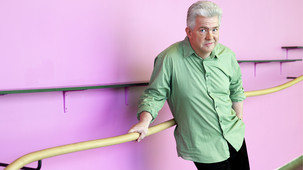
Ian McMillan

It’s almost time for the Free Thinking festival again; in a week's time I'll be heading for Gateshead and that amazing weekend of ideas and debate, questions without answers, and, for me, just a fantastic amount of laughter and joy - what my mate Dave Beresford used to call ‘head-clutching’. Radio 3 began its experiment in having a ‘festival of ideas’ a few years ago in Liverpool, and now we’re in our second year at The Sage in Gateshead. There aren’t many things I would miss our family bonfire party for, but the Freethinking Festival is one of them.


This year I’m involved in all sorts of ways; I’m presenting The Verb of course, at half past seven on Saturday 6th; our line-up includes the poet Katrina Porteous, who has for many years been preserving and responding to the language of the fishermen of Beadnell on the Northumbria coast, and the novelist and poet John Burnside, who is writing us a new piece based on his love of soul music.

That’s followed by the first ever Radio3/5Live linkup at 9.00pm for a live debate about sport and the arts which I’m going to sit and watch to be part of history, although I have to say I do a similar thing every Saturday night at home when I watch Match of the Day on BBC1 with the sound down whilst listening to Hear and Now on my personal DAB radio. A bit of new music doesn’t half liven up a dull 0-0 draw!

On the Friday night I’m presenting Words and Music, where my job is simply to steer the ship and make sure nobody falls off the (admittedly low) stage and taking part in a pre-concert talk in Hall One. On Saturday morning I’ll be co-presenting Free Ranters, a variation on last year’s Young Ranters where young people spoke (or ranted) for two minutes on a subject of their choice; this year they’re going to be joined by ‘silver ranters’ for a bit of cross-generational ranting. Sounds good to me! In the afternoon I’ll be refereeing a Theory Slam, where people deliver theories to a hungry audience in a no-holds barred atmosphere; last year people sweated, shouted and gesticulated as they got their points across, and I expect nothing less this year. Perhaps a little less sweat.


On the Sunday morning I’m interviewing Terry Deary, author of the Horrible History books that my grandson loves so much, and then on Sunday afternoon I’ll be hooting my horn at the Speed Dating with a Thinker event, where thinkers posit an idea in two minutes, and thinkees get to listen and then move on to the next idea, and the winner gets to keep the horn.

I’ll be around for the whole time, often (when I’m not chairing something) sitting around in the main space at The Sage drinking a cup of tea; please come and say hello. The Free Thinking Festival is a very exciting time for speech and drama on Radio 3, and it reminds us all that we really are a cultural station. A cultural station with a hooter!

The BBC Symphony Orchestra at 80 ...

Blog comments are currently unavailable. Find out more.

Post categories:

Graeme KayGraeme Kay|11:30 UK time, Monday, 25 October 2010

BBC Symphony Orchestra generic image
Quiz question: What was the first piece of music the BBC Symphony Orchestra ever played? You can find the answer in a special Blog by the orchestra's general manager, Paul Hughes. As the BBC SO reaches its 80th birthday, Paul reflects on the original aims for which the orchestra was set up, and compares that vision with current plans.

You can read Paul's Blog by clicking this link.

A great musical character of Argentina...

Blog comments are currently unavailable. Find out more.

Post categories:

Banning EyreBanning Eyre|18:43 UK time, Friday, 15 October 2010

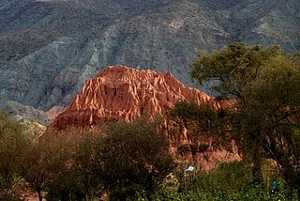
The landscape of North West Argentina

The landscape of North West Argentina

In Saturday's World Routes at 3pm, Banning Eyre travels to northwest Argentina to hear the music of the Humahuaca valley. in this fascinating Blog, Banning tells the story of the musicians he met ...

The northwest of Argentina, near the borders with Bolivia to the north and Chile to the west, is mountainous and beautiful. Our destination, the dry, colored rock canyon country north of Jujuy (hoo-HOOee) is in many ways reminiscent of the American southwest. Beyond the colored rock canyons, there’s the adobe architecture, corn-based food, and cultural expressions that blend Spanish and native American—in this case South American—elements. Then, of course, there are the pan pipes, charangos and a number of unique and surprising ingredients—like the erque, a 10-foot-long wind instrument with a hooked tin horn at the end of a long stretch of thin tubing. The erque produces deep blasts of flatulent melody believed to provide spiritual benefits when played in winter (about to begin here), but also to attract diseases during summer, when by custom it is not played.

Tomas Lipan met us at the airport in Jujuy. A bear of a man with a long, black ponytail and an oversized personality, Lipan is a celebrity throughout the region. Everywhere we went, friends and relatives came out to hug and kiss him, or at least shake his hand. Any hint of official harassment, such as when we tried to record a session amid the restored ruins of an 11th century fortress in Tilcara, vanished instantly at the mere mention of his name. 'Tomas? Tomas Lipan?” asked the officious guard at this national monument, 'Well, in that case, go right ahead. Do whatever you want.' In the end, it was the wind, not official protocol, that forced us to do the session in a gift shop across the road from the ruin.

Read the rest of this entry

The Unfortunates - how the play was made ...

Blog comments are currently unavailable. Find out more.

Post categories:

Graham WhiteGraham White|17:11 UK time, Thursday, 14 October 2010

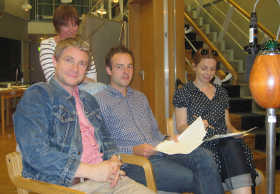
cast of The Unfortunates

(Front, L to R) Martin Freeman (Bryan), Patrick Kennedy (Tony) and Jacqueline Defferary (June), with Jenni Burnett (Studio Manager) ready to step in with effects

Next Sunday at 8pm, Radio 3 broadcasts The Unfortunates, an adaptation of B S Johnson's novel in which a sports journalist travels to a strange city to cover a football match, only to discover it was the city where he first met his friend Tony who has died young of cancer. We follow the journalist as different memories of his friend are triggered. Originally published in 27 unbound pamphlets in a box, The Unfortunates was intended to be read in a random order. The lack of a fixed order is suggestive of the way memories occur, and the book becomes a meditation not just on friendship and loss, but also on the nature of memory and writing as our hero struggles to recall everything in order to 'get it all down' as he promised his dying friend he would.

Here, Graham White, who adapted the work for radio, describes the production process.

Endless eating is a peril of the recording process (at least this side of the mic) and I’m tucking into a chocolate Hob-Nob while listening to Martin Freeman play Bryan, the narrator of The Unfortunates, as he grazes through a disastrous meal in a rainy Midlands city in 1969.

Martin has a mammoth day today, working through the intricate language of Bryan’s interior monologue. The character’s a belligerent, witty, sensitive novelist not a million miles removed from B S Johnson who’s on a day-job trek North to cover a football match for a Sunday newspaper. We’ll randomise the order of the scenes for our broadcast, following the novel’s lead, but it’s a very orderly recording. As Martin picks his way through the memories of Bryan’s past sparked by the city, producer Mary Peate, SMs Pete Ringrose, Colin Guthrie and Jenni Burnett weave an extraordinary soundscape of streets, crowds, trains, dismal guest houses, football grounds, old-fashioned grocers and south coast beaches around Martins’ deft and detailed performance. The studio is a hive of observations and insights while the recording comes together – discussions of the price of beer in 1969, the whereabouts of a Chinese restaurant in Nottingham (invaluable help from RDC actor Tony Bell, a local boy, on this) and the exact nature of the Ariel Red Hunter (Pete knows it’s an iconic motorbike and part of a dig in the novel against scooter boys. This leads Martin to joke that he’d have turned the job down if he’d known there’d be any dissing of Mods).

During the session we’re visited by BS Johnson’s son Steven (named as a young boy in the book) along with Diana Tyler, who worked in Radio Drama’s script unit years ago and was Johnson’s agent and confidante at the time of his early death at the age of 40.

Read the rest of this entry

Joan Sutherland appreciation

Blog comments are currently unavailable. Find out more.

Post categories:

Graeme KayGraeme Kay|17:16 UK time, Monday, 11 October 2010

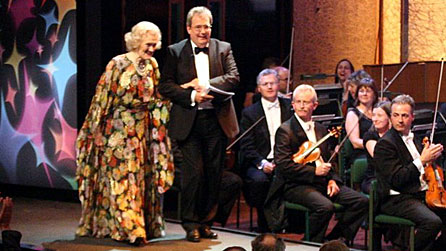
Dame Joan Sutherland at Cardiff Singer of the World. Photo © BBC

Dame Joan Sutherland at Cardiff Singer of the World. Photo © BBC

Joan Sutherland's special relationship with Britain and British audiences derived from the fact that the Australian coloratura soprano effectively launched her career at the UK's international opera theatre - the Royal Opera House, Covent Garden; and many of her most important recordings were made at the London studios of EMI.

Sutherland brought an entire genre of opera - bel canto (beautiful singing) - to the attention of opera-lovers, and the general public, by reviving operas and roles which had long been forgotten: bel canto was a style coined in the age of Baroque opera, refined by the beginning of the 19th century and later eclipsed by the music-dramas of Weber, Wagner and Richard Strauss.

It might not have been. In the early 1950s, Sutherland had been engaged by the Royal Opera on a general contract, with an eye to her learning the Wagnerian repertoire of which the Swedish soprano Kirsten Flagstad was the reigning diva. But in 1958, Sutherland's rendition of the difficult and brilliant 'Let the Bright Seraphim' from Handel's Samson (the aria later sung by Kiri Te Kanawa at the wedding of Charles and Diana) brought the house down, provoking an unprecedented ten-minute ovation: Sutherland had found her Fach.

Marriage to fellow-Australian conductor Richard Bonynge in 1954 undoubtedly nurtured and developed Sutherland's talent in bel canto. Many years of international touring in such signature roles as Massenet's Esclarmonde (by her own admission, her 'greatest achievement'), and the operas of Handel, Donizetti, Bellini, Offenbach, Mozart, and Meyerbeer showed that she could infuse real character into roles where apparently effortless vocal display was the path to success.

Along the way, she was able to encourage the talents of young singers such as Luciano Pavarotti: their 1965 tour of Australia was a sensation for both singers.

Many people will remember the 1990 New Year's Eve Gala TV broadcast of Strauss's Die Fledermaus at the Royal Opera House, where, in her last public performance in the UK, she was joined in the famous party scene by her friend and mezzo-soprano colleague Marilyn Horne, and Pavarotti. Fans of the BBC Cardiff Singer of the World Competition will remember her five consecutive appearances as a juror, from 1993 - always a stern and forthright judge (she entertained strong views about the standard of modern vocal training), she became the competition's patron in 2003.

Meeting Sutherland would confirm to anyone that this was a down-to-earth diva; that was my experience when, as administrator of Glasgow Masterconcerts, I promoted her appearance at the Theatre Royal, Glasgow in the late 1970s. We didn't need to print an expensive leaflet - word of mouth and a flyer inserted in Scottish Opera's newspaper was enough to ensure an instant sell-out. Our own lavish bouquets were dwarfed by the truck-loads of foliage, brought to the theatre by her fans, which rained down during the curtain calls. This tall, striking, extraordinary stage creature - known worldwide as La Stupenda - was as comfortable at the kitchen supper afterwards as she had been playing to hundreds of screaming fans.

That's a cherished personal memory. For those who never heard Sutherland live, there is a vast recorded legacy: Sutherland will live on in the diva pantheon ...

Biography, roles and recordings

More appreciations and obituaries for Dame Joan Sutherland ...

On the trail of the New Generation Artists ...

Blog comments are currently unavailable. Find out more.

Post categories:

Philip O'MearaPhilip O'Meara|12:05 UK time, Wednesday, 6 October 2010

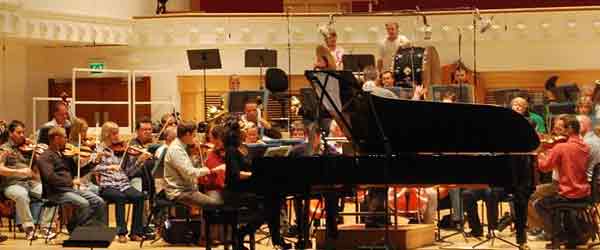
Khatia Buniatishvili (piano) with the BBC Scottish Symphony Orchestra

Khatia Buniatishvili (piano) with the BBC Scottish Symphony Orchestra

'The New Generation Artists.' The first time I heard this I have to confess I thought of Star Trek, and I’m no science fiction buff. But like a lot of Radio 3’s gems it doesn’t have a very high recognition rate, even among Radio 3 fans. I can’t count how many times I’ve had this conversation...

Someone At Party: So, what do you do?

Me: I work in production at Radio 3.

SAP: Oh that’s so cool – what programme do you work on?

Me: I work on the New Generation Artists scheme.

SAP: [vacant look with polite smile]

... which is extraordinary, since when you look at the alumni of this project you find world-class names popping out: Paul Lewis, Belcea String Quartet, Alina Ibragimova, Janine Jansen, Natalie Clein, Alice Coote... the list goes on and on.

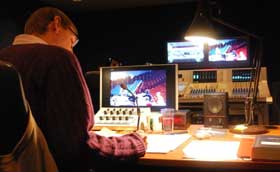
BBC SSO producer Andrew Trinick at work

For nearly two years, I’ve been working on the NGA scheme with senior producer Lindsay Kemp and founding editor Adam Gatehouse. Recently, my schedule took me to Glasgow for the first time, to attend a concerto recording with the BBC Scottish Symphony Orchestra, back to London for a chamber studio session and, two days later, an NGA studio concert with the BBC Symphony Orchestra. This account will give you a flavour of the NGA scheme in action.

After a brief tour of Glasgow City Hall and meeting the Scottish Symphony Orchestra team, broadcast assistant Lorna Liebow led me into the shadowy yet inviting recording room (illuminated buttons on mixing desks look nice in the dark) to greet Andrew Trinick, who recently moved from the BBC Symphony Orchestra to take up the post of producer in Glasgow. On the far wall of the recording room the plasma screen monitoring the inside of the concert hall showed that the action was very much underway.

I moved into the beautiful auditorium, bathing in the wonderful acoustics as Georgian pianist Khatia Buniatishvili breezed her way through Rachmaninov’s 2nd Piano Concerto under the baton of Garry Walker. Khatia’s passion at the keyboard is mesmerising – I had worked with her in the recording studio a couple of times before, but my head was always too buried in the score to notice her movements at the piano. From where I’m sitting, the most astonishing thing is that her arms appear to bear no relation to the torrent of notes gushing forth from the piano. In my opinion, seemingly stationary limbs should not be able to produce this incredible virtuosity - my eyes and ears disagree.

I talk to Khatia in her dressing room later, and after a bit of NGA admin and diary checking she confesses that she still feels new to the concerto world and felt nervous to be playing one she’s never performed with an orchestra she’s never partnered; but she found maestro Walker and the orchestra to be extremely accommodating. Khatia describes Georgians as ‘a musical people’, and as she’s the only Georgian I know, I cannot disagree. But there’s no time for a big catch-up as she has to catch a flight to Vienna – one of the biggest challenges of administering the NGA scheme is how to get already busy people to record repertoire they’ve never played with orchestras they don't know, as well as getting them into a studio to record chamber works that they mustn’t have played anywhere else in the BBC, or recorded commercially. I struggle on.

Read the rest of this entry

Meet the BBC Symphony Orchestra's audience ...

Blog comments are currently unavailable. Find out more.

Post categories:

Graeme KayGraeme Kay|16:48 UK time, Monday, 4 October 2010

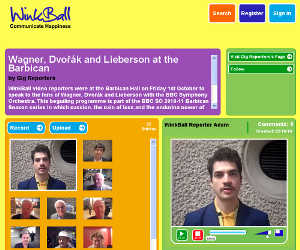
A reporter from the video networking site, Winkball, was at last Friday's concert at the Barbican to open the BBC Symphony Orchestra's 80th anniversary season.

Click this link to find out what some members of the audience thought of the programme of Dvorak, Peter Lieberson and Wagner, and meet more than one member of mezzo Sarah Connolly's unofficial fan club!

A busy week on Radio 3

Blog comments are currently unavailable. Find out more.

Post categories:

Graeme KayGraeme Kay|19:10 UK time, Sunday, 3 October 2010

Radio 3 Controller Roger Wright has posted an entry on the BBC Radio blog, discussing highlights of this week's Radio 3 Schedule.

You can find his Blog by clicking this link:

The full schedule for this coming week is available by clicking this link.

More from this blog...

Categories

These are some of the popular topics this blog covers.