Roland Taylor|13:24 UK time, Friday, 25 September 2009
I've just been in a meeting at Broadcasting House with the team that produce Radio 3's Breakfast show. The team meet on Fridays to reflect on the show: how has the week gone, what worked well? What didn't? What could we do better? This morning's conversation focused very much on the lifestyles and habits of the audience. In case you missed it, over the last few days, presenter Sara Mohr-Pietsch has been asking you to send in texts and emails to tell us what you've been up to while listening. Sara has received some fantastic responses. I must say, it makes fascinating listening.
As for me, I iron school uniforms during breakfast, find missing toothbrushes, brush my daughters' hair and consume toast. Not very interesting compared to some of the following responses we received.
Here are a few for your interest. Please feel free to add yours to this blog by commenting.
I've been driving to school on this wonderful autumn morning through Somerset and Dorset: church spires and reddening treetops peeping through white mist in the valleys; the sky above - blue.
Working at my hotel room desk with Breakfast playing on the computer (Hangzhou, China)
I am designing a new application for our website while listening to BBC Radio 3 stream over the internet on my headphones! (from Singapore)
Making a harvest loaf for the Harvest Service.
At the time of your invitation I was on the 23rd of my 50 morning press-ups.
No press-ups for me. Just a gentle routine to check that all my bits are still working.
Cleaning out the cutlery drawer.
I'm still in bed knitting a cardigan for my granddaughter.
Completing the crossword.
I am collecting quinces from the garden and I can't do with out your music.
On the way to work at the Sage, Gateshead.
Sorting out my ingrowing toenails
I'm watering my 'secret garden'
Am enjoying the music as I walk across Tower Bridge on my way to the office.
In the Barristers' Robing Room at Crown Court waiting to start a trial.
Graeme Kay|11:31 UK time, Wednesday, 23 September 2009
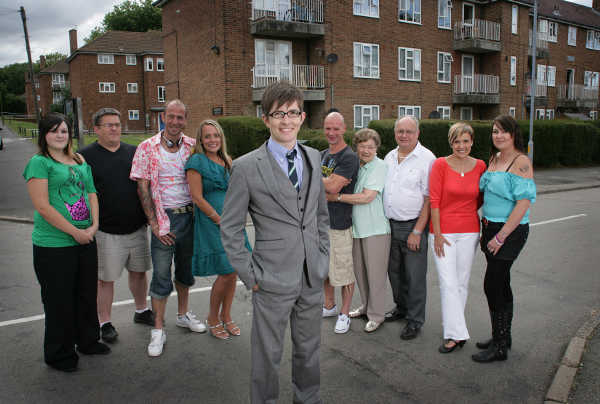
Another series of The Choir has just ended on BBC 2 Gareth Malone, choral animateur and veteran of Boys Don't Sing was parachuted in to the Hertfordshire housing estate of South Oxhey. The estate was built after WW2 to help alleviate the housing pressures thrust upon London during the Blitz. Originally council-built, some 70% of the housing is now owner-occupied, but the estate, which is a stone's throw from much more affluent areas, suffers from a poor reputation in those surrounding neighbourhoods. There is a church, a clutch of primary schools, some shops, a boxing gym - and five pubs. All too obviously, for decades, there has been no investment in infrastructure; the population are demoralised to the extent that Gareth was met everywhere with the mantra: 'Nothing, but nothing, has happened here for years.' No-one sings. The people are so unplugged from singing that - even in this age of ubiquitous pop music and The X-Factor, they are borderline hostile to the very notion. They obviously needed a community choir - but would anyone join? Every choir leader round the world would have sympathised with Gareth as he set about mobilising this community. Fast-forwarding to the end of the series, the fact that virtually the whole estate of 6000 people turned out to hear the choir at the concluding 'SOX 09' Festival was proof of Gareth's success.
Gareth's appeal is interesting - he looks a bit like an overgrown schoolboy (some people want to mother him), but underneath the necessary desire to please and be liked, he's very focussed, confident and has steely determination: also he's actually a bit posh and as part of his obvious sincerity, unlike some politicians and dare-I-say broadcasters, doesn't drop his 't's (or his jacket-and-tie) or moderate his speech or behaviour no matter who he's talking to...
All through the series I've been riveted as Gareth's work, dedication and charisma began to pay off, with predictable impacts on the personal lives of the, literally, hundreds of people he's touched - it's been like watching the tightest of flower buds gradually opening. As his choirs ventured out into the world of the snooty folk down the road in Hertfordshire's stockbroker belt, they found themselves acting as ambassadors for their community and helping change entrenched attitudes towards it. Apart from the usual concerns over the legacy once Gareth and the film crews have left (although in response to tearful appeals we learned that he's to stay on for a while) there really are no negatives ...
Rick Jones|16:06 UK time, Monday, 21 September 2009
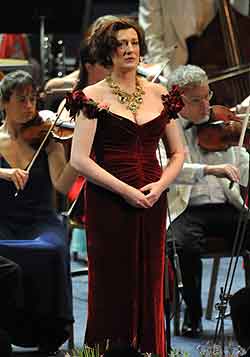
Purcell came out of the Last Night of the Proms smelling of the headiest roses. Sarah Connolly sang Dido's Lament with emotion, pity and reverence, restrained on the 'Remember Me's, resisting the temptation to belt them out, conscious that the composer's single most valuable jewel, the culmination of all his skills in one perfect aria, had been reserved for the climax of the nation's greatest musical event. In fact I was in Germany attending the Beethoven Festival in Bonn but saw it there on terrestrial TV with an hour's time difference. It has a large audience who stay up till midnight to sing Auld Lang Syne zu Hause. How is it possible to generate such jollity amid genuine passion at a classical music event? they ask enviously.
Henry Wood's arrangements for full orchestra of selected dance movements from the masques were graceful, respectful and mercifully free of the camp percussion of his Bach treatments. The minuet moved with an infectious weighty swing. I wish we'd heard them before, but then we might have overdone it. These inflated, sonorous vessels are probably best reserved for special occasions.
The build-up to all this was counter-tenor Iestyn Davies singing with warmth and the smoothest tone Music for a While and the Evening Hymn with the Academy of Ancient Music under Richard Egarr at Monday's Last Lunchtime of the Proms in Cadogan Hall. He carved shapely phrases with unmistakable diction and all he needs now is a little of the roughness of experience to rival the still incomparable James Bowman in Purcell.
And so we are ten. Ten years of the wind whistling through telegraph wires in the Australian outback, Mongolian throat singers galloping across the plains, delicate kora playing plucking at the heartstrings of the the African soul, a resurgence of English fiddle tunes and ballads, panting Inuit singing competitions, Scandinavian jazz and fiery flamenco. We've fed the soul with Coptic chanting, shape-note Quaker hymns, Mauritanian praise songs, funeral rituals and wedding dances...
Continue reading this post and leave comments on the BBC Music blog where it originally appeared.
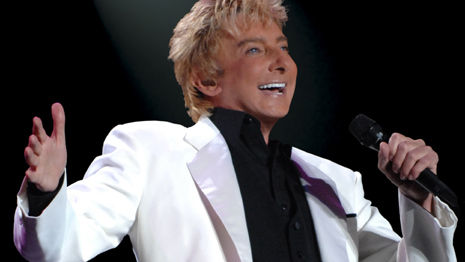
Brilliant Barry Manilow - but would he wreck the schedule?
The start of the eight-week Proms season is a bit like being at the top of ski run and launching yourself off not knowing if you are going to make it to the bottom unscathed. At least you hope you are going to be able to admire the view on the way down, or in this case enjoy some great music which we did in spades.
There have been some truly exhilarating televised concerts that will live long in the memory - The MGM Musicals Prom, Barenboim conducting the West-Eastern Divan Orchestra and Harry Christophers with The Sixteen to name just a few. Of course our colleagues in Radio 3 have the Herculean task of broadcasting all the Proms throughout the season, but televising 25 concerts - 3 times a week for 2 months across 4 TV channels - BBC2, BBC4, BBC1 and BBCHD - is no mean feat either. New this year was the weekly Thursday/Friday pattern on BBC4 which happily has resulted in more viewers to the channel.
Together with our colleagues in BBCi we embarked on some real innovation this season with MaestroCam - five specially chosen concerts when 'red button' viewers could select a dedicated view of the conductor and listen either to the music alone, or a commentary by conducting experts. The first of these was something of a live pilot but listening to Matthew Rowe's commentary, on Sir Charles Mackerras ' masterly execution of Holst's Planets Suite played by the BBC Philharmonic, was both very informative and truly fascinating. On that first Maestro Cam there was some experimentation with the visual presentation which wasn't 100 percent successful but by the next one, Vasily Petrenko conducting the NYO, we had it gripped. So I hope we'll do more next season.
My head is thick with drama this week (that's thick in a positive, creative way I hope - not thick as if with flu). We're trying to draw up a shortlist of plays to commission for next year. The floor of the room I work in at home is strewn with scripts and novels and long poems and CDs - systematically arranged though it doesn't look that way to anyone else in the house. I was reading Buchner for breakfast - not recommended (I'd recommend both Buchner and breakfast but not together
- more cheering to listen to Rob Cowan or Sara Mohr-Pietsch with the toast). So understand, when Graeme says, please nominate your highlights from the speech programmes around the Proms I think, OK but I'll do it very quickly, off the top of my head, and never mind that tomorrow I'll be kicking myself I didn't mention others.
It seems a lifetime ago in some ways but the very first Twenty Minutes sticks in my mind. In the interval of the opening concert, Moving Pianos gave us a gently humorous glimpse into some of the behind-the-scenes work that goes into preparing the concerts and a sense of the labyrinthine caverns and corridors hidden from public view in the Albert Hall. Pianos came up again much later in the summer in an unsentimental story by Carson McCullers - Wunderkind - in which a young pianist realises she's never quite going to live up to her early promise.
It's hard for me to choose between the broadcasts from the Literary Festival but Fiona Shaw reading Tennyson and talking about his poetry with Andrew Motion and Matthew Sweet, which you can still watch, has to be near the top and a passionate discussion of Sherlock Holmes later in the season, both in this year's Victorian series. For longer conversations of course there was another very strong series of Lebrecht Interviews. It's probably cheating to choose a whole series as a highlight so my next choice is a fragment - Stephen Hough in the presenter's box with Petroc Trelawny and Sean Rafferty for the opening and closing nights, bringing for me just the right mix of personal comment and expert insight.
Graeme Kay|15:06 UK time, Thursday, 17 September 2009
The Winkball video social networking site sent a video journalist to the Royal Albert Hall to vox-pop Prommers (and some non-Prommers) to find out what they thought about the Proms.
You can see five 'video walls' of interviews by visiting Winkball, click on 'Search all video walls', enter 'Proms' in the search box, and you'll find the index for all five Proms video walls - you might even be there yourself!
Matt Woodward|14:53 UK time, Wednesday, 16 September 2009
Directing 'The Last Night' is one of those things you dream about as a director. It's an amazing event to work on. My responsibility was for the music coverage in the hall.
Saturday was the end of a very busy few weeks of technical planning, liaising over camera positions, getting hold of the correct scores and information, followed by many hours spent scripting. This last process is enerally undertaken at my dining table: with headphones on and listening to the music, and with a head full of creative ideas, I plan the camera shots and where they will happen, marking these details on my scores.
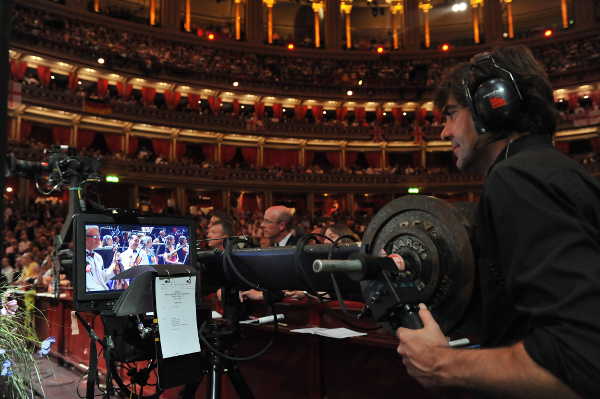
For 'The Last Night' I had 13 cameras, including 3 jibs (long arms, with the camera mounted on the end, that can swing around and crane up and down) - a brilliant and highly skilled crew of camera, sound, vision and lighting technicians, designers and engineers - together with the fantastic team of script-supervisor, Claire Mathias, and vision-mixer, Hilary Briegel.
Wow! What a start to the new season! There'd been quite a buzz about the young string quartet Meta4 from Finland but it was my first time experiencing them live. It was a performance of Shostakovich's 4th Quartet which blew us away, fiery, passionate, and troubled yet played with such depth and conviction. These four young musicians are fabulous communicators; individually each one is a great performer but the teamwork brought forth a beautiful sound and intensity.
They captivated the audience, standing to perform right at the front of the stage and the cheers which went up at the end of the piece were rightly deserved. One member of the audience said to me afterwards "you've got the best job in the world", and yesterday that was certainly true. No wonder I look forward to my Wigmore Mondays when everything comes together: this great building with its history of memorable performances going back over so many years, and programming which brings together the stars of today with the names of the future. And just for the record, violinist Minna Pensola goes straight to the top of the 'shoes of the series' chart.
Fiona Talkington is a presenter at BBC Radio 3
The concert will be repeated on Saturday at 1400 or you can listen again on the Radio 3 web site for the next 5 days.
There's a fascinating video from Fiona on the Radio 3 web site explaining how the lunchtime concerts are made (scroll down to the bottom of the page) and the Wigmore Hall's web site has a full programme for the season.
Roger Wright|10:21 UK time, Tuesday, 15 September 2009
On Sunday afternoon I attended my first Promenaders' Thanksgiving Service. It took place at Holy Trinity Church on Prince Consort Road and was a lovely moment to reflect on the power of music and the communal spirit of the BBC Proms in general and the Promenaders in particular.
The Promenaders organise the service and this year the hymns had been carefully chosen to reflect the four main anniversary composers. The Vicar at the church, Liz Russell, worked for many years in the Proms team and welcomed everyone with her typical warmth and openness. As she explained that the service was for 'people of all faiths and none' she encouraged us during the prayers to 'sit, stand, kneel or, in true promming fashion, lie down'!To be frank I felt like lying down but thought I may not get up for some time so didn't risk it!
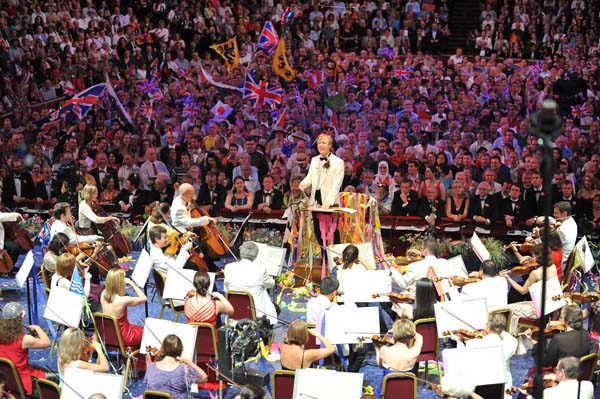
There has been a tremendously positive response to the Last Night, not least to the wonderful performances by all involved and the manner in which David Robertson led proceedings. It is a terribly difficult job to conduct the Last Night - so much business to get through, so much music to conduct, the unexpected audiences responses to keep an eye and ear on and keep control of - and the speech! I thought David captured the mood very well indeed and allowed an important moment of calm reflection as well as clearly enjoying himself at the most famous of all musical parties!
I was asked if I felt relief or sadness at the end of this year's festival. It's hard to say but I think my chief feelings are gratitude to all my colleagues who make the Proms possible and huge optimism in the future of music when such large audiences can turn out, want to discover new and unfamiliar work and listen so intensely - and that we have had a huge number (37,000) attend the Proms for the first time this year. Encouraging indeed.
So it is now time to get on and put the finishing touches to the 2010 Proms and launch the new season on Radio 3 - our evening schedule this week allows us to catch up with what has been going on at the Edinburgh International Festival. I remember Sir Brian McMaster, former Director of the EIF saying that he told his audiences to go to Radio 3 until the next festival. I trust that the Proms audiences will follow his advice too!
Graeme Kay|16:54 UK time, Monday, 14 September 2009
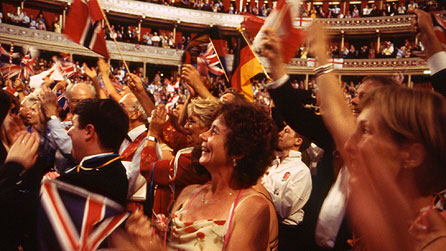
Judging by the comments on the Radio 3 Messageboards, and the Twitter conversations, we're all feeling the same thing - that mixture of elation and deflation as another magnficent season of Proms comes to an end.
Everyone I've spoken to - friends and colleagues alike - thinks last Saturday's event was one of the best Last Nights ever. And conductor David Robertson has come in for universal praise.
During the coming week on the blog we'll be hearing from our regular bloggers, Proms Controller Roger Wright, Roly Taylor (Interactive Editor), and Abigail Appleton (Head of Speech Programming), but we've also asked Matt Woodward, TV director of the Last Night to let us have his thoughts, as well as Oliver Macfarlane, series editor of the Proms TV coverage. Watch this space!
If you were following the Last Night on Twitter, you might like to know that you were involved in what was one of the most successful Twitter parties held by the BBC to date.
Some hard facts about this year's Proms:
5% increase in overall attendances for largest ever Proms season
87% average attendance for Royal Albert Hall concerts
11% increase in number of people buying tickets for the first time
32% increase in numbers of under-16s attending
In the Interactive team we're still doing the sums, but the headlines are that the number of unique users and page impressions on /proms was up again - the ukulele pages were especially popular!
Visits to the Radio 3 blog doubled every month from June to August. So thanks for following us - do come back and come back often, as there will be lots more inside track on what we're doing at Radio 3 and BBC Classical Music TV in the weeks to come: the Radio 3 party does continue after the Proms - for example this week on Radio 3 you can hear more recordings from the 2009 Edinburgh Festival; Afternoon on 3 is running a series on music inspired by Philosophy; and The Essay invites writers to talk about Dr Johnson, and in fact tomorrow night I won't be missing David Crystal, who speculates on what The (original) Doctor would have thought of wikis and the web.
Peter Gregson|14:53 UK time, Monday, 14 September 2009
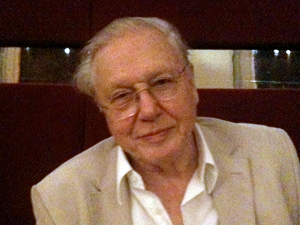
Standing in the gallery of the Royal Albert Hall after Last Night of the Proms I asked Sir David Attenborough, who had earlier taken part in Arnold's - A Grand, Grand Overture, his thoughts on the last night and indeed Proms 2009.
Peter Gregson|12:24 UK time, Saturday, 12 September 2009
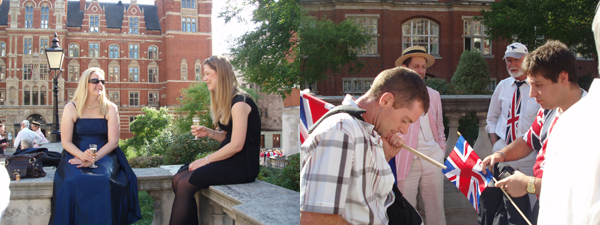
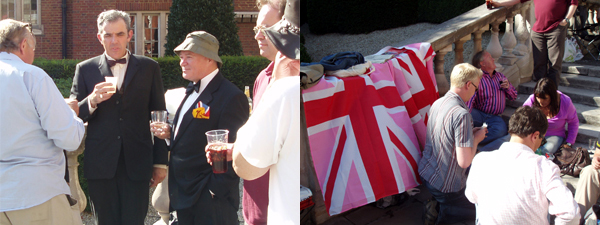
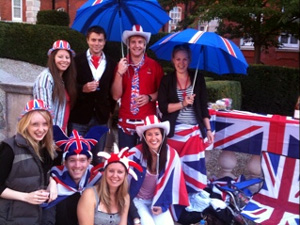
As I walked the queue once more, I was struck by one particular assembly... it appeared that they had bought Oxford Street out of Union Jacks to truly "pimp the Proms"!
They generously provided me with drinks, cakes (approproriately iced with the Union Jack, of course) and promised me quiche if I returned at lunchtime - so I'll keep this brief.
As the proms are winding down, they're doing their level best to keep the party going. If you pass them, ask nicely and you'll probably get a Pimms!
I've got my plot in the arena!
Here's a rare recording of the Grid allocation -
can you hear the excitement in my voice? No? Listen again. It's
definitely there, but it might be hiding under my need for coffee...
Adam, Keith, Louise and Tyrone camped out last night..!
See photo. I thought turning up at 4pm yesterday was keen. I thought returning
for a late night roll call was good. I thought turning up at 9.30am was
impressive.
I was wrong.
These extreme prommers camped out
from 10pm, braving the elements and using all their cunning to heat
their beans for breakfast. Following yesterday's coffee offer, I felt
that my generosity could easily extend to one more coffee run, so I
promptly furnished them with the strongest, blackest coffee that the
artist bar could offer.
Today is about more than just the
music; it's the end of term and everyone's here for a great time! If
you have any thoughts about tonight or any of the proms this season,
get in touch in the comments - we'd love to hear from you!
Peter Gregson|17:37 UK time, Friday, 11 September 2009
I talked to Lewis in the gallery queue before Prom 74, the Vienna Philharmonic Orchestra. As a trombone player Lewis is looking forward to Brahms Symphony No.4 as there is a fantastic trombone section. He is also looking forward to Strauss' Don Quixote. Listen to our conversation and Lewis's Proms highlights below.
Peter Gregson|17:23 UK time, Friday, 11 September 2009
Standing in the queue for Last Night of the Proms, just outside the box office at the Royal Albert Hall, I found Erling from Sweden. Erling is the leader of the #lastnightproms pack having started queuing at 3.55am!
Peter Gregson|17:00 UK time, Friday, 11 September 2009
The queue for Last night of the Proms as it happens - 3.30pm Friday the first roll call is announced, a list of names are called from a list, these lucky people are then able to join the queue for Saturday's Last night of the Proms!
Watch the video of Samara and I safely joining the queue for #lastnightproms!
Wikipedia begins its encyclopedia entry on Nikolaus Harnoncourt as follows - 'Count Nikolaus de la Fontaine und d'Harnoncourt-Unverzagt (born 6 December 1929) is an Austrian conductor, particularly known for his historically informed performances of music from the classical era and earlier.' So the announcement on 14th August that he was ill and would not be able to conduct at the Lucerne Festival and today's Prom with the Vienna Philharmonic could only be a disappointment. Fellow Austrian Franz Welser-Most generously stepped in to take over the programme, replacing Haydn's Symphony No 97 with No 98 but the fruits of Harnoncourt's work with the orchestra wasn't much in evidence on Radio 3 tonight.
I thought the performance started well, with a good tempo for the tricky first movement. On air, the timpani were too plummy - not something Harnoncourt would have sanctioned - but the rest of the ensemble was secure and tidy. Sadly the last two movements reminded me more forcibly of what we were missing without him. The minuet was seriously uninteresting, with no characterisation of its the melodic upbeats and the underlying dance rhythms. The finale seemed rushed, with a similar lack of rhythmic definition and little attention to melodic phrasing. Perhaps this only goes to show how difficult it is to perform Haydn's symphonies with a large orchestra! It would be good to know if other people were happier with this performance.
Looking through my post, I was pleased to see that fellow blogger kleines c agrees with me that the Concertgebouw concert (Prom 62) was exceptional. Like many, I expect he will now be looking forward to the Last Night, when Alison Balsom is scheduled to play Haydn's majestic Trumpet Concerto. Although it is one of his most popular pieces - and rightly so - its appearance in the programme for the Last Night of the Proms may well be a first!
I'm one of the TV directors from the BBC Classical Music Television department, and I'm also producing programmes during this year's Proms season.
We usually arrive at this point rather exhausted but the excitement of an extremely complex operation for the Last Night keeps us mildly entertained.
The TV side of the operation is complicated by there being five Proms in the Park shows and the main concert in the Royal Albert Hall - all providing input into one programme, broadcast live in many countries round the world, and recorded for selling to even more.
There is an immensely experienced team covering all eventualities, but my job is to make sure that the presentation of the programme runs smoothly, to length, and with appropriate content. The running of the concert itself is thankfully looked after - I only have to worry about the telly side of it. So, for the last week I've been checking timings; liaising with Clive Anderson about his script; talking to Rory Bremner about his guest role; re-checking timings; corresponding with Sarah Connolly about Dido, the Navy and chelengks; finding out what Alison Balsom is wearing - nice; making sure we have filmed inserts (we call them VTs) ready; arranging extra filming backstage; talking to the director about his coverage of the event; making sure the five Proms in the Park know what we want ... oh, and re-checking timings - did I say that?
Peter Gregson|21:42 UK time, Thursday, 10 September 2009
At the Royal College of Music with Roger Wright Proms director, Roger had just taken part in a Proms Intro discussion with presenter Petroc Trelawny. I had time to ask him a few questions, namely just how many Proms he had attended this summer or rather how few he had missed. Listen to our conversation.
Peter Gregson|21:32 UK time, Thursday, 10 September 2009
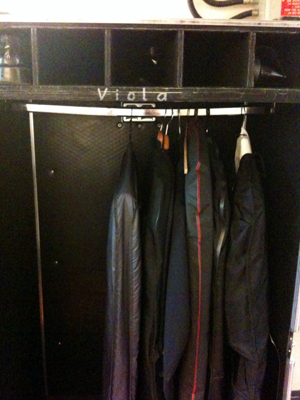
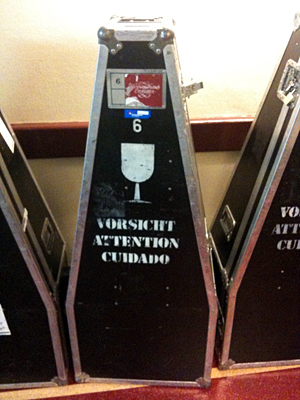
As the continuing cello coffin saga unravels, it is with great amazement that I can, for the very first time, show a VIOLA COFFIN!
The violists of the Vienna Philharmonic are a lucky lot and have their own travelling wardrobes. They have taken the place of the cello's, which I find unsettling, but it makes me wonder what luxury this eminent cello section must be treated to..!
Peter Gregson|19:49 UK time, Wednesday, 9 September 2009
By the time the Pre-Prom Composer Profile finished, the queue was moving in! I managed to slink past them through the underground maze that is the Albert Hall and take the first view from the indoors q!
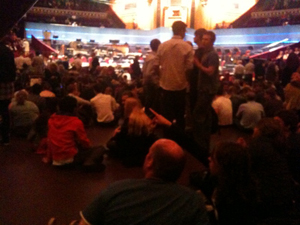
Once they let you in the building, there's still the small issue of being let in the hall to lay claim to your well earned position in front of the stage! Before the prom starts, most people in the know sit - you need to preserve leg strength for an evening at the Proms!
Peter Gregson|18:44 UK time, Wednesday, 9 September 2009
After composer Augusta Read Thomas had taken part in the Proms Composer Portrait, I managed to ask her a few questions about her writing process. Listen to our conversation.
Or listen to the broadcast of the Radio 3 Proms Composer Portrait.
Backstage at the Royal College of Music I caught up with Sir Peter Maxwell Davies who will be conducting the UK premiere of his latest violin concerto, in Prom 70 this evening, to be played by Daniel Hope for whom it was written. I took the opportunity to ask Sir Peter what his curious job title 'Master of the Queens Music' entails. Listen to his response.
Believe it or not, there was yet another photo shoot going on in front of the Royal Albert Hall this afternoon! The amazingly tall models were surrounded by an army of photographers, make up artists, runners, assistants and producers, all working hard to get that perfect shot.
It's a gloriously sunny evening here at the Royal Albert Hall. Perfect queueing weather! Enjoy it while it lasts, prommers - autumn is just around the corner...
Sarah Walker|15:35 UK time, Tuesday, 8 September 2009
DOWN WITH ACCURACY!
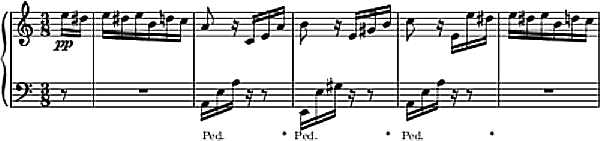
Some of my friends asked me why I feel an amateur performance of Fur Elise is almost always better than a professional one. Hmmm....well... I think amateurs tend to give the piece more weight, as they can't quite rattle it off so effortlessly. This may be accidental, but it is a good thing. The episodic structure sounds more fantasia-like in amateur hands, each section taking us into a new expressive world. Professionals tend more towards creating unity - trying to make the sections relate to each other more strongly and lead in and out of each other with more inevitability. That always sounds contrived to me. I think the widely contrasted sections are more like brainstorms - capricious changes of direction. Although of course you could argue that Fur Elise is a Bagatelle and should sound light, effortless, fun. But I prefer it to sound more like an adventure. Occasional wrong notes and extra repetitions of the right-hand Es and D#s just indicate the player's total absorption in this sometimes bewildering journey. And who did he write it for, anyway?!!!
I wonder if anyone will play this piece on Saturday! Can't wait to see what the Pianothon participants are going to bring along. It will be a real feast of music and pianistic bonhomie.
For details and how to apply for audience tickets click here!
Peter Gregson|18:42 UK time, Monday, 7 September 2009
My obsession with cello coffins is now becoming a tad worrying. The Leipzig Gewandhaus (performing in Prom 69) are sticking to a more traditional flight case option, but I can imagine this is because their suits are stored in the suit carriers. In this day and age, delegation by specialization is the key.
See my previous photo of the day of the cello cases for the Staatskapelle Dresden's cello section (in Prom 56). Each member has an all-in-one travel solution for their clothes and cello. A cello wardrobe. On wheels.
Peter Gregson|18:24 UK time, Monday, 7 September 2009
I found Chris quite near the back of tonight's queue for Prom 69. This is his first Prom! He's been recommended this performance by a friend who is a Mendelssohn fan and is looking forward to the atmosphere in the arena. Listen to our conversation.
Sarah Walker|12:31 UK time, Monday, 7 September 2009
As Radio 3's second Pianothon looms closer, I'm wondering how participants are dealing with the scary deadline: by Saturday September 12th, you've got to be ready to play! An audience will be there... so will Radio 3's microphones. Will that inflict so much nervous misery that the benefits of Pianothon could be cancelled out? I hope not. But having a performance date can interfere with a great amateur strength - the ability to work on technical problems purposefully, but without expectation. By expectation, I mean the insistence that your work must be successful by a certain point in time. Not minding too much how long it takes for the music to finally come together is the key to avoiding stress. Ah, but then along comes Pianothon, to put a spanner in the works!
I think the best way to survive the new pressure is to use the deadline to give an extra boost of motivation; commit ourselves to do everything in our power to maximise (without forcing) our musical growth. Passages that have been neglected can be polished up; problems that have been avoided can be faced. But opting to put in a bit more practice is only part of the picture. I certainly don't want any Pianothonners to kill themselves in order to turn in their best possible performance! The other important thing to remember is that how people play on the day is just a snapshot of their ongoing development. Fellow-Pianothonners will sense that development and celebrate it as much as the performance itself.
There's simply something elemental and timeless about hearing an amateur playing the piano with devotion: that's why I know that this year's Pianothon will be a magical day. And I truly believe that some music belongs to amateurs. (Have you ever heard Fur Elise played by a slick professional? Ewwww!)
For details and how to apply for audience tickets click here!
Peter Gregson|19:38 UK time, Sunday, 6 September 2009
No, these aren't sartorially advanced Prommers - they're some of tonight's singers performing in Prom 68 Handel's Messiah! There are 400 or so singers tonight so we're seeing a lot of them around..!
Peter Gregson|18:18 UK time, Sunday, 6 September 2009
Post Proms Intro I managed to catch Howard Goodall, speaker at the event and National Singing Ambassador for SING UP! We chat about the role that SING UP plays in all forms of group singing that go on in this country. Listen to our conversation and find out more.
Peter Gregson|16:09 UK time, Sunday, 6 September 2009
I was singing today in the Proms Family Chorus, the first time since school, and my first time
singing in the Royal Albert Hall! We were led through warm ups, taught some songs,
and told jokes. It was great fun, and with nearly 1,000 people singing,
there was a terrific sound! It's being recorded by Radio 3 - can't wait to hear it! Listen to three pieces I recorded on site:
Backstage at the Royal College of Music I caught up with composer John McCabe. This evening is the London premiere of his 'Horn Concerto'. The piece has a curious sub-title - 'Rainforest IV'. I ask John for an explanation. Listen to our conversation.
Believe it or not, it's just a week to go until the Last Night of the Proms, and it's been a hot topic of conversation in tonight's queue. Some prommers have been lucky enough to get tickets for the Royal Albert Hall, some are going to the Proms in the Park events, some will be watching on TV at home or listening to Radio 3. Where will you be?
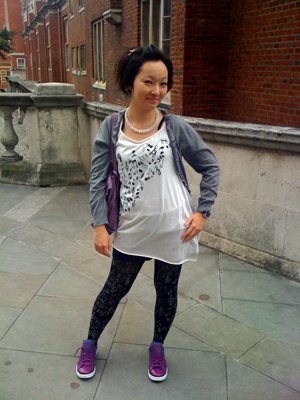
Prommer Mari is wearing this season's most fabulous outfit, a slouchy t-shirt and funky tights, all featuring musical motifs. Very on trend for Proms 2009.
"I've been away all summer so I've been really missing the Proms," she gushes, "I'm so excited to be here this evening!"
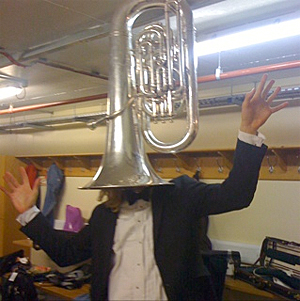
In the interval of Prom 65 I caught up with Sasha Koushk-Jalali who is a tuba player for the Jugendorchester, a pan-European youth orchestra. Sasha is one of only three British players in an orchestra of 120. I quiz him as to why there are so few Brits in the orchestra. Listen to our conversation.
Today the queue has once again been featured in the London Paper's "lovestruck" section, so may I take this opportunity to remind readers that the prom queue is *the* place for discerning classical music fans to meet that special someone. Have you ever met a potential partner at the proms? Have you ever been on a disastrous date with a fellow prommer and the had to try to avoid them for the rest of the summer? (yes, I speak from bitter personal experience!) Did you meet your future spouse in the queue? We want to know! Do tell us your stories of prom-based romance in the comments.
Hello again from Norway. What was I saying about it not mattering if it rains all week? Yesterday's Indian summer turned to torrential rain with the streets resembling fast flowing rivers. Thankfully Punkt isn't an outdoor festival and it's got off to an fantastic start.
I've got the beautiful pedal steel guitar ringing in my ears thanks to the beguiling playing of BJ Cole. Joining the Mongolian Jet Set he took part in the live re-mix of the final set on the main stage from soulful singer and one-man band Jarle Bernhoft, a charismatic performer with many, many fans in the audience.
Earlier in the evening there was cutting edge vocal improvisation from Sidsel Endresen and Maja Ratkje, with the intriguing touch that Sidsel took part in the Live Remix of Maja's set.
Another double bill brought real beauty to the stage: Labfield - Ingar Zach and David Stakenas, and another duo, Kim Myhr and Sebastien Roux. Wonderfully crafted sounds from both pairs.
But it all began, a very long time ago it seems now as I write in the wee small hours, with the inspirational direction of musical guru Adam Rudolph who worked magic with students from Agder University and guests in the Go: Organic Orchestra after meeting them only the previous day.
Susanna and the Magical Orchestra arrived after a long wet drive from Oslo so Day 2 of Punkt is promised the first public outing of their new material, and I make no apologies for mentioning once more that Sweet Billy Pilgrim will be on stage and now I've got everyone here talking about the Mercurys.
The creative day begins at 1200 though with Sidsel Endresen's seminar about her work over the last 15 years with experimental and improvisational music. She has so many admirers here and we'll be hanging on her every word.
What I said before about the big symphony orchestras regaining their confidence to programme Haydn symphonies was certainly born out by the Concertgebouw's Prom concert on 1st September. Haydn's Military Symphony No 100 was teamed with Shostakovich's 10th, and there was a real buzz in the hall at the beginning of the evening - with almost no empty seats and the promenade area full. This was certainly due to the orchestra's wonderful reputation, under its conductor Mariss Jansons, but also partly because the word was out that their performance of Ravel's 2nd Daphnis & Chloe Suite the night before had been a sensation.
For this second concert, the Concertgebouw played Haydn's Military Symphony with care and attention. The principal wind players were outstanding. Not long ago they would all have been born in Holland, but now they are international - the first oboe is Russian and the first bassoon Venezuelan, to name just two. With an appropriately reduced number of strings - ten first violins matched to three double basses - the textures were clean and clearly articulated. The principal cello told me that they are still searching for a richer tutti sound and have decided that for this they need better instruments. I was amazed to discover that the orchestra already own 40% of the ones used by the string players and are committing their trust funds to buy more. With the current price of good instruments he said there was no way individual players can afford to buy them these days.
In the 'military' movement, the big moment where the percussion instruments play was much too polite, but the rest of the score was lovingly shaped. The finale ended with a delightful piece of theatre, with the percussionists coming back on stage like the leaders of a marching band. They were lead by the triangle player, followed by the bass drum and cymbals. An extra bonus was an authentic Turkish 'Jingling Johnny' - an array of small bells mounted on a pole. Who says the Dutch don't have a sense of fun!
The late edition! I was so busy drinking tea with tonight's conductor Vladimir Jurowski, chatting away about the Zimmerman performance (which he warns me, with a wicked glint in his eye, is "a crazy piece") that I was late for my queue photographing duties and only managed to catch the tail end of the queue as the prommers filed into the hall! I did see the queue earlier though, and can report that it was the usual big eclectic mix of people looking forword to tonight's concert.
I caught up with tonight's conductor Vladimir Jurowski in the artist's bar before Prom 64. Maestro Jurowski explains how the experience of the Proms, the largest classical music festival in the world, differs from other concert experiences. Listen to our conversation.
I left home in the pouring rain this morning, now it's a beautiful, sunny early autumn evening in Norway. I'm looking out over the water where some sailing boats are making the most of the last of the summer sunshine.
But realy it won't matter if it rains for the next few days because what draws me to Kristiansand at this time each year is one of the most exciting festivals I've ever been involved with - Punkt. Under its directors Jan Bang and Erik Honore (well known names to Late Junction listeners) it's celebrating its 5th anniversary with a focus on some of the most innovative Norwegian music: Sidsel Endresen, Eivind Aarset, Arve Henriksen, Bugge Wesseltoft , Maja Ratjke, Mungolian Jet Set, Susanna and the Magical Orchestra ... And visitors too, there's BJ Cole for example and Late Junction favourites Sweet Billy PIlgrim who are currently trying on the smart suits ahead of the Mercury Awards ceremony next week. (Yes we're still rooting for you!)
Punkt's trademark is the Live Remix concept which, as director Jan Bang puts it, adds, by use of live sampling, another instrument into any ensemble and allows music to occupy past present and future territories at the same time. After each concert the audience heads down to the sub-basement Alfa Room to see just what live remixing has done to the concert they've just heard. It's edge-of-the-seat stuff for audience and musicians alike.
But tonight I'm off to Punkt Elope which is the platform for young musicians - Mattis Myrland and the Grand Trunk Road Ensemble kick start the whole thing.
Watch this space!
[Check out Jan Bang and Erik Honore's MySpace pages for information, graphics and streamed audio here.]
Rick Jones|12:05 UK time, Thursday, 3 September 2009
Tuesday 25 August's Orchestra of the Age of Enlightenment Prom was a sensual delight especially after the ear-bashing we received the previous night from the London Symphony Orchestra letting fly its pounding howitzers in Shostakovich Eight - not to mention imitating the atomic bomb in Schnittke's Nagasaki.
Roger Norrington led the period instruments through each of the four anniversary composers in date order. It was a lesson in music history to see how each built on the strings-only band of Purcell's Abdelazer Suite and an unnecessary detail that they should have numbered exactly twenty-four players to match Charles II's celebrated French band of fiddles which caused both envy and resentment among the culture-starved Brits at the Restoration. Their sumptuous gut tone was both intimate and regal as they danced through the incidental music for Aphra Behn 's blood-thirsty play. They spiked the overture with an exaggerrated French-style dotted rhythm and echoed their own phrases as opening and closing a shutter in the minuet. They played the rondeau which Britten used to introduce the young to the orchestra with a sense of tragedy and an appealing kick at the jazzy hemiolas when two threes become three twos.
I'll leave my fellow anniversary bloggers to say how well they played the rest of the concert ...
Jessica Duchen|11:23 UK time, Thursday, 3 September 2009
Brendan Carroll is back from Leipzig and has kindly written us eine kleine Mendelssohn report ...
In it, Brendan vividly describes the wonders of the city in its post-Communism state of reconstruction - physical, in the case of the rebuilt opera house and concert hall, and the re-opening, after years of neglect, of Mendelssohn's former residence; and cultural, as the atmosphere of the ancient university city returns.
Brendan reviews a number of concerts at the Mendelssohn Festival, not least the poignant final performance by the Beaux Arts Trio and its veteran, 86-year-old pianist, Menahem Pressler.
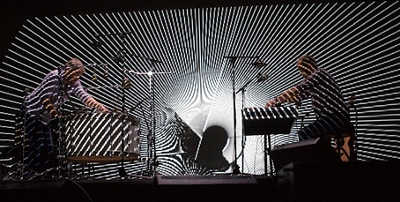
The arena is transformed this evening - Xenakis' piece Nomos Gamma calls for "98 musicians distributed among the audience" and so members of the BBC Symphony Orchestra will be mingling among the prommers. Of course, this does mean that space in the arena is limited, but seasoned prommers will be very excited to learn that in a massive break from tradition, the forbidden area outside the white line is not out of bounds! Enjoy it while it lasts...
I caught up with percussionist Colin Currie backstage at the Royal Albert Hall before he goes on to play Xenakis in tonight's Prom 63. I am not familiar with Xenakis so I've asked Colin for tips on how to approach his music. Listen to our conversation.
And/or listen to the performance.
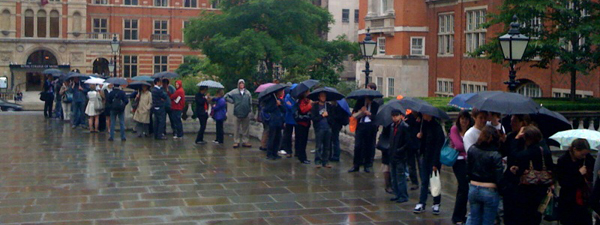
It's another cold and drizzly evening here at the Royal Albert Hall as prommers queue up for an evening of Xenakis, Rachmaninov and Shostakovich. Your fearless correspondent is feeling particularly bedraggled as I have stupidly left my big Proms umbrella at home. But no matter - prommers are made of stronger stuff than a bit of rain and tonight's turnout is as big as ever for Prom 63.
I managed to speak to writer/broadcaster Lindsay Kemp who had just taken part in the Proms Intro talk on Haydn's symphonies at the Royal College of Music for tonight's Prom 62. Lindsay informs me Haydn is one of just a half dozen of the great composers in British music and an amazing intellectual. Listen to our conversation.
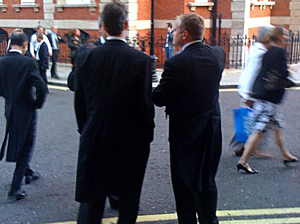
There's always a particularly great sense of occasion when foreign orchestras play at the proms, especially when it's one of the greatest orchestras in the world. One of the many things that adds to this sense of occasion is the different dress codes employed by foreign orchestras. The gentlemen of the Royal Concertgebouw Orchestra - some of whom are pictured here grabbing a quick sandwich - are wearing massive long tails, the kind that you have to flick theatrically over the back of your chair when you sit down.
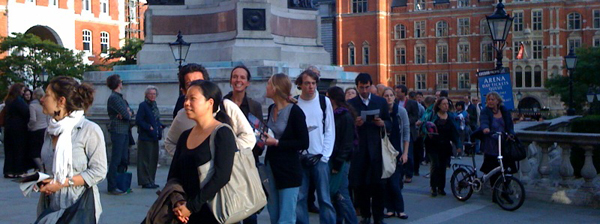
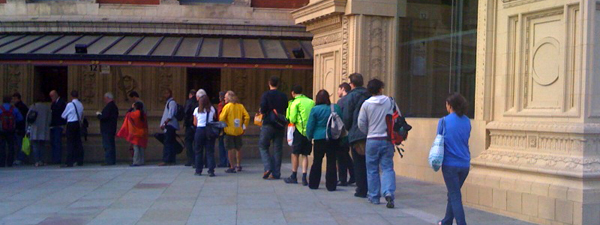
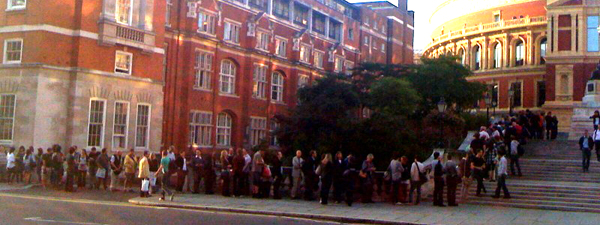
It's the longest queue I've seen so far at this year's proms - all the way to the end of Prince Consort Road and round the corner, even after the stewards had told them to budge up! And no wonder - they're here to hear one of the best orchestras in the world, the Royal Concertgebouw Orchestra, led by one of the world's greatest conductors - Mariss Jansons, at the world's biggest classical music festival, playing one of the biggest symphonies in the repertoire - Shostakovich's mighty 10th. It's going to be a huge night.
Haydn seems to have had a bit of a lean time at the Proms since The Creation on July 18th. On the plus side Proms Chamber Music later gave us three quartets and some arias and canzonets, but even that all seems rather a long time ago.
I was delighted with the BBC Symphony Orchestra's performance of The Clock. Fifteen years ago. Symphony orchestras seemed very defensive about playing Mozart and Haydn, preferring to leave that particular repertoire to the newly emerging period-instrument bands. But thanks to Roger Norrington, Simon Rattle and others, the big orchestras have listened and learnt - and finally got their confidence back. Like the BBC Concert Orchestra, the BBCSO has to be able to perform a vast repertoire in many different styles. On August 23rd they and Osma Vanska did Haydn proud. The playing was alert and the textures clean and lean. A real pleasure.
After that, I'm particularly looking forward to Prom 62 on September 1st with the Royal Concertgebouw (another big band) and Mariss Jansons pairing Haydn's Military Symphony (No 100) with Shostakovich's 10th. This is an intriguing piece of programming contrasting one of the world's most optimistic composers with one of its most troubled. It'll be very interesting to see how things go!
Not much doubt about the other Haydn symphony in Prom 73 on 10th September. The programme contrasts Haydn No 97 with the Great C major by Schubert and is given by the Vienna Phil and Harnoncourt. This conductor was one of the first to ask symphony orchestras not to play Haydn like Brahms. It should be great. More anon.
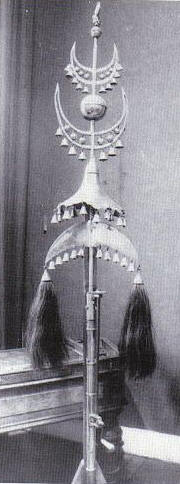
The picture shows a Mehterhane, an Ottoman military band of the kind that inflienced Haydn. It's from the Wikimedia Commons.
Roger Wright|14:56 UK time, Tuesday, 1 September 2009
What a weekend! The first ever Proms Chamber Music Festival is behind us and I was thrilled by the performances and the support they received. It was a huge feat on the part of my colleagues to plan and deliver such an array of talent in 12 concerts in three days. There was a great buzz at Cadogan Hall and I spoke to many of the audience who had committed to being there for the day if not the weekend.
It felt like a guilty daytime pleasure to sit back and enjoy each artist or ensemble in turn. There are so many marvellous musical memories resonating still with me - one entirely personal pleasure was the chance to hear Van Bree's charming Allegro for four string quartets that I had suggested for the series, knowing how many quartets were going to be around for the weekend! The joy of friends coming together to make music was palpable - like a musical house party.
And then in between these chamber days was the thrill of the three evening concerts - the Tonhalle Orchestra with David Zinman and Dawn Upshaw, the RPO with Charles Dutoit and Martha Argerich and last night the Royal Concertgebouw Orchestra with Mariss Jansons and Magdalena Kozena.
This year's Proms seem to have flown by and I can't quite believe that we are in to the last two weeks already. The finishing line is in sight but with the prospect of many more wonderful concerts still to come.

 |13:24 UK time, Friday, 25 September 2009
 I've just been in a meeting at Broadcasting House with the team that produce Radio 3's Breakfast show. The team meet on Fridays to reflect on the show: how has the week gone, what worked well? What didn't? What could we do better? This morning's conversation focused very much on the lifestyles and habits of the audience. In case you missed it, over the last few days, presenter Sara Mohr-Pietsch has been asking you to send in texts and emails to tell us what you've been up to while listening. Sara has received some fantastic responses. I must say, it makes fascinating listening.