Radio Blog

Archives for October 2010

Radio bosses debate the BBC's role

Blog comments are currently unavailable. Find out more.

Post categories:

Steve BowbrickSteve Bowbrick|10:15 UK time, Sunday, 31 October 2010

Last week's radio industry conference The Radio Festival was the first to take place in its new permament home, Salford. The whole UK radio industry was present and a sense of the shared challenges to radio animated the event. The video captures a fascinating session called 'meet the bosses' in which media pundit (and Media Show presenter) Steve Hewlett grills BBC Director of Audio & Music Tim Davie and the Chief Executives of Global Radio, Bauer Radio and commercial radio trade body RadioCentre. The debate starts with the big question in the headline (and forthright answers from the bosses) but the main topic of discussion is the distinctiveness of BBC Radio's output - and Radio 1's in particular. Ashley Tabor, Global's CEO, finishes by challenging Radio 1 to break ten new British bands in the next year...

Steve Bowbrick is blogs editor at BBC Audio & Music

  • Radio industry executive and blogger Matt Deegan picked up the question of Radio 1's distinctiveness and ran some comparisons with Ashley Tabor's flagship Capital Radio on his blog. Matt's post was subsequently picked up by Media Guardian.
  • There are more videos from the Radio Festival here.
  • The Radio Festival is an annual event organised by industry body The Radio Academy.

The Latest RAJAR Listening Figures: can it all be good news?

Blog comments are currently unavailable. Find out more.

Post categories:

Tim DavieTim Davie|08:00 UK time, Friday, 29 October 2010

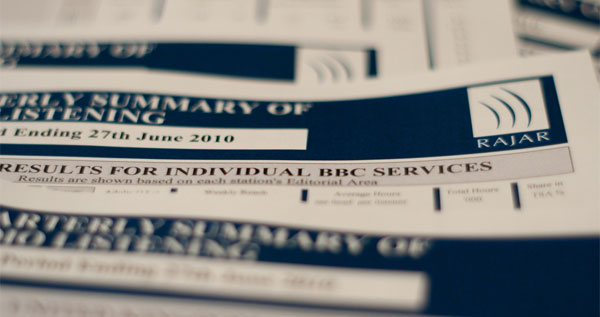
The RAJAR listening statistics. A picture by Adam Bowie.

As I was reading an article listing all the official quotes from radio industry leaders - myself included - reacting to the latest quarterly radio listening numbers, it was hard not to feel somewhat exhausted by endlessly positive sentiments. Nearly every quote is upbeat with each company proclaiming success. So what's going on?

Firstly, the good news is that when a sector is growing then there is a genuine opportunity for all companies to increase listening. I have spent the last few months emphasizing that although the radio market faces some challenges, it is time to accept that it has proved much more robust than anyone expected. Indeed, it has shown that it will remain a major force in a fully digital world. The latest Rajars actually showed a record high number of listeners (46.8 million) and showed an increase in hours for the first time in a while (up to 22.6 hrs a week). This is excellent news and it should give radio real confidence to lead the media sector. Revenues may be smaller than some other sectors such as TV or online but the depth of its relationship with the audience is second-to-none.

Meanwhile, after a record-breaking quarter some BBC services did take a small step back versus the last quarter although nearly all are up versus a year ago. However, as listening grew, we did see a small decline in our share of the market. Some may think this would be cause for concern in Broadcasting House but it is not a key metric for us. We maintained the numbers of listeners (66% of the population over 15) and actually grew hours (up to 16.7 hrs a week). So the BBC increased its importance while the market grew and commercial radio benefited. This growth, helped by the strong performance of national stations, is welcome because it helps drive revenues and growth for the whole sector.

So although the natural instinct of all corporate leaders may be to focus statements on the more positive elements of the facts, this quarter's results have enough genuinely good figures to keep most of the industry smiling.

Tim Davie is Director of Audio & Music at the BBC

HD sound for the Electric Proms

Blog comments are currently unavailable. Find out more.

Post categories:

Chris KimberChris Kimber|18:04 UK time, Wednesday, 27 October 2010

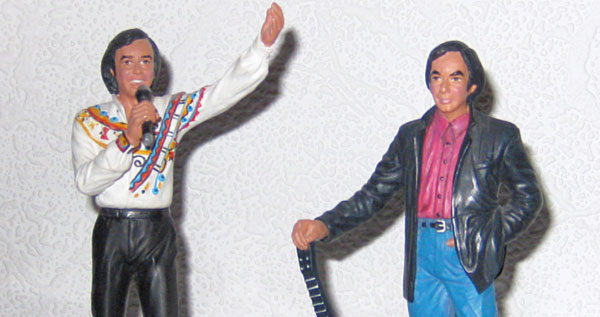
Two miniature likenesses of Neil Diamond, from Kathleen Mosley, Montrose Scotland

You may have heard that we offered an extra high quality (320kbs AAC) online audio stream for the last week of the BBC Proms this year (read about the experiment on the BBC Internet blog). The feedback we received was almost universally good. Listeners really appreciated the richer sound quality which made a fairly obvious difference even to the casual listener. Well, I can now confirm that for the first time for non-classical output, we'll offer the same higher quality audio stream for this year's BBC Radio 2 Electric Proms concerts.

So if you listen to the concerts live via the Electric Proms web site you'll hear our highest ever audio stream quality. We'll also offer the full concerts on-demand in HD Sound, again exclusively via the Electric Proms site. If your connection cannot handle this new higher quality, you can choose to listen at the standard quality.

We chose to pilot HD Sound with the Electric Proms because these live concerts represent something unique, something you can't get elsewhere. Radio 2's Head of Music, Jeff Smith, has written a post for the About the BBC blog in which he explains the unique nature of this annual event. Of course, once we've assessed feedback from listeners and looked at the technical and cost aspects, we'll look to extend this improvement to other services.

Why is this important? Well with the growth of music streaming services such as We7, Spotify, Last.fm and of course YouTube, an increasing number of people are hooking up their home computers to high quality sound systems and speakers, meaning that what was previously acceptable in terms of sound quality for small computer speakers or cheap headphones is rapidly becoming less so.

As more and more people start to listen to music via internet streams, as opposed to listening from CDs or from downloaded audio files, we expect that it will sound at least as good. Similarly, as more people start to listen to radio online, both live and on-demand, we are way past the point where people will readily accept poor audio quality simply because it's being delivered over the internet.

So, if you're a fan of Elton John, Robert Plant or Neil Diamond, listen live or catch-up via the Electric Proms site. As Robert Plant once said, the song remains the same; it'll just sound better now.

Chris Kimber is Managing Editor at BBC Audio & Music Interactive

Sir Michael Lyons on the new licence fee settlement

Blog comments are currently unavailable. Find out more.

Post categories:

Roger BoltonRoger Bolton|13:50 UK time, Friday, 22 October 2010

In this week's edition of the BBC's in-house newspaper 'Ariel', the main feature is about the heavy workload the BBC's chief operating officer, Caroline Thomson, now has as a result of the recent cull of executive board members. One of her three main responsibilities, it said, was preparing for the renegotiation of the licence fee which was expected to start in 2011 and take a considerable amount of time.

Well hardly had the paper hit the Corporation's corridors than her load suddenly got considerably lighter. On Wednesday the Chancellor of the Exchequer announced that the licence fee would be frozen for six years. The negotiations were over before they had started.

The deal, which means a 16% cut in the BBC's income, was hammered out in an extraordinary last-minute negotiation, so last-minute that no-one told the Board of S4C, the Welsh language television broadcaster, that the BBC was taking it over. The S4C Chairman is now talking of going to judicial review.

The licence fee-payer is now to pay for the BBC World Service and BBC Monitoring as well as for some local initiatives which are dear to the heart of the Culture Secretary, Jeremy Hunt. In the view of some the BBC's independence has been revealed as a mirage since the Corporation has been treated like a Government department caught up in a spending - or rather a cutting - round.

I went to see the Chairman of the BBC Trust, Sir Michael Lyons, shortly after the Chancellor had made his Commons speech. Some BBC executives were shell-shocked by the announcements but Sir Michael was determined to put a positive face on the settlement, perhaps because, as a former council leader, he was well aware of the scale of the cuts which had just been imposed on local authorities.

Here is an extended version of my Feedback interview:

In order to see this content you need to have both Javascript enabled and Flash installed. Visit BBC Webwise for full instructions

Do you think listeners should be consulted or are you happy for the decisions to be made on your behalf?

Roger Bolton is presenter of Feedback

  • Listen again to this week's Feedback, produced by Karen Pirie, get in touch with Feedback, find out how to join the listener panel or subscribe to the podcast on the Feedback web page.
  • Feedback is now on Twitter. Follow @BBCFeedback.
  • Steve Hewlett also interviewed Sir Michael Lyons on this week's Media Show.
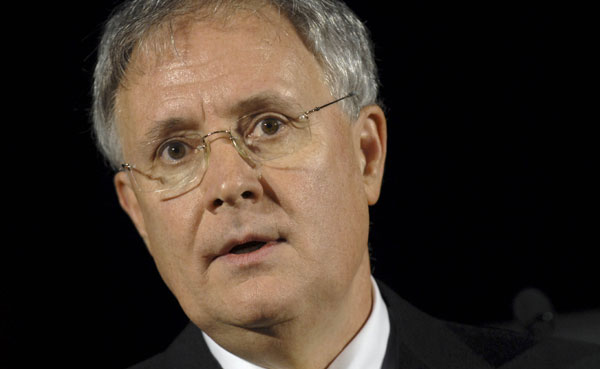
  • The picture shows Sir Michael Lyons, Chair of the BBC Trust.

Announcing Radioplayer

Blog comments are currently unavailable. Find out more.

Post categories:

Mike HillMike Hill|13:55 UK time, Tuesday, 19 October 2010

Editor's note: Mike Hill leads a project to build a unified player for all of the UK's radio stations online. An easy way to find and listen to every Ofcom-licenced radio station in one place - SB

Today at the annual Radio Festival we unveiled a fully working 'alpha' Radioplayer. The fact that we're showing our 'work in progress' to the great and the good of the radio industry speaks volumes about the spirit behind this project.

We've never pretended to be doing anything but 'making it up as we go along'. It's amazing that such a game-changing initiative has attracted widespread support from across radio - an industry not always noted for its unanimity.

This is largely down to the spirit in which we've approached the project - which in itself was largely invented 'on the hoof'.

  1. We've kept it mass-market. The early audience research helped with this. We got a very strong message from ordinary radio listeners about how they wanted to listen online.
  2. We've made it egalitarian. Radioplayer is a true 'level playing field', with the largest and the smallest stations existing side by side. The 'barriers to entry' are as low as we could get them, while maintaining quality.
  3. We've stayed true to Radio. Two knobs and five presets - the car radio came up time and time again in our research, as being the epitome of simplicity. Radio is simple, so Radioplayer is simple.
  4. We've taken a light touch. There are very few rules in Radioplayer. Four guidelines keep the main controls consistent for the user, but beyond that, freedom and innovation reign.
  5. We take one baby-step at a time. Very important when you're working in a complex partnership. Build the trust and the foundations gradually, and the model will evolve out of the goodwill you generate.

I hope our 'work in progress' will find favour. Even with just our five 'guinea pig' stations, you can see the potential for a simple but powerful way of listening to the radio. There are now new hurdles - I'm kept awake at night by the logistical challenge of helping hundreds of stations to skin and deploy their Radioplayer consoles. I'm sure there will still be wobbles - but we'll get through them if we stay true to the spirit and the vision of delivering 'one simple player for UK Radio'.

Mike Hill is Managing Director UK Radioplayer Ltd

Launching HD Sound

Blog comments are currently unavailable. Find out more.

Post categories:

Tim DavieTim Davie|10:09 UK time, Monday, 18 October 2010

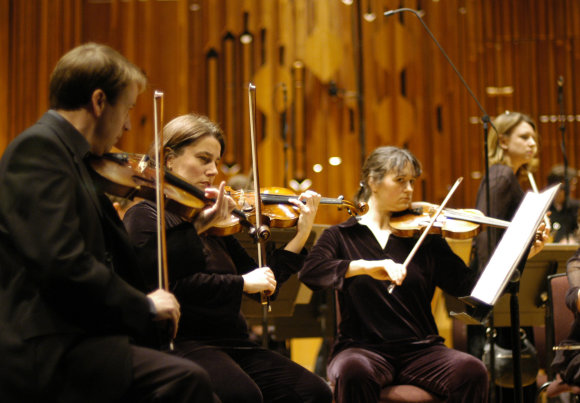
The BBC Symphony Orchestra

As the leading players in the radio industry gather today in Salford for their annual get-together, much of the conversation will be about the topic of innovation. Listeners are currently very satisfied with radio services but digital technology does bring opportunities to keep improving what we offer. This summer, BBC Radio 3 completed a trial of a higher quality online audio stream at the Proms. A positive listener response led us to look at a permanent launch. Therefore, from the beginning of December, we will offer "HD Sound" (as we are calling it) on Radio 3 when you visit the station website and listen online. We will quickly assess the performance of this before making the higher quality stream available on iPlayer and the proposed radio industry player (called Radioplayer). Radio 3 listeners will get the benefit of the highest quality broadcast available anywhere. Interestingly, it was Radio 3 that led the charge in 1971 as radio moved to stereo, and once again it is excellent to see it at the forefront of innovation.

As with Stereo, I would expect to see further roll-outs of HD Sound over time and we have already announced that we will be trialling it for Radio 2 at the Electric Proms. I am expecting that the performances by Elton John,Robert Plant and Neil Diamond will all be available.

Tim Davie is the Director of Audio and Music at the BBC.

Changes to the Radio 4 messageboards

Blog comments are currently unavailable. Find out more.

Post categories:

Jem StoneJem Stone|12:34 UK time, Friday, 15 October 2010

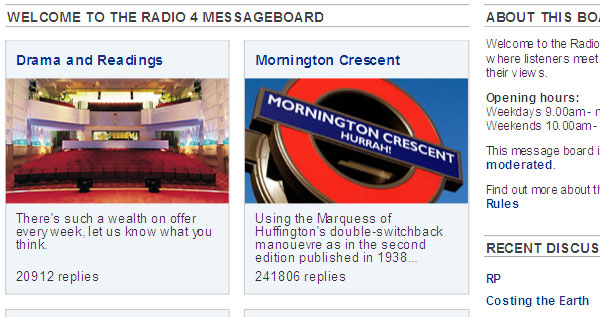
A screenshot of the BBC Radio 4 messageboard.

Editor's note: Jem Stone is the manager in charge of the messageboards at BBC Radio. Listen to his appearance on Radio 4's Feedback from earlier this afternoon - SB

In order to see this content you need to have both Javascript enabled and Flash installed. Visit BBC Webwise for full instructions

At lunchtime today I was interviewed on the weekly Radio 4 programme Feedback for an item that covered recent changes to the design of the Radio 4 message boards. After the forums were updated last Wednesday afternoon, various threads were started by users upset with the changes and several users emailed the programme frustrated with a number of bugs and overall how the new board was working. The interview was pretty brief so I've tried to summarise. Here are the points that I discussed with Roger:

Why did you make these changes?

The change in look finally brings the messageboards in line with other pages on BBC Online. The pages have been simplified and several new features such as 'sticky threads' - which users and hosts had been asking for - have been introduced. I scheduled the work for Radio 4 as part of a change that's been going on across all the BBC's messageboards over a number of weeks.

Are the problems fixed?

I regret there were some immediate snags to do with font size, opening hours and the ability of users to start new threads. These were all fixed earlier this week thanks to board users identifying them quickly and alerting these issues to hosts. Thanks again for doing so and also helping other users who turned up on the board with similar queries and problems. The remaining batch of minor fixes are scheduled to be rolled out next Wednesday.

Why didn't you foresee these issues before you made the changes?

We always expect a number of bugs and snags when we make a change as substantial as this. It was of course, significantly tested but I'm sorry that for a few days, some users were affected.

David Williams, the product manager for blogs, responded yesterday, and explains in detail the process for launching the changes and fixing problems. There is a further update to the message board software next Wednesday which should fix the remaining bugs.

What about The Archers?

The Archers is Radio's most popular message board and I had scheduled The Archers message board to be upgraded by the end of the month. However we've now put that back until we've done some more testing and I'm satisfied that the latest round of bug fixing is successful. We will obviously be in frequent discussion with Mustardlanders throughout.

Where do message boards fit on Radio 4, alongside recent launches of blogs, Facebook pages, and Twitter profiles?

We've had message boards at the BBC for a decade and they continue to be important for Radio 4 programmes such as Word of Mouth. The parodies, instant feedback, and insight we get from the large Archers community is shared regularly with scriptwriters, for example, and are an integral part of that programme's website and production. However, many users prefer to engage with Radio 4 in other ways, on Twitter or on Facebook, for instance.

We regularly update our blogs, making announcements and providing a place for managers to explain their decisions and we think this is an effective way for Radio 4 to interact with listeners and users of our digital services. You can see the full range of ways to join in with Radio 4 on our new Comment page.

It's worth saying that these days budgets are tighter than ever and, for stations where users are increasingly engaging with us in other ways or where the boards are used by a small number of listeners, then we have had to close some.

I'll be keeping an eye on comments here but also over at the board so feel free to ask questions here.

Jem Stone is Executive Producer, Social Media at BBC Audio & Music

  • Listen to this week's Feedback, produced by Karen Pirie, get in touch with Feedback, find out how to join the listener panel or subscribe to the podcast on the Feedback web page.
  • Feedback is on Twitter. Follow @BBCFeedback.
  • All of the BBC's messageboards are listed on this page.

The hundredth object approaches

Blog comments are currently unavailable. Find out more.

Post categories:

Tim DavieTim Davie|16:33 UK time, Wednesday, 13 October 2010

Two of the suggestions sent in by listeners for the 100th object in BBC Radio 4's A History of the World in 100 Objects.

Without doubt, my highlight of the week will be going to the British Museum on Thursday as we reveal the last object in our series A History of the World in 100 Objects. The Radio 4 series has been a centrepiece of our radio programming over the last year and it is destined to be remembered as one of BBC Radio's landmark pieces of broadcasting.

Initially, the idea of a world history brought alive through objects described on radio appeared too demanding for some. However, the use of objects as the starting point for important stories that draw in broader themes while remaining, by their very nature, personal, has been uniquely powerful. As someone who completed history A-Level with an encyclopaedic knowledge of the causes of World War Two but with little or no sense of global or early history, the series has been a revelation.

Thanks to the quality of production including masterful presentation by Neil MacGregor, the series, which has never shied away from more demanding detail and themes, has caught the public's imagination. We have seen an amazing 10 million podcasts downloaded and the involvement of over 500 museums across the country. Online, thousands of people have been submitting their own objects from a miniature 15th century prayer book to a 19th century Ale Jug.

This week we have been revealing some of the objects that are being considered for our last selection. We have heard about objects on the short list such as Didier Drogba's Chelsea shirt, the latest polar clothing and a mobile phone. Also numerous people have been making suggestions about what the object should be. Predictably, the last time I asked, the iPhone seemed to be coming out top. Importantly, and unlike reality TV, although we are getting numerous suggestions from the public, the final item will the choice of Neil MacGregor and the programme team, thus preserving the value of a strong curatorial hand across every episode the series.

Also, while some may question the value of some of the final possibilities, each offers great story-telling potential. Take Drogba's shirt; it is worth pausing and thinking just how many themes it embodies: the globalisation of sport, Russian oligarchs, the cult of celebrity to name but a few. I have no idea if it will be picked. I have asked not to know as I want to enjoy the drama of the announcement on Thursday morning at around 0745 on the Today programme. I hope that you will be listening not only to the news about number 100 but to all of these memorable programmes.

Tim Davie is Director of Audio & Music at the BBC

Investing in broadcast technology

Blog comments are currently unavailable. Find out more.

Post categories:

Tim DavieTim Davie|17:14 UK time, Monday, 4 October 2010

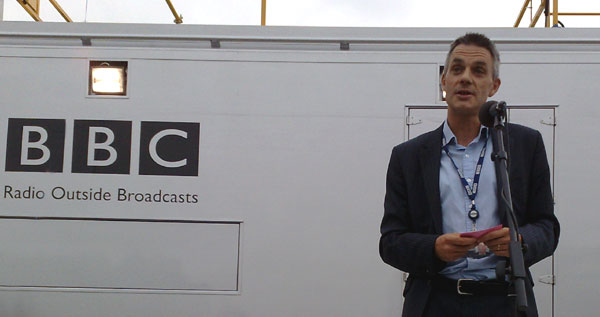
A few days ago I hosted a celebration of the launch of our new radio Outside Broadcast (OB) fleet. The fleet comprises of state of the art sound trucks that you may see parked up at countless festivals, concerts and events throughout the year. The new trucks have come to the rescue of our ageing vehicles which have been heavily used for many years. Capital investment is very significant (and rare) for BBC radio, so it represents a landmark moment.

Of course, inside the trucks are some of the most accomplished audio engineers, technicians and producers in the world. When you meet these teams, who have decades of experience, you are struck by their passion for delivering a perfect broadcast and the enormous pride that they have in representing the BBC across the country. Everything that you hear from live events beyond the studio is utterly dependent on their expertise.

This year, during some of my most enjoyable days, I visited our trucks across many locations such as outside the Proms, at Glastonbury or Maida Vale. However, perhaps I appreciate what these trucks deliver most in a cottage in Cornwall every summer, listening to live coverage of the Proms. The quality of our OB Fleet combined with the skill of the team comfortably closes the distance between the Albert Hall and the Lizard.

Furthermore, the OB team are a group that are constantly pushing the boundaries of technology. Immediately after last week's launch, they were testing new ways of producing music during a session with the Charlatans. I will be returning to this theme of audio innovation as we bring news of further developments to improve the quality of our broadcasting.

Meanwhile, if you do have ideas on how radio should innovate, don't hesitate to leave a comment here on the blog.

Tim Davie is Director of Audio & Music at the BBC

  • The picture shows Tim at the launch of the new fleet. It was taken by Simon Tuff, Principal Technologist at BBC Audio & Music.

A busy week on Radio 3

Blog comments are currently unavailable. Find out more.

Post categories:

Roger WrightRoger Wright|00:04 UK time, Saturday, 2 October 2010

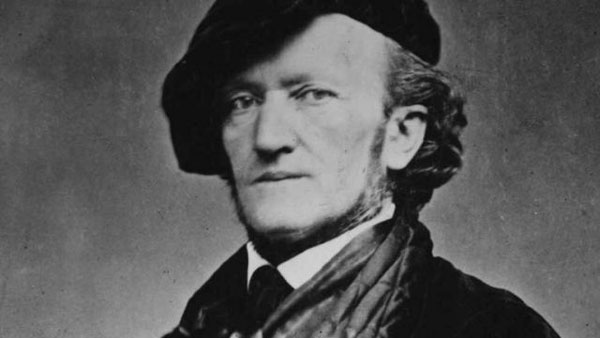
Richard Wagner, Radio 3 Composer of the Week in wek 40, October 2010

I was staggered recently when a colleague (in this case Andrew Connolly, who runs the BBC Concert Orchestra) told me what his orchestra was undertaking in a matter of days - the range of its output was breathtaking and the information itself made an impact on me.

Sometimes I think we do so much that it is hard to get any clear message out about what we are doing and when.

So it led me to think that the simplicity of merely communicating the details of our programmes can be a powerful tool to use in the promotion of Radio 3. This thought hit me again when I looked at week 40. I have always had difficulty in understanding BBC weeks. Many of my colleagues have amazing powers - not least to match a week number to particular dates. So for those like me who have no clue about week number except 1 and 52 (and they can be trickier than you might imagine!), I was looking at the plans for this week.

Just look at today's schedule:

A concert from the York Early Music Festival, a performance from the Darbar Festival in World Routes, Rigoletto from Welsh National Opera with Simon Keenleyside in the title role and a fascinating new play The First Day Of The Rest Of My Life by Martin Jameson in The Wire, That's all between just 1300 and 2200 on one day.

Later in the week you can hear Ugandan journalist Joel Kibazo visiting Kenya on the 50th anniversary of the liberation of 17 African nations, Wagner is Composer of the Week, there is a series of five talks exploring aspects of the Stewart dynasty, Rana Mitter talks to primatologist Frans de Waal and Matthew Sweet talks to the American novelist Jonathan Franzen (both on Night Waves), concerts from the Ulster Orchestra and the Halle (amongst others) and a live broadcast of Sir Andrew Davis conducting the BBC Symphony Orchestra and Chorus in music by Elgar, Delius and the world premiere of a new work by Edwin Roxburgh, followed by The Verb in which Ian McMillan introduces a new commission written for the programme by novelist Louise Walsh. Please excuse the long list - but I hope you get the point.

I suppose if I were looking for a definition of broadcasting as opposed to narrowcasting just reading the list of programmes speaks more powerfully than a strategy document!

Roger Wright is Controller of BBC Radio 3

BBC iPlayer Pop-Out Radio Console: new version

Post categories:

Dave Price|18:31 UK time, Friday, 1 October 2010

Editor's note: Dave Price is the manager responsible for the new BBC radio iPlayer. He's written a blog post explaining its new functions for the BBC Internet blog - SB

Online listeners of BBC radio may have noticed the BBC iPlayer team recently launched a new version of the pop-out radio console.

Anthony Rose in his previous post described some of the new features in the latest version of iPlayer. In this post I wanted to focus on the enhancements we've made for our global radio audience...

Read the rest of the post and leave comments on the BBC Internet blog

Portrayal of lesbian, gay and bisexual people in broadcasting

Post categories:

Tim DavieTim Davie|10:17 UK time, Friday, 1 October 2010

Image illustrating the depiction of lesbian, gay and bisexual characters in BBC content.

Just over a year ago, I volunteered to chair the Lesbian, Gay & Bisexual Working Group at the BBC and shortly thereafter, we announced that the BBC had commissioned a study into the portrayal of LGB audiences across all of our services.

As the most comprehensive piece of research ever carried out in this area by the BBC and perhaps any other media organisation...

This post originally appeared on the About the BBC blog. Read the rest of the post and leave comments there...

More from this blog...

Categories

These are some of the popular topics this blog covers.