Radio Blog

Archives for September 2010

The view from abroad

Blog comments are currently unavailable. Find out more.

Post categories:

Tim DavieTim Davie|09:31 UK time, Wednesday, 29 September 2010
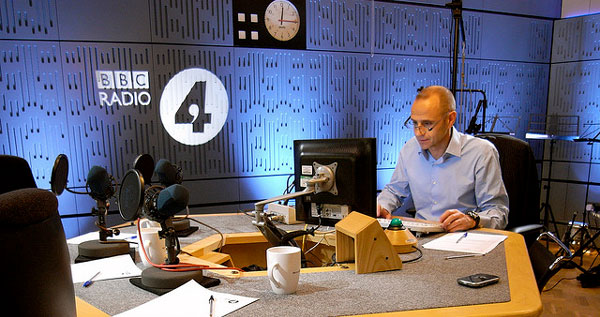
Evan Davis in a BBC Radio 4 studio preparing for a recording of The Bottom Line. Picture by Steve Bowbrick.

As a BBC Director who is often defending the BBC's actions against critics, I often get asked if the BBC could be more vocal about its strengths. So with this in mind, forgive me if this blog is a somewhat shameless celebration of what we do best.

Last week, I hosted a drink to say goodbye to Mark Damazer, the tenth Controller of Radio 4. Apart from paying tribute to Mark's successful tenure at the helm, it was a chance to reflect on the joys of the network and celebrate the strength of radio. Despite all the changes that the digital revolution brings, the fact that Radio 4 is achieving record listening is testament to the quality of its programme teams who deliver radio across a wonderfully broad array of subjects.

But to assess the true value of the network, it is sometimes best to move away from the UK and experience a culture devoid of Radio 4. In 2001, I moved to Connecticut for 2 years and while I appreciated so much of American life, almost every evening I would go to the computer after putting the children to bed and listen to programmes such as Today or In Our Time on Listen Again (as it was once called). On returning to the UK, I can recall that my first decision in this job was to confirm that I wanted our domestic networks to continue to be available for free online across the world. It did not cost significant money and there was no clear way to commercialise the services, so it was an easy decision to make.

On this theme, an article published in the LA Times this week not only drew attention to the strength of radio but gave a perspective on how Radio 4 is perceived beyond our shores.
An illustration of a microphone in the colours of the Union Flag from The Los Angeles Times.

To radio lovers, an explanation of the appeal of the station is not likely to be surprising news. However, the LA Times article also touches on a point that is central to UK radio and stretches beyond a pure celebration of Radio 4. It makes the case that appropriate public funding in radio broadcasting can lead to a stronger overall radio market. UK listening has remained healthy versus the US because of the diversity and breadth of what we offer. Of course the BBC must remain utterly distinctive versus commercial stations but when used appropriately the Licence Fee can help build the overall size of the radio market and stimulate growth across all sectors, commercial and BBC, by ensuring that radio does not become sub-scale in an increasingly competitive, global media sector. Of course, this does not mean that growth is all down to public funding; ensuring enough space for further commercial competition and driving industry innovation is also critical.

As for Radio 4, I am sure that with the very capable Gwyn Williams now in the Controller's seat, you will hear it going from strength to strength. Meanwhile, when you do travel abroad, do try to get to a computer and have a listen. I may be a touch sentimental but when you are thousands of miles from home it is easy to agree with Stephen Fry that Radio 4 is "the best reason for living in the UK". I wonder what the second best reason is?

Tim Davie is Director of Audio & Music at the BBC

Live music and BBC radio - welcome to the Radio Blog

Blog comments are currently unavailable. Find out more.

Post categories:

Tim DavieTim Davie|12:00 UK time, Wednesday, 22 September 2010

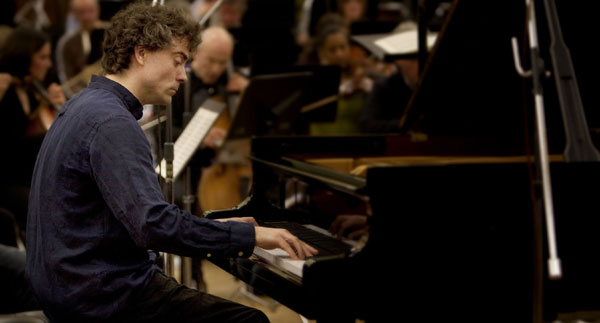
Pianist Paul Lewis at the piano during the BBC Proms.

Welcome to the new BBC Radio Blog where I and others will be making regular posts on a wide range of topics affecting the national radio stations and music programmes across the BBC. It is a chance to hear directly from myself and the team, and, like the best speech radio, we hope to provoke debate and reaction. Please do leave comments and suggest topics that we should cover.

September in the BBC Broadcasting House HQ is a time when we reflect on the BBC Proms season as well as on our coverage of a host of other festivals and outside broadcasts such as coverage of the Mercury Awards. For many of our teams, it is a momentary pause as they move into a busy autumn of live music featuring such delights as the London Jazz Festival and the Radio 2 Electric Proms, both of which announced their 2010 line-ups last week.

The global boom in live music is a well-documented phenomenon that has continued to buck recessionary trends. The latest PRS for Music Economics report (PDF) showed that after passing recorded music sales in the UK in 2008, live music receipts grew to £1.537bn in 2009, up 9.4%. Recorded music revenues were flat at £1.357bn in the same period. Of course, much has been written about the unique power of communal live events in an increasingly virtual world. Certainly, while I would naturally champion BBC radio and TV as an outstanding way to enjoy live performance, of course there is something special about hearing and seeing the drama unfold live at the event itself. That is why our commitment to supporting an incredibly wide range of live music across multiple genres and sustaining our hours of coverage will be central to my time in this job.

The success of the BBC Proms in achieving record ticket sales in 2010 was reported recently and the festival is perhaps benefitting from the overall trend, although it is dominated by pop music statistics. But I suspect that something deeper is at play. Indeed within the live music numbers there is some evidence that receipts are moving to the biggest pop superstars, while overall sales may be softening. The FT reported a 17% fall in ticket sales in the top 100 tours in the US in the first half of 2010. With this in mind, it makes our spirits soar when we hear that the Proms sold 92% of tickets to over 70 concerts in a venue of over 5000 people.

Personally I think two factors may be at play beyond a general trend towards live. Both of them could suggest that a sustained resurgence beyond pop music may be symbolic of deeper changes:

Firstly, the relative calm of a classical concert is something that I sense that people are beginning to yearn for. To be forced to switch off the smart phone and just absorb something of long lasting resonance, be it of beauty or powerful impact, is curiously precious in an age when instantaneous reaction (tweet, text or instant message) is the norm. Taking it slow is becoming a fast growth sector.

Secondly, I sense a growing but quiet rebellion against the desire to be confined to a fixed playlist or automated recommendations. Of course brilliant algorithms can work wonders for a web service, but when it comes to live performance, or indeed radio stations or museums, we put our trust in great curators and controllers and simply let them take us on a journey. It is this trust in an audience that marks out the great editorial leaders. I think that audiences trust BBC Proms Director Roger Wright and the Proms team. They are hungry to be taken beyond the familiar, to learn and be inspired. I know that by going to see something familiar, I may also make a memorable discovery. Personally, I remember arriving to see Prom 23 looking forward to The Lark Ascending and then getting bowled over by a inspirational work by the little known early 20th century composer John Foulds.

I hope that if you are not a regular fan of classical music or jazz, you may take the chance this autumn of putting your trust in those who are blessed with an innate ability to take us away from the addictive small screen and into a world of more profound discoveries: just click one of the links below and enjoy a concert from a BBC Performing Group or a jazz concert in the next few weeks. Of course, if you can't get to one, BBC radio will be there to broadcast much of what you miss.

Tim Davie is Director of Audio & Music at the BBC

  • There is still plenty to listen to and watch on the Proms web site, including clips of Dame Judi Dench, Simon Rattle and the Last Night. You can also browse the Proms archive for details of what was played at every Prom back to the festival's founding in 1895.
  • The London Jazz Festival web site has a full programme of performances (Friday 12 - Sunday 21 November).
  • The photograph shows Paul Lewis, star of the 2010 Proms. (c) Simon Jay Price.

A new BBC blog

Blog comments are currently unavailable. Find out more.

Post categories:

Steve BowbrickSteve Bowbrick|17:20 UK time, Tuesday, 21 September 2010

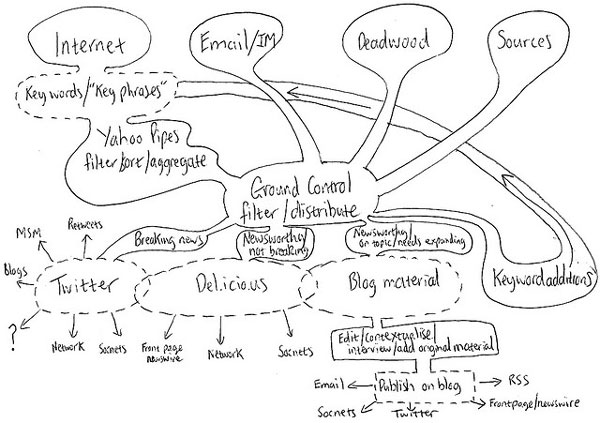
Hand-drawn blog diagram by Graham Holliday

Senior managers at BBC Audio & Music are already keen bloggers. The Controllers of Radio 3, Radio 4 and 5 live have had their own blogs for some time and others have blogged on the BBC Internet blog, the BBC Music blog and on various technical blogs. The latest to jump in is the boss, Director of BBC Audio & Music Tim Davie. His first blog post is a celebration of live music and radio and will be published here tomorrow.

And here on the new radio blog, alongside Tim's posts, we'll be publishing links to blog posts and discussions about BBC radio from around bbc.co.uk and from elsewhere and we'll be encouraging you to get involved by commenting on blog posts. Start by telling us what you'd like to see on the BBC Radio blog by leaving a comment here.

Steve Bowbrick, blogs editor, BBC Audio & Music

More from this blog...

Categories

These are some of the popular topics this blog covers.