BBC BLOGS - Peter HenleyHenley's Hustings

Archives for January 2010

Googling the Salisbury Conservative candidates
Peter Henley|16:22 UK time, Friday, 29 January 2010

Comments

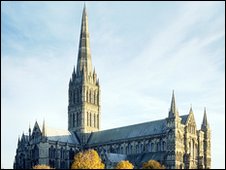
salisburycathedral.jpgWhen you've got 187 job applications to whittle down to a shortlist of six there's a lot of reading and talking to do.

And with all the stuff about Conservative HQ leaning on local parties to get their A listers promoted, choosing the replacement for a safe seat is a sensitive subject at the best of times.

So the Salisbury team had a dilemma on their way to London for a vital meeting earlier this month when the train was halted in the snow.

Rather than let the selection timetable slip I'm told they dreamt up a system of codes for the candidates under consideration and got on with choosing in a crowded carriage.

After the problems in South Norfolk when the committee were told they should have properly googled the background of Liz Truss perhaps they should have had internet access.

But this is an Open Primary, so you can do the job and help select for them. Here are the links for the final six. If you find anything dodgy post your thoughts below. We'll be live from Salisbury on this week's Politics Show so I'll pass the comments on!

Victoria Atkins - www.victoria-atkins.com


Ian Axton - www.ianaxton.net

Fleur Butler - www.fleurbutler.co.uk

John Glen - www.johnglen.org

Jeremy Quin - www.jeremyquin.com

Zehra Zaidi - www.zehrazaidi.org.uk
Marchwood Power Station, and the fish disco

Peter Henley|17:44 UK time, Thursday, 28 January 2010

Comments

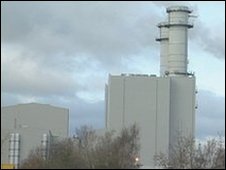
power.jpgA fascinating trip to the opening of one of the region's biggest construction projects today, and for a reason you might not expect.

The new gas power station at Marchwood on the edge of Southampton water took a thousand people three years to build and cost £380 million.

Now it's up and running just 45 full-time staff can provide enough electricity for Southampton, Portsmouth and Winchester combined.

The two huge engines at the heart of the power station are fed by gas from the national grid through a 23km pipeline bored under the New Forest.

OK, that's enough stats (and the bit about the fish disco is at the end if you want to skip on!) Here's what I found really impressive: it was real evidence of global action to provide power for the future.

The station was built by Siemens, a German company who make the most efficient gas turbines on the planet. The guest list for the opening was dominated by an Irish contingent because ESB - who distribute electricity and read all the meters in Eire - were the ones prepared to make the 20 year gamble that gas will continue as a viable fuel.

The actual work of construction was done by Russians, Portuguese, Finns (they do the best welding) and Italians (they have the coolest safety goggles).

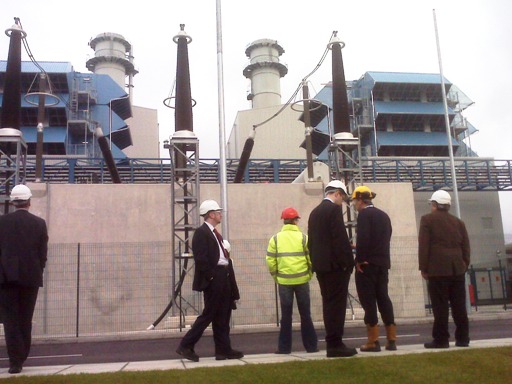
powerstation.jpgOn time, below budget, super-efficient. What might seem an old-fashioned dash back to gas is a real example of how by working together we can keep all our lights on for the future.

Which brings me to the fish disco.

I can understand why the appalling threat of climate change means that many people wouldn't want to celebrate the opening of a new power station.

We need efficiency, we need renewables, but we need alternatives too. This one has hugely improved environmental standards, nearly twice as efficient as the one it replaces, with 24 hour monitoring of the effect the station's having on the world around it.

Part of that is a rather nifty way of diverting fish away from the inlet pipes for the water that rushes in at 15 tonnes a second to cool the whole process. They're using underwater speakers that lure salmon and smolt towards less dangerous water, rather than messy screens and fencing.

It's all going swimmingly. An intelligent solution that's working now, while we find even better ways of generating power.

Trust a seven year-old to stop the traffic

Peter Henley|14:00 UK time, Sunday, 24 January 2010

Comments

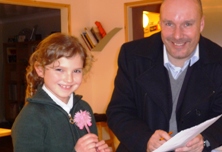
sophie.JPGThey're starting politicians young nowadays. Meet seven-year old Sophie, who lives in the Hampshire village of Kings Worthy. For ages she's been asking her Mum if they can have a cat, but Mum says no, because the road through the village is so busy.

It sounds like an excellent parental excuse to me. But young Sophie has obviously been blessed with that killer political attribute of refusing to accept that things can't be changed.

There's a simple solution, she declares, we need a speed limit to slow the traffic down.

And a campaign swung into action. She collected her neighbours' signatures on a petition, then she did an assembly at school on the need to slow down the traffic. Then she contacted the local supermarket for support and lobbied her MP, Lib Dem Mark Oaten.

It seems that there had been a proposal to reduce the road from 40 to 30 mph - but the Parish Council were against the idea.

But now Sophie's on the case I suspect a re-think may be on the cards, and one seven year-old could be well on her way to having a new feline friend.

The parting shots of MPs leaving parliament

Peter Henley|16:37 UK time, Friday, 22 January 2010

Comments

We have a new look for the Southern section of the Politics Show over the next month or so. I'll be presenting from the studio, and introducing a more varied diet of shorter items reflecting political life in the South of England.

One new strand is a series of interviews to allow MPs standing down at the next election to unburden themselves of any last words of wisdom.

I'm there to poke them with a sharp stick as well. Starting this week with the Salisbury Conservative MP, Robert Key. Did he jump or was he pushed? That's just for starters...

He'd been re-selected, but then admits several people had a quiet word with him...

Find out more on Sunday at 12:30, BBC 1.

A chill wind blows through local reporting

Peter Henley|15:23 UK time, Wednesday, 13 January 2010

Comments

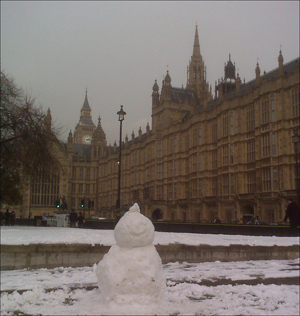
snowman.jpgAn interesting debate today, amid the snow and ice at Westminster, about the demise of local newspapers.

The bad weather has hugely boosted interest in local news, with South Today hitting a fifteen year record number of viewers last week. Local radio lists of school closures and traffic reports became essential listening, with BBC Berkshire, Oxford and Solent performing a vital role.

But local newspapers are under threat because of the internet. When people can get their news free through Google why would they pay to buy a paper? And with falling readership advertising has slid from £2.8 billion to £2 billion per year.

The result is a loss of a vital local conversation. The debate heard how local court reporting is disappearing - replaced by syndicated celebrity tittle-tattle. Properly balanced and researched accounts of council debates are being replaced by propaganda free-sheets funded by local taxpayers.

The Isle Of Wight Conservative MP Andrew Turner praised local reporting, the established weekly County Press, as well as sharp new competition from new media who work to professional standards like Ventnor Blog.

But he drew attention in the debate to the way that other local newspapers are owned.

Multi-national conglomerates have bought up what were once small local enterprises.
As a result the meagre monthly advertising budgets of local traders aren't re-invested in the community, boosing a sense of place, but syphoned off for shareholders' dividends.

Oxfordshire's Ed Vaizey is another Tory drawing up plans for a better way to run the local press. They'd like to see the Government's plans for local news news consortia to produce ITV regional news taken forward across the country.

But to do that they'll have to prove that people will pay for good quality local news, even when there's no local weather story to drag the readers in.

Cameron Direct - a study in air-brushed cool

Peter Henley|15:23 UK time, Wednesday, 13 January 2010

Comments

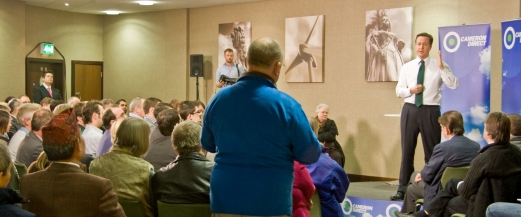
camerondirect3.jpgThere was something not quite right about the Cameron public meeting in Reading last week, and I've been trying to put my finger on what it was.

This was the 61st Cameron direct meeting, re-arranged because of the snow.

I arrived early to find everything already in place. The Madjeski stadium bar was spotless, the sound technicians were fine-tuning what sounded like a very expensive PA system, the lighting rig was totally even - not a trace of a shadow.

And that, I think, was what fed my lingering doubt.

It's all so perfect, so well-rehearsed, that the audience left still uneasy about the answers that they'd heard.

Cameron's own performance is well described here by Bracknell Lib Dem blogger Mark Thompson. There were tough questions, a decently sceptical and diverse audience, just the right amount of time spent on each answer to cover a wide spread of interest.

I was reminded of an early description of Cameron - "the words re-arrange themselves on the way out of his mouth." References to his family were without doubt sincere. He gave us just enough of a taste of a big news announcement the next day before stopping himself with a "better not say any more." There was light and shade, a twinkling humour, and yet...

Don't say the word "air-brushed" - it's not just that. It's less of a fuzziness, than a coolness that will need some attention before the election campaign. Some of that caution will need to be thrown to the wind.

To "seal the deal" and really connect with the electorate Dave has to find an extra gear, beyond what we saw in Reading. It's not just about policy - whether you agree or disagree there's plenty of detail coming through.

Reassuringly polished, but is the designer presentation starting to get in the way now?

BBC © 2014The BBC is not responsible for the content of external sites. Read more.

This page is best viewed in an up-to-date web browser with style sheets (CSS) enabled. While you will be able to view the content of this page in your current browser, you will not be able to get the full visual experience. Please consider upgrading your browser software or enabling style sheets (CSS) if you are able to do so.