

Marchwood Power Station, and the fish disco
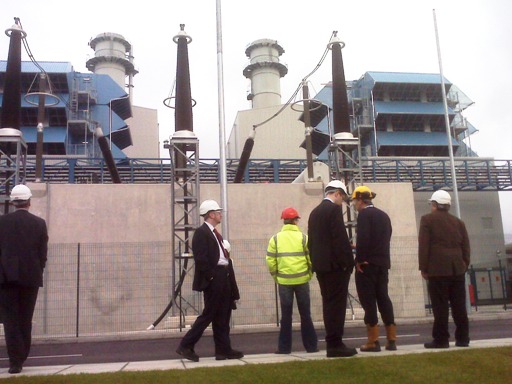 A fascinating trip to the opening of one of the region's biggest construction projects today, and for a reason you might not expect.
The new gas power station at Marchwood on the edge of Southampton water took a thousand people three years to build and cost £380 million.
Now it's up and running just 45 full-time staff can provide enough electricity for Southampton, Portsmouth and Winchester combined.
The two huge engines at the heart of the power station are fed by gas from the national grid through a 23km pipeline bored under the New Forest.
OK, that's enough stats (and the bit about the fish disco is at the end if you want to skip on!) Here's what I found really impressive: it was real evidence of global action to provide power for the future.
The station was built by Siemens, a German company who make the most efficient gas turbines on the planet. The guest list for the opening was dominated by an Irish contingent because ESB - who distribute electricity and read all the meters in Eire - were the ones prepared to make the 20 year gamble that gas will continue as a viable fuel.
The actual work of construction was done by Russians, Portuguese, Finns (they do the best welding) and Italians (they have the coolest safety goggles).
 On time, below budget, super-efficient. What might seem an old-fashioned dash back to gas is a real example of how by working together we can keep all our lights on for the future.
Which brings me to the fish disco.
I can understand why the appalling threat of climate change means that many people wouldn't want to celebrate the opening of a new power station.
We need efficiency, we need renewables, but we need alternatives too. This one has hugely improved environmental standards, nearly twice as efficient as the one it replaces, with 24 hour monitoring of the effect the station's having on the world around it.
Part of that is a rather nifty way of diverting fish away from the inlet pipes for the water that rushes in at 15 tonnes a second to cool the whole process. They're using underwater speakers that lure salmon and smolt towards less dangerous water, rather than messy screens and fencing.
It's all going swimmingly. An intelligent solution that's working now, while we find even better ways of generating power.
 Welcome to the hustings! I'm Peter Henley, the BBC's political reporter in the south of England. From parish councils in Sussex, to European politics in Oxford, this is the blog for you.

Comments
Sign in or register to comment.