
Can the dry spell last - and a sneak preview of next winter
Rainfall across the UK has been well below average so far this year. In fact across the UK it's been the driest January to May since 1964. This is due to the almost complete absence of our usual rain bearing weather systems, which normally bring unsettled weather from the West.
Since December of last year, the atmosphere has been 'blocked', preventing the normal sequence of weather fronts moving across the UK. Instead, high pressure has been dominant, leading to a distinct lask of rainfall.
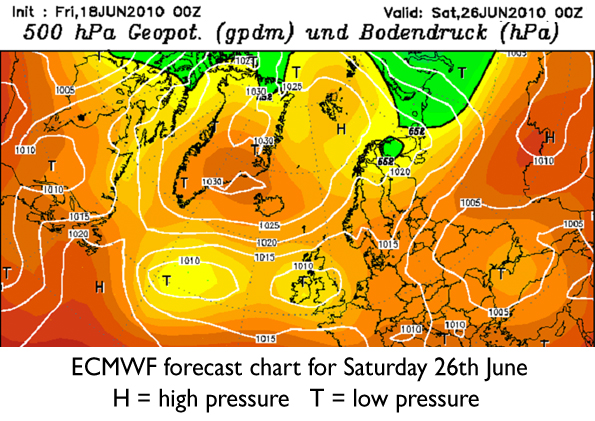
Although there is no sign that we are about to see a resumption of our more normal mobile pattern of weather anytime soon, it does look as though conditions could become much more unsettled towards the end of next week, meaning potentially much wetter conditions for parts of the UK.
The ECMWF (European Centre for Medium Range Forecasting) chart shown below for next saturday indicates low pressure in charge by that time.
Looking even further ahead, I thought the latest forecast temperature charts from NOAA (National Oceanic and Atmospheric Administration) were very interesting.
Note how virtually the whole of Europe through Autumn and next Winter is once more colder than average.
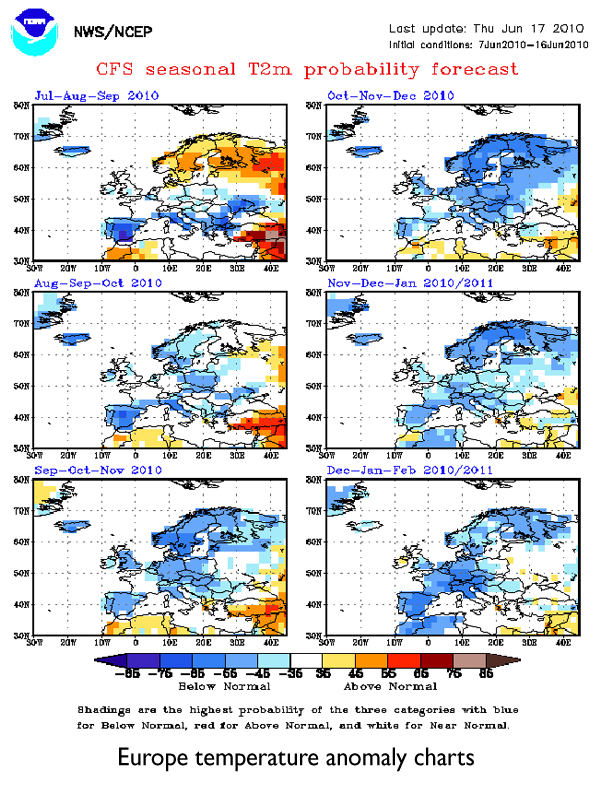
It's a long way off, but it suggests that weather patterns are likely to remain more blocked than normal across Europe. With average solar activity continuing to be weak, coupled with the likelihood of developing La Nina conditions (cooling of surface waters in the tropical eastern Pacific Ocean) later this year, the odds on a cold winter across Europe must once again be higher than normal.
 Hello, I’m Paul Hudson, weather presenter and climate correspondent for BBC Look North in Yorkshire and Lincolnshire. I've been interested in the weather and climate for as long as I can remember, and worked as a forecaster with the Met Office for more than ten years locally and at the international unit before joining the BBC in October 2007. Here I divide my time between forecasting and reporting on stories about climate change and its implications for people's everyday lives.
Comments
Sign in or register to comment.