
Second coldest May night on record
Last night was the coldest May night for over 40 years. At the Met Office at Leeming, North Yorkshire, the mercury dipped to -3.5C (26F) making it the coldest since 3rd May 1967 when -3.8C (25F) was recorded - and the second coldest since records began shortly after the end of the 2nd world war in 1945.
It is interesting that the current record was set very early in the month - making the recorded temperature last night all the more remarkable.
Church Fenton in West Yorkshire also had their coldest May night since 1967.
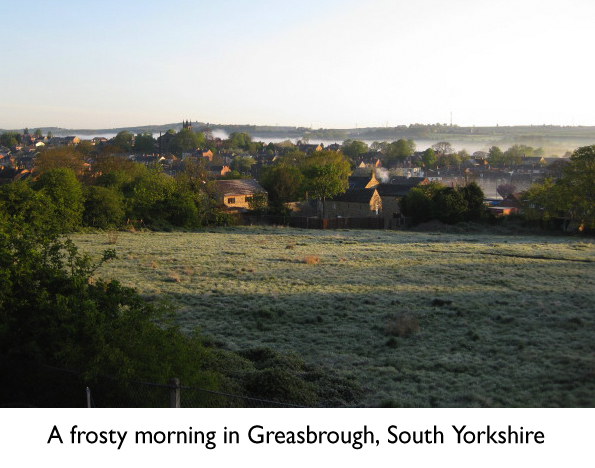
Although April was above average from a CET (Central England temperature measurement) point of view, May is now well below average, and as we approach the half way stage of 2010 it is becoming clear that there is going to have to be quite a turnaround in UK temperatures for the whole of 2010 not to be colder than average.
This comes against a backdrop of warm global temperatures, on all measures. In fact so far this year, global temperatures as measured by satellites are only just below those that were recorded in the hottest year on record, in 1998.
Across the UK, next week looks much warmer than of late, with a continuation of the mostly dry, anticyclonic theme. If the models are correct, May on the whole looks set to be a very dry month.
This blocked weather pattern has mostly been in place since mid December of 2009. From a climatological point of view, It could be only a matter of time before a wetter, more cyclonic West to South-westerly type of weather becomes established for the first time since November of last year.
 Hello, I’m Paul Hudson, weather presenter and climate correspondent for BBC Look North in Yorkshire and Lincolnshire. I've been interested in the weather and climate for as long as I can remember, and worked as a forecaster with the Met Office for more than ten years locally and at the international unit before joining the BBC in October 2007. Here I divide my time between forecasting and reporting on stories about climate change and its implications for people's everyday lives.
Comments
Sign in or register to comment.