Filming with the skater girls

Gary Butcher
Senior Broadcast Journalist, BBC 5live
I am a big fan of skateboarding - the culture, the people, the ‘me and my board against the world’ attitude, and the fact that you are competing against your own fear or the lump of concrete or rail you are trying to land a trick on.
However, I am a useless skateboarder! My participation in the sport so far has extended to watching lots of documentaries online.
An ad on the BBC jobs site said that Outreach was looking for volunteer filmmakers to make a documentary on skateboarders in Manchester.
I have never made a film before – I currently work as an SBJ on 5live breakfast – but having made radio documentaries I was keen to broaden my skill base and hopefully be able to pick up a camera and edit something together for our website.
So I approached the team, found out more about the role, applied and then found myself selected along with three other vastly more experienced filmmakers who were equally enthusiastic and brimming with ideas.
It is great to meet people from other departments that you wouldn’t ordinarily come into contact with on your day-to-day job.
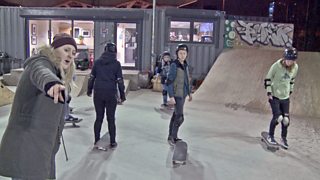
Our task was to make a short film to help encourage more girls to take up skateboarding, or more specifically to go along to a monthly meet up at a skate park underneath a road bridge in Manchester City Centre.
It is called Projekts MCR and its ethos is: ‘to make Manchester a better place for skateboarding and skateboarders and all those people who haven't tried skateboarding yet.’
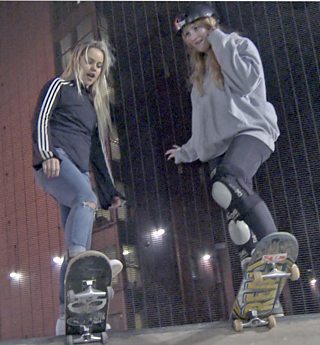
Projekts MCR started up a Girl’s Night around a year ago and wanted to encourage more girls to go along, so our task was to make a film which the project could use on their website and across social media to promote the night and girl skateboarding in general.
We are half way through filming and so far it is already been quite an experience. We all had to pad up and have a lesson to induct us... thank goodness no-one was filming that.
We have met the various young people who use the park, and found out why it is so important that projects like this exist. Girls from the ages of 15 to 29 go along – often on their own – simply to skate, learn and hang out.
They come from different backgrounds and have different stories to tell about why they started skateboarding, but they all have one thing in common, they want to become better skaters.
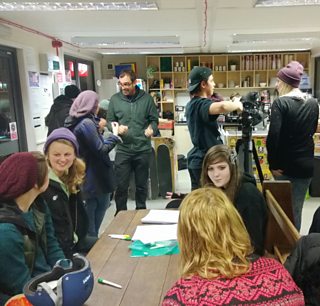
The girls have shared their stories with us about what skateboarding means to them. It has helped some of them deal with problems at school, or maybe just enabled older members of the group to reconnect with their past.
This concrete park under a road bridge offers them a space, once a month, to skate without judgement - or boys watching.
We were introduced to two teenage skaters, Max and Isaac, who are also keen filmmakers. They quickly became part of the team and are helping us film, which has been a huge asset with the skills they offer.
It also lets them add the BBC on their CVs, and learn from some of our experience.
Getting the opportunity to work with talented colleagues, learn new skills and reach out to a new audience is already helping me think more creatively in my day job at 5live, particularly on how we can broadcast material on different platforms.
Our hope is that the film will inspire girls across the UK to gain the courage to go along to their local skate park for the first time, experience the culture, make new friends and learn new skills. Maybe even master that kick flip that I never could.
*BBC Outreach & Corporate Responsibility connects the BBC directly with its audiences, particularly those identified as harder to reach. Projekts MCRapplied to the department’s Community Doorway programme, which gives BBC staff an opportunity to work with various charities and community groups.
Applications are particularly welcome from organisations based in the neighbourhoods where a large number of our staff work - namely Salford, Greater Manchester and the two London boroughs of Hammersmith & Fulham and Westminster - and those that work with 16-24 year olds and/or groups that are considered to be disadvantaged or socially excluded.
