

Science and religion: duet or duel?
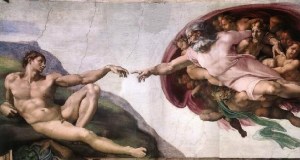

People often speak of the science-religion relationship in warlike terms. Is talk of a "battle" between religion and science supported by the historical and contemporary evidence?
The idea of a battle between religion and science is largely the invention of two late nineteenth century historians J. W. Draper and A. D. White who wrote books entitled History of the Conflict between Religion and Science and A History of the Warfare of Science with Theology in Christendom respectively. No serious historians today accept this 'conflict' thesis which has been refuted many times. However, it does retain a hold over popular consciousness and in the popular writings of the so-called 'New Atheists'. The reality is that it is in Christendom that modern science as we know it grew up, and for good theological reasons. The universe was seen as the free, rationally ordered, good creation of the all-good and all-powerful God of the Christian faith, and scientists such as Johannes Kepler saw themselves 'thinking God's thoughts after him'.
The most famous scientist of our age, Stephen Hawking, has said that there is no longer any place for God in theories about the origin of the Universe. Hasn't science killed off God?
Hawking confuses the idea that the universe had a beginning in time with the Christian doctrine of creation. The latter has nothing to do with whether the universe had a temporal beginning or not, but answers the quite different question, 'Why is there something rather than nothing?' Indeed, Hawking himself put this very eloquently in his first book, A Brief History of Time, when he asked 'What is it that breathes fire into the equations and makes a universe for them to describe?' In his most recent book Hawking and his co-author Leonard Mlodinow commit a number of philosophical blunders in thinking they can answer this latter question purely through science. Statements such as 'Because there is gravity the universe creates itself out of nothing' are simply self-contradictory.
Are science and religion competing and contradictory explanations of the world?
No, they provide complementary explanations. Science explains the processes of the world. It uncovers the laws which describe how the world works. Theology explains why science is possible in the first place, because science simply has to assume that there is a rationally ordered and structured universe out there which can be described by laws which are open to the human mind to discover. Einstein, for example, was deeply impressed by this match between the structures of the human mind and the structure of the cosmos and expressed this by saying that the most incomprehensible thing about the universe is its comprehensibility. Theology also explains why the laws of nature take the particular form they do with the result that 13.7 billion years on from the Big Bang there are intelligent creatures able to discuss such issues: this was the intention of the Creator. It turns out that the laws of nature are seemingly 'fine-tuned' for life, i.e. the constants which go into the laws and the initial conditions at the Big Bang were 'just right' for life to arise in the universe, and small changes would have led to a sterile cosmos. The favoured solution of Hawking and some others to this problem is to postulate a multiverse, a vast ensemble of universes, in which all these constants vary, and to say that we shouldn't therefore be surprised to be in a universe which is conducive to our own existence. But this idea is highly speculative, immune to empirical verification, and would in any case merely move the question up a level. That is to say, the question would become, not why is this universe so special, but why is this multiverse so special as to contain at least one life-producing universe as a member of the ensemble?
Can science provide any evidence for God's existence? If not, shouldn't we regard believe in God as "unscientific" and "irrational"?
God's existence cannot be proved from science, nor does science provide the chief rationale for belief in God. However, it seems to me that the findings of science are more conducive to a Christian interpretation than to an atheist one. I mentioned the fine-tuning above, and the rational order of the universe which science must assume. Another example would be the recent finding by palaeontologist Simon Conway Morris of 'evolutionary convergence'. Harvard zoologist Stephen J. Gould claimed that if one were to replay the tape of life again nothing like humans would evolve. Conway Morris argues that, in contrast, and in the light of many examples of the evolution of biological structures independently in many different places in the evolutionary tree, creatures like humans are bound to arise sooner or later. The idea that we are in some sense 'built into' the evolutionary process rather than a random and highly improbable outcome, is certainly amenable to a theistic interpretation.
The main evidence for my faith as a Christian, however, comes from the New Testament, and is based on God's revelation of himself in the person of Jesus Christ. I believe the evidence for the resurrection of Jesus is immensely powerful, but it is historical evidence rather than scientific evidence. In answer to your question, we hold many beliefs that are rational but not scientific, including those in the historical and ethical domains. Science cannot tell me whether it is right to torture babies - what on earth would any experiment show? - though most of us believe it is wrong to do so and that we are rational in believing it wrong. One of the disturbing aspects of the so-called 'New Atheism' is its scientific imperialism - the claim that science can answer any question one might want to ask. This is clearly false.
The Oxford scientist Peter Atkins says, "I regard teaching religion as purveying lies." Is that a scientific judgment?
It's rubbish! But I suppose I ought to qualify that a bit. 'Religion' is a pretty vague term and I hold no brief for defending religion in general. Where I would agree with Atkins is that there is plenty of bad religion. But then, there is plenty of bad atheism and we have witnessed the consequences of that in a big way in the twentieth century. One only has to mention Stalin and Chairman Mao, and for bad science, how about Dr Josef Mengele?
The great thing about theology is that it doesn't just teach a set of inviolable truths, handed to the student on a plate. It is a self-critical discipline, which examines and re-examines its claims in dialogue with and aided by many other disciplines, including philosophy, history, literature studies, languages, and - dare I say it - the natural sciences. That's what theology has been doing for 2000 years and continues to do today.
Is Intelligent Design Theory a "scientific" account of the world or a religious claim about the world?
By 'Intelligent Design' (ID) I understand the idea that certain biological structures such as the bacterial flagellum, are inexplicable by standard evolutionary theory. This is to be sharply distinguished from the fine-tuning argument I mentioned above. ID sees gaps in natural processes which it says science can't explain; the fine-tuning argument fully accepts the ability of science to explain processes within nature but asks the meta-question, 'Why do the laws of science take the form they do in the first place?' ID doesn't make predictions nor does it publish its 'results' in scientific journals, so if it is science then it is bad science. If it is theology then it's bad theology because orthodox theology sees God involved in the whole process of the world, upholding and sustaining the laws he has ordained and bringing about his purposes through those laws. God is not to be confined to ever narrower gaps in scientific knowledge. Quite the opposite: God is to be found in what we know from science, not from what we don't know.
The Faraday Institute is named after Michael Faraday. Why is he significant for the debate about religion and science?
Faraday was of course an outstanding scientist, especially well-known for his work on electricity and magnetism. But he was also a deeply committed Christian, a member of small nonconformist denomination. His Christian convictions shaped his approach to science as much as to other aspects of his life. He believed that God is Creator and, like Francis Bacon, that the book of God's works in nature, studied by science, and the book of his words in Scripture, which show the way to salvation, have the same author and cannot therefore conflict. He was impressed by the laws of nature through which 'God has been pleased to work in his creation' and it is these laws which he was searching for in his scientific work. Of course we could have taken our name from any number of distinguished scientists who have taken a similar view.
The Faraday Institute's course on science and religion is to be held at Union Theological College, Belfast, June 24-26, 2011. Click here for details.


Page 1 of 4
Comment number 1.
At 17:46 10th Jun 2011, flibbly wrote:This comment was removed because the moderators found it broke the house rules. Explain.
Complain about this comment (Comment number 1)
Comment number 2.
At 19:37 10th Jun 2011, Paul Robinson wrote:Will there be any input from professional philosophers of science / religion, or cognitive scientists of science / religion?
It would be nice if they made the Ernan McMullin lecture public.
Complain about this comment (Comment number 2)
Comment number 3.
At 21:12 10th Jun 2011, newdwr54 wrote:"Theology explains why science is possible in the first place..."
Theology is bunk.
Complain about this comment (Comment number 3)
Comment number 4.
At 21:16 10th Jun 2011, newdwr54 wrote:Sorry, my last comment was a bit abrupt. What I meant to say was:
Theology is navel gazing in its most extreme form.
Theology contributes nothing to anything.
Theology is a waste of time and minds.
There, that's a bit more bulked out :-)
Complain about this comment (Comment number 4)
Comment number 5.
At 22:06 10th Jun 2011, Casur1 wrote:Gee, newdwr54, I never heard it put like that. And since you're saying it like you mean it, it must be so.
Complain about this comment (Comment number 5)
Comment number 6.
At 22:31 10th Jun 2011, logica_sine_vanitate wrote:newdwr54 (@ 3 & 4) -
"Theology is bunk."
Evidence please.
"Theology is navel gazing in its most extreme form."
Evidence please.
"Theology contributes nothing to anything."
Evidence please.
"Theology is a waste of time and minds."
Evidence please.
Failure to provide evidence to support these statements will tell us all that we need to know about your character, your motives, your attitude, your intellectual ability and your integrity.
Complain about this comment (Comment number 6)
Comment number 7.
At 22:32 10th Jun 2011, newlach wrote:newdwr54
Abrupt but accurate. This guy is a hired gun who shoots without evidence. He throws Dr Mengele into his noxious brew, but discourses not on the Catholic Church's role in assisting Nazis escape justice.
"I believe the evidence for the resurrection of Jesus is immensely powerful..."
What evidence would that be?
Complain about this comment (Comment number 7)
Comment number 8.
At 05:47 11th Jun 2011, Theophane wrote:A lot of the so-called "conflict" between science and religion stems from the desire of various jumped-up scientists to claim all available glory for themselves, rather than giving glory to God. In answer to the question;
'Can science provide any evidence for God's existence? If not, shouldn't we regard believe in God as "unscientific" and "irrational"?',
LSV nailed that one comprehensively;
"Absence of evidence is not evidence of absence".
Complain about this comment (Comment number 8)
Comment number 9.
At 07:43 11th Jun 2011, newdwr54 wrote:Just to put some meat on the bones of my earlier observations re theology, I went through the interview again taking a few notes. I have placed my criticisms of Holder's position under several headings, some of which overlap.
1. Arrogant pronouncements:
- Modern science is due to Christianity and the Christian outlook (from answer 1)
- Modern humans are the pinnacle of evolution; indeed, the intention of evolution (from answer 4)
- Atheists are implicitly not to be taken seriously (from answer 1)
- Christian theology teaches "inviolable truths" (from answer 5.)
2. Unjustified claims:
- Christian theology teaches "inviolable truths" (from answer 5)
- Historical evidence for the resurrection of Jesus is "powerful" (from answer 4)
3. Inconsistency
- Naturalistic explanations for the universe fail because they are speculative and cannot be empirically verified; while the Christian theological explanation for the universe is accepted though it is speculative and cannot be empirically verified (from answer 3).
4. Nonsense statements
- The universe was 'created' by the Christian God, but it did not necessarily have had a 'beginning' (from answer 2)
5. Contradictions
- Part of the nonsense statement at 4. above is later contradicted by an explicit reference to the universe being 13.7 billion years old (from answer 3)
6. False claims
- Josef Mengele was an atheist (from answer 5). (Mengele was a Christian. There is no evidence that he ever renounced Roman Catholicism.)
7. Non Sequitur
- There were some very good Christian scientists so it implicitly follows that Christian theology is on a firm scientific basis (from answer 7)
- See 9. below
8. Straw man argument
- Atheists say science has all the answers (from answer 4)
9. Circular reasoning
- Intelligence evolved over time. Intelligence allows us to conceive of theological explanations for the universe. Therefore intelligence evolved in order for us to conceive of theological explanations for the universe (from answer 3 - also a non sequitur)
You may disagree with the above, but these are the reasons why I stand by my original statement: theology is bunk.
Complain about this comment (Comment number 9)
Comment number 10.
At 08:38 11th Jun 2011, Theophane wrote:I put my hands up and apologise for a fatal contradiction at the heart of my post #8. I take the view that the relationship between science and religion is, or should be, a 'duet', but the sort of rudeness in my post can only exacerbate a pointless 'dualling' mentality. Mea Culpa! Sorry.
Complain about this comment (Comment number 10)
Comment number 11.
At 10:51 11th Jun 2011, logica_sine_vanitate wrote:newdwr (@ 9)
You are, of course, entitled to your opinion, but it seems rather strange that you say "theology is bunk" rather than "the particular theology of Dr Holder" is bunk. I take it that if there is a philosophy you don't happen to agree with, then you will proclaim that "philosophy is bunk". Indeed, what if there is a scientific theory you happen not to agree with, are we therefore to conclude that "science is bunk"?
All the 'evidence' you have listed - some of it has some validity and some of it is nonsense - concerns the views of one particular person. So how does that make "theology bunk"?
to be continued...
Complain about this comment (Comment number 11)
Comment number 12.
At 10:59 11th Jun 2011, logica_sine_vanitate wrote:...continued from post #11 ....
(Newdwr54 @9)
Here are a few observations about the first section of your post:
Arrogant pronouncements
- Modern science is due to Christianity and the Christian outlook
Holder was making a point about the historical context in which modern science first developed, and a philosophical point about the worldview which encouraged scientific enquiry. Both points are perfectly valid, both historically and philosophically. Are you denying that a belief in the rational intelligibility of the universe is a necessary condition for scientific enquiry? If many pioneers of modern science understood this 'rational intelligibility' in terms of the existence of an intelligent creator, then why is it arrogant to point out this historical fact?
Furthermore, I take that atheists are never arrogant? (Could have fooled me).
- Modern humans are the pinnacle of evolution; indeed, the intention of evolution.
Well, I just cannot see how "theology is arrogant" by making that statement. In fact, there are some schools of Christian thought which have a very low view of man (which I don't espouse, by the way). This statement is Holder's opinion, which does not reflect 'theology' in general, and, of course, the concept of evolution is disputed anyway. So you are attacking a straw man there.
- Atheists are implicitly not to be taken seriously.
And you call theology bunk!!! Talk about hypocrisy!
Are you suggesting that the only way we can respect atheists is if we agree with their view that there is - or ought to be - a conflict between science and religion? In other words, it's as if atheists are saying: "If you disagree with us, then we will accuse you of not taking us seriously."
Ridiculous.
- Christian theology teaches "inviolable truths"
Talk about taking a quote out of context. I notice that you conveniently ignored Holder's comment about "a self-critical discipline". As for the concept of 'inviolable truths', I agree that this may have been an unfortunate turn of phrase, but how does this particular opinion on the part of Holder demand the complete condemnation of theology as a whole?
Furthermore, I can't help but notice that atheists hold to an 'inviolable truth', namely that 'nature is all that there is', and work from that basis.
To be continued...
Complain about this comment (Comment number 12)
Comment number 13.
At 11:12 11th Jun 2011, newdwr54 wrote:11. logica_sine_vanitate:
I consider theology to be about as useful as the study of ghosts - ghostology.
A study of the 'study of ghosts' might also be called 'ghostology', as seems to be the case in theology. This might be marginally more useful than the simple study of ghosts itself. It might offer an insight into the psychology of people who are inclined to study ghosts all their lives, for instance.
The study of ghostology, like theology, nearly always comes down to the views of one particular person - that's exactly what makes it so useless (in my view!).
Complain about this comment (Comment number 13)
Comment number 14.
At 11:24 11th Jun 2011, logica_sine_vanitate wrote:...continued from post #12...
(Newdwr54 @9)
Unjustified claims
- Christian theology teaches "inviolable truths"
See my point about this in post #12.
- Historical evidence for the resurrection of Jesus is "powerful"
Ah, I see. You are expressing an opinion about a claim you happen not to agree with. I assume therefore, that if you trawled through the entire corpus of ancient Greek philosophy and found a claim that you felt was exaggerated, you would therefore conclude that "philosophy is bunk". And anyone could use the same argument with regard to science: "science is bunk".
And what do you say to those theologians who would argue that the historical evidence for the resurrection of Jesus is not powerful? Would you say that their 'theology' is bunk?
By the way, I happen to agree with Holder on that point, but, as I say, this is a matter of opinion, not a judgment on theology per se.
Notice also that Holder actually said this: "I believe the evidence for the resurrection of Jesus is immensely powerful, but it is historical evidence rather than scientific evidence."
Holder is actually saying something about himself - "I believe"! Is he not allowed to? Is that arrogant and unjustified in your world? Are you complaining that someone has drawn a conclusion from historical evidence that you happen not to agree with? So, in an attitude of extreme petulance (and, dare I say, arrogance) you decide to condemn a whole academic discipline because of your obvious pique! Ironically, this is the kind of fanatical attitude of 'guilt by association' normally characteristic of extreme religious fundamentalists (someone offends us thousands of miles away, and so we take our revenge on anyone even remotely associated with the perpetrator!) It's not surprising, therefore, that it is often very difficult not to see a certain kind of atheism as really an inverted form of religious fundamentalism!
to be continued...
Complain about this comment (Comment number 14)
Comment number 15.
At 11:49 11th Jun 2011, newdwr54 wrote:12. logica_sine_vanitate:
The worldview which encouraged scientific enquiry began long before Christianity and it continued in non-Christian cultures (such as Islam) very successfully for centuries afterwards. There is nothing distinctly Christian in the philosophy that permits open enquiry into the natural world, otherwise our ancient ancestors wouldn't have been able to develop metallurgy, or sophisticated weaponry and hunting techniques, etc.
There is no reason to suppose that the universe is inherently rational. More likely its appearance of rationality (such as there is) is imposed on the universe by us. We can only describe phenomenon in terms of how we perceive it. The 'true' nature of the universe might forever be beyond our comprehension.
To suggest that we, evolved apes that we are, were somehow the 'ultimate goal' of this blind process called evolution is manifestly arrogant and reeks of solipsism. Every day I look in the mirror, or read a paper, I am reminded that human beings are unlikely to be the ultimate goal of any process, whether it be blind or wilful.
The view that atheism is not to be taken seriously is arrogant. As is the view that theology is bunk (even if it's true). (I didn't say that atheists weren't capable of arrogance did I?) Also, not all atheists are trying to pick a fight with theists. Many don't care what theists think about their beliefs, and vice versa no doubt.
Holder says "The great thing about theology is that it doesn't just teach a set of inviolable truths..." To paraphrase: 'theology teaches unassailable truth about the nature of reality'. No it doesn't; it expresses opinions that are unverifiable empirically. Once a theologian admits of the possibility that his beliefs might be wrong, as a scientist is supposed to do as a matter of routine, then he is on a slippery slope which it is hard to recover from.
Science does not say that 'nature is all that there is', and work from that basis. It says 'nature is all I can test', and works from that basis.
Complain about this comment (Comment number 15)
Comment number 16.
At 11:54 11th Jun 2011, logica_sine_vanitate wrote:...continued from post #14...
(Newdwr54 @9)
Inconsistency
- Naturalistic explanations for the universe fail because they are speculative and cannot be empirically verified; while the Christian theological explanation for the universe is accepted though it is speculative and cannot be empirically verified (from answer 3).
Oh my goodness me!! You didn't read his answer #3 properly at all, did you?
What he was talking about was Hawking's theory about a postulated multiverse, for which there is indeed no empirical verification. So if naturalistic explanations depend, by definition, on empirical verification, then it follows logically that Hawking's multiverse theory cannot be a naturalistic explanation! Unless of course, you have empirical evidence for this theory! I'd love to see it.
If you are going to damn theology, at least bother to take the time to read your opponent's words properly!
Nonsense statements
- The universe was 'created' by the Christian God, but it did not necessarily have had a 'beginning' (from answer 2)
Another naive misquote. This is what Holder actually said: "Hawking confuses the idea that the universe had a beginning in time with the Christian doctrine of creation. The latter has nothing to do with whether the universe had a temporal beginning or not, but answers the quite different question, 'Why is there something rather than nothing?'" (emphasis mine)
In other words, he is not making a dogmatic statement about whether the universe had a beginning - or not - but about the more fundamental question of "why is there something rather than nothing."
Straw man, in other words.
Contradictions
- Part of the nonsense statement at 4. above is later contradicted by an explicit reference to the universe being 13.7 billion years old (from answer 3)
See my answer above.
(Oh by the way... you may be interested to know that some people imagine that the universe began 13.7 billion years ago, but didn't actually have a beginning. They postulate an eternal cycle of Big Bang to Big Crunch. See Natman's post #224 on the Open Thread in which he suggests this possibility. I don't agree with this view, as it happens. But at least it shows that your claim that there is a contradiction between the ideas of a universe 13.7 billion years old and of a universe without a beginning, is rather hasty, I'm afraid.)
to be continued...
Complain about this comment (Comment number 16)
Comment number 17.
At 12:29 11th Jun 2011, logica_sine_vanitate wrote:...continued from post #16...
(Newdwr54 @9)
False claims
- Josef Mengele was an atheist (from answer 5). (Mengele was a Christian. There is no evidence that he ever renounced Roman Catholicism.)
Another misquote! Holder did not call Josef Mengele an atheist. Here is what Holder actually said:
"...there is plenty of bad atheism and we have witnessed the consequences of that in a big way in the twentieth century. One only has to mention Stalin and Chairman Mao, and for bad science, how about Dr Josef Mengele?" (emphasis mine)
He is identifying Stalin and Mao as purveyors of 'bad atheism', and he is identifying Mengele as a practitioner of 'bad science' (which is not necessarily the same as 'bad atheism'). It is obvious that Holder was careful to make this point, by the use of the phrase "and for bad science".
As for the claim that Mengele - and by extension leading Nazis, including Hitler himself - were Christians, this has got to be one of the most ludicrous ideas imaginable. Any liar can say "I am a Christian". Does that make him a Christian then? Someone could say the following: "I believe in God. I am also an atheist." Does that make him an atheist? How ridiculous.
Nazism and Christianity are inherently incompatible. Jesus was a Jew. Jesus said: "Salvation is of the Jews". Pauline theology tells us that the Gentiles are grafted into the Jewish tree, with the injunction to have great respect for the Jews. The scriptures of the early church were what we call the Old Testament - i.e. the Jewish Bible. Is this consistent with regarding Jews as sub-human and worthy only of extermination?
Christianity affirms that "man is made in the image of God". This idea rules out any concept that there are less evolved races, or sub-human races. (By the way, these ideas do not contradict another philosophy - dare I mention what it is?)
Of course Mengele may have been a Catholic and not renounced it. Traditional religious and cultural affiliation - adhered to for cynical political gain - has nothing whatever to do with Christian teaching and commitment. If you want to think that it does, you are free to indulge that delusion if you like.
to be continued...
Complain about this comment (Comment number 17)
Comment number 18.
At 12:50 11th Jun 2011, logica_sine_vanitate wrote:...continued from post #17...
(Newdwr54 @9)
Non Sequitur
- There were some very good Christian scientists so it implicitly follows that Christian theology is on a firm scientific basis (from answer 7)
Actually Holder's answer #7 is an accurate description of what Michael Faraday believed:
"...he was also a deeply committed Christian..."
"His Christian convictions shaped his approach to science...."
"He believed that God is Creator and, like Francis Bacon, that the book of God's works in nature..."
"He was impressed by the laws of nature..."
Since when has an account of an historical figure's beliefs qualified as 'bunk'. Are you allergic to biographies, or what?
Furthermore, Holder is implying through what he specifically says about Faraday, that science and Christianity are compatible. Since both Christianity and science involve a belief in an ordered and intelligible universe, then I have to say that I am at a loss to understand how that is a 'non sequitur'.
Of course, you have twisted the whole question round and claimed that Holder's mention of Faraday is an implicit claim that Christian theology is on "a firm scientific basis". Although I actually happen to believe (as I am sure Holder does) that Christianity is indeed on "a firm scientific basis", this is not what Holder was saying specifically in this answer! And, of course, your criticism only makes sense on the basis of a certain understanding of 'science' (I presume based on naturalistic philosophy), which itself needs to be validated.
So your criticism is totally without logical foundation.
To be continued...
Complain about this comment (Comment number 18)
Comment number 19.
At 13:11 11th Jun 2011, logica_sine_vanitate wrote:...continued from post #18...
(Newdwr54 @9)
Straw man argument
- Atheists say science has all the answers (from answer 4)
Holder does indeed say this:
"One of the disturbing aspects of the so-called 'New Atheism' is its scientific imperialism - the claim that science can answer any question one might want to ask. This is clearly false."
However, it does not follow that he is attacking a straw man.
If atheists acknowledge that science does not have all the answers, then, by implication, they are acknowledging that there are areas of intellectual investigation outside of the empirical scientific method. If that is the case, then why the opposition to theology?!!
Allow me to quote Peter Atkins: "There is no reason to suppose that science cannot deal with every aspect of existence. Only the religious - among whom I include not only the prejudiced but the underinformed - hope that there is a dark corner of the physical universe, or of the universe of experience, that science can never hope to illuminate. But science has never encountered a barrier, and the only grounds for supposing that reductionism will fail are pessimism on the part of scientists and fear in the minds of the religious." (p.125, 'The Limitless Power of Science' an essay from 'Nature's Imagination - The Frontiers of Scientific Vision')
Are you prepared to acknowledge that Atkins is wrong in making this claim?
I could find other quotes from leading atheists in the same vein, but I think I have made my point.
Clearly Holder is not as ill-informed as you are.
To be continued...
Complain about this comment (Comment number 19)
Comment number 20.
At 13:45 11th Jun 2011, paul james wrote:I can never shake the image of the almighty creator with his ear pressed tightly to an ancient wireless while "fine tuning" then wondering why he didn't put on a CD in the first place.
At least the the Reverent Doctor sees fit to dismiss ID,
"so if it is science then it is bad science. If it is theology then it's bad theology.."
Complain about this comment (Comment number 20)
Comment number 21.
At 13:49 11th Jun 2011, logica_sine_vanitate wrote:...continued from post #19...
(Newdwr54 @9)
Circular reasoning
- Intelligence evolved over time. Intelligence allows us to conceive of theological explanations for the universe. Therefore intelligence evolved in order for us to conceive of theological explanations for the universe (from answer 3 - also a non sequitur)
This is what Holder said: "Einstein, for example, was deeply impressed by this match between the structures of the human mind and the structure of the cosmos and expressed this by saying that the most incomprehensible thing about the universe is its comprehensibility. Theology also explains why the laws of nature take the particular form they do with the result that 13.7 billion years on from the Big Bang there are intelligent creatures able to discuss such issues: this was the intention of the Creator."
I see no circular argument or non sequitur here at all. Holder is simply saying that "theology also explains why the laws of nature take the particular form they do". Note the word 'also'. In other words, he acknowledges that there are competing explanations for something which is an indisputable fact, namely, that we are intelligent beings who seek explanations for the origin of intelligence!
By the way... if it is a circular argument, then it follows that this criticism also applies to any other explanation for the origin of human intelligence, including the naturalistic one: "Intelligence evolved over time. Intelligence allows us to conceive of naturalistic explanations for the universe. Therefore intelligence evolved in order for us to conceive of naturalistic explanations for the universe."
As it happens, I don't actually agree with Holder that intelligence evolved. But that difference of view doesn't alter the validity of my criticism of your claim.
In fact, isn't it interesting that I can disagree with Holder on one point, and yet why is it that I am not saying that "theology is bunk"?
"You may disagree with the above..."
The only sensible thing you wrote in the entire post. Well done.
Complain about this comment (Comment number 21)
Comment number 22.
At 13:51 11th Jun 2011, PeterM wrote:Newdwr (unfortunately I have to chop this up)
I see you have already had an extended conversation with LSV; I haven’t read it all and I don’t plan to discuss this at length (I can only admire LSV’s patience), but I will respond to one aspect of your #9, and do so because it highlights what I consider to be one of the main flaws in your “criticisms” - namely that the interview posted by William does not warrant the conclusions you have reached.
In point (1) in #9 you accuse Dr Holder of “arrogant pronouncements”, and then go on to outline what these “pronouncements” are; again, I shall comment on only one of these “pronouncements”: “Atheists are implicitly not to be taken seriously (from answer 1)”
The interview posted by William proceeds on the basis of a question followed by an answer. This may seem an obvious thing to say, but given the ‘conclusions’ you offer, it is important, and the reason that it is important is that the answers follow directly from the premise of William’s questions and therefore must be read in that context.
Part 2 to follow...
Complain about this comment (Comment number 22)
Comment number 23.
At 13:53 11th Jun 2011, PeterM wrote:Part 2
So, question, and answer (1):
- “People often speak of the science-religion relationship in warlike terms. Is talk of a "battle" between religion and science supported by the historical and contemporary evidence?”
In framing his answer Dr Holder refers quite specifically (and I might say exclusively) to the framework given to him by William:
“The idea of a battle between religion and science is largely the invention of two late nineteenth century historians J. W. Draper and A. D. White...”
(but)
“No serious historians today accept this 'conflict' thesis which has been refuted many times”
(reference ‘warlike’, ‘battle’ and ‘historical’ in William’s question)
“However, it does retain a hold over popular consciousness..”
(reference ‘contemporary’ in the question)
and this popular consciousness is seen in, “the popular writings of the so-called 'New Atheists'.”
(reference ‘contemporary’ in the question)
Complain about this comment (Comment number 23)
Comment number 24.
At 13:56 11th Jun 2011, PeterM wrote:Third and last part:
Dr Holder then goes on to say (using the example of “Johannes Kepler”) that (historically speaking) modern science grew in the context of Christendom; and, in doing this, he answers the ‘battle’ question again, but from a different perspective.
Finally Dr Holder explains that one of the theological reasons why this might have been/was the case - that “scientists such as Johannes Kepler saw themselves 'thinking God's thoughts after him'.”
- again indicating that neither he nor Kelper see any need for the use of ‘warlike terms’ (William’s question again)
From all this you conclude that Dr. Holder has made an “arrogant pronouncement” and this is that “Atheists are implicitly not to be taken seriously (from answer 1)”
Newdwr - Whatever you think of Dr Holder, me, or theology, it is *impossible* to draw your conclusion either from William’s question or Dr Holder’s answer.
Complain about this comment (Comment number 24)
Comment number 25.
At 14:13 11th Jun 2011, Dagsannr wrote:The myth that modern science had its origins in christianity completely ignores the massive advances made by the ancient Greeks, followed by the medieval Arabs and Chinese. Indeed, Robert Bacon, credited as the inventor of the scientific technique, based most of his thinking on Greek philosophy and islamic scientists. The fact he was a friar is less to do with religion and more the fact that he'd found a job with a lot of spare time and no heavy lifting.
Indeed, one of the reasons science took off in christian Europe is that, unlike the Chinese and muslim areas of the world, the christian nations were busy fighting each other, usually over minor theological points, and nothing advances technology faster than war.
Complain about this comment (Comment number 25)
Comment number 26.
At 14:41 11th Jun 2011, PeterM wrote:Natman
How good is your peripheral vision?
Complain about this comment (Comment number 26)
Comment number 27.
At 15:15 11th Jun 2011, Dagsannr wrote:Peterm2,
Does well, thank you.
Point?
There is no conflict between science and religion as it would be the equal of the Anglo-Zanzibar war of 1896. Religion is a poor rival to science and seems to mainly concern itself with filling in the gaps science hasn't (yet) or doesn't concern itself with.
If religion wishes to assume the 'duet' role to accompany science and make people feel better, then it can. But it shouldn't for one moment assume that science either needs it, or should be respectful of it.
Complain about this comment (Comment number 27)
Comment number 28.
At 15:22 11th Jun 2011, Dave wrote:Just because christianity happened to be around when certain discoveries were made does not mean it was a component part of that discovery.
This is a kin to god being lauded for rescuing miners from pits but not being responsible for those that don't get rescued.
Lets take the glory for all the good stuff and blame the rest on atheists.
It really is as arrogant as it gets.
newdwr54 @9, excellent post well argued and evidenced.
Complain about this comment (Comment number 28)
Comment number 29.
At 16:07 11th Jun 2011, newdwr54 wrote:16. logica_sine_vanitate:
Re consistency:
Holder dismisses 'multiverse' theory as "highly speculative, immune to empirical verification". He then confidently states that there is a being that created the universe and fine tuned its laws so that intelligent life would evolve after 13.7 billion years. He even claims to know the intentions of this being.
Excuse me, but that is also highly speculative and immune to empirical verification. Holder does not apply the same rules to 'God theory' as he applies to 'multiverse theory'. Therefore he is inconsistent.
Re nonsense statements:
Holder says "... the Christian doctrine of creation... has nothing to do with whether the universe had a temporal beginning or not..."
My paraphrase was: "The universe was 'created' by the Christian God, but it did not necessarily have a 'beginning'".
I don't see a radical difference between those two statements. The universe, according to Holder, may or may not have existed forever, or 'outside of time' or .... whatever? I told you, this is theology; nonsense is the norm.
LSV wrote:
"...some people imagine that the universe began 13.7 billion years ago, but didn't actually have a beginning"
I know, and Holder's one of them. Crazy, isn't it? The universe is 13.7 billion years old but might not have had a beginning, he says. In which case the word 'old' has no meaning.
Complain about this comment (Comment number 29)
Comment number 30.
At 16:18 11th Jun 2011, newdwr54 wrote:17. logica_sine_vanitate:
Re false claims:
I'll give you that one re Mengele, but with the caveat that Holder slipped the name into a sentence in which he was initially addressing 'bad atheism'. Menegle was a bad (as in 'evil') scientist, but a lifelong Christian. I retract the 'false claims' charge with apologies to Dr Holder.
As to what makes a Christian, well, every Christian will tell you something different. We'll have to rely on the theologians to work that one out.
Complain about this comment (Comment number 30)
Comment number 31.
At 16:21 11th Jun 2011, _Ryan_ wrote:Secular Theology-
To quote wiki -"The movement chiefly came about as a response to general dissatisfaction with the Christian establishment's tendency to lapse into "provincialism" when presented with the "unusual" theological ideas common during the 1960s. The movement also suggested the legitimacy of seeking the holy outside the church itself. Thereby it suggests that the church did not have exclusive rights to divine inspiration. In a sense, this incorporated a strong sense of continuous revelation in which truth of the religious sort was sought out in poetry, music, art, or even the pub and in the street"
This is one of my favourite Einstein quotes- It's a little acerbic but demonstrates his frustration at the inability of people to acknowledge this as a grey area.
Complain about this comment (Comment number 31)
Comment number 32.
At 16:34 11th Jun 2011, newdwr54 wrote:19. logica_sine_vanitate:
Most atheists acknowledge that science does not have all the answers and that there are areas of intellectual investigation outside of the empirical scientific method. Ethics, for instance, does not rely on the scientific method but we are all able to hold and discuss our intellectual views on morality. We might argue about where these views spring from (a product of our evolutionary heritage as social animals is my view), but we can't deny they exist.
The opposition to theology springs from the fact that theologians make very definite statements about the nature of reality itself, i.e. testable ideas. They claim that we continue to live after we are dead, for instance. Or that there is a God that consists of three parts. Holder tells us above as a matter of certain fact that an intentional being created the universe. He can't *know* that; any more that Hawking can *know* that there is a multiverse.
The difference between the two is that one acknowledges his view is a hypothesis, the other is claiming special knowledge of things that he can't possibly *know*. That is why theology gets the goats of people who have scientific training or who work in any field that requires their conclusions to be based on knowledge, rather than faith.
As for the Atkins quote, he does 'not' say that science can answer "everything", only that it can 'deal' with every aspect of *existence*. He qualifies this carefully by stating that he is referring to the "physical universe, or of the universe of experience". That is absolutely correct in my view.
Complain about this comment (Comment number 32)
Comment number 33.
At 16:45 11th Jun 2011, newdwr54 wrote:18. logica_sine_vanitate:
I see I have gone out of sequence. Thought it was going too quickly :(
Everything you say here re Faraday confirms my view that Holder is attempting to conflate science with Christianity as though they were hewn from the same rock.
Faraday was a great scientist, as was Newton, but that says absolutely nothing about the validity of their religious convictions.
So 'it does not follow' that because someone is a good scientist their religious beliefs are compatible with scientific facts. It is still a non sequitur.
Complain about this comment (Comment number 33)
Comment number 34.
At 17:07 11th Jun 2011, newdwr54 wrote:21. logica_sine_vanitate:
Where was I? Oh yes, circular reasoning.
Holder's argument is that he believes God seeded the universe 13.7 billion years ago so that intelligence would evolve, in order that intelligent beings would come to realise that God seeded the universe so that intelligence would evolve... There's something 'circular' in that, is there not?
Also, it does not follow that intelligence evolved so that we can all sit around discussing theology, which is what Holder is effectively saying here.
Intelligence might have evolved anyway, and abstract thought is certainly a function of intelligence. What is the 'idea' of a supernatural being if not an abstraction?
It's a different discussion, but I was impressed by a hypothesis proposed by an archaeologist, Steven Mithen. Based on archaeological evidence Mithen postulated that the modern human mind only became fully evolved around 40 - 30,000 years ago. He bases his idea on the fact that it is during this period that art, (relatively) advanced technology and evidence of ritual became widespread in human societies.
These all require the capacity for abstract thought. The idea of gods may, like art and science, be the result of a small evolutionary step in human brain function 40,000 years ago or so. How's that for a holy trinity?
Complain about this comment (Comment number 34)
Comment number 35.
At 17:38 11th Jun 2011, newdwr54 wrote:22 - 24. peterm2:
I'll try to respond to this one then take a break, and maybe a large scotch!
Come on peter, Holder was deliberately getting a dig in at Dawkins and co here.
By stating that "No serious historians today accept this 'conflict' thesis which has been refuted many times.. However, it does retain a hold over popular consciousness and in the popular writings of the so-called 'New Atheists'.”
This strongly suggests to me, though I may be paranoid, that Holder is telling us that "serious" people these days don't see any conflict between science and religion, only those (clearly not to be taken seriously) "new atheist" types.
That is arrogant and dismissive of a very sincerely held point of view among many people. As I mentioned to LSV, the arrogance of theologians is displayed not in their 'beliefs', but in their stating that they have *knowledge* that is somehow unavailable to the rest of us.
Because scientifically, and even philosophically speaking, theologians can not 'know' what they confidently claim to 'know'. All they have is a *belief* that they know something. They can't even produce any evidence in support of their 'knowledge'. Holder dismisses atheists as implicitly 'not serious', then proceeds to tell us, without any tangible proof, that he 'knows' the intentions of a supreme being that created the universe 13.7 billion years ago.
In my view, that is arrogant. Perhaps if Dawkins dismissed Christians as 'not serious' and claimed that he 'knows' there is definitely no God then he might get it in the neck for arrogance too? I suspect so.
Complain about this comment (Comment number 35)
Comment number 36.
At 19:20 11th Jun 2011, PeterM wrote:Newdwr
I’m not going to unnecessarily rehearse everything I’ve already said for the point has already been made and is straightforward - end of my #24, “Whatever you think of Dr Holder, me, or theology, it is *impossible* to draw your conclusion either from William’s question or Dr Holder’s answer.”
And you’re just drawing the conclusion again - “Come on peter, Holder was deliberately getting a dig in at Dawkins and co here.”
We don’t know this from what he said. This is conjecture. It may be true, it may not be true, but whether it is or isn’t, we cannot draw this conclusion from his answer.
Nor do I think his answer was combative or ‘arrogant’ in tone - given the question, that would have been self defeating! Look at what else he says, “The universe *was seen as*...”, “...scientists *such as*...”, “*...saw themselves*...”, and Paul James has flagged up his ID comments - if there's a combative bit, that's it!
Let's stick with the words we have rather than opinions based on information we don’t have.
Nor can we keep debating on the terms of “theology is bunk”, your comments in #4, “ghostology” or “Crazy, isn't it?”. Some may wish to, but if it keeps going this way, count me out.
Complain about this comment (Comment number 36)
Comment number 37.
At 19:39 11th Jun 2011, PeterM wrote:Natman #27
"Point?"
Read Ryan's #31
Complain about this comment (Comment number 37)
Comment number 38.
At 20:49 11th Jun 2011, newdwr54 wrote:36. peterm2:
If something strikes me as nonsensical, then I have a right to say so, as long as I back it up with evidence; which I hope I have done.
You say it is "impossible" for me to reach the conclusion that Holder is being arrogant when he dismisses the views of atheists as being (implicitly) 'not serious'. And I may be arrogant too, I'm not denying it.
I disagree. It is extremely arrogant to dismiss the views of your opponents without attempting to address them. Holder makes no attempt to address atheism other than by implying that it is 'not serious'.
The consensus views on science, from origins to climate change, are at odds with the views of many Christians, of whatever denomination.
Are 'you' saying that young earth creationists are not Christians? Because I'm not. I don't know what a Christian is supposed to be. Do you?
Complain about this comment (Comment number 38)
Comment number 39.
At 22:03 11th Jun 2011, PeterKlaver wrote:newdwr54, you brought up the bit
"No serious historians today accept this 'conflict' thesis which has been refuted many times.. However, it does retain a hold over popular consciousness and in the popular writings of the so-called 'New Atheists'.”
Historians would have something to say about whether the conflict thesis was valid in the past or not. However, for the situation today (given the mentioning of new atheism), it seems much more relevant to see what scientists today think about it. For the vast majority of highly accomplished scientists today, science and belief do not go together. That seems much more relevant to me than if philosophers of science, new atheists, or science historians think they are compatible or not.
Contrary to most cases, this would be one where the 'number of non-adherents argument does carry some weight.
Complain about this comment (Comment number 39)
Comment number 40.
At 22:12 11th Jun 2011, PeterM wrote:Newdwr
Let’s go back to your #9 - you said that one of Dr Holder’s “arrogant pronouncements” was, “Atheists are implicitly not to be taken seriously (from answer 1)”
I have said that I think it impossible to draw this conclusion from what was said.
Now you say, “Holder makes no attempt to address atheism other than by implying that it is 'not serious'.”
And I shall reply that Dr Holder did not imply that atheism is not serious. Nor was he asked to “address atheism”, so I see no reason why he should. (but we are going in circles)
Likewise, when you ask me, “Are 'you' saying that young earth creationists are not Christians?” I shall first of all reply ‘no’, and then go on to wonder why you would ask the question because I was not making any comment about young earth creationists and their salvation.
Perhaps you asked because I referred to Dr Holder’s comments on ID, but I did that for a different reason.
As for knowing what a Christian is supposed to be, well I wasn't talking about that either, but, it is sufficient for now to say that it will have something to do with Jesus.
Complain about this comment (Comment number 40)
Comment number 41.
At 22:28 11th Jun 2011, PeterM wrote:Peter
We may have discussed something like this before, but, given the thread, I hope you don't mind me asking again.
Would you say that you own experience in science was a major factor in your move away from the influences of a christian past?
Complain about this comment (Comment number 41)
Comment number 42.
At 22:42 11th Jun 2011, newlach wrote:"Einstein, for example, was deeply impressed by this match between the structures of the human mind and the structure of the cosmos and expressed this by saying that the most incomprehensible thing about the universe is its comprehensibility."
This guy drags in Einstein in an attempt to give himself some credibility. Einstein branded religious beliefs as "childish superstitions" and the "product of human weakness". I think he should make Einstein's views on religion clearer when he gives his talk.
"The word God is for me nothing more than the expression and product of human weaknesses, the Bible a collection of honourable, but still primitive legends which are nevertheless pretty childish. No interpretation no matter how subtle can (for me) change this."
Complain about this comment (Comment number 42)
Comment number 43.
At 23:01 11th Jun 2011, PeterM wrote:"This guy drags in Einstein in an attempt to give himself some credibility. Einstein branded religious beliefs as "childish superstitions" ..."
Is that an example of irony?
Complain about this comment (Comment number 43)
Comment number 44.
At 23:38 11th Jun 2011, PeterKlaver wrote:Hello Peter Morrow,
"We may have discussed something like this before, but, given the thread, I hope you don't mind me asking again."
If you asked before, then I must admit to not remembering, so fine for you to ask again.
"Would you say that you own experience in science was a major factor in your move away from the influences of a christian past? "
It may surprise you that the answer to that would be mostly no. I moved away from my Catholic upbringing before I was old enough to have a proper understanding of science. I was thoroughly skeptical of what parents, the local priest and RE teacher told me at a young age, but I only had a very limited understanding of how science can better answer questions where religion is claiming to have the answers.
Later on in life my scientific education and broad interest in scientific subjects outside my professional area tremendously strengthened my own world view and my rejection of faith as something of virtue. Realizing the positive, very constructive side of healthy skepticism is pretty lethal to faith.
Complain about this comment (Comment number 44)
Comment number 45.
At 00:05 12th Jun 2011, _Ryan_ wrote:Newlach, he had the same contempt for Atheism as he did organised Religion. His belief in God was subtle- free from the dogma of religious tradition & the mindlessness of Atheism
Complain about this comment (Comment number 45)
Comment number 46.
At 09:11 12th Jun 2011, Andrew wrote:I've been meaning to pick up on some of comments made all day but everytime I check back on the thread it's moved on. It seems to me some of the criticisms of Dr. Holder's responses suffer from pretty appalling misreading. Almost as if there's been little attempt made in trying to understand what the man is saying. I wonder if there's a parallel with driving a car being an over-learned activity?
Newdwr
If something strikes me as nonsensical, then I have a right to say so, as long as I back it up with evidence; which I hope I have done.
You say it is "impossible" for me to reach the conclusion that Holder is being arrogant when he dismisses the views of atheists as being (implicitly) 'not serious'. And I may be arrogant too, I'm not denying it.
And yet you say part of the reason Holder's responses are bunk is because he is being arrogant. That strikes me as nonsensical.
I disagree. It is extremely arrogant to dismiss the views of your opponents without attempting to address them. Holder makes no attempt to address atheism other than by implying that it is 'not serious'.
Holder isn't addressing atheism per se, he is addressing the relationship between science and religion.
The consensus views on science, from origins to climate change, are at odds with the views of many Christians, of whatever denomination.
And the consensus view on Britain's Got Talent is that Jai McDowall is a talented singer. For the time being I'm going to operate on the assumption that he isn't.
Are 'you' saying that young earth creationists are not Christians? Because I'm not. I don't know what a Christian is supposed to be. Do you?
Clearly young earth creationists are a fifth-column trying to make the rest of us who want to look respectable look stupid. They are Christians only insofar as they're pretending to be Christians; they're actually moonbeams and everybody knows that Jesus wants us for a sunbeam.
On 'ghostology', I'd recommend the work of Stephen Braude. Not quite 'ghostology' but close enough.
Complain about this comment (Comment number 46)
Comment number 47.
At 10:22 12th Jun 2011, newdwr54 wrote:46. Andrew wrote:
"... you say part of the reason Holder's responses are bunk is because he is being arrogant. That strikes me as nonsensical"
No, it's the nature of the statements too. Holder says Christian theology teaches "inviolable truths" for instance. Is there even such a thing as an inviolable truth? Certainly there isn't in science. Yes there are 'laws', but these are there to be knocked of their perch if contradictory evidence comes in. It is arrogant to claim that one has 'special knowledge' of "inviolable truth", but it is also ludicrous.
"Holder isn't addressing atheism per se, he is addressing the relationship between science and religion."
I understand that. I take the view that he was having a pop at those 'new atheists', some of whom are scientists, when he conflated them with his "no serious historian" remark. The fact is that many scientists would fundamentally disagree with him, even many religious scientists. It depends on what claims are being made.
Holder made the definite statement that there is a supreme being that created the universe seeded for intelligent life to evolve after 13.7 billion years. He can't *know* this; it is at best a hypothesis (strictly not even that, as it can't be tested; more of an opinion). He's telling us that he 'knows' the truth about the underlying nature of reality but that he doesn't need to show any proof in support of this 'knowledge'. We just have to believe him. How any scientist can accept that view, I don't know. (Note, it's not 'belief in God' or 'faith' as such I'm referring to; it's the bogus claim to 'knowledge' that theology makes.)
I'll let you settle your dispute with the YECs 'in-house'; but if they're in a minority in this country, then it's a very vocal minority.
Re ghosts: it only struck me afterwards that there might be a real word for people who study ghosts (or study the study of ghosts). And here we have it: 'parapsychology'. Wow.
Yes, theologians and parapsychologists sound like they were made for one another (not literally 'made' ;))
Complain about this comment (Comment number 47)
Comment number 48.
At 10:54 12th Jun 2011, newlach wrote:I liked William's interview with Peter Atkins (author of On Being) this morning. There was one minor hiccough over his use of the word "lie" to describe how religionists seek to brainwash children, but his argument that life has a personal purpose and not a cosmic purpose makes sense. Religious answers may be comforting but there is no evidence for them.
Complain about this comment (Comment number 48)
Comment number 49.
At 11:31 12th Jun 2011, circumspect wrote:‘There is no God’ is the biggest and most successful lie promulgated by pedantic people of Mr Atkins ilk.
This is addressed in the Scriptures and athiests are called ‘fools’.
People of the Atkins/Dawkins camp cannot comprehend the ‘child like
faith’ which is a requirement for Salvation.
Perhaps because Mr Atkins cannot provide definitive proof of the non existence of God this fuels his vehement denial and his obvious disdain for Believers.
However, a learned man and chief persecutor of Christians; Saul,had a spectacular conversion and the veil lifted from his eyes, remember with God nothing is impossible ;especially converting new atheists after all His Love extends to ALL.
Complain about this comment (Comment number 49)
Comment number 50.
At 13:26 12th Jun 2011, paul james wrote:Careful Circumspect,
"Whosoever shall say, Thou fool, shall be in danger of hell fire"
The pitchforks are being warmed up for you
Complain about this comment (Comment number 50)
Comment number 51.
At 13:32 12th Jun 2011, PeterKlaver wrote:circumspect wrote
"‘There is no God’ is the biggest and most successful lie promulgated by pedantic people of Mr Atkins ilk. This is addressed in the Scriptures and athiests are called ‘fools’."
Well that settles the debate then, doesn't it. Yes, let's settle the matter of 'There is no God' by taking the bible, the supposed word of god, as authoritative. About as circular as it gets.
Tell me circumspect, had you expected the bible to say 'All those God stories are just silly fairy tales' any more than you had expected the Koran to say 'All those Allah stories are just silly fairy tales'? And since neither does, do you therefore hold the koran to be as valid as the bible?
"Perhaps because Mr Atkins cannot provide definitive proof of the non existence of God this fuels his vehement denial and his obvious disdain for Believers."
Even better, not being able to prove the negative as argument against what Atkins said. The recent posts mentions YECs as being bad representatives for christianity. I'd say the level of circumspects reasoning demonstrates it's not just YECs.
Complain about this comment (Comment number 51)
Comment number 52.
At 13:40 12th Jun 2011, Andrew wrote:Newdwr
No, it's the nature of the statements too.
Which is why I said it was part of the reason.
Holder says Christian theology teaches "inviolable truths" for instance.
Actually Holder says theology doesn't just teach a set of inviolable truths. One way to take that is that Holder is saying Christianity is more than inviolable truths, and it is at least this. In context, however, it's more likely that Holder is saying that Christianity is not just a set of inviolable truths and that's end of discussion. Rather; [Theology] is a self-critical discipline, which examines and re-examines its claims in dialogue with and aided by many other disciplines, including philosophy, history, literature studies, languages, and - dare I say it - the natural sciences. That's what theology has been doing for 2000 years and continues to do today.
Is there even such a thing as an inviolable truth?
Is that a trick question?
He can't *know* this; it is at best a hypothesis (strictly not even that, as it can't be tested; more of an opinion). He's telling us that he 'knows' the truth about the underlying nature of reality but that he doesn't need to show any proof in support of this 'knowledge'. We just have to believe him. How any scientist can accept that view, I don't know. (Note, it's not 'belief in God' or 'faith' as such I'm referring to; it's the bogus claim to 'knowledge' that theology makes.)
Much depends on how one gives an account of knowledge. How can we claim to know anything? What is knowledge?
If you think that knowledge is limited to empirically testable phenomena which are consistent with hypothesises then 'proving' theological propositions becomes impossible. Holder does actually say that science cannot prove God exists. Given his earlier answer that science and theology answer different questions I suspect he would say that science shows the first part and theology the second. Since he frames the issue this way it's more than a little disingenuous to insist that he provide 'scientific proof' for a question that he insists that science cannot answer.
I'll let you settle your dispute with the YECs 'in-house'; but if they're in a minority in this country, then it's a very vocal minority.
I don't have a dispute with Young Earth Creationists.
Yes, theologians and parapsychologists sound like they were made for one another (not literally 'made' ;))
You should actually read Braude's work before you dismiss it. Perhaps its not just Christians who 'are post-hoc rationalisers'?
Complain about this comment (Comment number 52)
Comment number 53.
At 14:30 12th Jun 2011, logica_sine_vanitate wrote:Following up my comment in post #19, concerning the hope that Peter Atkins has, that science will one day be able to explain everything, I would like to ask...
What scientific experiment do we need to conduct, in order to discover the 'truth' that...
1. ...science ought to be able to explain everything?
2. ...science will be able to explain everything?
3. ...there is any need to explain everything by means of science?
If these questions cannot be answered strictly by means of the scientific method, then Peter Atkins has contradicted himself, since his hope would be based on the very thing he is hoping will one day be abolished, namely, the necessary validity of concepts that cannot be empirically tested and verified.
It's interesting that Atkins once used the argument of 'wishful thinking' to speak against the existence of God: because people desperately want to believe in the existence of God, that longing constitutes strong evidence against his existence. How is this any different from his hope in the future comprehensive explanatory function of science? He wants to believe this, therefore, according to his logic, because he wants to believe it, it can't be true!
Are we therefore to assume that the only way something can be true is if no one wants to believe it?!
Frankly, I really don't think Christians have much to be concerned about when confronted with the logic of someone like Peter Atkins!
Complain about this comment (Comment number 53)
Comment number 54.
At 15:06 12th Jun 2011, _Ryan_ wrote:48 Newlach- Interesting you mention *cosmic purpose*
Complain about this comment (Comment number 54)
Comment number 55.
At 18:42 12th Jun 2011, Peter wrote:I don't have a dispute with Young Earth Creationists.
If you accept science Andrew, then you should have.
Complain about this comment (Comment number 55)
Comment number 56.
At 18:44 12th Jun 2011, Peter wrote:Frankly, I really don't think Christians have much to be concerned about when confronted with the logic of someone like Peter Atkins!
They should be far more concerned when confronted with the logic of someone like Ken Ham !
Complain about this comment (Comment number 56)
Comment number 57.
At 21:26 12th Jun 2011, newlach wrote:54 Ryan
Your quote by Einstein gives a different emphasis to his views on God than the one quoted by me. I do, however, see nothing in the quote inconsistent with their being no "cosmic purpose". I am reminded of Spinoza who saw God as nature and, if my memory serves me well, was variously referred to as "the atheist Jew" and as "the God-intoxicated man".
Complain about this comment (Comment number 57)
Comment number 58.
At 21:27 12th Jun 2011, Dave wrote:LSV,
3. ...there is any need to explain everything by means of science?
Apart from science does not explain everything your number 3 is very aposit, but what is not explained or evidenced by science is belief, faith, imagination or opinion. I wouldn't run a red light on any of those.
Complain about this comment (Comment number 58)
Comment number 59.
At 21:42 12th Jun 2011, newlach wrote:Perhaps Peter Atkins should have used the word "confabulate" instead of "lie" in his interview with William this morning?
https://moreintelligentlife.com/content/ideas/ian-leslie/are-artists-liars?page=full
“the production of fabricated, distorted or misinterpreted memories about oneself or the world, without the conscious intention to deceive”.
Of course there are many who do tell lies to children so that they pray to a particular god.
Complain about this comment (Comment number 59)
Comment number 60.
At 21:56 12th Jun 2011, logica_sine_vanitate wrote:Dave (@ 58) -
OK.
If what you are saying is true, then I am sure that you can comply with the following request:
Please provide me with the details of the scientific experiment which shows us that "what is not explained or evidenced by science is belief, faith, imagination or opinion."
I look forward to receiving details from you of this experiment.
It should be interesting!
Of course, failure to provide me with details of this experiment will cause your whole argument to collapse, since you would be affirming that truth is based entirely on scientific evidence, while being unable to affirm that very truth claim with scientific evidence!
I am sure Dave wouldn't be bluffing, would he?!
Complain about this comment (Comment number 60)
Comment number 61.
At 01:05 13th Jun 2011, Gerry47 wrote:Oh dear more nonsense - Science and religion are NOT complementary - religion is a belief about how the world is and where it came from and where it is going and how we critters fit in - Science to date TELLS us based on slowly gathered EVIDENCE which to tries to give us as accurate an explanation as possible on the availble evidence. Peter Atkins in todays program (Sun 12th June ) was so spot on but I guess people would rather BELIEVE the fanastasies generated by their own body chemistry or any other mind distortiing susbstance -than the plain honest observations or deductions of scientfic enquiry. I guess what the BELIEVERS can not face and its testament to their their ultimate ego attachment and hubris - they can not honestly face their own demise - that's the core to all of it - so they will invent all sort of stories to comfort - as Atkins so compaassionately put it.
Complain about this comment (Comment number 61)
Comment number 62.
At 07:51 13th Jun 2011, JB44 wrote:William. Last week I had occasion to refer to David Gooding's book, True to the Faith. Since, I have been reflecting on Dr. Gooding's life and work. To the best of my knowledge I have never heard him interviewed on the airwaves. If I'm correct, may I suggest you consider rectifying this. He has such an amazing story - helping Christian beleivers in these islands and those in Spain during the Franco era, in Russia under Communism and more recently those who live under oppressive regimes in the East. I encourage you to invite him onto Sunday Sequence, although knowing the private man he is, he may decline, but it's worth a try!
Complain about this comment (Comment number 62)
Comment number 63.
At 08:21 13th Jun 2011, Dagsannr wrote:Dave,
Don't you get it? If just one part of science, or even the philosophy behind science, is wrong, or cannot explain everything, then by default and logic the only other correct answer is the specific god, Yahweh, as described in the modern translations of the bible and no other explanation is valid. Even if science can provide substantial and coherant explanations for nearly everything of substance and make predictions based on those explanations, if there's a gap in the thinking behind it... well, it must be the christian god of the bible. It's logic!
At least, that's the gist I get from LSV's continued proding of the subject.
Complain about this comment (Comment number 63)
Comment number 64.
At 09:36 13th Jun 2011, logica_sine_vanitate wrote:Since I only posted #60 yesterday evening, I am sure that Dave is still working on his answer, so I don't want to appear to be rushing him.
However, I noticed that Natman commented on it, but there is no indication that he can provide details of the scientific experiment I requested. I therefore feel very tempted to conclude that such an experiment does not exist - indeed cannot exist.
If that is the case, then clearly not everything can be explained by science.
Natman may not like this logic. He may do all he can to divert people's attention away from this embarrassment to his worldview, by attacking a point I did not make in post #60, but this does not undermine the coherence and validity of what I asked. I said nothing about any other viewpoint. I was investigating Peter Atkins' claim. (Dare I say it, the phrase 'straw man' seems to spring to mind.)
And to think that I am accused of dishonesty on this blog!
Complain about this comment (Comment number 64)
Comment number 65.
At 09:45 13th Jun 2011, sizzlestick wrote:Fascinating discussion so far, I thank you all for rendering it with much philosophical sophistication. Sadly, my so-called field of expertise is the dismally pseudo science, economics. Who can blame me, for I was young then and was enticed by the yellow brick road?
From science, I can calculate how much mega-tonnage of nuclear explosion required to wiping out and ending the whole human race. From science, I also know man is capable of doing it, had even thought about it much as MAD, mutually assured destruction. And that is where my science ends. But as a believer, I am prepared for the after-life where science does not matter. So, all the hassle about the big bang, young earth, and for that matter, Garden of Eden becomes moot when what really counts is the other end, the apocalypse… The Last Day, one article of faith in my belief.
Re JB44 @ 62. Good recommendation.
The Communists tried their experiment for about ¾ of a century and failed and many of their kind were martyred during their revolutionary experiments. Whilst Einstein, Atkins, etc seems to me dispassionate and disinterested people making off-the-cuff statements of religion? Are their followers doing the ‘big sell’ in deserts of Africa, jungles of South America, etc? There is a big difference in the commitment to a hobby versus that of a day-job.
Complain about this comment (Comment number 65)
Comment number 66.
At 09:59 13th Jun 2011, logica_sine_vanitate wrote:Gerry47 (@ 61) -
"Peter Atkins in todays program (Sun 12th June ) was so spot on but I guess people would rather BELIEVE the fanastasies generated by their own body chemistry or any other mind distortiing susbstance -than the plain honest observations or deductions of scientfic enquiry."
Let me ask you two very simple questions, Gerry, and let's see if you have the intelligence to answer them:
1. What are the "plain honest observations or deductions of scientific enquiry" which inform us that reality is ultimately mindless (in other words, there is no intelligent creator)?
2. If religious people are believing the "fantasies generated by their own body chemistry", then in what way is the "mindlessness" hypothesis of atheism NOT a fantasy generated by body chemistry? In fact, since you appear to be a devotee of the philosophy of materialism, it follows that EVERY belief is generated by body chemistry, as body chemistry is all that there is, as far as human life is concerned (materialistically speaking).
I look forward to your answers (assuming that Gerry isn't a "hit and run" blogger, in which case his fellow anti-religionists can answer, assuming that they are not too embarrassed by his original post. I certainly would be!).
Complain about this comment (Comment number 66)
Comment number 67.
At 10:21 13th Jun 2011, GraemeMark wrote:I've been thinking about this "Why is there something rather than nothing" argument. Scientists might say "Because gravity..." or whatever and a theologian might say "Because God..." .. Both are begging the question because both gravity and God are "something" (or someone).
I don't think the paradox is somehow reconciled either by appealing to the eternity of God. Just the opposite, I think it makes it infinitely more irreconcilable. I can imagine God in His eternity wondering exactly the same thing. "Why is there Me and not nothing?".
The question doesn't really have an answer. Any question "Why" must be answered with a "because" and as soon as you say "because" there has to be another something and this continues endlessly.
Complain about this comment (Comment number 67)
Comment number 68.
At 14:29 13th Jun 2011, grokesx wrote:I'm late to the party on this one, but there are a few points on OP still to make.
Holder's take on the battle in question 1 is an over simplification. The conflict thesis has made way for a more nuanced interpretation, but it's a stretch to think that it always has and always will be rosy in the garden. Flash points occur in the area of the Venn diagram Ryan talked about recently - Copernicus/Galileo, Darwin, Scopes, Stem cell research, AIDS, ID etc. To think it will go away if we are all just nice to each other is a bit of a pipe dream.
In question 2 Holder deploys the common tactic, not unknown in the comments section here, of holding opponents' arguments up to a far higher philosophical/evidential standard than their own. So, saying, "Because there is gravity the universe creates itself out of nothing" is an elementary philosophical blunder, conveniently ignores that any philosophical justification for a god or an uncaused cause is in precisely the same category. Furthermore, Hawking argues that philosophy has not kept up with science, so it is not the game he is playing. Some may argue with that - although a theologian is not in a good position to do so - but there are examples in observed science that previous philosophers would have thought of as elementary blunders - wave/particle duality springs to mind.
Complain about this comment (Comment number 68)
Comment number 69.
At 14:35 13th Jun 2011, grokesx wrote:That's quite a claim. I thought at first he meant natural theology and the various metaphysical philosophical arguments, but he goes on later to say that his faith comes from the New Testament and shifts the justification standards for himself down a few notches to the historical domain while berating Hawking for favouring a solution that is "highly speculative, immune to empirical verification, and would in any case merely move the question up a level."
Finally:
As a wise prophet once said: "All affirmations are true in some sense, false in some sense, and meaningless in some sense (and all combinations of the three)." So in what sense are we talking here, exactly? It looks like the cherry picking sense to me, but I'm a just a nasty old cynic.
Complain about this comment (Comment number 69)
Comment number 70.
At 18:58 13th Jun 2011, _Ryan_ wrote:When it comes to human cognition, there's a balancing act to achieve in the use of prose to relay Information- to prevent it succumbing to a narrative fallacy (Illusory correlation) on the one hand & uninspired *lifeless* empiricism on the other.
Professor Steinberg said recently (regarding quantum mechanics)
Regarding the language of the Scientific Method, the emphasis since Alhazen, has been on seeking truth.
To quote Alhazen:
People often observe what they expect to observe.Until shown otherwise- their beliefs affect their observations. To address this human failing necessitated the development of the Scientific Method.
"Belief can alter observation; human confirmation bias is a heuristic that leads a person with a particular belief to see things as reinforcing their belief, even if another observer might disagree. Researchers have often noted that first observations are often somewhat imprecise, whereas the second and third were "adjusted to the facts". Eventually, factors such as openness to experience, self-esteem, time, and comfort can produce a readiness for new perception"
This is a reason why the Scientific Method directs hypotheses to be tested in conditions which others can reproduce. The scientific community's pursuit of experimental control and reproducibility "diminishes the effects of cognitive biases".
Any scientific theory remains subject to falsification. That is, no theory can ever be seriously considered certain as new evidence falsifying it can be discovered. So the process is iterative
Science is like mathematics in that researchers can clearly distinguish what is known from what is unknown at each stage of discovery.
In mathematics, a statement need not yet be proven; at such a stage, that statement would be called a conjecture. But when a statement has attained mathematical proof, the statement gains infallibility
Sizzlestick, Although you may feel Einstein to be dispassionate & disinterested in people, he was in close contact with the Society of Friends (Quakers)
He is quoted as saying-
Complain about this comment (Comment number 70)
Comment number 71.
At 21:37 13th Jun 2011, newdwr54 wrote:52. Andrew wrote:
"Much depends on how one gives an account of knowledge. How can we claim to know anything? What is knowledge?"
Knowledge and conviction need to be separated. According to Kant there are different degrees of belief and assent.
There is 'opinion', i.e. "there is no God", or, "there is a God". Opinion is both subjectively and objectively insufficient to determine whether one or the other view is the case.
There is 'conviction' that there is, or is not, a God. This satisfies many people's subjective stance on their view, but not the objective stance.
Lastly there is "knowledge"; this is both subjectively and objectively sufficient.
My atheism is an opinion. I do not 'believe' that there is or is not a God. I do not 'know' that there is or is not a God.
On the balance of probabilities, it is my opinion that there is not a God. But I don't *know* either way; and neither do you; and neither does Holder.
But he pretends that he does, and people just like the notion that there is a celestial sugar plum fairy, so he's quids in.
*That's* theology, in my view.
Complain about this comment (Comment number 71)
Comment number 72.
At 22:51 13th Jun 2011, PeterM wrote:Newdwr
While there's more that could be said about epistemology, I'm pressed for time at the moment, so this will have to do:
"But he pretends that he does, and people just like the notion that there is a celestial sugar plum fairy, so he's quids in. "
Well, I doubt very much that he's thinking in terms of a 'celestial sugar plum fairy'.
Of course I could just be cynical and suggest that if there is no sugar plum fairy, then there is no music, and no dance, and call that atheism - but I wouldn't ;-)
Complain about this comment (Comment number 72)
Comment number 73.
At 23:43 13th Jun 2011, Andrew wrote:Knowledge and conviction need to be separated. According to Kant there are different degrees of belief and assent.
I guess this settles it, then. If only epistemologists had heard about this Kant fellow a lot of expended effort could have been saved. Oh well.
Complain about this comment (Comment number 73)
Comment number 74.
At 00:05 14th Jun 2011, logica_sine_vanitate wrote:Newdwr (@ 71) -
"...neither do you; and neither does Holder"
That's a rather presumptuous thing to say, isn't it?
In fine Rumsfeldian fashion, may I ask: how do you know that they don't know?
Complain about this comment (Comment number 74)
Comment number 75.
At 08:34 14th Jun 2011, JB44 wrote:William. Last week I had occasion to refer to David Gooding's book, True to the Faith. Since then, I have been reflecting on Dr. Gooding's life and work. To the best of my knowledge I have never heard him interviewed on the airwaves. If I'm correct, may I suggest you consider rectifying this. He has such an amazing story to tell - helping Christian beleivers in these islands and those in Spain during the Franco era, in Russia under Communism and more recently Christains who live under oppressive regimes in the East. I encourage you to invite him onto Sunday Sequence, although knowing the private man he is, he may decline, but it's worth a try!
Complain about this comment (Comment number 75)
Comment number 76.
At 05:00 15th Jun 2011, newdwr54 wrote:74. logica_sine_vanitate wrote:
"...how do you know that they don't know?"
Because if it is possible for someone to 'know' something, i.e. for something to be both subjectively and objectively sufficient, then it should be possible to transmit this 'knowledge' convincingly to anyone of average intelligence. It is in the nature of 'knowledge' that it can be communicated in a manner that convinces others, would you not agree?
Since atheism exists, then either all atheists are below the level of normal comprehension, or else it is not the case that theologians are in possession of 'knowledge'. I don't think a case can be sustained that all atheists are unable to understand the arguments being made by theologians. Therefore I believe that all the arguments theologians have are 'opinions' and 'convictions'.
This is supported by the observation that various theologians of various religions make differing statements about the nature of God, whilst all claiming to have 'knowledge' of the nature of God. Obviously they can't all be right. At least all but one of them, and possibly all of them, *must* be wrong.
Theology makes claims about the nature of reality that it cannot 'know' are true.
Complain about this comment (Comment number 76)
Comment number 77.
At 05:06 15th Jun 2011, newdwr54 wrote:73. Andrew wrote:
"If only epistemologists had heard about this Kant fellow a lot of expended effort could have been saved. Oh well."
I suppose it's possible to 'know' the nature of God, or of ghosts, as it is possible to 'know' that one's wife is beautiful and that one's children are clever, etc. But if one can't communicate that convincingly to others, then it's a very woolly definition of 'knowledge' in my view.
Complain about this comment (Comment number 77)
Comment number 78.
At 13:35 15th Jun 2011, logica_sine_vanitate wrote:newdwr (@ 76) -
Everything you have said in this post could appy to any truth claim, including that of atheism. It certainly applies to the philosophy of materialism / naturalism. Indeed, by this same logic, it must apply to your claim about the truth claims of theology.
Furthermore, you haven't taken into account why certain people refuse to accept particular truth claims. Are the reasons always purely intellectual? I doubt it somehow.
On what is 'knowledge' dependent? It cannot be exclusively dependent on empirical evidence, since that definition of knowledge is itself dependent on certain premises, which cannot be validated empirically. One of these is the premise: "Only empirically testable truth claims can be accepted as worthy of the status of knowledge". The problem is that this premise cannot be tested empirically (and if you think it can, then please show me how). Therefore we are faced with a contradiction.
Another premise is "the objective validity of logic". Take away logic and there is no way to make any sense of empirical data or indeed any sensations at all. But logic itself cannot be empirically tested.
Another premise is the moral one: "We ought to only accept truth claims which are empirically testable." This 'ought' cannot be empirically tested. It can only be assumed.
So if theology faces an epistemological conundrum, then so does naturalism. In fact, naturalism is an epistemological impossibility, because of the inherent contradiction at its heart, as I have just explained.
The concept of 'knowledge' itself only makes sense within a worldview in which there is an objective basis to 'mind'. This is not possible if 'mind' and 'reason' are simply human constructs - the result of the mindless movement of matter. That only produces total subjectivism.
Therefore I 'know' that an ultimate intelligence exists (however it may be described), for the simple reason that without it, 'knowledge' itself would be impossible.
Complain about this comment (Comment number 78)
Comment number 79.
At 14:46 15th Jun 2011, Dagsannr wrote:The "inherent contradiction at its heart" of naturalism doesn't stop it from producing worthwhile and meaningful statements and theories that contribute to the furthering of the knowledge base of humanity and can use said statements and theories to accurately predict future observations and then produce more theories.
Would that theology ever have such a claim. I cannot think of one thing theology has done to help people improve their lot in life. If every theologian in the world vanished overnight, I doubt there would be much of a ripple.
Complain about this comment (Comment number 79)
Comment number 80.
At 15:28 15th Jun 2011, PeterKlaver wrote:Natman,
"The "inherent contradiction at its heart" of naturalism doesn't stop it from producing worthwhile and meaningful statements and theories...."
It also doesn't stop LSV from occasionally citing scientific results obtained in the context of naturalism. He's always on about the supposed problems with it, unless it produced some result he thinks supports his creationist claims. Then there is not the slightest mentioning of the supposed problems he frequently brings up to dismiss evolution.
Which goes to show that his philosophical objections are little more than the constant application of double standards.
Complain about this comment (Comment number 80)
Comment number 81.
At 16:06 15th Jun 2011, logica_sine_vanitate wrote:Natman (@ 79) -
Well then, perhaps that says more about you than it does about theology.
By the way... has the grand theory of evolution actually ever done anything to help people improve their lot in life? (And don't bother mentioning anything to do with adaptation within species, because we all believe in that. I'm talking about the great unproven extrapolation, which, as far as I can see, serves absolutely no purpose whatsoever.)
Peter Klaver (@ 80) -
Of course not. Why should it, since I am a fervent believer in something called methodological naturalism? But since you are trying to pass this off as philosophical naturalism (which is what I was quite obviously talking about), then I wonder who's being dishonest now?
A common trick among the disingenuous: turning a 'both...and' argument into an 'either...or' (also known as "setting up a false dichotomy").
Good try, Peter. Pity that you are up against someone who can see through the ruse.
Better luck next time.
Complain about this comment (Comment number 81)
Comment number 82.
At 17:05 15th Jun 2011, PeterKlaver wrote:LSV,
"Of course not. Why should it, since I am a fervent believer in something called methodological naturalism? But since you are trying to pass this off as philosophical naturalism......."
And the arbiter of where the boundary between the different flavours lies, is you, right? And the boundary lies there where any misrepresented or distorted evidence that supposedly supports your creationist claims lies on the right side, whereas solid quality data that speaks for itself (in favour of evolution) without requiring much interpretation always lies on the wrong side.
Who do you think you're kidding?
"then I wonder who's being dishonest now?"
You, as usual.
Complain about this comment (Comment number 82)
Comment number 83.
At 17:36 15th Jun 2011, Andrew wrote:Newdwr
The problem with 71, 74, 77 is that it's just so much assertion. I'm also not clear what you mean by knowledge being 'subjectively and objectively sufficient'. Is this supposed to be a definition of knowledge?
Complain about this comment (Comment number 83)
Comment number 84.
At 19:10 15th Jun 2011, logica_sine_vanitate wrote:Peter Klaver (@ 82) -
Errrm. Nope.
Let us consider the following two statements:
A. We can study the properties of matter.
B. We assert that matter is all that exists.
Perhaps you would be so kind as to explain to us all how the methodology described in statement 'A' implies that statement 'B' is true.
Since when has studying something even suggested that the thing studied is the only thing that exists?
Now if you want to think that this mind-blowingly obvious distinction is the product of LSV's inflamed imagination, then go ahead. I can't stop you indulging in non sequiturs. That is your personal responsibility, not mine.
Nuff said.
Complain about this comment (Comment number 84)
Comment number 85.
At 19:17 15th Jun 2011, Dagsannr wrote:LSV,
I'm not going into this here, but there is no distinction between your 'adaptation within species' and the 'great unproven extrapolation' other than in your (and other like-minded people's) head.
If you've some examples of tangible benefits that theology has given us, I'd be happy to consider them.
Complain about this comment (Comment number 85)
Comment number 86.
At 21:20 15th Jun 2011, logica_sine_vanitate wrote:Natman (@ 85) -
Hmmm. Now let's see...
How about the concept of 'truth'?
(Objective truth, that is. Not the 'subjective' variety, that isn't really truth at all.)
Or what about providing the appropriate worldview conducive for the development of modern science?
Of course, salvation is quite a benefit, but since you don't believe in it, then I guess I'll just mention that in passing.
Now what about all the benefits of believing in your grand theory?
Ah yes, of course. The moral justification for treating certain vulnerable people as if they have no intrinsic value. Yep. That's a great benefit to those people, isn't it?
Or what about the ideas of 'survival of the fittest' or the idea that certain races are less evolved than others. Of course, the wonderful benefit of social Darwinism - you know, let the poor go to the wall, as that is just 'nature' doing its thing. Eugenics - that's another 'benefit'.
Here's some bed-time reading for you (pdf takes a while to download). Another reason why I will oppose this vile philosophy for as long as I live.
What a 'wonderful' contribution to the well-being of humanity, don't you think?!
Complain about this comment (Comment number 86)
Comment number 87.
At 22:11 15th Jun 2011, logica_sine_vanitate wrote:Following on from my last post...
One more article worth perusing.
Complain about this comment (Comment number 87)
Comment number 88.
At 22:58 15th Jun 2011, PeterKlaver wrote:LSV,
"Let us consider the following two statements:
A. We can study the properties of matter.
B. We assert that matter is all that exists.
Perhaps you would be so kind as to explain to us all how the methodology described in statement 'A' implies that statement 'B' is true."
I don't recall making statement B, nor do I recall e.g. grokesx making it. Nor do I recall making my points by using e.g. research papers that crucially depended on your statement B being true.
On the contrary, I have recently reminded you several times that in a scientific outlook you take a careful, cautious approach in which you don't claim more than you can support. That includes saying 'I don't know yet' to big questions now and then, as well as accepting that in areas where reliable answers are available, these answers are tentative and may be subject to revision in the light of new evidence.
So I might be willing to accept an adjusted version of B, that would read something like
B: we know physical phenomena (like Graham of the gaps, you make the error of filing all of them under matter, when that is just one of several) exist. They explain a good deal of the world around us. But not all so far. We keep the rest under 'Don't know yet' for now and keep working to see if we can transfer more from the 'Don't know yet' category' to the stuff that we do understand.
Complain about this comment (Comment number 88)
Comment number 89.
At 23:22 15th Jun 2011, Newthornley wrote:LSV.
I am very surprised to find you still trying to reason with some of these guys. I'd thought you'd realised by now that its a waste of your time.
All they want to do is take you round in circles...thats why they spend so much time on these blogs
The bottom line is...is if they don't see it...they won't believe it.
Complain about this comment (Comment number 89)
Comment number 90.
At 23:50 15th Jun 2011, paul james wrote:No no no no NT no reasoning required just six thousand years, six days, magic trees and a talking snake. Thats theology and science taken care of.
Complain about this comment (Comment number 90)
Comment number 91.
At 23:58 15th Jun 2011, newdwr54 wrote:78. logica_sine_vanitate wrote:
"Everything you have said in this post could appy to any truth claim, including that of atheism."
That is incorrect for two reasons:
1. Atheism does not make claims that it has knowledge about the nature of reality. Atheism says there is no reason to believe that a God or gods exist. A God or gods (or ghosts; or ephemeral dragons in people's garages) may exist; but this is not 'known'. The 'nature ' of the ghost, or dragon, or gods, or God, is certainly unknown.
2. Many things are sufficient both subjectively and objectively; therefore we have 'knowledge' about many things. To be clear, no one is saying that 'knowledge' is unimpeachable: just that it can be subjectively conceived and empirically demonstrated.
Examples of things we 'know' are: that food provides nutrients for bodily functions; that sunlight provides heat in the form of both UV radiation and IR re-radiation in the earth's atmosphere; that gravity is a force that tends to pull an object of smaller mass towards one of larger mass...
All these things can legitimately be termed as 'knowledge', even if they turn out in the long run to be slightly wrong. This can not be said about 'any' of the diverse and contradictory claims made by theologians.
Theological claims can not be empirically demonstrated in repeated experiments. They come under 'conviction' in Kant's hierarchy; also known as 'faith'. As attractive and beguiling as faith may be, it is not 'knowledge'.
Speaking of gravitational attraction, I better go to bed.
Complain about this comment (Comment number 91)
Comment number 92.
At 00:37 16th Jun 2011, grokesx wrote:Hm, well I suppose Plato, Socrates, Aristotle et al did practice a sort of theology but I'm not sure it's the one you are thinking of.
Another hm, well. If I was being as simplistically one dimensional in my thinking as you are being, I might observe that if holding a worldview at odds with the religious authorities of the day could get you burned alive, it tends to concentrate the mind a bit. "Yeah, mate, whatever. That God character, he's the one for me. Alleuya and three hail Maries."
As for the rest, I could scour the internet for examples of how, say, the Curse of Ham has been used to justify racism and present them as "proof" that the whole of Christianity is evil, but I wouldn't be so crass.
Complain about this comment (Comment number 92)
Comment number 93.
At 06:30 16th Jun 2011, newdwr54 wrote:83. At 17:36 15th Jun 2011, Andrew wrote:
"I'm also not clear what you mean by knowledge being 'subjectively and objectively sufficient'. Is this supposed to be a definition of knowledge?"
Are you saying that when someone says "I *know* that God exists", or "I *know* that God does not exist", that these are anything other than forthright professions of faith?
I think the term 'agnostic' comes from the Greek base 'Agnostos', meaning 'unknown' or 'unknowable'. In that sense everyone is an agnostic. Where you and I differ is in our 'convictions' about whether or not there is a God. But whether there is a God or not, and what his nature is, is unknowable (apart from in the beliefs of the more headstrong among us).
So what is 'knowable'? As you've said, I believe that something that is 'knowable' should be sufficient both subjectively and objectively. For example it is my belief that the sun will always rise above the horizon in the east. It occurs to me, subjectively, that this often appears to be the case. But can I demonstrate this belief empirically to the satisfaction of others?
My hypothesis, which must necessarily have arisen subjectively, only becomes 'knowledge' at the point where you agree that my observation is consistently true. Should the sun rise above the horizon in the west one day, then this 'knowledge' becomes falsified; it is no longer true that the sun always rises in the east. A new explanation for planetary motion would be required.
This brings me to another point: it is a characteristic of knowledge that it can be communicated to others. In order to convince you that the sun rises in the east every morning I must be able to demonstrate it to your satisfaction, not just once, but repeatedly. After enough observations you may start to agree with me, and my 'sun always rises in the east' hypothesis becomes a tentative theory, or 'knowledge'. The longer the theory remains consistent with observations, the stronger the knowledge becomes.
If you apply any of those rules to the various theological pretensions about 'knowledge' of God and his nature (or about ghosts, or pixies), then you are entering an epistemological free for all. Whatever the theologians' various subjective experiences of God are, unless they can demonstrate these empirically, and do so repeatedly, then we are under no obligation to regard what they call 'knowledge' as anything other than their headstrong 'convictions'.
In other words, unless theologians can satisfy us 'both' subjectively (i.e. at an emotional or 'spiritual' level) that God has this nature, or that nature, AND demonstrate their beliefs in a repeatable way for all to see and agree upon, then they are selling nothing more than their own, widely varying, convictions.
Complain about this comment (Comment number 93)
Comment number 94.
At 07:45 16th Jun 2011, newdwr54 wrote:86. At 21:20 15th Jun 2011, logica_sine_vanitate wrote:
"[... examples of tangible benefits that theology has given us are...] the concept of [objective]'truth'"
Can you define what 'objective truth' is please? Then can you explain how this concept is dependent on theology?
"Or what about providing the appropriate worldview conducive for the development of modern science?"
'Modern science' began long before theologians began making their many and varied pronouncements on the nature of reality. I would call our early ancestors' efforts at tool making and metallurgy examples of modern scientific thinking. Also their obvious ability to construct a mental database of the natural world around them.
They certainly did have religious ideas, as is seen by the wall paintings and burial rituals they have left. But these were not the tortured, abstract nuances of modern theologians, surely? They appear to have been basic animistic beliefs; beliefs derived from the tangible things they could see around them and which they relied upon for subsistence.
It is interesting to note though, that the emergence of art, complex technology and ritual all appear to share a common time period in human history (https://www.assemblage.group.shef.ac.uk/3/3martin.htm%29. It is possible that the emergence of this ability to think in abstract terms arises from the gradual emergence of an evolutionary step in human brain development 40-30 thousand years ago.
"....what about all the benefits of believing in [evolution]?"
You then proceed to conflate the theory of evolution with a series of morally questionable actions and attitudes. This ignores the fact that evolution is just a descriptive theory. It is just a means of describing one aspect of reality - how and why living creatures change and adapt over time. If people draw erroneous or unwarranted conclusions from this, conclusions that lead them to act in an immoral way, then that says everything about them, and nothing about the scientific theory itself.
Complain about this comment (Comment number 94)
Comment number 95.
At 08:34 16th Jun 2011, Dagsannr wrote:LSV,
Is that the 'objective' truth as put forwards by christian theologians, or muslim? Or perhaps buddhist, or even hindu? The trouble with an objective truth is that there can be only one. Every religion claims to have an objective truth, so which one is it?
As for providing the 'appropriate worldview conducive for the development of modern science', the ancient Greeks seemed to do quite well without a score of theologians to back them up.
Funny how when pushed against the ropes on basic science, anti-evolutionists always like to pull this one out. It's dragging the thread into YACE so I'd like you to read this short rebuttal(https://www.talkorigins.org/indexcc/CA/CA002_1.html%29 as I had the good grace to at least skim through those long articles you provded.
You've demonstrated your (willful) ignorance about the basics of evolutionary theory before, but at least now you've exposed that your objections to it are not based on good logical thinking and science, but a perception that it's a 'vile philosophy'.
Complain about this comment (Comment number 95)
Comment number 96.
At 10:12 16th Jun 2011, Newthornley wrote:Paul James,
Like I said...you 'believe' in what you can see.
That's your world and you don't and won't accept anything else...fair enough.
Complain about this comment (Comment number 96)
Comment number 97.
At 10:43 16th Jun 2011, Boris_Maisie wrote:It irritates me how apologists think that because atheists reject the prayer-listening, water-walking, bush-burning, interventionist deity known as God, that necessarily means they must reject - or do reject - the possibility of an unknown, unidentified, uncaused first cause to the universe, whatever that may be.
Its perfectly possible to reject one and be open to the other.
Theology is simply the discourse regarding ancient religious texts and the moral teachings contained within them.
It is all opinion, speculation, conjecture - undoubtedly containing wisdom, but a product of the imagination of men, with not a scrap of evidence to prove any divine providence to it.
Opinion, discussion and discourse is a massive part of human culture of course, but lets be clear - it is an altogether different brand of knowledge to the reliable, rigorous, verifiable, demonstrable facts that the scientific method strives tirelessly to achieve.
Complain about this comment (Comment number 97)
Comment number 98.
At 11:19 16th Jun 2011, Dave wrote:Boris_Maisie,
If you are only irritated now you should read a bit more on here, some of the stuff from the "theological" side beggars belief (if you will pardon the pun).
Complain about this comment (Comment number 98)
Comment number 99.
At 12:02 16th Jun 2011, Newthornley wrote:Why use the term 'belief' Dave when you don't know what it means.
Complain about this comment (Comment number 99)
Comment number 100.
At 13:43 16th Jun 2011, Boris_Maisie wrote:I've read through some of the comments and there's some interesting debates going on.
Apologetics has been the lifes work of many extremely intelligent and motivated people and so its no surprise they've devised some persuasive-sounding arguments. Whilst I enjoy engaging with these and they give the brain a good work out, my own religious beliefs are based on a simple, common sense principal.
Should I believe in a being that is invisible and unevidenced?
Its a yes or no question, and for me intellectual honesty prohibits a yes answer.
Complain about this comment (Comment number 100)
Page 1 of 4