

An Introduction to the Old Testament: Lecture 3
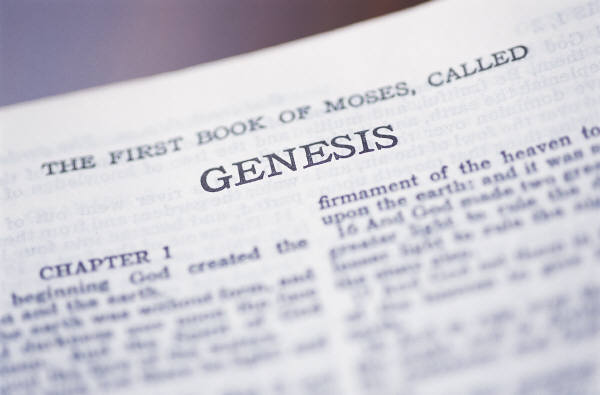 Welcome back to our introductory course in Old Testament. The plan is that we watch, read or listen to each lecture then discuss the themes explored in each class in the thread below. (Watch the previous classes here.) In this lecture, Professor Christine Hayes from Yale University begins to look at the book of Genesis. We will be reading and studying the book of Genesis for the next five classes.
This class in summary: "The basic elements of biblical monotheism are compared with Ancient Near Eastern texts to show a non-mythological, non-theogonic conception of the deity, a new conception of the purpose and meaning of human life, nature, magic and myth, sin and evil, ethics (including the universal moral law) and history. The two creation stories are explored and the work of Nahum Sarna is introduced."
Watch, read or listen to Lecture 3.


Comment number 1.
At 15:15 12th Feb 2010, Heliopolitan wrote:I thought this was an excellent lecture, and brought out both parallels & distinctions between the Genesis and Enuma Elish myths that I had not considered before. In particular the issue that the Israelites would have (as evidenced by Psalms and Job) been immersed in the old tale of Marduk & Tiamat (=Tehom, "deep"! Wow!). But it is also impressive how the author of Genesis 1 took the old story and refashioned it in a "monotheistic" setting, recasting the role of humans. We still have the notion of the firmament holding back the waters, and the waters under the earth, the world being as a bubble in a primeval watery infinity, but the emphasis is very different.
Complain about this comment (Comment number 1)
Comment number 2.
At 16:16 12th Feb 2010, graham veale wrote:Actually, it gets even better when we get to comparing Gilgamensh and Genesis 2-3 in lecture 4. It's not so much an issue of dependence there - rather how two ancient stories (they're **at least** that) deal with the same issues. Sex, immortality, freedom, love. It's great stuff.
But for the moment,
1) I'm wondering if Prof Hayes isn't too enamoured of a post-modern "it's the victors who write history" take on Genesis One. I see an interaction with mythology. I don't see hard evidence of suppression.
2) I'm also a bit disappointed that the Egyptian cosmogonies aren't mentioned more. I think that they've as much to add as the Babylonian.
3) Apsu and Tiamat don't seem that impersonal to me. Pehaps I'm missing something?
4) Creation itself is YHWHs temple in Genesis 1. (It took 7 days to dedicate a Temple.) And Temple's were surrounded by a garden, which seems pertinent to Gen 2-3.
5) "God imposes order on the demythologized elements"...I've already stated why James Barr and others outside the evangelical camp dispute this reading.
"Bara" is used exclusively of YHWH and is never used of creation from pre-existing matter; that Speiser's influential 'rewriting' of Genesis 1 to allow for creation from pre-existing matter leaves a clumsy, ill formed sentence that doesn't suit the context of Genesis 1; that the use of God's 'word' moves away from the image of a craftsman; that when Ptah spoke some sort of emanation of the gods was taught, so gods speaking is radicallyy unlike it's nearest pagan parallel; that heaven and earth can be taken as a merism for 'everything'; and that the uniqueness of Genesis 1 among the mythologies allows for a radically new reading of creation - one that seems to demand a move beyond dualism of creator and pre existenet material.
Anyhows I gotta head haim. i'll be away till Wed, so nobody turn heretical in my absence!
GV
Complain about this comment (Comment number 2)
Comment number 3.
At 17:03 12th Feb 2010, Heliopolitan wrote:Hi Graham, I think you are reading too much into the word "suppression". I took from this that she meant that the polytheistic themes & interpretations were being "suppressed" in the text, not referring to the history being written by the "victors".
I'm also interested in the Egyptian cosmogonies - again you have this notion of water, and the primeval mound rising from the water to form the land - so in this version you don't get the bubble effect. Having said that, the Egyptians had several cosmogonies, and all indications are that they used them extremely flexibly - they were not a matter of doctrine, but stories to aid the development of concepts.
Good point re the temple & 7 days. You're right - Gilgamesh in Lecture 4 starts to get interesting, but let's not get ahead of ourselves!
Complain about this comment (Comment number 3)
Comment number 4.
At 18:43 12th Feb 2010, Will_Crawley wrote:Let's stay with Lecture 3 for the time being. (GV, as a teacher you should know better ;))
Complain about this comment (Comment number 4)
Comment number 5.
At 19:19 12th Feb 2010, Heliopolitan wrote:So we have a different cosmogony but a similar cosmology.
Complain about this comment (Comment number 5)
Comment number 6.
At 20:35 12th Feb 2010, petermorrow wrote:OK, let's try this. (and I haven't listened to lecture 4... or watched it!.. or read it!!)
"it's almost like a polemical inversion in Genesis"
"so it's as if they're invoking the story that would have been familiar and yet changing it." (which sounds a bit like Jesus!)
Genesis is an explosion in the minds of the hearers. The parallels, or echoes, it contains to other myths are intentional and purposeful and deliberately point us away from one story, and forward to another story which shall be told again and again.
It is the story of the uncontested God who creates his temple, the place where he will dwell.
It is the story of the God and his people who always overcome. He overcomes the chaos, they come through the sea and out of exile,
The same story is picked up by other writers who understood this God's servant as the one who would descend into the 'depths' to come out of it again. They told their own story of coming up 'out of' baptism, into new life.
They declared again the Kingdom of the uncontested God contrasting it with the reign of Caesar.
They prayed, "on earth as it is in heaven."
It ends with Babylon, fallen, no more 'sea', and their God moving house.
Seems the years of redaction did a great job! ;-)
Complain about this comment (Comment number 6)
Comment number 7.
At 23:05 12th Feb 2010, Heliopolitan wrote:ooooookaaaaaaaayyyyy, Peter, I think you are perhaps reading a tad too much into things there. In fact, the early chapters of Genesis say nothing of the sort - that's just retrospective theowaffle there. Do try to follow the course - it'll do you good :-)
Complain about this comment (Comment number 7)
Comment number 8.
At 23:33 12th Feb 2010, petermorrow wrote:All I'm doing, Helio, is pointing out.... what shall I call them?... themes?, parallels?, motifs?, ideas?, similarities?, projections?, pictures?, evolution of thoughts?, fashionings?, refashionings?, manipulations?, interpretations? recastings? which may have continued over time... oh I don't know.
I mean what were they trying to do with the stories? Cut and paste with their eyes shut, or say something?
I thought retrospective theowaffle was the point? (God excluded, like, of course)
Complain about this comment (Comment number 8)
Comment number 9.
At 23:43 12th Feb 2010, petermorrow wrote:Or put it another way, H. It might be suggested that these are themes which continue to recur after "the author of Genesis 1 took the old story and refashioned it in a "monotheistic" setting". It *seems* to be a story which others appeared to want to develop and which *they* (never mind what I believe) believed they were telling and retelling.
Maybe they wanted to do this? Why would they want to do this? What would be the point of doing this? Why might such a tradition of interpreting or understanding continue?
Complain about this comment (Comment number 9)
Comment number 10.
At 00:02 13th Feb 2010, petermorrow wrote:Oh, and what is it the early chapters don't say?
Complain about this comment (Comment number 10)
Comment number 11.
At 10:42 13th Feb 2010, Jonathan Boyd wrote:The idea that any writers/redactors of the OT would use the form and elements of common ANE stories seems to make sense - it’s just speaking into the prevalent world views in their own language. Certainly a knowledge of ANE stories could be useful in understanding the authorial intent of OT texts, though I’m not sure it can be used to debate origins of the truths that are being communicated.
I’m not sure exactly what Sarna means about the tree of life being subordinate, but I’ve never thought of it as having an inferior or background role. Adam and eve interact with the tree of the knowledge of good and evil rather than the tree of life, but the author so closely associate the two that it’s hard to think about one without thinking about the other. When the tree of the knowledge is mentioned and the tree of life not, the text generally ha a reference to life or death - the concepts of morality and mortality seem inextricably intertwined. I suppose that the tree of life could be subordinate in the sense that immorality leads to mortality. Then again, God’s concern about man also eating from the tree of life could be read as its fruit having the power to reverse the punishment of mortality - in that sense, the tree of life is superior in power to the tree of the knowledge.
In the fuller context on the Christian canon, the tree of life certainly takes on a more prominent role thanks to Revelation, but I guess that’s bring in a theological assumption! (That’s tongue-in cheek, by the way and not a dig at Will or anyone else.) Thinking about the intertextuality of the Hebrew canon, Proverbs makes reference to a tree of life, whereas I can’t think of any references to a tree of the knowledge of good and evil. Anyone else?
Complain about this comment (Comment number 11)
Comment number 12.
At 12:39 13th Feb 2010, Will_Crawley wrote:JBoyd writes: "Certainly a knowledge of ANE stories could be useful in understanding the authorial intent of OT texts, though I’m not sure it can be used to debate origins of the truths that are being communicated."
-- I agree. Sometimes commentators try to undermine the force of a text by claiming that its compositional history is apparent. Compositional history is just that; it is not, in itself, an argument against the claims made in any text. I could plagiarize an article on physics by Einstein, and others could produce evidence of this copying. That evidence would challenge my right to be identified as the author of the text, but it would not, in itself, undermine the scientific claims made in the paper.
Complain about this comment (Comment number 12)
Comment number 13.
At 13:19 13th Feb 2010, Jonathan Boyd wrote:Will, I wonder if aesthetic analogies might not work better than scientific ones. A songwriter has a message they want to convey in a song and writes the lyrics himself. He has an audience in mind and borrows ideas for the music from a genre that resonates from them and combines his lyrics with their music to produce something that communicates his message in a form they will recognise. Talented musicians writing for less talented but more popular performers could be another analogy.
Not so much a case of stealing ideas as using someone else's language to communicate your idea in a way they'll understand. Just because the language isn't yours doesn't invalidate the message.
Sometimes though compositional history and the message of a text do crossover. Daniel would be a classic example of views on history impacting views on theology and vice-versa.
Complain about this comment (Comment number 13)
Comment number 14.
At 08:18 14th Feb 2010, Will_Crawley wrote:Yes, Jonathan, I'll buy that aesthetic analogy.
Complain about this comment (Comment number 14)
Comment number 15.
At 20:30 14th Feb 2010, Heliopolitan wrote:Another word for that is "parable"...
Complain about this comment (Comment number 15)
Comment number 16.
At 22:02 14th Feb 2010, Will_Crawley wrote:Helio, touché!
Complain about this comment (Comment number 16)
Comment number 17.
At 23:06 14th Feb 2010, Jonathan Boyd wrote:A few years ago (2005 I think) I recall England suffering a humiliating defeat to France in the Six Nations. The next day at least one paper was writing about the wheels having fallen off the sweet chariot. There was no chariot on the rugby field, but I don't think that the papers were telling a false history. If anything, they communicated an extra layer of truth than simply stating the score would have. Would you call that a parable Helio? Or would you say that it was anyway deceptive? I'm just curious about what the point of your comment was.
Borrowing language and ideas to communicate a truth can happen in parables, but there isn't complete congruence. Neither is there anything to stop a parable from communicating real history in a way that emphasises a particular understanding of the significance of events. For instance the parable Jesus told about the tenants who killed their master's son was about a specific future-historical event (at least, that's how Jesus seems to be intending it). The parable of the prodigal son on the other hand doesn't seem to be about a specific event, but rather is concerned with illustrating the character of the elder son who represents the Pharisees.
Complain about this comment (Comment number 17)
Comment number 18.
At 08:18 15th Feb 2010, romejellybeen wrote:I would never describe England getting stuffed at rugby (or football) in parables, but I would be quite biblical about it.
The day the Lord has made... A day of rejoicing... A day to kill the fatted calf...
Complain about this comment (Comment number 18)
Comment number 19.
At 14:42 15th Feb 2010, Heliopolitan wrote:Jonathan, humans are story-tellers. It is what we do. It's our job.
To some extent, that's all you need to know. It would seem that a lot of what this course is about is identifying the fragments of earlier myths that were woven into the resultant series of Genesis myths. Is Clint Eastwood's Gran Torino simply a story on its own, or is it an allegory of redemption by paradoxical inversion? Would GT have been fully understood, were it not for Dirty Harry or Josey Wales?
Complain about this comment (Comment number 19)
Comment number 20.
At 22:40 15th Feb 2010, petermorrow wrote:Helio
Would you be happy with the term 'meaning makers' to describe what we do?
Complain about this comment (Comment number 20)
Comment number 21.
At 00:48 16th Feb 2010, David Kerr wrote:I enjoyed the lecture. I remember reading somewhere that the fruit of the tree was a pomegranate ….. but who knows?
I enjoy the little tit bits like Adam is actually adam as in earthlings.
Undoubtedly the authors of Genesis were aware of the stories of the ANE and they have been woven, and no doubt changed through time, into this version of a tale. The section that stood out from all the others involved ‘evil’ as being a creation of man/woman and not of god. The old argument, ‘if god created everything he must have created evil’ is undermined if evil does not physically exist.
I must confess, I really do feel out of my depth but plan to hang in there as the lectures, to date, have been very entertaining….. the comments too.
Complain about this comment (Comment number 21)
Comment number 22.
At 09:44 16th Feb 2010, Parrhasios wrote:On another thread William and Jonathan mentioned complementary courses so I take that as permission to draw people's attention to a joint BBC Radio - Churches Together course for Lent: People on the edge of His pain. It appears quite devotional in character so might be an interesting counterpoint to the OT studies.
My own church is using it to structure its Lenten services.
Complain about this comment (Comment number 22)
Comment number 23.
At 20:55 16th Feb 2010, Jonathan Boyd wrote:Parrhasios, I see Will has taken you up on your suggestion. Looks like an interesting course. Can't say I agree with everything they've said, but there were some good insights and food for thought. Thanks for posting it.
Complain about this comment (Comment number 23)
Comment number 24.
At 18:07 17th Feb 2010, Orthodox-tradition wrote:J Boyd - respect for politely sticking to your guns
William - thanks for listening to him/us.
------------------------------------------------------------
A few thoughts
ADAM - MAN OR MOTIF?
It appears to me that Prof Hayes has overturned the understanding of every mainstream bible translation team when she says that Adam is a generic term only and not also an individual.
All bibles that I have seen refer to Adam as a proper name, as well as in the generic sense where appropriate.
According to the IVP New Bible Dictionary the Hebrew term for Adam in Genesis means a generic term for man when accompanied with the definite article but a proper name otherwise. (John you will note that the majority of IVP NBD editors are scholars from secular Universities BTW.)
Adam as an individual has always been a key understanding of traditional mainstream Jewish and Christian faith, including the traditional view of all mainstream denominations.
In Genesis Adam has a home in a defined place near the Tigris and Euphrates, he has a job, eats, walks, talks, gets married, has children, emotions and a genealogy. What else would be necessary to consider him an actual person? an i-phone?
Seriously, what would qualifiy him as an individual for those people who do not accept that he can be?
If you look at his response in Hebrew when he sees Eve (naked) for the first time he froths with excitement, for example. There is no English translation which does the Hebrew justice. Here is a literal translation;-
https://www.biblegateway.com/passage/?search=Genesis%202&version=YLT
GENDER OF GOD
It appears to me that Prof Hayes is imposing feminism too easily on the text without discussion.
The Hebrew terms used for God are apparently masculine when feminine forms were available.
The term "He" is used in reference to God in the initial verses of chapter one.
Father is also a term applied to God in the Psalms.
https://en.wikipedia.org/wiki/Gender_of_God_in_Judaism
It appears to be forcing the text to suggest that God and Adam were sexless. Why assume that God and Adam were not male and that Eve was not created as female from Adam?
MYTH OR HISTORY?
One major problem for a purely mythical verdict on Genesis is its apparent historicity.
Why did history and geography have to place "the cradle of civilisation" and the fertile crescent right where Genesis says it was? Why could Eden not have been in Ireland or Greenland?
Remember, Genesis says that Eden was located at the Tigris and Euphrates, right at the cradle and dawn of civilisation. Why do history geography and Genesis tally so closely?
(*)Regardless, IVP NB Commentary says that there are no objective literary standards to reject Genesis as historical.
IVP NBD rejects the negative connotations of the term "myth" and prefers "proto-history" noting that the historicity of the first chapters of Genesis was a given for the myriad references made elsewhere to them in the OT and NT. It also notes the genealogy links the early and later chapters strongly and that there is no literary break between early and later chapters in the book.
I will post below some info on creations myths. My perception is that the comparison of Genesis creation story to others has the effect of devaluing Genesis without a full consideration of other explanations. For example, does the similarity between Genesis and other stories add weight to the idea that Genesis is purely myth?
Or may we also ask the question as to why there are so many key features in common with so many creation stories all over the world? How could so many cultures in so many places dream up what is in many key ways the same story (see Enc Brit excerpt following)? That is a very pertinent question indeed IMO.
An obvious answer is that all the stories came from one source. What was that source? Is it fair to only presume that so many peoples were gullible enough to buy into a complete and utter fabrication? Might we also consider that the reason they all bought into the same story was because they all believed /and/or knew it to be -at its core- true, in that their ancestors had first hand knowledge of the events? Interesting questions, which I don't think can be easily dismissed by objective (*) means.
Similarly, this also begs the question as to why so many cultures believed in an Almighty creator so early in history, which seems to be a significant challenge to the idea that monotheism evolved from the Jews. Belief in an Almighty God in China, for example pre-dated the development of Confucianism and Taoism and the introduction of Buddhism and Christianity.
Sincerely
OT
Complain about this comment (Comment number 24)
Comment number 25.
At 18:11 17th Feb 2010, Orthodox-tradition wrote:Ref creation myths and my post number 24.
This is an interesting excerpt from Enc Brit. It basically says the underlying story of genesis is common to virtually all peoples and cultures. How could that be?
Certainly if genesis were true and the story was carried in all directions after babel that would explain it.
I dont think it is possible to scientifically refute this suggestion.
Has anyone some better explanations for his this has come about?
Enc Brit creation myth excerpt;-
"....the existence of a belief in a supreme being among primitive peoples.......has been proven and attested to over and over again by investigators of numerous cultures. This belief has been found among the cultures of Africa, the Ainu of the northern Japanese islands, Amerindians, south central Australians, the Fuegians of South America, and in almost all parts of the globe.
"Though the precise nature and characteristics of the supreme creator deity may differ from culture to culture, a specific and pervasive structure of this type of deity can be discerned. The following characteristics tend to be common:
"(1) he is all wise and all powerful. The world comes into being because of his wisdom, and he is able to actualize the world because of his power.
"(2) The deity exists alone prior to the creation of the world. There is no being or thing prior to his existence. No explanation can therefore be given of his existence, before which one confronts the ultimate mystery.
"(3) The mode of creation is conscious, deliberate, and orderly. This again is an aspect of the creator's wisdom and power. The creation comes about because the deity seems to have a definite plan in mind and does not create on a trial-and-error basis. In Genesis, for example, particular parts of the world are created seriatim; in an Egyptian myth, Kheper, the creator deity, says, “I planned in my heart,” and in a Maori myth the creator deity proceeds from inactivity to increasing stages of activity.
"(4) The creation of the world is simultaneously an expression of the freedom and purpose of the deity. His mode of creation defines the pattern and purpose of all aspects of the creation, though the deity is not bound by his creation. His relationship to the created order after the creation is again an aspect of his freedom.
" 5) In several creation myths of this type, the creator deity removes himself from the world after it has been created. After the creation the deity goes away and only appears again when a catastrophe threatens the created order.
"(6) The supreme creator deity is often a sky god, and the deity in this form is an instance of the religious valuation of the symbolism of the sky.
"In creation myths of the above type, the creation itself or the intent of the creator deity is to create a perfect world, paradise. Before the end of the creative act or sometime soon after the end of creation, the created order or the intent of the creator deity is thwarted by some fault of one of the creatures. There is thus a rupture in the creation myth. In some myths this rupture is the cause of the departure of the deity from creation."
Complain about this comment (Comment number 25)
Comment number 26.
At 18:13 17th Feb 2010, Orthodox-tradition wrote:A suggestion for a complimentary online study course;-
Take "Mere Christianity" chapter by chapter in the same format as for this course.
The whole book is online in numerous places.
Complain about this comment (Comment number 26)
Comment number 27.
At 12:04 18th Feb 2010, Groona_Inzel wrote:Enjoyed this lecture. Some good and helpful insights. Appreciated Peter's "theowaffle" too.
Complain about this comment (Comment number 27)
Comment number 28.
At 19:09 18th Feb 2010, Orthodox-tradition wrote:ref posts 24, 25
Come on guys, is this a seminar or not?
I would at least feel more part of the course with a witty non-put down from Helio.
Some articulate feedback from our tutor perhaps?
In fact, I would prefer an actual argument from Helio, rather than one from authority or at my person.
:)
OT
Complain about this comment (Comment number 28)
Comment number 29.
At 02:21 19th Feb 2010, Parrhasios wrote:The course is getting better - there is always more fun in anything when one gets down to the detail. I had never previously given Genesis 1-3 any close consideration; my thoughts on it, if pushed, would have been 'primitive survival, know the story, irrelevant, load of piffle'. I now realise that actually we are dealing with a sophisticated multi-layered construction which challenged the intellectual consensus of its time and still has the power to make us think today.
When we approach the text afresh, armed with some knowledge of its background, I love the way we can see how the editor subverts expectations and overturns assumptions to redefine, purely contextually and quite without abstract argument, the very fundamentals of deity.
I hope, time permitting, to pick up soon on some of OT's points but, for the moment, I will content myself with saying that, for me, these lectures have undoubtedly enhanced my appreciation of the Genesis accounts and generated a respect which was previously entirely absent.
When I read the chapters again I can see signs (Genesis 1:26) of polytheistic roots; I can see evidence of redaction (the two accounts of creation of man); I wonder when I read an interpretation of the two trees whether it is an insight from a few hundred years after the original text or a few thousand (and of-course I don't care a jot which). I see primarily a resultant richness of texture which engages us to this day.
There could not have been a better background than this lecture for the first part of the People on the edge of His pain course. How better to understand the temptation of the second Adam than in the context of the fall of the first?
Prof Hayes says that one of the great insights of ethical monotheism is that we live in a moral universe and that the drama of human life revolves around moral conflict - I go along with the second of those two contentions.
The Hebrew Bible begins with Eve and Adam faced with a moral choice in their paradise garden, the Gospel account of Christ's ministry begins with Jesus faced with moral choices in the wilderness. When Luke narrates the story of the temptation of Christ he is as aware of the Genesis background as the editor of that account was of the story of Tiamat. Both authors' inversion of a known history is deliberate and purposive. In Genesis God places man in His world. Luke brings God (in the person of Jesus) into man's world. I love the way the Gospel relates itself back into its Hebrew roots, uses the techniques and devices of the tradition from which it grew to integrate a new layer into the narrative and add a new dimension to the picture we have of God.
Already I am learning so much more about the riches, not just of the Hebrew Bible, but of the Christian Testament too.
Complain about this comment (Comment number 29)
Comment number 30.
At 09:18 19th Feb 2010, Jonathan Boyd wrote:Parrhasios (couldn't you have an easier name to spell? I keep having to scroll up to check!), there seems to be a great deal of richness to be uncovered in comparing the temptation in the wilderness to the temptation in the garden. Your post got me thinking about the significance of where the temptation took place. Adam was tempted when there was much around him that could satisfy his needs - a bit like someone offering you a Rolo in Willy Wonka's Chocolate Factory - whereas Christ was tempted in a place where none of his needs could be met or had been for many days. How much more of a temptation that would have been.
Complain about this comment (Comment number 30)
Comment number 31.
At 11:49 19th Feb 2010, Orthodox-tradition wrote:Parahasios
Hope you don't mind me saying.
You know, you seem to have an uncanny way of hitting the nail on the head, with regards to critical parts of Christian belief, and in a way that "orthodox" believers on this blog, including me, often seem to miss in favour of more esoteric points.
The critical part of the story *is* without doubt the fall of the first Adam and all the ramifications.
Because if there was no fall, there was absolutely no need for the second Adam to cancel it out.
I have to be honest, I thought Prof Hayes brought out very well, at least by her own standards, the centrality of the fall.
However, I can't get away from the feeling, that ultimately, if it is generally accepted that Adam was just a myth, then so is the fall of man, and the relevance of the second Adam eventually fades to nothing.
I think this is well reflected in the attitudes and worldviews of the regular posters here, from all parts of the spectrum.
Why do you treat the story of Adam as not factual? What process do you use to weigh the evidence? Is it objective in that you would use the same process for evidence in other walks of life and with other historical and textual evidence? IVP NBD says it cannot be dismissed as unfactual by objective literary standards.
Is it objective and scholarly to assume that supernatural elements in any story must automatically force us to assume it is factually untrue? Or are those secular presuppositions?
Many Christians have accepted the story of Adam as fact, people ranging in their views from convential evolutionists to YECs. CS Lewis to Ken Ham, if you like.
William has previously advanced the CS Lewis viewpoint on this very blog, if my memory serves.
I repeat some other observations on Prof Hayes views;-
1) I believe she has made a massive error by any academic standards in suggesting that Adam is not a proper name in Genesis. That is in terms of what the Hebrew actually says. (see post 24)
2) She speaks of the Jews imposing monothesism on the text, but it seems clear to me that she has outrageously imposed feminism on the gender of God and Adam, again, in terms of the the actual Hebrew. (see post 24)
3)She only appears to take one narrow view of the significance of other creation myths, and either ignores or is ignorant of other broader views which tend to augment the authenticity of genesis (see post 25).
William has previous emphasised that the views of this course on redaction and editing of scripture in its constructions do not "in theory" contradict the belief in it being God breathed.
I agree.
But I think William's use of the phrase "in theory" suggests what I also believe; that in practise, the speculative extreme of this practise does in indeed confict with divine inspiration.
In many places scripture specifically acknowledges that it is quoting from other non-scriptural writings.
But I dont think there is any actual evidence to draw rock solid conclusions about the start of Genesis in the way that Prof Hayes seems to be doing.
When she says speaks of the text being manipulated and monotheism being imposed, to me that is definitely undermining the belief in divine inspiration or "truth".
For the record I dont see why we have to assume that the two different accounts of the creation story cannot have been from the same author at the same time.
There is no reason why one cannot have been intended to explain the creation generally and the other setting the scene for quite a different story.
To me this is the clear intention, and I understand this is the traditional view, but I dont see it mentioned by the Prof.
In fact, from the traditional point of view, either one and the broader story would have been meaningless without the other. The first and second Adam are the key message of all scripture.
To conclude, the biggest tragedy I fear, is that we have the one explanation of the origin of all our guilt, fear and bondage and the one proven and time tested solution to them all - Christ - and yet so many of us are determined to cross to the other side of the street and avoid him.
Sincerely
OT
Complain about this comment (Comment number 31)
Comment number 32.
At 12:35 19th Feb 2010, graham veale wrote:JB/P
Very interesting.
OT
I keep meaning to get back to your comments, but I can't seem to get the time to do the reading that they merit.
Basically you seem to ask three questions:
How prevalent is monotheism (across different cultures)?
How prevalent is a story about a "Fall"?
Were all cultures originally monotheistic?
It'll take a bit of reading to get an informed discussion on those questions, but I think that they're good questions. A lot turns on what we mean by Monotheism.
GV
Complain about this comment (Comment number 32)
Comment number 33.
At 18:52 19th Feb 2010, David Kerr wrote:No offence intended, OT but as a non Christian I would no more consider treating the text of Geneses as factual as I imagine you would take the writings of the Islam or Scientology.
Nevertheless, given the way religion divides the world and given that it is such a catalyst for conflict, we all, believers and non believers alike, must pay some regard to these texts.
I truly hope academics, such as Prof Hayes, can undermine the Bible and its place in the world through their expert views and revelations. We need to bring an end to these irrational beliefs as soon as is possible.
Kind regards
DK
Complain about this comment (Comment number 33)
Comment number 34.
At 11:29 20th Feb 2010, Orthodox-tradition wrote:Hi William
Good to see you back.
fyi In this post I'm throwing down a few gauntlets to you as the tutor for this course.
--------------------------------------------------------------
Hi GV
I am not so much asking those as three questions as stating as fact that the core beliefs of the Genesis story were held on a worldwide basis long before Genesis was written. I am arguing that Genesis was not at all based on Gilgamesh etc but was setting the record straight and correcting inaccuracies in the broadly agreed story.
This would make Prof Hayes argument about whether the Jews invented montheism a complete red herring.
Request some feedback from the tutor here - William I'm throwing down the gauntlet!
See post 25.
I accept that the original universal creation stories will not always fit into a tight modern definition of monotheism, but I repeat that they generally had the key features of the genesis story. I think it is a complete ref herring for Prof Hayes to say that Genesis was based on the Gilgamesh story. The real question in the bigger context is why man universally believed in the core elements of the Genesis story long before Genesis was written. See post 25.
See ancient Chinese monotheism and note Chinese culture is a rare thing in that it has been quite unbroken for almost 5000 years, so this gives an insight in faith in this era that other cultures are usually less able to offer;-
https://en.wikipedia.org/wiki/Shangdi
--------------------------------------------------------------------------------
Thanks for your input David
You suggest I would not take the writings of Islam and Scientology as factual, if I could just respond as best I can.
I am not very well acquainted with either but I understand that the Koran accepts Adam and Eve and all the patriarchs as historical people. As for Scientology I am not aware that it makes any claims at all about the people and times of Genesis.
Certainly I adhere to the Christian faith and make no bones about it, but if you want to make a case for Islam or Scientology's historical credentials at the expense of Genesis I am sure we will all give it a fair hearing.
To be honest, you dont give the impression of having given even the undeniable historical credentials of Genesis any sort of fair hearing, so just for the record, I'lll recap.
To set the scene, Prof Hayes has previously stated that the early chapters of Genesis are known as "Primeval History" though she does not like the term. She also accepts the stories about people are either real stories or highly realistic.
Generally accepted facts;-
1) Archeological evidence and that of distribution of earliest domesticated plants and animals points to the Tigris Euphrates area as the location where agriculture first developed "and thus the birthplace of stable society and historical memory". (The Columbia History of the World). Genesis also says that God placed the first farmer, Adam, in the Euphrates-Tigris area ie Eden.
2) Archeology NEVER contradicts any of stories of people and places in Genesis. The stories of people and their lives in Genesis are in complete harmony with all that is known of people of these times.
3) I think I have demonstrated reasonably well that the core beliefs of the Genesis story were believed on a worldwide scale long before Moses. So mankind almost universally believed in the God of the Genesis story, if you will, long before the Jews.
4) The Times Complete History of the World accepts the biblical story of Abraham as fact and says the three patriarchs have been dated to the early or middle second millenium BC. It also fully accepts Moses as an historical figure in the same way.
I make a few more observations;-
1) There was no such thing as novel writing in this era (a very modern invention) but even Prof Hayes accepts the stories about people are highly realistic/real stories. This points strongly to them being real stories about real people ie real history - literature had a long way to go to fabricate such realistic writing.
2) Likewise legends and myths usually ascribe amazing powers and abilities to the main characters, but this is not at all the case in Genesis. The actual human stories are still very gritty in their hum drum realism.
I grant of course that no secular historian is going to accept the Genesis creation story itself as fact, but aside from that, I observe that there is no more supernatural happenings in Genesis than in the gospels, and they are widely accepted by *mainstream* academia as historical documents, albeit, again secular historians usually take a neutral stance on the supernatural events therein.
Finally I would again point out that Prof Hayes appears to have made some monumental errors in basic Hebrew in asserting that Adam was never a proper name in Genesis and that God and Adam were sexless. This just appears to be plain WRONG in terms of basui Hebrew. see post 24.
I am throwing down another gauntlet to William on this one :)
Sincerely
OT
Complain about this comment (Comment number 34)
Comment number 35.
At 11:39 20th Feb 2010, Orthodox-tradition wrote:Helio
I wonder if there might be any connection between Tiamat and Tien?
Enc Brittanica;-
Shang Ti
(Chinese“Lord-on-High”)
ancient Chinese deity, the greatest ancestor and deity who controlled victory in battle, harvest, the fate of the capital, and the weather. He had no cultic following, however, and was probably considered too distant and inscrutable to be influenced by mortals. Shangdi was considered to be the supreme deity during the Shang dynasty (1600–1046 century BCE), but during the Zhou dynasty (1046–256 BCE) he was gradually supplanted by heaven (tian).
Complain about this comment (Comment number 35)
Comment number 36.
At 11:54 20th Feb 2010, Orthodox-tradition wrote:GV
Enc Brit Article on primitive monotheism;-
This backs up what I was saying earlier, I know early faith would not qualify under modern definitions of monotheism, but you definitely have a clear and common concept of THE overall creator God.
Money quote;-
"....It is true that in many cultures the particular high god is considered as the creator, the founder of the order of the world, and also in some cultures as the reigning god according to whose will everything now happens, but such a god is rarely considered to be the one and only god that counts...."
Complain about this comment (Comment number 36)
Comment number 37.
At 23:19 20th Feb 2010, Parrhasios wrote:OT - this may seem a strange way to address your post but this blog is a really wonderful place.
I am ecumenical. I have for years attended all sorts of inter-Church forums and dialogue groups, I have met dozens of people from many different denominations and essentially we have all been very much the same, all politely agreeing with one other, all sharing fairly common assumptions about our religious faith. Neither middle of the road Anglicans nor your average Quaker will openly disagree very much with anyone about anything. The kind of Presbyterian matron who bemoans the influence of the younger generation of enthusiastic clergy and the delightful lady who mans the bookshop in the Catholic cathedral will get along nicely over their cup of tea. As for Methodists they're, well, Methodist.
It may be wonderful to dwell together in unity but you don't learn anything! This blog is different - I have engaged with the kind of people who wouldn't be seen dead at an ecumenical gathering and, in the frankness and honesty of the exchanges I have witnessed or participated in here, I have learned so much.
One of my greatest lessons was that my presuppositions are not universal. There are Christian worlds in our own society which are as foreign to me (and almost as impenetrable) as deepest Africa. I had to ask recently, for example, what is confessionalist Protestantism and I had never even heard of The Shack before its mention on another thread. I imagine aspects of my Christian and intellectual world may be equally foreign to you.
You see, I have not actively rejected the historicity of Genesis, I have not assessed its accounts critically and found them wanting. I have never ever even looked at them in that way. Before joining this community, before indeed this course we are now undertaking together, the idea of taking the creation stories as being in any way literal had never even occurred to me. Not at home, not at school, not at Church had I ever registered any challenge to the orthodoxy that mankind is the result of an evolutionary process and the Biblical accounts pious fables.
If I were to make the kind of judgments you ask I would have to look at the Bible in, for me, a new and very different way. This course is my first academic approach to Scripture, it has already brought insights but I think you and I both agree it will not challenge my fundamental assumptions - that's up to you. :-)
You can, I hope, see that I have, however, always taken the Bible seriously, always thought it has important things to say. I do find great significance in the Adam story as a story whatever its relation to history. I think the Bible connects through story and that is a great part of its success and its power. I like Collins' idea of the unrestricted paradigm allowing application by analogy and thus lasting relevance for as long as human nature remains constant. Abstract thought does not do this. Systematic theology which tends to define 'against' often seems strangely irrelevant with the passing of time. If Jesus' legacy had been a book of sermons rather than a living story I venture to suggest it would be at most a historical curiosity today.
I don't see myth as less than history (and don't get me started on that subject) - I see it as more.
Note to Jonathan - you can call me Parr - Graham does.
Complain about this comment (Comment number 37)
Comment number 38.
At 02:50 21st Feb 2010, David Kerr wrote:I must apologize OT for failing to articulate my views clearly on the subject of regarding holy texts as factual. In short a talking snake, a prophet riding to heaven on a horse with wings and aliens planting souls under volcanoes all sound a little implausible to the rational mind. However, I am beginning to grasp that irrational thinking is very popular but, hopefully, dying out. Followers of each faith believe the others to be ridiculous, atheists believe all to be ridiculous. A talking snake? And you believe that? My my.
DK
Complain about this comment (Comment number 38)
Comment number 39.
At 11:22 21st Feb 2010, PeterKlaver wrote:Oh dear, Orthodox Tradition,
After you seemed to be reinventing yourself and distancing yourself from your pb identity creationist comments (renouncing YEC geology etc that you had been spewing here for ages), you seem to be slipping back now. At least if post 34 is anything to go by. There seems little point in refuting the same tired old nonsense once again. As your fellow christian Parrhasios says, you don't learn anything. But then it is fortunately not necessary to go over it all once again, as you seem to be having a good time debating yourself. Look at two statements you make within one post:
"Archeology NEVER contradicts any of stories of people and places in Genesis. The stories of people and their lives in Genesis are in complete harmony with all that is known of people of these times."
and
"I grant of course that no secular historian is going to accept the Genesis creation story itself as fact"
Ah, so while the fairy tale of Genesis is in complete harmony with what we know, only creationist fundies would ever accept it. Gosh, I wonder why.
Have a good time refuting your own creationist claptrap OT.
Complain about this comment (Comment number 39)
Comment number 40.
At 21:31 21st Feb 2010, graham veale wrote:On Historicity
Personally, I believe that highly poetic language is being used, but that it has historical referents. That is there was an original couple in (pre)history that was tempted by a personal spiritual malevolent force (the devil). These historical referents act as ‘truth makers’ for the text. So if there was not an original couple that fell, then Genesis 2-3 is partially false. And it is false in an important sense. But I don’t believe that there was a talking snake in a garden.
If there was no Fall, then we lose part of Genesis insight into the human condition and into God. In Genesis God acts in history, not in a mythical time and space (the Egyptians believed in such an age, when the gods ruled – “The First Time”.) By making history important, our lives gain dignity. We take on responsibility.
And this is the insight into human nature and human history. It is not the way it was supposed to be. We fell, and it was our fault. That’s oddly dignifying, the ultimate backhanded compliment. We can thwart God’s desires. We can oppose him successfully - on some level.
Our actions matter. Our misery is not built into our nature. It was not the whim of the gods. We chose a path, because we were given a choice. We made the wrong choice. But we can be rescued from it. (The idea that Original Sin is being “read into” Genesis seems very weak when we get to the Deluge. Humans spiral ever downward in their conduct. And the Deluge shows that we can’t just wipe the slate clean and start again with a righteous family. Some thing has gone wrong. It will take more that human righteousness and a clean slate to dig us out of this mess.
So I believe the story has referents that really existed in human space and time. That’s essential to the point of Genesis as I see it. A mythological interpretation loses a substantial part of Genesis power and meaning.
GV
Complain about this comment (Comment number 40)
Comment number 41.
At 11:13 22nd Feb 2010, Orthodox-tradition wrote:GV
Thanks for taking the trouble there.
I would say that is a very mainstream viewpoint in terms of contemporary Christianity.
--------------------------------------------------------
Parahasios
Apologies, I know that looked pretty confrontational.
I didnt for a second expect me to change your mind on anything, I was really drawing out the fact that everyone, really, approaches Genesis with their minds fairly well made up, IMO.
If I read you right, you are essentially saying that you dont think the historicity of it is that important, that you hold to the implications of the text without believing its historicity. I understand you and I am not going to dispute that.
However I do believe that to allow it to be dismissed as myth without any interest in its historicity will ultimately undermine the credibility of values we can take from the story.
Incidentally, I reckon you are probably the most consistently gracious regular on the blog; I certainly accept that dogmatic fundamentalits do not have the best of reputation ( though I dont for a second see myself as one, and I know they would not have me). On the other hand, it is hard to accept an invitation to join a "scientific" study of the bible when you have a real faith in God and yet not create some conflict. To do anything else would be dishonest of me and would in principle defeat the stated purpose of this excercise.
My main focus here is simply to present the actual historicity that Genesis does have a challenge to Prof Hayes' assertion that it is myth, and to see how the two react upon collision.
--------------------------------------------------------------------
Hi David,
I know those are very very good questions you are asking, about which faith is true etc. I reckon you and I have both debated them at length before with many people and I honestly don't think this is the thread to go into this. In short my faith revolves around my personal experience of Jesus Christ as a living person, and that is what it is - faith. I guess you have your own materialistic faith too, that nothing exists unless you can detect it with your senses. I dont have any problem with that. I guess the foundations for our respective worldviews are therefore faith based and we interpret all the evidence after that through such lenses; you cant prove God does not exist and you can't prove him either, in scientific terms. You might say there is no onus on you to disprove God, but that was a philsophical trick of the Enlightenment. The giants of modern science, in the scientific revolution, saw God as the foundation of inspiration for all their breakthroughs.
You suggest the idea of a talking snake is ridiculous to a "rational" mind and do you know what, I absolutely agree. It is also ridiculous to me that Christ loves me and died and rose again for me, but something "irrational" keeps drawing me back to it/him. A power outside of me that is absolutely consistent with the written record of his life. A power that draws me closer to him, through no merit of my own.
What is a "rational" mind? The founders of modern science took the inspiration for our science from the God of the bible, a God who designed things in order and whom they believed they were worshipping by unpacking the world he made. Kepler said "Science is thinking God's thoughts after him". In a very real sense modern science is a product of European Christianity.
This was all before the philosophy of the Enlightenment convinced us that God was dead and that man was the captain of his own destiny. You will note that not all regions of the world bought into the Enlightenment. eg Russian science never kicked God out and is still quite comfortable with him to this day.
I can take you to many rational scientists and teachers today in Northern Ireland who will testify to supernatural events in their lives. If you have been brought up today outside of "Western civilisation" the chances are you would be much more open to the reality of the spiritual.
Do I belive in talking snakes? I certainly believe in the historicity of Genesis and if I believe in Christ rising from the dead, I don't in principal have a problem believing his chief angel could take possession of a person or an animal. I believe the story where Christ cast a legion of spirits into a heard of pigs, which then committed suicide; I believe Satan entered into Judas.
However, I would be very reluctant to start making dogmatic absolute interpretations of Genesis. Certainly the traditional mainstream view would hold to the view that Satan either appeared as a snake or took possession of one. Paul says in the NT to marvel not for Satan can even appear as an angel of light....
---------------------------------------------------------
Just on that note PK,
I dont think I have ever called myself a YEC nor would I choose that label. I have certainly tested your faith in atheistic evolution to destruction and in minute detail (and found it seriously wanting) but that does not mean you can put me in a box so easily :)
Acknowledging that secular historians do not generally accept the creation story of Genesis causes me no problems at all. BY definition, anyone who identifies themselves as secular has precluded any possibility of the reality of God from their investigations.
Is that bold and openminded scholarship or religious prejudice? I know what Plantinga would say.
This takes us right back to the Dover trial on teaching ID in US schools. The judges, you will remember, said that Intelligent Design may well be true, but that it could not be considered without science because it necessitated supernatural causation. As you will also remember, he was significantly shredded on the soundness of such a statment by none other that Plantinga, William Crawley's favourite philosopher and a world class academic.
https://www.evolutionnews.org/2006/03/philosopher_alvin_plantinga_de.html
Only in the past 150 years or so has western science philsophically insisted that it is the study of the uniformity of natural causes in a closed system. Outside the west today, and outside those 150 years, it was and is the study of the uniformaty of natural causes in an OPEN system; God was and is a given.
The great evolutionist SJ Gould acknowledged that half his respected colleages believed in supernatual causation in conjunction with evolution.
But here is where the rubber hits the road. Genesis 1-2 is deceptively simple. Our familiarity breeds such contempt that we come to it with our minds already made up. But our minds are not made up on scientific or philsophical grounds, they are made up on prejudice. You could prove me wrong by offering formal scientific and philsophical reasons why there is no factual credibility at all to Genesis 1-3.
Genesis offers an hypothesis that original European science was inspired from - and which 21st century secular science cannot even begin to touch; it offers explanations for the original cause of the universe, the origin of matter and light, the origin of life and the nature of death, the reason for the indescribable order and stability of an universe which secular science alone would argue came about because of a massive freak explosion. It also offers explanations for the origin and nature of evil, gender, sexual reproduction and marriage.
Here is the rub, modern secular science cannot refute any of these things told from a biblical perspective. On the contrary, all the evidence that exists backs up genesis on these grounds.
Another example is that even an athiestic reading of genesis must concede that broadly speaking it has got the correct order in which things were created.
If you really want to refute Genesis 1-3 it would be very interesting to see you trying to offer explanations for all these things from an athiestic perspective. What is your best grand unifying theory / hypothesis?
David Kerr. Would be interesting to hear your take on this too.
We all know there is not even the beginning of a secular grand unifying theory to rival this biblical proto-hypothesis, as Alsitair McGrath puts it.
Genesis is usually rejected from such discussions on grounds of religious prejudice, not science.
OT
Complain about this comment (Comment number 41)
Comment number 42.
At 11:14 22nd Feb 2010, Orthodox-tradition wrote:So to recap, I am saying;-
1) Prof Hayes says the start of Genesis is generally regarded as "primeval history".
2) She says the stories are either of real people and / or are highly realistic.
3) The key core beliefs of Genesis were in very wide circulation around the globe long before the Jews.
4) An overall Supreme being who created everything we know was a universal belief long before Moses and the Jews.
5) Prof Hayes is, I believe, colliding with basic Hebrew to suggest that Adam is never a proper name in Genesis and that Adam and God were gender neutral in the Hebrew.
6) History and Geography attest that recorded history and agriculture began in the Tigris Euphrates region, just where scripture says the first farmer, Adam, was placed.
7) Archeology is completely at harmony with every part of the bible.
8) Abraham, Isaac, Jacob and Moses are widely accepted as real historical characters in mainstream history.
I am not saying that any of this means that we should all accept every word of Gen 1-10 as absolutely literally true. But I am saying that there is much more historic credibility to this "primeval history" that Prof Hayes appears to suggest.
So far, although this is supposed to be an academic thread, the reaction I have got to this is;-
1) That religion causes world conflict and therefore it will be good if Prof Hayes can undermine it. DK.
2) That another poster has no real interest in whether it has any credibility. Parahasios.
3) That I am irrational if I believe in talking snakes. DK.
4) That I am an YEC.
An observant reader will notice that none of these responses make any attempt whatsoever to weigh the actual evidence and that instead they leap to attack my character and mental capacity (with the honourable exception of Parahasios).
Anyone actually want a discussion about the evidential credentials of Genesis?
William , I'm hoping you will find a few minutes sometime.....
cheers
OT
Complain about this comment (Comment number 42)
Comment number 43.
At 12:49 22nd Feb 2010, Orthodox-tradition wrote:Just correcting my last post but one here;-
Genesis offers an hypothesis that original European science was inspired from - and which 21st century secular science cannot even begin to touch; it offers explanations for the original cause of the universe, the origin of matter and light, the origin of life and the nature of death, the reason for the indescribable order and stability of an universe which secular science alone would argue came about because of a massive freak explosion.
Here is the rub, modern secular science cannot refute any of these things told from a biblical perspective. On the contrary, all the evidence that exists backs up genesis on these grounds.
It also offers unrivalled explanations for the origin and nature of evil, gender, sexual reproduction and marriage.
Complain about this comment (Comment number 43)
Comment number 44.
At 13:14 22nd Feb 2010, graham veale wrote:OT
More mainstream in Evangelical Christianity than it used to be. If you go over to BioLogos, yuo'll find that the move is to see Adam and Eve as representative of human groups. John Polkinghorne sees them as representing awakening human consciousness. James Dunn (and most others -Niebuhr, Brunner, Ricoeur etc etc) see Genesis 1-3 as mythology. Dunn is different in that he believes *Paul* believed that Adam and Eve were mythological figures.
Were I also differ from most Evangelical Theistic Evolutionists (Sam Berry, Dennis Alexander)is refusing to date Adam and Eve. (They date the couple as Cro-Magnon.)
GV
Complain about this comment (Comment number 44)
Comment number 45.
At 13:17 22nd Feb 2010, graham veale wrote:Also, I don't think OT believes in talking snakes. Even on the most extreme literalism, the Serpent in Gen 2-3 differs from "snakes" as we know them.
It is sometimes helpful to listen to what literalists actually believe.
GV
Complain about this comment (Comment number 45)
Comment number 46.
At 13:29 22nd Feb 2010, romejellybeen wrote:OT
"You could prove me wrong by offering formal scientific and philosophical reasons why there is no factual credibility at all to Gen 1-3."
Will this do?
https://www.youtube.com/watch?v=E_EXqdJ4L7I
Complain about this comment (Comment number 46)
Comment number 47.
At 21:48 22nd Feb 2010, PeterKlaver wrote:Hello OT,
As I had feared, you are fully back to your old YEC ways. Come on OT, why are you troubled by being called a YEC, when you've linked to just about every possible Answers in Genesis page on their website?
A sufficient number of posters (not just atheists) have pummeled your creationist views, that game is just too boringly easy to repeat. But there are a few other bits I'll address.
Your post flows from creationism right to Intelligent Design. Don't you know that you're scoring a bit of an own goal there, since the IDists like to insists that ID is not christian creationism but real science?
Oh, and the argument again that in the past scientists believed in god. Yawn. Your fellow christian Graham has already pointed out your error there. Those scientists from the past would also be considered very sexist and racist by 21st century views. Does that give any credibility to sexism or racism? Of course not. And in the same way their belief in god doesn't help you anything more to build credibility for belief in god than their belief in witchcraft helps wiccans make a case for witchcraft.
And the last half of your post is possibly still worse. It is pure god of the gaps vacuousness. Take a statement like
"If you really want to refute Genesis 1-3 it would be very interesting to see you trying to offer explanations for all these things from an athiestic perspective."
So in order to refute Genesis an atheist perspective must offer all the answers? Of course not. People who have thought things through a bit better have no problem accepting there are things we don't know yet. And are fine with that and therefore do not jump to non-answers like those you read into Genesis. Thinking that Genesis gains credibility by pointing to holes in other explanations really is god of the gaps thinking. Among the large arsenal of poor arguments chrisitians come up with, that is one of the poorest, worst reasoned ones. You can instantly spot someone who has never properly thought about his/her world view if they come up with that one.
No wonder then that Graham sometimes notes how much he thinks along similar lines to you.:D
Complain about this comment (Comment number 47)
Comment number 48.
At 22:47 22nd Feb 2010, Parrhasios wrote:OT - please be assured that, just as I did not consider your remarks in the least confrontational, so I hope my reply did not appear abrupt or dismissive. I actually welcome a certain amount of confrontation when it is constructive and please have no worries about how I might take any future exchanges - some points require vigour!
What I was trying to do in my answer was show the difference in my approach and that of the general consensus of the broad church which we might loosely label Evangelical. I got the impression you might have thought that I had closely examined the text of Genesis 1-3, carefully weighed the evidence for and against historicity, and arrived, by means of rational consideration, at a rejection of the contention that the account accurately recorded actual deeds and events. I wanted to show you that such has not been my approach (hitherto).
My faith is not based on Theology and indeed has little time for Theology particularly in any of its systematic guises. My faith is devotional and practical: devotional and practical in that order. I embarked on this course for two reasons. One: out of interest. I have an enquiring mind, I am infinitely curious about things, I hoped to find out more about the general background to a text which has the most profound impact on my life. Two: I wondered if the study might enrich my meditative life, add an extra dimension to the process of contemplation for, while the origins and base intentions of anything are of at best secondary importance, they may on occasion impart something valuable and useful. Both hopes have been abundantly realised so far.
I do not think the Genesis story loses anything, I do not think the Gospel loses anything, by understanding the Adam story as a universally engaging portal to truth rather than blow-by-blow history. Actually I think they gain. This view, of-course, only makes complete sense if one's view of the Christ story in its eternal aspect is essentially the same as one's view of the Adam story. I can see that if you regard Christ's sacrifice as propitiatory it probably has actually to have happened. The parallels and correspondences which enrich the myth (and for me that is a good word) of the First and Second Adam simultaneously reproach any understanding of Scripture which sees the Gospels as fact and Genesis as fable. I think that, if you think as I do about Genesis, you probably also have to think as I do about Matthew, Mark, Luke and John.
====================
Response to some of specifics:
Adam - man or motif: you say in post # 24 "According to the IVP New Bible Dictionary the Hebrew term for Adam in Genesis means a generic term for man when accompanied with the definite article but a proper name otherwise." I do not read Hebrew but I have taken a fairly close look at Genesis 1 - 3 in the inter-linear Bible and it really seems pretty clear that the definite article is used from the point of actual creation on (i.e. from 1:27 onward). Prof Hayes notes this point: "Genesis 1 states that God created the adam, with the definite article: this is not a proper name. God created the adam, the earthling, "male and female created he them".".
Gender of God. I think it's obvious the good professor has some feminist sympathies but I struggle to find any clear references in the lecture to the gender of God. Kaufman is explicit that the conception the Israelite hierarchy has of God is utterly without theogonic or mythological features and that includes gender. This seems both reasonable and consistent to me - gender defines, gender limits, and the new conception of God is beyond definition and without limit.
Creation Myths and non-Hebrew Monotheism. Prof Hayes and Kaufman accept the existence of various forms of henotheism which promote a pre-eminent deity but, they assert, the absolutist nature of the Hebrew concept of God is not so much subtly as radically different from any of these. This is actually a strong and thought-provoking contention; prior to this course I had not even begun to appreciate just what a gulf separates the God of Abraham from other conceptions of divinity including perhaps that of Christianity. I see nothing so far which would undermine my respect for the Biblical project, rather I am astounded at the sophistication of thought which informs the treatment.
Complain about this comment (Comment number 48)
Comment number 49.
At 15:28 23rd Feb 2010, Orthodox-tradition wrote:PK
So you are admitting you cannot refute Plantinga and cant begin to offer any possible GUT as a rival to the biblical one?
Aquinas said the 13th century that God was the first cause of the universe and that he designed, created and upholds all natural processes; there are no possible gaps in such a theory.
I am going to claim this debate as mine Pete, but you win on insults and straw men as usual.
Parahasios
Are you saying there are no parts of Genesis where Adam is mentioned without the definite article?
I dont think you have at all dealt with the masculine hebrew terms used for God.
My takes on the creation myths is that I feel that real monotheism was the original long before the Jews and I think this is supported by how widespread the core elements of the genesis story were.
I would feel that this monotheism was later corrupted over time and that Genesis aimed to reinstate it.
Gotta rush.
OT
Complain about this comment (Comment number 49)
Comment number 50.
At 17:03 23rd Feb 2010, graham veale wrote:PK
I ahven't followed the exchange with OT. But I did spot the passing insult, and it left me thinking a few issues over. Indeed I do think like OT on some issues:
"you win on insults and straw men as usual"
Yeah, I'd agree with that.
It was getting very boring. To be honest, it's now bordering on the vindictive and disturbing. You just get nasty when you can't see an argument, or when you don't agree. I can live with that.
But to hold a grudge for over a year - for a man you've never met in the flesh? It's a *bit* petulant.
GV
Complain about this comment (Comment number 50)
Comment number 51.
At 22:19 23rd Feb 2010, PeterKlaver wrote:Hello OT,
"So you are admitting you cannot refute Plantinga and cant begin to offer any possible GUT as a rival to the biblical one?"
No OT, you didn't present anything on Plantinga other than a url. Present your argument first. In your own language. My exchanges with Graham in the past have made me much aware of the 'argument by url' type of debater who can't present his own arguments. Plantiga doesn't post here, does he? I'm having an exchange with you, not him. So you present your arguments.
"Aquinas said the 13th century that God was the first cause of the universe and that he designed, created and upholds all natural processes;"
Bernards_Insight tried the same one on me in a lengthy thread. I couldn't distnguish anything convincing in his many posts with fancy words on the subject. But feel free to take his place there, as he stopped arguing around the turn of the year.
"I am going to claim this debate as mine Pete"
Hmmm, it's more impressive if someone from the opposing side grants you the win, rather then announcing yourself to be the winner.
Complain about this comment (Comment number 51)
Comment number 52.
At 22:24 23rd Feb 2010, PeterKlaver wrote:Hello Graham,
"But to hold a grudge for over a year - for a man you've never met in the flesh?"
I can well imagine why you don't like people having good memories of what you've said in the past and being reminded of it. It means you can't get away so easily with inconsistencies or other bad performances, can you?
Complain about this comment (Comment number 52)
Comment number 53.
At 23:39 23rd Feb 2010, Orthodox-tradition wrote:PK
I gave you Aquinas' argument and you ignored it.
Here is one of Plantinga's so you can ignore it too
:)
"....if you exclude the supernatural from science, then if the world or some phenomena within it are supernaturally caused — as most of the
world’s people believe — you won’t be able to reach that truth scientifically.
"Observing methodological naturalism thus hamstrings science by precluding science from reaching what would be an enormously important truth about the world. It might be that, just as a result of this
constraint, even the best science in the long run will wind up with false conclusions."
I think it is pretty safe to award myself the debate if you refuse to engage in it
:)
OT
Complain about this comment (Comment number 53)
Comment number 54.
At 10:48 24th Feb 2010, graham veale wrote:"I can well imagine why you don't like people having good memories of what you've said in the past and being reminded of it...."
er, no...bloke I've never met thinks I'm silly and keeps saying so over and over. It's not his view of my intellect that concerns me.
"It means you can't get away so easily with inconsistencies or other bad performances, can you?"
That seems a *bit* obsessive. You may want to google "Narcissism". There's a few personality traits coming across that ring alarm bells. You take yourself a tad too seriously.
GV
Complain about this comment (Comment number 54)
Comment number 55.
At 14:23 24th Feb 2010, Orthodox-tradition wrote:PK
Here is another one, this proves that real science and faith can work together quite well;-
Integral Reason: Science and Religion in Russian Culture
by Vladimir Katasonov
After decades of oppression and obscurity, the dialogue between science and religion is alive and well in Russia, drawing on deep historical roots that have given the dialogue a unique national character.
In Russian culture, the great theme of "Science and Religion" has been played in a different key from that sounded in the West. There has been, on the Russian side, far less conflict between the two "magesteria" (always excepting, of course, the 70 years of state atheism under the Soviet regime). The antagonism that has marked, and often marred, the Western science-religion dialogue was never a part of the foundations of Russian thought, due to several unique factors in the nation’s religious and intellectual development....
https://www.science-spirit.org/article_detail.php?article_id=178
Complain about this comment (Comment number 55)
Comment number 56.
At 14:49 24th Feb 2010, Orthodox-tradition wrote:So Peter.... just to recap
I am saying that Genesis 1-3 cannot simply be rejected as unhistorical because you believe it to be "unscientific".
What you really mean (speaking as the humanist physics phd that you are) is that it is not athiestic (essentially methodological naturalism) which is a philosophy quite seperate to science. Western Science today does not actually say that there is no spiritual real or God, it is generally neutral on the subject.
To recap;-
1) History shows that science can accept the supernatural/God. Kepler said "Science is thinking God's thoughts after him". It is not enough to say that these giants of science of his time may also have been racist, sexist etc etc(straw men); none of them ever attributed their science to these sources. Newton attributed corrections in his theories on stability of planetary movement to interventions by God. Right or wrong, historically, right there we see the supernatural God within key historical theories in our history.
2) Geography shows that that science can accept the supernatural/God ie science done outside western secularism eg in Russia today (see previous post).
3) Science today shows that it can accept the supernatual/God - Gould said half his evolutionary colleagues believe in supernatual causation from God and evolution.
4) Philosophy shows that science can accept God/the supernatural - Aquinas in the 13th century gave a grand unified theory of everything that is still the best GUT around; he said that God caused everything to begin, and designed and upholds all natural processes. That easily encompasses and compliments all scientific knowledge today.
5) The future shows that science can accept God/the supernatural. As Plantinga says (post 53), if science rules out investigating the supernatural it is doing so on grounds of religious prejudice, because most people in the world believe that is where the answer is to the theory of everything. And that means it may rule itself out of investigating fields it really should look at in the interests of good science.
I am not seeing anyone offer any real challenge to these points.
Dear reader, you will see that believing in the substantial historicity of Genesis 1-3, if you come to the actual evidence with an open mind - is much more credible that you might have ever thought.
(read this thread from the top down to review evidential points).
It is the basis for an unrivalled hypothesis for the origins of the universe, matter, man and life.
Sincerely
OT
Complain about this comment (Comment number 56)
Comment number 57.
At 16:26 24th Feb 2010, graham veale wrote:Apparently we're in a competition, so I thought I'd supply some odds.
Parrhaios not to lose in Old Testament Thread but get beaten at home: 9/2
Harder to pin down than a gas leak in a fog, Parrahsios is so elusive we can't even spell his name right. Tipsters might disagree about his fighting style, but there's one thing we're agreed on. Whatever he's smoking, we'd like some please. He may have put in the work to take the Old Testament Studies crown, but he's also a sure bet to knock himself outsoon after. Expect Parrhasios to have a violent disagreement with himself for having an opinion.
William Crawley win: 13/8, Orthodox Tradition win 17/10, Draw 2/1
Hirsute in a suit, the man with more degrees than a Philadelphia soul group wins the contest for class and style. But has he the sheer endurance to take out the man who puts the Fun in Fundamentalism? OT hits so hard it knocks out conspircaies that weren't even there, and then and he'll hit 'em again just to be sure. Smart money is on a draw here folks - but expect this match to run and run.
Peter Morrow to win both legs: 8/1, lose both legs 4/1
W&T is no place for a nice guy. If he keeps showing everyone his gentle understanding nature, expect Peter's kneecaps to go missing sometime during the Old Testament thread. He's a slim chance of getting them back again if he learns to take out a jugular or two - but the smart money won't bet on it.
Heliopolitan to score at any time 110/1
Initially we tipped Heliopolitan for the Championship, but the Joker was steered way off course this season by distractions off the pitch. Forget John Terry's misdemeanours. Forget Ashley and Cheryl Cole's marital meltdown. The question for this season is - will Helio's charm work on Dr Christine Hayes? He's got the GSOH, he's got the charm and he's well motivated (his long pursuit of Wilma Deering look-a-likes has inspired many a chuckle among the fans). Against this Chritine's never heard of him and is never likely to. And Helio has his wife's left hook to think of. Smart money won't be wasted on this guy.
Complain about this comment (Comment number 57)
Comment number 58.
At 17:15 24th Feb 2010, graham veale wrote:I mean if my performances are being evaluated, I'm in a competition. Right?
Complain about this comment (Comment number 58)
Comment number 59.
At 23:42 24th Feb 2010, Orthodox-tradition wrote:GV
You've bought a new sense of humour chip on ebay havent you?
:)
I did smile, honest that was pretty funny.
But on a more serious note, I'm actually genuinely very interested in anyone offering a serious contrary argument to me.
You will see that from my track record.
I play the ball not the man.
Honestly, I dont take myself too seriously, but I dont think there is anything more serious in life than faith.
Plus I actually believe in learning facts. You will see that my posts are heavily loaded in this direction with requests for people to refute my arguments. I learn each time I am refuted.
Look carefully. Winning arguments is not at all my aim - I'm interested in proving what the truth is on these issues.
You will notice that you have slipped into ad hominen attacks on me which are all nonsense on so many levels, if you really sat down and thought carefully about them. fine.
But I would actually be more interested to see you actually engaging on the questions, instead of promising to do so sometime....
:)
OT
Complain about this comment (Comment number 59)
Comment number 60.
At 23:50 24th Feb 2010, Orthodox-tradition wrote:PS Plus you will notice the tutor has not even put in an appearance during this seminar GV....
Complain about this comment (Comment number 60)
Comment number 61.
At 09:51 25th Feb 2010, graham veale wrote:OT
It was *all* in jest.
I was playing with
"the man's so tough they say he put the "mental" in "fundamentalism", and
"he hits so that he knocked out a liberal theology before anyone else thought of it"
but I thought that might come across as too negative. And I was trying to lighten things up a bit. Yep, you're not being personal or anything, I was just joshing about a bit.
Seems a shame to waste those lines, though.(-;
GV
Complain about this comment (Comment number 61)
Comment number 62.
At 10:06 25th Feb 2010, graham veale wrote:OT
On the questions I promised to get back to.
I've come across this "Higher God" in polytheistic cultures before. And it seems that he/she/it is not like Nun or Tiamat - or even like the Trimurti in Hinduism. This God seems personal and transcendent. I've mainly noticed this in traditional African religion (the Yoruba for example). I've heard of Shang-Di / Shang-Ti also.
I don't think this picture of God is universal. Still it does seem surprisingly widespread. I can't find much on this God concept - because I can't get the time to look. I'd like to move beyond Wiki and EncBrit. Maybe check out the Psychology of Religion literature, something like that. But they're making me work for a living this year.
GV
Complain about this comment (Comment number 62)
Comment number 63.
At 12:23 25th Feb 2010, Parrhasios wrote:OT - your points in # 49.
I am not saying that at no point in Genesis is Adam used without the definite article - but, until the genealogies, those points are very few and far between.
In the creation accounts (chapters 1-3) I note twenty-one appearances of the adam, one of a negative no man, three prepositional phrases, and just a single use without the article (1:26) where it speaks of the conceptualisation of man.
After the death of Abel the use of adam without the article becomes more common but, in this context, it is most interesting to look at Genesis 5:1: on the day when God created man, he made them male and female, and He called their name adam.
I am not saying that the original story was not of the creation of an individual, I think it likely it was, but it seems clear there is a layer, perhaps a later superimposition, which allows for a generic understanding, something the slightly liberal undoubtedly find helpful. You will note I am trying simply to understand the text; for me, on a spiritual level, it is still unimportant because I do not believe in creation full stop.
I think the masculine terms used of God can be explained in terms of the speech and thought patterns of a patriarchal society - look at the verse I cited above (Genesis 5:1) - the male includes the female. Look at the use of man even in English prior to women seeking liberation in language: the use of masculine gender references in relation to God is an incidence of cultural convention nothing more, nothing less.
Further thoughts on monotheism will have to wait...
Complain about this comment (Comment number 63)
Comment number 64.
At 13:45 27th Feb 2010, Will_Crawley wrote:"Abraham, Isaac, Jacob and Moses are widely accepted as real historical characters in mainstream history."
-- Where's the evidence for that claim? Has someone done a survey amongst history professors?
"Science today shows that it can accept the supernatual/God - Gould said half his evolutionary colleagues believe in supernatual causation from God and evolution."
-- Off topic, because we're not discussing the rationality of belief in God. In any case, the fact that some scientists believe in God (which is undisputed) is not an argument for belief in God, nor is it an argument for the scientific-status of belief in God. Some scientists believe in scientology, is scientology *therefore* approved "by Science". Clearly, the argument is flawed. As for the number of believers amongst the late Stephen Jay Gould's list of friends, I cannot comment, and nothing of importance follows from any figure that could be suggested.
I could reply to other points in OT's list, but my comments would be as dull as these, I'm afraid.
Complain about this comment (Comment number 64)
Comment number 65.
At 13:49 27th Feb 2010, Will_Crawley wrote:I will just add that I am thoroughly enjoying Chris Hayes's course. Again, hats off to Yale for allowing us open access to lectures from some of the world's leading scholars in their fields.
A general point on comments on the blog. Feel free to leave short or long discussions, but my experience is that you are more likely to receive a reply if your comment is reasonably compact.
Complain about this comment (Comment number 65)
Comment number 66.
At 20:57 27th Feb 2010, PeterKlaver wrote:Hello,
I will follow Wills suggestion in catching up with the posts you addressed to me earlier this week, and keep it short.
You triumphantly claim to have arguments that I don't have a response to. Unfortunately for you, you don't present much of and argument for me to respond to. Aquinas' argument is you saying 'first cause', not explaining or arguing anything. Same with your claim that the bible offers an unrivaled explanation, which it doesn't of course. You've just taken the emptiness of your position and made it sound more acceptable to yourself by relabeling it 'god' or 'gods word'. What is there to argue against there for me?
The bit you quote from Plantinga about science not handling the supernatural actually seems to make a little sense, but then nothing in there offers any reason to assume there is a supernatural. Sensible as it reads, it is an entirely hypothetical thought.
And finally, your source for claiming science and religion go together is a religion-minded blog site. How deeply unimpressive a source. Did you also know that the pope claims Catholicism to be true?
Complain about this comment (Comment number 66)
Comment number 67.
At 18:17 28th Feb 2010, Orthodox-tradition wrote:GV
I'm all for humour, but if you are going to make a personal attack, at least make sure you can stand over it, otherwise you just look ridiculous.
:)
Just jesting!
:)
OT
Complain about this comment (Comment number 67)
Comment number 68.
At 18:24 28th Feb 2010, Orthodox-tradition wrote:Will
As for the historicity of Abraham Issac and Jacob, I was referring to historians, not theologians.
My ref was the Times Complete History of the World for example, but I understand this is a mainstream historical viewpoint and not serious contested.
Are you challenging this? One what grounds?
I'm sorry but science is precisely the topic of this thread.
You billed this as a "scientific" study of the bible. And supernatual creation has been challenged by DK as being unscientific.
You can dismiss my arguments by the narrow rules of your philsophical viewpoint, but I'm afraid my argument is all the stronger because I am describe the de factor position of science past, present and future.
If you believe in God at all, as you do, you have already admitted to the existence of what is beyond natural law, ie supernatural.
You have already conceded to the reality of the supernatural.
And there is no objective definition of "supernatural" which can exclude it from science.
At the very least the subject has never been finally settled, among those who actually professionally debate this demarcation.
Thanks for taking the trouble to respond Will.
OT
Complain about this comment (Comment number 68)
Comment number 69.
At 11:16 1st Mar 2010, graham veale wrote:OT
We're clear I was jesting - right? There's nothing for me to stand over. I don't really think Peter Morrow will lose his kneecaps. I don't think helio will try to chat up Christine Hayes. I don't think Parr avoids having an opinion.
I don't think you put the fun, or the mental, in fundamentalism.
(That was Carl McIntyre - but that's a different story)
GV
Complain about this comment (Comment number 69)