

An Introduction to the Bible
 This may become an online experiment for the Will & Testament community. Why don't we take a college course together? Since there is so much discussion on this site about how to read the Bible and how to apply the moral and political implications of the Bible to the contemporary world, it may be helpful to take a university course on academic biblical studies.
If you have the time, you may consider auditing the Old and New Testament introductory courses offered online, entirely for free, by Yale University. Professor Christine Hayes teaches the Old Testament course, and Professor Dale B. Martin teaches the New Testament course.
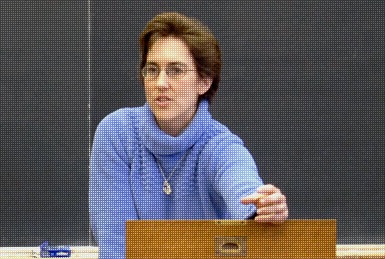 You can watch each lecture in the Old Testament course here, in addition to reading a transcript of each lecture, and download the full syllabus.
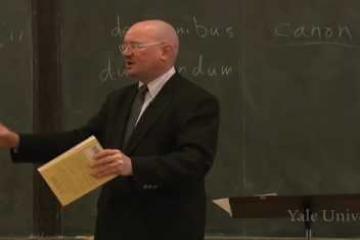 Watch the New Testament course here, and read full transcripts of lectures, alongside the syllabus.
If theology is not your thing, you can browse the other offerings from the Yale Open Courses -- from astronomy to modern languages -- on their excellent website.
Feel free to use this thread to record your insights, comments, and questions as you listen, watch or read the lectures on the Bible.


Page 1 of 2
Comment number 1.
At 15:44 21st Jan 2010, mccamleyc wrote:Will it be the full bible, or the one with the bits Protestants don't like left out?
Complain about this comment (Comment number 1)
Comment number 2.
At 16:52 21st Jan 2010, Jonny Gibson wrote:It seems to me that there is likely to be large level of agreement among those who have extensively studied astronomy, and therefore taking an ‘understanding astronomy’ course at Yale is likely to contain the same content as one in Tehran or Beijing or Belfast. ‘Understanding how to read the Bible’? not so much. Smart/learned Christians are likely to have a very different view on the matter to smart/learned non-christians. I often think that Theology itself is an argument against the Christian god. If I need to be smart to really understand it then it feels discriminatory and unegalitarian. If I’m not smart enough to realize that the NT makes sense and I should sign up to Christianity, then I’m missing out on account of being stupid, or indeed genuinely mentally challenged.
Complain about this comment (Comment number 2)
Comment number 3.
At 17:36 21st Jan 2010, Will_Crawley wrote:Thanks jongib for your comment. All academic disciplines, including astronomy and other hard sciences, are venues for significant debate amongst peers, and theology is no different. That said, all academic disciplines are also in part defined by some common understandings about the nature of the discipline and the methodology that should shape discussions. The courses from Yale University are excellent introductions to those common understandings and to the methodology of exploration. There is certainly space for disagreement and debate: you have every right to voice your own views, challenge perceived presuppositions, etc. I hope these lectures will open up, not close down, debate on the blog.
Complain about this comment (Comment number 3)
Comment number 4.
At 17:42 21st Jan 2010, curiousman wrote:Why not try an Alpha course? You can ask all the questions you like and get them answered - though you may not like some of the answers, it's up to you!
mccamleyc wrote:
Will it be the full bible, or the one with the bits Protestants don't like left out?
Which bits are those, mccamleyc?
Complain about this comment (Comment number 4)
Comment number 5.
At 18:26 21st Jan 2010, rochcarlie wrote:mccamleyc
Why just the Bible? What about including the hieroglyphic writings from Egyptian tombs and temples or perhaps the Norse sagas or is it just ancient Israelite parchment for the theology discussion?
Complain about this comment (Comment number 5)
Comment number 6.
At 20:12 21st Jan 2010, Will_Crawley wrote:I will be interested to hear comments from anyone who watched some of the lectures.
Complain about this comment (Comment number 6)
Comment number 7.
At 20:55 21st Jan 2010, John Wright wrote:I'll be doing so starting tonight!
Complain about this comment (Comment number 7)
Comment number 8.
At 22:19 21st Jan 2010, Heather Hanna wrote:Hi Jongib - just wanted to say, being a theologian & being a Christian are too very different things.
Complain about this comment (Comment number 8)
Comment number 9.
At 22:56 21st Jan 2010, Will_Crawley wrote:Heather, you are quite right. But there's no crime in being a theologically-literate Christian, right? Actually studying the literature, language, history, geography and culture of the biblical world and the Bible itself -- is that such a bad idea?
Complain about this comment (Comment number 9)
Comment number 10.
At 23:06 21st Jan 2010, Heather Hanna wrote:Hi William. I agree with you, totally. Just listened to the 'introduction to the new testament' lecture. I like Prof Dale Martin's style, he seems to be trying to ask genuine questions without being too dramatic / provocative. I think that approaching the NT as a historical document is an opportunity to engage with the Bible in a very refreshing way. I'm in....
Complain about this comment (Comment number 10)
Comment number 11.
At 23:15 21st Jan 2010, petermorrow wrote:William, you have asked for comments.
I have read rather quickly through the first transcript, 'Introduction: Why study the New Testament', and the course overview.
My first thoughts are these:
Professor Martin explains in his overview that "This course approaches the New Testament not as scripture", and students are therefore, "urged to leave behind their pre-conceived notions of the New Testament and read it as if they had never heard of it before." Fair enough. I can try to do that. If however that is what I am urged to do then others who already hold this view must, surely, consider that it might be "authoritative". Whatever one's view of the bible, that is how it has been read by many, many people for many many years. At the very least though, if I can ask, 'What if?' others can too.
Beyond that my first thought relates to the 'quiz', and I'll ask a question.
During the Q&A session an example of the record of resurrection appearances in Matthew and Luke was given. Now, my point is not to seek to argue for the validity of such rather to note how the answer was framed. Professor Martin said, "But now notice, the Gospel of Matthew, as we'll talk about later, has Jesus appear to his disciples only in Galilee, not in Judea, and the Gospel of Luke and Acts have Jesus appear to his disciples only in Judea but not in Galilee. Ah, that's an interesting problem we will have to get to at some point."
Indeed, notice! "Matthew...has Jesus appear to his disciples only in Galilee, not in Judea" and "the Gospel of Luke and Acts have Jesus appear to his disciples only in Judea but not in Galilee".
But how am I to read the words 'only' and 'not'?
Am I to understand that the Professor is saying, 'Matthew states that the disciples only met Jesus in Galilee and at no time did they meet in Judea, while on the other hand Luke says, no, no, it was definitely Judea, wherever did anyone get the idea that they met in Galilee'?
or, am I to hear, 'Matthew only records a meeting in Galilee and doesn't happen to record the meeting in Judea while Luke records the Judea meeting but not the Galilee one'?
Am I to hear implied contradiction, is it just a throwaway comment, is it just, 'here, this is curious', is it a weighted point, why call it a problem? There are endless questions here.
The point about history and context and genre is of course important, but whatever way we come at this everybody will be interpreting both before we come to the text and after we have read it.
Complain about this comment (Comment number 11)
Comment number 12.
At 23:34 21st Jan 2010, graham veale wrote:Is that the Heather Hanna I know? Or are there two of you.
Complain about this comment (Comment number 12)
Comment number 13.
At 23:35 21st Jan 2010, graham veale wrote:And is that jongib someone I know?
Complain about this comment (Comment number 13)
Comment number 14.
At 23:59 21st Jan 2010, Jonny Gibson wrote:Sorry Will. it IS a good idea, but my Sky+ is too backed up to be able to watch the seminars at the moment. curiousman, I do think that non-christians should set up a (pretend) anti-alpha course so they can dismissively point christians towards it when any questioning of the validity of their faith/non faith arises. It seems to be the thing to do.
Complain about this comment (Comment number 14)
Comment number 15.
At 00:26 22nd Jan 2010, Heather Hanna wrote:Hi Graham
Yes, it's the RPC Heather Hanna.
Quite new to this site.
Complain about this comment (Comment number 15)
Comment number 16.
At 00:41 22nd Jan 2010, Heather Hanna wrote:His point that "(scripture) is only scripture to a community of people who take it as scripture" implies that it is the human act of belief that makes the text 'holy', rather than the work of a life-giving, life-changing God. I'm happy to share the journey with him however, because i believe the Bible is both a historical document and a holy book & that these are not mutually exclusive positions.
And yes, i'm not sure what he was implying by the 'only' and 'not' comments. But i hope he appraoches this 'problem' with the true curisoity of a good historian.
I'm not sure about his comparison of the Book of Acts with a Greek novel? Having never read a Greek novel, i wouldn't know whether what's he's saying is true or not - but if i indulge the idea that Luke did that intentionally then i'd actually be quite impressed.
Complain about this comment (Comment number 16)
Comment number 17.
At 01:22 22nd Jan 2010, Will_Crawley wrote:Guys, it's very late and I'm off to bed, but thanks for starting to look at those courses. It makes sense to start the OT course first (at least the first couple of lectures) then move to the NT course, but they should be stand-alone. The lecturers are major players in international biblical studies, so this is an extraordinary opportunity to benefit, for free, from their learning.
Complain about this comment (Comment number 17)
Comment number 18.
At 10:24 22nd Jan 2010, graham veale wrote:Heather
Greek novels I'm not so sure about, not having read any either. But Burridge, Bauckham and Witherington have drawn impressive parallels with Greek historiography and biography. All three have found the novel less satisfactory. Philostratus "Life of Apollonius" reads more like a Greek novel than a gospel. Allegedly.
GV
Complain about this comment (Comment number 18)
Comment number 19.
At 10:26 22nd Jan 2010, graham veale wrote:BTW
Welcome to the site. It gets a little surreal at times(I'm as much to blame for that as anyone), but it's often worth it.
GV
Complain about this comment (Comment number 19)
Comment number 20.
At 10:40 22nd Jan 2010, Heliopolitan wrote:Will, I think this is a great idea. I haven't had a chance to check out these lectures yet, but they sound very good. And free! There is lots of other good free stuff on the web from Hector Avalos, John Loftus, Bart Ehrman and many others, but I think kicking off with a proper academic series is a good way forward.
PeterM, if you read Matthew and Luke, you will see that there is a very real and very specific contradiction there, which requires some of the most inventive ad hoc cabbage to circumnavigate :-) Enjoy!
-H
Complain about this comment (Comment number 20)
Comment number 21.
At 12:39 22nd Jan 2010, graham veale wrote:Why the sudden obsession with cabbages, H? Some sort of experimentation you'd like to share?
Complain about this comment (Comment number 21)
Comment number 22.
At 15:08 22nd Jan 2010, Heather Hanna wrote:Thanks Graham & OK William, i'll go back and start with the OT course like a good Protestant thinker...
Complain about this comment (Comment number 22)
Comment number 23.
At 17:25 22nd Jan 2010, Michael in Dublin wrote:William, I would like to add a comment:
A university course is not necessary in order to begin to understand the Bible, nor are years of study a guarantee of understanding. I am not against university courses. There is also much benefit in being able to read the ancient Hebrew and Greek texts of the Bible. But I am convinced that a close and careful reading of an English Bible can take a reader a long way down the road to understanding the message. And while mulling over this the reader may find appropriate applications for our busy modern world.
However, having had a glimpse at the Open Yale Courses on the Old and New Testaments, I wonder how helpful they really are. These courses do not start out with the text (book) as it stands. When we read an English novel or essay or poem, we usually do not know the process that led to the finished work. But neither this nor our lack of background necessarily prevents us from understanding. Because of the way language is used and the information given in the text, we may clearly grasp what the writer is saying even though some of the details may be unclear. I wonder why different standards apply in academia to reading the Bible and to reading say English literature? If the methodology often used in Religious Studies when approaching the Bible were to be applied to English literature in general, I think it would make the reading of many books we enjoy a really confusing and frustrating exercise.
I hope to look closer at the Open Courses and to give further responses. I am, however, convinced that much of the Bible can be read and understood (without these lectures) and have a great impact on the lives of very ordinary people.
Complain about this comment (Comment number 23)
Comment number 24.
At 17:29 22nd Jan 2010, Paul Robinson wrote:This is a wonderful idea, not just because of the inherent value of the lectures, or the merit of actually putting online courses to good use, but also because it would demonstrate a commitment to each other regardless of our differences. I gather that various bloggers and blog readers get together from time to time; but I've never heard of an online community getting together to study. It would be a nice gesture of humility and friendship, especially in Northern Ireland.
Would anyone be interested in drawing up a schedule (one lecture per week?) and arranging to meet up (once a month?) for a drink -- coffee if there are any teetotalers who take offence to alcohol! -- to discuss them? (Or better: to discuss their subject matter in light of the lectures?)
Complain about this comment (Comment number 24)
Comment number 25.
At 19:28 22nd Jan 2010, Will_Crawley wrote:In reply to Michael in Dublin:
A university course is not necessary in order to begin to understand the Bible, nor are years of study a guarantee of understanding. I am not against university courses.
-- In fact, most of what people taught about the Bible in churches has come as a result of serious academic study of the Scriptures. Luther, Calvin and the other Reformers were all academics investigating the Bible. there is no need to fear serious examination of the Scriptures. It is, of course, the case that people can benefit from the Bible without engaging in that examination; but, whether they realise it or not, their views on the Bible have been partly shaped by the academic work on the Bible that has been transmitted through seminaries, universities and pulpits.
There is also much benefit in being able to read the ancient Hebrew and Greek texts of the Bible. But I am convinced that a close and careful reading of an English Bible can take a reader a long way down the road to understanding the message. And while mulling over this the reader may find appropriate applications for our busy modern world.
-- The Yale courses I have placed here are in fact in English. Some reference will be made to the original languages, as would be appropriate when examining any document.
However, having had a glimpse at the Open Yale Courses on the Old and New Testaments, I wonder how helpful they really are. These courses do not start out with the text (book) as it stands. When we read an English novel or essay or poem, we usually do not know the process that led to the finished work. But neither this nor our lack of background necessarily prevents us from understanding. Because of the way language is used and the information given in the text, we may clearly grasp what the writer is saying even though some of the details may be unclear. I wonder why different standards apply in academia to reading the Bible and to reading say English literature? If the methodology often used in Religious Studies when approaching the Bible were to be applied to English literature in general, I think it would make the reading of many books we enjoy a really confusing and frustrating exercise.
-- The methodology used to examine the Bible in these courses is similar to the approach taken in literary studies, but there is additional recourse to archaeology and other scientific disciplines.
I hope to look closer at the Open Courses and to give further responses. I am, however, convinced that much of the Bible can be read and understood (without these lectures) and have a great impact on the lives of very ordinary people.
-- I have no doubt that the Bible can be read with profit by people who have not studied biblical studies in a university. I simply offer these courses here as a value added experience for those who, like me, think the Bible is a foundational text of Western culture. Lincoln's Gettysburg Address can be read with profit by people who have not studied the history of the American civil war, or the literary sources underlying Lincoln's great speech, or the political and sociological context in which he made his speech. But I would argue that a knowledge of those matters would tend to add depth to any subsequent reading of Lincoln's speech. The same is true for the Bible.
Perhaps the real concern you have, Michael, is that you believe academic studies of the Bible serve only to undermine people's "faith" in the biblical witness. I suggest that those studies can challenge some misreadings of the Bible, they can encourage people to face up to problems attached to their own interpretations of the texts. But that is not the same thing as undermining the authority the text may continue to have in the experience of readers.
Complain about this comment (Comment number 25)
Comment number 26.
At 23:18 22nd Jan 2010, Orthodox-tradition wrote:It would appear that Professor Martin's approach to the NT
1) "does not attempt" to find that the NT is scripture and
2) focuses on the *differences* of early "Christianities" ;-
https://oyc.yale.edu/religious-studies/introduction-to-new-testament
3) It also appears that he focuses on the NT reader's perceptions and imagination at the expense of the mainstream and traditional historical-grammatical way of reading the bible, which focuses primarily on the original intention of the authors in writing the NT.
Any ideas about any alterantive online academic courses that might focus on;-
1) the historical grammatical approach, ie what the author of a book was trying to convey;
2) a course which DOES attempt to find the NT as scripture;
3) and which focuses on the amazing unity of early Christianity, ie around the widely held belief in the bodily resurrection of Christ as Lord and Saviour?
BTW According to these reviews below, Professor Martin's book, "sex and the single saviour" overturns the traditional historical-grammatical conclusion on homosexuality and suggests that Christ had an ambigous sexuality.
I mention this because sexuality and the bible is a very common theme which W&T posts on, so presumably a good many folks will have an interest.
Martin's views on the subject might also be a good indicator of the outworking of his views on 1, 2 and 3 points above, which may help people make an informed judgement on where he is coming from before they commit to study.
https://www.exgaywatch.com/wp/2007/04/book-review-sex-and-the-single-savior/
https://www.amazon.com/Sex-Single-Savior-Sexuality-Interpretation/dp/0664230466
https://www.jmmsweb.org/issues/volume2/number1/pp47-51
Complain about this comment (Comment number 26)
Comment number 27.
At 08:43 23rd Jan 2010, Heliopolitan wrote:Of course the notion that the bible is "holy scripture" is academically untenable. Indeed, it's even *ludicrous*...
Complain about this comment (Comment number 27)
Comment number 28.
At 10:49 23rd Jan 2010, Will_Crawley wrote:Nice try, OT. But you are off topic. I know you would dearly love to turn the thread into a discussion of homosexuality, yet again, but I do hope others will resist the bait. This thread is about two introductory courses in Old and New Testament at one of the world's leading universities, given by leading scholars, which are offered for free. That is a rare opportunity for people who have never taken a university course in Biblical Studies to consider the kinds of questions asked by academics when they approach the Bible. Again, I suggest that the IT course is the best place to begin these classes -- even if you watch only the first two or three OT lectures before turning to the NT classes. It is certainly true that every reader of the Bible approaches the text with assumptions -- sometimes presumptions -- but the difference here, perhaps, is that academics tend to declare their assumptions loudly, and they deny any prophetic ability to settle debates. You are not required to agree with their assumptions -- or their conclusions, for that matter. But these scholars bring a lifetime of learning to bear on some very important texts, and we all have something to learn from them. Let's not be afraid to ask questions, or consider alternative answers.
Complain about this comment (Comment number 28)
Comment number 29.
At 11:44 23rd Jan 2010, petermorrow wrote:Interesting comments
I wouldn't be too bothered about either the fact that Christianity can be understood and practised without a theology or biblical studies degree, or that this is a course which asks us to "leave behind (our) pre-conceived notions of the New Testament and read it as if (we have) never heard of it before" or that the OT overview states, "the Bible is an account of the odyssey of a people rather than a book of theology". That's just the way things are, that's the starting point of this course and I accept that. At the very least it means that people get to understand what they don't think about the bible. On the point of being a christian without a degree, it's also worthwhile saying that that goes for divinity degrees from mainstream evangelical colleges too. To use a cliche I can be 'sound as a bell' on doctrine and have no life in me.
What interests me a little more, from my reading of the 1st OT lecture and the 1st NT lecture, are the implications which follow from the stated starting point . I do not expect the course to presume 'holy scripture', and its not that there isn't anything to learn, but when we kick off with the concept that Israel were a group of people with a big idea and understand that everything will be interpreted through that lens I'm just not sure how I'm supposed to respond. Yes I can read the text as never before, yes I can run with reading it as a rehash of a shared cultural experience and so on is but if everything is going to be interpreted through the lens of 'big idea' it means there will never be room for the question, 'what if God'. Yes, I can say, sure, let me look at it from a purely human perspective, but it seems to me that if someone has even a smidgen of faith (or perhaps even curiosity) there is going to be a 'but' lurking somewhere, even if, like me, they claim no prophetic ability to settle debates.
Helio, I'll pick up your comments in my next post.
Complain about this comment (Comment number 29)
Comment number 30.
At 12:34 23rd Jan 2010, Will_Crawley wrote:Helio writes: "Of course the notion that the bible is "holy scripture" is academically untenable. Indeed, it's even *ludicrous*..."
-- Well, it rather depends what you mean by "holy scripture", I suppose. Perhaps Helio's starting point is that any concept/category relying on the assumption that God exists is an "academically untenable" category. That is certainly Richard Dawkins's claim and it's the reason why he refuses to accept that "theology" is an academic discipline. Dawkins has introduced a gate-keeping commitment for the Academy that would exclude any theory, idea, concept or category that assumes, supposes or proposes the existence of God. Many academics would disagree with that exclusion for non-scientific subjects, while accepting that this exclusion should certainly apply to scientific subjects. In any case, the assumption is not made by the Yale courses.
Complain about this comment (Comment number 30)
Comment number 31.
At 12:50 23rd Jan 2010, petermorrow wrote:Helio
You know, I really like our conversations, but sometimes I don't know if we're playing football or ice-hockey, or arranging flowers!
I'm quite sure, though, that you know the point I was making in post 11, it was about how we use words.
You'll remember that we've spoken about this before, numerous times. Remember all that stuff about the end of the gospel of Mark and how we've all assumed that it must be missing; about how some of the monks were sitting around one day happily scanning the text onto a goat when suddenly one of them piped up, "Ah, nuts, we've gone a made a right pig's ear of this, boys. Where's the last page of Mark? I can't find it anywhere," at which point everyone else pointed at Alfredo the cook and blamed him for mixing it up it with some raw cabbage and putting it in the pickle jar. Remember? And then, hey presto (as a pixie might say), up popped some boyo (some might even say academic) who'd spent half his life in the Middle East, had translated texts from Hebrew, Aramaic, Greek and Syriac and said, "rhetorical form", at which point Alfredo (the cook) wiped his brow, held up the pickle jar and declared, "See, cabbage after all, what are you lot going on about? No missing page, just a completed rhetorical template."
I only say all this because that view of the end of Mark takes into account history, author, style, genre, purpose, audience, context. In other words, a variety of cabbage, or should that be academic thought?
So come on, broaden your diet; not that cabbage isn't good, I actually have quite a nice recipe for Savoy cabbage with Cannellini beans, its just that I don't want the record to read that Helio only eats cabbage and not, say, Judean artichoke, when actually he's partial to both but just not on the same plate at the same time.
Oh, and speaking of words, how are you interpreting your use of the word 'if' in, "PeterM, if you read Matthew and Luke."? Or (as William has noted) perhaps what you mean in post 27 when you say "academically untenable", because if we're going to have a go at understanding the bible maybe we should be clear about our own words first! :-)
Complain about this comment (Comment number 31)
Comment number 32.
At 14:08 23rd Jan 2010, Parrhasios wrote:I read the first OT lecture last night - my first reaction was wonderful, wonderful stuff! Then I thought about it for a while and my considered response: really wonderful, wonderful stuff!
Let's take this passage: "Job, possibly the greatest book of the Bible, ... challenges conventional religious piety and arrives at the bittersweet conclusion that there is no justice in this world or any other, but that nonetheless we're not excused from the thankless and perhaps ultimately meaningless task of righteous living."
That is pure Parrhasios - I could have written it myself did I favour the succinct. (I would quibble though about ranking Job as only possibly the greatest book of the Bible).
What I think, however, we should all find interesting and perhaps try to bear in mind (not that it will do any good) is that what I have just done is illustrative of the human approach not just to learning but to life.
When we approach something we try to place it with regard to ourselves or our positions. If first impressions are positive we look for affirmation - it's not so much what do we agree with as what agrees with us. If negative, we look for the markers which place it as either worthless or hostile or dangerous. We see the common ground or we see the slippery slope - unless we are careful everything else gets lost. (If we are careful it just gets misinterpreted or twisted).
I venture to suggest that every single one of us will view these lectures though our own customised lens - and won't that be fun.
I had these thoughts late last night and planned to write something to the above effect when I had some free time today. I duely logged on this morning and, mirabile dictu, there was OT's post # 26. Q.E.D.
So, let me join the joyful throng twisting and shouting before the throne (it is what we do best) and note another uncannily prescient statement of my own current concerns from lecture one:
"Jewish communities chose to put all this stuff in this collection we call the Bible. They chose to include all of these dissonant voices together. They didn't strive to reconcile the conflicts, nor should we. ... Each book, each writer, each voice reflects another thread in the rich tapestry of human experience, human response to life and its puzzles, human reflection on the sublime and the depraved."
I've realised why I'm just enjoying the blog more and more - with all our wonderful new contributors W&T has just got a lot more Biblical.
I fully intend to work my way through the course - starting with the OT. Look forward to my idiosyncratic observations joining yours...
Complain about this comment (Comment number 32)
Comment number 33.
At 15:14 23rd Jan 2010, Will_Crawley wrote:I'm delighted, Parrhasios, that you are enjoying the OT course. As for the suggestion that W&T has become "more biblical" because of new contributors, that's something I hadn't considered at all when posting the lectures. I've been exploring the Open Culture site (which is superb), and wan't to share some of my findings -- end of conspiracy! Trawl back through W&T and you'll find lots more items on matters biblical. I'm looking forward to your responses to the lectures.
Complain about this comment (Comment number 33)
Comment number 34.
At 16:31 23rd Jan 2010, Heliopolitan wrote:Hi chaps,
Peter, it doesn't matter how Mark ends up (most scholars do agree that the ending was not part of the original manuscript, and we do have plenty of evidence of interpolation and alteration of gospel texts - heck, that is what Matthew and Luke ARE!). The fact remains that the various synoptic stories (and that is all they are) are contradictory. Not different viewpoints - one base document that has been altered to fit preconceptions and myths.
Will,
Perhaps Helio's starting point is that any concept/category relying on the assumption that God exists is an "academically untenable" category.
Actually, it is worse than that. I am talking about the assumption not only that god exists, but that the bible represents its word to mankind. There is not a shred of justification for such a view, and the bible itself contains plenty of the required evidence that it is a purely human set of documents.
Having said that, Dawkins is not wrong - there is no good evidence to support the existence of the gods, so why even go down that line? Theology is at best an exercise in multi-layered whatiffery. If gods don't exist, ZAP! There it goes.
Dawkins has introduced a gate-keeping commitment for the Academy that would exclude any theory, idea, concept or category that assumes, supposes or proposes the existence of God.
Well, first catch your chicken. Demonstrate this goddy thing, and away we go. I don't see any academic departments trying to derive the characteristics of other mythical beings; where cultural phenomena and beliefs *are* studied legitimately, there is an appropriate level of detachment. There is nothing to stop people looking for Nessie or Atlantis, but to build an academic discipline on these bases is clearly nurturing several brassicaceous cultivars of prime quality.
Many academics would disagree with that exclusion for non-scientific subjects, while accepting that this exclusion should certainly apply to scientific subjects.
Well, they would, wouldn't they. If they want to put their money where their mouth is, let them clamour for more study of leprechauns, ley lines, spoon-bending and the rest. The bottom line is that if one makes a *truth claim*, one automatically enters the realm where science is justifiably applicable. These many academics are quite cosy and comfy indulging their wee notions in safe seclusion, but if the best they can do to justify theism is to just claim an ad hoc exclusion for pixiology, that is a bit pants.
In any case, the assumption is not made by the Yale courses.
Indeed. There is nothing like proper academic study of the bible and its multi-threaded origins to rebut that old assumption that this corpus is "scripture". I think it's great that you've linked these, and I'm sure the punters will find them interesting. But theology is really just a branch of mythology; the lofty pretensions of some of its practitioners don't really merit that much attention.
Discuss :-)
-H
Complain about this comment (Comment number 34)
Comment number 35.
At 16:58 23rd Jan 2010, Orthodox-tradition wrote:William
I think it is pretty obvious my reference to homosexuality was a post script to my actual comments, which you have sidestepped with the skill of a top wing three quarters.
And those comments give a reasonable insight into the belief system of the main NT teacher on the course.
I dont suppose you just accidentally picked this course to promote without checking out that it fitted in with your worldview?
I repeat;-
It would appear that Professor Martin's approach to the NT
1) "does not attempt" to find that the NT is scripture and
2) focuses on the *differences* of early "Christianities" ;-
https://oyc.yale.edu/religious-studies/introduction-to-new-testament
3) It also appears that he focuses on the NT reader's perceptions and imagination at the expense of the mainstream and traditional historical-grammatical way of reading the bible, which focuses primarily on the original intention of the authors in writing the NT.
Any ideas about any alterantive online academic courses that might focus on;-
1) the historical grammatical approach, ie what the author of a book was trying to convey;
2) a course which DOES attempt to find the NT as scripture;
3) and which focuses on the amazing unity of early Christianity, ie around the widely held belief in the bodily resurrection of Christ as Lord and Saviour?
--------------------------------------------
I certainly wouldnt turn down the chance to study a good course, time and money permitting. And I dont think that spiritually motived people have nothing to learn from secular scholars of the bible or from secular unis. On the contrary.
But I just want to state a few obvious facts regardless.
An academic study of the bible from secular scholars, while doubtless of some value will not develop;-
* Spiritual growth
* Character
* Love for others, holiness
* Prayer life / actual relationship with God
* Humiltiy
* Wisdom
There are plenty of urgings in scripture to study scripture, but there is also this warning from Paul about philsophical add ons to Christ himself, in colossians;-
Now this I say lest anyone should deceive you with persuasive words. 5 For though I am absent in the flesh, yet I am with you in spirit, rejoicing to see your good order and the steadfastness of your faith in Christ.
6 As you therefore have received Christ Jesus the Lord, so walk in Him, 7 rooted and built up in Him and established in the faith, as you have been taught, abounding in it with thanksgiving.
8 Beware lest anyone cheat you through philosophy and empty deceit, according to the tradition of men, according to the basic principles of the world, and not according to Christ. 9 For in Him dwells all the fullness of the Godhead bodily; 10 and you are complete in Him, who is the head of all principality and power.
Man is a tripartite being, body, spirit, soul and so long as one understands that an acdemic course is only going to expand your knowledge and intellect and one is not overlooking the other issues, then fine.
However, personally I still think I might prefer to study at an academically respectable institution that is actually seriously interested in whether or not the bible is credible as the word of God and whether it can actually speak to us on those terms.
Yale explictly avoids both.
The NT demonstrates what I have just written;-
Acts 4
Then Peter, filled with the Holy Spirit, said to them, “Rulers of the people and elders of Israel: 9 If we this day are judged for a good deed done to a helpless man, by what means he has been made well, 10 let it be known to you all, and to all the people of Israel, that by the name of Jesus Christ of Nazareth, whom you crucified, whom God raised from the dead, by Him this man stands here before you whole. 11 This is the ‘stone which was rejected by you builders, which has become the chief cornerstone.’[a] 12 Nor is there salvation in any other, for there is no other name under heaven given among men by which we must be saved.”
The Name of Jesus Forbidden
13 Now when they saw the boldness of Peter and John, and perceived that they were UNEDUCATED AND UNTRAINED MEN, they marveled. And they realized that they had BEEN WITH JESUS.
Now dont get me wrong, I think academic study of the bible is fascinating, but I think I too am susceptible to focussing on that at the expense of SPENDING TIME WITH JESUS.
A degree from a top uni will help set you at ease with people who value such things above all else, but lets not kid ourselves that it puts us on a par with the Apostle Peter, a man of spiritual power and action in the kingdom of God.
I would also be cautious about drinking in uncritically the views of anyone teaching the bible who thinks that the numerous opinions and imaginations of countless different people should be taken more seriously than what the authors of biblical books were intending to convey. This is explicitly contrary to mainstream Christianity. So long as you understand this then doubtless some people may proceed with harm.
OT
Complain about this comment (Comment number 35)
Comment number 36.
At 17:00 23rd Jan 2010, Parrhasios wrote:William - just because they're out to get you doesn't mean you should give in to paranoia! Honestly I have no suspicion that this thread is the latest part of some great BBC conspiracy. It is just within the bounds of possibility that my tongue was ever so slightly in my cheek in parts of my last post...
Complain about this comment (Comment number 36)
Comment number 37.
At 17:37 23rd Jan 2010, Orthodox-tradition wrote:Parrhasios
Address me directly and the issue directly if you have the courage.
I notice you never objected when William was directing a repeated torrent of insults at me and had his post pulled from his own blog by the moderators!
;-)
OT
Complain about this comment (Comment number 37)
Comment number 38.
At 17:59 23rd Jan 2010, Will_Crawley wrote:OT write: "I dont suppose you just accidentally picked this course to promote without checking out that it fitted in with your worldview?"
-- I chose these courses from the Open Culture website. They are the only full introductory courses in biblical studies offered online there for free, with full transcripts, syllabi, etc. They are given by field-leading academics at one of the world's top universities. That's why they were selected. As for my own "worldview", OT, I can assure you that I have my own views, and these differ at significant points with the lecturers in the courses. But I have never felt the need to agree with everything an academic says in order to benefit from their ideas. You might want to set aside your worries/fears for a few hours, and watch some of the lectures.
Complain about this comment (Comment number 38)
Comment number 39.
At 18:00 23rd Jan 2010, Heather Hanna wrote:Heliopolitan
I could be persuaded to accept your suggestion about the idea of the bible as holy scripture being academically untenable, although would suggest that if that's the case then the idea that the bible is NOT holy scripture is equally academically untenable. The idea that it's 'ludicrous' seems to me a very reductionist view of human life and experience. The Bible is just words on a page, but what if there's a God behing those words who is able to make them "living and active" when we approach them in faith?
Complain about this comment (Comment number 39)
Comment number 40.
At 18:01 23rd Jan 2010, Will_Crawley wrote:P.S., I do agree with OT that we should avoid an uncritical reception of others' ideas. I would simply extend that to ideas we encounter about the Bible from pulpits as well as lecture halls. Critically engaging with every interpretation of the Bible seems to me to be a thoroughly biblical approach to the Bible.
Complain about this comment (Comment number 40)
Comment number 41.
At 18:34 23rd Jan 2010, petermorrow wrote:William,
A question, although I understand you are under no obligation to answer.
Sorry, still adjusting the reading 'lens' in my spectacles!
When, Professor Hayes says, (regarding questions prompted by a commitment, a prior commitment to an article of faith.) "I'm not going to be drawn into a philosophical or theological debate over the merits of that belief, but I'll simply point out how or why that belief might be making it difficult for you to read or accept what the text is actually and not ideally saying, and leave you to think about that." How would you say that someone deal with her use of the word 'actually'.
My response might be to say, yes, I hear you; yes, that might be valid, but there is another 'layer' here.
Any thoughts?
Beyond that this is a good idea, it will be interesting to see how it all pans out online.
Complain about this comment (Comment number 41)
Comment number 42.
At 18:42 23rd Jan 2010, petermorrow wrote:Helio
"it doesn't matter how Mark ends up", well, it did when we first started talking about it. Why not deal with the possibility that the suggested form is important instead of just dismissing it?
"we do have plenty of evidence of interpolation and alteration of gospel texts", and I suppose that does matter!? Not that I particularly disagree. We've discussed this before too. There is every likelihood that Matt and Luke used Mark, we know this already. But why would that be a problem in a society which valued oral tradition? I fail to see the negative point you make.
"The fact remains that the various synoptic stories (and that is all they are)", ah, go on, take a risk and leave out the parenthesis! :-)
"one base document that has been altered to fit preconceptions and myths." Well, let me rewrite that sentence; one base document, personal experience and a centuries old, well established and reliable oral tradition were considered, reflected upon, altered and pieced together in order to suit, purpose, audience, context, intention, emphasis, and communicated in a way which would best convey the writer's particular perspective.' No one I know is suggesting that the writers weren't setting out to make a point, or that they were plugged into some kind of pre-electronic goddy TV thing and recording it on their 'plus' box to be transcribed some time later in the week.
Complain about this comment (Comment number 42)
Comment number 43.
At 18:47 23rd Jan 2010, PeterKlaver wrote:Heather Hanna,
"I could be persuaded to accept your suggestion about the idea of the bible as holy scripture being academically untenable, although would suggest that if that's the case then the idea that the bible is NOT holy scripture is equally academically untenable."
It is a common error among believers to say, 'I can't prove this or that part of my faith, but you can't disprove it, therefore neither of our positions is any better than the other'.
Let's roll out the classic example or Bertrand Russells teapot analogy again. Suppose I were to claim that there is a small china teapot circling the sun in the open space between mars and jupiter. It would be too small to observe with any of our telescopes. There is no evidence to support the claim but there is also no credible evidence against it. Does that then make the likelyhood that there is a china teapot circling the sun as large as that there is none, i.e. both 50%? Of course not. There is no evidence to support the idea that there is a teapot circling between mars and jupiter. Until there is, the sensible thing to do is not to assume there is one.
It works similarly for what you said. There is no evidence for the bible being holy scripture. Until any is presented, the position that the bible is not holy scripture is the reasonable one to take.
Complain about this comment (Comment number 43)
Comment number 44.
At 23:42 23rd Jan 2010, Parrhasios wrote:OT - post # 37.
My post # 36 was addressed to William and was directed at William - not at you.
I wrote it in response to William's comment # 33 in which he appeared to entertain the idea that I might have linked his posting of this thread to the influx of some of our more colourful recent contributors perhaps as part of a BBC conspiracy to rehabilitate the Holy Scriptures. (!!!)
You should reflect closely on that OT - it was an alarmingly literalist reading of my post # 32 for someone you suspect may be a liberal!
I have defended you on several occasions in the past where I felt criticism was unwarranted - I did not read the removed post so have no idea whether or not I would have rushed to your defence on that occasion or not.
I am not sure what you expect me to say about the choice of the course - you know I am unapologetically a liberal; you know I regard the Bible as containing words about or around God not as the Word of God; you know I have personally not the slightest interest in the sexuality of Jesus but would not consider someone's possessing a conviction that He was a practising homosexual any bar to their teaching Scripture.
Do I think the course was deliberately chosen as part of a BBC plot to gay the nation? No, sorry, but I think not.
This seems a very interesting project - should you decide to participate I would certainly enjoy exchanging opinions with you but do note I am starting with the Old Testament.
Complain about this comment (Comment number 44)
Comment number 45.
At 10:33 24th Jan 2010, Heliopolitan wrote:I think Will's comments are bang on the mark. OT, what are you afraid of? Heather, you cannot assume in advance that any particular writings, be it Philippians or Moby Dick, is "holy scripture" - this is an invented human category. Contra OT's assertions (and in line with the comments from Prof Hayes), the various disparate texts in the bible do contain the imprint of their entirely human origin, and seeking "The" word of god in there is an a priori assumption - not a logical extension of what you find in the text.
Peter, you have got to be having a laugh. The gospels contain the very best evidence available that this "reliable oral tradition" myth is false. Remember how Matthew doctored Mark's original to produce the double donkey? Remember the fig tree? Remember the mess that Luke and Matthew both made of the tomb scenes (which *do* appear to have been based on hearsay, because they don't appear to have had access to the current ending of Mark) - which is also very solid evidence that the endng of Mark was not planned as some literary device, but was a clumsy strap-on to a gospel whose final pages got lost or chewed or never got written at all.
It's not enough to simply pretend that these established arguments do not apply. You have already noted that OT's view incorporates layer upon layer of unsupportable presupposition and post hoc conjecture. Don't ape him.
Complain about this comment (Comment number 45)
Comment number 46.
At 13:06 24th Jan 2010, Heather Hanna wrote:Peter, can we agree not to make this about who is right and who is 'in error', but accept that are looking at the world in different ways. My point is that my understanding of who God is would not allow me to try and draw parallels between him and tea-pot circling the sun. One world-view is based on the assumption that everything that is real has to observable & measurable within our current understanding of time & space, the other world-view assumes that there may be things which exist outside of that. However, i personally believe that God made our world, and therefore nothing in science will ever DISPROVE him. Ultimately, whilst science can challenge how i might think about God, it will only ever serve to deepen my understanding of him e.g. if he chose to make a small teapot circling round the sun, why would he do that?
Even though, as i have said, i don't accept that God will ever be 'discovered' in the same way as the teapot might, the teapot analogy in itself illustrates that science often makes wrong assumptions based on the null hypothesis, and gives us a very incomplete understanding of the world around us. Whilst i believe that science has much to contribute to how i understand the world, it is not for me the whole story. I'll finish with the words of U2...some things have to be "believed to be seen"...although i'll add a question mark?
Complain about this comment (Comment number 46)
Comment number 47.
At 13:16 24th Jan 2010, Heather Hanna wrote:Helio
I see where you coming from when you say "theology is at best an exercise in multi-layered whatiffery", and (for me) it's exploring the answers to the 'what if's' that the mysteries of God can be enjoyed.
Science is easy, the 'what if's' require your head and your heart.
Go on, indulge me, as i asked above...
"The Bible is just words on a page, but what if there's a God behing those words who is able to make them "living and active" when we approach them in faith?"
(Don't feel you have to respond publically, but go on...imagine it for just for a minute).
Complain about this comment (Comment number 47)
Comment number 48.
At 15:32 24th Jan 2010, petermorrow wrote:Helio
End of Mark first (if you see what I mean). Whatever the reliability of the last verses, 9 - 20, I'm not discussing them and their content, I'm (well not me you understand!) suggesting we don't need them. I'm saying that in cultural context verse 8 stands as all the end we need. We can do Ch 16:1-8 verse by verse if you want.
We've been through the double donkey thing before too, and I know, if you'll pardon the expression, that you think he got his donkey ass about face but you haven't shown any indication that you are prepared to read the text or any of the texts in any kind of alternative way.
As for the fig tree, I presume that its a chronology problem you're having. You wouldn't be the first. :-)
More broadly I don't know why you consider these things to be so problematic. It is an 'authority' thing; an, 'Oh my golly gosh how could any god get it so wrong.' ? All I can say in response to that is to repeat what I've said before: history, context, genre, intent, purpose, style, audience.
And on the reliable oral tradition thing, did you ever read the Kenneth Bailey article I linked you to? I'll link it again if you'd like it.
But yes, I was having a laugh too, Alfredo and the pickled cabbage was funny, come on, come on, was to!
More generally in terms of this course, I get the impression that at least some, and perhaps all of the Christians on here so far are prepared to follow it as is, listen, reflect, learn and yes, offer alternative perspectives which include the 'big idea' - God; and when Heather says to PeterK, "can we agree not to make this about who is right and who is 'in error' ", I think that's pretty valid, so why don't we all just go 'surfing'?
Complain about this comment (Comment number 48)
Comment number 49.
At 17:26 24th Jan 2010, Orthodox-tradition wrote:Parrhasios
Oops what can I say. Please look the other way while I take my foot out of my mouth.
I hereby unconditionally apologise and retract post 37. sorry.
Carry on.
------------------------------------
Helio
What am I afraid of? Not a thing, what a laugh of William to suggest this of someone else up the thread also.
Expressing healthy scepticism about a radical liberal theology course is suddenly fear?
Helio, you have NEVER bested me in a debate on science, faith and logic; you get your behind beaten every day on this blog by all comers.
Modern science and humanism are factually and historically DIRECT products of the Christian faith. All the giants whose shoulders you stand on are only giants because of their faith.
There is no fear i can assure you.
I really don't believe that you believe half the things you say, because they are so ridiculous.
For weeks upon weeks you argued that the gospels were forged because one reported that a donkey and its foal were seen and another just mentioned the donkey!! And that was the best you could come up with!!!
Above you say that Jesus never claimed to be God. If you read John 8, as an example, you will see Jesus saying that he was a personal friend of Abraham's who existed before Abraham. He also applied Jehovah's name to himself - I AM- for which the Jews went to stone him on several occasions, saying he was making himsefl equal with God.
When the soldiers came to arrest him in Gethsemane they asked who Jesus was and he replied "I AM" and they were all knocked backwards by the power of Christ's words.
Why?
Come, one Helio, loosen up a bit. I dont have to be right, I am happy for people to disagree with me but I do demand some respect and I wont be patronised.
John 8
56"(CT)Your father Abraham (CU)rejoiced to see My day, and he saw it and was glad."
57(CV)So the Jews said to Him, "You are not yet fifty years old, and have You seen Abraham?"
58Jesus said to them, "Truly, truly, I say to you, before Abraham was born, (CW)I am."
59Therefore they (CX)picked up stones to throw at Him, but Jesus (CY)hid Himself and went out of the temple.
John 18
3So Judas, obtaining and taking charge of the band of soldiers and some guards (attendants) of the high priests and Pharisees, came there with lanterns and torches and weapons.
4Then Jesus, knowing all that was about to befall Him, went out to them and said, Whom are you seeking? [Whom do you want?]
5They answered Him, Jesus the Nazarene. Jesus said to them, I am He. Judas, who was betraying Him, was also standing with them.
6When Jesus said to them, I am He, they went backwards (drew back, lurched backward) and fell to the ground.
Complain about this comment (Comment number 49)
Comment number 50.
At 19:38 24th Jan 2010, Dan wrote:I just wanted to mention that you can find over 250 free university courses (including the ones mentioned above) at the Open Culture website. You can download most every course to a computer or mp3 player. Here is the link:
https://www.openculture.com/2007/07/freeonlinecourses.html
Complain about this comment (Comment number 50)
Comment number 51.
At 20:37 24th Jan 2010, PeterKlaver wrote:Hello Heather,
Thank you for your reply in post 46.
The comparison to the teapot was just for illustration. The more important thing is to realize how little the statement 'you can't disprove this or that' means. When uttered by believers it invariably involves believers starting off from the point that their position has some basis or credibility to start with and that it is up to critics to show otherwise. Not showing anything for themselves, but trying to shift the burden instead. This was clear in your post 39 and again in your reply to me. E.g. in your reply you wrote
"However, i personally believe that God made our world, and therefore nothing in science will ever DISPROVE him."
See, you turn it on its head. Disprove what exactly? Something credible would have to be presented first, before we can get to the disproving. So far it has never happened. But presumably you wouldn't worry about that, given that you wrote
"One world-view is based on the assumption that everything that is real has to observable & measurable within our current understanding of time & space, the other world-view assumes that there may be things which exist outside of that."
Apart from mis-guessing my position, making assumptions about things that have no connection to anything observable seems folly to me. Tell me, if you're going for something without any connection to physical reality, do you always go for the same? Tons of ideas to choose from if they need not have any connection to what we observe around us, with no choice having anything credible to put it ahead of the others. Has it always been christianity for you or do you ever pick christianity on Mondays, switch to the IPU by the middle of the week, go for the ancient Egyptian gods by Friday, take the FSM for the weekend?
Complain about this comment (Comment number 51)
Comment number 52.
At 21:30 24th Jan 2010, Heliopolitan wrote:Will, I've had a look at a couple of the lectures on this course. They are BRILLIANT. Prof Hayes lays it on the line; I've rather looking forward to going over the rest of the material. I especially liked some of her commentary on the Kaufman analysis of polytheism vs. monotheism, and it will be interesting to see how this pans out in subsequent lectures, and whether it holds up, given what we now know about the nature of many "polytheistic" religions that are actually a lot closer to a monotheistic (not just henotheistic) worldview that was previously thought.
OT,
Helio, you have NEVER bested me in a debate on science, faith and logic; you get your behind beaten every day on this blog by all comers.
Nice to know you haven't lost your sense of humour! You and Peter completely fail to get the point about the double donkey and the failure of Jesus to mention his divinity in the earliest and closest source (i.e. Mark). The Johannine gospel is regarded by *mainstream* religious scholars to be the most theologically reinterpreted, over-worked and least accurate of the gospels - I am not promulgating anything that is not very well known and virtually universally accepted. If you have anything in the synoptics, let us know.
Peter, the resurrection contradictions directly refute your suggestion that there was a "reliable oral tradition". Oral tradition, yes. Reliable, yeah right!
Heather, the "what if" cuts multiple ways. What if the Qur'an is true, not the Christianity which has been formed from multiple layers of tradition with a wee hint of bible thrown in to back it up? What if Moby Dick is true? What if there really are fairies at the bottom of the garden? What if Elvis is alive? You can play that game all day.
But what if there is a god?
So what? If there *is* a god, I find it hugely unlikely that it is to be identified with YHWH, and since, like Russel's teapot, since it doesn't bring anything to the party, it matters not whether I believe in it or not. Indeed, if there *is* one, I am very happy to believe that it wants me to be an atheist, and kick the behind of those-of-little-insight like our dear friend OT above.
I don't presume to visit the same divinely-sanctioned coups de pied to nice people like you or Graham or Peter - you guys are at least vaguely logical, if a little misguided :-)
But fear not; Helio is here to help!
And definitely check out the course - it looks great.
[Now the question is: does the bible reflect an *early* Israelite monotheism, or is it a 7th-6thCBCE gloss applied to an earlier poly- or heno-theism that has been reinterpreted by *later* monotheists, trying to salvage something from the cultural wreckage? I would suggest the latter; let's see if that is borne out...]
Complain about this comment (Comment number 52)
Comment number 53.
At 23:07 24th Jan 2010, petermorrow wrote:Helio
Aw shucks, thanks for not kicking my butt!
Heather
You should be pleased; when Helio says we're, "vaguely logical", that's an honour, a kind of Will and Testament 'Fields Medal' for having a lesser degree of dumbness than dumb people, gee! :-)
Helio
(BTW I could have written my responses to you in a strict chronological fashion but you'll notice I'm structuring my comments in a way which might communicate the degree to which they registered on my smileometer. Please understand that this in no way negates their value, the warmth with which they are written or their reliability; I'm even tempted to quote Dick Emery! I'm hoping too that our pervious interactions, banter and jolly tone provide a cultural context for understanding what I'm saying now; if you were not my audience I might say things differently, you know, use different words, emphasise different aspects of the topic but all, you understand, without any particular contradiction!)
However, oral tradition, yes; do you see how you are insisting on and continuing to presume contradiction in the resurrection accounts and then using that to cast doubt on the tradition?
"Oral tradition, yes. Reliable, yeah right!" Might I counter, 'Read the article, yea right!' :-)
https://www.biblicalstudies.org.uk/article_tradition_bailey.html
And I suppose you don't want to do that rhetorical structure of Mark either. Pity, it's real good.
Actually come to think of it you ignored most of my last post! But that's OK! :-)
"does the bible reflect an *early* Israelite monotheism, or is it a 7th-6thCBCE gloss"
Funny, I quite like Kaufman, "the interaction between God and humans, he says, happens not through nature but through history. God is not known through natural manifestations. He's known by his action in the world in historical time and his relationship with a historical people." Now what's the mainstream, Christian theological, term I'm reminded of?
And, Professor Hayes, "I think it's also a civil war of Israel against itself." Goodness, I'll let you guess what I'm thinking.
Complain about this comment (Comment number 53)
Comment number 54.
At 23:32 24th Jan 2010, petermorrow wrote:And, sorry about this, but a couple of points about Mark.
At the beginning of the gospel we read, "The beginning of the good news of Jesus Christ the Son of God." It ends with a rhetoric templete in which we are at the end of this beginning. When we read it, we realise that the women overcame their fears as, in the resurrection, the high point of these end verses, they finally understand who Jesus was/is.
Then read Mark and think of the events at Caesarea Philippi as a kind of pivotal point.
Among other aspects of the gospel these answer your objection about the failure of Jesus to mention his divinity. We are walking with these people as they began to grasp what Jesus was saying about himself. They came to their conclusions, we will come to ours.
Complain about this comment (Comment number 54)
Comment number 55.
At 00:08 25th Jan 2010, Parrhasios wrote:Lots of interesting "stuff" in the first two lectures. I've breached the Sabbath (or Sabbath replacement) to order the course books so I can do things properly. This will be my first attempt at any formal study of the Bible so I am looking forward to enjoying much better informed prejudices in the future.
Complain about this comment (Comment number 55)
Comment number 56.
At 00:09 25th Jan 2010, Heather Hanna wrote:Thanks Peter
I am aware you were using the teapot as an illustration, as of course was I.
I think the statement "you can't disprove..." is very meaningful. Again, to back to the point that you illustrated using the teapot i would have to question an understanding of science that says that starting with the null hypothesis is the same as saying the chance of anything other than the null hypothesis being true is 0% (which is the same, more-or-less, as assuming there is no teapot) is misleading. There would be no point to science if that were the case. The null hypothesis is just a theoretical position the scientist takes in order to approach the question logically. If we were going to approach the question of God's existence scientifically, and started with the position he didn't exist (which always remain nothing more than a theoretical starting point), how would we design an experiment to test the alternative hypothesis? Just interested in your thoughts about that, given that you seem to be wedded to asumption of God's non-existance?
If i couldn't design an experiment to test my null hypothesis, then i would feel very confident about translating a theoretical starting point into a reality on which i based my understanding of the world....but if you can come up with an experimental design then i'm more than happy to prove it.
Hope you don't think i'm shifting the burden. I just think science can't give us all the answers!
And speaking of mis-guessing positions, I did not, at any time, in any way suggest that God had "NO CONNECTION" to the observable. The observable screams out to me that God exists...but i know that i'm looking at it in a different way to other people.
Peter Morrow, thanks for your comments re the "field medal" and yes, the surfing suggestion is a good one. I'm new to this site but not sure it's for me, so if i dissapear you'll know where i've gone, dude!
Complain about this comment (Comment number 56)
Comment number 57.
At 00:20 25th Jan 2010, Heather Hanna wrote:Helio
re post 52 above
thanks for indulging me on the "what if"
and the "reverse what if's" do make me think
(which is what the what ifs are for, after all)
and i have to say, like you, i probably wouldn't change very much about how i live my life - although then i really would be muddling on in my vaguely logical, misguided kind of way...& i think i'd feel a bit lost and lonely!
hh
Complain about this comment (Comment number 57)
Comment number 58.
At 09:06 25th Jan 2010, Heliopolitan wrote:Peter, lovest thou me? ;-) Look, it is very simple. The reason I have not attempted to get bogged down in the fake ending of Mark (on this occasion) is that it is actually irrelevant to this point. Here are the facts. The Mark document (or at least a very early set, n>=1, of versions of it) was known to the authors of Matthew and Luke, but (and this is critical, and you have done zero to contradict this) they spin off wildly once we get to the empty tomb. The reason for this is not hard to deduce - the version they had to cog from did not have the current Marcan ending (if indeed it had any ending at all). Matthew and Luke used *documentary* (not oral) Mark as their narrative core - you know this.
Now that being the case, we see Matt and Luke come up with grossly divergent stories as to what happened next. THIS destroys your argument (and Bailey's argument - you referenced this before). It is not enough to suppose that oral tradition MIGHT have been "accurate enough" when it is DEMONSTRATED in the text that it WASN'T!
The double donkey conundrum and the other mess of cabbage (you know the allusion ;-) are clear prima facie evidence AGAINST the reliability of oral transmission of these tales, FOR the position that the gospel authors tarted up their stories to match their prejudices, and AGAINST the notion that the bible is somehow "true". Yes, of course they would have altered things to fit with their beliefs and wee notions. Of course the bible is a *product* of a belief set, not the primary producer thereof.
Now, having established these facts, perhaps it is, as Will suggests, time to go back and have a look at what the bible actually *is*. Interestingly, Prof Hayes does seem to agree with my suggestion above that starting with the presupposition that the bible is "holy scripture" is not an academic standpoint, so perhaps you need to cut Helio a little slack here, eh? ;-)
Now, feed my sheep!
-H
Complain about this comment (Comment number 58)
Comment number 59.
At 09:08 25th Jan 2010, Heliopolitan wrote:Heather, by the way, you are most welcome, and I enjoy your comments greatly. No need to feel lost and lonely when the W&T commenting crew are here to provide uplifting and character-building backup and support. You will notice how Peter and I encourage each other :-)
-Helio
Complain about this comment (Comment number 59)
Comment number 60.
At 10:40 25th Jan 2010, graham veale wrote:Gosh, I missed quite a bit over the weekend!
There's life in the old blog yet!
Complain about this comment (Comment number 60)
Comment number 61.
At 10:41 25th Jan 2010, graham veale wrote:The lectures do look very good, by the way. Good call Will.
GV
Complain about this comment (Comment number 61)
Comment number 62.
At 13:07 25th Jan 2010, graham veale wrote:"The double donkey conundrum and the other mess of cabbage (you know the allusion ;-) are clear prima facie evidence AGAINST the reliability of oral transmission of these tales, FOR the position that the gospel authors tarted up their stories to match their prejudices, and AGAINST the notion that the bible is somehow "true". "
Helio - I don't know of anyone in Histotical Jesus research who would make this claim. You have a good prima facie case against inerrancy. That is simply not grounds for historically unreliable. *Every* historian expects errors in their sources.
Even historians who doubt the "nature" miracles (James Dunn, EP Sanders) do not dismiss the NT documents as unreliable.
G Veale
Complain about this comment (Comment number 62)
Comment number 63.
At 13:18 25th Jan 2010, graham veale wrote:Heather
I certainly hope that you'll consider sticking around. You dealt with the "Teapot objection" deftly. Very impressive.
Different threads differ in content and style. I tend to dabble in most, others are more selective in their dabbling. But (after a wobbly period) there are signs of life on the blog. It would be a shame to lose you so soon.
GV
Complain about this comment (Comment number 63)
Comment number 64.
At 15:13 25th Jan 2010, Heliopolitan wrote:Graham, there is reliable and there is reliable. You are quite correct - I have a prima facie case against inerrancy (indeed, this is PROOF of errancy). It is also a prima facie case that certain gispel "authors" introduced not just *mistakes* but deliberate fabrications in order to twist the story to match the way they thought it should have turned out. Peter was trying to suggest that oral history was reliable enough to bridge the gap between the death of Jesus and the origin of the resurrection story; I have shown (and I don't see how anyone can credibly argue otherwise, given the evidence) that this is not the case. Historians do accept that their documents contain inaccuracies, but in general they don't make the ludicrous and unacademic presumption that they are scripture, nor do they have the gall to suggest that historical documents, however tatty, provide support for the assertion of magical events - quite the reverse.
-H
Complain about this comment (Comment number 64)
Comment number 65.
At 15:50 25th Jan 2010, John Wright wrote:Ah, what the bible IS. Heh. The subject that could change the world. I've watched the first lecture; on to the second today, if I can find the time. With regard to you boys' and girls' confab:
1) Agree with Helio that the bible itself is proof of errancy. It should be fairly obvious that the existence of even one mistake of any kind is incompatible with a belief in inerrancy. End of discussion?
2) Aside: Hayes mentioned authorship (it's not the 'word of God'), it's a collection of books with human authors. Similar to point 1, the bible itself can also be used against a claim of divine authorship. When the Apostle Paul is imparting his terribly awkward 'wisdom' on marriage and divorce and other things he knows nothing about in 1 Corinthians, he makes it clear that it is himself talking and NOT God ("I, not the Lord").
3) The question you guys are asking is, Are the gospel accounts historically reliable? I think they are historically USEFUL. Some of the gospel accounts are probably reliable, some are probably not. If we take a Bart Ehrman approach to matters of biblical reliability, we would say that resurrections don't happen, so gospel accounts of one having happened make the probability of it being true extremely low. This impacts upon our assessment of the accounts' reliability. It seems likely to me (with my historian hat on) that Jesus died largely in the manner described in the gospels, and that theological significance, favourable narrative and a vindicating resurrection and ascension were added.
Complain about this comment (Comment number 65)
Comment number 66.
At 16:11 25th Jan 2010, Heliopolitan wrote:What John said :-)
An important point is that even if the gospels are *highly* reliable, an *actual* resurrection remains possibly the *least* likely explanation for those stories. One reason for this is that in addition to the stories themselves, you need to explain why god let the accounts of this (presumably rather important) "one shot" event get so horribly mangled, and leave us with precisely NO other evidence for its occurrence.
We used to hear dear old PB yap about how we weren't treating the bible as historical documents, yet that is precisely how we *were* treating them. We don't believe everything we read in Herodotus or Homer; we can spot hyperbole and chinese whispers. Assuming in advance that the stories they relate are *true* is a deeply unacademic and unhistorical approach.
Complain about this comment (Comment number 66)
Comment number 67.
At 16:25 25th Jan 2010, John Wright wrote:John Wright = Nervous Heliopolitan.
Complain about this comment (Comment number 67)
Comment number 68.
At 16:37 25th Jan 2010, Orthodox-tradition wrote:Helio
"feed my sheep"
thats actually quite good ;-)
Anyway, your first challenge was that Jesus never claimed to be God. period.
Now when the apostle John contradicts you you throw in a massive qualifier.
Perhaps you could just put all your qualifiers on the table first and then let me refute them all in one go.
Would save us all time!
;-)
OT
Complain about this comment (Comment number 68)
Comment number 69.
At 17:07 25th Jan 2010, graham veale wrote:Prima facie case against = proof?!!
You work for the Crown Prosecution Service in a former life?
Complain about this comment (Comment number 69)
Comment number 70.
At 17:11 25th Jan 2010, graham veale wrote:"I have shown (and I don't see how anyone can credibly argue otherwise, given the evidence) that this is not the case."
Errr, beg to differ. A lot.
But it's going to have to wait till the morning. In the meantime you may want to wonder why Geza Vermes can affirm Jesus honorable burial and the empty tomb.
GV
Complain about this comment (Comment number 70)
Comment number 71.
At 17:14 25th Jan 2010, Heliopolitan wrote:Hi OT, firstly, the apostle John is not the author of the gospel John. Surely you are aware of this? Secondly, I don't think I ever claimed that no-one SAID Jesus never claimed to be god - just that he never actually said it. And since the synoptics don't mention it (at least unambiguously), and it doesn't crop up until we reach "John" (after everyone has been long dead), and even then it is not clear whether he is claiming exclusive divinity or engaging in a little gnostic word-play, I think you haven't addressed the issue.
Anyway, where *did* I say that Jesus never claimed to be god? Just for future reference, you understand.
Now go and listen to your lectures!
:-)
-H
Complain about this comment (Comment number 71)
Comment number 72.
At 18:25 25th Jan 2010, Heather Hanna wrote:Thanks Graham & Helio
Looking forward to more on the tea-pot issue.
But really must start the OT lectures...this week, definitely.
H
Complain about this comment (Comment number 72)
Comment number 73.
At 18:26 25th Jan 2010, petermorrow wrote:Boys a dear!
I really hope we're not going to fall at the first hurdle, there's a bundle more lectures to watch or read, but John's succinct, "Ah, what the bible is." sort of sums up where we are so far.
Oral tradition, which Helio would have us believe he's busted apart.
(Oh, and BTW, Yea, Helio; thou knowest that I love thee.)
Just read Mr. Bailey's article; I really liked the bits about the flies drinking the ink.
John - "It should be fairly obvious that the existence of even one mistake of any kind is incompatible with a belief in inerrancy. End of discussion?" - emmmmmmm nope!
"it's a collection of books with human authors", yep - we're all agreed on that bit!
Opps, Helio, one more thing, you said Post 64 to Graham, "... provide support for the assertion of magical events", which sort of brings us back to Kaufman.
Complain about this comment (Comment number 73)
Comment number 74.
At 19:10 25th Jan 2010, John Wright wrote:Inerrancy always struck me as an idea dreamed up by those too small-minded to think in greys and nuances, who need blacks and whites and false certainties. Welcome to the real world, where truth needs discernment, and nothing is as easy as the idea that 'all-truth-is-found-nowhere-except-every-word-written-between-these-two-leather-covers'.
I would posit that we should all sign on to agree with Hayes, in order to continue to more interesting notes about the bible, the following:
• The bible is not inerrant, nor should it be expected to be
• The bible is authored by human beings, not a deity
• The bible contains some reliable historical accounts but not all its accounts are historically reliable.
In?
Complain about this comment (Comment number 74)
Comment number 75.
At 20:05 25th Jan 2010, petermorrow wrote:John
I'm a non-conformist and have no intention of signing anything.
So that means I'm both in and out. In the same way, I wrote this post with my tongue in my cheek and my tongue out of my cheek!
Up the rebels!
:-)
Complain about this comment (Comment number 75)
Comment number 76.
At 20:57 25th Jan 2010, Parrhasios wrote:Here's a plea.
In an earlier post, in perhaps too oblique a fashion, I suggested that we were all likely to approach this course with fairly fixed minds. I said we were virtually bound to use it to repeat afresh (astale would be a better word if only it existed) the arguments and concerns we have each of us rehearsed all too often in previous threads. THAT WOULD BE A PITY.
The course is a wonderful opportunity to look in a structured way at the Bible and to look at it together. Take the Bible away from our discussions here and I think we can agree there would be a lot less argument.
We cannot use this course to best advantage, we cannot mimic the section discussions whose importance Prof Hayes stresses, unless we approach it together.
I hate to appear sensible but would other people think that this project might work better if William posted a new thread introducing or, at least, referencing 1-2 lectures each week allowing us to react to specific material in an orderly fashion?
I am a liberal, the course from what I have seen to date seems more liberal than evangelical to me. If the evangelicals here suggested each week an article which presented a conservative view of the same material I, for one, would undertake to read it also and to include it in my reactions to the topic.
Complain about this comment (Comment number 76)
Comment number 77.
At 21:32 25th Jan 2010, John Wright wrote:"the course from what I have seen to date seems more liberal than evangelical to me."
I have to disagree with this label, 'liberal.' If what you mean by 'liberal' is that it doesn't presuppose that anything believed by many of the adherents to the religions that treat the bible as sacred is true, then perhaps we should simply use the word 'academic.'
That said, I agree with Parrhasios on the request for a structured response on W&T. If we want to take a course together, let's do it! I'm in. But we probably do need a 'starter' post for each lecture or group of lectures. How 'bout it William?
Complain about this comment (Comment number 77)
Comment number 78.
At 21:45 25th Jan 2010, petermorrow wrote:Parrhasios
I, for one, am prepared to hear your plea.
My hope that we wouldn't fall at the first hurdle alluded to that sentiment. The structured approach you suggest does seem quite sensible; indeed, if this is to be an online experiment which attains a degree of success then some kind of structure in terms of the content we reflect on is probably necessary.
Personally I couldn't hope to take on board any more than 1 lecture per week but some kind of schedule (for want of a better word) certainly seems like a way forward.
Having said that, some kind of initial posturing was probably unavoidable; we're all, in the nicest possible terms, a bit of an intransigent bunch and it is a big ask, if only at the level of personal significance to ask an 'evangelical' like Graham or myself to rule God out of the equation. Understood in the personal sense this is more than an objective academic discussion, identity and personality are involved. I am prepared though, as I said way at the start, to ask the 'what if' question, I am prepared to learn, I have learned about Kaufman already, but I am still 'me' and have no way of not being 'me'.
Positively, the thing which impresses me about this blog is that there are a bunch of diverse people who, in the middle of fighting the bit out, stick around and exchange banter, which would indicate to me that there is a degree of, often unspoken, respect, and that is a rare thing.
It is also worth noting that Paul Robinson in post 24 made a similar suggestion, and while meeting up is probably, at least at this stage, beyond doing, his encouragement to us to actively engage with the subject was important.
Complain about this comment (Comment number 78)
Comment number 79.
At 21:55 25th Jan 2010, Heather Hanna wrote:I agree with posts 76 & 77 above.
Afterall, we're designed to prefer order over chaos!
(Just a wee joke).
One lecture a week would prob be enough for me, but whatever the majority think...
h
Complain about this comment (Comment number 79)
Comment number 80.
At 22:02 25th Jan 2010, PeterKlaver wrote:Hello again Heather,
I would certainly echo Grahams invitation to hang around.:) Not so sure I'm equally deeply impressed as he was. I have a couple of questions regarding your reply to me.
"I think the statement "you can't disprove..." is very meaningful. Again, to back to the point that you illustrated using the teapot i would have to question an understanding of science that says that starting with the null hypothesis is the same as saying the chance of anything other than the null hypothesis being true is 0% (which is the same, more-or-less, as assuming there is no teapot) is misleading."
I think this is mostly a wording issue. When we say 'there is no evidence for it' it doesn't mean that there is 0 chance for it, just that there is no positive evidence. But in informal everyday language they are made to mean the same, when formally they are not. This means I'm not, as you phrased it, wedded to the idea of gods non-existence. If something convincing were presented for there being a god (or gods) I see no reason to deny that. And it would certainly make for what would arguably be the most fascinating discovery ever.
And I'll readily agree that the null hypothesis has been overturned time and time again. But always when good reasons were presented to do so. Which bring me to
"And speaking of mis-guessing positions, I did not, at any time, in any way suggest that God had "NO CONNECTION" to the observable. The observable screams out to me that God exists...but i know that i'm looking at it in a different way to other people.""
Given your recent arrival on the blog I don't know too well what your thoughts and beliefs are. But would I be correct to assume that the 'screaming out' is the inaudible, unrecordable type of screaming that can only be heard through 'personal experience'? If not, could you please elaborate a little then what this screaming out means please.
If it is something of personal experience (if not please just ignore anything after this), would you then accept that as valid in others too? Suppose we have a believer of religion X, Y or Z (X, Y, Z not being christianity) who says he/she has learned from personal experience something that is completely opposite to your experience, not in any way reconcilable to it. I assume you wouldn't just drop your beliefs and accept what the other person tells you? How would you deal with a situation where there are multiple personal experiences that are mutually exclusive? Would you then just conclude that some must be wrong? If not, how could they all be right then? Or if you think that at least some must be wrong, how would you determine which one, given that it is based on pesronal experience rather than hard evidence? It might be good to keep in mind in such a situation that e.g. your own faith might not be any stronger or sincere than that of the person whose personal experience says that what you believe must be wrong.
Complain about this comment (Comment number 80)
Comment number 81.
At 22:18 25th Jan 2010, petermorrow wrote:Parrhasios John
I'll say something else by way of seeking a meeting of minds. I find it an odd, but true fact, that a 'liberal' can often reach the meaning of the biblical text before an evangelical. While not always being able to find an explanation for this it may well be the result of feeling no need to read in a pre-determined doctrinal or spiritualised view, focusing instead on the words given. In that respect, at least, evangelicals have something to learn.
(apologies for my use of the word 'odd', I trust you understand how it is used)
Complain about this comment (Comment number 81)
Comment number 82.
At 22:46 25th Jan 2010, Heliopolitan wrote:Peter, you didn't even remotely address my point! The bible contains error and fabrication and tarting up. That is a factual statement; you seem to agree. My take on the Kaufman thing is that he raises a very interesting model, but he seems (maybe not - I haven't looked in the appropriate depth yet) to assume that the early history recorded in the bible is of a community engaged in monotheistic worship, when in fact (as Prof Hayes correctly points out) what we have are a load of old stories reworked and re-jigged in order to conform to a very *late* monotheistic model. In other words, David & Solomon & Samuel & Elijah and the rest were not monotheistic - at best they were monolatrous or henotheistic, but their stories were re-cast by later editors to try to retroproject a monotheistic view. The arch-victim of this process was of course Abraham (if he even existed).
This is essentially part of my take from Lecture 2.
It does make it difficult to comment on actual Israelite practices in the era before these texts were compiled, but there is no archaeological or historical evidence to separate them from the Canaanites - they were simply a Canaanite confederation with no special or separate history, until one was invented for them. A bit like Northern Ireland Protestants ;-)
Complain about this comment (Comment number 82)
Comment number 83.
At 22:52 25th Jan 2010, auntjason wrote:Peter K:
I think the experience of X conflicting with Y = two different powers at work.
Let us use the letter X as true, and Y as false.
Now lets say X and Y experience the same emotions but believe in different things - how do we know X is true over and against Y?
The experience of X should lead to a radical change in lifestyle and character.
For Y there will be a change but for the worse.
As we study theodicy we see two powers at work, and both these powers have the ability to cause experinces which people cannot fully explain.
So a consistant change in moral behaviour - over time - is what I feel acts as a good indicator towards truth and faith which is consistant and coherrant.
Only a few thoughts from my own experiences and experiences of others in the last ten years.
Complain about this comment (Comment number 83)
Comment number 84.
At 23:40 25th Jan 2010, petermorrow wrote:Helio
"Peter, you didn't even remotely address my point!"
You're right, I didn't. I deliberately avoided mentioning it; not only was my head dizzy circling the same old path on this tandem you and I share, I also noticed that the tyres had become worn, all on one side, and I was afraid of a blow out! Think of this fear as an uncanny premonition of Parrhasios' post 76.
Your thesis: the Israelites were not always monotheistic. Perhaps, depends on what you mean by 'Israelites' and 'not always'. Depends on how you understand 'revelation' (I know you don't use that word but you see my point, I'm sure, use 'realisation' if you prefer). The 'civil war' point I noted earlier may be a neutral way of putting it; we both see religious evolution, but for different reasons. You see a 'reading back into' (which wouldn't be all wrong) and I see a 'growing out of', or let me use a 'loaded' word, a calling out of.
Complain about this comment (Comment number 84)
Comment number 85.
At 09:21 26th Jan 2010, Will_Crawley wrote:I take John's point about a structured course. Here's my proposal. I will post individual lectures. Beginning with the old testament course, on Fridays -- thus giving people time over the weekend to watch or read the lecture. Then the thread for that lecture would be used to consider the ideas in that individual lecture -- and I ask people to focus closely on the topic in hand rather than go off in tangents.
This way, it will take us most of the year to get through two Yale University courses. But that's very worthwhile, time well spent I think.
Agreed?
Complain about this comment (Comment number 85)
Comment number 86.
At 09:31 26th Jan 2010, Parrhasios wrote:Heather - welcome to the asylum. I agree one lecture per week is probably about right. Would just like to add, however, that not only are we programmed to seek order there is a Biblical injunction requiring it: "let all things be done decently and in order" (1 Corinthians 14 v.40). So William - do you hear the voice of the people?
John - thanks for your support. I have admitted I know nothing about Biblical Studies so I may be talking right through my hat here but I just had this sneaking suspicion that an academic course at, say, Bob Jones University might take an ever so slightly different line. I am completely open to correction, of-course.
Complain about this comment (Comment number 86)
Comment number 87.
At 09:34 26th Jan 2010, Parrhasios wrote:Looks like he did...
Agreed!
Complain about this comment (Comment number 87)
Comment number 88.
At 09:47 26th Jan 2010, graham veale wrote:General comments:
1) I think one lecture a week is an excellent idea.
2) I'm a bit unclear as to the meaning of "Inerrancy". I'm not convinced that it's terribly helpful.
3) There are issues (like Russell's teapot) that are worth mulling over and debating, but don't seem quite on topic. I know traditionally we wonder all over the place. But do we want to keep these threads tidier?
Can we have threads that deal with issues that crop up?Just a thought.
GV
Complain about this comment (Comment number 88)
Comment number 89.
At 10:17 26th Jan 2010, romejellybeen wrote:Many blog sites have a thread where, when people want to go off topic, they take it there. This keeps the other threads tidy.
However, will the BBC NI budget extend that far?
Complain about this comment (Comment number 89)
Comment number 90.
At 12:32 26th Jan 2010, graham veale wrote:I certainly think "Inerrancy" is worth mulling over, and it's probably worth mulling over before we start the course. So it would seem appropriate to this thread.
That said, the "null hypothesis/teapot" exchange is very interesting. And informative. It would be nice to give people the time and space to develop conversations like that, and to be able to take their time over them. I don't know if that's practical.
GV
Complain about this comment (Comment number 90)
Comment number 91.
At 14:48 26th Jan 2010, John Wright wrote:Given the tendency for the conversation to detour up alleys wild and mysterious, the sort of structure William suggests is perfect. If a single thread ventures up an alley or two before getting back on topic, it's not so destructive. It also means there is ample time for us to delve into each of the lectures. With regard to the desire of some to discuss teapots, this thread would seem a perfect place to continue that conversation! (There's also the underutilised practice of getting in a DeLorean and going back to a dormant thread, like THIS ONE, lighting it up again with a new discussion which can take place in some kind of eerie, dimly-lit corridor of time.)
So I say YES to this harebrained plan.
Complain about this comment (Comment number 91)
Comment number 92.
At 16:26 26th Jan 2010, Paul Robinson wrote:Thanks for the mention, Peter! (Post 78)
Nice one Will, I look forward to following along.
Complain about this comment (Comment number 92)
Comment number 93.
At 16:54 26th Jan 2010, graham veale wrote:Meeting up (as suggested in #24) might be a good idea. Once a month seems too much, but a little less often?
GV
Complain about this comment (Comment number 93)
Comment number 94.
At 17:00 26th Jan 2010, Heliopolitan wrote:Graham, I just realised I left a loose thread up there; apols for not dashing your comment upon the rocks ;-)
Yes, Geza Vermes affirms an honourable burial and an empty tomb.
You will recall, I hope, that so does Heliopolitan!
:-)
-H
Complain about this comment (Comment number 94)
Comment number 95.
At 17:11 26th Jan 2010, Heliopolitan wrote:Graham et al, we've tried to get you to come to the W&T Commenters' Dinner... ;-)
Complain about this comment (Comment number 95)
Comment number 96.
At 19:33 26th Jan 2010, petermorrow wrote:William, your proposal is a good one, I look forward to it.
John, it's not that harebrained, is it?
Paul, no probs. Your suggestion seemed like a good idea, I just wasn't sure how it would work, except, perhaps, that Helio has a solution.
Complain about this comment (Comment number 96)
Comment number 97.
At 20:53 26th Jan 2010, John Wright wrote:No, no, just being facetious.
Complain about this comment (Comment number 97)
Comment number 98.
At 23:06 26th Jan 2010, Heliopolitan wrote:Peter, I have solutions to a lot of things. Moreover, a lot of them actually make sense! :-)
Complain about this comment (Comment number 98)
Comment number 99.
At 00:44 27th Jan 2010, Heather Hanna wrote:Hi Peter K
I agree with Graham that we have strayed off the subject but do feel i owe you a response. After this, i'm sticking to one lecture per week....and looking forward to us doing them together.
So, given that (i think) we are more or less agreeing on what the null hypothesis / lack of evidence really means...that leads me to this thought,
for me, given that you cannot accept the null hypothesis until you have disproven the alternative, you and i start from similiar thoretical positions. we cannot prove God's existence, neither can we disprove it, therefore we must use our reason and experience to make sense of the situation we find ourselves in? agreed?
human beings, i find, are "meaning makers" - we will always enquire, interpret etc
where i disagree with you, is on your previous statement that, "the sensible thing to do is not to assume there is one", or that i am relying on "personal experience" rather than "hard evidence"
surely the only relaibale way of 'not making assumptions' would be to accept a questioning stance, given that there does not appear to be "hard evidence" for any other position?
you study & EXPERIENCE the world around you, as do i, but we interpret it in different ways. you are not my judge and i am not yours
your interpretation of 'the evidence', your process of logic and your expereinces, are no more or less valid than mine, and the strength & sincerity of my faith is no measure of how 'right' i am
there are many things we will probably both accept given that have been 'proven', but we must accept that the understanding of the world afforded by science will always change over time
i'll pause here to address the accusation that i can here some "inaudible, unrecordable type of screaming"
by 'screaming out' i means things like
a. i read just this week, it has been discovered that bats and whales have independently evolved echolation abilites to home in on their prey, based on similiar molecular mechanisms (which overturns conventional thinking that convergance is rare at a molecular level) just a little example that the more science reveals, the more complex yet amazing our world becomes, this points me to a creator
b. selfless altruism (although does it REALLY exist)
c. the need for an uncaused first cause
d. the search for truth / understanding / meaning / relevance in us all
e. that so many believe despite the lack of 'hard evidence', WHY is that? ( i am aware of how people try to explain it away)
f. lots more soft and fluffy things thare are very meaningful to me but i assume you might think are meaningless
if i thought i was hearing something that was inaudible to everyone else & unrecordable, i'd take myself to see a doctor
so the other questions you ask are difficult ones, although i would suggest they are equally as difficult for you?? i'll be interested in how you answer them?
i'll have a go, thinking out loud as i go:
the mutliple personal expereinces that are mutually exclusive (as above, 1. my expereince is no more valid than anyone else's, as above, 2. i'm not sure that 'expereinces' can be mutually exclusive, at the most they can create some sort of cognitive dissonance in us, 3. i would naturally be more inclined to pay attention to expereinces which lead to constructive and creative behaviours)
drop your beliefs and accept what soemone else tell's you? (no way hosea - although there are few things i hold very strongly held views on)
can they all be right? (no, don't think they can be, given that we live in a world of pain and misery), which leads naturally to 'how do we decide?'
and unfortunately Peter, i don't think we can by ourselves, based on everything i've said above, which brings me back to the world of pain and misery
i chose, many years ago, to listen to the words of Jesus, "If you abide in my word, you are truly my disciples, and you will know the truth, and the truth will set you free"; it is a relationship & freedom i value, and while i hope it never leads me to take a position of superiority, i don't think it is one i would ever chose to give up
and i can only imagine what you'd have to say about that
which i think leads me just to say, let's do this course together and see where it takes us...
"Between the probable and proved there yawns
A gap. Afraid to jump, we stand absurd,
Then see behind us sink the ground and worse,
Our very standpoint crumbling. Desperate dawns
Our only hope: to leap into the Word
That opens up the shuttered universe"
Complain about this comment (Comment number 99)
Comment number 100.
At 12:54 27th Jan 2010, grokesx wrote:@HH
I hope you don't mind me putting my oar in your discussion with Peter.
Regarding the null hypothesis, in an absolute sense, of course you are right. The null hypothesis is either rejected or not rejected and in rejecting the null hypothesis we are only then, as it were, not rejecting the alternative hypothesis. In other words, it is all contingent on evidence, both what we have and what we might get in the future. And therein lies the problem with the god hypothesis.
What Russell's Teapot - and the Flying Spaghetti Monster, Sagan's Dragon, the Invisible Pink Unicorn (May Her Holy Hooves Never be Shod) - are intended to demonstrate is that in practical terms a default position of not rejecting the null hypotheis regarding god is not unreasonable. That it seems unreasonable to religious people is in the nature of religion. All I can suggest for you to get a flavour of what it is like to see things from an unbeliever's perspective is to run through the Allah hypothesis, the Shiva hypothesis etc. But then, if you are a Christian of the RJB, Parrhosios type it will show you nothing new. The other type don't want to go there anyway:)
I'll give you my take on the scream outs later.
Complain about this comment (Comment number 100)
Page 1 of 2