

Evangelical bishop explains why he's going to Lambeth
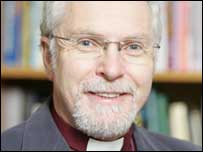 A leading evangelical bishop within the Church of Ireland has spoken of his personal struggles over his decision to attend the Lambeth Conference of Anglican bishops next month. In his Presidential Address to the Synod of the Diocese of Down and Dromore, Bishop Harold Miller explained: "Let me be honest with you: I thought long and hard before deciding to go to the Lambeth Conference this year. So long and so hard that, when I detailed my thinking of the issues I have been examining to the clergy in an Ad Clerum, several said to me: 'When we were reading it, we thought you weren't going, but then we got to the last sentence which said you were!' They were discerning people, and what they said made me think."
According to Bishop Miller, the absence of some 200 bishops from Lambeth will "undermine to some degree the moral authority" of the Conference and "will mean we are only a partial 'communion' gathered, as has happened before". Many of those bishops are attending the GAFCON gathering this week in Jerusalem and Bishop Miller says "many of us will be listening carefully at what they say".
The bishop is critical of the format of this year's Lambeth Conference: "It will be like a retreat-come-training-conference and a meeting and listening place for bishops. That bothers me, even if it is the only realistic thing which can happen. Again, I ask certain questions: Who is doing the 'training' and how is it going to be 'slanted, or is it, or will it be neutral? What exactly does 'listening' mean - when The Episcopal Church in the USA does not seem to have listened? Does it mean 'you must keep on listening till you come round to a particular point of view? Is it worth the vast sums of money being expended simply to do something to keep the show on the road!"
Why then is the bishop attending the Conference? This is part of the explanation he gives: "I'm prepared to give it another chance'. If I'm honest, I do not see how our Communion will, or can, hold together with people going more and more out on a limb. I am aware that such people are creating disunity within the Communion and ecumenical distress with other churches, and concern in other churches who relate to us. But I don't want to give up hope, just yet."
Read the full address by Bishop Harold Miller here.


Page 1 of 2
Comment number 1.
At 09:41 25th Jun 2008, antisyzygy wrote:Personally I think Bishop Harold is one person the Anglican Communion can afford to lose quite easily.
Lets face it, he's still got the sulks for not getting Armagh.
Complain about this comment (Comment number 1)
Comment number 2.
At 10:34 25th Jun 2008, CITCordnd wrote:pathetic comment - shows how little you know about the CofI - he was never in the running for Armagh. the leading evangelical for that post was Fanta Clarke. in fact so sure were the media in Kilmore that they had to pull the front page of their paper with the announcement of his election to Armagh when it was announced that Harper had got it.
good on Miller for voicing concerns about Lambeth
Complain about this comment (Comment number 2)
Comment number 3.
At 12:55 25th Jun 2008, brianmcclinton wrote:So there is a gathering in Jerusalem and there will be gathering in Lambeth, and in both cases the litmus test of true C of E 'orthodoxy' will be attitudes to the rights of gays.
I am still awaiting an answer from any religious believer on this blog. What are the intellectual/ideological origins of modern homophobia if not religious? Is there not a definite correlation between the influence of religion in any part of the world and homophobia?
Complain about this comment (Comment number 3)
Comment number 4.
At 15:05 25th Jun 2008, gveale wrote:Hi Brian
I can understand your confusion. As an Evangelical, I find it odd that someone can deny the existence of God, yet remain a Bishop. Yet once they accept homosexual lifestyles as permissable they are beyond the pale. Atheism was okay, so long as conservative morality was retained?
Of course GAFCON will look homophobic! This is far too little, far too late.
Graham Veale
Armagh
Complain about this comment (Comment number 4)
Comment number 5.
At 15:09 25th Jun 2008, smasher-lagru wrote:Brian - how can you expect to get an answer to a question framed in such a way? It's a "have you stopped beating your wife?" question.
Firstly, it contributes nothing to any debate to use the term "homophobia" for every attitude that is different from yours.
Most moral systems in the world have some religious basis. You don't believe in the religious opposition to homosexual behaviour. So you set up a fake position which is that all opposition to homosexual behaviour is biggoted and homophobic, and then conclude that this dreadful evil is caused by religion. It is nonsense masquerading as logic.
Your final question could be written - "is there not a definite correlation between opposition to homosexual behaviour and opposition to homosexual bahaviour."
As regards Lambeth - the homosexual issue is a sympton of what is happening in the Communion, not a cause.
Complain about this comment (Comment number 5)
Comment number 6.
At 15:30 25th Jun 2008, gveale wrote:I think to answer your substantial question, it is difficult to conceive of non-religious arguments against homosexual practice.
The agnostic Anthony Kenny in "What I Believe" goes so far to argue that it should be discouraged - but still permitted.
Now, as I have said before, many people find homosexuality distasteful. But, as I have also argued, this is morally irrelevant. It also causes anxiety in some heterosexual males, mainly due to the myth that we can loose control of our orientation, once a pattern of sexual behaviour is established. Macho culture would often want to reject homosexuality ( the SA seemed to want to persecute it in public, even though many practised it in private). So there are sources of homophobia outside Religion. However Religious worldviews often attach a significance to sex (and work and leisure and frienship etc. etc) that non religious worldviews do not. So it is quite possible that the purpose that a Religion assigns to sex (and this purpose always goes beyond, but includes, procreation) will rule out homosexual activity. The rationality of the objection depends on the rationality of the Religion.
I think we need to think very carefully about how we conduct ourselves in Public. I can't see any way of coming to a consensus on this issue. So, to put things as simply as possible, we need good manners. We can demand tolerance for our beliefs and lifestyles. But we should not demand approval.
At the end of the day, isn't there a lot to be said for agreeing to disagree, and minding our own business?
Graham Veale
Complain about this comment (Comment number 6)
Comment number 7.
At 16:32 25th Jun 2008, The Christian Hippy wrote:Lex Scantinia
Complain about this comment (Comment number 7)
Comment number 8.
At 23:15 25th Jun 2008, brianmcclinton wrote:Smasher:
1. I don't know where you got the idea from that I describe any view which is different from mine as 'homophobia'. I favour a left-liberal political agenda, but I don't believe Conservatives or Fianna Fail are homphobic. I don't believe that William of Stratford wrote Shakespeare, but I don't believe that Stratfordians are homophobes.
In fact, you know very little about my views on many things, so your statement is entirely irrational and unfounded.
2. Your statement that most moral systems in the world have some religious basis is quite wrong. Most moral systems are based on social needs and have nothing to do with religion. Of course, religions try to hijack morality, but happily in the west most people are rejecting their attempt at 'moral monopoly'.
3. In fact, most modern secular political and social philosophies claim to have a moral basis. But only those modern philosophies which are deeply influenced by religious values are homophobic. The DuP seems to be the main local example. Robinson, Paisley Jnr and Paisley Senior have all made public homophobic verbal attacks.
On the other hand, Alliance, Sinn Fein and the PUP welcomed gay groups to stormont the other day. Well done, these parties.
Similarly, the Labour, Liberal Democratic and Conservative Parties in the UK all stand squarely for equality of rights for gays. So too do the main parties in the South. None of these parties is theocratic; i.e. none of them wishes to see a religious agenda put into practice by the state. In other words, they are not influenced by religion in their approach to such matters.
4. Again, as usual, you conflate sex and morality. As I have said before, it is time that some people in Ireland, and particularly the churches, stopped judging other people on the basis of their sexual behaviour. This is the product of centuries of the churches' (plural, please note) reign of fear and loathing. Sex is a joy (Alex Comfort). Leave consulting alone to enjoy it and stand being concerned more about delivering a decent moral modern ethic that it tolerant and inclusive. Let shame and guilt be a thing of the past.
5. The fact is that the major religions have waged a war for 2000 or more years against homosexuals and seem unable to let go of it. Leviticus 20:13 demands that gay lovers should be put to death. And this is precisely what religious organisations did (and in some countries still do). Gays have been stoned to death, burnt alive and hung from the gallows, and this slaughter took place with the official blessing of Popes and Archbishops of Canterbury and Mullahs.
6. While Judaism and Christianity no longer advocate the death penalty for gays, they still preach homophobia (gay sex is an abomination, sinful, vile), sexual apartheid and sexual discrimination.
7. All the talk about hating the sin but loving the sinner is meaningless rhetoric if you advocate denying gays the same rights to a happy and loving life as heterosexuals can experience.
What Iris Robinson said was disgraceful, but Christians cannot use her to pretend that their religion is not homophobic.
8. If there was religious support for full equality and an acceptance and tolerance by the churches of the gay lifestyle, then I am sure that the bullying, taunting, teasing, beating and killing would dramatically decline.
The proof lies throughout Europe. In those countries where there is equality and secular politics, there is little homophobia, although it does happen (recently a gay man was attacked in Amsterdam by... a gang of Muslim youths). On the other hand, in countries which are still influenced by religion, such as NI and Poland, homophobic attacks are more frequent.
8. Is it not time for Christians to admit that in this area the Bible WAS WRONG and that being gay is nothing to be ashamed of. Come on! Do it! Does it matter that the ancient scribes might have got a few things about God and his intentions wrong? Maybe they were wrong about the Flood as well...
Complain about this comment (Comment number 8)
Comment number 9.
At 23:16 25th Jun 2008, brianmcclinton wrote:Puritan:
With your one or two word interjections, you are beginning to sound like Father Jack. I am waiting for the posting: 'Drink! Drink!'
Complain about this comment (Comment number 9)
Comment number 10.
At 23:56 25th Jun 2008, brianmcclinton wrote:Apologies for getting my numbers wrong and the odd misspelt word in post 8.
I have been doing a lot of it recently (typing).
Complain about this comment (Comment number 10)
Comment number 11.
At 00:04 26th Jun 2008, brianmcclinton wrote:Puritan (9)
Apologies. I should have put it in Latin: "nunc est bibendum" -
now is the time to drink.
Cheers.
Complain about this comment (Comment number 11)
Comment number 12.
At 10:58 26th Jun 2008, smasher-lagru wrote:This comment has been referred for further consideration. Explain.
Complain about this comment (Comment number 12)
Comment number 13.
At 13:02 26th Jun 2008, smasher-lagru wrote:So who complained and about what? What are you afraid off? Typical liberals, spout about tolerance and then run off and try and suppress free speech.
Complain about this comment (Comment number 13)
Comment number 14.
At 13:04 26th Jun 2008, gveale wrote:Brian
1) There are sources of homophobia outside religion - the SA, for example. Another example - in 16th century England homosexuality was only actively persecuted once Thomas Cromwell gave the State, rather than the Church, the role of moral guardian.
2) You are begging the question when you say that morality is based on social needs. Kant, for example, would disagree.
3) What moral systems can give significance to human beings without Religious presuppositions? I keep referring you back to the first "Free-thinkers", who would not embrace moral systems that made human significance a human invention.
4) I can reject Stalinism, Leninism and National Socialism as they are irrational. They do not "fit" with the facts about the universe. It seems to me you reject them because they do not cohere with the value you have decided to attach to human beings. That make morality a matter of taste.
5) You can retreat to a "social needs" defence of morality - that morality promotes the survival of the species, or the society or whatever. But, frankly, that just opens the door to whatever works. If left-liberal democracy is doing the trick for the time being, then great. If it begins to break down, we can just throw human rights out the window.
6) I believe that it is morally wrong to torture babies for fun. So do you. But I don't think it is wrong because I find the idea distressing, or because it isn't pragmatic. I find it wrong because it is a transgression from the way things were meant to be. Something of real, eternal value is being destroyed in such an act.
7) You really want to be rid of shame and guilt?? Shipman? Unterweger? Steve Wright? Fred West?? Shouldn't they at least be embarrassed?
Seriously, I think Freud has had a big impact on you here. Which is ironic as (a) he's being rejected more and more as psycho-biology comes to the fore and(b) if Freud was taken at all seriously, we would have to agree with him that Repression is necessary for society.
Graham Veale
Armagh
Complain about this comment (Comment number 14)
Comment number 15.
At 14:20 26th Jun 2008, brianmcclinton wrote:Hi Smasher:
Not me, guv. I never complain. That's how tolerant I am.
Graham:
I don't want to be sidetracked into discussing the basis of morality again. I am not a Freudian and 'social needs' is not a defence of morality but a fact. it is the religious relationship to morality that needs 'defence'.
Otherwise, it amounts to mere obedience to 'Divine commands. 'Might is right'. 'Do what I say'.
I want a modern example of a secular organisation that is homophobic. I am still insisting that modern homophobia is religion-based. I am still waiting for a rebuttal of this claim.
Complain about this comment (Comment number 15)
Comment number 16.
At 14:45 26th Jun 2008, smasher-lagru wrote:There is no contradiction between a "social needs" and "religiously based" morality. I think morality is based on the natural law, you could call it human nature. Morality is about the flourishing of the human person and doing the things that bring happiness. Obviously for believers this includes heaven and hell and final judgement, but the things that bring heavenly rewards tend to be what makes you happy on earth. I never heard of a real saint who wasn't happy.
I didn't think it was you Brian, because, annoying and all as you are, you do try to engage in debate, even though your arguments are often fatuous and circular.
Complain about this comment (Comment number 16)
Comment number 17.
At 15:52 26th Jun 2008, brianmcclinton wrote:Hi Smasher:
How generous of you! thanks for damning me with faint praise. Have to say, though, that in addition to being fatuous and circular, your arguments are irrational.
You say there is no contradiction between a 'social needs' and a religiously based morality. I beg to differ. The former have the potential to be liberal and humane; the latter are inevitably negative, authoritarian and cruel.
Homosexuality is a classic example.
How about my question? Isn't homophobia as an ideology religious-based? And if you are gay (I don't mean you!), should you not dissociate yourself from religious faith?
Complain about this comment (Comment number 17)
Comment number 18.
At 15:55 26th Jun 2008, U11831742 wrote:Brian you seem to want to argue that homophobes are always religious. No atheists or non-religious are homophobes. Would that the world were so simply. The Nazis sent gay men to the death camps. They did so not because of any theological views about homosexuality.
Complain about this comment (Comment number 18)
Comment number 19.
At 16:04 26th Jun 2008, gveale wrote:Smasher
It all depends on what you mean by "happy" and "flourishing". Psalm 22 is in Scripture for a reason.
Brian
Actually, I was alluding to Voltaire, Paine, Toland and co., all of whom believed morality required a religious worldview, and not one of whom believed in a Divine Command theory of ethics.
Neither do Buddhists, but morality and religion are very closely tied together in this worldview.
Neither do Roman Catholics, and many Evangelicals (including me) base our ethics on the nature of a loving God, not his arbitrary commands. The "Might makes Right" objection only applies to a small band of Protestants, and probably most Muslim schools of thought.
"Social Needs" as a basis for morality is just a fact? We can close the discussion there, can we? That is simply ludicrous Brian.
Mathematics meets a Social Need. Are our "social needs" the basis of mathematics?
I presented two arguments -
1) Your "social needs" view of morality leaves us without a rational basis for morality. All you have is what turns out to be pragmatically useful for humans.
2) Your "social needs" view of morality cuts against our moral intuitions. When it comes to moral philosophy, EVERYONE appeals to these.
You didn't reply to the arguments. I'll reply to yours (again). Contemporary neo-nazi organisations reject Christian morality and homosexuality because neither coheres with the culture of the violent assertive male.
Graham Veale
Armagh
Complain about this comment (Comment number 19)
Comment number 20.
At 16:04 26th Jun 2008, smasher-lagru wrote:I think it is probably true that most opposition to homosexual acts is religously based. For Brian this immediately means "irrational". The Catholic view on sex is holistic and rational - it should be commited, loving and open to life - like God's relationship with man - and that excludes fornication, adultery, masturbation, contraception and homosexual acts - but every thing else is okay, in fact encouraged.
Complain about this comment (Comment number 20)
Comment number 21.
At 16:09 26th Jun 2008, John Wright wrote:I'm watching this thread and wondering also who complained about Smasher's comment #12 and why. Could the complainer do everyone a favour and at least take ownership of it?
Like Brian, I never complain about a comment: nothing anyone has ever said has ever offended me and I can't imagine a possible statement that would. Maybe we should start a decree: "the undersigned do not complain about the posts of other people as a matter of upholding the principles of free speech."
All those who don't sign are suspects. ;-)
Complain about this comment (Comment number 21)
Comment number 22.
At 16:16 26th Jun 2008, gveale wrote:Can I just add that there are Religious persons posting here who are not homphobic, even by your definition. You have also been given historical and contemporary examples of secular organisations that are homophobic. You have also been pointed to evidence that homophobia is a social phenomenon that extends far beyond Religious organisations.
It is not necessary to be religious to be homphobic. Religious convictions are not sufficient to make one homophobic. That closes the case, pretty much.
Graham Veale
Armagh
Complain about this comment (Comment number 22)
Comment number 23.
At 16:17 26th Jun 2008, The Christian Hippy wrote:Give strong drink to the one who is perishing, and wine to those in bitter distress.
Complain about this comment (Comment number 23)
Comment number 24.
At 16:24 26th Jun 2008, gveale wrote:I'm sorry, you need a drink?
Complain about this comment (Comment number 24)
Comment number 25.
At 16:27 26th Jun 2008, gveale wrote:Or you think Brian needs a drink?
Complain about this comment (Comment number 25)
Comment number 26.
At 16:29 26th Jun 2008, smasher-lagru wrote:I agree with John here - come on, be a man and own up. I can't understanding someone complaining for two reasons. Firstly, why participate in this forum if you are don't believe in free speech, and secondly, what on earth did I say that could offend since I don't keep records. As Brian will tell you, I simply repeat the same old tired arguments over and over again.
Complain about this comment (Comment number 26)
Comment number 27.
At 17:05 26th Jun 2008, Dylan_Dog wrote:John Wright m21,
Like yourself, Brian and Smashy I make a point of never complaining about a post. Also it would be great if the poster who complained grew a pair and owned up. It is becoming pathetic, someone referred this comment by me in m13 of the healing thread for moderation(and please folks look away now if you are easily offended) here it is...
"No there hasn't. Funny that..."
Shocking I know! and I do hope I have not upset anyone?(thankfully the mods chucked the complaint out). Indeed I have had a Jihad against my posts and I do suspect who it is-someone with extremely limited intellect who cannot hold reasonable/rational debate but I could not Possibly Betray the name.
"the undersigned do not complain about the posts of other people as a matter of upholding the principles of free speech."
Dylan Dog.
Btw Smashy I may not agree with your posts but I do emphasise with you!
Complain about this comment (Comment number 27)
Comment number 28.
At 22:42 26th Jun 2008, brianmcclinton wrote:Ah, at last, some engagement with the question. I wondered when somebody would raise the spectre of Nazism (Augustine, #18). In the 1920s and 30s, homosexuality was known as 'the German vice' across Europe because of the 'debaucheries' of the Weimar period. Germany was liberal in its attitude to sex (read Goodbye to Berlin or watch Cabaret). Indeed, it was sometimes called the 'godless' republic. Both the main denominational Christian churches welcomed the overthrow of this pluralist, 'decadent' constitution by the Nazis and looked forward to the reassertion of traditional values.
Hitler's regime did indeed reassert traditional notions of 'morality' and respectability and the gender ideology of a patriarchal society. Add to that the notion that gays did not typify and reproduce the master race, and you can see the origins of Nazi homophobia. Anyone who promoted controversial sexual ideas was thought of as a deviant. In this Nazism was at one with the main churches.
At last, too, someone who admits that 'most opposition to homosexual acts' is religiously based. Some Christians, of course, are not particularly proud of this fact.
Complain about this comment (Comment number 28)
Comment number 29.
At 00:05 27th Jun 2008, PeterKlaver wrote:I agree with John, the complaint button seems to be used here to remove posts that people (or one person?) doesn't like, rather than for offensive posts. Just as William stated a few threads back.
I promise to be a good boy and not do that.
Complain about this comment (Comment number 29)
Comment number 30.
At 10:13 27th Jun 2008, smasher-lagru wrote:So William, can I have my post (#12) back.
Brian - of course my statement that most opposition to homosexual acts is religiously based is not the same as saying most homophobia is religiously based. The sort of thugs who beat up homosexuals are rarely God fearing Christians.
Complain about this comment (Comment number 30)
Comment number 31.
At 11:46 27th Jun 2008, brianmcclinton wrote:Hi Smasher:
The sort of thugs who beat up homosexuals are rarely god-fearing Christians. Similarly, the sort of thugs who beat up or killed Catholics are rarely god-fearing Christians. And the sort of thugs who beat up or killed Protestants are rarely god-fearing Christians. It makes you wonder why religion apparently has such little influence of the behaviour of some irish people.
I am being sarcastic, because of course it has had a big influence on behaviour.
In other words, saying that homophobia is not religiously-based even though most opposition to homosexuality is religiously based is a bit like saying that they weren't fighting over religion in NI.
Sure, terrorists and rioters were not waving Bibles or rosaries as they planted bombs or shot people in the back. BUT:
1. The problem is not only related to those who commit the violence. For if the violence is connected to the disagreements, hatreds etc in the wider society, then it has to be explained in terms of the ideas that divide people and set them against one another.
2. The reasons for attacking Gays, 'Prods', 'Taigs' are those not necessarily those offered by the perpetrators. They may fail to understand the underlying causes of their actions, which are nevertheless all around them.
3. Homophobic atttacks, like our 'war', are not done officially in the name of theology, true, but they are done in accordance with the concepts, culture, customs and morals to which that theology gives rise.
This is why there is a link between arguments against gays and violence against them.
BTW:
I am not saying that our Troubles were entirely religious in origin. They were a mixture of religion and nationalism, two ideologies which, when fused together, produce a lethal cocktail.
Complain about this comment (Comment number 31)
Comment number 32.
At 15:14 27th Jun 2008, smasher-lagru wrote:Brian - I don't really disagree with anything you say. So long as you will agree that the views that secular humanists have about religion can very easily translate into intolerance of and violence against believers.
Swift's line about how "We have just enough religion to make us hate, but not enough to make us love one another" has a lot of truth in it. Look what they did to Jesus.
Complain about this comment (Comment number 32)
Comment number 33.
At 21:37 27th Jun 2008, gveale wrote:Brian
Did you consult any of the books that I suggested on the relationship between Nazism and the Churches? What history are you reading?
I think that there is a lot of evidence to suggest that when Christian Beliefs are "internalised" (the person bases their life on them), then the Beliefs are good for the person and those around them. However, when Christian beliefs are simply accepted as an external marker for ones social identity, Christianity actually makes a person worse. I refer you back to Argyle's book, and also the research of Brad Wilcox in the US for my evidence.
So, oddly enough, we may end up agreeing on this issue. Religiosity may be bad for society. I certainly believe it is bad for souls.
Graham Veale
Armagh
Complain about this comment (Comment number 33)
Comment number 34.
At 00:37 28th Jun 2008, brianmcclinton wrote:Hi Graham:
No, I haven't. I have been reading Nicholas Baker's 'Human Smoke', which tries to argue that WW2 was unnecessary but, although I think such a case can be made, it is not very convincingly argued here.
Your point about the distinct between internalisation and social identity is interesting. It seems to imply that only those who take the Bible seriously understand their own homophobia. The real perpetrators of intolerance are looking for any old excuse.
But I am wondering about its implication in regard to homosexuality. Does it mean that when you take the Bible seriously you don't hate gays or wish to do violence to them even though the Bible says they should be put to death? In other words, are the perpetrators of the violence interpreting the Bible too literally?
Should someone not inform then that sometimes it doesn't actually mean what it says?
Hi Smasher:
Your well known quote from Swift is a good one. I could of course quote Lecky: "If the characteristic mark of a healthy Christianity be to unite its members by a bond of fraternity and love, then there is no country where Christianity has more completely than Ireland".
As for humanist intolerance, I think first we need to define the term. Be my guest, but let me say that tolerance and intolerance are concepts which both presuppose disapproval or disagreement. So 'intolerance' means wishing to prohibit something of which you disapprove.
I am pretty liberal and, much as I dislike Iris Robinson's remarks and think they were 'abominable', ultimately she has a right to say them. Most humanists that I know would agree. We would not like what she said; we would think that it was unwise of her to say it; we expressed concern at what we said; but we would not wish to censor her opinion. Now, if that is defined as intolerance, some people need to go back to school.
Complain about this comment (Comment number 34)
Comment number 35.
At 16:44 28th Jun 2008, portwyne wrote:I rather think Brian McClinton's proposition that the intellectual/ideological origins of modern homophobia are religious misses the point. He may be correct in so far as religion is often used to justify and provide spurious cover for base prejudice and ignorance but the real origins of homophobia are not to be found in religion.
Many people, some of them undoubtedly experiencing or suppressing nascent same-sex attraction, are possessed of a fear of homosexuality which may be based on insecurity, jealousy, the threat to stability in existing relationships, or the inversion of accepted behavioural norms. This unease is present throughout society and gives rise to most homophobic behaviour; it accounts for attacks on gay men from people whose connection to any form of religious influence could not even be described as tangential. Religions have in this instance merely followed society and adapted innate prejudice to their own ends.
I would cite the British military as (until recently and then very reluctantly) a modern example of a secular organisation infected from top to bottom with homophobia.
This thread relates to Bishop Harold's decision to attend Lambeth and the inevitable split forthcoming in the Anglican communion. I do not think homosexuality is anything other than a catalyst in that schism - its origins are in another type of fudge altogether.
Anglicanism has historically held its broad church together by means of theological ambiguity, moral pragmatism, and marginalisation of conviction religion. We have now reached a situation where both evangelical fundamentalists (made bold and strengthened numerically by the African churches) and western liberals (having to show they have actually got something to say on matters of importance to their flocks) can no longer pay lip-service to the compromise formulas which have defined (if the word is not too inappropriate) Anglicanism over the last four centuries.
I am reminded by the whole situation of the old ditty:
The Devil to prove the Church was a farce
Went out to fish for a Bu**er.
He baited his hook with a Soldier's a**e
And pulled up the Bishop of Clogher.
(NB - the reference is to a 19TH CENTURY Bishop of Clogher)
Whatever it says about God, the present state of affairs would certainly give you second thoughts about the possible existence of 'the other fella'.
Complain about this comment (Comment number 35)
Comment number 36.
At 18:12 28th Jun 2008, petermorrow wrote:"The real perpetrators of intolerance are looking for any old excuse."
Yep, that's pretty much it.
The real question of course which ought to be answered is, "What is it about me which causes intolerance and hate to bubble over in thought, word or deed."
Whether or not I have the courage to ask that of myself is a different matter.
Complain about this comment (Comment number 36)
Comment number 37.
At 21:19 28th Jun 2008, gveale wrote:Brian
Do I need to explain, again, why a Christian cannot apply Old Testament Law to a different society BECAUSE they believe the Scripture is infallible? Galatians and Romans rule this kind of thinking out, as does Jeremiah 18.
Graham Veale
Complain about this comment (Comment number 37)
Comment number 38.
At 23:05 28th Jun 2008, brianmcclinton wrote:Portwynne:
You imply that homophobia has no ideological/intellectual basis and that it is a matter of prejudice. But prejudice itself can be caused by conformity to an attitude/idea.
Prejudices arise for a number of reasons:
1. Economic and political competition or conflict.
2. Displaced aggression.
3. Personality Needs.
4. Conformity to existing social numbers.
You stress (3) above. While not denying that it is a factor, I think (4) is more relevant to homophobia in NI.
Let me illustrate with the example of racism in the US. Thomas Pettigrew in the 1950s discovered that, although there was more prejudice against blacks in the South, there was less prejudice against Jews in the South than in the US as a whole. Yet the prejudiced personality ought to be prejudiced against both.
He accounted for the animosity towards blacks in the south partly by historical causes: the blacks were slaves, the Civil War was fought over the issue of slavery, and so on. This created the climate for greater prejudice. But what sustained the climate?
One clue he found from the behaviour patterns of a group of coal miners in West Virginia. The black and white miners followed a pattern of total integration while they were under the ground, but complete and total segregation while they were above the ground. If you truly hate someone, you want to keep away from him (her) - why associate with him below the ground and not above the ground?
Pettigrew suggested that the explanation is conformity. In the case of the miners, they are simply conforming to the norms that exist in their society (above the ground!). The historical events in the South set the stage for greater prejudice against blacks, but it conformity that keeps it going. Indeed, Pettigrew believed, and I think he is substantially correct, that although economic competition, frustration, personality needs account for some prejudice, the greatest proportion of prejudiced behaviour is a function of slavish conformity to social norms.
Other research has backed this conclusion up. For example, in South Africa studies showed that those individuals who were most likely to conform to a great variety of social norms also showed a high degree of prejudice against blacks.
The pressure to conform can be caused by a number of factors. But one of them is the relative unavailability of accurate evidence, a preponderance of misleading information, a hegemony of a particular ideology and a culture which stresses the importance of conformity to this ideology.
The relevance of this to homophobia in NI should be obvious. It is a highly religious society. Moreover it is a traditional, authoritarian and highly conservative version of religion (this is true of both Protestant and Catholic Christianity.
This traditional version stresses the biblical message that homosexuality is wrong (or worse: an 'abomination etc etc). Whatver words are used here, it is a lifestyle which is regarded negatively by most Christians in NI.
This attitude filters throughout the society.I come back to the famous Keynes remark:
"The ideas of economists and political philosophers, both when they are right and when they are wrong, are more powerful than is commonly understood. Indeed the world is ruled by little else. Practical men, who believe themselves to be quite exempt from any intellectual influence, are usually the slaves of some defunct economist".
Substitute in the above 'the ideas of theologians' and similarly at the end 'defunct theologians' (Calvin or Augustine or whoever), and you get the idea. The 'man in the steet' is not aware of, or even made aware of, subtle nuances in the doctrine which say things like: "Oh it was only an order (to put gays to death) in the infallible OT but it not quite as final in the equally infallible NT".
No; I maintain what I have claimed throughout. Homophobia in NI springs predominantly from religious ideas, and it will only decline when either religion itself declines or Christians (for they are the predominate religion) show tolerance and a positive attitude to gays.
Complain about this comment (Comment number 38)
Comment number 39.
At 00:36 29th Jun 2008, petermorrow wrote:Brian
"Substitute in the above 'the ideas of theologians' and similarly at the end 'defunct theologians' "
Brian this is precisely the problem with your argument, I can substitute whatever I like and make a case for it.
What I find strange is that no matter how many times Christians explain how the bible is read, how they understand theology or how many times they accept some of the accusations thrown at them, you keep reinterpreting what you think we believe. Indeed this is another example of substituting in whatever we like and then stating a point of view as if it were established. You seem to think that this makes you case for you, it doesn't.
Are some religious people homophobic? - yes. How many times do you want to hear it.
Are all religious people homophobic? - no.
Are non-religious people homophobic?
Well guess what - yes; yet according to you the irreligious are influenced by the religious and you cite the example of race relations in America. You also point to SA and the issue of racism. Is it too obvious a point to make to say that in America race was the problem, and in SA race was the problem. It would be more helpful to your argument if you could use SA and the concept of conforming to social norms to show that racism directly lead to other cases of intolerance and if in the case of NI you were able to make a direct link between these antithetical religious/non-religious positions here in NI. But I've already asked you to do that.
Indeed what I hear from most people I meet day to do is a live and let live attitude.
People are influenced by all sorts of things, religion is one, but there are others. I notice that you have entirely failed to respond to my comments concerning this made on another thread ( Do people of faith need psychiatric help? post 58 ) Maybe you could read it again, it directly relates to what is said here.
So seem so concerned, determined maybe, to find religion to be the 'bogey man' that you don't actually listen to what the Christians on this web-site are saying - and it's just getting frustrating.
Maybe you would also like to comment on what I said on this thread on post 36, or is religion the answer to that question too?
Complain about this comment (Comment number 39)
Comment number 40.
At 11:36 29th Jun 2008, brianmcclinton wrote:Peter:
Please stop talking about people, Christians or atheists/humanists.
Your remarks are very personal about me and what you think I am trying or not trying to do. Stick to the arguments, please.
I am not talking about individual Christians. I am talking about a system of beliefs, or rather, systems of belief because there is not only one brand of Christianity. But in NI the main Christian brands both tend to be more 'orthodox' and 'traditional' than, say, in England, and I say, and will repeat, whether you like it or not, that this is intimately related to the greater homophobia in the wider society.
You say that no matter how many times Christians explain how the bible is read, how they understand theology or how many times they accept some of the accusations thrown at them, you keep reinterpreting what you think we believe. But there isn't only one explanation offered, Peter. As you know, Christians dispute the Bible. That's why there are Catholics, Presbyterians, Methodists, Baptists, etc. etc. etc.
I am told, for example that, on the one hand, the Leviticus injunction to kill gays was replaced by NT times (though what the punishment was supposed to be then I am not at all clear), and on the other hand by another Christian that in the NT other abominations like eating shellfish were removed but not the anti-gay one.
No Christian on this blog has openly said that being gay is good, Peter. Every other comment has been a greater or lesser degree of disapproval. If I were a gay Christian, and if I thought this reflected the wider society, I would find it an intolerable situation. The Changing Attitudes group have a gargantuan task indeed!
You say that no matter how many times Christians explain how the bible is read, how they understand theology or how many times they accept some of the accusations thrown at them, I keep reinterpreting what I think you (PLURAL) believe. I am trying my best to understand it. But, Peter, to be quite frank, it is so 'jesuitical', so contradictory, so confused, so obtuse, and so evasive that it is really very very difficult. Sometimes, getting straight answers to straight questions is like trying to get into Fort Knox. For example: is anything in the Bible WRONG, Peter?
You say that in America race was the problem, and in SA race was the problem. Indeed but, dare I say it, in NI religion is the problem (or at least one of the two main problems, as I have already said).
I know you think I don't always read your posts, but maybe you should read mine a little more carefully.
You talk of many Christians who have a live and let live attitude. That is good. But I am not so sure that it is true of some the hierarchy, who feel they are the custodians of 'the faith'.
I am also talking about the relationship between the 'intellectual' godfathers and 'the man in the street' (who isn't necessarily irreligious, as you put it; he may be religious or apathetic towards religion; few terrorists or terrorist leaders are/were 'irreligious').
In NI the general attitude of the Christians churches is anti-gay. Are you saying that this has no relationship whatsoever with the higher level of homophobia in the wider society? If you are, I think you are quite, quite wrong. The churches have claimed to be the moral arbiters in this society, and they have proclaimed homosexuality to be immoral. Therefore, by implication, gays
bring the abuse on themselves.
But this Pontius Pilate act won't work.
What do the Christian churches say about gays?
(1) Is gay sex an 'abomination'?
(2) Is gay sex a sin?
(3) Is gay sex a minor sin?
(4) Should gays abstain from sex?
(5) Can gays be 'married'?
(6) Can gays adopt children?
(7) Can gays be 'bishops' or other clerics?
Until the churches say no to all the first four and yes to the other three, there will be a large degree of homophobia in the wider Ulster society.
Complain about this comment (Comment number 40)
Comment number 41.
At 12:16 29th Jun 2008, gveale wrote:Brian
I've read Peter's comments several times. I can't see where he gets personal.
It is worth noting that in the Bible the first murder was religiously motivated. So I'm not denying that Religion can lead to hatred and intolerance. Are you claiming that all religions, therefore, must be false? Or that Churches in Northern Ireland must do more to promote tolerance?
Graham Veale
Complain about this comment (Comment number 41)
Comment number 42.
At 12:18 29th Jun 2008, portwyne wrote:Brian
I would blame the churches in Ireland for many things but I honestly think it is stretching credulity to its limit to attribute the ORIGINS of homophobia in our society to them. I grew up in a broadly evangelical church and have absolutely no recollection of ever even hearing the topic mentioned - undoubtedly far too risqué for the delicate ears of the congregation.
I accept that some firebrand preachers have found mileage in denouncing sodomy and that the Bible itself reflects the taboos of the societies in which it was written. These things have certainly reinforced the prejudices arising from the fears and uncertainties which are embedded deep in our individual psyches. I believe, however, that the normative relationship model which sets the standards which give rise to those fears and uncertainties, while it may be, in our society, Christian in origin, has long obtained a life of its own independent of the churches and obtaining little, if any, of its acceptance and credibility from its beginnings.
I fear you attribute too much influence to morally and intellectually bankrupt institutions which have little impact on the lives of their adherents and far less on wider society.
The Bible says, for example, "If we are rich and see others in need, yet close our hearts against them, how can we claim that we love God?" (1 John 3 v 17). Jesus Christ himself said "How hard it will be for rich people to enter the Kingdom of God!" (Mark 10 v 23).
I would challenge you Brian to show me how these words have any effect on the lives either of present day Christians or of the society they are supposed to leaven. Bishops live in Knock and not on the Shankill. Pastors and evangelists drive Mercedes rather than borrow Ladas. The famine in Darfur has not led to a mass sell-off of the holiday homes and investment properties of rich Christians.
Please explain to me Brian how, when the very words of their founder and the teaching of their holy book have so little observable impact on the lives of Christians in such a visible area they are likely to be of such great influence on the much more tenebrous area of sexual morality and homophobia in society.
Complain about this comment (Comment number 42)
Comment number 43.
At 14:12 29th Jun 2008, brianmcclinton wrote:Hi Portwyne:
Neither you nor Peter like my example of racism in US and SA.
So let me take another example:
religion in NI. You will both be telling me next that religion has nothing to do with the Troubles.
Let me quote some academics.
The first is the sociologist Steve Bruce in 'God Save Ulster': "The Northern Ireland conflict is a religious conflict. Economic and social considerations are also crucial, but it was the fact that the competing populations in Ireland adhered and still adhere to competing religious traditions which has given the conflict its enduring and intractable quality".
The second is John Hickey in 'Religion and the Northern Ireland Problem': "Politics in the North is not politics exploiting religion. That is far too simple an explanation: it is one which trips readily off the tongue of commentators who are used to a cultural style in which the politically pragmatic is the normal way of conducting affairs and all other considerations are put to its use. In the case of Northern Ireland the relationship is more complex. It is more a question of religion inspiring politics than of politics making use of religion. It is a situation more akin to the first half of 17th century England than to the last quarter of 20th century Britain".
The third is the historian F.S.L. Lyons in Culture and anarchy in Ireland: "The ancient quarrel is, of course about power, and about its economic base as well as about its political manifestations. But such clichés can hardly satisfy us. If we ask further what are the ends for which the possession of power is coveted, we may perhaps come closer to the truth about Ulster. In that small and beautiful region different cultures have collided because each has a view of life which it deems to be threatened by its opponents and power is the means by which a particular view of life can be maintained against its rivals. These views of life are founded upon religion because this is a region where religion is still considered to be a vital determinant of everything important in the human condition. And religion is vital because there have been in conflict three (latterly two) deeply conservative, strongly opinionated communities each of whose churches still expresses what the members of these churches believe to be the truth".
Now, I happen to think that Bruce, Hickey and Lyons are right. The Troubles were (are) in so small part about religion.
The evidence is all around us in segregated housing, segregated schools, segregated sports, segregated cultures and segregated versions of our historical past.
Religion and religious leaders do deeply influence the society here (though hopefully its influence is declining) and that includes attitudes to gays.
People learn by precept and example. You mention Jesus's message about riches and poverty. A good point. But religious leaders tend to live in big houses and do not exactly exude poverty. As you say, bishops live in Knock, not the Shankill. So why should the people in the Shankill pay any attention to a message of poverty (of course some of them do) delivered by people from Knock? The Pope himself lives in a 72-room palace and wears expensive rings and apparel. Most people aren't likely to pay much attention to a buried message delivered by people who set such a bad example themselves and seem to contradict the words in their own 'apparent' lifestyle.
But of course this is all part and parcel of the contradictoriness of most people's Christianity. Jesus wandered about in rags and, as you say, told the rich man to give all he had to the poor. The churches have largely forgotten this message and certainly don't demand that their congregations follow it. Ethics is less important than dogma to most mainstream churches.
For arguments that religion and homophobia are interrelated see:
https://www.humanistsofutah.org/1996/nancyapr96.html
https://www.zip.com.au/%7Ejosken/homophob.htm
https://www.pinknews.co.uk/news/articles/2005-3927.html
https://www.petertatchell.net/religion/2000.htm
In the last, Peter Tatchell accuses Christianity of 2000 years of homophobia
Complain about this comment (Comment number 43)
Comment number 44.
At 15:51 29th Jun 2008, petermorrow wrote:Hi Brian
First of all on the issue of being personal. If you can tell me how I can address *you*, and answer *your* arguments without using the words *you* or *your* I will be happy to oblige. But just for the record, I was not attacking you, I was disagreeing with your insistence that religion carries the sloe responsibility for homophobia.
Second on the issue of Christianity. Do different flavors of Christians have different emphasis - yes, this has been discussed before, but there is actually agreement on the main themes. However what is frustrating is that when Christians try to explain how they read the bible, particularly in the context of Jesus, the argument always seems to revert to the initial objections.
Third, you now appear to be defining homophobic in terms of Christians disagreeing with the lifestyle. I disagree with all sorts of things, yet they are not phobias. Indeed I have already on another thread defended the rights of people to make and be responsible for their own choices. We do not have to agree with everyone's lifestyle to defend their rights. You, (can I use that word?) after all, disapprove of my beliefs and I do not find that intolerable. Indeed if I wanted to be picky I could say that you have accused my belief system of causing violence against others and jump up and down and stamp my feet and get all hot and bothered and ......
Fourth, it appears that the are bits of Christianity of which you approve - would you, an atheist, have us all reinterpret our theistic beliefs in light of atheism or humanism?
Fifth - "Are you saying that this has no relationship whatsoever with the higher level of homophobia in the wider society?" Brian what I said was: "Are some religious people homophobic? - yes" (post 39) So on what basis is the above (your) comment made?
Sixth - "dare I say it, in NI religion is the problem" So you see no good in religion? In spite of all the faults with have been accepted on this blog by christians, all the self examination, and all the debate, there is no good in it? You bewail the influence of religion yet you seek the approval of the churches on the issue of homosexuality. This I do not understand.
Seven - "I am also talking about the relationship between the 'intellectual godfathers' and 'the man in the street'" I would have thought that there were other 'intellectual god-fathers'; indeed if you listen, like I do, on a regular basis to many of our religious leaders, the intellectual god-fathers they complain of are the secularists. The argument cuts both ways! Anyway this is not an establishing of their influence, rather it is a assertion of influence. I imagine that many church leaders wish they had more influence. And how does this square with, (post 34) "The real perpetrators of intolerance are looking for any old excuse." Anyway after 300 years or so of modern enlightened free thinking, are people so incapable of acting independently. Is that religion's fault too. Are people so bound?
Eight - "The churches have claimed to be the moral arbiters in this society, and they have proclaimed homosexuality to be immoral. Therefore, by implication, gays bring the abuse on themselves." Brian proclaiming a view on immorality is not a call to violence. It is proclaiming a view. Furthermore this misses the possibility that when religion is declared an evil then the 'man in the street' is open to influence in this direction. What then, are christians attacked? Would this mean atheism was responsible. On the basis of this argument, quite possibly.
Nine - I am still waiting for responses to my questions on "Do people of faith need psychiatric help?" post 58 and here post 36.
Ten - I see you have posted again!! "You will both be telling me next that religion has nothing to do with the Troubles." I shall assume 'tongue and cheek' it makes no sense otherwise.
Eleven - "In the case of Northern Ireland the relationship (religion and politics) is more complex" Well that would be obvious. I don't need a sociologist to tell me that. All of life is complex, and a point I have made time and time again is that we, people are complex, and we are responsible for more that we want to be. But your problem here is that you are arguing for relative morality and have provided me with no basis for why I should not hate. That is another answer I am waiting on.
Twelve - "Ethics is less important than dogma to most mainstream churches." Yes unfortunately you are correct. I have raised this before, and have sought to argue that both go together. Dogma on it's own is worthless while ethics are derived from God - that in my understanding is the basis of Christianity - as I said before - who God is and how we should live. A faith which isn't worked out in actions really isn't faith, is another way of wording this. I have never tried to defend the churches, we ought to be critical of ourselves, but you have still to show me how lack of belief and shifting morality and self-existent atoms are a better alternative.
Complain about this comment (Comment number 44)
Comment number 45.
At 15:53 29th Jun 2008, brianmcclinton wrote:Will you Christians debating with me on the influence of religion on homophobia answer a few straightforward questions? If at the Lambeth Conference the Anglican Church were (note the subjunctive tense) to announce that gay bishops with civil partners are welcome and that homosexuality between consenting adults is fine, and if it were followed by similar pronouncements from the Vatican and from the Presbyterian Church in Ireland, that it would have no impact on the level of homophobia in the wider society?
Are you saying that nobody would pay any attention to the presumed moral authority on this matter of the main Christian Churches?
Are you saying that the level of homophobia would continue as if nothing had changed?
How then do you yourselves account for the higher degree of homophobia in religiously dominated societies? Is it just a coincidence that the two go together? Are you saying that it has absolutely nothing to do with a religion saying that gay sex is an abomination, sinful, wrong, unnatural, etc. etc? (actually Smasher has admitted that there is a connection). Are you saying that it has absolutely nothing to do with religions that once sanctioned the hanging of gays (and in some Islamic countries still do) and which still deny full equality to gays?
Complain about this comment (Comment number 45)
Comment number 46.
At 16:51 29th Jun 2008, brianmcclinton wrote:Peter:
1. First of all, I was not complaining about you attacking me personally but merely of your habit of reverting an argument to me as if it were somehow unique to me. That is one reason why I have quoted so many others. The arguments are generally not only my arguments. Indeed, the connection between religion and homophobia has often been made. I am not saying anything new in this respect. Yet you argue as if I were. Quite wrong.
2. You say that there is agreement among Christians on the main themes. I'm sorry, but this is not correct. It is one reason I have been arguing with you for so long about it. There are many people who call themselves Christians who do not believe in every word of the Bible or that it is inspired word of God, or even that Jesus was god incarnate but this sort of Christian is pretty thin on the ground in NI. I have already discussed this point with you believe. You thought they weren't proper Christians, isn't that right?
3. You say that I appear to be defining homophobic in terms of Christians disagreeing with the lifestyle and that you disagree with all sorts of things, yet they are not phobias. As I have already explained, homophobia can be a negative attitude towards gays. Are you saying that you believe gays should have equal rights with everybody else? If not, then I'm sorry but in my definition this is homophobia.
4. If only...
5. Doesn't answer the point, I'm afraid. The fact is that the churches' official policies are homophobic.
6. Saying that religion is the problem (I said earlier that the problem was essentially a mixture of religion and nationalism and that when the two come together it is a pretty lethal cocktail. e.g. former Yugoslavia) is not the same as saying there is no good in religion. I have already made it clear that there is some good in religion, but too often it is thwarted by the organisations of the faith. I said to Smasher that his Swift quote was a good one; so too is Lecky's.
7. Secularists have very little voice in NI compared to religious leaders. There are more churches per square mile here than anywhere else in Europe. Read the newspapers with their weekly religious columns, the letters pages full of Christians agreeing with Iris Robinson, the weekly church ads, the weekly published newspaper sermons, the religious programmes on Radio and TV. No contest, I'm afraid. Religion has a moral hegemony in NI. Also, you quote this quote "The real perpetrators of intolerance are looking for any old excuse", as if I agreed with it when obviously I didn't and don't.
8. Very few humanists would describe religion as an evil. And how many times do I have to say that I don't either? I don't like the word 'evil'. OK?
9. Do people of faith need psychiatric help? Some might. It depends on what effect the faith has had on them. But in general, simply because they have a religious faith, NO!
10. ?
11. "In the case of Northern Ireland the relationship (religion and politics) is more complex". Peter, this is a quote from a book. Take it up with the author!
12. At last, some agreement, at least with the first part. The end bit about lack of belief, shifting morality and self-existent atoms will only get a quick comment now. As for lack of belief, it is good to be in a state of uncertainty and doubt about lots of things because it is more truthful and honest.
As for shifting morality, well it does shift and change. Gays are no longer put to death in Christian countries. Most people believe that it is not the right thing to do (although there are still some people who want the death penalty for homosexuality). For hundreds of years most Christians believed that it was the right thing to do.
For hundreds of years it was an abomination to eat shellfish.
For thousands of years women were treated as inferior to men and the law discriminated against them. This was based on scriptural authority. Now it has changed.
There are countless examples, Peter, where Christian morality has changed, along with secular morality. Christian morality is not fixed or immutable at all.
Complain about this comment (Comment number 46)
Comment number 47.
At 16:56 29th Jun 2008, petermorrow wrote:Hi Brian
First of all if you stopped changing your questions it would be easier to answer them. You seem to be trying to debate on the basis of finding synthesis after synthesis, but it's not working.
However, "would (agreeing with a homosexual lifestyle!!) have no impact on the level of homophobia in the wider society?" well obviously it might have some, but you seem to insist that this could only happen if the church no longer disagreed with the lifestyle - disagreeing is not a phobia.
Secondly a lot of people pay little or no attention to what the church says. We have all sorts of moral statements from the churches which people ignore, and as I have noted this is a problem with your argument; you have established no clear link between the moral teaching of the church and irreligious homophobia, except to say it gives an them excuse. We have also have anti-racism statements from the churches in NI and racist attacks haven't stopped, more importantly attitudes (hearts) haven't changed (my post 36 still awaits an answer)
"actually Smasher has admitted that there is a connection"
Actually a lot of the 'you Christians' on this site have accepted that religion can be homophobic but then you shifted the definition of homophobia.
You also have continually ignored my points. I shall assume you have no answers.
Complain about this comment (Comment number 47)
Comment number 48.
At 17:05 29th Jun 2008, brianmcclinton wrote:Peter:
Do you think that gays should have equal rights with straight people. A straight answer, please!
Complain about this comment (Comment number 48)
Comment number 49.
At 17:05 29th Jun 2008, brianmcclinton wrote:Peter:
Do you agree that Christian morality has changed? A straight answer, please!
Complain about this comment (Comment number 49)
Comment number 50.
At 17:06 29th Jun 2008, brianmcclinton wrote:Peter:
Why is there a higher level of homophobia in religiously dominated societies than in more secular societies. A straiught answer, please!
Complain about this comment (Comment number 50)
Comment number 51.
At 17:09 29th Jun 2008, petermorrow wrote:Hi Brian I see you have posted again.
A few comments: Stop fixating on the word evil and deal with the implications of the argument.
NI religion and politics, you used the quote so I replied to you!!
On the points of a shifting biblical morality, yes on occasions it has; often on the basis of discussion about what the text says and trying to understand it. The text still provides a marker that mere atoms don't have.
Graham has answered the shellfish one as have others.
On point 12- "At last, some agreement, at least with the first part.", was that the part where I said you were correct!!!
Complain about this comment (Comment number 51)
Comment number 52.
At 17:11 29th Jun 2008, petermorrow wrote:Brian I answered question 48 ages ago. I have also said that I can defend rights and disagree. Where is the problem?
Complain about this comment (Comment number 52)
Comment number 53.
At 17:12 29th Jun 2008, petermorrow wrote:question 49 - also answered - You will note that I have a habit of answering your questions
Complain about this comment (Comment number 53)
Comment number 54.
At 17:16 29th Jun 2008, petermorrow wrote:Question - 50
Is there? Honestly I don't have sufficient information to answer on a worldwide basis. I was debating on a local basis and critiquing christianity - something I am still waiting for in regard to the idea called atheism.
Unless of course godlessness is the great saviour (!) of the world.
Is China homophobic?
Is disagreeing a phobia?
Complain about this comment (Comment number 54)
Comment number 55.
At 17:34 29th Jun 2008, petermorrow wrote:One more thing:
The mains points of Christianity are, the existence of God, humanity's need of redemption, the provision of righteousness in Jesus.
It's not a matter of me judging others (as you appear to imply) I just don't see the point of using the word Christian otherwise.
Complain about this comment (Comment number 55)
Comment number 56.
At 18:13 29th Jun 2008, brianmcclinton wrote:Peter:
Are you saying that you think gays should be religious leaders if they want to be? And that they should be 'married' if they want to be? That indeed gays should have equal rights with straights within as well as outside the churches?
On the quote on NI religion and politics, you extracted a bit that was less important and quibbled over the author's phraseology, but neglected to deal with his substantive point later, which was that it is more 'a question of religion inspiring politics' (#43, Hickey quote).
I am not fixating on the word 'evil'. You used it to describe my view of religion, and it is quite wrong and misleading.
There IS a higher level of homophobia in religiously-dominated societies. indeed, this is crucial to the whole argument.
Thus, for example, gays have been hanged recently in Iran because reactionary mullahs have enormous influence over the government. Indeed, we could describe it as a theocracy.
Do you accept, Peter, that the Christian churches approved the hanging of gays in the past? And that they were basing this policy on Scripture?
Would you not agree that there is still INSTITUTIONAL homophobia in the Christian religion, irrespective of what many individual Christians think?
Complain about this comment (Comment number 56)
Comment number 57.
At 18:56 29th Jun 2008, petermorrow wrote:Brian
I do not support the ordination of homosexual leaders in the church. It is a valid point of view held within the church and is an entirely different from saying, as I have, that I might expect and accept a secular society to grant equality.
Religion has a view on homosexuality, you have chosen to define this view as homophobic, I do not necessarily agree that it is.
NI is not a theocracy and I have argued against theocracies.
On the issuse of christians hanging homosexuals I would like your sources because it is not something I am familiar with.
Interestingly you are shifting again. Having considered state rights you are now arguing for rights within a body of which you are not a member and which you do not support.
Complain about this comment (Comment number 57)
Comment number 58.
At 19:07 29th Jun 2008, petermorrow wrote:Brian
Post 57 I should have said that the Christian church has views on homosexuality which you have defined as homophobic and I do not necessarily agree.
Also in terms of the word evil I wrote -
"Furthermore this misses the possibility that when religion is declared an evil then the 'man in the street' is open to influence in this direction."
I did not attribute the use of the word to you. I know you don't like it, you prefer something more relative.
Complain about this comment (Comment number 58)
Comment number 59.
At 20:53 29th Jun 2008, brianmcclinton wrote:Hi Peter:
Ah, at last, an admission of a negative viewpoint about gays. You have kept that a secret for quite a while, despite your insistence that you are perfectly open. I'm afraid I think that that is a homophobic stance.
You are not prepared to grant gays full rights within 'the church' (whichever one it is), though apparently you think they should have full rights in 'secular society'.
Presumably that includes 'marriage' and adoption, does it?
And why this discrimination? I mean: wouldn't it make 'the church' stand out as even more homophobic if gays had full right everywhere except in religious organisations? Indeed, if gays did have full rights in the secular society, it is highly probable that churches would not be allowed to be exceptions.
Complain about this comment (Comment number 59)
Comment number 60.
At 21:06 29th Jun 2008, gveale wrote:Brian
Can I interrupt briefly?
1) Stalinism and Nazism were both homophobic, as social order took precedence over individual rights in these societies. The idea that Nazi homophobia had Christian roots is absurd. The Nazi's obsession with the reproductive health of the Volk adequately explains their hostility to homosexuals.
2) To be clear, I'm not arguing for equal rights for homosexuals, or the celibate, or Buddhists, Muslims or Evangelical Christians. I'm arguing for freedom of conscience, and a right to privacy. That's the belief my Father, a fundamentalist Protestant, raised me with.
Graham Veale
Complain about this comment (Comment number 60)
Comment number 61.
At 21:47 29th Jun 2008, portwyne wrote:Brian
On the religious component of the 'Troubles' I would agree that organised religion played a significant part in their development but I do not see how that makes a necessary correlation with the questions we were addressing on homophobia.
Much though I hesitate to question the authority of the luminaries you quote, I feel that they overstate even in this area the actual influence of religion.
First that influence was almost entirely one-sided and it takes two to Tango. Religious bigotry and intolerance in this province are more or less the sole preserve of Protestantism and that is to be expected given the nature of the different denominations.
Catholicism nurtures an organic and almost elemental faith which, in the mass of adherents, is almost completely without intellectual underpinning or indeed, I suspect, anything but the most rudimentary comprehension (if that). Catholics might feel Protestantism a little deficient but they lack sufficient understanding of either it or their own faith to add a palpable religious dimension to their political and economic aspirations.
Protestantism, however, has its origins in the Age of Enlightenment and is essentially a religion of the mind. It has managed to reduce being 'born again' to an act of intellectual assent to a dogmatic proposition and has confounded sanctity with orthodoxy. This world view forces it to confront and challenge the perceived errors of Catholicism and far too many of our local hate-spellers have in this instance been less than careful to urge dintinguishing the 'sinner' from the 'sin'.
There are many rejoicing in the name Christian (perhaps the most meaningless word in the English language) who have used religion actively to stir up hate, division, and strife. When that could be linked to people's economic interests and apparent social well-being the effect was wide-spread and discernable; when it relates only to half-felt pyschological prejudices it's effect must be much more questionable.
Second you asked if
Complain about this comment (Comment number 61)
Comment number 62.
At 22:30 29th Jun 2008, brianmcclinton wrote:Portwyne:
You say that "Religious bigotry and intolerance in this province are more or less the sole preserve of Protestantism". I don't agree. Protestant bigotry and intolerance tend to be upfront whereas Catholic bigotry and intolerance are more subtle.
You have to see both in an all-Ireland context and also in relation to nationalism. Protestant nationalism is a British nationalism (Britain is a superior nation, and Protestantism is the superior religion). Catholic nationalism has equated itself with Irish nationalism (Ireland is a Catholic nation and Catholicism is the one true faith).
Both, of course, are wrong. Ireland can be, in the updated words of Wolfe Tone, a nation of Protestant, Catholic, Dissenter and Humanist. It will only be so when the influence of religion wanes and people really that we are united by a common humanity. In other words, Ireland can be united when we look beyond Protestant and Catholic, Orange and Green, to a common secular philosophy.
Complain about this comment (Comment number 62)
Comment number 63.
At 22:32 29th Jun 2008, brianmcclinton wrote:The word at the end of the fifth last line should read 'realise'.
Complain about this comment (Comment number 63)
Comment number 64.
At 00:24 30th Jun 2008, petermorrow wrote:Brian
"Ah, at last, an admission of a negative viewpoint about gays. You have kept that a secret for quite a while, despite your insistence that you are perfectly open. I'm afraid I think that that is a homophobic stance."
I see you have the 'negative' arrow you have been hunting down with which I suppose you will take aim. Really, this is a petty little game. In case you missed it I had already taken a stance which disagreed with homosexuality, why would you expect me to support such leadership in the church. I have also, like Graham, argued for free speech and freedom of choice in lifestyle - although this is not enough, what's the problem Brian, is it that you just don’t like Christians?
Anyway, why are you so concerned about rights within an body which follows a make believe God, you position on this is untenable. Unless you are after more synthesis or more arrows.
Homophobic? Yes, by your definition I must be; but then again defining your own meaning and calling people to account on your terms is something of a fait accomplis. I really can't win can I, nor have I the right to disagree with your views without being sidelined - how progressive of you. Tolerance obviously isn't enough - you would have us agree. And then you complained about my earlier argument regarding religion being declared immoral (yes I said evil) or the creator of fears!
Homophobic means - "an extreme and irrational aversion to homosexuality and homosexual people." (dictionary defination) Although on wiki we also have, "The usage of the word homophobia in its modern form is controversial as it may be used pejoratively against those with differing debatable value positions." Maybe we should let the readers decide who's using the word correctly. Anyway on your terms you must be Christophobic. Is that intolerable?
Of course godlessness is to blame for nothing.
There's another issue too. I raised it and portwyne does too. You simply have not established a link between the irreligous and homophobia.
Here's what you might have done:
Does religion influence the religious? - I would expect so, but again no need of a sociologist.
Might the religious use religion to justify and promote racism, homophobia, sexism, anything you care to mention? - well yes I guess so!
Seems blindingly obvious to me.
What you have not done is to establish in any way the idea that the irreligious are directly influenced by religion. Yet, that as you said is, what was it, yes, "crucial to the whole argument."
You argument is assertion after assertion and now you assert that I am homophobic. As I said before, even when Christians explain their view even when they self critique, the argument always seems to revert to the initial objections.
Anyway, after you have given me all the answers I'm waiting for, answer one more thing, you say,
"Ireland can be, in the updated words of Wolfe Tone, a nation of Protestant, Catholic, Dissenter and Humanist. It will only be so when the influence of religion wanes and people really that we are united by a common humanity. In other words, Ireland can be united when we look beyond Protestant and Catholic, Orange and Green, to a common secular philosophy."
Surely you mean Ireland can be a nation of no Protestants, no Catholics and no Dissenters. If not you going to have to start redefining some more terms.
And maybe you could also explain where I am going to fit in this New Model Ireland if I want to remain in one of the first three categories.
Complain about this comment (Comment number 64)
Comment number 65.
At 10:56 30th Jun 2008, gveale wrote:Portwyne
The Reformation predates the Enlightenment. Luther's focus was on Justification by faith - the "born again" Christians (I put myself in this fold) really trace their roots back to 17th Century Pietism. Philip Jakob Spener and August Herman Franke would really count as our Founding Fathers; the Wesley's and Anabaptists also. They were deeply hostile to the idea that Christianity was a "religion of the mind". Rationality has it's place, but religious affections are also important.
I'm not sure if you were offering a critique of Northern Irish evangelicalism - but if you were, your premise is very shaky.
Graham Veale
Armagh
Complain about this comment (Comment number 65)
Comment number 66.
At 11:03 30th Jun 2008, gveale wrote:Brian
Surely tolerance means being prepared to live in peace with those you profoundly disagree with. At he end of the day, if I approve of someones behaviour, then there is nothing for me to tolerate. In which case it doesn't matter one jot if evangelicals are homophobic (or if you are Christophobic). The core of this issue is, can we maintain our beliefs and live in peace with those we disagree with?
Graham Veale
Armagh
Complain about this comment (Comment number 66)
Comment number 67.
At 11:10 30th Jun 2008, smasher-lagru wrote:Brian is absolutely right about everything. How could we all have been so wrong for so long? We should all give up our religious beliefs, burn our bibles and unite under the one banner of the nation, perhaps even with Brian as our leader.
Ein Volk, ein Reich, ein Fuhrer.
Complain about this comment (Comment number 67)
Comment number 68.
At 11:12 30th Jun 2008, brianmcclinton wrote:Graham (#60):
Stalinism was homophobic, and that tends to be true of any authoritarian regime. But you have to ask: where is the ideological basis of this homophobia? You can say that gays were persecuted because they did not conform, because they were different etc. But that is not an ideology. Nor is so-called communism homophobic.
Homosexuality was illegal under Tsarism, where the ethical ideology was provided by the Russian Orthodox Church.
When Lenin came to power, it was decriminalised after from
1922 but recriminalised under
Stalin in 1933, and remained a crime until the end of the
Soviet regime.
I would say that Stalin's attitude to gays derived from his upbringing. His mother wanted him to be a priest and he trained at a Theological Seminary in Tiflis.
Although he claimed that he became an atheist because of the brutal regime run by the priests, it should be clear that he didn't shake this experience off. I would say that his homophobia derived at least partly from his Russian Orthodox education at Tiflis, as did his own preference for brutal rule.
In a real sense, Stalinism was a kind of secular religion.
It is no coincidence that the countries of the former communist bloc in eastern Europe where homophobia is highest are the predominantly conservative Catholic countries of Poland and Lithuania.
Complain about this comment (Comment number 68)
Comment number 69.
At 11:27 30th Jun 2008, brianmcclinton wrote:Hi Peter, Smasher:
Oh boy, when you get near the knuckle, things get very personal.
I think I have touched a few nerves. Peter asks me if I just don't like Christians, even though some of my best friends are Christians. Peter, you don't know who I like and don't like, so don't be presumptuous.
I know what Jesus felt like when he was being persecuted by all those angry Scribes and Pharisees.
Peter, Smasher:
Neither of you speaks for all Christians. Why can't you both get that into your heads? What I have been trying to do is to show that Christians DON'T all think the same way. Nor can they escape responsibility for what they do believe.
Graham:
I agree with your definition of tolerance. But if you have rules and laws which discriminate against people on the grounds of their sexuality, and if you agree with those laws and rules, THEN YOU ARE NOT BEING TOLERANT.
Take the question of homophobia. Clearly, there are gay Christians. They are obviously not homophobic. But there are other Christians who are, to a greater or less extent. The latter group have imposed their conception of Christianity on the rest by the rules of the main churches and by the laws of many societies (which, at least here in NI, are largely Christian based). They think that Christianity doesn't approve of gays. Obviously gay Christians think that Christianity is perfectly cool about gays.
Complain about this comment (Comment number 69)
Comment number 70.
At 11:33 30th Jun 2008, brianmcclinton wrote:Peter:
Talking of a united Ireland, I said that when the 'influence of religion wanes'. Please read what I write and not what you think I write. 'Influence' means what it says;
'wanes' means declines or is less powerful. Neither implies that religion has disappeared. The statement means that it is less powerful. Ok?
Complain about this comment (Comment number 70)
Comment number 71.
At 11:47 30th Jun 2008, petermorrow wrote:Hi Brian
I see you are using Jesus against me now! Interesting.
Interesting too how you have chosen to forget all of my self-critique and go on to label me intolerant and homophobic. You too know nothing about who I know and who I don’t know, who I work with and who I interact with.
Of course all christians don't think like me, nor do I expect that you are the only one to hold you views. I see too that I'm getting 'personal' again. I been accused of this a number of times now, would you prefer I write in the 3rd person referring to some vague they and them or other.
Have you any thoughts on the definition of homophobic I gave you?
Have you any answers about the New Ireland you are promoting?
Then on your conclusion to Graham. Really I don’t know where to start.
It seems like you, someone who is not a christian, are seeking to tell me what kind of christians you will accept and not accept.
But Brian, as you said, there are all sorts of Christians, and you know what, I recognise them all, in-spite of what you have said. Why? because I don’t have to agree with everyone in order to listen to their point of view, act with respect towards them, defend their rights and treat them with equality when I meet them in the course of my daily life.
Brian, pluralism is a good idea, but is there any room in this New Ireland for people which whom you disagree?
Brian I am not in any way advocating discrimination against anyone I have made that clear on a number of occasion, I am merely disagreeing, but believe whatever you like.
As I said before, we shall allow the other readers to decide how intolerant or homophobic I am being.
Complain about this comment (Comment number 71)
Comment number 72.
At 11:51 30th Jun 2008, petermorrow wrote:“When the influence wanes”
Is that in the same league as “We hope that as the influence of religion in this country wanes, this kind of primitive belief *will become history*”
Complain about this comment (Comment number 72)
Comment number 73.
At 12:04 30th Jun 2008, petermorrow wrote:Brian (post 68)
So, Stalinism was religion in disguise! Intriguing! You are now stretching the limits of my credulity.
Indeed maybe there never was a persecuted church in communist states, no torture, no prisoners, no forced labour.
Obviously if he’d been a better atheist there would have been more peace in the USSR.
Complain about this comment (Comment number 73)
Comment number 74.
At 12:50 30th Jun 2008, brianmcclinton wrote:Peter:
Stalinism was indeed a transferred religion. There was originally a Trinity: Lenin, Stalin and Trotsky. There was a Bible: The Communist Manifesto. There was a dogma: 'communism'. there were high priests of the faith: the party activists. there were purges of non-believers and dissidents, etc. etc.
I think that if the Russian system had been merely atheist, there would indeed have been more peace. It was their positive philosophy of 'communism' that led to the Gulag.
In post #72 you quote the Humani statement, which I have already said I didn't write. Allow humanists their individual opinion too, please! But I don't see the problem here. The phrasing is slightly different. So what? The primitive belief, by the way, is homophobia, not religion. Is that what you are on about? It wouldn't make any sense to say that as the influence of religion wanes, religion will become history'.
You say: "Brian, pluralism is a good idea, but is there any room in this New Ireland for people which whom you disagree"? This is a riduculous question. What on earth am I arguing with you for if I felt there wasn't?
I do think that some Christians are homophobic without realising it or admitting it to themselves. That is the bottom line here, isn't it? It seems to me that if you think 'the church' should not have gay leaders, then you do have an element of homophobia. Or would you disagree?
Complain about this comment (Comment number 74)
Comment number 75.
At 13:28 30th Jun 2008, petermorrow wrote:Hi Brian
Now that the heat has gone out of this debate again, maybe we could discuss what we mean by homophobia.
I have said that I can defend the rights of those I disagree with, that I can respect then, treat them with equality and so on; however I may still disagree with them.
I do not consider this to be any kind of phobia, and it is most certainly not discrimination.
You wish to maintain that I am homophobic because I do not support homosexual leadership in the church.
Let's then return to the distinction between church and state. There are all sorts of things which the state permits which the church does not, and there is a substantial body within the church which understands Christianity in terms of redemption. This is something I believe I am in need of as much as anyone else, I am not, as I hope you have picked up, into finger pointing.
The other thing to say is this, in my understanding, Christian leadership is not something to aspire to, it is not something attained on the basis of demanding rights; rather true christian leadership is about relinquishing rights, and what this means is that sometimes the real leaders may not be the ones who hold the title 'leader'.
This them leads us to the concept of religion. You use it in the context of Stalin, "There was originally a Trinity: Lenin, Stalin and Trotsky. There was a Bible: The Communist Manifesto. There was a dogma: 'communism'. there were high priests of the faith: the party activists. there were purges of non-believers and dissidents, etc. etc." While this may be a perfectly useful description of communism it does two things:
1 It assumes a definition of religion (specifically the christian one)
2 It assumes that Lenin, Stalin and Trotsky deliberately set out to model their ideology on christianity, and even if they did it assumes that the Christian religion is then responsible for their abuse of power.
What we must do then is discuss the use of the word religion, (in the above terms, hierarchy and abuse of power, I too have an aversion to religion) and we must also discuss the use of the word atheist, which I have always taken to mean 'not theist'. If you are using this differently we both need to know what is meant.
This then might help clarify what is meant by 'religion becoming history' or the influence of religion waning, and how christians like me can still make a worthwhile contribution to society.
And some clarification from me, I am not arguing for christian government, Christian laws, christian nations and the like, I am not into theocracy and I am not into what might be called 'Christian democracy' - government is not the role of the church, in my opinion.
Complain about this comment (Comment number 75)
Comment number 76.
At 14:41 30th Jun 2008, brianmcclinton wrote:Hi Peter:
1. I was under the impression that the debate was just heating up!
2. You say that we can discuss homophobia. Indeed we should. Favouring discrimination against gays in any organisation is homophobic, surely? It implies that they should not have the same rights/power/position/status/ responsibility in that organisation as other people. On what grounds can you possibly favour such discrimination when you do not think it should exist in the wider society?
3. You allude to 'redemption'. Is this a possible basis for your discrimination? If so, you need to explain what you mean.
4. Your point about 'relinquishing rights' in the context of straights versus gays in the church is also obscure and needs clarification.
5. Saying that Russian 'communism' was a kind of religion does NOT imply that L,S and T deliberately set out to model their ideology on Christianity. I made it clear that Stalin did not escape from his upbringing, education and experiences. So the transference was unconscious. Of course, they thought they were divesting themselves of all religion, capitalism, etc., but they were mistaken.
6. 'Atheist' does indeed mean 'not theist'. therefore it implies no other belief whatsoever. If communism had been merely a matter of atheism, there would have been no Gulag because it is beliefs that kill, not lack of belief.
Atheists are warriors against the tragedy of belief. in other words, the world would be a far better place without lots of beliefs and with more scepticism and doubt (I have to add what I have said many times before, that in this context I am partly an atheist, partly an agnostic and partly a humanist).
7. On this business of the waning of the influence of religion, or its disappearance altogether, let's be clear. You are implying yourself that you would like to see the waning of religion. Now, in a a perfect world it would, in my view, cease to exist. But that is a long way off, unfortunately. I have to live with people as they are, just as we all do. Religion is not going to disappear overnight, but I would like to see it having less influence on the laws and morality of society and become a purely private affair. Now, that has happened to a greater or less extent in many advanced societies.
But it has not happened nearly so much in NI. Iris Robinson, the Paisleys, Ken Maginness etc prove my point. The fact of the matter is that if we still had the old Stormont, gay rights would be even further behind the rest of Europe.
I feel that many Christians in NI are either openly homophobic or less openly homophobic. This is why I feel that all Christians need to examine their own position on the matter and come clean about it.
Complain about this comment (Comment number 76)
Comment number 77.
At 17:08 30th Jun 2008, petermorrow wrote:Hi Brian
"'Atheist' does indeed mean 'not theist'. therefore it implies no other belief whatsoever."
"I am partly an atheist, partly an agnostic and partly a humanist"
Does that mean you have 'beliefs' or not?
Point 4 - relinquishing rights.
Here's what I mean. If the gay lobby in the church is correct and I am mistaken, then the over-arching principal in Christian belief is, in my opinion, that of relinquishing rights rather than demanding them.
In practice this means that whatever the issue, those who believe that they are being discriminated against seek the good of others rather than their own good. This applies to all issues, not just this one.
Now I know that these leaves people, all of us possibly, open to misteratment by others, but as a Christian principal it is, I believe, unavoidable.
Unfortunately in this, as in almost all human disputes, what I see is a clamour for rights, not the gracious forgoing of them.
In terms of leadership in the church then, it is not primarily about promotion and status as in secular states, rather it is about service.
And yes I do apply principal this to myself however wide of the mark I usually am.
On point 7, am I to assume that you define religion in terms of power? If so that is not primarily how I understand Christianity.
On the privatisation of religion, that is what some people would wish of homosexuality. So I ask, how far would you allow the rights of the religious to extend?
Complain about this comment (Comment number 77)
Comment number 78.
At 17:27 30th Jun 2008, petermorrow wrote:It should of course be principle!
Complain about this comment (Comment number 78)
Comment number 79.
At 20:33 30th Jun 2008, brianmcclinton wrote:Hi Peter:
I am atheist about the monotheistic gods, agnostic about the origin of the universe and humanist in positive philosophy. In the last category, most of my beliefs are tentatively held. On factual matters I prefer doubt and knowledge to belief. In general, I think the world would be a far happier place if people didn't feel the need to believe things of which there is no existence whatsoever. I hope that I am sceptical yet open-minded and respect truth and reason.
On the question of relinquishing rights, you are effectively saying that people who are oppressed, badly treated or discriminated against should 'turn the other cheek' and think of others. But that is asking too much, in my opinion, especially if people like you or me who have these rights and are not so treated will not stand up for them. Should you be pariticipating with me in Belfast Pride in August?
I think your position here is wholly misconceived. Let me remind you of the quote attributed to Burke, even though it contains the problematic word: "The only thing necessary for evil to triumph is for good men to do nothing.”
Remember too the poem attributed to Niemoller:
"When the Nazis came for the communists,
I remained silent;
I was not a communist.
When they locked up the social democrats,
I remained silent;
I was not a social democrat.
When they came for the trade unionists,
I did not speak out;
I was not a trade unionist.
When they came for the Jews,
I remained silent;
I wasn't a Jew.
When they came for me,
there was no one left to speak out".
You talk about a clamour for rights. Peter, I am sorry, but in the present context of homophobic bullyings and beatings, that is pretty ungenerous.
I think your position is untenable. It says: "Do nothing". We don't have to resist what is wrong through violence, but we should resist it nevertheless with all legitimate means at our disposal.
Complain about this comment (Comment number 79)
Comment number 80.
At 20:42 30th Jun 2008, brianmcclinton wrote:Second last line of para 1 should be 'evidence', not 'existence'.
Last sentence of para 2 should be:
"Should you not be...".
Complain about this comment (Comment number 80)
Comment number 81.
At 22:23 30th Jun 2008, portwyne wrote:Apologies Graham for my careless use of the term enlightenment - I meant that the emergence of Protestantism was broadly contemporary with the rise of modern science, the expansion of the known world, and the rediscovery of classical learning. Its English incarnation developed in tandem with the growth of the empirical method as the sole credible approach to understanding the world in which we live. Mysticism and subjectivism played no significant part in the evolution of mainstream British Christianity.
In Northern Ireland in particular selective pressures across the generations have created an evangelicalism which, in my experience, uses conformity to dogma as a measure of core belonging and possesses a strongly negative identity defining itself in terms of its opposition to a whole raft of theological, social, and moral issues. No denomination that I know of would self-describe in this way but an external observer can see both traits very clearly in the pronouncements and attitudes of so many evangelical churches and evangelical Christians.
I would, though, like to thank you for pointing me to the roots of "born again" Christians in seventeenth century Pietism - I shall explore this link further as I had often wondered where they sprang from - failing generally to see any obvious genesis in the life and teachings of Jesus Christ.
Complain about this comment (Comment number 81)
Comment number 82.
At 00:20 1st Jul 2008, gveale wrote:portwyne
Pietism does not necessarily imply mysticism, or subjectivism. And born again Christians have sailed a little too far from their roots for my liking. The original Pietists reacted against an Orthodoxy that contented itself with mere intellectual assent. Whereas modern Evangelicals are reacting against ideas that challenge Orthodoxy. So, as an "insider" I think there is some merit to your observations.
Roger Olson's "The Story of Christian Theology" isn't a quick read, but it certainly gives a thorough account of the theological roots of Evangelicalism.
Graham Veale
Complain about this comment (Comment number 82)
Comment number 83.
At 00:23 1st Jul 2008, gveale wrote:Brian
Can you define, roughly, what you mean by "evidence" and "knowledge"?
Graham Veale
Complain about this comment (Comment number 83)
Comment number 84.
At 00:28 1st Jul 2008, gveale wrote:Brian
Also, what is your definition of Religion? Stalinism may have tried to usurp some of religions social functions, as did Nazism, but I don't think either could be referred to as religions as they denied the Transcendent. Hitler believed in destiny - a force at work in the world, not beyond it.
Graham Veale
Complain about this comment (Comment number 84)
Comment number 85.
At 01:03 1st Jul 2008, petermorrow wrote:Hi Brian
There are at least two issues which I would like to follow up.
One, your use of terms, I am having difficulty in finding any kind of consistency. In no way is this intended as a personal attack, but your philosophy seems like a 'Woolworths' Pick'n'mix.
You don't like beliefs? You prefer knowledge, and doubt? Religion seems to be anything which involves a power hierarchy? You are skeptical and open-minded? Truth means fact, nothing else, certainly I must assume there is no moral truth?
I have to say a huge range of questions spring to my mind, but, definitions aside, what I will say is this. When it comes to doubt, I'm really not convinced your are all that good at it. I've mentioned this before, but really, I think I can do it better!
Do you ever doubt yourself, do you ever doubt your doubts, do you ever doubt 'facts', 'knowledge', 'morality', and have you ever thought about the fact that what you have outlined above is, in the end, a system of belief? There really is no escape from this. And when it come to evidence, we, at a personal level, simply don't seek evidence for everything we need to function, if we did our world would grind to a halt.
Two, on the issue of rights. I was not speaking of rights in secular terms, of course that is how the world works and people ought to be protected. I will speak out against violence as much as anyone. What I said was, that in the context of the church, the relinquishment of rights is at the heart of Christianity as I understand it. No, it is not palatable, nor is it practised much, but when it is done in generosity of spirit, it is a devastating victory against discrimination. It is most certainly not - do nothing. And yes, for the christian there is a tension, that is why I limited my comments to the church, and it is why I am happy to critique the church of which I am a member.
You said 'turn the other cheek' yes; but here's the thing, Christian belief says much more. Love your enemy, do good to those that hate you, return evil with good, consider others before yourself. It's way beyond the golden rule.
But please understand this, I am not saying this as a rod to beat the backs of those who may be persecuted, when I say these things I call myself to account. I remind myself that I believe in a Kingdom which really isn't of this world in any shape or form, and I find myself chastened.
And, and I know you may disagree, when I read these words I find it impossible to escape Jesus.
Complain about this comment (Comment number 85)
Comment number 86.
At 08:24 1st Jul 2008, portwyne wrote:Graham thank you for your reply which was more courteous than I deserved! I agree that emotion needs to season intellect and both to inform action. You have added (seriously) to my holiday reading list...
Complain about this comment (Comment number 86)
Comment number 87.
At 10:21 1st Jul 2008, brianmcclinton wrote:Hi Peter:
Peter:
I have doubts about lots of things of which you aren’t aware because we are talking about religion. I have no doubt that your God does not exist, but please don’t insult my intelligence by telling that it must imply that I don’t doubt anything else. As I have already said, I don’t know how the universe originated and am sceptical of most theories about it. I wrestle over what is the best policy to remove Robert Mugabe, over whether the arguments about global warming are correct, about the right mixture of state and private enterprise, about clashes of rights, about whether Gordon Brown should resign, about how to achieve a united Ireland, aboutr whether England should drop Bell for the first test, etc etc etc.
Indeed, precisely because there are heaps of other things that I doubt, I am then accused of having a ‘Woolworths’ Pick’n’ mix philosophy! Actually, there is absolutely wrong with eclecticism, and everything wrong with a narrow philosophy which sees everything through the prism of an obtuse and outdated Christianity.
Of course, you are picking and mixing yourself. Apparently, trying to protest about wrong and injustice
is OK in a secular context but not in a religious one. Now how do we unravel that one! In fact, it seems to me that your dichotomy between the religious and the secular sphere is a very confused one. You didn’t answer my question. Why aren’t you participating in the Belfast Pride parade on 2nd August in support of an oppressed minority?
And if you knew anything about any other philosophy apart from Christianity, you would know that Lao Tzu said (about 600 BC): “Recompense to none evil for good; repay evil with good”. Also: “Do good expecting no return”. I know we have that word ‘evil’ again, for which I would substitute ‘bad’ or ‘badness’.
Peter, there are other philosophies out there besides Christianity. You are deluded if you think it is a better than the rest. It isn't.
Complain about this comment (Comment number 87)
Comment number 88.
At 12:07 1st Jul 2008, gveale wrote:Brian
I can't see any way to make progress in your debate with Peter, unless we can understand what counts as knowledge. Does it always have to be proportionate to the evidence? Just how much evidence is required? Does the belief have to be beyond all doubt?
In certain situations we should be skeptical. But if we are skeptical about everything, knowledge can't "get off the ground".
I'm aware of other Religious and Philosophical traditions, and learn from them. I don't believe they can bring me any closer to God. But it would be an odd person who couldn't learn from traditions they do not belong to.
Graham Veale
Armagh
Complain about this comment (Comment number 88)
Comment number 89.
At 12:08 1st Jul 2008, gveale wrote:Portwyne
Happy reading!
GV
Complain about this comment (Comment number 89)
Comment number 90.
At 12:30 1st Jul 2008, brianmcclinton wrote:A 'fact' doesn't imply 'absolute certainty'. There is no such thing in an exciting and complex world. The final proofs of logic and mathematics flow deductively from stated premises and achieve certainty only because they are not about the empirical world.
Scientists make no claim for perpetual truth. In science, a 'fact' is confirmed to such a degree that it would be perverse to withhold provisional consent. In other words, it is probably true and it would be silly not to accept it provisionally until other facts are discovered to modify or refute it. This is the scientfic method, Graham, whether you like it or not. It is tentative and provisional, whereas religion is dogmatic and immutable.
There are lots of things which aren’t facts because we still don’t know enough. The origin of the universe(s), if any, is one. Man’s role in global warming is another. There is a lot of evidence for it, but it is by no means conclusive.
Moreover, morality itself is not factual but normative. It may be based on facts, but they alone cannot provide us with a morality.
Only we can do this, based upon our common humanity.
Complain about this comment (Comment number 90)
Comment number 91.
At 15:51 1st Jul 2008, petermorrow wrote:Hi Brian
I'm really struggling to see how I am insulting your intelligence, or how I have been personal before. I will however, review my comments and adjust accordingly if necessary. In post 85 I was at pains to point out that my comments were not a personal attack, just robust debate.
However, we have sort of been here before with discussions about the self-existant nature of the Christian God, presuppositions, justice, mercy, morality, doubt and the like. Really, I have said most of this before.
You are absolutely certain that the Christian God does not exist? On what basis? Knowledge? Facts?
If facts are not absolutely certain what then do we actually know?
Are the proofs of Maths and logic indisputable proofs, or relative proofs? Is one and one two?
How can I, a buch of atoms, be sure that my interaction with the world is accurate, even reasonably accurate?
Is your disbelief in God 'tentative and provisional?'
Why is hate unacceptable?
How does slime produce personality?
Isn't skepticism a worldview? (Read belief system)
How, are we going to determine knowledge from not knowledge?
You say you hold your humanist beliefs tentatively. Are they beliefs or facts. Is there anyway of establishing these beliefs as 'norms'.
And is it ever reasonable for us to doubt ourselves and how we understand the world?
Did you ever read Psalm 88?
Complain about this comment (Comment number 91)
Comment number 92.
At 19:27 1st Jul 2008, petermorrow wrote:Hi Brian
On the other point, "Apparently, trying to protest about wrong and injustice is OK in a secular context but not in a religious one."
When one's first allegiance is is to the Kingdom of Heaven the concept of relinquishing rights makes perfect sense. And, it is one which I believe Christians should apply to all circumstances. Remember the context of what I said, if on the issue of homosexuality in the church, the gay lobby is correct then I suggest that the Christian principle of not demanding rights is the preeminent one. The greatest demonstration of Christian faith is that of sacrifice.
If one is not a Christian, and if the state is a secular one, then of course it makes perfect sense to apply all rights equally. I don't see how the state can argue otherwise, and I, as a citizen, should also treat people with equal respect, even when I disagree.
Remember too that, in the Christian context, I am speaking of a voluntary forgoing of one's rights, it is that which makes the difference.
Do Christians wrestle though, like others, with how we ought to remove a tyrant from power - yes - of course, but that does not remove the call for Christians to think more highly of others.
Complain about this comment (Comment number 92)
Comment number 93.
At 19:33 1st Jul 2008, gveale wrote:Brian
1) Does the Earth orbit the sun? Do you hold this as a tentative belief, or would you stake your life and reputation on it?
2) I am absolutely certain that it is an horrendous evil when children are tortured for another's amusement. Am I being too dogmatic? Or have I to much faith in a useful fiction?
3) Even if we had a clear account of the scientific method (and we don't) it would depend on certain prescientific presupppositions - that our minds are reliable, for example.
4) What makes humanity so valuable? Aren't you being "speciesist"?
Graham Veale
Armagh
Complain about this comment (Comment number 93)
Comment number 94.
At 20:16 1st Jul 2008, brianmcclinton wrote:Peter:
Your concept of sacrifice is tantamount to surrender. Moreover, you are missing the point again. If the discrimination is wrong, then who will oppose it? At the very least, those who support the rights of others should. If you expect gays to relinquish their rights, should not straights relinquish some of their 'right' to discriminate?
Of course, you don't think gays should have equality in the churches, even though you think they should have equality outside them. Frankly, it is all very confusing.
Graham:
(1) 99% certain.
(2) 99% certain: child torture is intolerable.
(3) Fair enough. Wouldn't want to be too certain now, would I?
(4) Humanity is valuable; so too are animals, and so is nature.
In fact, Christianity is speciesist in the sense that it says animals are created for human benefit. I don't believe this at all. They have rights too.
It seems to me that a non-believer cannot possibly win some arguments. Peter accuses me of being too 'certain'; Graham, you are accusing me of not being certain enough for your liking.
Dear, oh dear!
Complain about this comment (Comment number 94)
Comment number 95.
At 21:06 1st Jul 2008, petermorrow wrote:Brian
Surrender would be a good word.
*********
I wasn't assusing you of being too certain, I was asking you how you can be certain at all.
The difference is that I do not trust myself to be the arbiter of morality and existence.
As I have said before the Christian has a personal moral God to point to.
Why is hate intolerable?
Why do mere atoms have morality?
What do we say to the victim, especially those for whom rights have been violently denied?
Christians have an answer, the judge of all the earth will do what is right, he will vindicate the victim and punish those who do wrong. He will forgive his enemies. He is both just and merciful.
That is why my alligence lies elsewhere and it is why Christians can surrender their rights. The Kingdom of Heaven is not based on merit, it is based on mercy. If I were always to recieve what I deserved then I would not have very much hope.
Then again, because I have begun to understand my own character, I have come to identify with those who are guilty.
In the Kingdom of Heaven, there is room even for the Mugabe's of this world.
Complain about this comment (Comment number 95)
Comment number 96.
At 22:04 1st Jul 2008, brianmcclinton wrote:Graham:
I would like to take you up further on a remark in post 84 where you write: "Hitler believed in destiny - a force at work in the world, not beyond it". This is quite wrong.
In fact, Bullock in his biography makes it clear that Hitler’s sense of destiny resulted from his belief in a god and his belief that god had chosen him to come into the Reich to be a leader of the German nation. Hitler said as much after the Anschluss in 1938.
John Toland in his biography of Hitler writes:
“Still a member in good standing of the Church of Rome despite detestation of its hierarchy, he carried wiyh him its teaching that the Jew was the killer of god”.
Another biographer, Werner Maser, writes that he regarded himself as an 'intrinsically pious man'. In October 1941, tormented by a variety of ailments and more than ever convinced that he had little longer to live, he said: "The fact is that we're creatures without wills and that there is a creative force. It's stupid to attempt to deny it".
Maser then goes on to say: "There is ample proof that Hitler's belief in a supreme divine power was not merely simulated" (p175) and that "he never hesitated to interpret either success or failure in the light of that belief”.
Of atheism, Hitler said in a 1933 speech: "We were convinced that the people need and require this faith. We have therefore undertaken the fight against the atheistic movement, and that not merely with a few theoretical declarations: we have stamped it out".
Complain about this comment (Comment number 96)
Comment number 97.
At 22:16 1st Jul 2008, brianmcclinton wrote:Hi Peter, Graham:
Peter says :Post 85: "I have to say a huge range of questions spring to my mind, but, definitions aside, what I will say is this. When it comes to doubt, I'm really not convinced your are all that good at it. I've mentioned this before, but really, I think I can do it better"!
Saying that I am not good at 'doubt' implies that I am pretty certain about most things. Yet when I say I'm not, Graham, you jump in and complain about my professed ignorance. How absurd of me not to be 100% certain that the earth revolves around the sun!
I'm sorry guys, but I refuse to be all things to both of you even if it annoys you that I am not what each of you wants me to be.
Complain about this comment (Comment number 97)
Comment number 98.
At 22:32 1st Jul 2008, petermorrow wrote:Brian
When I say that I am better at doubt I mean I am better at doubt.
If I had wanted to say you were more certain than me I would have said that.
I am 'better' at doubt in this way, as already said, I do not presume myself to be the abriter of morality and existence. I doubt me.
Brian, the question Graham and I both appear to be asking is this, how can you be so certain that God does not exist, reasonably certain about statements of morality and yet go on to value skepticism?
Why not doubt that God does not exist? Why not doubt that hate is wrong? And how is all of this not a belief system?
I am not expecting you to be anything, I am merely probing your arguement.
I presume too that you understand better now how I come at the issue of rights. Again I am trying to answer your questions.
And I've been waiting a very long time now for an answer on the issue of atoms and morality.
Complain about this comment (Comment number 98)
Comment number 99.
At 22:59 1st Jul 2008, Heliopolitan wrote:Hmmm. I don't know that I want to jump into this, but it is worthwhile noting that morality is a thing that humans do, and there is no need for recourse to a "higher power" - the whole thing can be built from the bottom up. You might as well wonder how an image can be made up of "just pixels" - there are properties of systems that are only visible or even relevant at a scale way above the component level. It's all to do with relationships.
As for scepticism, it should be clearly stated that this is not just a blanket cynical non-acceptance of anything - or even "doubt". Scepticism is critical thinking. It is testing concepts, assertions, etc to see whether they are valid. Climate change denialism is not "scepticism". Creationism is not "evolution scepticism". HIV/AIDS or 9/11 conspiracies or Moon-landing-denialism are not scepticism - they are the antithesis of critical thought.
-H
Complain about this comment (Comment number 99)
Comment number 100.
At 23:23 1st Jul 2008, petermorrow wrote:Helio
I have no problem with your definition of skepticism - critical thought is good. Faith is not, regardless of what some think, the antithesis of thought and reason. It is not 'just believe'.
The baseline question still remains:
How do we know what kind of morality to build?
How do we know we are being reasonable?
For me it is not enough to say that we just are.
I am always going to ask why.
Complain about this comment (Comment number 100)
Page 1 of 2