How conservation breeding holds the key to saving wildcats

RZSS
Royal Zoological Society of Scotland
By David Barclay, Saving Wildcats ex-situ conservation manager and coordinator of the UK conservation breeding programme
Even when a species is on the brink of extinction, a well-managed captive breeding programme can offer hope for survival.
Clinging on by a claw
Wildcats in Scotland are a critically endangered sub-population of the European wildcat (Felis silvestris silvestris) and are the last remaining native cat species in Britain. Similar in size to a domestic cat, the wildcat can be identified by its greyish-brown fur with tiger stripes and a bushy tail with distinct black rings.
Wildcats are an integral part of our ecosystems and wild landscapes. They are also one of a few iconic species that are a huge draw to the Scottish Highlands for wildlife tourists, helping to support the local communities.
Following widespread population declines due to of centuries of persecution, habitat loss and interbreeding with domestic cats, the wildcat population in Britain is now considered non-viable. This means that without efforts to increase their numbers by releasing captive-bred wildcats into the wild, the risk of extinction for this iconic species is somewhat inevitable. Without intervention, their numbers are so low that it is much more likely any remaining wildcats would come across a feral domestic cat before another wildcat. As a result, interbreeding with domestic cats is now one of the greatest threats to their survival. This hybridisation not only exposes them to diseases, but it also dilutes important genetic traits that are unique to wildcats, enabling them to thrive in their natural habitat.
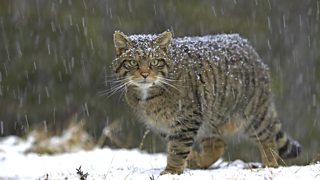
Wildcat in snow Credit: SCOTLAND: The Big Picture
Hope for the future
Research conducted by the Royal Zoological Society of Scotland’s (RZSS) WildGenes laboratory established that wild-living cats who appeared to be wildcats were actually genetic hybrids, many of whom had a high percentage of domestic cat DNA. Whereas the wildcats found in UK zoos and wildlife parks had much higher levels of wildcat DNA. This means that the captive population now holds the key to saving their species.
Thankfully, over 30 zoos, wildlife parks and private collections, including Alladale Wilderness Reserve, have come together as members of the UK conservation breeding programme to help ensure the wildcat’s survival.
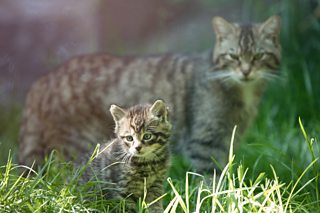
Mother and kitten Credit: Royal Zoological Society of Scotland
UK conservation breeding programme
RZSS, the lead partner for the Saving Wildcats project, has been managing the studbook for the UK captive population of wildcats since 2015 and I have been privileged to lead these efforts as the conservation breeding programme coordinator. It is my role to collaborate with the programme members, develop best practice management guidance, manage the UK population database and make recommendations for transfers and breeding, ensuring those wildcats can support the restoration of their species in Britain.
In 2020, RZSS celebrated a record breeding year after 57 wildcat kittens were born within the UK conservation breeding programme. The success of the programme is a true testament to the hard work and devotion of the wildcat facilities and their animal keepers.
Kittens born into the programme are all potential candidates to join the Saving Wildcats conservation breeding for release centre, based at RZSS’s Highland Wildlife Park, where they will contribute directly to wildcat restoration in Scotland. A young female arrived from Alladale Wilderness Reserve earlier this year and settled well into the off-show centre, which provides breeding space, veterinary care, remote monitoring and pre-release training to prepare cats for life in the wild.
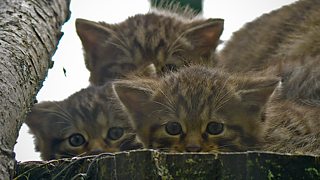
Alladale Kittens Credit: Alladale Wilderness Reserve
Together, we’re Saving Wildcats
Saving Wildcats is an exciting conservation partnership project, led by RZSS, in collaboration with NatureScot, Forestry and Land Scotland, the Cairngorms National Park Authority, Norden’s Ark and Junta de Andalucía. The project aims to prevent the extinction of wildcats in Scotland by breeding and releasing them into the wild.
Wildcats are one of Britain’s rarest and most endangered mammals, which means every kitten is a potential lifeline. Over the last few years, the members of the wildcat breeding programme have demonstrated the immense value in working together to secure a future for this iconic species.
