8 nature stories that happened this week
Chris Hitchings
BBC Springwatch Digital Team
Every week we round up the stories that have been making the headlines in the last seven days.
1) Concern was raised for Britain's seabird colonies.
It was reported in The Guardian that numbers of arctic tern, arctic skuas and kittiwakes are in “freefall” in Britain. Although the exact reasons are unclear, warming waters are thought to be disrupting the birds’ feeding supply, and the RSPB is leading calls for a ‘long overdue’ national census of our seabird populations.
Read more (The Guardian)
2) Otter spotting tips revealed
This week WWT shared a guide on how to best spot an otter. With a bank holiday and good weather on the cards - why not have a go yourself? We'd love to see your pictures!
3. Hello deer!
A video of a red deer making an impressive entrance into a Devon garden has been a huge hit on our social media this week. The footage, filmed by Jochen Langbien, has been viewed more than half a million times on Facebook alone. The impressive stag boasts more than a dozen points on his antlers, quite a sight amongst the shrubbery!
4. Sticky situation for Leicestershire homeowner.
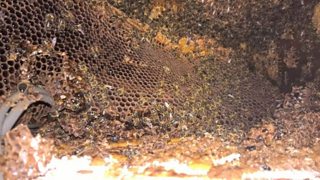
BBC Leicester reported this week that bees had to be removed from a home in Leicester after the homeowners, who did not wish to be identified, found a sticky substance around a light fitting in their home. After calling out experts to examine what was going on they found a well developed hive - complete with honey ‘oozing’ through from their loft. Un-bee-lieveable!
Read more (BBC)
5. Total eclipse of the... sun.
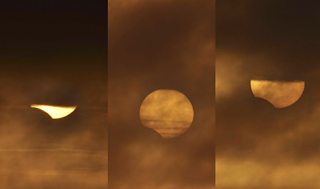
No, it's not a comeback single from Bonnie Tyler but the news that millions gathered across the U.S.A. earlier this week to watch a total eclipse – the first for over 100 years to span the whole continent.
In the UK the sight was slightly less impressive - only a partial eclipse – but the solar event was captured on camera by photographer Richard Clark, who observed it from St Ann's Head in Pembrokeshire, Wales.
If you missed this one though, don't worry! The next one in the UK will be on Saturday 11th August 2018. Best get those welding goggles ready!
6. An American tourist got U.K. birdwatchers excited.
Hundreds of birders headed south this week to capture a glimpse of a North American yellow warbler that turned up in Dorset. It's thought that the bird was carried across the Atlantic by Hurricane Gurt before it reached safety on the birding hotspot of Portland.
News quickly spread of the unexpected visitor and fans rushed to see it, but before you jump in the car to have a look yourself, it's thought the bird has now crossed the Channel and headed further south – on to a new adventure.
Hear more (BBC)
7. Spiders on the web
Whilst filming this month's SOS film the team spotted this rather enormous house spider. We've name it Aragon - naturally....
As we approach Autumn we'll see more spiders coming into our homes. Males like this one are looking for a female to mate with. You can read more about house spiders here.
Meanwhile, you've been sharing your photos.
On the web (sorry), you've been sharing your pictures of spiders living in your house - and we're impressed....
8. The secret life of puffins revealed
The RSPB have produced a fascinating insight into the behaviour of puffins in British waters. As part of Project Puffin, the team have tracked birds using remote GPS systems. The organisation say numbers of the birds are declining, although they aren't entirely sure why.
Worth having a look (RSPB)
----
Remember you can follow BBC Springwatch year round on social media. For updates on the most important British wildlife stories make sure you follow us on Facebook, Twitter and Instagram. You can share you photos in our Flickr pool.
----
About the author
Chris Hitchings is the social media lead for BBC Springwatch. He looks after the website, makes videos, sounds and updates the Watches Facebook, Twitter and Instagram accounts. You can see more of his work for BBC Springwatch here.
The BBC is not responsible for the content of external sites.
