Surveying butterflies in Scotland

Guest blogger
Guest blogger today is Tom Prescott from Butterfly Conservation Scotland.
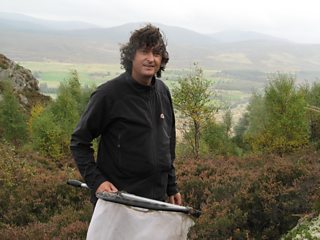
Tom Prescott
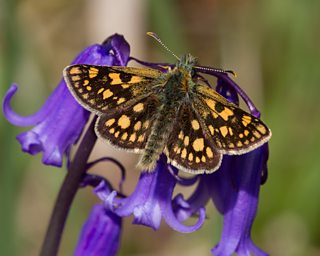
Chequered SKipper
Photo by Dave Whitaker.
However, computer modelling suggests that the butterfly maybe under-recorded by as much as 80% at a 1km resolution i.e. it should occur in four times as many of the blue 1km squares on an Ordnance Survey map than it currently does. In 2012 and 2013 Butterfly Conservation Scotland encouraged its volunteers and members of the public to look for Chequered Skipper in the top one hundred 1km squares predicted by the modelling to be the most suitable for the butterfly, but where it had not previously been recorded. This has resulted in the butterfly being found in 68 new 1km squares thereby increasing its range by over 27%. So it is comforting to know that one of our bonniest and scarcest insects is not as rare as we first thought and members of the public can readily discover new colonies. The survey is being repeated again in 2014, for more information please visit www.butterfly-conservation.org/chequeredskipper.
Although this survey is restricted to Scotland there are several other ways that you can get involved with butterflies and butterfly recording throughout the country; here are just two suggestions.
Wider Countryside Butterfly Survey
This survey aims to monitor the changing abundance of widespread butterfly species across the general countryside. It requires up to two visits annually to a specific 1km square to simply record and count butterflies. Visit www.ukbms.org/wcbs.aspx
Big Butterfly Count
This comprises a simple survey in which you count how many of each different type of butterfly that you see during a 15 minute period. It can be done anywhere where you might see butterflies, from your garden, school grounds or nearby park, to fields and woods. Participants can carry out as many counts as they wish and in doing so will be taking part in the biggest survey of butterflies in the world! In 2014 the count will run for three weeks from Saturday 19th July to Sunday 10th August. For more information visit www.bigbutterflycount.org
