Moths and apple orchards

Springwatch Guest Blog
Springwatch guest blogger: Richard Taylor Jones (Wildlife camerman)
Although there is no definitive list of moths found in orchards, about 260 species were recorded from orchards across the UK on National Moth Night 2008 (that a single cool night in June). This demonstrates the potential diversity of moths that could occur over the year. About 100 species have been reported to feed on apples trees as caterpillars, but it is not just the orchard trees themselves, with bordering hedgerows, hedgerow trees and low-growing plants also supporting many other species. Whether moths pollinate apple trees is not known for certain, and warrants further investigation, although there is a strong possibility they will prove to be key pollinators.
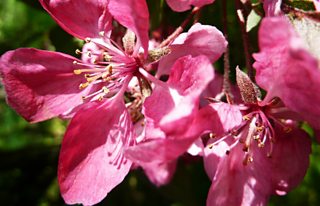
Apple blossom by Surreydweller, from the Springwatch Flickr Group.
Orchards that support mistletoe from Somerset north to Herefordshire and Worcestershire could support a very special moth indeed, the Mistletoe Marble Celypha woodiana. It was so-named in honour of Dr John Henry Wood who found the first example of this species in 1878 (in Herefordshire). The caterpillars of this scarce moth live internally (mining) on a leaf of mistletoe, the species requiring an annual continuity of this parasitic plant for survival. With the decline in traditional old orchards which support mistletoe, there is concern for this moth (and the five other insects solely associated with this plant). Encouraging mistletoe will therefore potentially benefit a range of other organisms. A factsheet on this moth has been produced by Butterfly Conservation (pdf).
Moth Nights (jointly run by Atropos and Butterfly Conservation) will take place on 8-10 August 2013, this year's theme is tiger moths. For more information see www.mothnight.info
