10 Tips for Insect Photography

Guest blogger
This Summer and as part of the #100DaysofNature project we've been seeing a huge amount of great insect photography. But photographing insects isn't easy so we asked Kate Stenton, Summerwatch young guest blogger and photographer, for some top tips.
Insects are everywhere, in all shapes, sizes and colours. With these 10 tips and a lot of patience and practice you will soon be on your way to producing stunning images of these magnificent creatures.
Tripod Support will steady the camera, and allow you to produce sharp images, which is a must for insect photography. If you don't have a tripod or find them restricting, turn yourself into one! This could mean that you sit or lay down, or even just tuck your elbows into your body. For ultimate stability try to control your breathing, this will make you more aware of the tiniest movements that you are making.
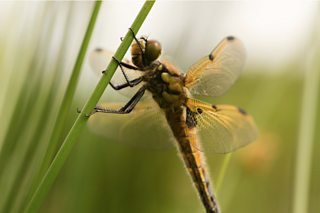
1. Photo by Kate Stenton
Aperture Control - If your camera has this setting then you can use it to control the depth of field; In other terms, how blurry the foreground and background is, the smaller the number the more blurred it will be. This can add an interesting effect and can help to isolate the subject.
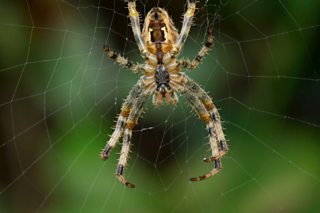
2. Photo by Kate Stenton
Get Low and shoot up - You might get some funny looks from passers by because you are laying on the ground, but this will enable you to capture an interesting perspective that people don't normally see.
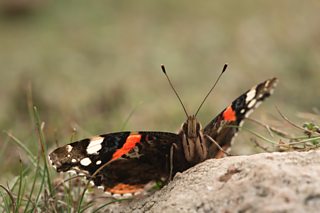
3. Photo by Kate Stenton
Review as you shoot - Checking the photographs you take as soon as you take them gives you the opportunity to check if the subject is sharp, or if there are any distracting objects in the image. Hopefully the insect will still be close by if you need to reshoot.
Composition - With macro photography comes a world of opportunity to create unique compositions; try to find detail that you wouldn't normally see, like the hairs on a dragonfly's back, or the pollen sacs on a bee. Or mix things up by choosing a wider angle to include the insect and it's habitat.
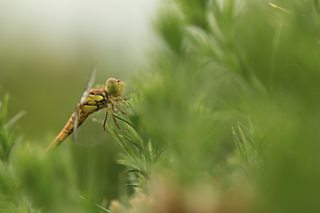
4. Photo by Kate Stenton
Know your insects. Insects can be found in many different places, and each different species has a different place that they favour. For example most spiders live in places like bushes and trees, compared to bees and butterflies that prefer plants that produce nectar and pollen. By researching the times of year, time of day and habitat that they prefer you will have a better idea of where and when to find the insect that you want to photograph.
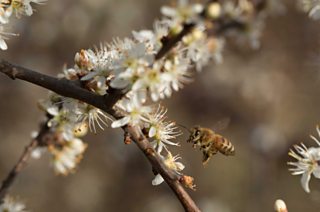
5. Photo by Kate Stenton
Explore - Take your camera with you wherever you go, look under logs, rummage through leaves and peer into crevices. You might be amazed at what interesting creatures you can find in your own back garden, footpaths and even urban environments!
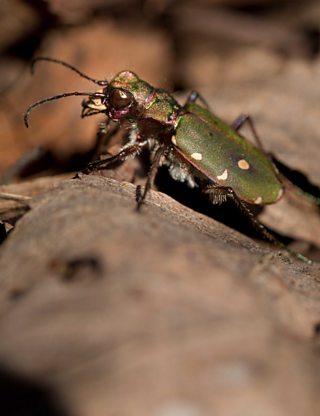
6. Photo by Kate Stenton
Approach Slowly - Insects are very sensitive to movements in the air. This means that in order to get close to them you must think very carefully about where you are going to tread next and what your camera equipment is doing.
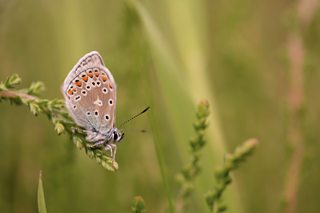
7. Photo by Kate Stenton
Use a reflector - This doesn't have to be anything fancy, a simple piece of white paper will do. When it is positioned so that the ambient light bounces off the paper and onto the underside of the subject it can work wonders, by bringing out details that might have otherwise been lost.
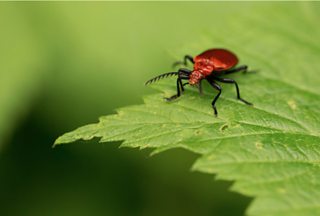
8. Photo by Kate Stenton
Patience is key for insect photography, the saying "if at first you don't succeed try, try again" definitely applies here. At times it can be a little frustrating, especially when the subject flies out of frame the moment before you press the shutter. If this happens, don't feel disheartened, just try again; there's no greater reward than success after perseverance.
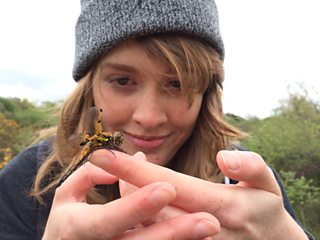
Kate Stenton Bio Pic
Kate Stenton is a Marine and Natural History Photography student based in Cornwall, UK. Having been interested by nature and photography from a young age it was only a matter of time before she combined the two passions into one. You can see more of her photographic work at www.katestentonphoto.co.uk
