Are food brands so powerful they can actually affect our taste buds?
Post categories: brands
 |14:10 UK time, Tuesday, 31 May 2011
When it comes to food and drink, chances are there are certain brands you keep on coming back to. But why? In Secrets of the Superbrands tonight at 9pm on BBC Three, I try and work out just how the biggest food brands in the world have managed to hook so many of us on their wares.
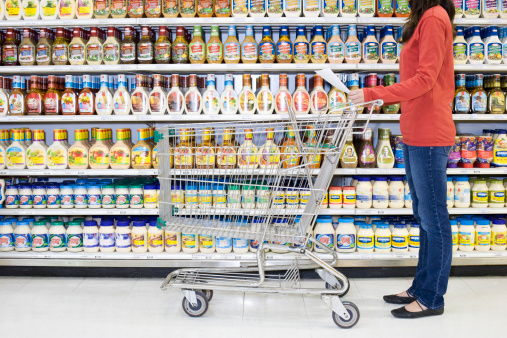
I find out how Coca-Cola (or a Coca-Cola owned drink) has become the number one soft drinks brand everywhere in the world, except Scotland (where Irn Bru reigns); how Heinz manage to sell 1.5 million tins of beans a day in the UK; how Starbucks can charge £3 for a cup of coffee and why Red Bull has invented its own sport.
Of course, I always thought that the brands I chose were the ones I felt tasted the best. However, human behaviourist Peter Hughes told me that what we think about brands can be so powerful it can actually affect our taste buds. So if we believe a certain brand tastes better, it can actually start to taste better.
I found that hard to swallow. So my team and I set up an experiment on the streets of Kingston-upon-Thames. We put Heinz beans into two flasks, one bearing a Heinz label, the other a supermarket own brand. And even though the beans inside were identical, only one person thought they tasted the same. Everyone else was convinced they tasted different. No wonder Heinz sells 10 times more beans in the UK than anyone else.
Of course some branded foods have such a distinctive taste you could pick them out blindfolded. And that’s part of their appeal: people seek out McDonald’s because they know exactly what they’re going to get. But I got a shock when we filmed at a McDonald’s in India, a country where the majority of people hold the cow sacred; meaning for most beef is definitely off the menu. Instead of a Big Mac, they have the Chicken Maharaja-Mac, plus the McAloo Tikki and the Paneer Salsa Wrap - dishes that reinterpret local specialties with an international twist. And how do these exotic offerings taste? Er…well, just like a McDonald’s.
That‘s because McDonald’s and many other brands have a signature taste, which helps differentiate them from rivals and allows them to maintain consistency across thousands of restaurants in different countries. And it means they can offer foods tailored to local tastes, while maintaining their brand signature. Flavourist Stephen Hart of International Flavours and Fragrances told me how his company could develop taste signatures which actually reflect the ‘personality’ of a brand.
But do we really think of food brands as having personalities? Well thanks to Professor Gemma Calvert of Neurosense and an MRI scanner, I was able to find out. When we showed our volunteer images of his friends and family, there was activity in the reward network of his brain, the region associated with positive mood. The pictures were making him feel good. No surprise there. But when we showed him products from the big food brands he liked, his brain reacted in a very similar way, right down to the area we use to recognise faces. This result backed up Neurosense’s own research: it seems that we perceive the biggest and most popular food brands we buy in the same positive and friendly way as our nearest and dearest.
If people feel that strongly about your brand, you’re well on the way to becoming a superbrand, and if the food you’re selling doesn’t actually taste the best, don’t worry, because it seems your customers will soon believe it does.
Are there particular brands of foods that you just can’t live without? But do you reckon you could pick them out in a blind taste test? Let me know what you think.
Alex Riley is presenter of BBC Three’s Secrets of the Superbrands.