Money, Money, Money

Dr Eurovision
They say that money makes the world go round. It certainly counts when it comes to Eurovision! Let’s take a look at some of the costs involved in both participating in, and the hosting of, the Eurovision Song Contest.
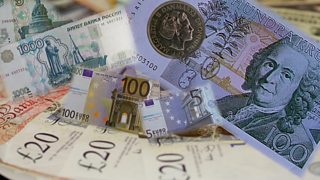
The on-going global economic crisis has impacted upon the contest, not only in terms of how the event has downsized in recent years, but also in terms of number of participants. Every national broadcaster has to pay a fee to enter the contest. The UK, as part of the so-called 'Big Five', get automatic entry into the final along with France, Spain Germany and Italy since they pay higher fees. In recent years the number of participating countries has fallen. 2014 has seen more countries leave the party; Serbia, Bulgaria, Croatia and Cyprus. All have cited financial reasons for their respective withdrawals. It seems that when it comes to austerity, even the Eurovision Song Contest isn’t immune!
However it’s not all doom and gloom, 2014 sees the return of Poland and Portugal, both of which previously withdrew due to lack of funds in the past. Arguably the story of the year though is Greece. Despite the closure of the state broadcaster ERT, as part of the Greek government’s wider austerity measures, Greece will be ready to party in Copenhagen. Private sponsorship is the key here; a blueprint which many countries have followed.
Of course the main cost involved in the Eurovision Song Contest is the staging of the event. It’s not cheap to produce television shows anyway let alone three prime time international contests. Representatives from Ireland’s state broadcaster, RTE, were said to have expressed concern at having to stage the contest for a third consecutive time in 1995, inspiring the famous Father Ted 'A Song For Europe' episode. Perhaps the biggest irony is that only weeks after ‘My Lovely Horse’ was broadcast, Ireland went on to win with Eimear Quinn’s ‘The Voice’ leaving RTE picking up the tab for staging its fourth contest in five years.
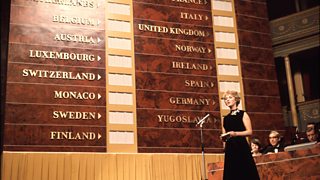
Ireland produced slick shows in the 1990s and as the contest expanded it not only grew in size it grew in cost. In 2009 Russia set the bar high by spending an alleged $30 million hosting Eurovision in Moscow. This was eclipsed by Azerbaijan’s staging of the event in Baku in 2012 where they built a brand new arena specifically for Eurovision!
In terms of Euro extravagance Baku was probably the tipping point as in 2013 the Eurovision Song Contest in Malmö, Sweden, was on a much smaller scale than in previous years; gone were the numerous presenters, the larger arenas, lavish parties and huge stages. Malmö was different. Whilst it might not have had the bling of previous contests, it was a highly sophisticated piece of television and with an estimated budget of €12 million, at a fraction of the cost of previous contests.
It was the year Malmö's executive producer Martin Österdahl declared that the Eurovision 'technical arms race' was over:
”There is no continuation of the route taken in Moscow and Baku. It just doesn’t work to create an interesting narrative with the same equipment they used. It isn’t possible to create a more extraordinary technical light show than in Moscow, even if you have a bottomless pit of money”.
What do the Danes have in-store for us in May? Already the production team have said that they intend to use Malmö’s budget as a blueprint for hosting the event. However, unlike Malmö, which had an arena ready and waiting, the Danes have opted for the Burmeister & Wain Halls, a former industrial complex in Copenhagen. The site is currently undergoing major refurbishment work. This won’t come cheap. Whilst Denmark’s national broadcaster DR may be well aiming to stick to their budget, their decision to take the contest to such an ambitious location may well show that they were 'one step out of time' from their previous financial forecasts.
Eurovision routinely reflects the issues of the day and financial issues are just one aspect of that. The global economic crisis has impacted upon both numbers and now the actual scale of the contest. Countries are also much more frugal when it comes to promoting their songs and hosting parties in the run-up to the contest. Whilst these may be worrying times, I don’t think it’s a case of 'La Fiesta Termino'. Eurovision has lasted for nearly 60 years. I dare say there’s still life in the old thing yet!
