

Tears and Tesco: the changing face of the High St
Why do people cry when they close down a shop?
Is it a business, or a love affair?
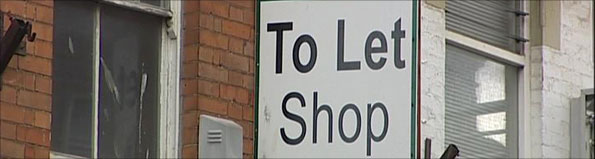
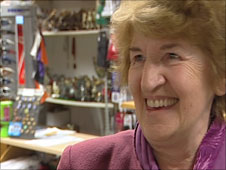
Colin Zabel has not gone bust. He has not lost his home. His two shop assistants have both found new jobs. But as he packs up the last of the stock from his chemist and general store in Swindon's old town, he can't hold back the tears.
"It's much more than a business," he explains, wiping an eye, "it's a way of life."
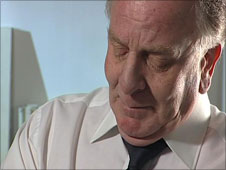
Mr Zabel has been on Wood Street for 14 years and now the lease has expired. These things are complicated, as ever, but suffice to say the shopkeeper and his landlord have parted company. He is already looking for new premises, and a new enterprise.
"Shopkeepers will be okay," he says, "but the community is left with an empty shop. Or worse, yet another restaurant."
He tells me that many of his regulars are old, infirm, disabled. A short nip down the road to pick up some new buttons and a ball of wool is what they want. And they get a friendly chat into the bargain. "If we ran this place on purely commercial lines, we'd have gone bust years ago."

In the first six months of 2010, 519 new restaurants, takeaways or pubs opened in the South West. That's more than one in four of all new openings on our high streets. There's more on the new analysis here.
The research by the Local Data Company was commissioned for BBC One's regional current affairs series Inside Out. You can see my take on it in the West Country edition at 7:30pm on Monday, 6 December, but there are similar reports in all of the English Regions reflecting what's happening on local High Streets. You can also watch on the BBC iPlayer.
The "death of the high street" is a frequently reported tragedy. But, to quote Mark Twain, its death has been rather exaggerated. I've been inspecting the health of local shopping streets across the West Country, and I found something rather surprising.
They've not died. They've just changed. In fact, they've never stopped changing.
Out go multiple chain retailers, especially of clothing and electricals. In come cafes, delis, hairdressers, nail bars. In a word: services.
Round the corner from Mr Zabel's TopDrug is a road that provides TV cameras with the desired images of "recession Britain". On Victoria Road I counted 25 units. Nine are empty, in fact derelict. Look at them.
But who is trading well here? Five restaurants and four hair and beauty salons.
An accountant, a thriving dentist, a man who engraves gravestones. Services.
There are only two true retailers, who actually sell things, but in fact they are really services too. Ann Farthing's lovely antique shop and Wiltshire Rod & Gun, a mecca for field sports from across the county. In both, you buy expertise, personal service, and a nice chat.
I found the same picture everywhere. It is most striking in Frome, a cornucopia of independent shops. Of 275 stores in Frome, only 40 are multiples.
"These people have realised you don't compete with the multiples, you provide something different," explains retail analyst Mike McElhinney of King Sturge.
There are unique fashion designers, I count four haberdasheries, two hand made cosmetics boutiques, several second hand bookstores and countless jewellers.
"They have passion, creativity, flair," says Mr McElhinney. "They are running shops the multiples could never open."
Back in Swindon, Colin Zabel is still tearful.
"When Wood Street is the street of bars, where will the old people go then?" he laments.
They say you shouldn't argue with the dead, so it seems wrong to question a man who is shutting up shop. But right next door I pop into a hardware store, run by an enthusiastic chap who says times are tough, but perfectly profitable.
As we chat, a woman comes in with a long face. Her oven has gone on the blink.
"Its flashing red, says 'change filter', and I didn't even know it had a filter," she tells him. In a flash, her local ironmonger has identified the make of oven and whipped out the right filter from a mysterious box behind the counter.
"A fiver for that, if you would. Come back if you get stuck fitting it!"
Everyone has a local shopping street. And everyone has an opinion on whether it is going to the dogs, being ruined by out of town superstores, or actually becoming rather pleasant.
What's it like round your way?

 Hello, I’m Dave Harvey – the BBC’s Business Correspondent in the West. If you’re making hay in the markets or combine harvesting; scratting cider apples or crunching tricky numbers – this is your blog too.
